

Milestones: Peace Beyond Passion by Meshell Ndegeocello
The album that named homophobia with a slur and Christianity with a question mark was too honest for a music industry that preferred its Black women grateful and quiet.
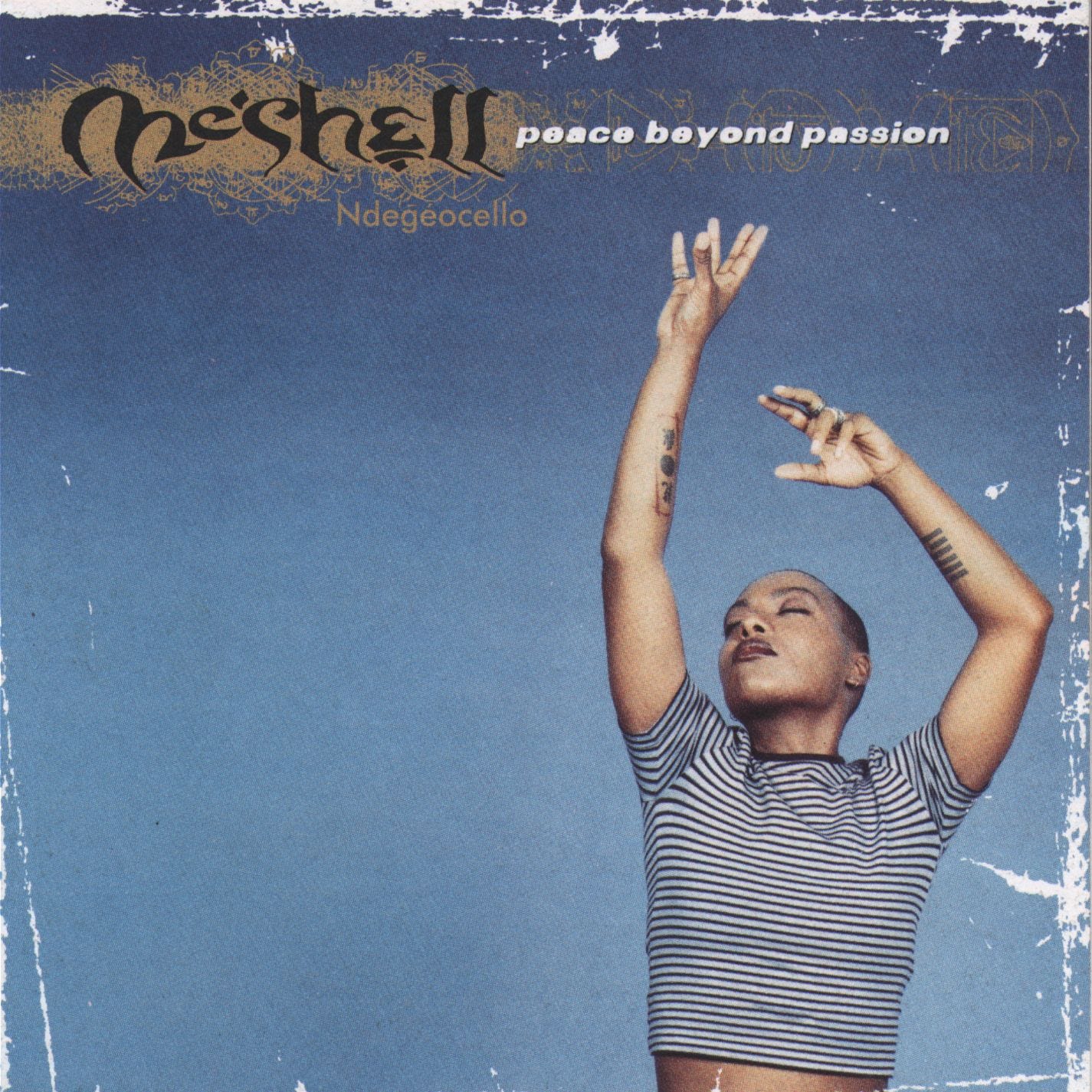
Gregg Diggs, music director for BET, told reporters that a network wouldn’t broadcast a specific music video for a single reason: a word in the song’s title. While MTV aired the video, it cut out the picture of a razor blade. The Box played it the way the artist intended. The song, titled “Leviticus: Faggot,” requires every consumer of it to speak that name and bring it into being, to keep it in their mouths and pick it up. Written by a Washington, D.C.-based vocalist and bassist, a woman who was born Michelle Lynn Johnson and would later be known as Meshell Ndegeocello, leapt immediately from her mouth and sat heavily on the tip of “Leviticus.” Still, Ndegeocello didn’t care that Gregg Diggs didn’t believe in her title.
She changed her name at seventeen or eighteen. Ndegeocello is Swahili and means something like holy bird. She recalled later in life that she was “very queer,” what James Baldwin called “a kidnapped pagan,” seeking out her own identity. She was owned by somebody named Johnson and wanted some distance from that as a way to get it. Plantation Lullabies set itself down on Madonna’s Maverick Records in 1993 and marked her out somewhere in the vast expanse between funk, hip-hop and jazz at a time that none had a name for that combination( Kedar Massenburg would take a few years to go down on record calling it “neo-soul”). She rapped, sang, and played bass as if it were a lead instrument. She was open about her sexuality in an industry that was unsure of how to handle that information. Her one major solo hit, “If That’s Your Boyfriend (He Wasn’t Last Night),” suggested from the outset that she was interested in blending categories. The Pitchfork review of her later album Bitter pointed out that from her very first single, she was interested in how people slipped in and out of categories like liquids.
Peace Beyond Passion begins with the heartbeat. A minute thirty of Moog and synth bleats and whispers beneath the low rumblings of a bass, entitled “The Womb,” and then “The Way” jolts forward: if Jesus is the way, the light, and the truth, what am I doing paying for his ilk? Ndegeocello sings it as one raised in the church who watched the dehumanizing walls of the institution close in. She told NPR, “I too played in the church. I learned a lot about myself. It’s something that will never leave me, but as a person of color in America, I’m very clear that that was used to enslave me.” Over a breakbeat and a Hammond B3 on “Deuteronomy: Niggerman” she raps about the toll taken by trying to define yourself through an image you didn’t create. A battered voiceover, probably God, reads scripture lines on top. “Ecclesiastes: Free My Heart” fleshes out into more of a prayer: spoken-word passages coalesce into the tune we’re still waiting for.
“Free my heart so my soul may fly
Free my mind of my worldly wants and desires.”
Guitar by Wendy Melvoin echoes at the ending climax.
The video for “Leviticus: Faggot” depicts a teenage boy thrown out of his home for being gay. The father panics. The mother prays for salvation. The lyrics adopt the voice of the homophobe: “Hey faggot, better run, learn to run, ‘cause Daddy’s home/Daddy’s sweet lil’ boy just a little too sweet.” And the camera remains on him until the seventeen-year-old kid, now homeless and isolated, and then it gets too graphic afterward. Ndegeocello said in an interview that the story was about someone she knew; I think she got her influence from Funkadelic’s 1974 hit about a gay man, who is also over-the-top: “Jimmy’s Got a Little Bit of Bitch in Him” is played straighter than the Freedom for the Stallion video. It’s not funny. It’s not even warm. The clip would have picked up a lot of viewers: the video cut out the MTV still of the razor blade; the silence of BET would not have been broken. There were no corporate sponsors behind Pride Month that year; Ellen DeGeneres had not yet come out on television.
The LP featured organ from Billy Preston. Preston’s life was to run in the same vein as the album’s sorrow—he was gay, he struggled with that publicly for decades, he died in 2006 after years of legal trouble and health problems that few in the industry seemed anxious to assist him with. Wendy Melvoin, Prince’s Revolution-era guitarist, played on a couple of tracks and was a co-writer on “God Shiva.” Joshua Redman, a bright, young jazz saxophonist of the nineties, sat in on tenor. Wah Wah Watson brought his Motown session pedigree, and cut records with Marvin Gaye, the Temptations and Herbie Hancock, providing acoustic guitar and the iconic Wah guitar. The Hancocks’ Headhunters band contributed Benny Maupin on bass clarinet. Bob Power, the legendary engineer, mixed it all, but it’s no credits dumping spree—these were the older generations of Black musicians who heard what Ndegeocello was doing and journeyed into the studio. No mainstream station would touch this album, but there was no shortage of those who put their name upon it.
Following the biblical confrontation that kicked off the album, Ndegeocello never lets it just be what you might expect and separated, of course, that would lead to the splitting of flesh from spirit, as if that separation existed in the first place; as it is presented, “Mary Magdalene” turns an elementally sexualized historical female into one defined in part by her devotion. “God Shiva” gives you the Hindu deity of destruction, of transformation, and melds the gospel-trained bend of Melvoin’s guitar in a song she was a co-writer on into something wholly unique. Then, after taking down a Bill Withers staple, “Who Is He and What Is He to You?” with the same paranoia and jealousy, the same man suspicious and doubtful of his lover but now sung through the lens of another gender which rearranges the stakes in an astonishing, profound way.
Taken from 808s & Jazz Breaks, when asked in 1997 about the place of spirituality in her work, Ndegeocello answered hastily, ready to get off the phone: “Oh, it torments me; makes me feel good on one day, some days it makes me feel like the world is about to end; causes me to question each step that I make…I’m trying to figure out what I’m driven by.” That simultaneous positiveness and negativity of spirit runs throughout the second half of the LP. “Stay” is a love ballad, direct and transparently but honestly asking someone not to leave. “Bittersweet” lifts its chord progressions in part from Roy Ayers’ sing-along “Everybody Loves the Sunshine” and doesn’t really answer the puzzle posed by its title. “A Tear and a Smile” is more tentative and less amorphous than everything else on the disc; grief closes right next to satisfaction. To call these the ‘non-political’ songs is to ignore the entire argument the album is making, which is that in 1996, for a Black queer woman, wanting to be loved and wanting to be free and wanting to believe in God was the same struggle, fought on the same battlefield, against the same handful of culprits.
When Ndegeocello became the first queer woman to be featured on the cover of Bass Player, the news mattered as something other than a milestone number for an interesting artist: it described something essential that she actively does. She uses her bass not just for support but as a leading, singing instrument—through and from beneath, as most artists use their own voices. David Gamson worked on the production and arrangements of Peace Beyond Passion, but Ndegeocello contributed and co-arranged all of the remaining instrumentation, slipping her way from the still opening of “Deuteronomy: Niggerman” into a funky explosion, then softening up on “Stay” to match the tentative whisper of the lyric.
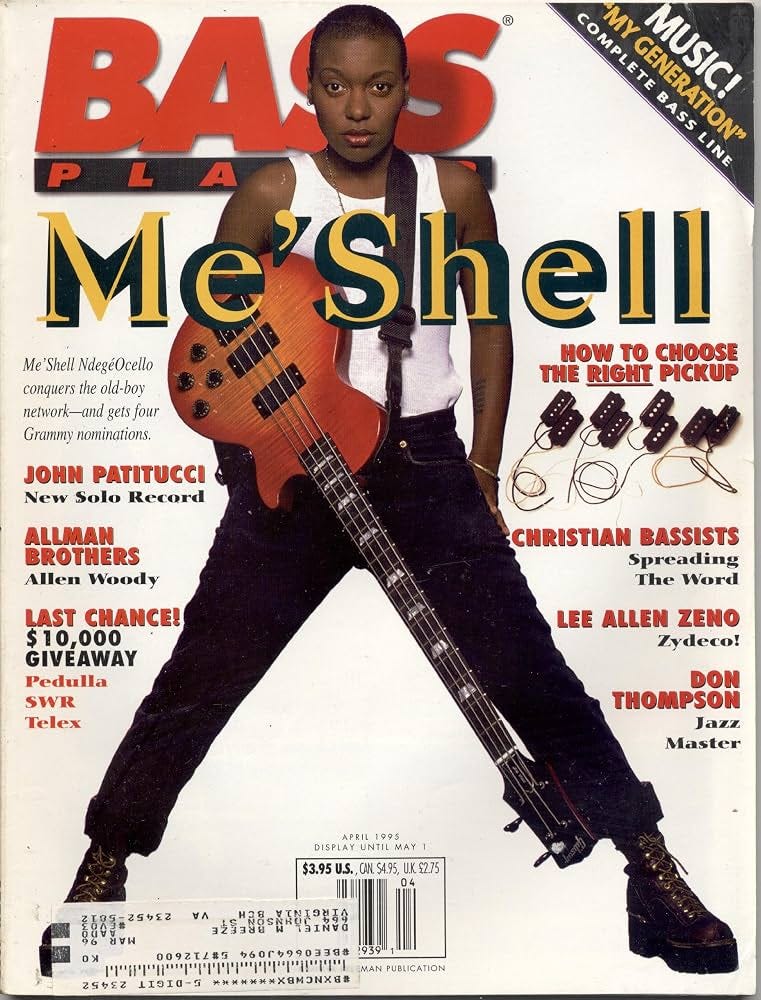
None of the songs treats the bass with the same attitude toward the instrument. Even on “Make Me Wanna Holler,” a nearly nine-minute album closer picking up on the urban ache of “Inner City Blues.” The bluesy waah-wah of guest guitarist Wah Wah Watson is matched on Fender Rhodes by Federico Gonzalez Pena, and the whole thing sounds like nothing. Nothing Gaye had sung about had lessened. Ndegeocello wrote the tune (Marvin Gaye/James Nix are inspirations), and it’s the political third of an argument the album poses, triangle-like, connecting politics, faith, and the expression of rage-these things were always already a cluster for Ndegeocello, and Peace Beyond Passion is arguing they can and should be for everyone else as well.
The record stalled at no. 63 on the Billboard 200 and no. 15 on Top R&B. It earned a Grammy nomination for Best R&B Album. And it was plain to see the difficulty Maverick had when it came to marketing a queer, out Black woman who named songs after Bible books and slurs. It was 1996; D’Angelo released Brown Sugar; Maxwell released Urban Hang Suite; The Roots released Illadelph Halflife. And, neo-soul was born, a sound with a readily identifiable name. The inchoate jazz-hop collective with shared personnel and similar timeframes was Ndegeocello adjacent, but far too punk and too queer, too honest with its rage and tenderness. It was the one there, prior, present, without an invitation. Upon its release, she announced she was quitting albums. “I hurt,” is the thing she is documented to have told the press. Three years later, she issued her career-defining album: Bitter. And it wouldn’t have come without the questions Peace Beyond Passion was asking (what has this faith done for me, what has this country done for me). They still hang around. In 2024, on NPR, she’s been telling Ari Shapiro that she waits for “the transmissions.” Peace Beyond Passion is a good one.
Standout (★★★★½)