

Milestones: Peaceful Journey by Heavy D & The Boyz
Heavy D cut it the year hardcore rap hardened, then hid grief and a street conscience inside the dance songs. Peaceful Journey is the widest record anyone in 1991 rap had the nerve to make.
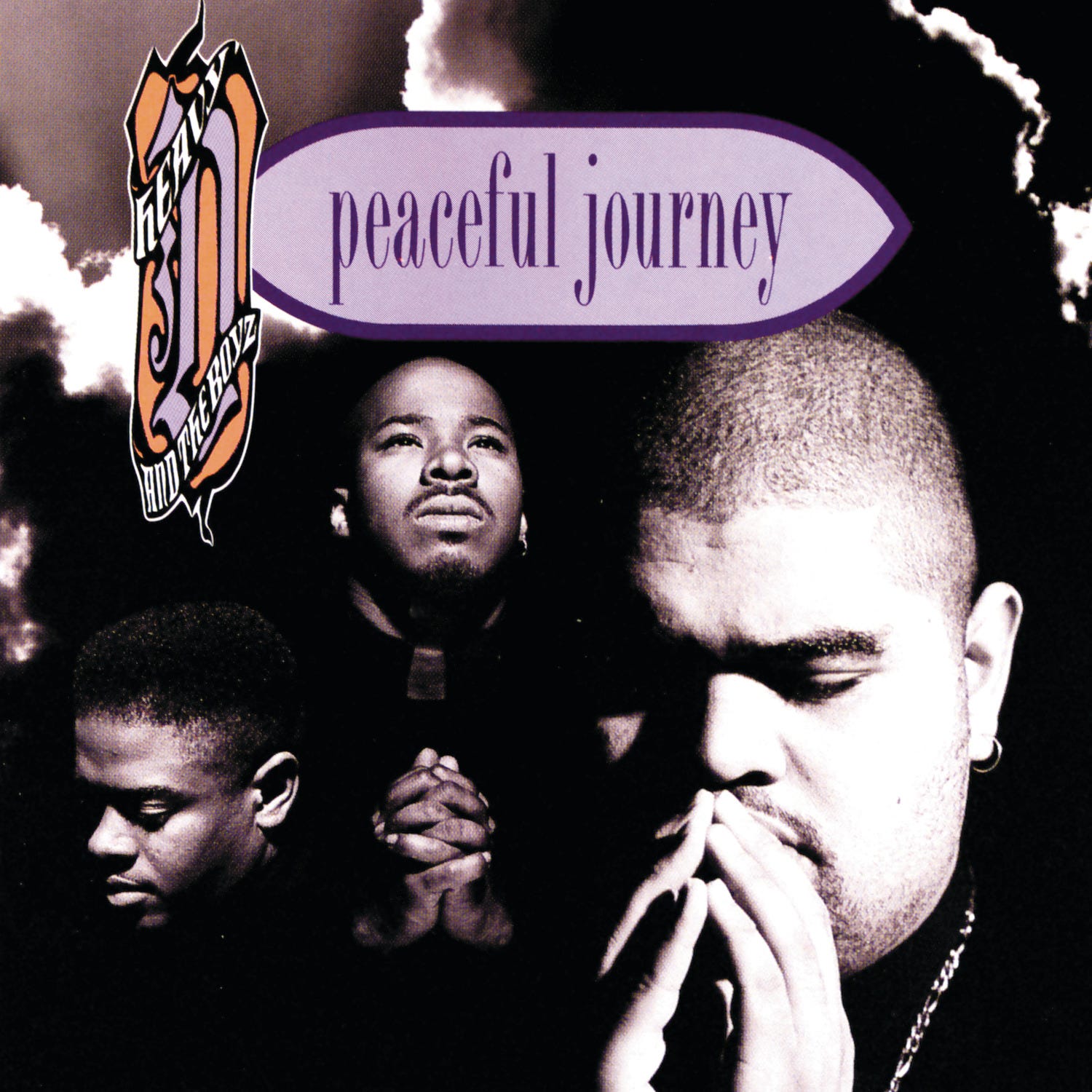
By the summer of 1991, rap was all about the hardest stuff. Ice Cube was running the country to its death sentence, N.W.A. was preaching the gospel of civil disobedience in whatever horrific language they could manage. Up in Mount Vernon about a half hour north of the Bronx, a 350-pound MC Dwight Myers was listening to all of that and making a platinum dance album anyway. He had done that before; Big Tyme had gone platinum in 1989 with songs about girls and good times, and Myers, who still rapped as Heavy D and was the biggest rapper alive in the most literal of senses, had several more dollars waiting to be taken by forty-one million and one rapper than he had just spent in the previous thirteen months of quote business. So he ventured back into the music with a death in his stomach. His friend and dancer T-Roy had fallen five stories from a parking lot in Indiana the summer before while the crew was out with Public Enemy. Heavy had dropped out of the tour. When he returned to record, the grief made the album’s title.
That he got that out there at all, that he waited nearly a full song to do so, might be the most profoundly weird, generous, and affecting thing on his catalog. Built around a bassline that Eddie F pilfered from “This Place Hotel” by the Jacksons, the first part of “Peaceful Journey” finds Heavy speaking to T-Roy directly, and to the way that it feels to lose the friend you knew back when nothing about this, giggling and trauma bundled into the same several seconds, had yet to happen. But then, the scope expands beyond the single burial. He shifts to addressing the broke, the cornered, the kids with nowhere to go, the people dance songs tend not to notice, turning in the last few bars to the cops who patrol their streets and asking them to take their boots off, to cool it. And all the while the hook “Through all your travels I’m wishing you a peaceful journey” circles back to the original line he’d written for Dixon, under that gently thumping, somewhat mournful Jacksons figure Eddie F just couldn’t put down, and so the sentiment never quite hardened into something as static and lugubrious as a memorial.
Two songs later, on “Sister Sister,” Heavy is given a soft, synth-drenched beat by Marley Marl and surrenders it completely to Black women—the ones with children and jobs who seem to always keep it all moving regardless of the odds stacked against them. No romance angle, no come-on, just a grateful ode. Then there’s “Letter to the Future,” in which Heavy, writing from a place of affection to a younger generation, conjures one of his stranger ideas, suggesting that the experience of slavery perhaps brought Black people closer than they have been in freedom: “Picking cotton was bad, but we picked it together.” It’s hardly perfect; the sort of R&B lean on “Sister Sister” is a little overbearing, and that line about picking cotton might be more provocative than an argument. The songs are placed only two spots before “I Can Make You Go Oooh,” and Heavy treats them all with the same unflustered ease, the thought that a dance track about hooking up could potentially clash with a sincere plea for the betterment of his community apparently not occurring to him.
Heavy decided to record a posse cut under the condition that nobody curse. Then he somehow managed to wrangle some of New York’s filthiest and most intimidating lyricists and had them swear a pact to honor his request. Built entirely on the premise, “Don’t Curse” video has all involved huddled around a poker table in tuxedos and passing the mic like a cigarette. Pete Rock produces and contributes a verse. G Rap kicks it off (a masterstroke), who has spent a career making a career out of having no fear. The rule, in fact, becomes the source of endless, inventive fuck-arounds: Grand Puba turns it into a schoolyard joke and spells the offending word out in reverse. C.L. Smooth talks about washing mouths out and goes to church, claiming it’ll hurt his image if he even mentions it. Big Daddy Kane talks about advisory labels and challenges anyone to try and put a sticker on him. Q-Tip goes light and airy, and it’s a pleasure to hear them all try so desperately not to fall off the cliff. The track easily could have become a gimmick. It hasn’t. Each MC on “Don’t Curse,” from Pete Rock to G Rap to Q-Tip, looks like they’re having an absolute ball with this dumb, beautiful restriction imposed by the host—not necessarily the best lyricist ever, but surely the best one for this particular task.
The credits are the clue to it all: Heavy had everybody on the job. “The Lover’s Got What U Need,” one of three songs to sample an O’Jays song in ‘91 alone, sees Marley Marl’s smooth flip of Diana Ross’s “Love Hangover” serve as the bed for Heavy’s bragging; and on “Cuz He’z Alwayz Around,” Pete Rock ( Heavy’s youngcous and still one year out from his OWN first classic) hooks the Blackbyrds’ “Rock Creek Park” up for a chopped beat. ” Marl was the Juice Crew; Teddy was the current moving and shaking R&B up to the dancefloor, and Pete Rock the shape of sample-based-rap-to-come; these three kingdoms rarely shareed album space until Heavy put them to work. None of these beats sound alike, and all of them keep warm, the drums so soft that even the harshest bravado on “Don’t Curse” somehow feels like an inoffensive come-on that wandered in from a backyard BBQ.
But it must have been easy—Heavy wasn’t out to go toe to toe on the microphone, and had little in the way of appetite for the kind of lines that win rappers accolades; and with the subject of this record, it was the right instrument: “I Can Make You Go Oooh” and “Do Me, Do Me” are seductions run entirely on personality and smile, never a second firmer than the beat asks it to be, and “The Lover’s Got What U Need,” is so simple-hearted and good humored, it may just take any offense out of its own bragging, the “loverman” moniker itself possibly an entirely unwarranted pigeonholing. It takes discipline to sound this unforced at any level of the rap game; on “Is It Good to You” Riley gives him an absolutely luscious New Jack Swing cut and Heavy turns the entire topic over like he’s already got an answer, cool, calm and collected for one last question.
Riley got a second life out of that groove; in fact, he liked it enough to update it for Tammy Lucas a year later on the Juice soundtrack, which meant a Heavy D album cut could precede one of the decade’s most influential rap films. More far-reaching was “Now That We Found Love,” a rewrite of the Gamble and Huff standard the O’Jays and Third World had already made famous into a four-on-the-floor, club-built hip-house track with Aaron Hall on the vocals. It was a naked grab at pop radio, and it was a success, and today it sounds, in retrospect, utterly blameless. Heavy still spits easy, unforced verses about love as he always did while the beat gives him somewhere to put his feet on the dance floor. The pop crossover from 1991 now comes across as nothing but an assured craftsman who could float any kind of beat you stick under him.
Heavy was born before Mt. Vernon in Jamaica, and you can catch him glancing back toward there in the raggamuffin toasting of Daddy Freddy on “Body and Mind.” Freddy’s guest rapping is at double time, and Heavy meets him part of the way toward something like patois, momentarily shifting the Jamaican accent that he’d always carried to the fore before returning it to its background hum. He rarely let his other country out, and this one only exists for just over three minutes; a blip, in a long career devoted largely to dance-pop rap.
Thirty-five years have been unkind in places to these tracks, as they are on most albums. The bubblegum pop moves haven’t aged the best, and some of the love-making filler feels even lighter today than it did then. What has gained weight, however, has been the heavier material. The title track was originally dedicated to mourning a friend, but in the aftermath of Heavy D’s death from a pulmonary embolism at age 44 on November 20, 2011, his send-off to the recently deceased Trouble T-Roy has taken on a far more personal cast. People will play it for him now, the way they played him for T.R. It wasn’t intended as a life statement, but that’s what it’s become, and it’s an unexpected thing for a dance album to carry in its depths. The heavy thought in that track, the humble thank you to “Sister Sister,” the desultory truce at the end of “Don’t Curse.” They’re all part of a certain kind of nerviness—at the apex of commercial visibility, trading in on commercial appeal to articulate grief, gratitude, and a gag, rather than another shot at a hit single.
The lane that Heavy was driving wasn’t empty for long. The Uptown sound that he was proving out, R&B and rap mushed into a single musical product, smoothed out and unabashedly prepared for radio, became the primary language of the decade once Andre Harrell’s label released Mary J. Blige and Jodeci, and a young Sean Combs was watching the process in the room. (Heavy eventually ran the label, a few years down the line). The play at the heart of “Now That We Found Love”—a rapper that could sing-talk his way into pop charts without clearing out the place-is the engine of the whole Will Smith oeuvre, and then pops up later, a little more forlorn, in Drake. Heavy did it in 1991, on a track best known for the dance number it also produced. Think of that poker table, though.
The six toughest rapperss on New York City in 1991, each one a master of precisely the lexicon that song rails against, in suits trying to be gentlemanly and keep up with each other, trading mic and dissolving into giggles. The big, smiley man from Mount Vernon had issued the invitation, and the fellas came. G Rap diagramming his own constraint. Kane fighting off an imagined censor’s sticker. It’s three minutes of sheer, dumb fun and of pure life—a snapshot of what Heavy D could accomplish and few others in rap: get the hardest room in town to let their hair down, their guard down, and just… laugh. He’s been gone for fourteen years. The game is still going on.
Great (★★★★☆)