

Milestones: Pray for Haiti by Mach-Hommy
Mach-Hommy walked back into the Buffalo rap label he helped found in 2012, accepted Westside Gunn’s executive-producer credit, and used the wider room to fund schools in Port-au-Prince.
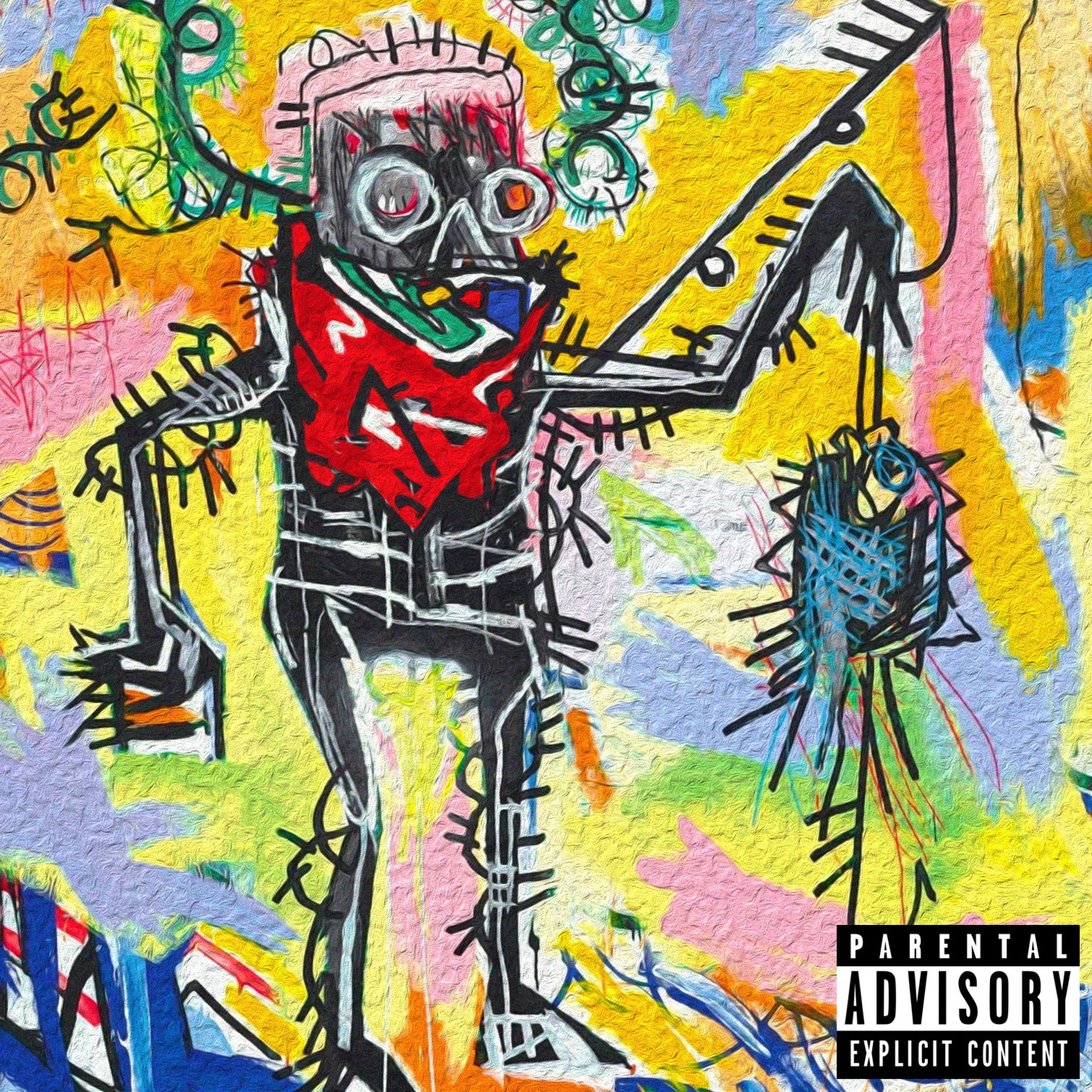
The bandana is red and blue with a coat of arms stitched into the middle, the flag of Haiti folded into a face covering, and for years it was the only thing photographers were going to leave with. At record stores in Brooklyn and Newark and out in Buffalo, fans paid two and three hundred dollars for vinyl that would never appear on Spotify. They were buying physical objects from a rapper who wouldn’t let Genius post his lyrics, who called the practice of republishing them on those websites a kind of theft, and who had built a whole second economy underneath the one the rest of rap was busy losing money inside. The name he uses, the only one he uses, is Mach-Hommy. The face under the bandana belongs to a Haitian-American kid who grew up between Port-au-Prince and Newark, New Jersey, and who, in 2012, helped start the Buffalo rap label Griselda Records with two brothers from upstate named Alvin Worthy and Demond Price, better known to the people who follow this stuff as Westside Gunn and Conway the Machine.
He left them, or they left him. Nobody on either side has ever publicly said exactly what happened in the middle years of the decade, only that by 2017 Mach was gone from the masthead and the catalog, and Westside Gunn was building the label into the most prolific independent rap operation in the country without him. Gunn ran his three-year sprint of WWCD and Pray for Paris and Flygod Is an Awesome God while Mach put out Haitian Body Odor and Tuez-Les Tous and Mach’s Hard Lemonade through nothing but his own hands and a mailing list, and the audience for both built up across the same stretch of years without overlapping much. People who liked one were not always sure what to do with the other.
Late in 2020 the rift between them closed, and Mach soon turned up on Westside Gunn’s “EasterGunn Day 4 Freestyle” the following spring, and Gunn told Rolling Stone the obvious version of the story, that Mach had been with him from the start of Griselda and had asked to be turned up and so he turned him up. A few months later the LP was on streaming services with Westside Gunn credited as executive producer, sixteen songs plus a few short Kreyòl skits between them, and a note attached to it that twenty percent of the proceeds were going to a trust fund Mach had set up to put kids through school in Port-au-Prince. The title was Pray for Haiti, and it talked back to what Westside Gunn had put out the year before, the one with the Basquiat skull in a Hermès bag on the cover.
Paris pulls in the museums and the Basquiats and the magazine spreads; Haiti pulls in the embargoes and the news cycle that arrives only when something has gone wrong. Borrowing Gunn’s naming format is a small joke that becomes less funny the longer you turn it over, since the setup is identical and the cultural budget for the picture is not.
The first thing you hear is a Denny LaFlare beat that sounds half-taped off the radio in 1996, and Mach is talking about the twenty-sixth letter of the alphabet. Z, the end of the line, the place where they shove you when nobody expects you to come back from it. Mach drops the title, “The 26th Letter,” about three quarters of the way into the verse, burying it inside the song as one more line with no banner attached. Mach’s been at the back of this alphabet for years, and the back of the alphabet, in his telling, is where you make the rules.
Conductor Williams handles a run of consecutive cuts early on, which is unusual for a Mach album and the closest thing here to a unified middle. Conductor’s sound, all heavy bass and unfiltered soul, gives Mach a place to do what he does best, which is rap with the cadence of someone who never finishes a sentence the way you think he’s going to. Somewhere in the middle of that run, the King of Pop joke winds up typed out in full Haitian spelling on a song called “Makrel Jaxon,” and the verse Mach raps over it is one of the rare places he walks through his own infrastructure out loud. Genius doesn’t have his lyrics because he won’t permit it, and he has called the republishing of lyrics on those sites a kind of theft. There’s no Instagram account. The few interviews he has sat for are ones where whatever cause is attached outweighs the press cycle around them. Even putting this work on Spotify at all was a concession he made for the trust fund and not for the platform.
For years Mach has been saying rap is too dry, and the lead single is where he lays the line out plain. The bar about needing rap to rain sits on top of Conductor Williams’ sunlit jazz loop, in the song called “The Stellar Ray Theory,” which carries the most welcoming production on anything Mach has put out this decade. Jay-Z’s Bowie interpolation from “Takeover” surfaces in the verse. So does the Ghostface line from “The Sun.” Mach uses both the way an older cousin shows you what was already on the dresser when you walked in, no trophy case attached. The Spotify reach the single picked up brought Mach new listeners this year who had never been near a two-hundred-dollar Mach vinyl pressing in their lives.
Nicholas Craven gives Mach a piano taped from another room, and on “Kriminel” the autobiography comes nearer to the open air than anywhere else here. Mach raps over Craven’s loop about the word “criminal” and the people who have applied it to him: American cops, the news cycle that uses Haiti as shorthand, the long American habit of sorting Haitian men into the column where suspicion is kept. The official version of Mach’s life walks one way past Craven’s piano. The version Mach lived through walks the other way. Nobody in the song needs to point out the gap between them.
The Kreyòl interludes “Leta Yo” and “Kreyol” run for under a minute apiece and arrive without subtitles. Anyone who speaks the language picks up the small joke folded into each one. Anyone who doesn’t will hear instead what it has been like to be inside American rap as a Haitian listener for closer to thirty years than anyone has been counting, present in the room without ever once being addressed by anyone in it.
Gunn appears three times. He brings his BOOM BOOM BOOMs to “Murder CZN,” takes a verse on “Folie A Deux” alongside the spoken-word poet Keisha Plum, and trades bars with Mach on “Rami” over a Camoflauge Monk beat soft enough to lay a child down on. A handful of features for an executive producer is a small allotment, and Gunn knows what he is doing with it. He brought the artist back to the label, then walked out of his own room.
The trust fund is the easiest part of the rollout to roll your eyes at, and it turns out to be the part that means the most. Twenty percent of the proceeds went to schools in Port-au-Prince, the cause Mach mentioned to Rolling Stone in the conversation where he called this work the fruit grown from the seed of his 2016 Haitian Body Odor. Putting it on streaming was the exception that paid for the rule. He needed a wider room to fund a smaller one.
Mach raps about cryptocurrency on a song called “Blockchain.” He has been making this argument for years in a quieter form, that the question of who gets paid for art is the same question as who is allowed to own it, and that the answer the streaming era handed rap was an answer designed by people with no skin in the rap game. Camoflauge Monk’s beat doesn’t preach, and neither does Mach. He says what he has been saying since before there was a word for any of it on a financial news segment.
There is a folk figure inside the last song here, the Sin Eater, a village character who used to take bread and salt off a corpse so the dead could walk away clean, and Mach late in the song claims the role for himself. He has worn down a whole sequence absorbing what other people couldn’t carry: a flag they didn’t want to wear, a Kreyòl phrasebook they didn’t want to learn from, a whole catalog they didn’t want to pay full price for. Somewhere in Port-au-Prince a kid is in a chair at a desk that he bought.
Standout (★★★★½)
and they said shakespeare’s dead.