

Milestones: Rapture by Anita Baker
A former legal secretary bet her health insurance on eight love songs, and R&B had to recalibrate around her. Baker fought a court injunction to release Rapture, and all of them earned the trouble.
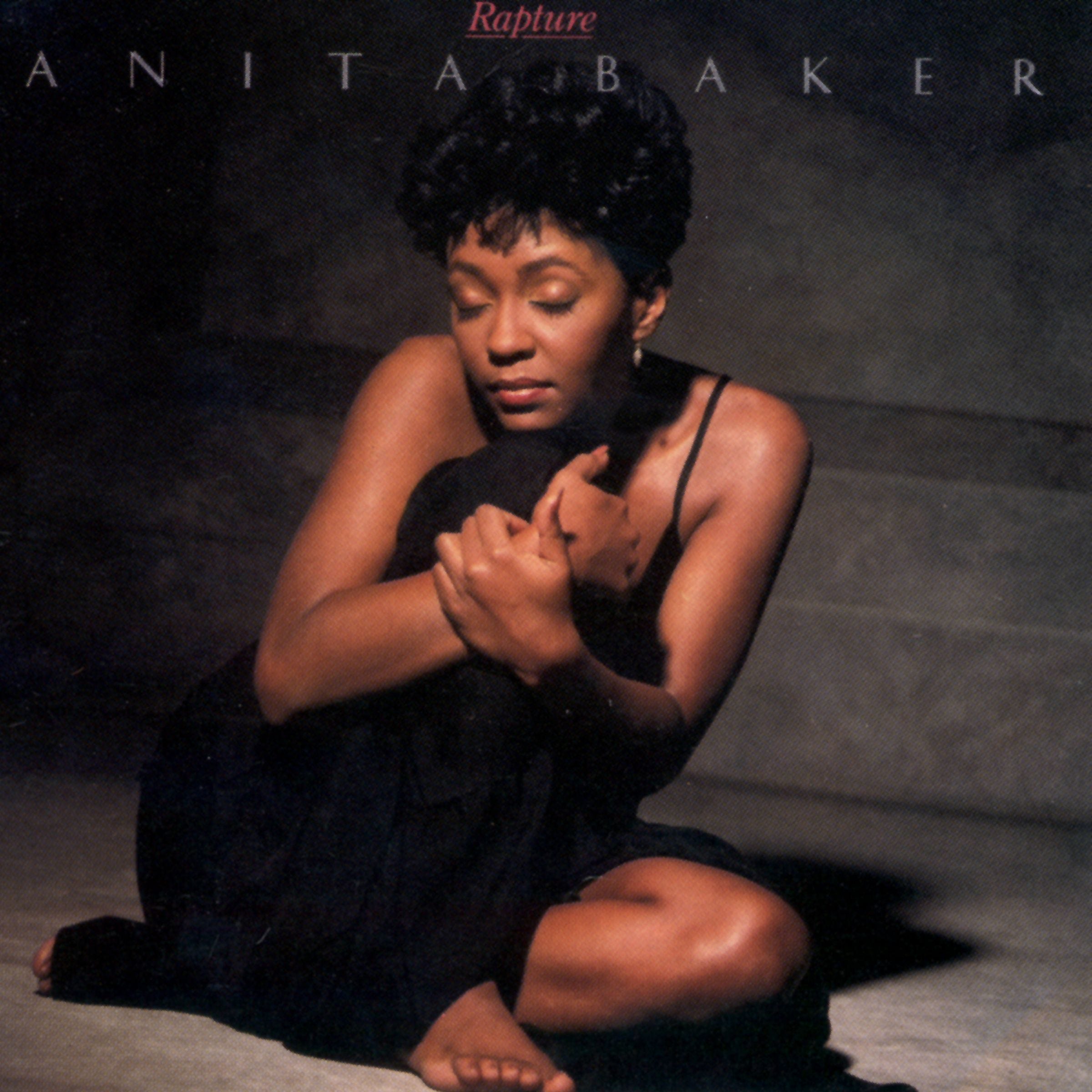
R&B singers who wanted hits during this era had two reliable paths. They could chase Whitney Houston into the pop stratosphere, belting anthems with aerobic choreography and reverb thick as paint. Or they could hand their careers to Jimmy Jam and Terry Lewis, whose Minneapolis machine had turned Janet Jackson into a hitmaker and given the whole genre a colder, more syncopated pulse. Both approaches worked. Both rewarded volume and velocity. And both left a lot of people behind, particularly listeners who wanted to hear a singer in a room, not a singer competing with a room. The kind of R&B that Smokey Robinson and the Isley Brothers had been making for late-night radio since the seventies had been getting steadily crowded out. Quiet storm programming still existed, but it was running on fumes, playing records that already felt like reruns.
In Detroit, a twenty-eight-year-old named Anita Baker was filing paperwork at a law office and occasionally wondering whether her singing career was finished. She’d spent the late seventies fronting a local funk band called Chapter 8, touring the Midwest until they landed a deal with Ariola Records in 1979. When Arista bought Ariola, the label dropped the group and specifically told Baker she lacked “star potential.” She went home and waitressed, then took a receptionist job at a Detroit law firm. A former Ariola associate named Otis Smith eventually persuaded her to record a solo album for his small Beverly Glen label, matching her receptionist salary and dangling a car she never received. The Songstress sold around 150,000 copies in 1983, enough to build a following through word of mouth, not enough to change her tax bracket. Baker never collected a royalty check. When Elektra offered her a real contract with creative control, Beverly Glen sued to block the release of her second album. Baker spent months shuttling between the courtroom and the studio, recording at night what she couldn’t protect during the day. A judge ruled in her favor on March 19, 1986. Rapture came out the next morning.
She named herself executive producer—unusual for a singer on her second album, unheard of for one with no commercial leverage. She hired her old Chapter 8 bandmate, Michael J. Powell, to produce seven of the eight songs. She told interviewers she wanted “fireside love songs,” with jazz, blues, and gospel overtones, and she meant it literally. She wanted an album you could put on after work, start to finish, without hitting skip. Elektra executives had pushed for bigger-name producers; Baker refused. The recording budget was modest. The ambitions were specific and narrow and entirely her own.
Baker co-wrote two of the eight songs. One of them, “Sweet Love,” became the biggest hit. She wrote it with bassist Louis A. Johnson and saxophonist Gary Bias, and the three of them stripped the lyrics down to almost nothing. She loves somebody, she wants them to stay, she’ll be everything they need. No cleverness. No double meanings. Her contralto sits low to the point of being physical, and when she lands on “stay with me,” it doesn’t scan as a plea or a performance. It sounds like somebody talking to one person in a room, after everyone else has gone home. “You Bring Me Joy” works from the same impulse—gratitude, relief, the particular happiness of being with somebody who keeps showing up, but Baker pushes the word “joy” into a bent-upward note with a gospel singer’s conviction, and the song tilts from romantic into devotional. These first two tracks tell you everything Rapture is going to do. It is going to talk about being in love, wanting love, holding love, and fearing the loss of love. If you need more range than that, this record has nothing for you. If that’s enough, it has everything.
The album’s emotional palette is narrow on purpose, but Baker moves through different registers of wanting without repeating herself. “Caught Up in the Rapture” is about being overwhelmed, not grateful, not settled, but knocked sideways by devotion she can’t quite control. She stretches “rapture of love” across the beat like she’s physically reluctant to release the phrase, and it’s one of the few moments where she comes across as off-balance rather than sure. “Been So Long,” by contrast, opens with a demand. Baker won’t be neglected, won’t be denied. Where the earlier songs ask somebody to stay, this one tells somebody they owe her their presence. The bluntness surprised people in 1986. Baker’s public image was all elegance and restraint, but “Been So Long” is about sexual frustration and the anger that comes with being kept waiting, and she doesn’t pretty it up.
Rod Temperton, who’d written “Thriller” and “Off the Wall” for Michael Jackson, contributed “Mystery,” and his lyric sits in a completely different emotional place than anything else here. Baker is turning over old memories, chasing the residue of a relationship that may have ended without her consent. There’s no resolution. The song just stays in the uncertainty, and Baker’s singing drops to its warmest, lowest register to match. “No One in the World,” the only track produced by someone other than Powell (handled instead by Gary Skardina and Marti Sharron), pulls yet another kind of sadness. Baker is looking backward at shared happiness, measuring it against a present that doesn’t compare, and the question running under the whole thing is whether what she lost can come back. Sharron and Ken Hirsch wrote a tighter pop melody than the rest of the album, and for about thirty seconds Baker feels like a visitor on her own record before her voice overtakes the arrangement.
Every album that runs eight songs deep needs all eight to hold. “Watch Your Step” doesn’t quite. Baker wrote it herself, and the lyric is a warning to a man whose capacity for damage she already knows. Fair enough. But the melody slides by without catching, and Baker carries herself like she’s going through professional motions on a song that needed her to be angry or frightened or at least annoyed. She’s too sturdy for the material. It’s the one moment where the album’s tightness works against it—at thirty-seven minutes, there’s nowhere for a weaker song to hide.
The eight-song, thirty-seven-minute runtime helps. Nothing wears out. Nelson George coined the term “retronuevo” to describe what Baker was doing, reaching backward into jazz, blues, and seventies soul while never playing like a nostalgia act. He wrote that Baker “made music for assimilated Black Americans” whose taste didn’t need to be “the musical equivalent of a Big Mac.” That’s condescending in its own way, but George was trying to name something real: Rapture sold five million copies in the U.S. by asking nothing of pop trends. It crossed over to Adult Contemporary and Top 40 radio without a single concession.
There’s a moment on “Same Ole Love (365 Days a Year)” where Baker is flipping through the history of a long relationship—fights, good nights, the accumulated weight of years spent with one person—and she arrives at something that doesn’t sound like a grand romantic declaration. She’s choosing to stay. Not because the love is new or electric, but because it’s been tested, and it held. “From beginning to end, 365 days of the year, I want your same ole love,” she sings, and the word “same” does all the work. She’s not pledging passion. She’s pledging the ordinary. The band loosens underneath her, Baker gets a little playful with the phrasing, and the song ends with her sounding like a woman who just settled a question she’d been turning over for a long time.
Standout (★★★★½)
Also read this gem below by David Nathan: Soul Ambassador.
