

Milestones: Ridin’ Dirty by UGK
Jive Records put out UGK’s third album without a video, a single, or a press plan, and it went gold on word of mouth anyway.
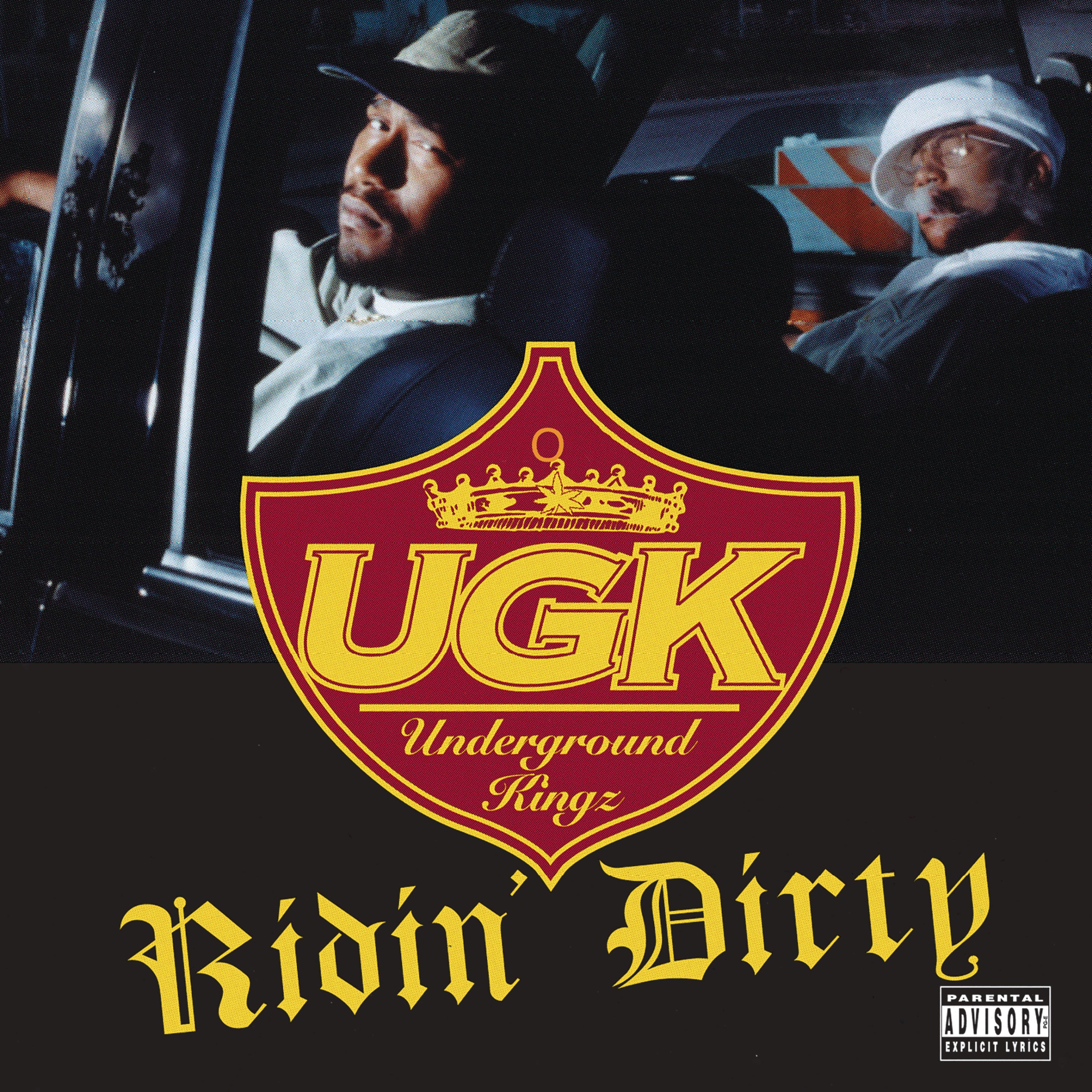
The Gulf Coast of Texas runs on refineries and flare stacks and corroded air, and the music that emerges from it is always a response to how to live in the body that has been given to the artist. Port Arthur is one of those towns, ninety miles east of Houston, in a lake that used to be a lake, under the haze from the petrochemical plants that settle on every object you own. Janis Joplin came from Port Arthur, was unhappy there, and left; two boys from Lincoln High did not leave and made music together there. Chad Butler and Bernard Freeman had been recording as a team since the late 1980s, and in July of 1996, after a four-year battle against a New York-based label that signed them without considering anything about them, they released the album that every Texas and Louisiana rapper since has listened to to learn what their regional album sounds like when it refuses to ask for permission.
UGK’s contract with Jive Records lasted four years before either side got what they wanted. They signed in 1992, and all throughout the contract the company had been making replacements for cleared samples and insisting on radio edits, and Pimp had been told that the tempo was too slow and the hi-hats not bright enough and the project as a whole was too difficult to sell to a New York sales meeting. After three albums, the two sides finally reached a deal I have never seen anywhere else on a major-label rap contract from the ‘90s. Jive agreed to release the album without videos, singles, radio play, or magazine reviews. UGK gave the company something nobody in A&R had any business releasing to the public. The label believed they were washing their hands of the project, and what they agreed to do was release the finest album to emerge from their Southern branch, and continue in their New York offices as if nothing had happened. 850,000 records sold, word of mouth, one at a time, trunkloads from Beaumont to Jackson.
The first voice on Ridin’ Dirty belongs to Smoke D, who at the time was serving time in a Mississippi prison for manslaughter and drug trafficking charges. He grew up with the group in Port Arthur, and somehow he managed to get a portable DAT recorder during his recreational hours—Bun explained in an interview on Sama’an Ashrawi’s The Nostalgia Mixtape that he smuggled it in there—and record his account of prison life in Mississippi in his own words. The cassettes went to Texas, and Pimp C played them in his car between recording sessions until he realized that he had to put those tapes on the record. Smoke D introduces the LP and closes it. He raps under Bun B’s sixteen bars on “Hi-Life.” Nearly a third of the running time on Ridin’ Dirty consists of the prison monologues Smoke D recorded in Parchman State, Mississippi, and the two rappers wrote their verses around him because he had become part of their music before they even wrote a lyric.
After that intro, the first song interpolates “Ain’t I Been Good to You” by the Isley Brothers, and the original is a guitar crying for something that has no reason yet. 3-2, Pimp C, and Bun B take their verses on mortality (3-2 goes first). He asks to be buried next to a convenience store in his neighborhood called Come N Go, so that wherever his spirit may end up will be near the curb he grew up walking on. There is no metaphor in the request; he is telling you where to bury his body. Ronnie Spencer performs the hook with a voice Ronald Isley might recognize. Pimp C lost the son of a close friend in a Dallas house fire the same week he was writing his verse, and he never pretended the writing helped him with it. Bun B grieves a friend he saw shot in a dice game. Four different men express grief openly on “One Day,” 3-2, Pimp C, Bun B, and Ronnie Spencer on the hook, and it appears second on the LP only because somebody had to open it.
Pimp C’s mother, Weslyn Monroe, also known as Mama Wes, was a singer, and she bought him his first keyboard. He produced almost all of Ridin’ Dirty himself. Before that, two UGK LPs, Jive had told him the beats were too slow, the samples would not clear, and the radio needed faster drums. He refused to make his songs faster and created the slowest rap album in 1996 and released it on a major label. The beats on Ridin’ Dirty sit closer to a drag than a standard rap beat, hovering somewhere in the space that would soon belong to DJ Screw and the whole city of Houston. He disassembled his samples and reassembled them slower, added live instruments, built beds of Rhodes and guitars above the original bassline. Pimp C would name Dr. Dre and DJ Quik as his influences in interviews in the following decade, not Pete Rock or Primo. He wanted a rap LP that sounded like a Southern soul LP by mistake—a Southern soul LP that had accidentally fallen into the hands of a rap producer—and he walked out of the studio with it.
Slab culture in Port Arthur and Houston was candy paint covering wood grain dashboards, pinky rings and gold fronts, oversized chrome rims in a year when no one outside the city owned them yet. Pimp C describes what he owns on “Diamonds & Wood,” and his verse slips sideways halfway through a line into the home, where his son’s mother is waiting for him. He raps about the inside of his car and his son’s mother in the same breath, and neither is higher in the hierarchy than the other. Possession of the slab and loss of the woman he loves happen in one trip, in one seat, and you cannot divide them. Bootsy Collins’ bassline slides underneath the song until it is crawling on its belly. Pimp C delivered the best soul ballad that doubles as a braggadocio in rap.
People who know of UGK most likely remember them for “International Players Anthem.” Bun B’s verse on “Hi-Life” makes it a problem. Smoke D begins the track from his prison cell. Pimp C raps about the storefront pastors pulling up in a brand new car and asking why your tithe is light. Bun B steps onto the mic and tells you, in his own words, what was inside the pantry of a poor household in Port Arthur in 1996. It was ramen noodles and Spam and beef jerky when the rent money had consumed the grocery budget; turkey and ham were a step up. An empty table and a hustle for that table were one step away from him and all the men he knew, and most of them had taken that step. Bun B describes the details of his and his friends’ life in sixteen lines and leaves the verse where he wrote it.
Call “Murder” a posture move if you want, and “Touched” the same, and “That’s Why I Carry” the same again, and you’ll notice that the word doesn’t apply. The rhyming density on Bun B’s “Murder” verse breaks the ceiling he has been building in his entire career, rhymes turning on themselves until a line that started as a boast ends up finishing its journey in a repeat of its starting consonant. In “Touched,” he tells you what he will do to the person who touched one of his people, and he doesn’t ease the material in order to keep you entertained. “That’s Why I Carry” raises the question most songs of that kind skip, and then answers it literally, with a line-by-line account of what had happened to Pimp C and Bun B in Port Arthur, and the specific reasons why the next attempt will not finish any differently from the others.
Three o’clock in the morning on a Texas highway. Pimp C uses that hour twice in Ridin’ Dirty; the second time on the title track. “3 In the Mornin’” is a nocturne, the windows rolled down and someone awake that should be asleep, the knowledge that whoever else is up at that hour is there for the same reason you are. On the title track, the paranoia shifts from ambient to specific; the contraband in the vehicle is no longer hypothetical, and Pimp C and Bun B narrate an experience every black driver in Texas has gone through in 1996 every time a reflection of the police car appeared in his rearview mirror. On the title track, they describe the situation in detail, from the moment he sees the reflection of the headlights to the thirty-second adjustment period before he rolls the window down.
I write this in California almost thirty years after Ridin’ Dirty was released. 3-2 says something on “One Day” that stuck with me—”gas station.” That made an impression on me the first time I heard it. I am not from Port Arthur, and I have never been there. The closest thing I can call my Come N Go is a 7-Eleven corner that nobody will ever use as a song title. Who would? But that is how songs travel—you name the actual corner. He asks for proximity to the storefront that already belonged to him, and there is nothing closer to devotion than asking to be buried in the dust of the place. You can love the town where the refinery flares illuminate your backyard at night, and you can still love it if no magazine feature knows what to do with the place and its people. Most music that has emerged from these towns is the music of the people who decided to stay there.
The last eight minutes on Ridin’ Dirty are Smoke D closing the door he opened before. Then Pimp C takes “Diamonds & Wood” instrumental, slows it even more, leaves the wah-wah guitar playing under him, and shouts out his block, his crew, Mama Wes, and everyone who has talked in the prison monologues before. It is longer than most of the songs on the record, another LP alongside the first one. He gives the same treatment to a prison monologue and a late-night jam session that “Murder” gets on the LP. Nobody at Jive Records argued against it in the studio. And he never got the chance to close his own LP in that fashion again.
There was no awareness in the rap industry that Ridin’ Dirty was released. No music videos, no singles, no magazine features—there is just one lukewarm review in the December 1996 edition of Vibe; The Source and Rap Pages passed on it completely. But 850,000 records sold one at a time, in trunks, at small record stores from Beaumont to Jackson and back to Houston. Three years later, JAŸ-Z used UGK on “Big Pimpin’,” and the whole nation learned that Pimp C and Bun B are rap artists. Another eight years later, UGK received a Grammy nomination for “International Players Anthem.” In its first decade, Ridin’ Dirty was the best rap album that the New York industry didn’t know about, and in its second decade, it became the best Southern album every rapper under forty would tell anyone about it to go out and buy.
Pimp C died in December of 2007 at the age of thirty-three, from the combination of sleep apnea and a level of codeine that his body couldn’t break down. Bun B has taught a class on religion and rap at Rice University in Houston for a while now, and in the interviews he has been giving about his friend, he keeps repeating that Chad wanted to be remembered as a producer. Chad dismantled old songs to make something new because he loved them. His biggest album was made of Isley Brothers and Fatback Band and whatever Mama Wes left in the house while he grew up in it.
Standout (★★★★½)