

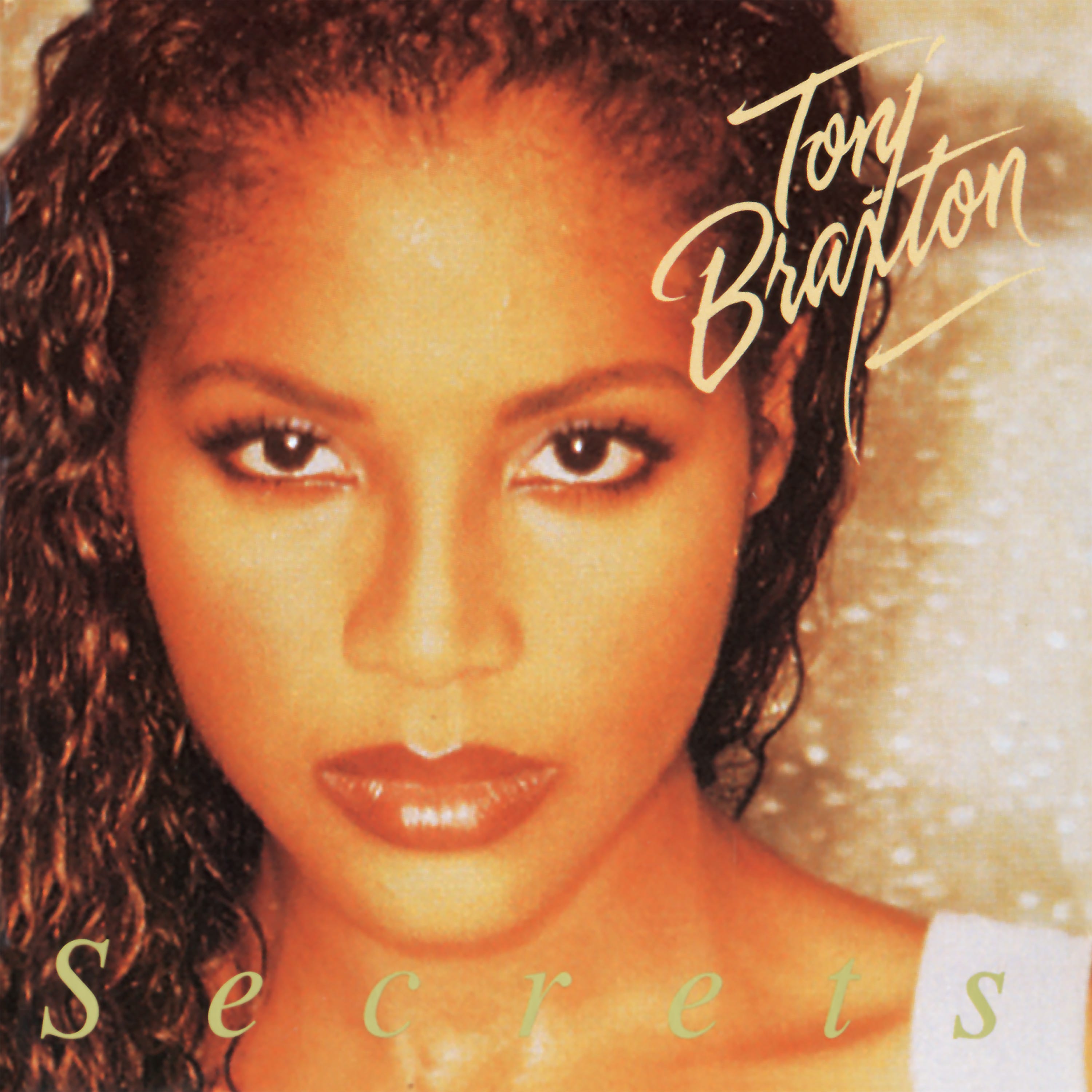
Milestones: Secrets by Toni Braxton
Secrets is a grown woman’s album in a year when R&B was getting younger. Braxton went to Babyface and Diane Warren, and the music has outlasted everything that was supposed to replace it.
Bill Pettaway was at a gas station in Severn, Maryland. When he heard singing. A songwriter, he realized the voice he was hearing, from across the lot, was a sophomore at Bowie State University, majoring in music education. The sophomore had grown up in a strict Methodist home, where her older brother and four sisters, among other musical endeavors, sang in her dad’s church choir; music outside of that context largely had been forbidden in the Braxton house. He’d help the five sisters to Arista Records in 1990 as The Braxtons. The single “Good Life” flopped. But L.A. Reid and Kenneth “Babyface” Edmonds had just launched LaFace Records, an imprint of Arista, and heard something in the oldest Braxton sister that the group could not accommodate. They pulled Toni Braxton out of the act and signed her as a solo artist. She made roughly 33 cents on each album.
Her self-titled debut album, released in July of 1993, would reach number 1 on the Billboard 200 and sell over 10 million copies. “Another Sad Love Song” peaked at number 7 on the Hot 100. “Breathe Again” was a number 4 hit. 3 Grammys came soon after one another, for best new artist and best female R&B vocal performance for two years in a row. In between albums, Babyface penned and produced “Let It Flow” for the Waiting to Exhale soundtrack, a song in which Braxton expresses her sense of empowerment in ending a relationship: “I gotta let it go/And just let it flow.” But, by 1996, Brandy and Monica, both still in high school, were singing over hip-hop beats about high school breakups, and Aaliyah, just out of her teens after leaving R. Kelly’s control, had started collaborating with Timbaland and Missy Elliott. Braxton was 28 and had no interest in catching up.
Instead, she ran away from the pack. For her follow-up, Secrets, she tapped Diane Warren, who had been working with Celine Dion and Michael Bolton throughout the 90’s, and brought on David Foster as producer, all while keeping Babyface to write and produce the bulk of the songs on the record, which would be cut at studios in Atlanta, Hollywood, Beverly Hills, New York, and Miami Beach. Also appearing was R. Kelly (hate to keep mentioning him), who penned “I Don’t Want To” and performed every instrument on the track.
But the credits don’t lie. Babyface co-wrote a single song on Secrets, “How Could an Angel Break My Heart” and wrote the rest of the album FOR her, from Diane Warren’s “Un-Break My Heart” and Andrea Martin and Gloria Stewart’s “I Love Me Some Him” and Tony Rich’s “Come On Over Here,” to Jon B and Babyface’s co-write of “In the Late of Night” and Keith Crouch’s production of “Talking in His Sleep,” which was based on an actual occurrence of Braxton’s-a boyfriend in his sleep calling out the name of another woman as she lies beside him; it’s too bizarre and painful to be the work of fiction.
All of the songs on Secrets were about a man: there were songs about wanting a man (“Come On Over Here,” “You’re Makin’ Me High”), losing a man (“Un-Break My Heart,” “Let It Flow,” “Why Should I Care”), being cheated on by a man (“Talking in His Sleep,” “How Could an Angel Break My Heart”) and about wanting a man you know is bad for you (“I Don’t Want To”). “Find Me a Man” is exactly what the title promises. “I Love Me Some Him” is a declaration of want so profound that she herself admits other people just don’t get it, and she doesn’t even care. “There’s No Me Without You,” says she, literally can’t function if the men in her life are gone. Braxton, daughter of a minister in small-town Severn, Maryland; late bloomer who sneaked into watching Soul Train in her youth.
Braxton was finished with being the Sad Song Queen. “You’re Makin’ Me High” was her clear declaration of her change. This song was about a daydream of, and physical desire for, someone; so much so that she couldn’t eat or sleep. “Aren’t we going a little left here?” she’d asked Babyface, who’d co-written and co-produced the song with Groove Theory’s Bryce Wilson, whose distinctive stamp is everywhere on this track, riding the similar mid-tempo beat from his group’s 1995 hit single Tell Me. “I didn’t want people thinking ‘Why is she always so sad?’” Braxton had told Essence (May 1996 issue that was photographed by Dorothy Low for Toni’s Second Take). “It seems like sadness is a working formula for me, but I don’t want to say the same things over and over.” The music video was also proof. With Vivica A. Fox and Tisha Campbell, Braxton in her one white catsuit and mullet, evaluated a number of male contenders in a high-rise suite; it would become her first #1 hit on both the Hot 100 and the R&B charts.
Clive Davis threatened to pull Secrets unless Braxton recorded “Un-Break My Heart.” She worried it would be a step backwards. David Foster produced, and Simon Franglen programmed the Synclavier. Babyface agreed with Warren to keep the key lower for Braxton. Shanice Wilson supplied background vocals on this song about begging a lover to come back to reverse the pain and the tears and the harsh words, a pure-formal writing effort for Warren, “The nights are so unkind/Come back and bring back my smile.” “Un-Break My Heart” was a huge hit, hitting the top spot on the Hot 100 for 11 weeks and on the adult contemporary chart for 14 weeks.
On “Why Should I Care,” Braxton poses the basic question of why bother caring about someone who is not reciprocally giving you love? “I was afraid you’d break my heart in two/Fate would have it that you broke it anyway,” she sings over a subdued electric guitar. Greg Phillinganes performed piano and Rhodes on many of the Babyface-produced sessions; Nathan East played bass. Kenny G played saxophone on “How Could an Angel Break My Heart” and “In the Late of Night” to keep the songs in a mellow key. The most divergent song here was written, produced, and all instruments were performed by Robert: “I Don’t Want To” is about longing for someone whom you know is bad news, and you don’t want to long for this person, you don’t want to need them, and you don’t want to want them. Kelly’s song was a success, charting at number #20 on the Hot 100 and at number 10 on the R&B chart.
Soulshock & Karlin, the Danish producers behind CeCe Peniston’s “I’m in the Mood” and Monica’s “Before You Walk Out of My Life,” worked on “I Love Me Some Him,” co-written and with background vocals by Andrea Martin, as well as Gloria Stewart. Braxton professes that she totally loves the man that the song is dedicated to, and people who don’t understand don’t need to; they don’t need to get it. Tony Rich, the LaFace artist/singer-songwriter who topped the Hot 100 at #2 with “Nobody Knows” in 1995, co-produced with L.A. Reid and played all of the instruments on “Come On Over Here,” a song that tells a lover to stop playing and come to her, and starts off the album with a mid-tempo bounce that she hadn’t been previously known for.
She preached to her friends not to just get fixated on “Find Me a Man.” (Line “I’m just a girl that doesn’t like the thought of being alone” verges on a rom-com cliche). “There’s No Me Without You” is the stiffest of the Babyface ballads, melodically unimaginative from the first note. A well-written pre-chorus salvages it: “You told me everything would be fine/Then why am I losing my mind?/How come I feel like a fool?/Why do I keep losing you?/Why do I love in despair/When you’re not there?” They’re questions someone would type into a phone at 2 am, talking to herself more than a lover or a friend. Kenny G comes wailing on “How Could an Angel Break My Heart,” a song which anchors it to a time and a musical sensibility that has not aged well. Jon B and Babyface co-wrote the late-night lament “In the Late of Night,” which is about exactly what its title says it’s about.
A year after Secrets went platinum, Braxton filed suit against LaFace and its parent company Arista, citing a California labor law prohibiting personal service contracts over seven years in length. LaFace responded by filing a suit against her for breach of contract. In January 1998, Braxton filed for Chapter 7 bankruptcy with debts totaling approximately $5 million. The financial realities behind it were astounding. Secrets and the album that preceded it had earned Arista and LaFace an estimated $170 to $188 million dollars; Braxton had earned just under $2,000 in royalties between the two LPs, losing publishing on 27 of her most popular tunes, including all but one on Secrets. She was barred from public discussion of the settlement for ten years. Later that year, Braxton went on Oprah and was berated for her spending habits. (Winfrey explained it plainly to the audience: “Nobody can believe that you’re gonna be broke. Is that true? That you’re gonna be B-R-O-K-E broke? Like broke?”). The public narrative that year was clear: she had spent it all, and it was her fault.
She did go back to LaFace to record The Heat (2000), which earned much less than Secrets but gave her the #2 single on the Hot 100 with “He Wasn’t Man Enough.” Her Blackground Records debut, Libra, came in 2005, then it was onto Atlantic for Pulse (2010) and Sex and Cigarettes (2018). She filed for bankruptcy a second time in 2010 after a Las Vegas residency financed with her own money at the Flamingo, which had to be shut down for health reasons brought on by her Lupus. (Prince had been on the phone with her after the first bankruptcy to give advice. They had stayed in touch). Babyface would later explain on The Touré Show podcast that the contract had been unfair: “I was put in an awkward position.” The LaFace settlement came out to over $20 million dollars. In 2014, Braxton published her memoir, titled Unbreak My Heart.
Standout (★★★★½)
I wore this album out back in the day. “Talking in His Sleep” highlights what’s so amazing about her vocals and adlibs, the storytelling elevating something campy into an everlasting deep cut