

Milestones: Songs In A Minor by Alicia Keys
Alicia Keys left Columbia at sixteen and bet her career on a piano. Nothing else in 2001 R&B sounded like it.
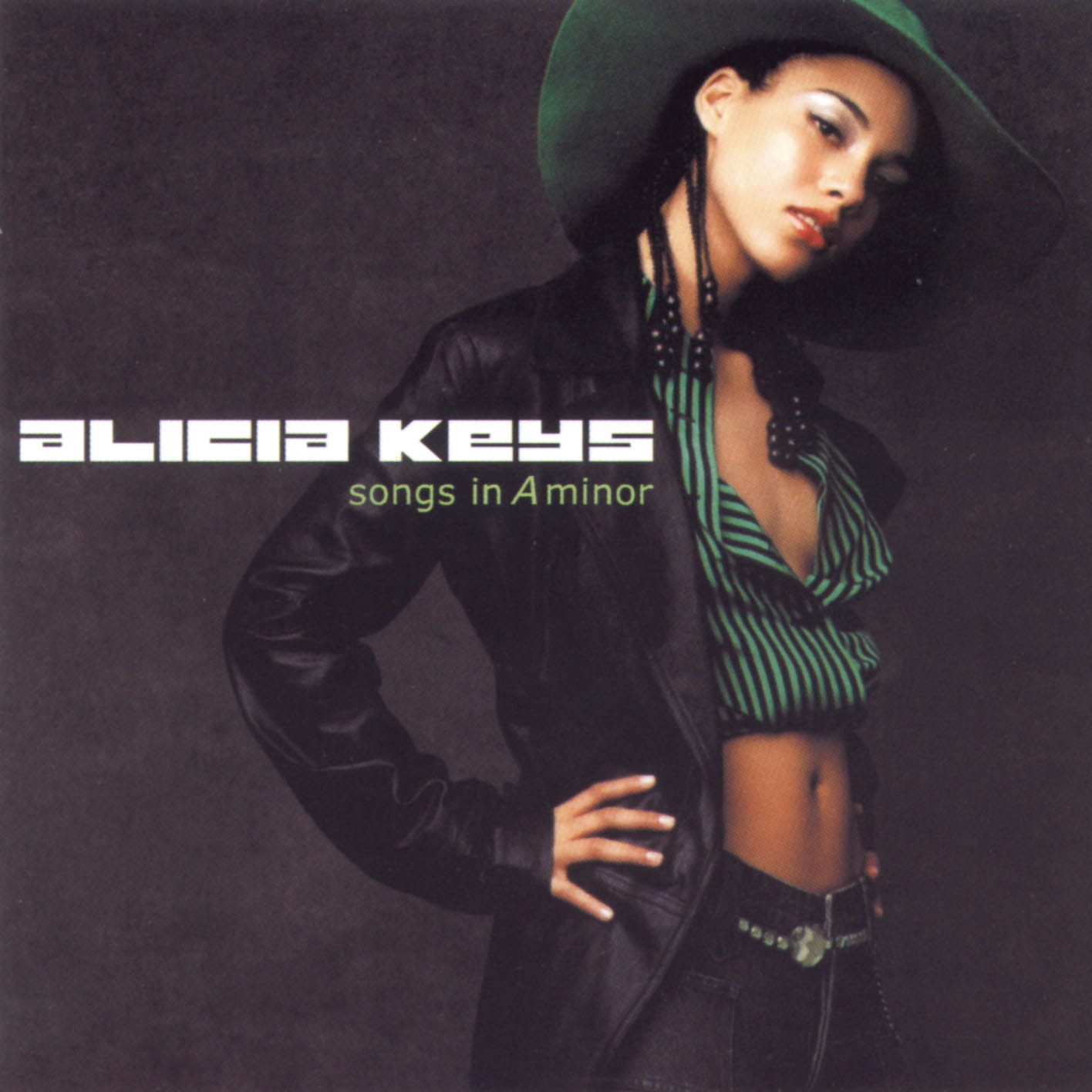
Columbia Records, in 1998, signed a fourteen-year-old classical pianist from Hell’s Kitchen and didn’t know what to do with her. They hired producers who had nothing to do with her sound. Alicia Keys ended up with two years of fruitless sessions as a “hard, depressing, frustrating time.” Keys wanted to write and arrange and play the piano on her own songs, while Columbia wanted pop/R&B in a pre-approved, commercially exploitable packaging. She was Alicia Keys, and was sixteen when she fired Columbia, followed by a man who signed Janis Joplin, Bruce Springsteen and Whitney Houston, the right career man. It was Clive Davis.
When he was bounced out of Arista and put together J Records from zero, Keys was among the first signings, among his very first, who gave her the autonomy Columbia denied her, the approval to self-produce. But Davis’s smarter play was orchestrating Keys, Jill Scott, and India.Arie to sing together on Oprah. Songs In A Minor doubled its pre-orders almost instantly. Keys then went on tour with Maxwell from August through October of 2001; with Davis since the sixties managing and operating the machine, all of the commercial architecture of a blockbuster album was already in place, before most of her listeners even recognized her.
Keys figured out how to produce the songs by asking the engineers endless questions during the frustrating, failed sessions, so that when she and Kerry “Krucial” Brothers started work on a studio in Rosedale, Queens, she understood how to build a song, top down, from the piano out. Keys wrote most of the lyrics, she played nearly all of the piano and oversaw the arrangements. She co-produced “Girlfriend” with Jermaine Dupri and “Jane Doe” with Kandi Burruss. Warryn Campbell co-produced another track. Beyond those, and aside from Brothers, no other significant producers had anything to do with the Songs in A Minor album, which she had started recording while under contract at Columbia; the two spent three years in different settings trying out thirty-two songs before getting to the album’s sixteen-track mix. The one song which made her realize the whole endeavor might actually be a success was the fifth track, “Troubles.” “Finally, I knew how to structure my feelings into something that made sense.” Stevie Wonder, back in 1972, was the last in major-label R&B to do anything resembling this.
Songs In A Minor kicks off with “Piano & I,” a solo piano song, no drums, no production, no vocals for a solid minute. Keys plays a phrase from Beethoven’s “Moonlight Sonata,” segues into an original, then the drums enter, and she says: “I don’t know that I’m here, but do you know my name?” In the summer of 2001, R&B was Timbaland’s stutter-beat syncopation and Rodney Jerkins’s over-the-top production; Aaliyah’s self-titled album, as well as Usher’s 8701, arrived on shelves that same season, all crowded with guests and heavy studio effects. Keys, on the other hand, started hers with nothing but a piano and an empty room.
Keys’s biggest hit is a song about falling for and breaking up with someone who she knows is wrong for her, and it does it with a piano riff so ineradicable that it is synonymous with the entire song. “Fallin’” spent six weeks atop the Hot 100 and was one of the last pieces recorded for the project. Simon Cowell eventually banned the song from being sung by contestants on American Idol, which, in turn, is either a very high compliment or the end result of a song becoming ubiquitous. “A Woman’s Worth” is pretty cut and dry as far as conditions go: You treat me well, and I’m yours, or you don’t, and I’m not. It was an “I don’t know what else to do with this” “oh my golly you know you worth it,” L’Oréal catchphrase that would turn out to be the origin of what would eventually become one of the 2000s decade’s most powerful feminist pop anthems. “Butterflyz,” as stated before, was written at age 14, and is the feeling you get right before anything happens, nothing happens, you’re just all amped up and ready. You can tell the song was written by a teenager.
“Joy is what you bring
I wanna give you everything.”
Prince, always known for being fiercely protective of his music, invited the 19-year-old Keys up to Paisley Park to do her rendition of “How Come U Don’t Call Me Anymore” in front of his closest peers. He said it was allowed. She would then later record the song without backup, stripped to piano and her voice, and its centering query felt far more plaintive minus Prince’s funky cushion. Keys allowed the raw feeling to sit there. Prince had spent the last ten years litigating unauthorized versions of his work. Prince’s permission slip to a nobody nobody outside of Clive Davis knew is worth far more than any amount of J Records advertising.
Keys was being marketed as a child prodigy in the tabloids, yet “Girlfriend,” a track she produced with Dupri, finds her delivering the lyrics to a man who’s already in another relationship. It’s flirty and feisty with just enough of a hint of meanness for fans. In “Jane Doe,” which she co-produced with Burruss, Keys is spitting straight fire at her love rival. Both tracks have a possessive edge that belies the image of Keys as a classical composer playing piano and a Beethoven-quoting pianist. The intensity of her piano playing on “Girlfriend” and “Jane Doe” elevates them above the genre clichés that haunted early 2000s R&B.
While JAŸ-Z and Destiny’s Child were releasing the mega-hit albums The Blueprint and Survivor that year, a young twenty-year-old was topping the Billboard 200 chart without any guest artists or producers from the elite list of 2000s hits producers. And her main instrument of choice was a piano. Her debut album, Songs In A Minor, sold a whopping 236,000 copies in its first week. And that year, the 44th Annual Grammy Awards saw Keys snag 5 awards. She picked up Song of the Year (”Fallin’”), Best New Artist, Best R&B Album, Best R&B Song, and Best Female R&B Vocal Performance. She ties Ms. Lauryn Hill’s record for the most Grammys for a female artist in one night. It has since reached 7x platinum in the States and has sold over 12 million records worldwide. While the music business was drowning itself in late ‘90s digital production and generic, committee-driven songs, the music-listening world chose Keys.
It’s not easy to talk about socioeconomic ambition or individual liberties without resorting to generalization. That’s why Keys doesn’t really know what she’s talking about in her song “The Life,” where she talks about her dreams of a better tomorrow without pinpointing the specifics of her unsatisfactory current life. “Mr. Man” has Jimmy Cozier exchanging a back-and-forth of verses with Keys. The duo trade lines about each other in a playful exchange not found in her solo tracks. “Why Do I Feel So Sad?” is a poignant ballad where Keys wonders why the pang of grief follows a relationship that she wanted to end. And, fittingly, she has no answer to that profound question. Warryn Campbell collaborated with Keys to produce the track, which deliberately sits in that confusing space.
Keys tucked in one of the most autobiographical songs on the album at number fifteen. “Caged Bird” draws on a metaphor from Maya Angelou—a singing bird that has no reason to vocalize: it’s confined. Keys penned the song during her Columbia years, when she was bound at sixteen by a contract to an album everyone at the label believed in. “Lovin’ U,” that song closes out the album on the softest note: “If I gave you forever, would you take care of me?” Keys was twenty. She had spent six years fighting record companies to have the right to play her own instrument on her own songs.
In 2011, on the tenth anniversary of Songs In A Minor, Keys performed the entire album front to back at Joe’s Pub in New York, stripped down in a small room, just the songs and the piano. She didn’t release the recordings until years later, before uploading them to YouTube. In 2022, the Library of Congress inducted the album into the National Recording Registry. “Joe’s Pub is where it all began,” Keys wrote to her 22.8 million followers on Instagram that year. The piano is still the first sound you’ll hear.
Standout (★★★★½)