

Milestones: Sparkle by Aretha Franklin
A man wrote every word and a woman made all of it hers. The best Aretha Franklin album in years almost didn’t survive the sessions.
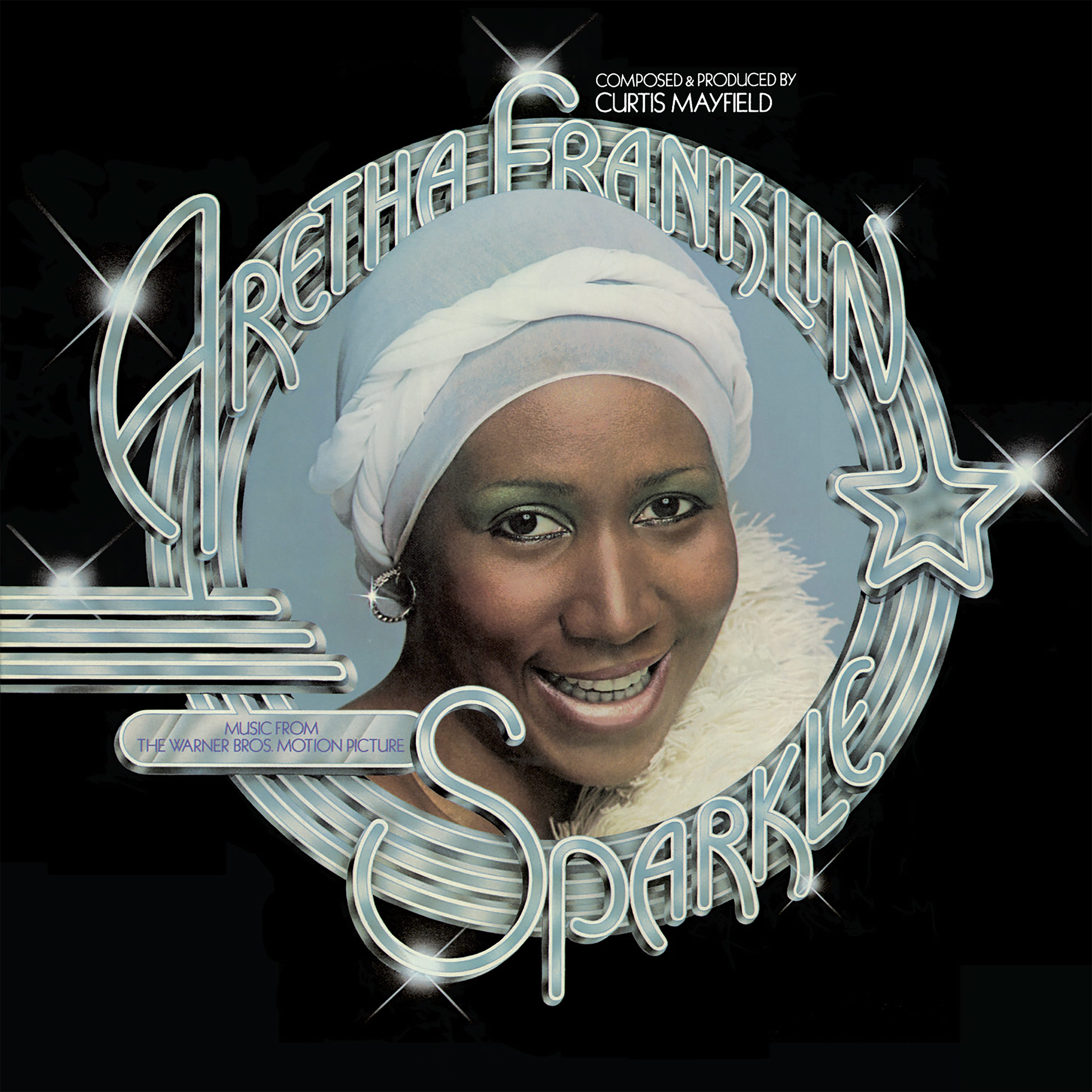
Three consecutive albums had gone nowhere. Quincy Jones produced one in 1973 and it bombed. A follow-up stalled at #57 on the pop charts. The album after that, You, crawled to #83 and vanished. No top-40 pop singles from any of them, no Gold certifications since 1972. Her longtime producer Jerry Wexler was about to leave Atlantic entirely. She’d been hospitalized for what the press called “acute physical exhaustion,” which people close to her described as something worse. Aretha Franklin still had the title, but by 1976 the commercial ground beneath it had been crumbling for years, and the women coming up behind her (Chaka Khan, Natalie Cole, Deniece Williams) weren’t waiting around.
Curtis Mayfield had spent the first half of the ‘70s scoring films for other people’s voices. Super Fly, Claudine, Let’s Do It Again. Each one a hit, each one proof that the man who’d written “People Get Ready” and “Keep On Pushing” could bend his pen to fit whatever story you gave him. But those soundtracks had him writing about the street, about welfare, about community. For Sparkle, the 1976 Warner Bros. picture about three singing sisters from Harlem, he had to write love songs, and he had to write them from a woman’s mouth. Mayfield told Billboard the material was based on “how I thought a woman might feel when she was to love a man.” That’s a weird, clumsy sentence, and maybe the clumsiness is honest—he wasn’t pretending to have cracked some code. Just guessing. But his guesses fell on a singer who didn’t need to guess about any of it, and what she did with those guesses was take complete ownership.
The songs were supposed to go to somebody else. Carolyn Franklin, Aretha’s younger sister who’d written “Ain’t No Way” and “Angel,” told David Ritz for his biography Respect that she and Mayfield had planned to cut the Sparkle material together, but Aretha stepped in. “It’s hard for me to talk about it now,” Carolyn said. Her own album, If You Want Me, came out the same year, went nowhere, and RCA dropped her. She never made another one. Lonette McKee, who’d sung the parts in the film and hoped the soundtrack would jumpstart her music career, got pushed aside too. There’s no clean version of this story.
On “Something He Can Feel,” Franklin gives her man is physical and real and nobody else’s opinion of it matters. “Living in a world of ghetto life/Everyone is so uptight/But nothing’s wrong, it’s alright, my man.” A simple assertion, almost stubborn in how plainly it states itself. Franklin stretches the song past six minutes, and the back half is all vamp—her voice climbing, ad-libbing, pushing further into the feeling with each pass. Mayfield wanted more of that. Cecil Franklin, Aretha’s brother and manager, recalled to Ritz that she thought she’d nailed it in two takes. Mayfield, gentle but stubborn in his own way, coaxed at least six more out of her. The extra takes are why the ending sounds the way it does. You can hear her finding new corners in a phrase she thought she’d already finished.
Every other track on the album is some shade of romantic devotion, except one. On “I Get High,” the singer wakes up staring at the wreckage of her life—everyone she knew is gone, people keep telling her to settle down and raise a family. Franklin’s voice starts a sentence it won’t finish: “Sister gets... yeah, she do... sister gets...” The word “high” hangs just out of reach, implied but never spoken. She can’t say it. Franklin opens with a scream that could be a church testification or a howl of withdrawal, same pitch, same desperation, and then drops into something quieter, almost conversational, naming the losses one by one. Mayfield later admitted he couldn’t even remember writing it. “I can’t make out the basic lyric or how it makes sense!” he laughed in a 1993 interview. “But it really doesn’t matter because she carries on in such a gospel manner, it’s like a hymn.”
Six of these eight songs are about wanting somebody and saying so. The title track has Franklin promising to keep the fire going, telling her man she’ll give herself over, her voice floating against Rich Tufo’s string arrangement, slow enough for a wedding reception. On “Hooked on Your Love,” she’s bouncier, almost giddy, stretching the word “ree-ee-ling” until it sounds like vertigo. “Look Into Your Heart” is the gentlest thing here, a ballad where she tells her partner (and herself, really) to take stock of what’s good and leave the rest behind. “Loving You Baby” just says I love you and I want to keep loving you, and there’s nothing wrong with that. These aren’t fancy songs. Mayfield wrote them as straightforward declarations, and Franklin takes them that way. They’re all saying more or less the same thing. What changes is how far Franklin lets her voice wander inside that one sentiment.
Congas kick in on “Jump” and the album sheds about forty pounds of emotional weight. Chicken-scratch guitars and a bassline that jogs, and Franklin hollers over the top of it like she just heard her favorite number come on at a cookout. “Rock with Me” follows in the same gear, funkier, more assertive, Franklin with a grin you can hear. Neither one is trying to be anything more than a good time, and on an album heavy with romantic sincerity, they’re the exhale.
The material outlived the film by decades, mostly through hip-hop producers. Ayatollah sampled “I Get High” for Talib Kweli and Mos Def’s “Joy” in 2002, and he’d already pulled from another Aretha cut for Mos Def’s “Ms. Fat Booty” three years before that. En Vogue covered “Something He Can Feel” and “Hooked on Your Love” on Funky Divas in 1992 and took “Something He Can Feel” back to #1 R&B all over again. Whitney Houston sang “Look Into Your Heart” in 1994 and later starred in the 2012 Sparkle remake—her last film.
Sparkle went Gold. It put “Something He Can Feel” at #1 R&B and #28 pop, Franklin’s only pop top-40 single for the rest of the decade. Everything that came after it on Atlantic failed. Sweet Passion, Almighty Fire, La Diva—all commercial dead ends. She left the label in 1979, and Luther Vandross brought her back on Arista with Jump to It in 1982. Sparkle was the last time Franklin went Gold on Atlantic. After it, she never made another album on that label that sounded like the woman who’d sung “Ain’t No Way” and “Angel” and “Day Dreaming” could still walk into somebody else’s songs and own every room.
Great (★★★★☆)
Sparkle is one of my favorite albums. Mayfield was the king of 1970s Black film soundtracks. I know the original cast did record the songs in Mayfield's studio, which was used in the film. Hopefully one day the material will be released as a bonus disc or something.
Young KD wrote a letter to the record company expressing displeasure that the cast album was not released. We performed the songs and moves in the playground, knowing that if young Sparkle's dreams came true, so would ours. While Aretha did a great job and Old KD has the songs on repeat, Sparkle is the story of young women finding their way. Aretha performed the songs as a what she was a confident, mature woman regaling her various suitors.