

Milestones: Stakes Is High by De La Soul
Three albums deep in invented slang and inside jokes, De La Soul dropped the code on their fourth and said plainly what they thought of a culture they loved and no longer recognized.
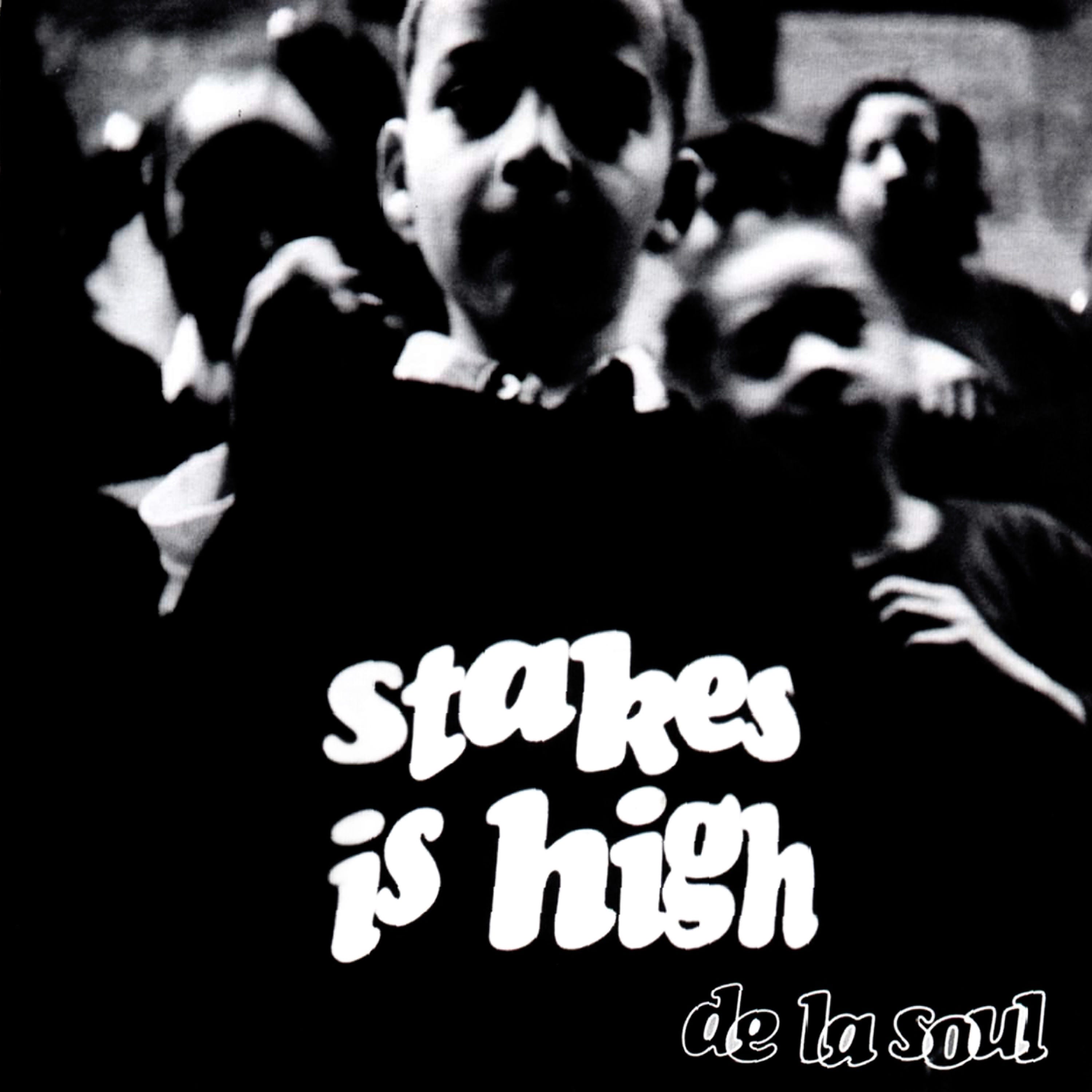
Summer ‘96 was a different era in rap. That was the summer Criminal Minded by Boogie Down Productions was still reverberating, and not just the lyrics but the actual spot you were in the first time you heard it, who you were with, how it made the room move. That kind of shared physical memory had already started to be a rarity, especially on the radio. JAŸ-Z had just dropped Reasonable Doubt, 2Pac’s All Eyez on Me had been everywhere, the Fugees’ The Score was in everyone’s ear, and the sound of New York had recently been reduced to a competition over who had the most—the bricks, the Rolex, the body count. (The stakes of the sound, anyway.)
De La Soul decided to do things a little differently with their fourth album. They put the mic in ordinary people’s hands and told them to remember a feeling. It was the direct opposite of the private-code language of the album preceding this one. That album, Buhloone Mindstate, had gotten so tangled up with its riddles that in retrospect, the group seemed to have felt some shame about it, so they got rid of them. Stakes Is High, for example, was produced without Prince Paul—the member whose involvement since the demo stage had effectively given them four. Apparently, the tracks he turned in just didn’t match the feel they were aiming for. “We being real blatant now,” Mase told Rap Pages as the album came out. “No more symbolism, no more beating around the bush, no more talking over people’s heads in a language we only understand.” For a group whose entire mystique was built on slang codes and inside jokes, that was the wager. Take the plainest thing to say it in plain language, let it land, and trust.
Over a Jay Dee beat he constructed from samples of James Brown’s “Mind Power” and Ahmad Jamal’s “Swahililand,” Dave opens the album title track by ticking off the things he’s had enough of: “Sick of half-ass awards shows, sick of name-brand clothes.” Then, with a little crackle in his voice, he points an accusatory finger at the conceited ones: “Rappers with their necks swollen up.” Pos takes the thing in a darker, colder direction. “Gun control means using both hands in my land,” he raps before proceeding through a few lines about where we live now: “Neighborhoods are now hoods cause nobody’s neighbors/Just animals surviving with that animal behavior.” What’s endured of the track might be its most throwaway line: “It should be illegal to smile now because it’s a front/It is a shame now because love no longer grants you any kind of credit.” (It is the plain-spokenness, more than anything, that makes people pay attention.)
The title track gets peppered with the clang of dice and the broadcast of the O.J. verdict, and that was not an isolated incident. The album can’t stop stuttering—an overheard conversation cutting off a pair of friends’ spat outside a club, a snippet ripped from a documentary on the artist Crumb, the buzz of a late-running craps game. No fragment of these interruptions is a waste; for a group this concerned with rap’s devolution, much of the album is about simply aiming the mic into the world from which the music emerged, the way one might set a tape recorder in a windowsill and leave it to collect.
De La’s home was Amityville—which is, you know, one of the real Black stretches of Long Island, sandwiched between the exodus and the unwelcome suburbs—just near enough to rap’s pulse to worship its reach, far enough to view its whole shape from a different latitude. This perspective makes itself visible in all the group’s most soil-rich cuts. Stakes Is High is flag-planted with “Wonce Again Long Island” and “Long Island Degrees,” and for good measure, there’s a white voice inserted, immediately after the latter song’s conclusion, that acts as a kind of preview of the price of the drive back into the five-o-fives. The sense of clarity arises from the distance of perspective, like the way you recognize a neighborhood’s change only once you’ve returned.
This group, worried about the state of rap, could easily have just sealed itself off, drawn a perimeter. Instead, they were generous in extending an open invite; on multiple occasions, younger MCs got center stage. Common graces “The Bizness,” his every moniker delivered with pride in front of the crowd, reminisces on the time he “lost it in rhyme,” then got it “with the resurrection” two years prior. Mos Def, almost a new name when the album was released, spits verses beside Pos and Dave in “Big Brother Beat,” connecting “manicured lawns to projects bricks/From 718 to the 516,” passing on the torch of Brooklyn to their Long Island origins. These were precisely the MCs the group was afraid hip hop was forgetting, and they all were invited to join in.
Just alone, without Pos and a featured MC for a boost, Dave carries “Itzsoweezee (Hot)” from start to finish, without missing a beat. He free-associates on and off mic, brick-wall dedication to Mos Def, then delivers the joke: that he has fallen in love with a woman who had “burned my scene up like David Koresh.” The hook is an echo of the central thesis of the title track—that love is, somehow, obsolete—and Dave plays it off like, “somebody better change the law.” The video even features Dave in the center of a rapturous group of MCs who spontaneously break into a food fight, which should come as no surprise because how seriously do you think he was taking all this peacocking?
Despite these triumphs, Stakes Is High didn’t quite set off sparks. It dropped during one of rap’s most crowded summers to date—on the same day as Nas’s It Was Written—and its popularity seemed modest next to the dozens of other platinum-selling records vying for space on the shelf. Its harshest criticisms also struck a chord with critics of rap’s shift to material goods; even though he responded critically, Tupac wrote a scathing reply on “Against All Odds,” and Treach of Naughty by Nature was so personally offended that he took his beef with De La for a decade and a half. Robert Christgau, writing a warm review for the Village Voice, characterized the album as a relief over revelation—a judgment which, to be sure, felt about right then. It’s a quiet masterpiece, not a supernova, but still as profound as the stars it was aimed toward. In the wake of commercial success and scathing reviews, relief doesn’t sound thin enough after thirty years to diminish the weight of its message; De La just refused to lie about the world he observed.
What that worry got wrong in 1996. The next two decades saw most of those young MCs become fully formed icons who became, in effect, some of the smartest cultural historians who grew out of the scene, producing a wealth of thought which informs our view of hip hop to this day, even when it doesn’t involve the names commonly found on mainstream playlists or in the history books for all manner of bad reasons. Even though it is a great thing that the album is finally available for people to stream, it is also tragically ironic that so many only get to hear Stakes Is High for the first time after Dave passed. Stakes Is High ends by playing a tape recording, in the voice of a young MC, who starts off by recalling hearing the debut’s “Fight the Power” for the very first time. But we never get to hear the rest of it, and the screen goes black with all the rest still to come.
Classic 🔥🔥🔥