

Milestones: Step in the Arena by Gang Starr
DJ Premier and Guru drop the blueprint for what East Coast hip-hop should sound like when the bullshit is stripped away. This is rap music for grown folks who don’t need fireworks to feel the heat.
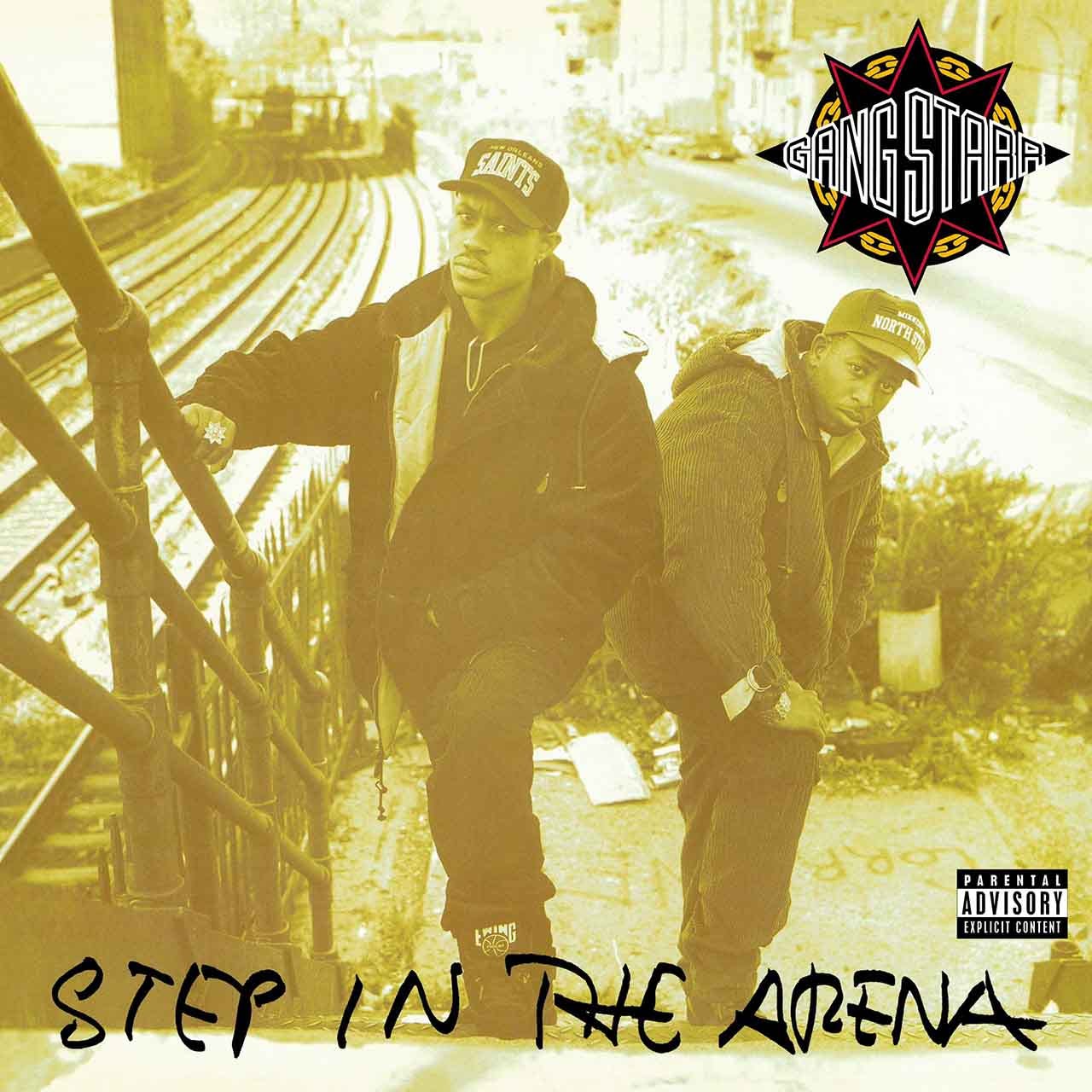
When No More Mr. Nice Guy dropped in ‘89, Gang Starr showed potential but the production was all over the place—too many cooks, not enough vision. Premier was still finding his sound and Guru was still finding his pocket. Fast forward to ‘91 and these brothers have figured it out. Step in the Arena is the record that proves Gang Starr isn’t just another conscious rap duo trying to be Native Tongues. This is something harder, something colder, something that belongs on the streets of Brooklyn while still keeping the jazz in the veins. The album hits different because it doesn’t care whether you like it or not. It exists on its own terms, which in an era of label interference and radio pressure is a statement in itself.
Guru is an interesting cat. His voice sits in this narrow range where he never really goes up and never really goes down. Some heads will tell you he’s monotone, that he can’t flow, that he’s boring. Those heads are deaf. What Guru does on this record is deliver information. He’s not trying to impress you with vocal gymnastics or punchline acrobatics. Guru saying “Knowledge of self is like life after death/Apply it to your life, let destiny manifest,” on “Here Today, Gone Tomorrow,” he’s teaching. Not preaching—teaching. There’s a difference. Preachers yell. Teachers explain. Guru explains. He comes from the lineage of Rakim, that cool, even-toned approach that signals confidence without requiring volume. You don’t need to scream when you know what you’re talking about. Guru knows what he’s talking about.
Premier’s beats throughout Step in the Arena are straight up ridiculous. The man has mastered the art of the two-bar loop in ways that make you wonder why anyone needs more than that. “Just to Get a Rep” rides on this dark, melancholic piano figure that just keeps cycling, keeps hitting the same note of sadness while Guru tells the story of young brothers who rob and steal to build a name, only to get dealt with in the end. “A group of brothers figured out the plan/One of them was big, the other small/They made a pact to go for all/They watched the big kid shooting ball/Then they attacked him in the hall.” No glorification, no celebration. Just the facts of how it goes down when cats get caught up in the rep game. The beat never lets you forget this is a tragedy. Premier could’ve given it an uptempo bounce, made it head-nod music. Instead he made it feel like a funeral procession.
The story continues as Guru narrates these cats getting bolder, hitting more people, building their name through terror. Then the inevitable: “They caught a bullet in the back.” That’s it. No dramatic final words, no redemption arc. Just a bullet and then nothing. Premier lets the loop keep cycling after that line, which is almost cruel in how it refuses to give the listener release. The music doesn’t mourn. It just keeps going, same as the streets keep going after another body drops.
“Execution of a Chump” is where Guru really shows what he’s about. The title alone tells you this isn’t for the soft. But Guru doesn’t come with guns blazing. He comes with that cool, calculated delivery that lets you know he’s thought about this. He’s assessed the situation. The chump in question has been evaluated and found wanting. Now execution proceeds. “Sucker MC’s, I will seize them all/Seize and freeze and squeeze until they fall.” Premier scratches in some vocal samples that punctuate Guru’s bars like a judge’s gavel. The whole track moves like a court proceeding where the verdict was decided before anyone walked in the room. This is rap as jurisprudence, verdicts delivered over basslines.
What really sets this album apart from the growing pack of jazz-rap records is that Gang Starr never lets the jazz get too soft. Pete Rock and C.L. Smooth were doing their thing. Tribe was doing their thing. But where those records had bounce and warmth, Step in the Arena stays in the shadows. The jazz here is smoke-filled rooms late at night, not sunny afternoon barbecues. Listen to “Form of Intellect” where Premier flips a horn sample into something sinister while Guru drops knowledge about MC skills and the art of rhyming. “Using the method of rap/To give you more and more/And after I’m through you’ll be yelling for more.” When Premier cuts in KRS-One saying “Intelligent but not yet equivalent,” he’s making a statement about where Gang Starr stands in the hierarchy. They’re students of the game, still earning their stripes, but they’re also grading papers themselves.
Premier’s scratching throughout the record deserves its own discussion. He’s not just showing off turntable skills—he’s building arguments. Every cut-in voice is testimony, evidence entered into the record. When he scratches in samples from other MCs, he’s calling witnesses to support Gang Starr’s case. The scratches on “Here Today, Gone Tomorrow” create a conversation between Premier’s hands and Guru’s voice. It’s call and response updated for the SP-1200 era. The tradition of Black music runs through these cuts, even if it’s chopped up and rearranged into something new.
“Check the Technique” is probably the closest thing to a party track on here, and even then Guru keeps it instructional. The track is basically a manual for how to be a proper MC—verbal skill, stage presence, knowledge of history. Premier’s beat knocks hard enough to make you bob your head, but Guru’s using that head-nod to sneak lessons into your brain. “Using all that I’ve got/Giving all that I have/To rock the microphone/And kick lyrics that are bad.” He’s not talking about bad meaning bad. He’s talking about bad meaning good. But he’s also talking about discipline, about giving everything to the craft instead of coasting on whatever comes easy. The hook cuts back to that title phrase, “Check the Technique,” over and over until it embeds itself in your skull. That’s the point. Remember what you learned here.
The deeper you go into the album, the more you realize Gang Starr isn’t really here to entertain you. That’s not the primary objective. “Who’s Gonna Take the Weight?” asks a question that the rest of the record tries to answer. Who’s going to step up? Who’s going to do the work? Who’s going to carry the culture forward when everyone else is chasing radio play and video girls? Guru positions himself and Premier as two brothers willing to shoulder that burden. “Society’s a weak excuse for a man/So I’m thinking of strategies and planning,” he spits. The track doesn’t offer solutions so much as it identifies problems. Fake people, fake friends, people who talk loud but don’t follow through. Guru’s seen them. Premier’s seen them. And this record is partly about putting those people on notice.
“As I Read My S-A” finds Guru in a reflective mode, reading through his rhyme book, looking back at what he’s written. S-A being slang for his cerebral assassin, his thoughts on paper. It’s a meta track about the craft of writing rhymes, which could be corny in the wrong hands. In Guru’s hands it becomes a meditation on what it means to take this seriously. He’s not just freestyling off the dome. He’s working. He’s revising. He’s thinking about what he puts on wax before he puts it there. Premier’s beat is appropriately subdued, letting Guru’s words sit in the mix without competition.
“Lovesick” shows Guru can talk about women without getting puerile about it. The track addresses a relationship with some tenderness, which is surprising given how hardnosed the rest of the album is. “Girl, I’ve been going through changes lately/I don’t know if you hate me/But in the morning you might forsake me.” Premier’s production gives it room to breathe, a bit more open than his usual claustrophobic loops. It proves Guru’s range extends beyond battle raps and street tales, even if that’s where he’s most comfortable.
The weakness of Step in the Arena, if you want to call it that, is that Guru’s voice can start to feel samey over eighteen tracks. By the time you hit “Beyond Comprehension,” your ear might be craving a shift in energy that Guru isn’t going to give you. He’s locked into his mode and he’s not breaking out of it for anyone. Some listeners will find this hypnotic. Others will find it numbing. That’s the gamble Guru takes by refusing to flex. He trusts that his words carry enough weight that he doesn’t need to dress them up with vocal tricks. For the most part, he’s right. But there are moments where you wish he’d just let loose a little, show some fire instead of just talking about it.
Premier, on the other hand, never gets boring. Every beat is its own world. “Precisely the Right Rhymes” has this knocking snare that cuts through the mix like a blade. “What You Want This Time?” rides on a bassline that rumbles underneath while Guru addresses an unnamed woman who keeps coming back for more. Even the interludes and shorter tracks have their own flavor. Premier was clearly locked in during these sessions, pulling samples from jazz records and transforming them into something the original musicians never could have imagined. He’s recontextualizing Black musical history in real time, making the past serve the present.
The title itself—Step in the Arena—tells you everything about how Gang Starr sees hip-hop. It’s not a game. It’s not a party. It’s a proving ground. You come in, you get tested, you either hold up or you get carried out. Guru and Premier designed this record to be a test in itself. Can you hang with eighteen tracks of no-frills, no-gimmicks rap music? Can you sit with a voice that doesn’t change, beats that don’t chase trends, lyrics that demand you pay attention instead of just vibe? If you can, welcome to the arena. If you can’t, there’s plenty of other stuff on the radio.
Gang Starr don’t play. Premier constructs environments that reward patience and punish anyone looking for instant gratification. The drums hit hard but they don’t rush. The loops cycle but they don’t bore. Guru fills those environments with words that stick with you long after the record stops spinning. “I flip the script in every rhyme/All the time/Giving more and more divine,” he says on “What You Want This Time?” It’s not braggadocio for its own sake. It’s a statement of fact, entered into evidence.
Step in the Arena isn’t the flashiest hip-hop album of 1991. It might not even be the best. But it’s the one that feels most like a statement of purpose, a line drawn in the concrete. On one side, the rap that talks loud and says nothing. On the other side, two brothers from the East who take this craft seriously enough to make you take it seriously, too. Guru’s still at the microphone, voice steady, waiting to see who’s real and who’s fronting. Step in or step off. Those are your options. And if you step in, understand—the arena doesn’t care about your feelings. It only cares whether you can hold weight.
Masterpiece (★★★★★)