

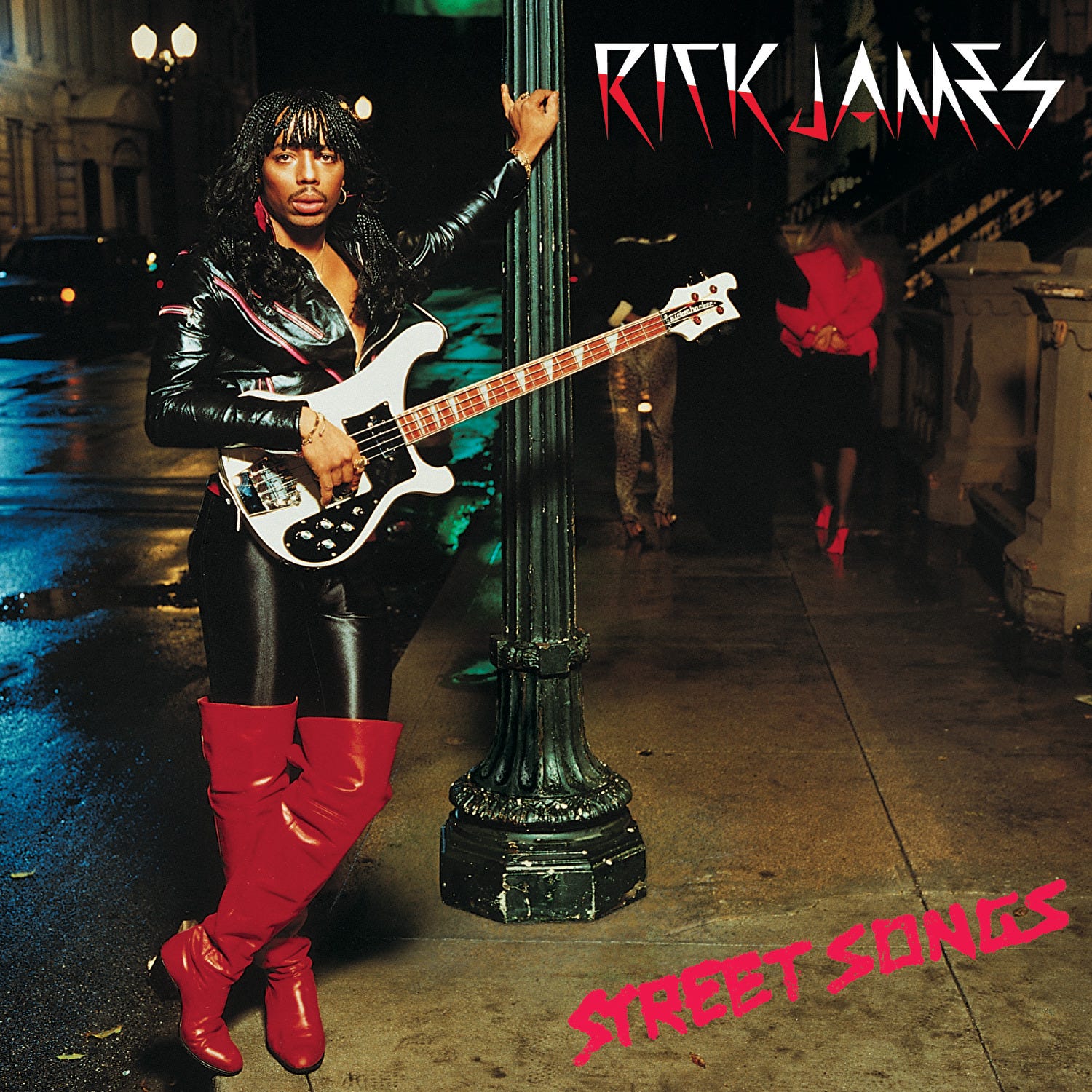
The man who called himself the King of Punk Funk was thinking about building houses. Rick James’ previous album, Garden of Love, had tried a softer direction, Caribbean-influenced ballads and songs written while yachting, and stalled at No. 83 on the Billboard 200 after three consecutive gold albums. Motown was disappointed. A tour with Prince as his opening act the year before had gone hostile, the 22-year-old from Minneapolis outperforming him nightly, and (according to Teena Marie) it nearly got physical backstage. That rivalry destabilized James’s standing at the label during a period when Motown couldn’t find another new star at his level. He drove out to the Record Plant in Sausalito with a guitar, a bass, and a drum machine, working dawn to sunset. “If this doesn’t work, I’m gonna be a carpenter,” his keyboardist Levi Ruffin Jr. remembered him saying.
The album he brought back was about the specific place he grew up. “Ghetto Life” names the neighbors—pimps, prostitutes, hustlers, corner boys—and puts the Temptations on background vocals while James describes hanging on the block in Buffalo’s Perry Projects, singing with friends and looking for girls. Every day is survival, but nobody in the song complains about it; the speaker just reports what the street looked like and who was standing on it. “Below the Funk (Pass the J)” compresses the autobiography even further. Born in Buffalo, raised on the numbers racket, eight kids, no father, too cold and funky, pass the joint. One of the Stone City Band members recalled that it was the last song they needed to fill the album, essentially a throwaway, but it says more about where James grew up in two and a half minutes than most artists manage on a full concept album. The detail is granular and unadorned. He doesn’t moralize it or shape it into a parable.
“Mr. Policeman” speaks to a cop. James is the Black man being stopped, searched, and harassed, and he tells the officer to leave him alone—he hasn’t done anything wrong. James wrote it as a tribute to Bob Marley and in memory of childhood friends who’d been killed. The rhythm is reggae-influenced, and it pulls the song away from the funk on the surrounding tracks into a slower, angrier mood. Stevie Wonder plays harmonica on it, one of the few times in 1981 that Wonder appeared on someone else’s session, and his instrument gives the song a mournful insistence that James’s voice alone wouldn’t have carried. On a Gordy Records album in the Reagan era, putting a direct address to police brutality at the close of Side A was a bold move, and the song doesn’t soften any of it.
Four of the album’s eight songs are about wanting sex. “Give It to Me Baby” is a command (the hook is just those five words repeated), and the groove took its final form when drummer Lanise Hughes changed the beat during rehearsal. It didn’t feel right, so James let him redo it, and the revised pattern locked everything else into place. “Super Freak” sketches a sexually uninhibited woman by cataloguing what she does. She likes the boys in the band, she’ll never let your spirits down, she’s the kind you don’t take home to mother. James nearly left it off. He called it “just a joke, something white folk could dance to,” and threw it together quickly after the other seven songs were finished—an afterthought that became his biggest crossover hit and got nominated for Best Rock Male Vocal at the 1982 Grammys, the first time a Black man had been nominated in that category. “Make Love to Me” slows the tempo, adds strings arranged by Reggie Andrews, and asks for the same thing at a lower volume. “Call Me Up” opens with phone-ringing sound effects and a spoken section that’s close to proto-rap patter, flirtatious and light, a woman calling for “Slick Rick.” The tempos and tones vary across all four songs, but the bluntness is constant. James says what he wants in plain language.
Between the album’s most cartoonish song and a phone-flirtation groove sits “Fire and Desire,” seven minutes of James confessing that he used to love them and leave them, was cold as ice, thought he was God’s gift. Then Teena Marie enters and answers him. The song becomes a conversation between two people admitting they’ve hurt others and seeing the same damage in each other. It was never issued as a single, but it became one of the most-played R&B ballads on radio through the ‘80s and into the ‘90s, the kind of song that people who grew up on Black radio can hum from the first bar. James and Marie reunited to perform it together at the 2004 BET Awards, five weeks before James died of heart failure at 56.
James wrote, composed, arranged, and produced every song on the album, and he played guitar, bass, drums, percussion, timbales, and timpani himself. But the guests on Street Songs are a family tree of the label that put it out. His uncle Melvin Franklin and four other Temptations sang background on “Ghetto Life” and “Super Freak.” Stevie Wonder played harmonica. Teena Marie dueted, sang backgrounds on two additional songs, and clapped hands on the sessions. James told Billboard he wanted to bring back the old Motown spirit, the family relationships between the Supremes, Marvin Gaye, and the Temptations. And he got it, on an album full of profanity, weed references, and a song about a woman whose sexual habits are too explicit for her mother to know about. The old guard showed up for the new nastiness, and none of them sounded out of place.
Standout (★★★★½)