

Milestones: Survivor by Destiny’s Child
A comeback from public humiliation that sold ten million copies. Beyoncé just needed two other voices to make it look like teamwork.
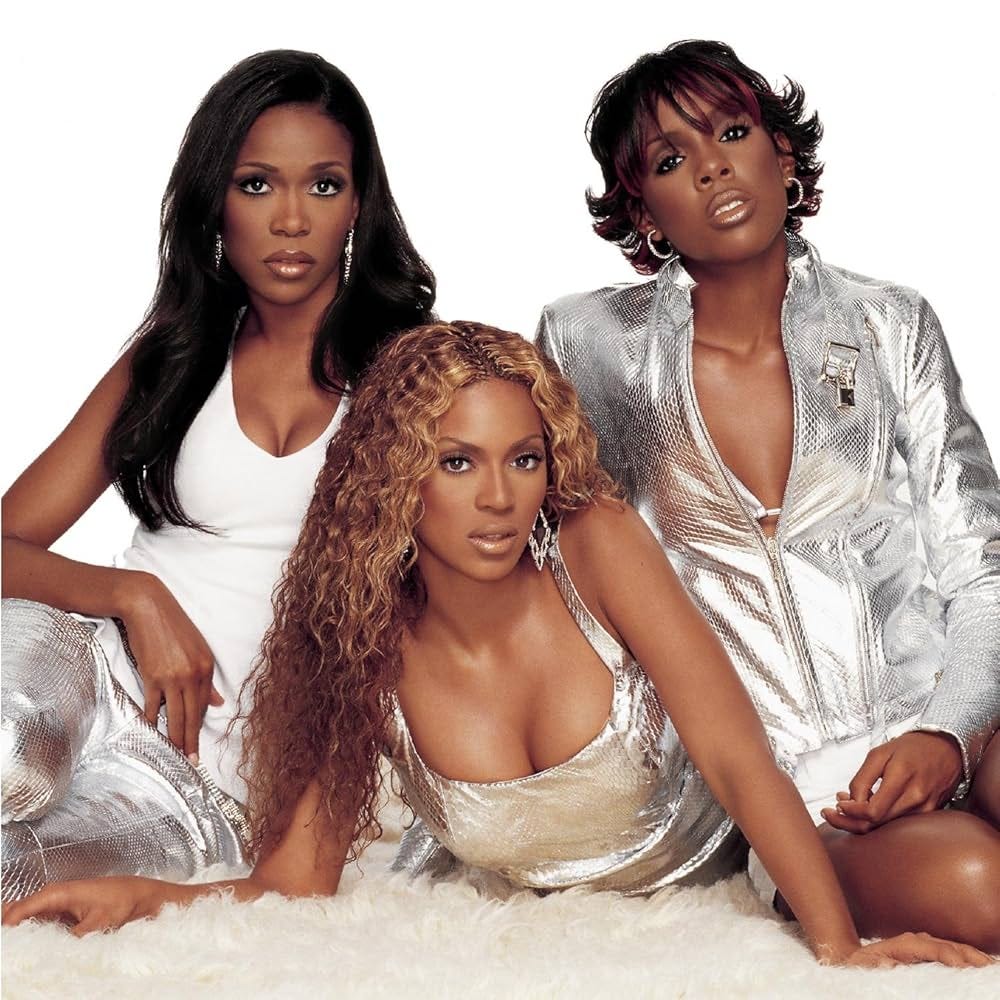
Sometime in 2000, a radio station turned the most chaotic girl-group saga in pop into a punch line, and the bit was simple. Destiny’s Child that kept losing members was basically the CBS reality show Survivor, and the question was which one got voted off the island next. The joke stuck because it was accurate. The group had burned through four members in less than a year, left behind two lawsuits and a management scandal, and still had albums to sell. Beyoncé Knowles heard the bit and did something nobody at that radio station expected. She wrote a song called “Survivor.” Then she renamed the entire album after it.
That joke was aimed at a specific disaster. LeToya Luckett and LaTavia Roberson, original members since the group’s formation as Girl’s Tyme in 1990, were replaced in February 2000 by Michelle Williams and Farrah Franklin while The Writing’s on the Wall was still producing hit singles. The swap happened via music video, which is how Luckett and Roberson found out. Both filed lawsuits claiming Beyoncé’s father, Mathew Knowles, who managed them, had been favoring his daughter and Kelly Rowland for years. Franklin lasted five months before she was gone too. And the trio that walked into the studio to make Survivor was held together less by shared history than by the wreckage of the old lineup.
Beyoncé co-wrote virtually everything and produced all of it at twenty years old. Rob Fusari co-produced a handful, Cory Rooney and Poke & Tone and Damon Elliott split others, but the editorial hand belonged to one person. Rodney Jerkins, who had produced “Say My Name,” submitted tracks that didn’t make it. Beyoncé said she only wanted to record a handful, but the label kept pushing for more, and none of it was planned. Rowland and Williams sing leads on sections throughout, but they’re singing words Beyoncé wrote over production Beyoncé approved. That arrangement would have its own name two years later, when she titled her solo debut Dangerously in Love.
Columbia pulled “Independent Women Part I” off the Charlie’s Angels soundtrack and slotted it onto this tracklist after the single had parked at number one on the Hot 100 for eleven consecutive weeks. Too big to leave off. Shoes on my feet, I bought ‘em. Clothes I’m wearing, I bought ‘em. Rock I’m rocking, I bought it. Just an itemized receipt for a life without a man’s credit card. Every object named is an object a boyfriend used to buy, and the women are daring someone to miss the difference.
Beyoncé wrote the title track for the people who wanted them dead. “You thought I’d be broke without you,” she sings, and lists what she bought since they left. “You thought I’d be helpless without you,” and lists what she built. Luckett and Roberson viewed the title track as violating a non-disparagement agreement from their departure settlement and filed a second lawsuit. All litigation settled in June 2002. A song that went to number two on the Hot 100 for seven weeks was also, briefly, a legal exhibit.
Rob Fusari co-produced “Bootylicious” and later disputed Beyoncé’s songwriting credit, saying he conceived the track around a sample of Stevie Nicks’s “Edge of Seventeen” guitar riff. Mathew Knowles’s response was blunt. “People don’t want to hear about Rob Fusari, producer from Livingston, N.J.” The credit dispute got buried; the song went to number one. “I don’t think you’re ready for this jelly,” Beyoncé sings, Kelly and Michelle behind her, and the women whose bodies had been tabloid property since the lineup scandal sound like they’re enjoying themselves more than at any other point on the album. The Nicks sample gives them a rock-radio aggression their previous singles never had.
The same trio that made “Bootylicious” also made “Nasty Girl,” a song that scolds women for wearing too little clothing. “Look at that girl,” they sing over a stuttering beat, pointing at women in clubs who dress for attention and calling them classless. Destiny’s Child dared anyone to handle their bodies on “Bootylicious” and then policed somebody else’s wardrobe here. Their version of female empowerment has conditions, and they include a dress code.
Beyoncé wrote at least five different songs on this album about how attractive a man is. “Fancy” is a getting-dressed song that stays in the mirror for three minutes. “Apple Pie a la Mode” swaps dessert names for sexual content with the subtlety of a greeting card. “Sexy Daddy” tells a man he’s attractive in the plainest terms. “Happy Face” says a man makes her smile. “Dance with Me” asks a man to dance. None of these have the architecture of the singles or the writing of the singles or anyone seemingly invested in them past the first run-through. She wrote and produced them anyway, and her instincts are good enough that even the throwaways have shape.
Two years after Survivor, Beyoncé titled her solo debut Dangerously in Love, the same name as a ballad she’d co-written here with Errol McCalla Jr., and she kept the song for the new record almost intact. Listening back to the original, the vocal is already a solo artist testing the water while two other women harmonize behind her. Elsewhere, Mark J. Feist produced an R&B rearrangement of the Bee Gees’ “Emotion” that pulls the melody away from its disco origins, and the harmonies across all three voices are some of the cleanest anywhere on the LP. One conventional ballad could belong to any R&B group working in 2001.
It closes with a gospel medley dedicated to Andretta Tillman, who helped form the group when its members were children in Houston. Tillman booked their earliest shows and coached their harmonies before any label knew their names. Lupus killed her in 1997, a year before “No, No, No” hit the radio. All three women grew up in church, and closing a pop album with straight gospel was a choice almost none of their commercial peers would have risked. After fourteen songs about independence and men, the album ends in a sanctuary. Tillman never saw any of this happen.
Survivor debuted at number one on the Billboard 200 with 663,000 first-week copies, the highest first-week total for a female group in the SoundScan era. Over ten million copies worldwide. Metacritic gave it a 63. “Independent Women Part I,” “Survivor,” and “Bootylicious” are as big as anything released in 2001, and they’ve held. The tracks between them coast on goodwill and Beyoncé’s instincts. She was twenty, and she was already making the decisions that would define the next twenty years of her career. Rowland and Williams sang whatever she gave them, and it sold like they were equals. Everyone involved knew better.
Above Average (★★★☆☆)
I remember happy face was my favorite song on that album at that time. never heard that in it 😅 I was in middle school though so that may have had something to do with it 😂