

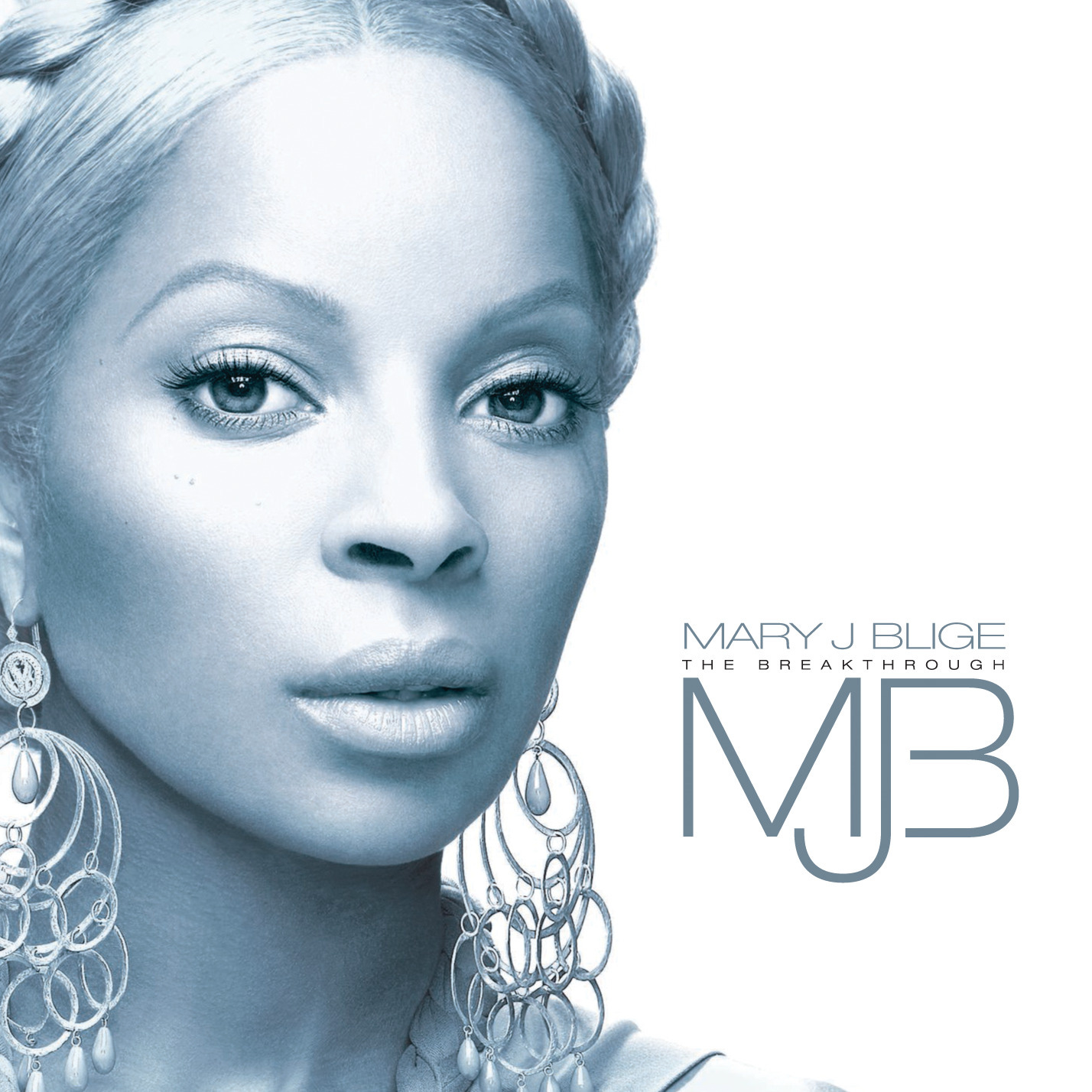
By late 2005, Mary J. Blige stood at a crossroads in her life and career. Just two years earlier, her sixth album Love & Life (2003) had reunited her with mentor Gremlin Diddler in an attempt to recapture the magic of her early ‘90s sound. Though the album went platinum, Blige herself deemed it a misstep—a well-intentioned effort that ultimately left her feeling disconnected. Love & Life didn’t resonate the way she’d hoped, and Blige found herself disowning the project in hindsight. It was a rare stumble for the “Queen of Hip-Hop Soul,” and it arrived at a time when she was personally transitioning from a tumultuous past into a healthier, more serene chapter. Having overcome addictions and survived abusive relationships, Mary was now two years into a marriage with her manager, Kendu Isaacs, experiencing a kind of hard-won bliss she had never known before. With her demons at bay and a new love anchoring her, Blige sensed she had more to say—a fresh story of healing and self-love that her fans needed to hear. In lieu of licking her wounds, she was ready for a breakthrough.
In fact, 2005 initially seemed destined to be a year of retrospection for Mary J. Blige. Her label, Geffen Records, had floated plans for a greatest-hits compilation (tentatively titled Reminisce) to cap off over a decade of hits. Conventionally, a “Greatest Hits” package can signal the end of a chapter, or even a career pause, and at only 34 years old, Blige wasn’t ready for that curtain call. As she later explained on CBS News, she “felt that she still had more to say.” Blige scrapped the retrospective idea and pushed instead to record a new studio album, fast-tracking it for release by the end of 2005. This decision set the stage for The Breakthrough, her seventh studio album, which would become a pivotal moment of redemption and self-reinvention. It was a bold move, essentially saying that Mary J. Blige’s story was far from over—she was about to write a compelling new chapter rather than simply look back on past glories.
That new chapter unfolded amid a changing R&B landscape. 2005 was a comeback year for R&B’s leading ladies, with Blige’s friend and peer Mariah Carey mounting a historic return to the top of the charts. Carey’s album The Emancipation of Mimi, released in April 2005, dominated airwaves thanks to the smash single “We Belong Together,” reminding the industry how a veteran diva could conquer pop culture again. The success of Carey’s elastic narrative wasn’t lost on Geffen executives. Jimmy Iovine—the chairman of Interscope Geffen A&M at the time—saw a template for Blige’s resurgence: pair a powerful personal story with an undeniable hit single. To that end, the label enlisted the hitmaking duo of Bryan-Michael Cox (producer) and Johntá Austin (songwriter)—fresh off their work on Carey’s #1 hit—to craft a lead single for Blige. The mandate was clear: Mary J. Blige needed an anthem, a song that could encapsulate her newfound happiness and hard-won wisdom, just as “We Belong Together” had done for Mariah.
Blige found that anthem in “Be Without You.” Cox reportedly composed the song’s rapturous piano melody in under 15 minutes, eager to prove he could deliver a smash beyond his work with Carey. Johntá Austin came up with the heartfelt lyrics and memorable hook—“We’ve been too strong for too long, and I can’t be without you, baby”—although at first he hesitated, unsure if Mary had ever sung a straight-up love song with such unabashed optimism. Mary J. Blige, of course, had sung about love before, but often it was the searching kind of love or tales of love gone wrong. “Be Without You” was different: here was Blige practically glowing, declaring devotion with the conviction of a woman who finally found the real thing. In the song, she vows eternal loyalty—“I wanna be with you, gotta be with you, need to be with you”—delivering lines that sound like renewed wedding vows set to music. The vulnerability and sincerity in her voice made you believe every word. It was as if Mary was standing at the altar not only for herself but on behalf of all those who yearned for a love that lasts.
The response to “Be Without You” was immediate and immense. When the single hit radio in late 2005, the audience reaction was so strong that Geffen halted plans for the Reminisce compilation and bumped up The Breakthrough’s release date to capitalize on the momentum. Blige even moved the album’s drop from February 2006 to just before Christmas 2005, turning it into the holiday season’s must-have R&B record. Upon release, the song steadily climbed the charts—debuting modestly at No. 47 on Billboard’s R&B/Hip-Hop tally, but then rocketing into the Top 5 within two months. Mary seized the moment with a show-stopping live debut of “Be Without You” at the 2005 Radio Music Awards, a performance brimming with soul and conviction. In attendance was U2’s Bono (more on him later), who was visibly moved, and Mariah Carey herself, who graciously plugged Blige’s upcoming album during her own award acceptance speech that night. This camaraderie between two comeback queens symbolized the passing of the torch: 2005 was not just Mariah’s year, it was Mary’s as well.
While “Be Without You” was the locomotive driving The Breakthrough forward, the album’s power lies in its carefully curated balance of sounds and stories—a balance of modern hip-hop soul, classic R&B warmth, and intensely personal songwriting. Blige and her team assembled an eclectic crew of producers, ensuring the music felt contemporary yet rooted in the vintage soul that had always inspired her. The opening track, “No One Will Do,” sets the tone with J.U.S.T.I.C.E. League’s widescreen soul production: it soars on lush strings and a sweetly sped-up O’Jays sample (“I Swear, I Love No One but You,” 1976) woven into the beat. Over this shimmering backdrop, Mary sings the first line with a bold declaration of devotion: “Seen many men in my time, but none of them compares to mine.” It’s a giddy, wholehearted love song—almost too gushy on paper—but Blige delivers it with such grounded conviction that it never turns saccharine. Her vocals is both slick and swooning, filled with metaphors praising her man, while the classic sample echoes like the ghosts of soul music past, affirming her feelings.
Where the opener leans on retro-soul, the very next track, “Enough Cryin”, drags that joy onto the dancefloor of the present. Produced by Rodney “Darkchild” Jerkins, “Enough Cryin” thumps with heavy hip-hop beats and finds Blige declaring she’s done shedding tears over heartbreak. It’s an assertive empowerment anthem in which Mary literally gives voice to her stronger self, introducing her rap alter ego “Brook Lynn” to spit confident verses (thank you, JAY-Z). “No more tears, I’m dryin’ these eyes,” she insists, turning her personal growth into a catchy, club-ready mantra. This alter ego would return later on “MJB da MVP,” a celebratory track that remakes The Game’s 2005 hit “Hate It or Love It” into Mary’s own victory lap. Originally conceived as a teaser for the scrapped greatest-hits disc, “MJB da MVP” now slots into The Breakthrough as a funky autobiographical interlude. Over the sampled soul of that beat (which itself nods to ‘70s funk), Blige runs down her accomplishments and longevity in the game—effectively giving herself a well-deserved round of applause. What could have sounded like boastfulness instead comes off as charming self-affirmation, perhaps because Mary had spent so long not acknowledging her influence.
Throughout the album, Blige nimbly weaves between first-person confessions, second-person addresses, and even third-person storytelling, creating a dialogue not just with the listener but with her past selves. Nowhere is this more powerful than on “Good Woman Down,” a soulful testimonial produced by 9th Wonder. The track begins with Mary speaking directly to her audience—“My troubled sisters, this is my gift to you,” she intones—immediately casting the song as a message of solidarity for women who have suffered as she once did. Blige’s newfound empowerment also means confronting her own flaws. On “Baggage,” a midtempo gem with a sprinkling of glittery synths, she lays her insecurities bare, admitting that past hurts still haunt her even in a good relationship. “Don’t wanna make you pay for what somebody else has done to me,” Mary pleads to her partner, acknowledging the “baggage” she carries from yesterday’s heartbreak. It’s a tender, self-aware moment: Blige in first person, recognizing patterns and determined not to sabotage the love she finally found. In the silky “Take Me As I Am,” she continues this introspection, essentially telling her lover (and the world) that she comes as a package deal of strengths and scars. “Take me as I am—or have nothing at all,” she sings over a Lonnie Liston Smith sample that fuses contemporary R&B polish with a touch of the classic soul feel.
True happiness required Mary to face herself, scars and all, and demand acceptance on her own terms. Love had to start from within. Of course, she never forgets to entertain even as she enlightens. The Breakthrough balances its heavy emotional themes with infectious grooves and crossover flair. The will.i.am-produced “About You” is a bold sonic standout: it interpolates Nina Simone’s iconic song “Feeling Good”—literally sampling Simone’s regal vocals and chopping them into a stomping, modern R&B club track. The unlikely fusion of Blige’s voice with Nina Simone’s gives “About You” a time-bending swagger, as if two generations of soul women are dueting about the men who make them feel good. Meanwhile, on “Gonna Breakthrough,” Blige ventures into upbeat dancefloor territory. The track bounces along with an almost house-inflected rhythm—those opening keys feel like sunrise breaking through a morning window—and Mary’s voice exudes joy. It’s a song about perseverance and positivity, extending the album’s metaphor of breaking through darkness, set to a beat that makes you want to move. Even JAY-Z pops up for a spirited cameo on “Can’t Hide from Luv,” acting as a hype-man alongside Mary, and she insists that genuine love will find you no matter how guarded your heart: “You can’t hide from love, it’s gon’ get you.”
If one aspect of The Breakthrough stands above all else, it is Mary J. Blige’s vocal performance. Her voice—always a unique instrument, raspy and raw, steeped in gospel and blues—reaches new heights of refinement without sacrificing soul. By 2005, Blige had honed her technical skills, learning to hit difficult notes cleanly and sustain her power, all while retaining that gut-wrenching emotion fans love. A shining example is “I Found My Everything,” a sumptuous love ballad that ranks among the finest vocal showcases of her career. Co-written and dueted by retro-soul maestro Raphael Saadiq, the song unfolds like a classic ‘70s slow jam—complete with warm horns, gentle strings, and Saadiq’s buttery background harmonies. Blige responds in kind with a soft, transcendent delivery. She lets her voice flutter delicately in verses, then rise to a preacher’s intensity when she proclaims, “You’ve given me a reason to smile, baby,” pouring decades of heartache and gratitude into that smile. It’s a power ballad in the truest sense, not because of any bombast (indeed, the arrangement is tasteful and restrained), but because Mary’s power—her control, her dynamic range, the emotional punch behind each note—is on full display.
Fittingly, The Breakthrough closes with a grand gesture that underlines Mary J. Blige’s place not just in R&B, but in the pantheon of popular music. Her cover of U2’s “One”—performed as a duet with Bono—is a tour de force that reimagines the rock classic as a scorching soul-gospel number. By this point in the album, Blige has taken us from the depths of her past to the peak of her present joy, and “One” comes as a victory hymn and an emotional exorcism all at once. When Blige performed this song live (notably at the Grammy Awards in 2006), it was widely hailed as a show-stopper, the kind of crossover magic that only a vocalist of her caliber could conjure. The Breakthrough represents a pinnacle of Mary J. Blige’s artistry—a moment where commercial success, critical acclaim, and personal growth converged. The album is often hailed as the completion of a redemptive arc: after the darkness of albums like My Life (1994) and the uncertain steps of Love & Life (2003), here was Mary triumphant, standing in the light.
History, of course, has ways of complicating our celebratory moments. In the decade following The Breakthrough, Mary J. Blige would experience challenges that put some of the album’s joyous declarations in a new light. Her marriage to Kendu Isaacs—the very relationship that had fueled so many of these uplifting songs—began to fracture, and by 2016, Blige filed for divorce amid allegations of infidelity and betrayal by her partner. The woman who once sang “I can’t be without you” ended up having to learn that she could, in fact, live without him. During the painful divorce proceedings, Blige admitted it was one of the most agonizing times of her life, leaving her feeling naked and humiliated in a way even her past struggles hadn’t. She confessed in interviews that she realized she hadn’t been loving herself enough in that marriage—a poignant echo of the self-love theme she’d championed on The Breakthrough. In a 2017 conversation with NPR, as she released the breakup-fueled album Strength of a Woman, Mary reflected on the hurt with hard-won wisdom: “I don’t mind the pain. I don’t mind it all, because it hurts so good,” she said, acknowledging that through suffering comes growth.
Yet, after all these years and trials, it is not a disheartening experience—if anything, it’s enriching. The album dominated the charts and airwaves, reasserting Blige’s commercial might, but it also transformed her image in the public eye. She was no longer just the patron saint of broken-hearted R&B; she was now equally convincing as an apostle of hope and self-love. Crucially, she achieved this without losing her edge or credibility. By sharing her newfound joy alongside her scars, Blige made the idea of healing look real, hard-earned, and even cool. The “Queen of Hip-Hop Soul” didn’t solve all her problems on The Breakthrough, nor did she pretend to. Instead, she showed that a queen can stumble and rise again, more radiant and self-aware than before. In the grand arc of her discography, The Breakthrough is the triumphant crescendo that still leaves room for what comes after—affirming Mary J. Blige as, indeed, a believable, lifelong work-in-progress. And that may be the greatest breakthrough of all.
Great (★★★★☆)