

Milestones: The Coming by Busta Rhymes
On his 1996 solo debut, the former Leaders of the New School frontman treated language as demolition equipment, and if the architecture he wrecked was sometimes his own, the rubble still crackled.
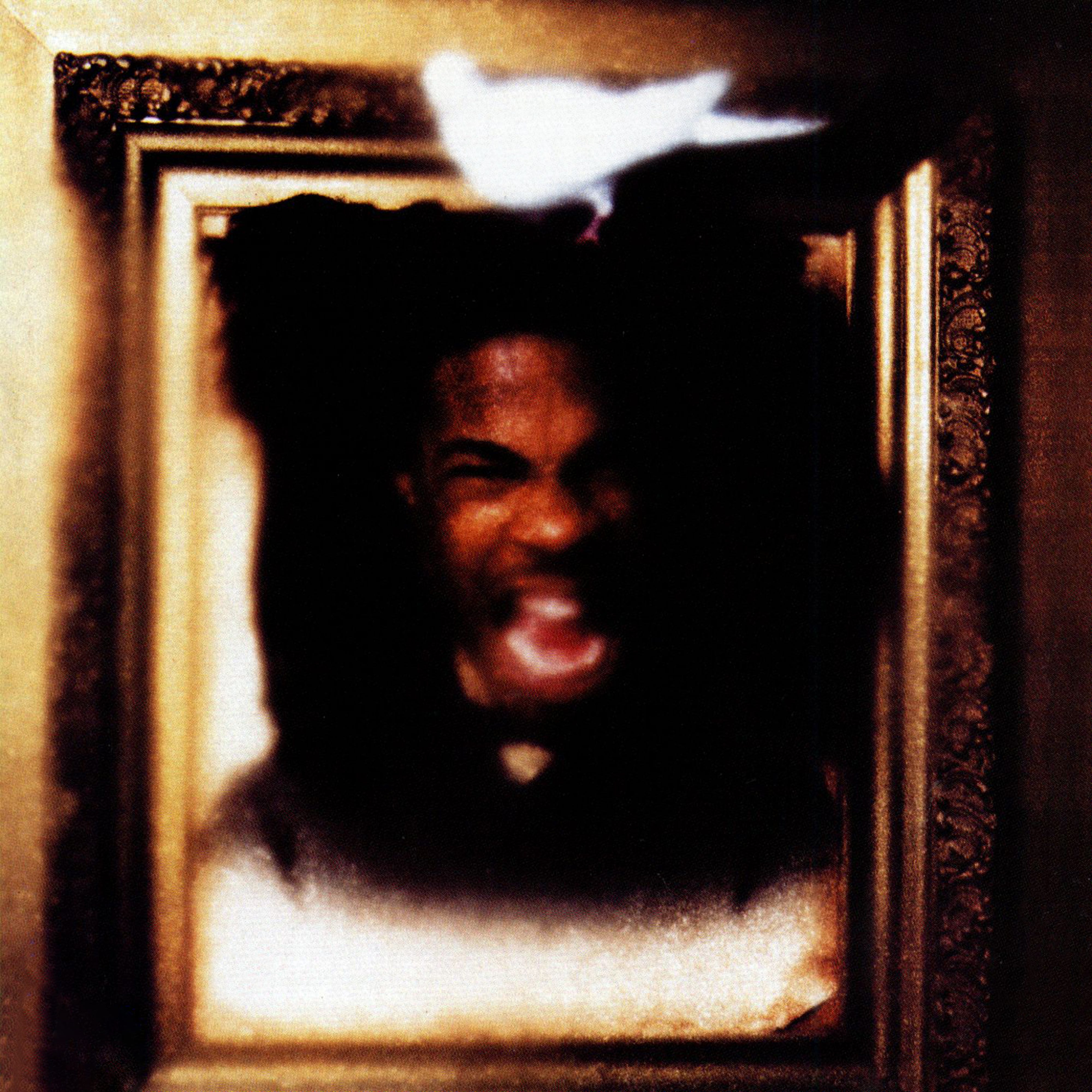
In the middle of 1995, RZA had dragged New York rap into his basement. The production on Enter the Wu-Tang (36 Chambers) two years earlier had already startled the borough into imitating its bone-dry drums and severed soul loops, but the real damage came during the solo rollout that followed. Tical, Return to the 36 Chambers, Only Built 4 Cuban Linx…, Liquid Swords—each release darkened the palette further, and by the time Ghostface Killah’s Ironman dropped in October 1996, an entire ecosystem of grimy, claustrophobic beats had supplanted the jazz-inflected warmth that Tribe and De La Soul had established as the default for Native Tongues-adjacent MCs. Mobb Deep’s The Infamous owed its stark paranoia to the blueprint RZA drafted; so did Nas’s pivot toward street-level cinema on It Was Written. To debut a solo rap record in the spring of 1996 meant reckoning with the fact that New York production had turned inward, gotten colder, and stripped itself of almost everything that wasn’t drums and threat.
Trevor Smith’s parents had left Jamaica for East Flatbush, and he grew up in Long Island listening to dancehall alongside hip-hop, absorbing a rhythmic logic that prioritized attack over sense. By his own later admission, his Jamaican heritage shaped how he heard the relationship between a voice and a beat. Dancehall MCs jabbed at riddims rather than riding them, and the words mattered less than the force of contact. He’d already demonstrated this as a teenager. The last verse on A Tribe Called Quest’s “Scenario,” where he erupted out of a song that wasn’t his with that “Rrrrroaw rrrrroaw like a Dungeon Dragon” shriek, had put his name in circulation years before he cut a solo record. Leaders of the New School crumbled on live television in 1993, and the group’s dissolution left him freelancing, cutting features for Biggie, Craig Mack, TLC, Mary J. Blige, anyone who wanted an adrenaline spike grafted onto their single. “I was like the first artist to really start rhyming on everyone else’s record,” he told interviewers. “And I was doing that because it was a quick way to feed my kid.” Those years of cameo work trained him to detonate in small windows, to seize a verse like a man who didn’t know when his next opportunity might arrive.
The Coming arrived on Elektra, and the first thing it told you was that Busta Rhymes had no interest in confessing anything. Nas was writing an autobiography. Biggie was narrating the drug trade. Raekwon was constructing crime cinema. Busta, meanwhile, was threatening to bend wack emcees’ frames “like plexiglass,” to go “King-Kong on niggas like Guerrilla Monsoon,” to endanger species and feed enemies swine sausage. His own record company biography quoted him rejecting the dominant ethos of his peer group: “I don’t want to hear about this issue of keeping it real no more. It’s all hype. It’s time we all saw through it.” On “Everything Remains Raw,” he opens with a demand, “let me just fuck with your mind, please,” and proceeds to reference protons, neutrons, electrons, Voltron, the Quran, and supermarkets within a single verse, as if free-associating from a thesaurus with the pages torn out and reshuffled. None of these images connect to each other through conventional logic. They connect through the velocity of their delivery and the physical pleasure of consonant stacking: “Sick lyrics like multiple sclerosis/Focus, while I display flows ferocious.”
This mattered more than it should have. The mid-‘90s fixation on lyrical authenticity—on street credibility as the measure of an MC’s worth—had calcified into a narrow set of acceptable subject positions. Busta refused all of them. He wasn’t political, wasn’t confessional, wasn’t gangsta, wasn’t conscious. He was loud. And his loudness contained its own proposition: that verbal force and rhythmic invention were reason enough for a rap album to exist. On “Woo-Hah!! Got You All in Check,” the biggest hit of his career, Rashad Smith’s production sampled Galt MacDermot’s 1968 instrumental “Space,” and the beat lurched with a carnival wobble that had nothing in common with RZA’s severity. Over it, Busta locked every end-rhyme in each verse to a single vowel sound: “I know you really want to know who’s/Coming through leaving blunt stains and residues/Sorry homeboy but your flow sounds used/Got to pay your dues, baby, you know the rules.”
The production team gave him real ground to cover. Easy Mo Bee, who’d shaped albums for Biggie and Miles Davis’s Doo-Bop, built “Everything Remains Raw” on parched drum programming and a drifting jazz loop that could have accompanied a noir film scored by heroin. DJ Scratch supplied the funky, low-slung groove for “Do My Thing.” The Ummah—Q-Tip, Ali Shaheed Muhammad, Jay Dee—handled “Ill Vibe” and “Still Shining,” the former a woozy collaboration where Busta and Q-Tip batted absurdist scenarios back and forth like they were shooting pool in somebody’s living room, Busta inventing an elaborate fantasy about Siamese twins from Lebanon and a woman who tried to steal his house keys. The spread of sounds counted because Busta adjusted himself to fit each one. He could sink into Easy Mo Bee’s menace and growl through punchlines at half his usual tempo on “Hot Fudge,” then whip through the Ummah’s buoyant chops with a giddiness that justified those Tribe comparisons. “Ill Vibe” has this Dee beat, which was loose and swinging enough to absorb Busta’s convulsions without sounding crowded, and because Q-Tip’s calmer delivery gave the ear somewhere to rest.
Busta told the Los Angeles Times in 1996 that he didn’t “represent a 20-block radius known as my ‘hood.” He was right. The Coming represented something odder: the conviction that a rapper’s mouth could be a sufficient subject, that the way syllables crashed into each other at high speed was itself a form of content. On “Everything Remains Raw” and “Woo-Hah!! Got You All in Check” and “Ill Vibe,” that belief held. The songs said nothing and meant everything about what a voice could physically accomplish when its owner stopped worrying about credibility and just swung. The posse cut “Flipmode Squad Meets Def Squad,” where Rampage, Lord Have Mercy, Jamal, Redman, and Keith Murray crowded the mic, chased the ghost of “Scenario” without catching it, but everybody brought it. Though The Coming staked a claim that none of Busta’s more serious-minded peers would have bothered making: that joy and aggression and nonsense could share the same bar, and that an album didn’t need a thesis to justify its existence.
Standout (★★★★½)