

Milestones: The Dude by Quincy Jones
Jones’ final A&M record turned an art gallery impulse and a $50 demo singer into the blueprint for ‘80s R&B.
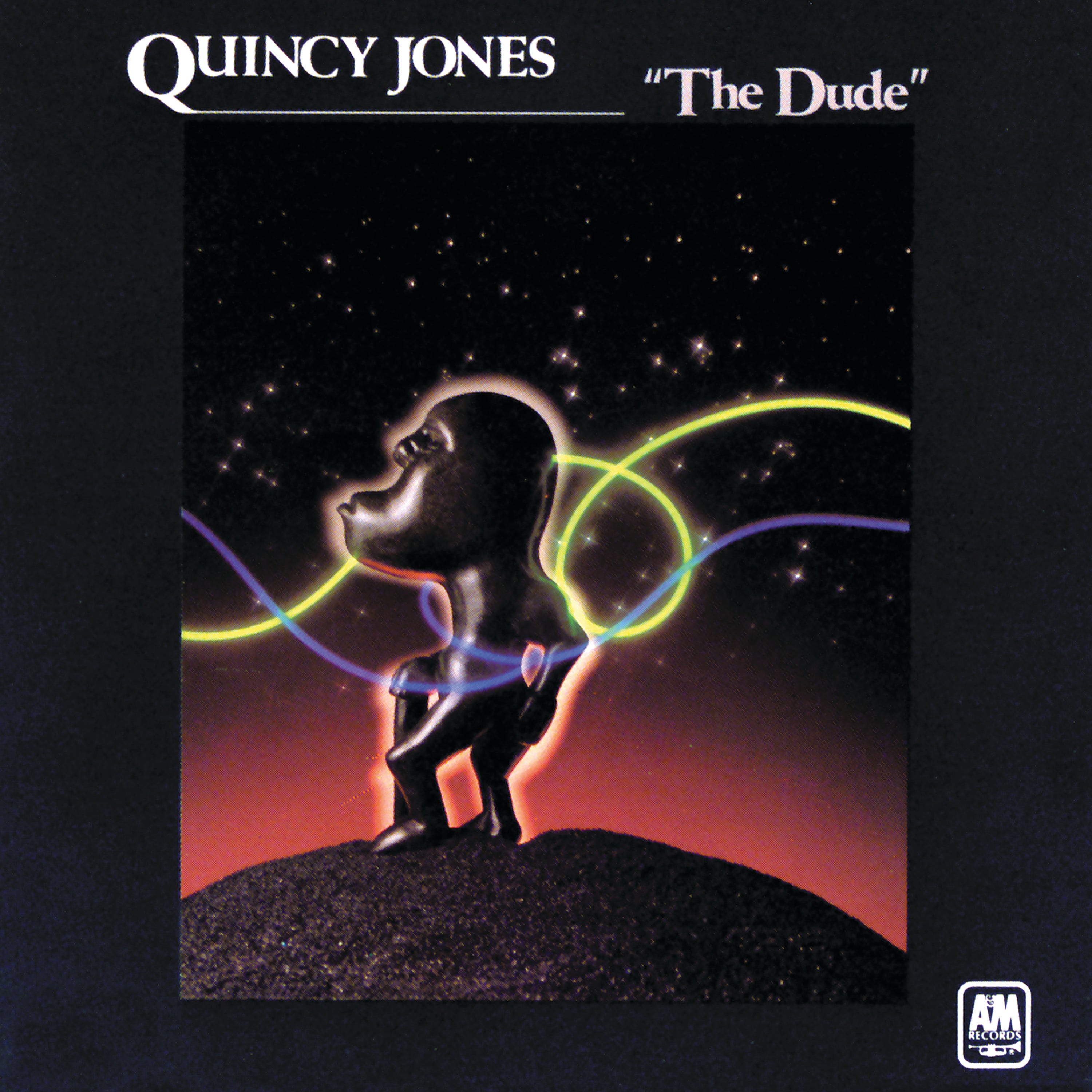
American pop and R&B had entered one of those in-between periods where the old guard hadn’t quite left, and the new money hadn’t fully arrived in 1981. Synthesizers were creeping into R&B sessions all over Los Angeles, though nobody had yet figured out how to make them the whole point. Into this moment walked Quincy Jones, 48, owing A&M Records one last album before launching his own Qwest label. He owed them a record. He gave them more than an obligation. The album got its name from a Shona sculpture by Zambian artist Fanizani Akuda that Jones spotted in an L.A. gallery on Wilshire Boulevard while browsing with Henry Mancini. “It said, ‘Hey man, take me home. I want to be an album, I want to be a tune,’” Jones recalled. He bought the statue on the spot. Its silhouette—puffed lip, arched back, cane in hand—ended up on the cover, and the attitude ended up everywhere else.
“Ai No Corrida” kicks things off, and right away the record sounds geographically greedy. The song was written by Chaz Jankel (the keyboardist from Ian Dury and the Blockheads, about as far from Quincy Jones’ world as you could get in 1980) and Kenny Young. Its title borrows from Nagisa Oshima’s controversial 1976 Japanese erotic film In the Realm of the Senses; “Ai No Corrida” translates roughly to “Bullfight of Love,” though in Spanish slang the double meaning runs considerably raunchier. None of that registers while you’re listening. Charles May handles lead vocals, Patti Austin joins on harmonies, and Herbie Hancock plays electric piano while Louis Johnson’s bass pops underneath. The horns, arranged by Jerry Hey, land somewhere between a Fania All-Stars record and a Hollywood action cue. Jankel admitted that once Jones got hold of the song, he felt it leave his hands completely. That tension between them, a skinny English post-punk songwriter’s melody rebuilt by Los Angeles’ most connected bandleader, produced something neither of them would have made alone.
The title track follows, and it’s Jones himself talking on the record, a half-rapped, half-spoken character sketch over heavy funk. Rod Temperton and Patti Austin wrote it, and James Ingram carries the melodic sections, but the star is this fictional “Dude”—a neighborhood patriarch, a little bit pimp, a little bit mayor, the kind of figure who strolls through a block and people just know. Stevie Wonder plays a Yamaha CS-80 synth solo on the bridge. Michael Jackson is on background vocals. The song is funny and cool and a little silly, and it was also, in 1981, one of the earliest moments where a jazz-trained producer in his late forties casually dropped a rap cadence onto a major-label R&B album. “Razzamatazz,” a few tracks later, gives Austin her loudest vehicle, a disco-funk workout Temperton wrote that burns with get-ready-to-go-out energy. Austin tears through its rapid-fire choruses like she’s been waiting all session to cut loose, and the song became Jones’ biggest UK hit.
The ballads carry different weight. “Just Once” exists because of a $50 demo. Barry Mann and Cynthia Weil, veteran Brill Building songwriters, needed someone to sing a demo of their new ballad so they could pitch it to Jones for George Benson. They asked around and found James Ingram, an Akron, Ohio native who’d been kicking around L.A. as a keyboard player for Ray Charles and a voice for hire on other people’s demos. When Mann heard Ingram’s take, he stopped the tape. “You’re just the greatest singer I’ve heard in the past thirty years,” he told Ingram. They sent the demo to Jones, who called Ingram immediately—Ingram, not recognizing the number, hung up on him the first time. The song itself asks a simple, even pathetic question: can we figure out what keeps going wrong between us? Can we get it right just once?
Ingram sings it with the kind of open desperation that bypasses good taste and lands on actual feeling. He sounds like he’s negotiating with someone who’s already packing a bag. “One Hundred Ways,” the other Ingram ballad, takes the opposite approach to the same problem. Instead of begging, it counts the ways he’d prove his love if given the chance. Kathy Wakefield, Ben Wright, and Tony Coleman wrote it, and Ingram won a Grammy for his performance, becoming the first artist to win one without having released a solo album. When he performed “Just Once” at the ceremony, he was shaking with anxiety. He’d never sung alone on a stage that size.
The album’s quietest stretch says the most without any words at all. “Velas,” written by Brazilian composer Ivan Lins and Vitor Martins, is a four-minute instrumental built around Toots Thielemans—the Belgian jazz harmonica player who recorded his guitar, harmonica, and whistling parts in Brussels and mailed the tapes to Jones in L.A. Greg Phillinganes plays electric piano, Paulinho Da Costa handles percussion, and Johnny Mandel arranged the strings. The title means “sails” in Portuguese. It drifts. Jodeci sampled it for “Get On Up” in 1996; MF DOOM built “Rhymes Like Dimes” around “One Hundred Ways.” Those interpolations speak to something about the record that’s hard to pin down without getting too precious about it—the songs just kept turning up in other people’s music for decades because the melodic material was so strong and so pliable. Stevie Wonder wrote “Betcha’ Wouldn’t Hurt Me” for Austin, a mid-tempo groove about trust and suspicion in love, with Wonder himself playing the CS-80 synth. Austin delivers it with an arched eyebrow, suspicious and charmed at the same time.
A year after The Dude, Jones began working with Michael Jackson on Thriller, using many of the same musicians, the Westlake Audio studios where The Dude was cut, and more Rod Temperton songs. The connection is impossible to miss. “The Dude” title track and “Thriller” share DNA. “Razzamatazz” and “Wanna Be Startin’ Somethin’” belong to the same rhythmic family. The ballad approach Jones refined with Ingram on “Just Once” showed up again with Jackson on “The Lady in My Life.” The Dude spent 81 weeks on the Billboard chart, earned twelve Grammy nominations, and won three. It sold over a million copies. But more than the numbers, the record proposed a specific idea about what R&B could hold: Japanese film titles, Zambian sculpture, Brazilian jazz standards, English post-punk melodies, Belgian harmonica, Brill Building balladry, and proto-rap, all organized by a man from the South Side of Chicago who’d been arranging music since the Eisenhower administration. That range was the argument. The songs themselves were the proof.
Great (★★★★☆)