

Milestones: The Off-Season by J. Cole
The rapper who told the world he just be rapping went ahead and proved it. A man trying to outrun his own comfort keeps tripping over the truth.
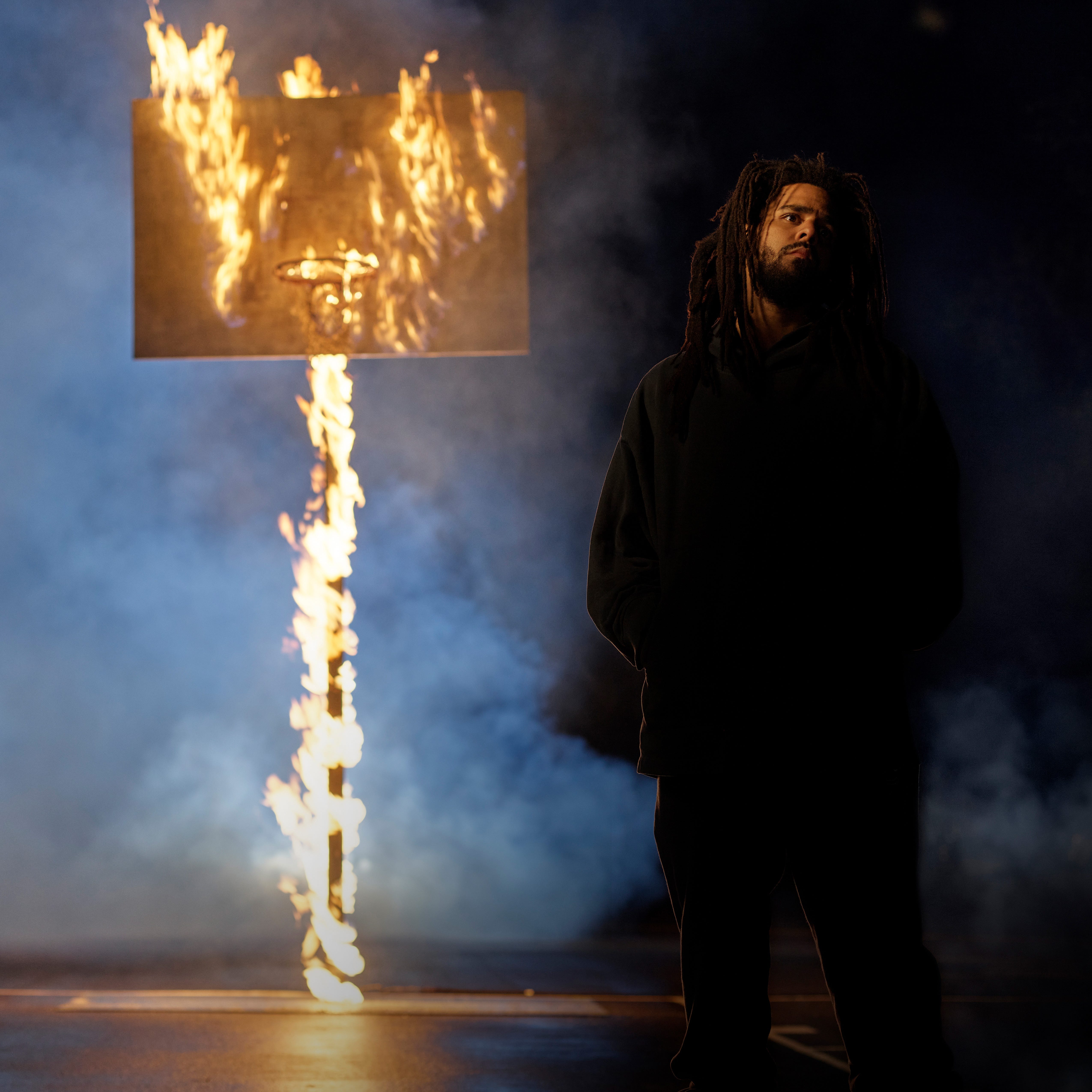
A year before this album dropped, Jermaine Cole sat on a public scolding he couldn’t shake. Noname had tweeted that top-selling rappers were nowhere to be found while Black folks put their bodies on the line during the George Floyd protests, and even though she didn’t say his name, Cole took it personally enough to write a whole song about her tone. “Snow on Tha Bluff” came off like a rich man asking a woman to lower her voice while the house burned. Noname answered with “Song 33” over a Madlib beat in under two minutes. He tweeted afterward: “Meanwhile a nigga like me just be rapping.” When The Off-Season showed up the following spring, Cole took that line and turned it into a mission statement. He put out a twelve-minute documentary comparing himself to a basketball player between seasons, telling 21 Savage on camera, “One more time before I leave, before I feel fulfilled in this game, let me try to reach new heights from a skill level standpoint.” Then he flew to Rwanda to play professional basketball for the Rwanda Patriots. The essence brought back the basketball hoop from The Warm Up and Friday Night Lights, except now it was on fire.
“95 South” starts with a Cam’ron intro, and that alone tells you where Cole’s head is at. He comes swinging at rappers who stuff their albums with thirty filler tracks and can barely move a hundred thousand copies, with a nastiness to it he usually keeps leashed. The second verse gets meaner, referencing wanting to kill twelve, ducking gunshots in Fayetteville, telling rivals to check between their legs. “Amari,” named for his manager Ibrahim Hamad’s son, runs under two and a half minutes on heavy auto-tune with a single verse and a hook about making it out of the concrete. “Applying Pressure” is one verse of net-worth arithmetic and shit-talking, Hideo Kojima name-drops and all, checking Slim Shady’s YouTube views to measure his own bag, calling broke rappers’ diamonds CZ and their perspective sustained by delusion. These songs are short on purpose. Cole wanted them built like suicides on a court—get there, touch the line, come back.
Damian Lillard’s voice kicks off “Punchin’ the Clock,” talking about not wasting his moment after a 61-point game. Cole follows with a story in under two minutes that sits heavier than anything else here. Somebody got killed over a chain—“Died over a cross just like the start of Christianity.” Then the verse cuts to Cole as a kid, somebody handing him a Glock, him firing it randomly into the trees for no reason, and he wakes up screaming from nightmares about it. The whole thing lasts a hundred and fifteen seconds. On “Close,” the weight arrives from the other direction. Cole describes a nightmare where he watches an old friend about to get shot, tries to yell, nothing comes out. He grabs his phone and his mom has texted—the friend just got killed for real. Whether the dream preceded the text or the grief rewrote the memory, the song doesn’t try to sort it out. It starts with “Ville-matic, one, one,” Dreamville meets Illmatic, and that little tic says plenty about where Cole thinks he fits and what he thinks rap should be able to hold.
Four and a half minutes is practically an epic by this album’s standards, and “Let Go My Hand” uses every second. Cole wonders aloud whether making music matters when people’s attention spans are cooked. Ibrahim Hamad sent him the beat a year prior, and Cole found it on his phone while on vacation, which is an oddly specific and charming admission. There’s talk of reading the Quran without the discipline to stick with it, dabbling in multiple religions and committing to none. A whole stretch of the song is about pretending to be tough his entire life, being scared of getting punched, keeping up a hard face out of habit. Then the Diddy story: Puff confronted Kendrick Lamar at the VMAs over the “king of New York” claim, Cole got in between, and it turned physical. (Diddy actually ends the song with a prayer.) His son told him “Dad, let go my hand,” and that small moment of a kid asserting independence set off a chain of thoughts about fatherhood and what masculinity even asks of you.
Cole hadn’t credited guest artists on a solo album since Born Sinner in 2013, and the company changes the room. On “My Life,” 21 Savage drops a verse about his absent father and his mother keeping him alive through the worst of it. There’s a plainness to the way 21 says it that Cole doesn’t always manage on his own. No polish on it. Morray sings the hook (interpolated from Styles P and Pharoahe Monch’s “The Life”), and his voice is the warmest thing on the whole album, a churchy wail over a soul sample that belongs on a Sunday morning even when the verses are about grinding and sacrifice. Lil Baby matches Cole’s paranoia bar for bar on “Pride Is the Devil.” The post-chorus has this panic to it:
“Terrified, paranoid, I’ll put you over everything to fill the void
And when you’re gone, will I have anything or will I be destroyed?”
Cole pays somebody to count his money on this track, then pays somebody else to verify the first person’s count. That detail is funnier and sadder than any bars about wealth should be.
The longest verse on the album lives on “The Climb Back,” which had been circulating since July 2020 as part of the Lewis Street dual single. Five minutes and change. Cole demands seven figures, talks about gun violence (“More deaths than World War II caused”), and then the song turns into a story about a friend he brought into his circle—somebody who got addicted to the proximity and started resenting Cole’s position. “Most of these niggas gon’ hang themselves, just give ‘em the rope and see.” That line has a weariness the competitive tracks don’t allow for. The outro breaks from rapping entirely and asks a direct question about whether they’re chasing growth or just fame, and it’s the kind of thing Cole gets clowned for sometimes (the teacher voice, the Jermaine lecture). This time the personal cost on display stops it from sounding preachy.
T-Minus produced more than half of The Off-Season and it shows in how the album breathes as a single piece. The soul samples are chopped tight, the drums hit like they’re trying to prove their own point. “My Life” and “Pride Is the Devil” both carry that T-Minus signature, the sample flipped just high enough to sound familiar without being identifiable until you go digging. Timbaland’s fingerprints are on “95 South,” the aggression in the way the beat pushes the pace. Boi-1da’s work is cleaner, more patient. DJ Dahi, Jake One, and Tae Beast fill in around the edges. Cole self-produced on “Applying Pressure,” and that track has a different texture, more spare, more room for the bragging to echo. None of these beats fight each other, which is unusual for a roster this stacked.
People been saying since 2014 that Cole’s guest verses and loosies embarrass his albums, that the guy who showed up on 21 Savage’s “A Lot” or Dreamville’s “Under the Sun” was a sharper rapper than the guy who made KOD. He told SLAM he wanted this album to be about “the time spent getting better and pushing.” He also kept calling it a warm-up for The Fall-Off, which he pitched as the real ‘final’ statement. And he did sharpen the pen. The competitive songs go hard. The album’s strongest material, though, lives in the pauses between them—a childhood gun, a dead friend, a kid pulling his hand away, a buddy who couldn’t handle watching someone else win. Cole built a gym, climbed in, ran suicides for thirty-nine minutes, and the stuff that’ll stay is what he said between sets, the things he couldn’t take back.
Solid (★★★½☆)