

Milestones: Watch the Throne by Kanye West & JAŸ-Z
The luxury-rap era’s high-water, built under a paranoid lockdown at the Mercer Hotel by two rappers coasting through an expensive hour, with a core that earns every receipt they flashed to get to it.
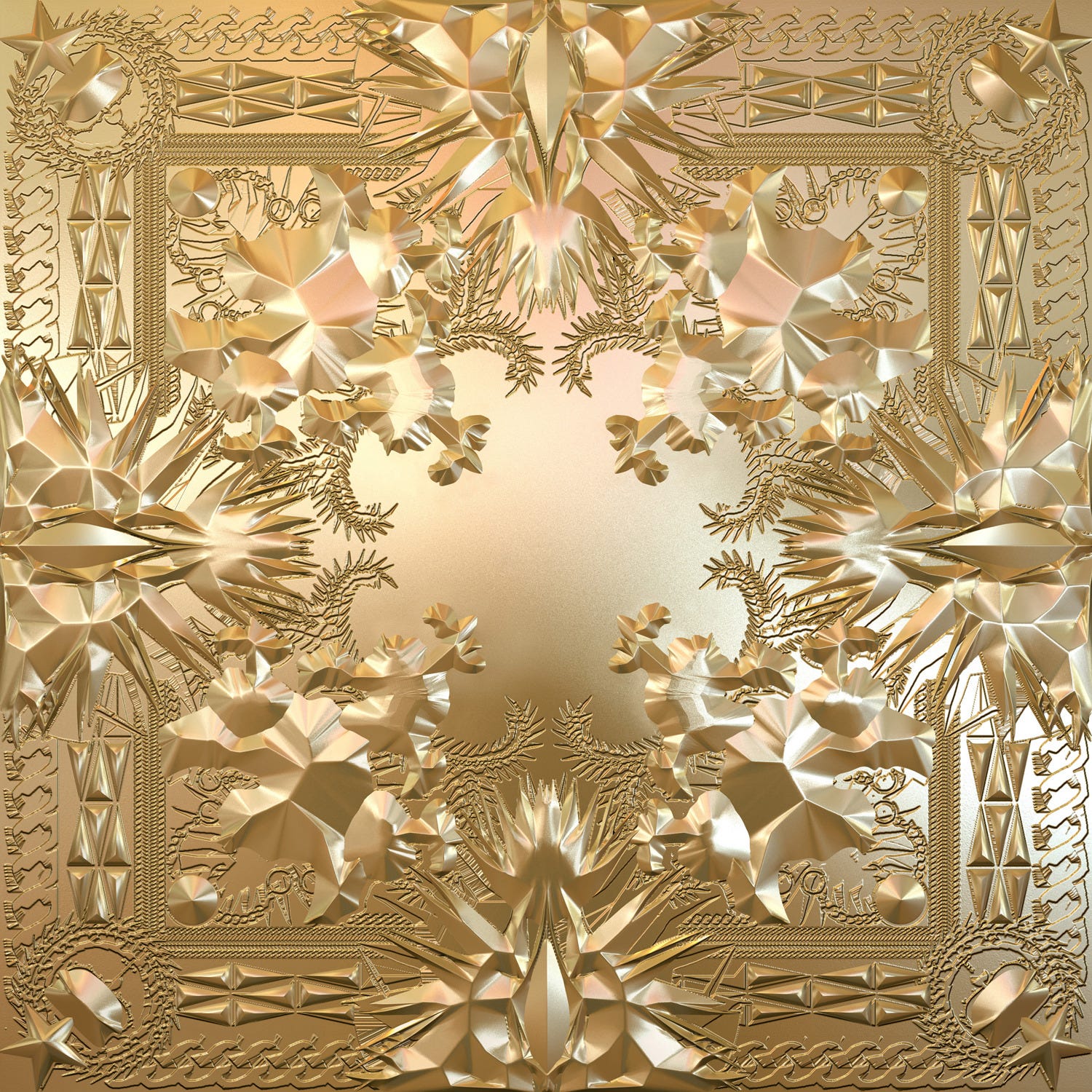
In the Mercer Hotel in early 2011, producer Hit-Boy was sequestered in the side room making beats and taking them down the hall when the call came in. The main suite belonged to Shawn Carter and Kanye West, and the rule was that nothing left the building. If you wanted to play anything, you brought the laptop into the room. In an interview with Complex, Hit-Boy said that Kanye would listen to a beat, break it apart, strip its tempo, and send Hit-Boy back into the room to build it up again from scratch. That is how a song called “Niggas in Paris” was created. That is also how the rest of the LP was made—in hotel suites across Mercer Street, Sydney and Paris, in a lockdown paranoia no one had bothered with before because no one had been worth leaking.
Everything was supposed to be an EP. Kanye sent an initial sketch of “H•A•M” to JAŸ. The idea was a brief, joint release, a victory lap, something to exercise the muscle after Kanye had returned to public life via the success of his My Beautiful Dark Twisted Fantasy while Jay was running Roc Nation and the Brooklyn Nets and a marriage and a label presidency and whatever else can fit into a calendar at forty-one. The EP idea kept growing beyond its initial boundaries. Producers got brought in, beats stayed, hooks stayed, more producers got brought in. What had started as a quick dap between two friends evolved somewhere between Mercer in New York and Mercer in Paris into an opera about the amount of money in the room making it.
Money is the theme of Watch the Throne, and the rappers know it. Frank Ocean opens the album with a question, wondering what a mob thinks of a king and what a king thinks of a god, over an 88-Keys’ stuttering loop from Phil Manzanera. That is the only philosophical question JAŸ and Kanye ask in their entire album. Everything in the next forty minutes is about shopping. Hermès and Margiela and Tom Ford, a Maybach car in a parking lot, a Basquiat on lease, a private jet itinerary that wouldn’t fit on Twitter. JAŸ rhymes about Bentleys with curtains and a watch he won’t even show to anyone in his verses on “No Church in the Wild”. Kanye rhymes about Audemars Piguet and the Louvre in the same breath. Ocean asks the question, the rappers answer with the items they possess, and whoever listens to the album with you decides whether the listing is the answer Ocean sought or whether two writers ran out of words after the first track. I heard it both ways myself, sometimes even within the same listening session.
RZA produced “New Day.” The sample under it is a Nina Simone vocal, slowed and chopped so much that it could easily pass for a synthesizer if no one had told you. Kanye starts his verse telling his unborn son that he will never give him an ego, that he will teach him to be nice to everyone. That vow is the first in the long chain, each of which cancels something Kanye had already been seen to do or something his father did to him. Some of the vows are funny in the moment and then become hard to listen to as you learn about Kanye’s life and career in the years to follow. JAŸ’s verse follows the verse of Kanye’s, dedicated to a daughter who hasn’t been born at the moment the track was recorded. Blue Ivy was born five months later. Whatever Jay has been doing on that verse, he is doing it for the audience of one, who would not listen to it for years to come and would already know everything important from it by then.
Swizz Beatz and the Texas producer S1 split “Murder to Excellence” in two movements deliberately, and used the seam in the middle to do something they didn’t do anywhere else in the album. Kanye starts the track by mentioning Danroy Henry. Henry was a Pace University football player who was shot to death by a White Plains police officer sitting in his car after the homecoming party in October 2010. Kanye goes further, and the verse becomes a walking tour of Black death without a search for an image more decorative than a name. Drums refuse to do anything spectacular under the rapper, which is the cruellest production decision. The names must do the work alone, without a kick drum to help. And then a horn line appears out of nowhere, the beat changes, and Jay comes in riding its end with a verse about being one of the few black families in the country club and the price it takes to be an exception to the rule just listed out loud by Kanye. Anywhere else in the album, production is added on top of production, with Mike Dean’s strings on Kanye’s synths over a chopped soul sample. Here the architecture is naked, and JAŸ and Kanye are forced to actually rap at each other and not just past each other.
Hit-Boy’s beat for the album’s flagship track is a completely different statement. He constructed the track out of a simple synth line, a Reverend W.A. Donaldson sample, and a Will Ferrell quote from Blades of Glory. JAŸ and Kanye giggled through the verses about being two black kids from Marcy and the South Side sitting in the Louvre discussing whether they look like Marcellus Wallace, and that giggle is the only reason the song works. The duo performed “Niggas in Paris” eleven times in a row at Madison Square Garden in the tour that followed. The crowd never stopped. Regardless of what you think about luxury rap as an art direction, this song is its anthem and its parody at the same time, the only place on the album where JAŸ and Kanye joke at themselves, knowing perfectly well they are joking.
Otis Redding does almost all the work on the track named after him. It is a chop from “Try a Little Tenderness,” four bars of raw wailing looped against itself. The beat was Kanye’s own work. JAŸ and Kanye trade off over it about Tom Ford and Maybachs and the price of a hostage. Verses do their job without ever going into the foreground of the sample. Eight months after the track was released, Otis Redding, dead since the plane crash in December 1967, was the featured artist on a 2011 rap record moving 436,000 units in a week, and a Grammy for Best Rap Performance went to “Otis” the next February. JAŸ and Kanye walked up to receive the trophy because they were the only people in the room who could. Otis was thanked in the speech.
The first thing JAŸ says on “Welcome to the Jungle” is that he is a Black Axl Rose. Swizz Beatz gives him an organ and a single drum and keeps out of the way. Jay raps about deaths he had carried for decades before he ever had a record deal. First of them is his father, who abandoned the family and died before JAŸ could afford to find him. Then Colleek, his nephew, was killed in 2006 in a car JAŸ had bought him as a gift. Names of the friends from Marcy pop up in the background of the verse without receiving proper attention. Jay speaks the worst of it in the casual register people use to say things out loud when there is nothing left to do on the porch. “Lost a nephew, my motherfuckin’ uncle gone too.” Axl Rose built a career out of grief turned into a tantrum. JAŸ-Z spent fifteen years pretending he had no grief at all. “Welcome to the Jungle” is what is left when the pretense is cracked open for four minutes.
The hour around these peaks reveals the budget without earning anything for itself. Bruno Mars was supposed to sing on “Lift Off”; he was pulled somewhere in the process, Beyoncé came in to cover his part over and still makes the song sound like a draft she didn’t have a chance to reconstruct. “Gotta Have It” is a competent Neptunes track from the post-Neptunes period. Q-Tip overloads “That’s My Bitch” with too many ideas and makes Justin Vernon put them in the right order. Kanye makes his case about being the rudest person in the room on “Who Gon Stop Me,” over a Flux Pavilion dubstep, and his case includes a line about the Holocaust that was not appreciated in 2011 and is even less appreciated today. “Why I Love You” is JAŸ rapping a grievance verse at Beanie Sigel and Freeway and whoever else he believes abandoned him during the Roc-A-Fella’s fall. Nobody comes to Watch the Throne to hear that. Competence of these tracks was not in question here. None of them will travel home with anyone after the headphones are off, which rap’s best songwriters haven’t managed to do in a room until they tried in a hotel.
Five months after “New Day” were recorded, JAŸ-Z became a father. Blue Ivy was born in January of 2012, and by then the Watch the Throne Tour was already a month into the run and grossing more than any previous hip-hop tour. Jay was performing “Niggas in Paris” eleven times per night in Madison Square Garden with a daughter of his own in the audience and a roomful of kids who could recite the Will Ferrell’s sample before the beat dropped. Kanye was two years away from having a daughter of his own, and from recording a verse in a hotel suite to a child who remained hypothetical at the time of recording. “And I’ll never let my son have an ego/He’ll be nice to everyone, wherever we go,” he said into the microphone with RZA on the other side of the glass, and in the following years would get to see how long it would last.
Great (★★★★☆)