

Milestones: We Are KING by We Are KING
Three women spent five years making a debut in a bedroom studio. We Are KING refused outside pressure, and the finished record carries the grain of slow assembly.
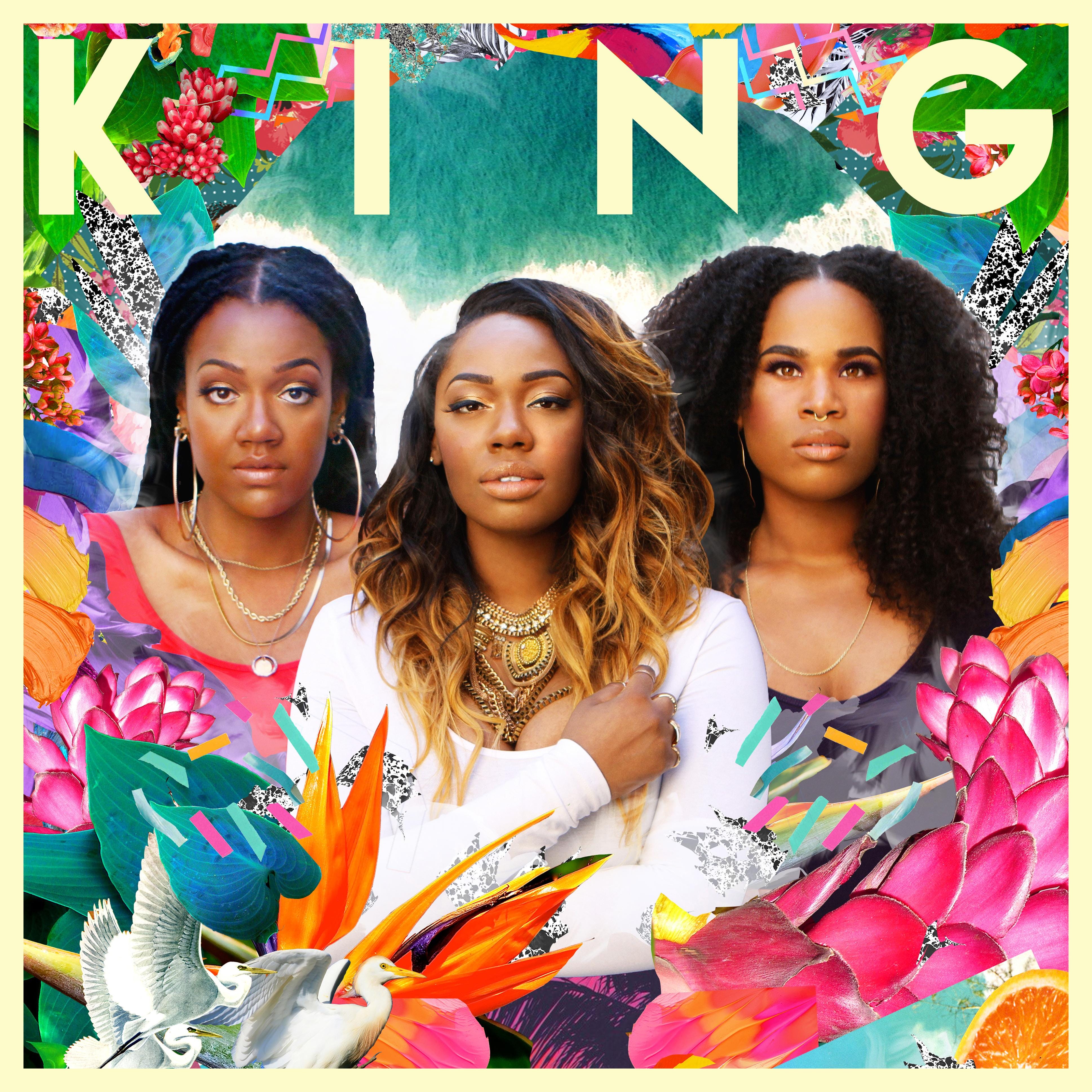
Three women spent five years building something from a bedroom studio in Los Angeles, and the long wait tells you more about the record than any promotional copy could. Twin sisters Amber and Paris Strother grew up in Minneapolis, nieces of the electric bluesman Percy Strother, and they moved to California carrying that city’s particular relationship to synthesizers and negative space. They met Anita Bias years earlier, when Paris was music-directing for another singer and heard Bias warming up in a hallway. That voice stopped her mid-exit. Later, in California, the three began recording together at King Creative, the Strothers’ home studio, and when they uploaded a three-song EP called The Story in March 2011, the traffic spiked within hours. Phonte heard it, then Questlove, then Erykah Badu, then Prince, who invited them to open his 21-Night Stand residency at the Forum and became their advisor for two years. Labels circled. The Strothers said no.
That refusal cost them velocity and bought them ownership. Kendrick Lamar’s Section.80 surfaced later that year with Tommy Black’s sample of “Hey” running through “Chapter Six,” spreading the trio’s harmonies across a record that became a generational marker. People who had never touched their Bandcamp page suddenly knew their voices. The placement could have pressured a rushed debut, but KING continued writing, produced everything in-house, and turned down deals that would have diluted their control. Five years passed before the album hardened into its final shape.
We Are KING landed in February 2016 with twelve songs, and its assembly announces its own terms. Extended mixes of “The Story,” “Supernatural,” and “Hey” appear alongside newer material, the same melodies that had circulated for half a decade now given room to stretch. When a motif returns in longer form, what once circulated as teaser becomes declaration. Paris Strother’s synthesizer arpeggios on “The Story” widen at the margins, allowing the voices to settle into pockets that the original version merely suggested. The stacked vocals on “Supernatural” climb higher, breathe more, and the extensions earn their minutes by proving the trio knew exactly where each phrase wanted to land. Returning to known material on a debut is a gamble, but the bet pays because the new versions carry different emotional weight. Hearing a song you already loved given more space produces a particular kind of satisfaction, like watching someone finish a thought they had been holding for years.
Muhammad Ali spent decades telling the world he was the greatest before the world agreed. The song named for him treats self-belief as rehearsal, building affirmation through repetition, each declaration landing with slightly more heft than the last, as though certainty were a muscle you condition until your body summons it without thinking. The vocal arrangement avoids inspirational cliché. When the three voices lock on the hook, they carry the weight of people who have practiced conviction until it stopped feeling like theater.
Elsewhere the album fixates on departure. “Red Eye” catalogs destinations with the breathlessness of someone planning an escape that keeps getting postponed—Egypt, then Tokyo, the Serengeti and Santorini, Zambia and Cape Town, Spain pivoting to Beijing. The names accumulate like stamps in a passport that exists only in daydream, and the production floats beneath the vocals with the weightlessness of altitude. One phrase cuts through: “Fly through the Nigerian night sky.” That pull toward transit recurs across the record, a persistent ache for elsewhere, for love defined by leaving together rather than staying put. The destinations matter less than the motion itself. What the singers want is velocity shared with someone they trust enough to board the plane beside.
A man who refuses to stabilize anchors “Mister Chameleon.” He shifts gold to green to indigo to white, and the speaker’s tolerance wears as she tracks each color change. The conceit could have turned precious, but the writing stays grounded in behavior rather than metaphor. She catalogs what he does, not what he represents, and the accumulating evidence builds the case for departure. The vocal blend tells you where the relationship stands at any given moment. When the three voices merge, they project solidarity, but the harmony thins as the doubt grows, and the fracture in the final verse widens enough that you register the breakup before anyone states it outright. The song earns its exit by showing you exactly how many changes the speaker absorbed before she stopped trying to keep up.
Some listeners who tracked KING through those five years called the album anticlimactic, and the complaint has a certain logic. Parts of this world had circulated since 2011. A debut assembled partly from earlier material generates a different kind of suspense than one arriving fully fresh, and people who had worn out the original EP might have wanted more unfamiliar ground. The record still holds together as a single object, though, and its coherence comes from restriction. The Strothers and Bias wrote and produced everything themselves, avoided the feature economy that clutters so much contemporary R&B, kept the collaborations purposeful and sparse. Paris handled the production and most of the instrumentation; Amber and Anita sang lead and background, trading positions according to what each song required. They decided what they wanted to make before anyone else could tell them what might sell, and the album carries that self-determination in its refusal to chase trends.
The few outside sessions sharpened particular abilities. Paris Strother co-wrote and produced “Move Love” for Robert Glasper Experiment’s Black Radio in 2012, and the session taught her how her arrangements could breathe against a jazz rhythm section without losing their center. Working with musicians who approached song structure differently forced her to loosen some of her production instincts. Her duet with Bilal on “Right at the Core,” from his A Love Surreal, pushed her into sparser territory, the two voices trading lines in near-whispers over minimal accompaniment. Both collaborations appear in We Are KING as absorbed lessons—the arrangements here know when to crowd the frame and when to thin out, and the vocals never fight the production because the same person shaped both.
The album keeps circling back to love as labor, as work you choose when you trust the other person will match your effort. The singers ask questions about commitment, worry whether their partners can sustain the same investment, plan trips that may or may not happen, negotiate terms under which intimacy becomes sustainable rather than draining. The romantic imagination here stays practical and deliberate, closer to partnership than to fantasy, and it mirrors the way the record got made. Five years of incremental assembly, three people who trusted the process enough to resist external pressure, a finished object that carries the grain of slow construction in every seam. The patience was the method. The method became the sound.
Exceptional (★★★★★)
 | A guest post by
|