

Milestones: What’s Going On by Marvin Gaye
Motown’s most obedient hitmaker stopped taking orders, and the album he fought to release became the label’s conscience.
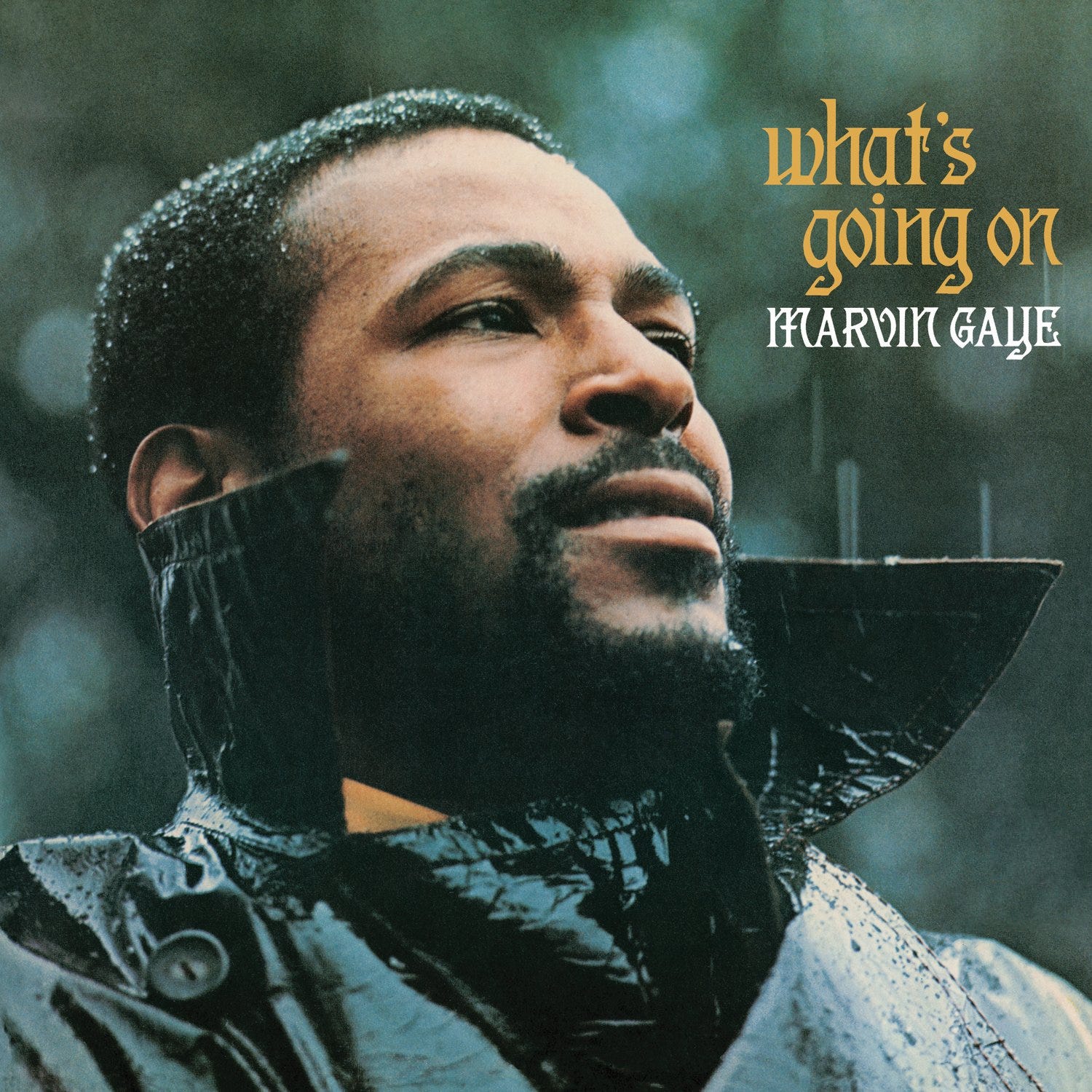
By the spring of 1970, Motown had lost one of its brightest voices in the ugliest way possible. Tammi Terrell died on March 16 after eight brain surgeries, three years of decline, and a final stretch confined to a wheelchair at 93 pounds. She was 24. Her duet partner hadn’t performed live in months and wasn’t planning to start again. Marvin Gaye barely left the house. He’d carried her offstage in Virginia three years earlier when she collapsed mid-song, and he never got over it. Gaye told friends and interviewers that singing love songs felt pointless now. His brother Frankie had just come home from a three-year tour in Vietnam with stories that made Marvin cry, and Frankie couldn’t find work. The country was falling apart. And the most successful Black-owned record label in the world wanted another “I Heard It Through the Grapevine.”
The song that broke the stalemate didn’t even belong to Gaye at first. Renaldo “Obie” Benson of the Four Tops had watched Berkeley police beat student protesters in People’s Park in 1969 and brought a tune to his group, but they turned it down—too much protest, not enough pop. Benson and songwriter Al Cleveland shaped it further, then dangled it in front of Gaye with a specific condition: sing it yourself, or you don’t get a piece. Gaye rewrote lyrics, sharpened the melody, and made it sound like two guys talking on a porch, not a protest sign. Berry Gordy heard it and called it “the worst record I ever heard.” Too jazzy, too meandering, too far from the Motown formula that printed money. Gaye refused to record anything else until it came out, and the standoff dragged on for months before Motown sales executive Barney Ales got tired of waiting and shipped 100,000 copies to stores without Gordy’s sign-off. They sold out in a day.
Gordy went from furious to demanding a full album in 30 days. Gaye and his musicians (Funk Brothers plus ringers he’d recruited himself) cut the remaining rhythm tracks in ten days at Hitsville’s Studio A, the basement everyone called the Snakepit. Instead of producing from the booth, he sat down at the piano with the band, which nobody at Motown did. Sessions ran midnight to dawn and the room stayed thick with weed smoke. Saxophonist Eli Fontaine was warming up over the rhythm track, just noodling, when the tape caught something nobody planned. Gaye stopped the session and told Fontaine he could go home. Fontaine protested that he’d been goofing around. “You goof off exquisitely, thank you.” That warm-up became the opening bars of the title song. Then engineer Ken Sands was supposed to play back two separate lead vocals so Gaye could pick one. Sands accidentally stacked them on top of each other. The doubled voice sounded a little ghostly, like catching your own reflection mid-conversation, and Gaye kept it. That’s the vocal on every track. James Jamerson, meanwhile, had to be dragged out of a bar, arrived too drunk to sit upright, and played his bass parts lying on the studio floor. Arranger David Van De Pitte had written those lines specifically for Jamerson’s fingers, and Jamerson nailed them flat on his back.
Frankie Gaye came home from Vietnam and couldn’t find a job. His older brother turned that into “What’s Happening Brother,” a song disguised as small talk—whether people still go to ballgames, whether there’s work, whether anyone noticed he was gone. Sounds casual for about thirty seconds. Then the questions start piling on and you realize the guy asking them already knows the answers. “Flyin’ High (In the Friendly Sky)” goes somewhere darker, a first-person drug confession where Gaye admits he’s “hooked” and “can’t stop,” congas and strings swirling around his vocal, sweet and drifting and going nowhere good. Nobody at Motown had put that on a record before.
Every problem on this album is the same problem. Mercury in the fish, oil wasted on the ocean, animals dying—that’s “Mercy Mercy Me (The Ecology),” and in 1971 the EPA was less than a year old. No scientific language. Just a list of things disappearing and a man mourning them. The way Gaye sings “oh, mercy mercy me/oh, things ain’t what they used to be” sounds exactly the same as the title track, because the neighborhood and the planet and his brother’s empty pockets are all one wound to him, and they always were.
Most of the album’s second half runs on sincerity that would embarrass a lesser singer. “Save the Children” pleads for kids inheriting a poisoned world. “Wholy Holy” asks, in total earnest, what would happen if people actually loved one another. No wink, no safety net of irony. Gaye meant every word, and getting that kind of naked conviction onto tape without it curdling into schmaltz is a trick almost nobody pulls off. “Right On” stretches past six minutes, congas and Jamerson’s bass locked into each other while Gaye scats and ad-libs over the top—the freest and loosest the album gets, like a band that forgot the red light was on.
The last song drops the gentleness. “Inner City Blues (Make Me Wanna Holler)” is all frustration. Taxes, inflation, trigger-happy cops, rent you can’t cover. The conga groove has that slow rolling boil, a pot somebody forgot on the stove. Gaye’s vocal trails off into wordless humming at the end, and the record just… stops. He’s out of words, but not out of feeling.
Every song bleeds into the next. Van De Pitte suggested the bridges between tracks, and Gaye went with it. The segues, combined with the party chatter that opens the album (Detroit Lions players Mel Farr and Lem Barney, Motown staffer Elgie Stover calling out “what’s happening”), turn nine songs into a single 35-minute prayer overheard through somebody’s window. You catch pieces of conversations. The mood stays warm even when the content is devastating, and the whole record trusts affection over anger. Gaye could’ve screamed and nobody would’ve blamed him, but he pleaded instead, asked questions, and the questions—”what’s going on,” “what’s happening brother,” “who really cares,” “make me wanna holler”—weren’t rhetorical. He wanted answers, and nobody had any.
Masterpiece (★★★★★)