

Milestones: Where I’m Coming From by Stevie Wonder
A newlywed and his bride wrote songs about love and ruin while Motown had no choice but to press every one of them.
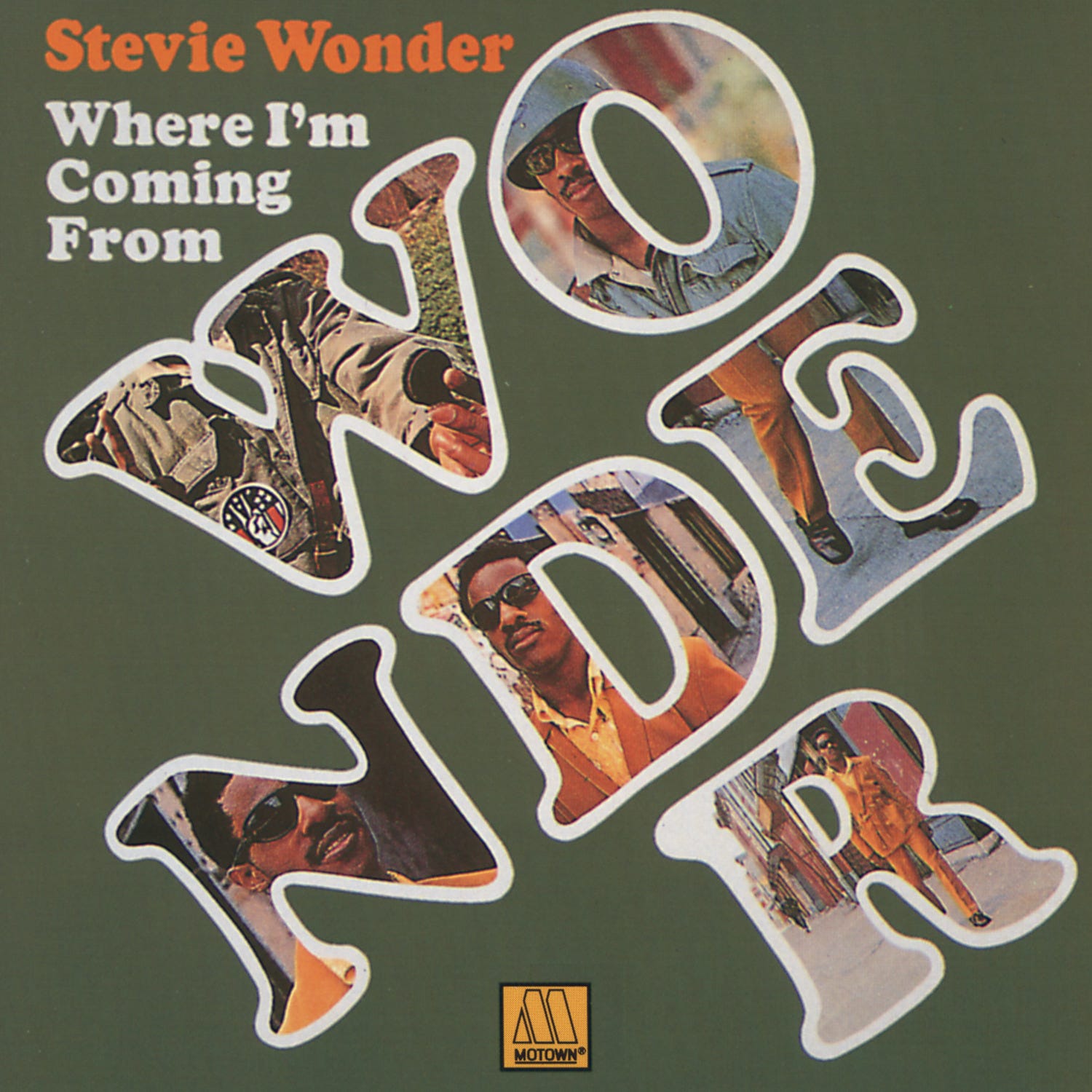
Motown in early 1971 still ran on Berry Gordy’s assembly model: write a single, cut it, ship it. Album-length ambition from an artist was a problem, not a selling point. But a contract signed on behalf of a child prodigy was about to expire. Stevie Wonder turned twenty-one that May, and the deal Gordy struck when Wonder was eleven years old could be voided the moment he became a legal adult. Gordy knew this. Wonder knew Gordy knew. And so Where I’m Coming From became the rare Motown album produced without any outside interference from the company, because Gordy couldn’t afford to say no. Wonder ran the sessions himself, played synth bass on most of the tracks (a first for him), stacked clavinet and harpsichord alongside the Funk Brothers, and hired four different string arrangers. The album he turned in was not the album Motown expected. It opened with a waltz played on harpsichord, contained a psychedelic funk blowout with a counting sequence tacked onto the end, and closed with a seven-minute two-part song about praying children and street crime. All nine songs were co-written with Syreeta Wright, his wife of six months.
Wright was a former Motown receptionist and demo singer who’d been writing poems since childhood. She and Wonder married in September 1970, and they built the album together during the first stretch of a marriage that would dissolve by 1972. Wonder told Blues & Soul that year: “Syreeta has a unique ability to express exactly what I want to say with a lyric.” That claim is audible across the whole album. Wright’s phrasing runs toward the declarative and the blunt. On “Look Around,” the speaker says coldness is the virtue, love is “used for something but what for,” time is floating in your mind, and you should look around because all you’ll find is “ruins of the human history.” On “Do Yourself a Favor,” the language gets stranger and more biblical: “ride the thorny mule that cries: dig your grave and step right in,” Judas collecting his thirty pieces. These are not Motown sentiments. They’re closer to Curtis Mayfield’s preacher-cadence social writing, but Wright bends them toward a harder kind of disgust.
Vince Aletti, reviewing the album for Rolling Stone alongside Gaye’s What’s Going On, called the lyrics “pretentious” and singled out that thorny mule line as evidence. He wasn’t wrong that the writing could be awkward on the page. But it wasn’t meant for the page—Wonder sang it over swirling psychedelic organ, handclaps, and a long breakdown that ended with him counting to ten and then calling the listener “dummy.” Aletti heard cluttered production. On tape, it’s a tantrum in the best sense, a young man with a church voice screaming about self-destruction over something that sounds like Sly Stone’s band had wandered into a tent revival.
“I Wanna Talk to You” splits Wonder into two characters, a young Black man and an old white Southerner, and lets them argue for five minutes. The Black character says he’s standing on his own side, waiting for the floor, reads about the way he could be and knows he “just ain’t able,” asks “who can I blame for the way I am? I ain’t never had one soul to help me.” The white character offers dinner and lawn mowing. The Black character calls him “white man” and says “I’m gonna take my share.” That last line did double work: it was the speaker talking to the white character but also Wonder telling Gordy and Motown that the old arrangement was finished. And on “Sunshine in Their Eyes,” the album’s longest song, Wonder tries a two-part structure. The first half is about children: “a prayer is heard by one so small, let love be in the hearts of all.” The second half drops out of that softness and into direct social reporting—“Papa’s stayin’ real careful ‘cause his brother Sam was robbed trying to buy just a loaf of bread for baby John,” “crime just feeds in the air.”
The love songs carry the album’s other half. “If You Really Love Me” was the hit, No. 8 on the Hot 100, and Wright sings co-lead on it, her voice threading through Wonder’s, their call-and-response built on actual bewilderment. The song asks a simple question (if you love me, why do you act like this?) and the piano-only verses strip the drums and horns away to let the question sit there undecorated. “Never Dreamed You’d Leave in Summer” is essentially Wonder at a piano with orchestral strings behind him, and the whole conceit is that warm weather was supposed to mean safety. He expected cold to come with winter, not with the person he loved leaving during the months when everything should have been easy. It’s a song about being betrayed by a calendar, by the logic of seasons, and it previews the kind of ballad writing Wonder would refine on Music of My Mind with “Superwoman.” “Think of Me as Your Soldier” and “Something Out of the Blue” are gentler and less complicated—romantic pledges from someone newly married. They’re warm without trying too hard, and they sit between the protest songs like rest stops, the album catching its breath before the next sermon.
And then there’s “Take Up a Course in Happiness,” which is the oddest thing on the album because it sounds like it belongs at a county fair. The electric bass bounces, the melody is goofy and infectious, and the lyric is just: happiness is something you can learn. After “I Wanna Talk to You” and before “Never Dreamed You’d Leave in Summer,” it’s almost absurdly cheerful. On a tighter album it’d be a tonal problem. Here it feels like Wonder and Wright taking a break between heavy conversations, writing something silly because the album needed a place where nobody was angry or heartbroken for three minutes.
The standard knock against this album, the one that’s followed it for fifty-plus years, comes from that Aletti review: he praised Gaye’s What’s Going On as seamless and unified, and called Wonder’s production “self-indulgent and cluttered.” The comparison was unfair in the way that simultaneous-release comparisons always are; one album became a consensus masterwork, and the other got measured against it in real time. But the criticism isn’t baseless. Where I’m Coming From does pull in too many directions at once. A drumless waltz on keys gives way to a funk freakout, then a straight love ballad, then a three-minute clavinet pop song, then a five-minute race dialogue. The sequencing lurches more than it flows.
The album’s ambition outpaces its editing. Some of Wright’s lyrics do strain for profundity (”we are idle strangers married to our dangers, flying to the heavens, chasing the light of day into hell”), and the longer songs run past the point where their ideas sustain them. But the album has Vince Aletti’s “most successful cuts” diagnosis backwards. The straightforward love songs are fine. The messy, overreaching songs, “Do Yourself a Favor,” “I Wanna Talk to You,” “Sunshine in Their Eyes,” are the ones where Wonder actually says something nobody at Motown had been permitted to say before. They’re flawed songs about real things: addiction, waste, race, poverty, the way adults fail children. And they’re written by two people who’d only been married a few months, who were still figuring out how to talk to each other and to the world at the same time.
Solid (★★★½☆)