

Mixtape Review: I Heard You Paint Houses by Conway the Machine & DJ Whoo Kid
Conway rhymes over beats jacked from 50 Cent, Eminem, and Biggie while DJ Whoo Kid hollers across the top. The writing makes the borrowed production beside the point.
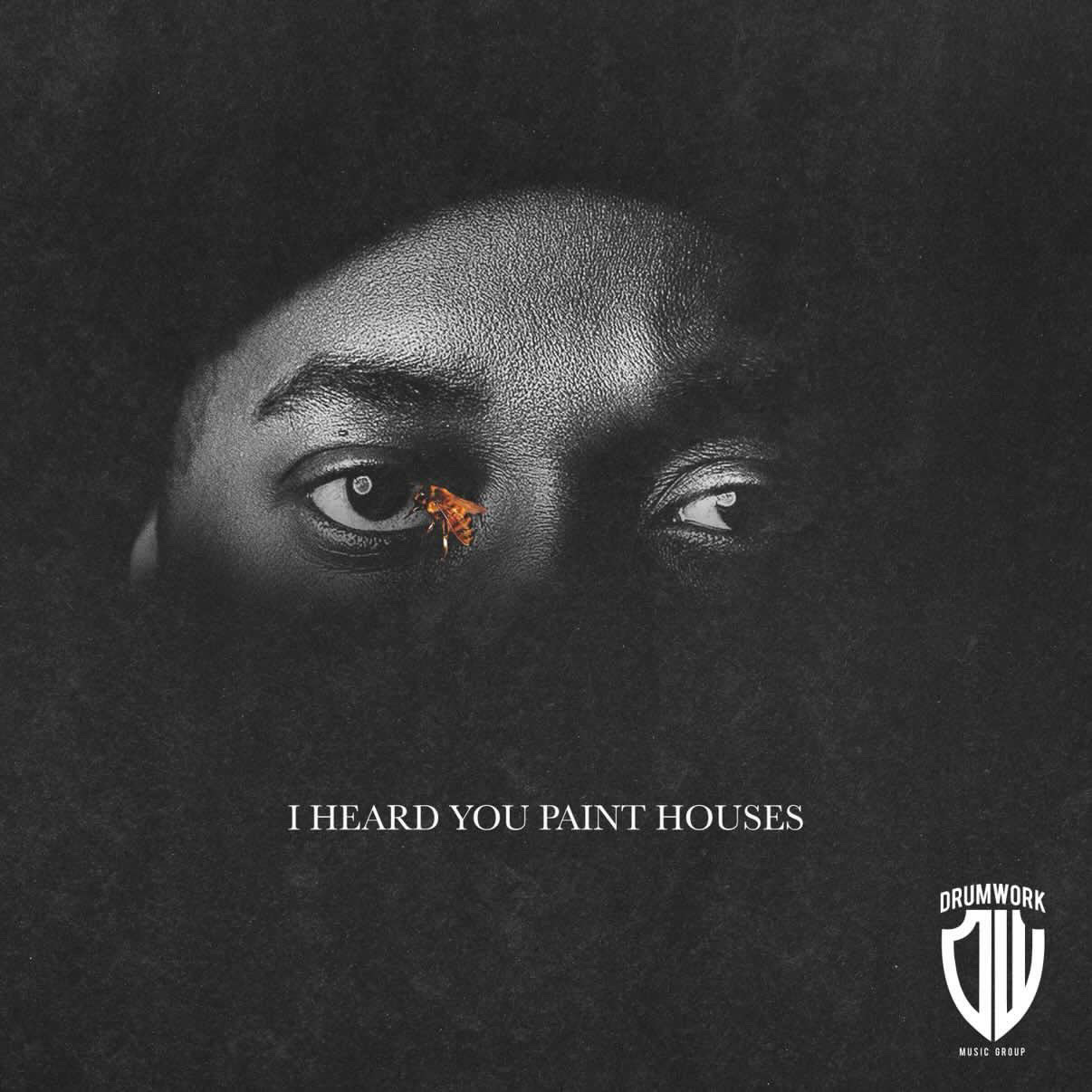
A hosted street tape, so it’s bittersweet having that feeling again. The instrumentals are owned by someone else, by 50 Cent, Eminem, Biggie, Drake, and a vintage 702 R&B single from the ‘90s; DJ Whoo Kid screams over much of it, dropping The Irishman’s line like the whole package’s calling card-mob slang, the designation for killing a man for hire. Conway the Machine raps within that frame; the veteran from Buffalo, who with his brother and cousin built Griselda and now heads the Drumwork imprint, has a role given to him. The skits make him his own staging; one of them features Conway receiving a telephone call, and then instructing him on the correct pistol to tote, and everything that comes afterward is Conway laying his raps over beats which aren’t his own. If production is removed from the equation, the only thing left to judge Conway is his rapping itself, and if he has what it takes to carry somebody else’s record on his back.
The first half is made of threats; they’re constructed economically. Conway turns wealth into danger without missing a beat on “20 Shots”—the speeding Porsche and the four-person Lamborghini within the same breath, the very next a nonchalant gesture: “Heard in his family someone died, I almost cared.” The hilarity of his ruthlessness stems from the detached way in which he reports. On “This Is Way,” built around 50 Cent’s “This Is 50,” it is pure mockery, the suit-and-tie hit man’s menace coupled with the playground fantasy of an adversary jumping a friend at the front of the lunch line. He waves a rival away, “You ain’t shit to me, you a write-off.” The mob fantasies come to dinner on “Superhero,” with lemon squeezing and lobster at Gekko and Naomi Campbell in the mix, then, in a casual sort of way, “Hit him three times, and he didn’t get up.” The narrative of the killing is nothing new for him, and that much he knows—what saves it from being tedious is the fact that the boast and the corpse never stop showing up together.
On “Long Kiss,” which uses Biggie’s “Long Kiss Goodnight,” Conway recaps his trade as if referring to an operations manual: “I sold base, I sold flake,” and then its chemistry, “I learned put some soda in the pot, the white expanded,” and then the exit; “Took the label’s money and ran, it’s like I vanished.” The verse concludes with a single-handed testament to a singular truth: “No friends, only this .38 I trust.” “TV Off” brings him to the kitchen: “When I’m cooking up, it’s Michelin three stars,” and only then do the threats turn crude, with a gun longer than a broomstick held in a man’s parents’ face. It’s in the cooking bars that the writing is the loosest and the most assured, a history brought so close he could reach and touch it.
For much of these verses, Conway measures himself. “Whips & Chains” turns inwards, “I’m antisocial, I don’t socialize,” “Bipolar, yet still one of the most polarized rappers,” a man cataloging his contradictions and then running through the list of what he has yet to do: an album with Pharrell, Chanel he owes Tyler, the Holy Grail says he’s finishing. “IJDGAF,” over Eminem’s “Just Don’t Give a Fuck,” looks to his legacy; “I started out with zero/Now I’m worth nine million,” “I got a legendary catalog, I’m Bob Dylan,” and proclaimed the greatest rapper ever died and lived. The brags are so gigantic that he has to almost laugh at them, to make sure they are truthful.
When the threats subside, Conway dabbles in seduction, with mixed results. “702,” a run of “Steelo” cadence, comes off easy: “Your picture should have a spot in the Louvre,” the whole tab he picked up for a stranger, a conclusion on a body, “I can tell by the way the thighs match the ankles.” “Freakin” aims for something more complex, a relationship that is off and on, that shares a verse with arguments and romance, Paris and a first crème brûlée on one hand, “Every other day, it’s like another argument with you” on the other. The only original beat here, “Can’t You Be,” laid down by Cardiak and Hitmaka over a flip of Total’s “Can’t You See,” is the closest thing to a single; it gets an actual hook from A Boogie wit da Hoodie and Jeremih. Conway provides it his thinnest lyrics; it is all Diddy in ‘97 and nothing more.
Grief dominates the ending section of the mixtape. “Emotionless,” a breakup devoid of niceties, opens up in a rush of insults. “I crossed more lines with you than this paper my pen crossed”, transitions to that that stings: “I guess you seen grass wasn’t as green as it was with Machine”, a confession beneath the brag: “When deep down, that shit crushed me to pieces.” “1985” adds further grief to that. The 1.5 million dollars Ghazi gave him and how he spent it all, more than average drinking, a lost child, the envy he can’t get rid of for his brother Victor, who chose being a husband, picking up his children over music. “Free” is by far the best writing. Conway is reading through a Wallo book and wishes for peace over a bottle of The Prisoner, remembers JAŸ-Z looking across a table and telling someone to give him a portion while his eyes insist otherwise (there’s already speculation about that and the reason we don’), lists who is coming home from prison while his call disconnects after a friend, who stole from him twice. The peace he craves sounds absolutely nothing like the menace that piles up before it.
Conway’s production isn’t all over this tape. A tape like this pays to borrow others’ records (which we dearly miss), hoping the writing will do enough to earn back the expense, and the drops and movie skits of Whoo Kid are scaffolding that stops being relevant after a few listens. What stands is a rapper who, onto a 50 Cent or an Eminem instrumental, bends toward Buffalo without notice. And who writes of what wounds him, when the menace leaves him, in the same bare hand that he uses to count bodies.
Great (★★★★☆)
Favorite Track(s): “20 Shots,” “1985,” “Free”