

Mixtape Review: Naturally by Nectar Woode
Nectar Woode spends these soul songs on Naturally talking herself down from her own head, with Elton John guesting on piano for the one about lost childhood.
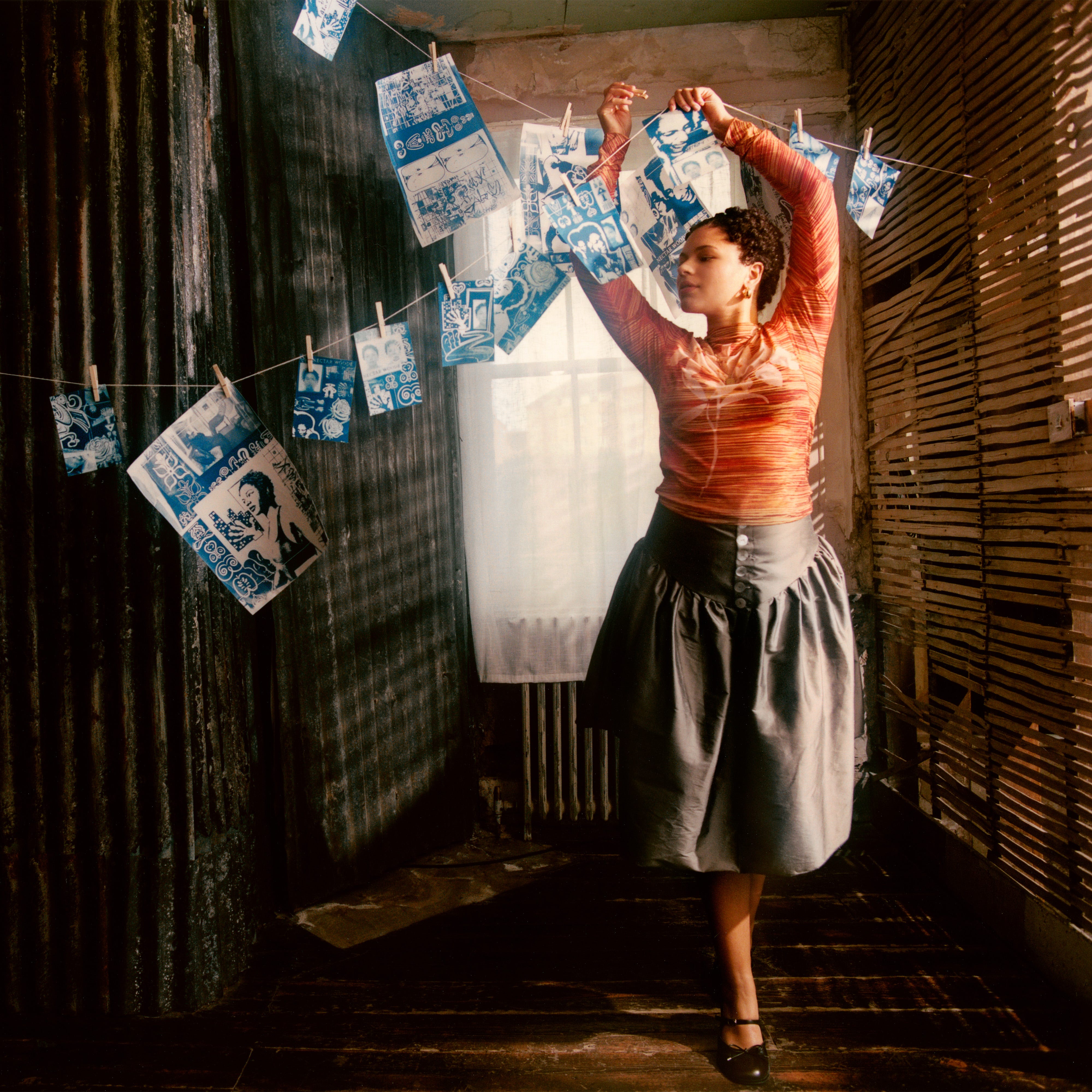
London, predictably, can’t help but produce young singers ready to blow out the room, the kind with belts and runners who can make the hook sound like a final closing argument. Instead of the pyrotechnics, the warm bass and live drums, Nectar Woode, a British-Ghanaian singer, works the other way. Singing at speaking volume, close to the music, the majority of these songs on Naturally are angled back in, toward the only people she can’t gain enough distance from: herself.
She faces off with herself. The small live band under her just keeps things out of the way. The low, rumbling bass on “Lights Off” feels weighty. It supports this small voice, but it sounds like it would suffocate most bigger ones, framing them rather than simply cradling. “Naturally,” by contrast, bounces along on a slightly sunnier melody. Woode never becomes glib, and though the band backs off, allowing her to whisper the lyrics in an almost audible hum sitting on top of the song, they don’t disappear altogether. Her strongest rival is that persistent internal critic.
The most insistent version, and the one who vocalizes herself most, is on the bubbling, percussionist-driven “Stick Fight.” She sings, “Playing with my own mind,” and, “Think twice/Then think another couple times,” folding the entire confrontation up into what becomes, with her, a fairly livable compromise, “Chipping away till I lose/I’d rather be painted a fool/In this stick fight,” carried off, on account of the rhythmic push and pull, so you don’t feel her actually sink to her knees. Ultimately, she does answer the anxiety from “Rivers End” with self-affirmation (“To the river’s end/I’m gonna be my best friend”) and on “No Chains on My Soul Right Now,” that can-do monologue starts to feel genuine.
Her love songs are where Woode stops the blame game with her element. It’s “Roses In the Dark,” which lays an even dead, bouquet at the altar of a text she can’t stop sending, arriving each morning. This one also lays blame on herself: “You hit the blunt and killed the vibe/A fuck you might have crossed my mind.” Self-doubt follows with the story of two kids who were too young to make sense of things on Plasticine, molding and shattering an attraction until it all falls apart: “It’s crumbling in our hands/But maybe we deserve it.” It’s a lot to take ownership of for any song, let alone a break-up one.
There’s one address pointing outwards, which is also the lightest writing, the love songs are really Woode taking on this particular pain the other one takes a look around at what may or not be coming and sings about summer at the ready for her arrival, hoping for more than a romp with the hook, the groove and lines about somebody you and somebody taking to sunny sides a few pleasant lines which cut into something different by her inwardly-focused songs.
The only other ballad, except for a piano, is on the one song, where it seems Elton John himself takes over, and from brokenness the only change made was into simple grieving, turning away from romantic wrecks into plain grief and aging, for here we get a “Wine Into Water” with a sentiment about getting older again: “Wish I was a child again.” A slow, steady hum on the piano to counter a sigh breathed rather than enacted. The grief in a single snapshot the following morning is a sudden, clear vision: “like a flash of light/I saw myself grow up overnight,” the death of the self one can’t visit again, put simply and without argument.
Once the piano goes away, it’s back in force again with the low end of “Message to London,” where Woode finally stops talking to herself and talks to the city, “Blue city lights surround me,/Where do I turn when you hurt me unexpected?” The tune oscillates between perceiving the city as a lover or as danger, “You’re tall and bright, hypnotizing/But is this home? I need reminding.” She holds London against her origins, “Louder than my Grandma’s highrise,” and laments the city being devoured by construction, “There’s more and more cranes,/Tearing the sky.” The simmering anxiety finally coalesces into form and place, “How do you pour such a mixture/Of anxiety? At the same time, I miss ya,/A cocktail of all my broken dreams.” As the song draws to a close, she releases any tension to simply concede, “Blaming my pride anymore,/I’m yours.” She’s never sounded more committed, although it is towards a landscape of which she’s still quite fearful.
Great (★★★★☆)
Favorite Track(s): “Roses In the Dark,” “Stick Fight,” “Wine Into Water”