

Our Tribute to Lowell “Sly” Dunbar (1952-2026)
The Jamaican drummer anchored reggae and dancehall for five decades alongside bassist Robbie Shakespeare. His grooves carried everyone from Bob Dylan to Chaka Demus & Pliers.
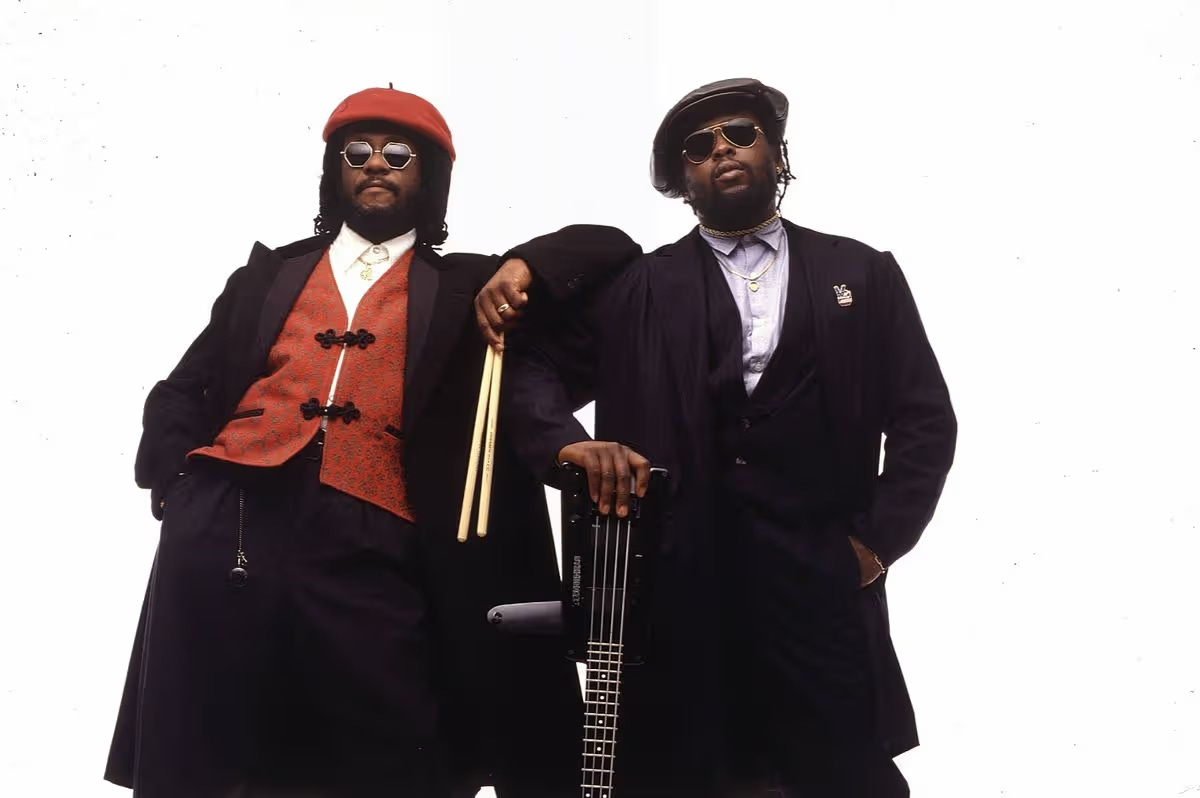
The Jamaican drummer whose syncopated inventions bent reggae and dancehall into new shapes for fifty years, Lowell “Sly” Dunbar, has passed away earlier today at age seventy-three. His wife Thelma, in a statement that circulated through Kingston by midmorning, described waking him at dawn and calling a doctor to their home. The physician arrived too late. Dunbar had been ill for some time, though the specifics remained private, and the quiet of the news matched the man himself, who spent decades letting his sticks do the talking while others sang above his kit.
He entered the world on May 10, 1952, in Kingston, where the corrugated rooftops and transistor radios carried rocksteady and ska through the yards of Trench Town and beyond. By fifteen he was sitting behind borrowed drums, teaching himself patterns by ear, absorbing the work of session players whose names never graced record sleeves. He took his nickname from Sly Stone, though the two shared little beyond an instinct for the pocket. Where Stone craved the spotlight, Dunbar preferred the shadows behind the hi-hat.
His first recorded drumming surfaced in 1971 on Dave and Ansell Collins’s “Double Barrel,” a sparse and propulsive instrumental that sent British teenagers into record shops by the thousands. The single seized the number-one position on the UK charts and stayed there, an unlikely feat for a Jamaican tune built on a drum pattern so lean it seemed to dare the listener to look away. Dunbar was nineteen years old. He had announced nothing. He had simply played.
At Channel One Studios on Maxfield Avenue, where the mixing desk glowed orange and producers layered dub effects onto rhythm tracks late into the night, Dunbar met a bassist named Robbie Shakespeare. Shakespeare had a way of locking his notes to the kick drum that made the two of them sound like a single organism breathing in four-four time. They began calling themselves Sly & Robbie, and within a few years, no session in Jamaica could afford to proceed without them.
The pair supplied the pulse for Peter Tosh’s Legalize It, a record whose title track became an anthem for herb smokers and civil libertarians alike. They drove the Mighty Diamonds through Right Time, anchoring falsetto harmonies with a groove so patient it seemed to stretch time itself. When Black Uhuru needed a rhythm section for Guess Who’s Coming to Dinner, they turned to the duo whose reputation had grown synonymous with Kingston’s studio culture. Dunbar’s snare on those sessions hit like a door slamming in a concrete corridor.
By 1978 the Rolling Stones had taken notice. Mick Jagger, who collected Jamaican records and flew musicians to New York when the mood struck him, invited Sly & Robbie to tour as part of an expanded band. Dunbar found himself playing arenas that dwarfed any Kingston dancehall, his polyrhythms colliding with Keith Richards’s guitar churn in ways that delighted some crowds and bewildered others. He released Simply Slyman the same period, a solo statement that showed he could carry a record without Shakespeare beside him, though the partnership remained his anchor.
The pair founded Taxi Records, a label and production house that let them control their own tapes. They joined Chris Blackwell’s Compass Point house band in Nassau, where the Bahamas breeze mixed with cigarette smoke in a studio built for maximizing echo and groove. Grace Jones arrived to record Warm Leatherette, and Dunbar’s drums on that album cracked like whips against the tile. He stayed for Nightclubbing and Living My Life, giving Jones a rhythmic skeleton she dressed in leather and glitter. Serge Gainsbourg flew in to capture some of that Compass Point air; so did Mick Jagger, cutting solo tracks away from the Stones; so did Bob Dylan, whose presence in the room surprised no one who understood how far Dunbar’s reputation had traveled.
When dancehall swallowed reggae whole in the early 1990s, Sly & Robbie refused to watch from the sidelines. They constructed the Bam Bam riddim, a chassis so durable that dozens of vocalists rode it to chart success. Chaka Demus & Pliers slapped “Murder She Wrote” on top of it and watched the single ricochet through sound systems worldwide. Nardo Ranks took the same riddim for “Them a Bleach,” a tune about skin-lightening creams that hit harder because the drums underneath carried such easy menace. Dunbar had proven, once again, that he could reinvent himself without abandoning his pocket.
No Doubt recruited the duo to help shape Rock Steady in 2001, a gamble that paid off when “Hey Baby” climbed the American charts and “Underneath It All” lodged itself in radio rotation for months. Gwen Stefani sang over rhythms Dunbar had spent thirty years perfecting, and the combination sold millions of copies to listeners who had never heard of Channel One or Taxi Records.
He and Shakespeare recorded thirty albums together, a partnership that outlasted marriages, lineup changes, and the collapse of the Jamaican studio system they had helped build. Their final collaborative record, Sly & Robbie vs. Roots Radics: The Final Battle, arrived in 2019, a head-to-head with another legendary rhythm section that felt less like competition than celebration. They claimed two Grammy Awards along the way, for Black Uhuru’s Anthem in 1985 and for their own Friends in 1999, trophies that now sit somewhere in Kingston gathering dust while the records themselves continue to spin.
Dunbar’s drums powered two Billboard Hot 100 number-one singles in two different decades. Maxi Priest’s “Close to You” reached the summit in 1990, a lover’s rock ballad that needed Dunbar’s restraint to let the vocal soar. Omi’s “Cheerleader,” remixed for international release in 2015, borrowed a groove Dunbar had perfected long before the singer was born. He did not appear on the remix, but the original session belonged to him, and when the track became inescapable that summer, older heads recognized the Kingston DNA in its bones.
He leaves behind a catalog so vast that scholars will spend years sorting through session tapes and tracking down credits. More than that, he leaves behind a way of playing that turned the snare into a conversationalist and the kick into a heartbeat. The riddims he built will outlast the men who sang over them. The grooves he locked will keep dancers moving long after anyone remembers his name. Sly Dunbar let the drums speak for him. They have not stopped.