

Peabo Bryson Was a Songwriter Before He Was a Disney Voice
The two movie themes that made him famous are the least revealing things he ever sang. His self-written ballads and his duets make a better case.
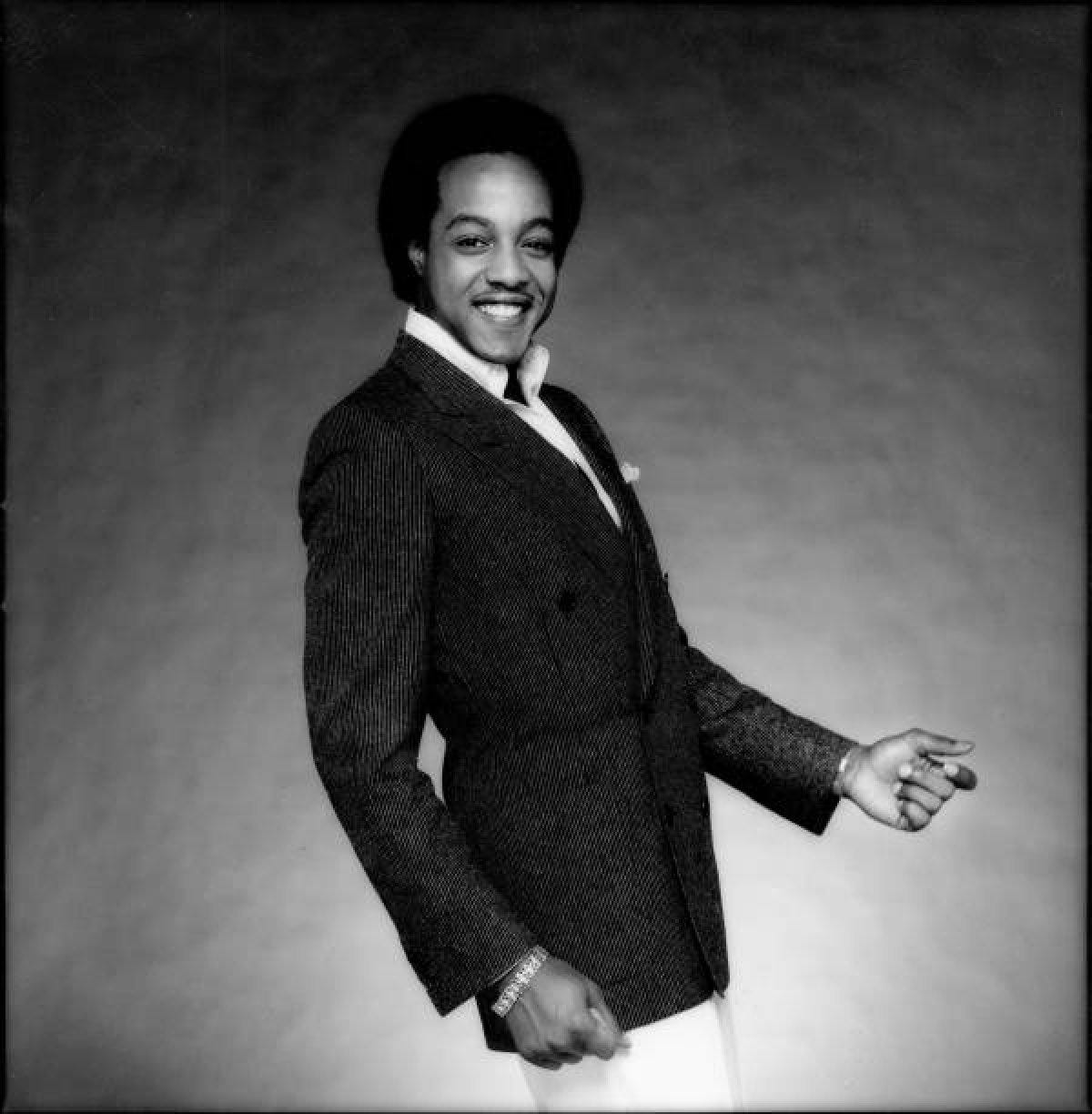
A bandleader named Al Freeman nicknamed him. As a boy in 1964, while backup—singing in a Greenville group called the Upsetters, the kid listened to Freeman mispronounce his middle name of French West Indian origins—Peapo—until the mispronunciation stuck, and Robert Peapo Bryson was Peabo. He was only 16 when he began touring the Chitlin’ Circuit as part of Moses Dillard’s band and later signed with Atlanta-based Bang Records, where he began his career first as a writer, producer, and arranger and later recorded his own material. Bryson, who his family said “peacefully transitioned” yesterday at 75, days after suffering a stroke, rose to fame making music before any labels wanted him for his voice. And that order of operation is where the entire story lies. But on the two Disney numbers we all can hum, the order is reversed.
The Capitol era that came after, in 1978, with his gold albums Reaching for the Sky and Crosswinds, began with songs he wrote himself, all characterized by a reserved adulthood. “Feel the Fire,” the first standard to originate from this partnership, demands everything and pledges everything in a measured rhythm that sounds cautious. When he sings, “Let my record show/I gave you all the love I know,” the wording is nearly legal, a contractual agreement rather than an overwhelming release. Although Teddy Pendergrass and Stephanie Mills would both cover the song as a carnal desire, his version sounds almost chaste, its wearer buttoning his collar at the end of a steamy night he describes with caution. “I’m So into You,” a two at the R&B charts hit—his highest ever—works on the same principles; his hunger is registered, but his appetite is restrained, a young man with a need expressing desire like someone who has thought it all through.
But he was destined to sing duets, and the duet calls for the ability—most singers do not possess-not to win. He met Roberta Flack—whose singing partner, Donny Hathaway, died in 1979—on the 1983 Born to Love album, stepping into the vacancy that could have flattened any less assured vocalist by merely keeping his place as the grounding force. “Tonight, I Celebrate My Love,” a surprisingly adult take on a love song by Gerry Goffin and Michael Masser, has been described as an account of sexual commitment treated with the banality of everyday life; Bryson’s shrug of a lyric, “It seems the natural thing to do,” is delivered with zero irony. He had performed similar duets with Natalie Cole on “We’re the Best of Friends,” where their voices never truly intruded upon one another’s spaces; his career was subsequently devoted to this collaboration style.
His one true solo pop hit, the 1984 “If Ever You’re in My Arms Again,” depends on a single changed word. Earlier in the song, a second chance is “too much to ask”; in the final chorus, the line has shifted, the doubt is gone, and a second chance “isn’t.” It’s a whole argument with himself, won in the space of one syllable.
Both of the songs with which Bryson was known to people who never bought one of his albums were end-credit pop versions of songs heard within a movie. Angela Lansbury, as Mrs. Potts, sang “Beauty and the Beast”; Brad Kane and Lea Salonga as Aladdin and Jasmine sang “A Whole New World”; and Bryson got the radio edit that played as the house lights came up. First, Disney was worried the now unknown Céline Dion couldn’t pull off a single on her own in the U.S. So they partnered her with the already established Bryson to help support her, and she had her first U.S. Hit with the song. For “A Whole New World,” lyricist Tim Rice wanted a hit on its own merits rather than by a major name; after Barbra Streisand and George Michael both declined, he gave it to Bryson for simply doing it well and being unobtrusive. The Bryson-Regina Belle version hit #1, ending Whitney Houston’s 14-week run with “I Will Always Love You,” and becoming the first song from an animated feature film to reach #1 on the Hot 100. It was his only #1 in life. The song won the Oscar, but at the awards telecast, it was performed by Kane and Salonga; Bryson and Belle performed it live and on the album, but never live in concert that I’m aware of. Bryson’s last hit charted months later at #25, on a Kenny G record.
It’s easy and false to write that this is tragic. It’s more useful to tell the plain truth: both of the songs with which the general public most associates Bryson are among the least interesting records that he ever made—they’re well-sung greeting cards, and as noted, it takes real skill to do that, just not the skill that produced “Feel the Fire” or the Flack duets. The subsequent hits maintained his lifestyle but added little to the artistic case. “Show and Tell” and “Can You Stop the Rain” are competently produced adult contemporary records that just about any number of capable singers could have cut. The records that only Bryson could have made had already been completed, created by a man who had spent the 70s writing grown-up soul nobody was going to put on a soundtrack.
When his stroke hit, Bryson had just completed a Golden Touch tour that was celebrating 50 years in the business and was working on an album called Grace with Jimmy Jam and Terry Lewis, almost but not quite completed. He had barely escaped a heart attack years before, but had still carried on performing. He knew what he had, and he knew that he had earned it. He had no need to list his achievements, “Not how you think, but validation in the faith that I’ve kept in myself and those around me, and the person that I’ve managed to maintain myself to be. I’m really happy about that. I like me. And I like that I don’t feel the need to chronicle my accolades to anyone, shout them out to anybody. But, if someone were to stop and do the research,” Bryson explained to Rolling Stone in 2018, “there’s nobody like me.” The record clearly supports his case, though it is not a case that will be focused upon by headlines; it is a record that focuses on a kid from Greenville who received an incorrectly spelled name, landed a job writing hits for others and decided to write hits for himself.
It can be argued that Bryson was the best singer of soul ballads and duets (both R&B and pop) from the late 1970s to the early 90s. The Disney songs and the ballads with Roberta Flack gave him crossover appeal, but his love songs in the 70s and early 80s helped create the Quiet Storm playlist and songs like Impossible and Lovers After All, which was a Melissa Manchester song where he was the duet partner - are two of my favorites. RIP Peabo Bryson.