

Philly Soul Never Actually Left, It Just Moved
Joy Denalane cut the year’s most beautiful record in Berlin, in German. Plus: Jagged Edge without JD, Ledisi’s mainstream turn, the entire Norwood family on one tracklist, and more.
Welcome to this special edition of Soulpolitan. 2011 was fifteen years ago. I know, you feel old? During that time, on the surface, it was rough as R&B was trying to find its way back. But make no mistake, in this five-album series, we’re revisiting these albums to see if they hold up (or not), or whether you should give them a second chance if you missed the project(s) on their initial release date.
Jagged Edge, The Remedy
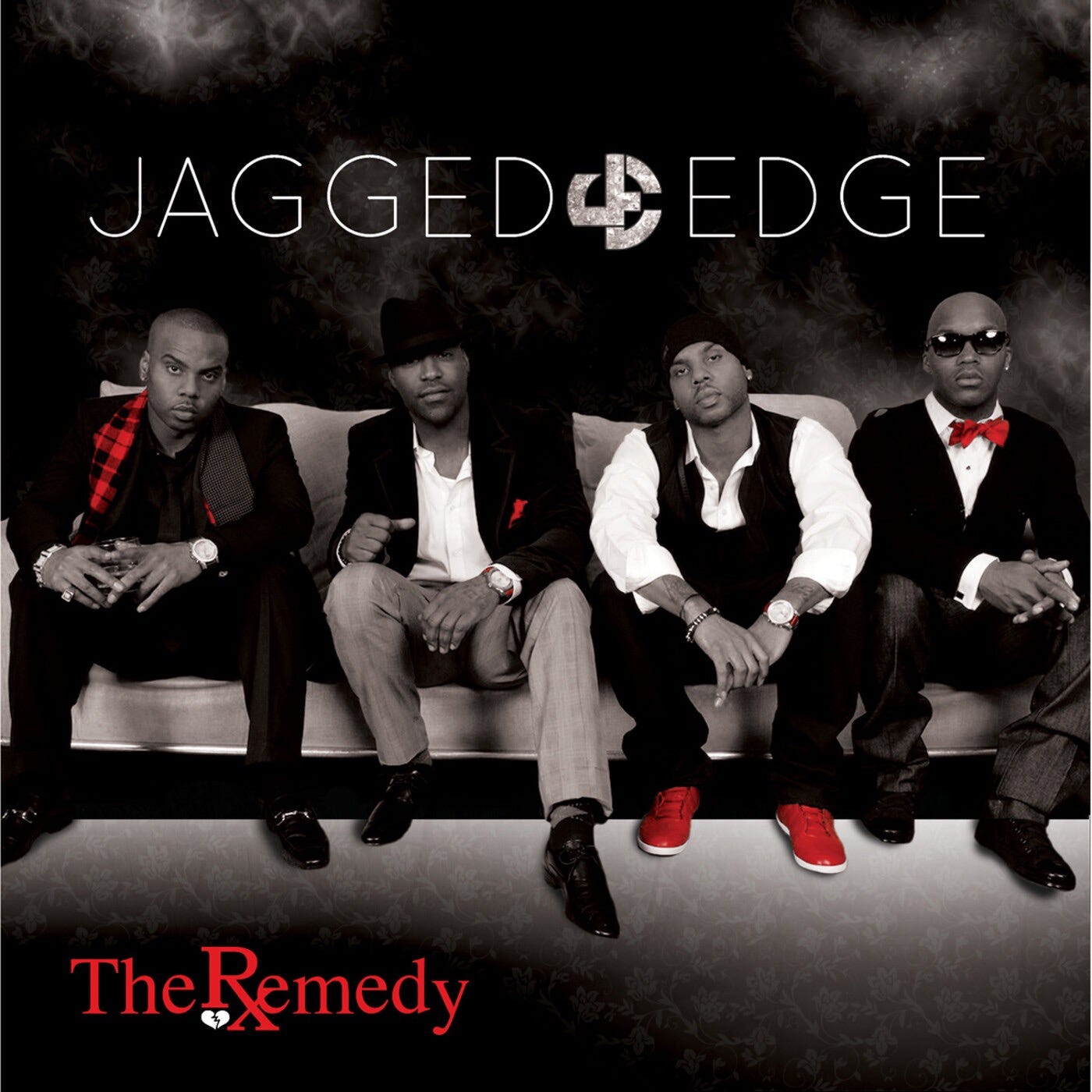
Yeah, a lot of people were saddened when vocal groups all but vanished from the mainstream music scene, leaving Jagged Edge as the last bastion of the genre. It’s a tough climate for R&B vocal groups, but it seems like it’s becoming difficult (at least in the mainstream) to produce “authentic” R&B. It’s been four years since JE released an album, but it is excellent to see them release new material and keep the R&B vocal group format alive. In the album’s acknowledgments, Brian Casey cites artists like Tank and R. Kelly (I know, I know) as keeping true R&B alive.
These are the same JE and Dupri that made so beautifully in the past. Yet you get the feeling that JE is anxious to put some fresh distance between them and Jermaine Dupri. That was especially clear when JE released the single and video for their “Tip of My Tongue” (featuring Trina and Gucci Mane) in 2009, and only now do they explain that this track was supposed to actually be the first JE single. This sample is from Art of Noise’s “Moments In Love’”and features that laid-back, Miami-style bounce that JE was famous for. However, this was put out under Slip-N-Slide, distributing their own imprint (581 Music), which legally meant it could not be featured on JE’s new album.
The other tracks on the album (which lean heavily on famous samples) probably don’t credit their source material due to sampling clearance issues. That said, this album was recorded in Atlanta and Miami and is quintessential JE. Most people probably assumed that NE would be altered somewhat due to the change of label, but JE’s Southern-flavored style is completely unaltered (thanks in part to producers like Gorilla Tek, who brought the JD-era JE sound). Most of the credit goes to the Casey brothers, Brandon and Brian, who wrote almost every song as they have done in the past. Even the tracks produced by other people (”My Girl” by Big D and “Lay You Down” by Cool & Dre), though featuring contemporary synth sounds, are unmistakably JE-style.
Of course, the Casey brothers’ tracks are quintessential JE, loaded with the poignant, beautiful melodies that characterized so many of the duo’s past triumphs. Yet another example, “Love On You,” a ballad with a striking piano tone, or the melancholic “Space Ship,” both from the Casey bros, or another mid-tempo marvel, “Let’s Make Love.” Produced by Lamb, “I Need a Woman” is another ballad, with a great piano riff on that one too. The Brothers Casey penned the duo’s second release, J.E. Heartbreak, with the potential classic “Let’s Get Married” on it. “Flow Through My Veins,” a melodic ballad produced by Jim Jonsin, bears a fresh, vibrant sound, almost completely conjured by the acoustic guitar. It’s beautiful.
Songs like “Baby” and “Lipstick,” the latter featuring Rick Ross on what would seem the guaranteed smash of a catchy mid-tempo groove (with the breezy open feel of Miami recordings), while the former borrows heavily from Surface’s “Happy,” showcase how vital and refreshing JE’s vocals and harmonies still are. This sudden play for catchiness and summer anthem status, climaxing in the infectious “Mr. Wrong,” the ballad dredging up the melody of Roberta Flack and Donny Hathaway’s classic “The Closer I Get to You,” would seem unfair if these guys weren’t so irresistibly talented; it’s almost impossible to hold a grudge. Continuing the pride and determination of old-style R&B vocal groups, Je has created a fine record. —Tabia N. Mullings
Ledisi, Pieces of Me

Pieces of Me, Ledisi’s first album in roughly two years, is a sharp change of direction after the heated energy of Turn Me Loose, which featured several prominent producers. Besides Ledisi, the only returning player on Pieces of Me is Claude Kelly, who writes or co-writes all but three of the album’s songs. A fairly explicit cover shot and aggressive funk songs on the earlier album put her in a similar camp with other singers and also evoked memories of the old Party label. She’s obviously cast her lot with the mainstream now, opting for a nearly all-straight R&B album, apparently with outside producers such as Chuck Harmony, Mike City, Salaam Remi, and KayGee. The jazzy material on her earlier albums may not have appealed to the broadest audience, but at least it was something relatively unique. She’s making a play for the mainstream audience now, in a manner—and without the sort of stiff, lifeless auto-tune we heard too much of from the last—we can wholeheartedly endorse.
Considering how wonderful she sounds, especially on the title track and the thrusting “Shut Up,” some may question whether this is really her style. Yet the impossibly gifted Ledisi—an impossibly gifted singer whose breadth of talent makes every effort seem easy—shows she can catch the feel of R&B naturally, and in whatever style. It’s impossible to dislike her abundant dynamism, whether a slow jam as exceptional as the title track or the tension-bursting “Shut Up,” co-written by Louis York. The former is topped only by Chrisette Michele’s excellent Epiphany among all R&B this year. Compare, too, the uptempo, rugged yet smooth “Shut Up” and sweet slow “I Miss You Now” (with its Philly-style fat-bottomed bass) to how Ledisi’s voice wraps itself so enjoyably around John Legend that it should “complain” that these tracks sound too young or too polished. Highlights abound; Ledisi draws richer from each than her peers, such as Michele or Legend—even her clichéd uplift numbers like the inspirational “I Miss You Now.”
Largely functioning in a Rodney Jerkins-R&B-influenced mode on “Bravo” and “Shine,” producer Jon Jon Traxx has much of the essential R&B sound of these years under his belt. The flow of “Bravo” could easily be The-Dream and not leave anybody the wiser. As for “Coffee,” featuring KayGee separately from Jaheim, is still one of the best bangers in her arsenal. “I Gotta Get to You,” the one track with Ivan Barias and Carvin Haggins, leans a little too close to Jill Scott’s lane, if this wasn’t recorded previously. Nostalgic “BGTY” pairs the Amy Winehouse side of Salaam Remi with a reggae-inflected conclusion (though lacking the reggae inflection) and comes up as one of the better songs in the latter portion. Of the tracks with outside influences, “So Into You” and “Stay Together” (the latter featuring Jaheim) hail as major contributions to the album, while the exceptionally heavy and deep “Hate Me” places with the best of them.
Ledisi has a strong, dominating personality, and she displays it with potent authority on her new album. Listeners who want her to be funkier, like she is sometimes, may complain, and there’s some chance of overbalancing. Still, the rich details here give a different perspective. —Imani Raven
Joy Denalane, Maureen
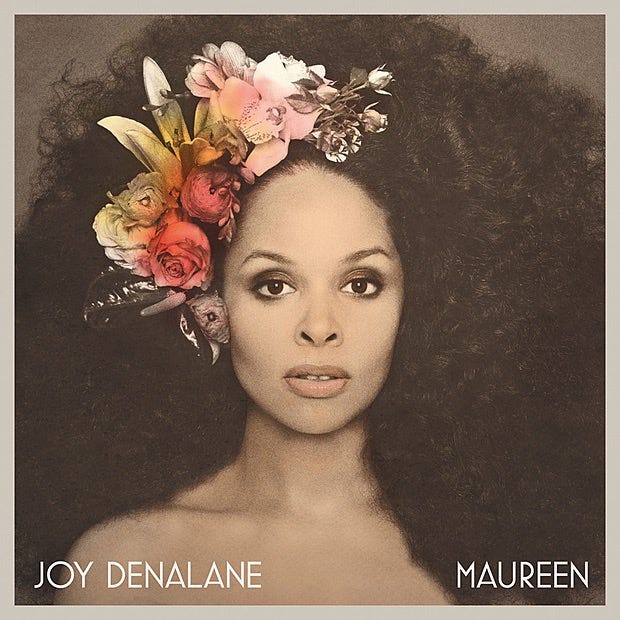
Five years after her last album, which was made in the U.S. and sung in English, Joy Denalane has released an album named for her middle name, which, in every song aside from one, is sung in German. To get the album done, she teamed with her husband, Max Herre, and with SteveMcKie and Samon Kawamura, the Kahedi team. Most of the tracks deal with juicy rhythm tracks that hearken back to those on her last album, but tracks such as “Niemand (Was wir nicht tun),” with its Curtis Mayfield-like male voice, show how much her creative team has matured. The constant quotations from sweet soul songs by The Moments, The Five Stairsteps, or whatever are unavoidable if one just makes rhythm tracks. Such are also those that are nice to throw in once in a while; combined with the voice, they make the piece. But what’s new in this album, as opposed to the last one, are strings that recall Larry Gold. It’s very possible that Gold was inspired after he wrote the score for The Dresden Soul Symphony, which was put on CD and DVD in 2008, and saw her live covering soul classics, with Bilal, Dwele, Tweet, and the like performing the same with a German orchestra.
“Der Tag ist nah” and “Bin und bleib dein” are fragrant ‘70s Philly-style ballads, with Joy’s supple voice melting brightly into Larry’s strings. Her singing has become considerably rounder, and perhaps because of that, the angular quality particular to German is less pronounced. Still, the crisp expression on contemporary mid-slow “Siehst du mich” and the Afro-funk-flavored groove of “Rosen” reveal the progressive spirit characteristic of Joy. As for her sole English-language song, “Happiness” is a Heatwave melodic cover, with the flow leading up to it especially splendid. —Mina Abdel
Mamas Gun, The Life and Soul
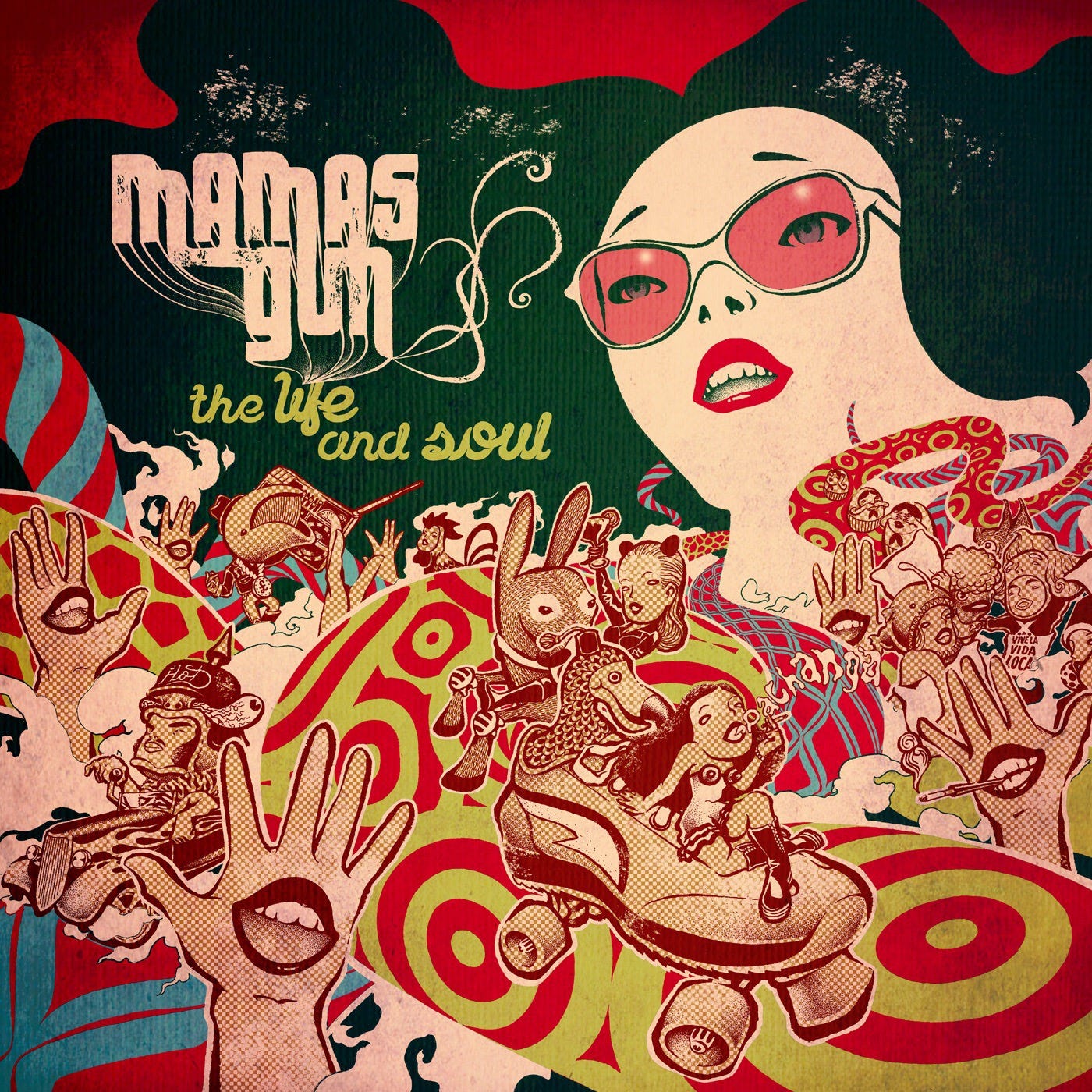
Should Black music really be embarrassed by a group as overflowing with charm and cheerfully band-oriented as our favorite Streatham, London, act? It’s a hard question faced, perhaps, by no one but us, for there is no denying the blatant appeal of this second album, which first hoves into view with “Reconnection,” its fathoms-deep live piano chords statesmanlike amidst generous helping of rushing beat and dizzily 1970s rock-and-soul sound, an instance of delightfully achieving something close to—no, not the Isley Brothers in question, but that group’s even more arbitrarily rock-feeling early 1970s. “We Make It Look So Easy” tests positive to the same strategy’s continuing effectiveness (falsetto and all), though it’s folky rather than pretentious this time.
The rare combination of a forceful, raised-chest voice with a thick, moist, almost delicate guitar cut ting that rides warm strings on a song like On a String is what makes Andy Richards such an unusual find among Black vocalists who normally center everything on the back of the throat. Besides Eric Benét’s mellow, chestier tones on Heavy Hands, every track finds Richards swapping his six-string for a strap-on clavinet and wah-wah guitar to goose up the replacement groove. His ‘50s finds him in a glorious retro-soul mood, flirting shamelessly with Motown pop. Several impressive tracks, especially the tasteful ballad with Paula Wilcox, the fine Beverley Knight harmonies, and the bright bicycle race, are likely to be overshadowed by the immaculate performance. —Jamila W.
Brandy & Ray J, A Family Business
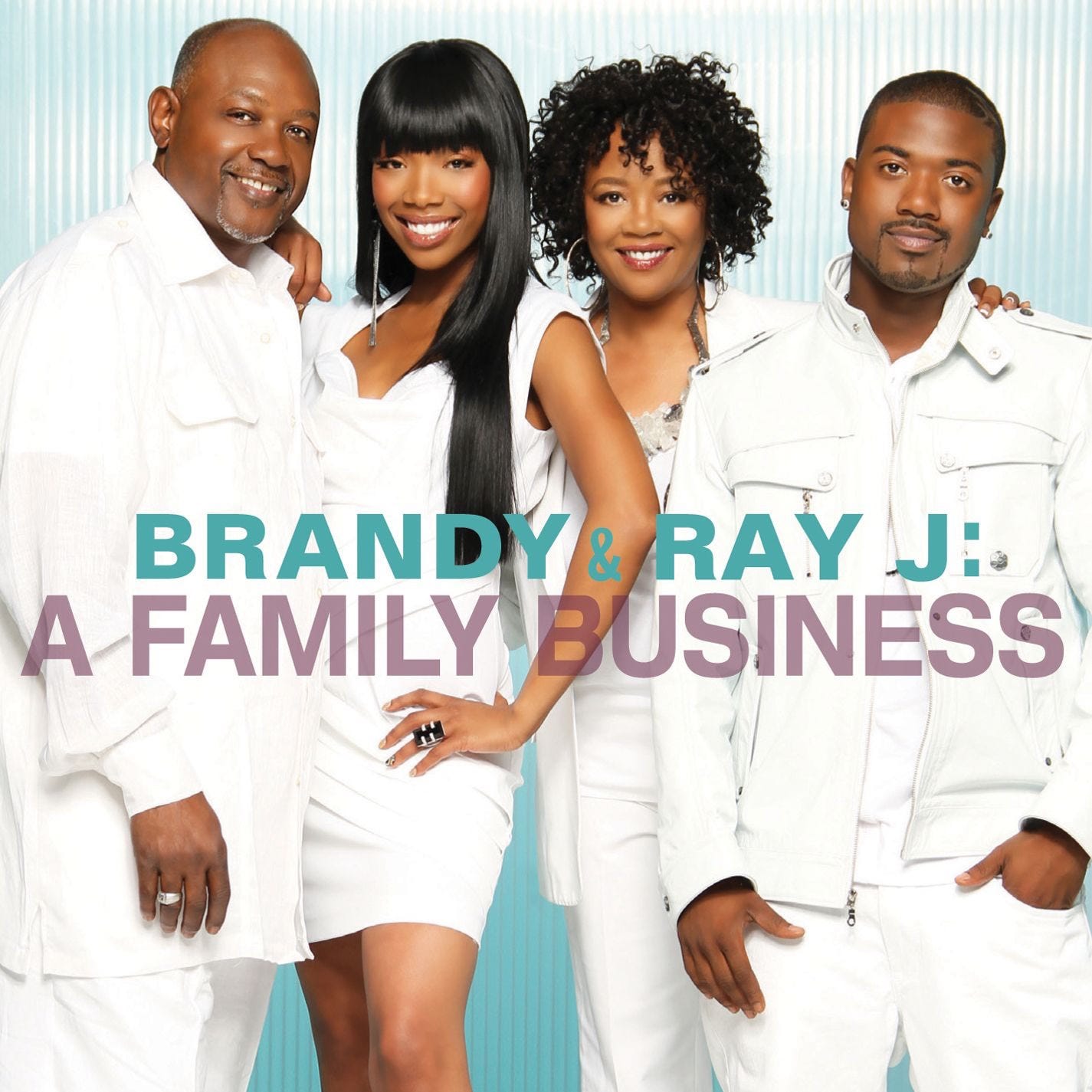
Remember Family Business? An album with the same name as the Brandy/Ray J reality series shows as much faith in the value of marketing as its makers have. The opening title track is a rubbery gospel-influenced uptempo number with beats, ostensibly performed by the entire family and dedicated to “the family business.” Actually, since only the show’s mother, Sonja, does any singing (unless her father, Willie, is moonlighting as a noted gospel singer), it’s hard to tell what the producer is thinking.
Sonja does act as a vocal trainer, and she delivers the moody “Sonja, Sonya, Sonia,” in a soulful style that recalls Midnight Star’s “Slow Jam,” professing her love for her husband. Brandy and Ray J are left to do vocal tricks on the beautiful, slow “Talk to Me,” produced by Scott “Shavoni” Parker of Brandy’s team, natch. As for Ray J, he struts his electro stuff with the infectiously upbeat “Turnin’ Me On,” featuring Ragga artist Aaron Fresh. “Ready to Roll” features the MC crew TKO, and Brandy gets to strut her stuff on two new songs: the Lifeguard folks provide “Lifeguard,” which leans rock-oriented in its approach, and there’s the pleasantly floating slow jam “I Don’t Care.” If nothing else, both these kids sound re-energized now that they’ve all but left the reality show behind to start work on new albums in production.
The set also boasts “My Family,” performed by Brandy’s daughter, Sy’Rai (who has an EP coming out very soon), and her half-sister, Rain Smith, and produced by their father, Robert Smith. There’s also “Gone,” performed by Tanya Scott, who is on Ray J’s label. It’s a project that keeps the family business grounded in the family, quite literally. —Tai Lawson