

Prince, Sonata for Two Pianos
From his father’s piano to the one that accompanied him on stage during his final tour, it is the most intimate facet of Prince’s body of work that is unveiled beneath his fingers.
John L. Nelson had been working for over fifteen years in the plastic molding department at the Honeywell Manufacturing plant in Minneapolis. Undoubtedly—as his sister Sharon would later recall—he was the first Black worker hired by Honeywell, back in 1948. But John had more than just a “secret garden”; he led a double life. In the downtown clubs at night, he led his jazz trio—the Prince Rogers Trio—from the piano. An amateur musician, to be sure, but one who was completely dedicated, he performed a repertoire of standards featuring sophisticated arrangements, often drawn from the work of Duke Ellington. “To him, Duke was greater than anyone else,” his son—aptly named Prince Rogers—would later remember.
At home, Skipper (as the boy was nicknamed by the family) would fall asleep every night to the sound of his father playing the piano. His half-sister Sharon Nelson recounts how, defying the ban on going out at night, he would secretly watch John’s performances from the club’s entrance—taking care to slip away before the final set ended so as not to be caught. In the Nelson household, that same sense of prohibition surrounded the instrument itself. John had always warned his son: this piano was not a toy, but a sacred space—and jazz was a serious business. Nevertheless, the legacy is passed down; the boy is drawn to this world of harmony—music opens the doors to desire for him... and to frustration. This authoritarian and distant father—whom he admires when he doesn’t outright hate him—becomes his rival. When, at the age of seven, Skipper tries his hand at the piano, John shows him no mercy: neither compliments nor encouragement; he judges coldly, with exacting standards.
Soon, Skipper puts himself to the test: he will play, and he will play well. To earn his father’s love? To surpass him? The piano becomes a symbolic battlefield. It becomes a matter of learning outside the scope of the paternal gaze—by cultivating an intimate, almost secret relationship with the music.
And, even then, by associating creation with solitude. When his parents divorce, John leaves the family home... but leaves the piano behind. Prince is now ten years old; he discovers that he possesses an exceptional auditory memory, reproducing sophisticated harmonies he has absorbed without ever giving them a name. The piano becomes an emotional refuge amidst the family chaos—a place where the child manages to re-establish a sense of order and weave an invisible bond with his absent father. And while he inherits John’s taste for improvisation—for musical architecture that extends beyond mere melodies—he will also diverge from it just as fundamentally: by saying “no.” He would not be a jazz musician. He would be funk, rock, pop. In fact, he would begin by imitating popular culture—reproducing, by ear at the piano, the theme song of his favorite TV series: Batman (a premonitory impulse, given that in 1989 he would compose a memorable album for Tim Burton’s film). And he would be a multi-instrumentalist, so as to depend on no one, never again having to ask for permission.
First Movement: The Hidden Pianist
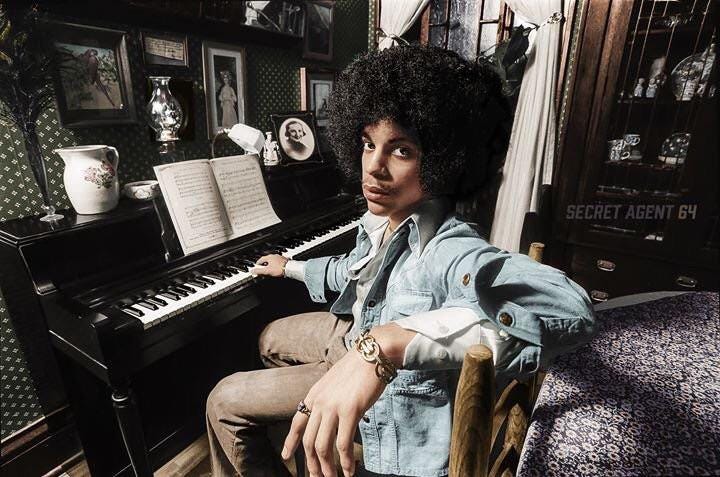
Prince would turn to the guitar, which quickly became the instrument through which he asserted himself. From his very first steps on stage, he forged an image of radical modernity and uninhibited sexuality. The piano, however, still reminded him of the wounds of childhood and his father’s judgment. From the late 1970s to the early years of the following decade, he was a guitarist performing for the public—and a great, hidden pianist. For the piano remained, in truth, the secret core of his creative work—the essential instrument behind numerous compositions. As early as his debut album in 1978, it served as the emotional engine of “Baby,” driven by its soulful, gospel-inflected chord progression. In 1979, it acted as the narrator in the starkly stripped-down “When We’re Dancing Close and Slow.” Thus, for Prince, while the guitar served as a shop window, the piano was his workshop.
The piano gems of that era lie buried within his discography—hidden there, too: tucked away on the B-sides of his 45-rpm singles, embedded within work sessions whose recordings circulated illegally at the time, or found in the extended versions of his legendary 12-inch singles. Thus, he recorded a distinctly jazz-funk keyboard solo—a performance that would remain quite unique throughout his career—within the instrumental section of “Sexy Dancer” (acting as a one-man band, he also contributed bass and guitar solos to the extended version released on the 12-inch single).
Released that very same month—October 1979—Patrice Rushen’s song “Haven’t You Heard” reveals striking similarities in inspiration to “Sexy Dancer,” particularly through its improvisational style: characterized by short, heavily syncopated phrases—often played against the beat—and its soaring, lyrical flourishes. Indeed, at just 20 years old, the multi-instrumentalist from Minneapolis was closely observing the musical currents flowing through the studios of Los Angeles, bound by a deep, mutual respect for the virtuoso pianist. No competition here: as he was forging his identity as a total artist, Prince viewed Patrice Rushen (herself a composer and producer) as a kindred spirit. Even then, the “Prince sound” belonged to him alone, and his approach to keyboards contributed significantly to it. At the moment of the synthesizer’s explosion, he sensed that it would serve as a tool to shape his artistic universe. Deciding as early as his debut album to forego a brass section—“We originally planned to use horns, but it’s really hard to sound different if you use the same instruments,” he observed in 1978—he invented a new kind of horn section by blending synthesizers and guitar. This would become the hallmark of the “Minneapolis Sound.”
Another gem, released quietly in 1982 (primarily as the B-side to the “1999” single), “How Come U Don’t Call Me Anymore” would go on to become an enduring piano-and-vocal classic, covered countless times on stage. Prince was only 24, yet he had already discovered his distinct identity at the piano. By 1983, Prince had only a few months left before becoming the colossal star behind Purple Rain. Yet his relationship with the piano remained a private affair, kept on the fringes of the major stages. One night in his home studio, he sat down at the instrument and recorded an improvisation and composition session onto cassette—a secret session that would eventually become historic, officially released in 2018 under the title Piano & A Microphone 1983.
If this recording moves us so deeply, it is because we hear Prince playing as if in the family living room—the son alone with the shadow of his father. He composes through exploration, testing out progressions, doubling back; the instrument is entirely at the service of emotion and doubt. Transcending the sadness of the lyrics, the music sweeps us away in a torrent of joy. An unfinished track, “Why the Butterflies,: resonates like an unconscious reenactment of childhood. With “butterflies in his stomach” and “swirling clouds”—his voice pleading for help (”Mamma!” chanted repeatedly)—he is surely reliving his childhood epileptic seizures: traumatic experiences undoubtedly linked to his hyperactive temperament. Only the piano—Prince’s intimate diary—could open up such a space for him.
Second Movement: The Liberated Pianist
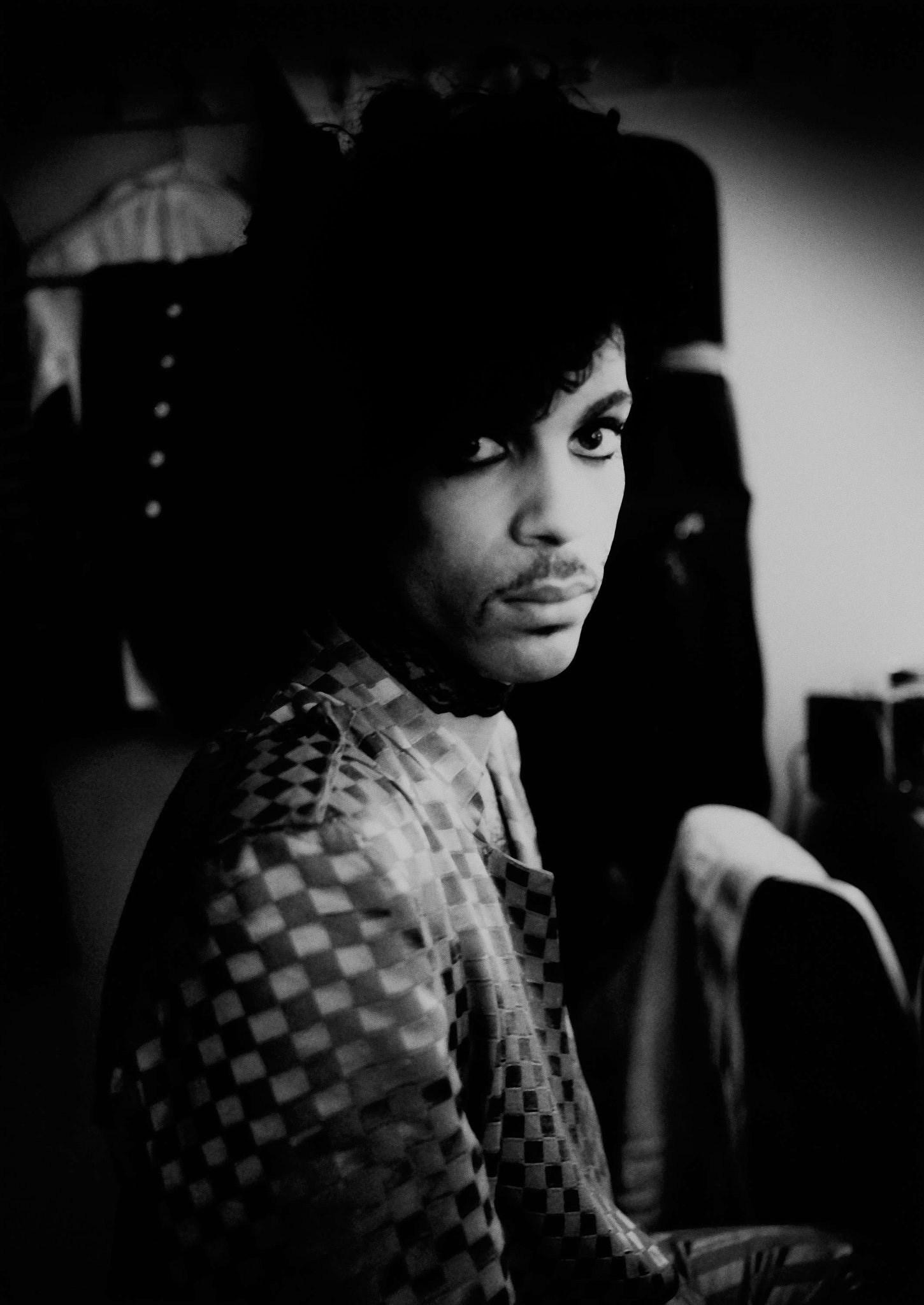
In 1983, amidst the compositions for his film project Purple Rain, Prince unearthed a melody by his father, John—a piece that stood in stark contrast to the album’s usual grandeur and brilliance (and which would not be officially released until 2017). It possessed a gentle tone and slow, deliberate progressions—a piece played “straight,” as if by a student dutifully adhering to his lesson. By titling this track “Father’s Song,” Prince confronts his heritage head-on. Having reached a creative pinnacle—churning out one sonic masterpiece after another—he no longer needs to contend with that paternal figure. Instead, he steps into the spotlight to assert himself as an accomplished pianist.
Another symbolic milestone would be reached at the New Morning in Paris, one evening in August 1986. During a concert organized that very day, John L. Nelson was welcomed onto the stage of this legendary jazz club by his son, who invited him to join the band at the piano. Prince did not play “in John’s place”; rather, he “made room” for him. On stage, father and son stood as equals. And this concert would be one of the very first to take the form of the countless “aftershows” to come—those secret gatherings between the star and a handful of privileged fans. The club would become, for him, a place of experimentation—a laboratory where he would play, to the point of exhaustion, through every repertoire—soul, pop, rock, and more—mining them for unreleased material and new artistic directions.
In the studio, too, it was the piano that opened up new horizons for him—particularly at a time when he was giving more creative space to Lisa Coleman—a devotee of classical music and jazz—within the band The Revolution. Beyond the chords themselves, it was the space between the notes—the resonance, the textures, and the sonic atmospheres—that truly captivated them. When he performed his famous piano medley in 1988 on the circular stage of the Lovesexy tour, Prince was at the absolute peak of his confidence; he felt free to do anything he pleased. His piano playing became highly percussive—more rhythmic than lyrical—yet it never veered into mere showmanship.
Nevertheless, Prince never ceased playing keyboards on a daily basis. Mayte (Prince’s wife from 1996 to 1999) said that he kept his magnificent purple Yamaha in their home in Spain. He dreamed of owning a Bösendorfer but never actually possessed one; on tour, he traveled instead with a custom-built case that served as a piano—one in which he housed an electric keyboard that was far easier to transport and amplify. When Mayte suggested a program of covers drawn from his repertoire—rearranged through the lens of modern jazz—playing Prince’s songs on the piano felt like the most natural choice in the world. The phrasing, the intent—everything adapts so effortlessly to jazz. Is this due to the fact that he grew up with this music—that it served as the very structural foundation for his work as a composer, for his melodies? Mayte detailed that while they were living together, he would listen to Miles Davis’s Kind of Blue every single day. She knows the record by heart; she could sing you every single one of John Coltrane’s solos.
In 2002—the year of his father’s passing—Prince took a bold gamble: an acoustic album built entirely around the piano, titled “One Nite Alone.” On it, he strips away every element that defines his signature spectacular style—the groove, the guitars, the flamboyant production—retaining only the piano (often acoustic, occasionally lightly processed), his voice (fragile, at times whispered), and the silence—the very sound of his breathing. In “Avalanche”—the most starkly stripped-down track on the record—he doesn’t merely “play” the piano; he lets it speak for itself. Here, he communes intimately with the introspective jazz of Bill Evans and the contemplative spirit of classical music. ...serving a protest song with powerful lyrics: it depicts the snow blanketing Wounded Knee—where nearly 300 Native Americans of the Lakota tribe were massacred by the U.S. Army in 1890—a symbol of a nation built on violence, of a crime never redressed. Musically, the track moves at a slow pace; it offers no clear resolution and does not pander to the listener. It is a meditation on the fragility of a man who knows that everything could still crumble, yet chooses to go on living nonetheless.
When “One Nite Alone” was released, Prince had already endured several major ruptures: the premature death of his son Amiir, the failure of his marriage, his battles against the recording industry, and a genuine weariness regarding his own myth. Here, the piano becomes a space for prayer—for a grief that remains unspoken. It would be his final introspective album.
Third Movement: The Possessed Pianist
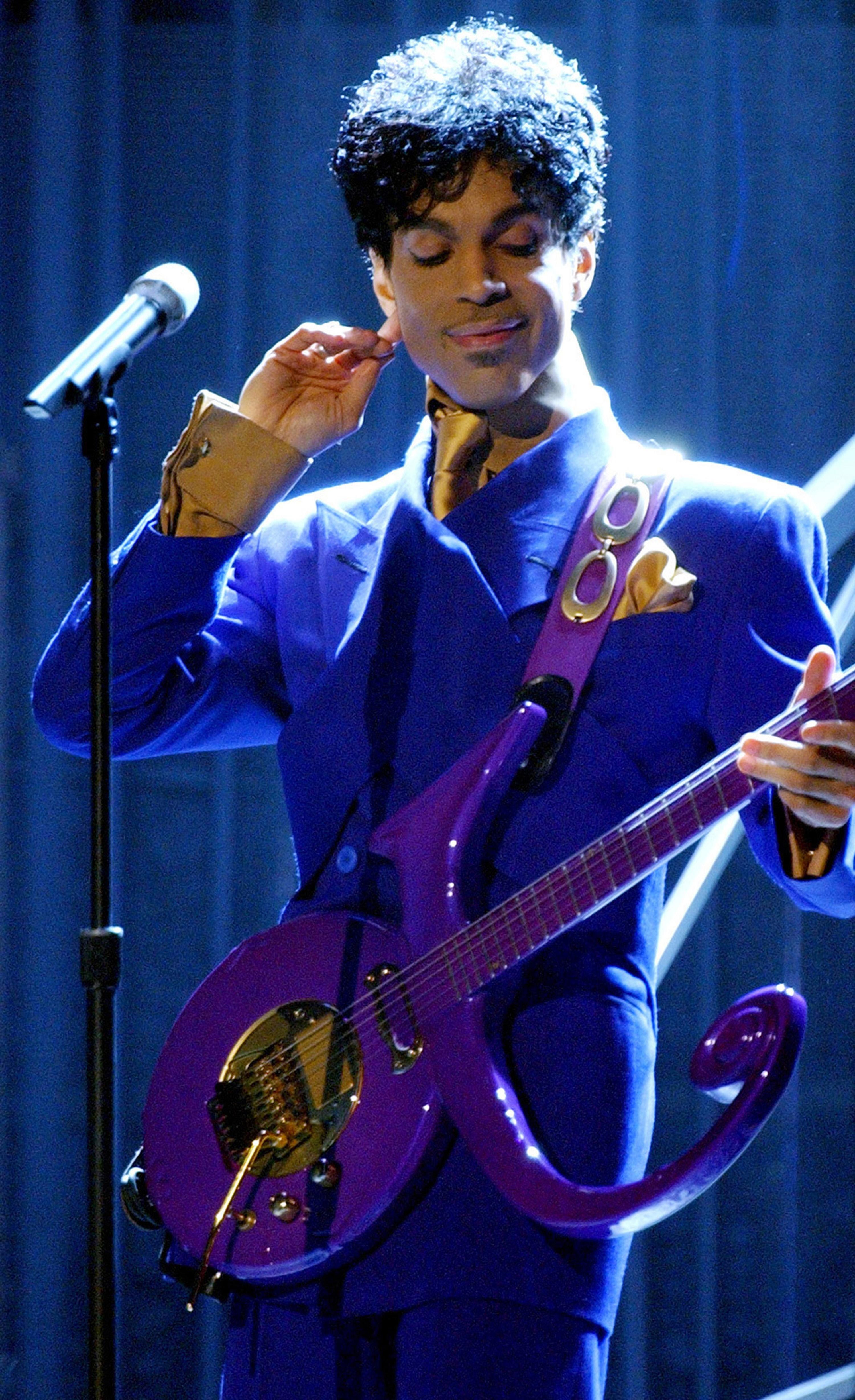
In the years that followed, Prince released album after album, yet the pianist receded into the background. It marked a return to funk—to the virtuosity and energy of the “guitar hero,” to groove as a form of self-affirmation. There was no longer any room for doubt; he thus distanced himself from that place of vulnerability he had reached in 2002, just as his spirituality evolved into an explicit discourse—a truth asserted with absolute conviction.
In the 2010s, another shift occurred. On stage, the artist remained incandescent—though, as we would only fully realize years later, he was concealing his physical suffering and chronic pain (primarily in his hips), finding in painkillers a fragile ally that allowed him to continue performing and creating. His demeanor changed; he began to open up freely, making frequent television appearances where he reminisced about the past and toyed with his own legend. He turned his gaze toward his history, even announcing his intention to write an autobiography.
This foreshadowed the profound impact of the Piano & A Microphone tour of 2016—less a concert than a real-time self-portrait. The staging was ascetic: a piano, a microphone, and a solitary man confronting his own memories. At several stops on the tour (particularly in Minneapolis, where the emotional intensity reached its peak), Prince spoke frequently of his father; he told stories—and, in doing so, told his own story. “I thought I would never be able to play like my dad—and he never missed an opportunity to remind me of it.” He was Skipper again—a ten-year-old boy—and the piano once more became his confidant, his instrument of survival. Alone on stage, in his hometown, he can finally bridge the gap between the intimidating father, the child playing in secret, and the global icon—without irony or mask. Thus, the piano—John L. Nelson’s piano—returns to center stage.
His passing, on April 21, 2016 (ten years ago now it’s crazy), lends this tour an almost unbearable dimension. Fleeing the instrument that shaped him, transforming it into a personal sanctuary, then returning to it—stripped bare, face unmasked: such is the story of Prince the pianist. With, at the end of the road—just as at the very beginning—a piano.