

This series revisits five rap albums from 2006 the way you’d recheck a year you thought you already understood. Not for nostalgia, not to rank “classics,” but to see what still holds when the tricks are no longer new and the industry has changed. Twenty years later, 2006 is the year of snap and ringtone-era minimalism proving how little a hit needs, veterans showing a second wind can be real, debuts arriving after years of groundwork, and underground records using self-imposed rules as advantage.
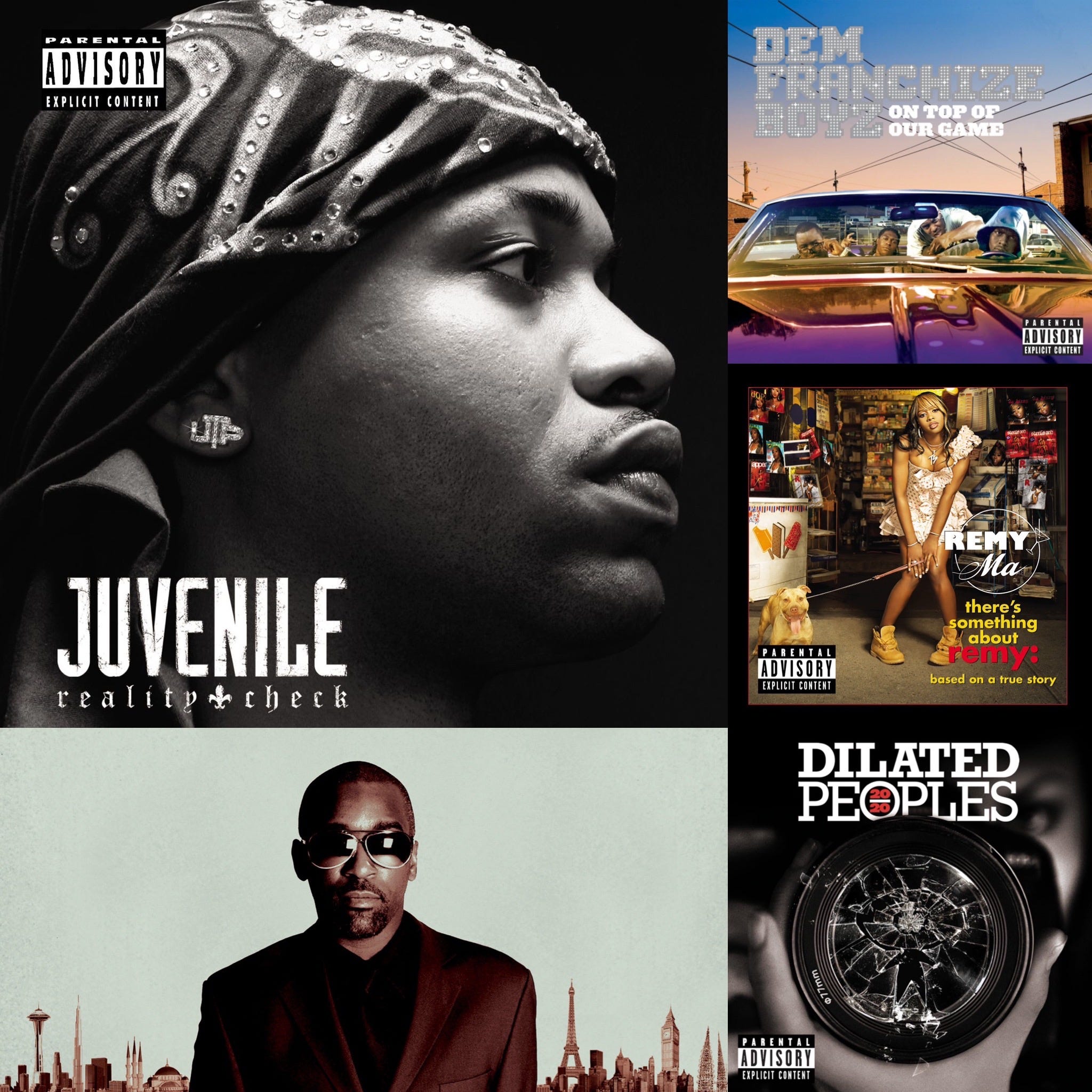
Juvenile, Reality Check
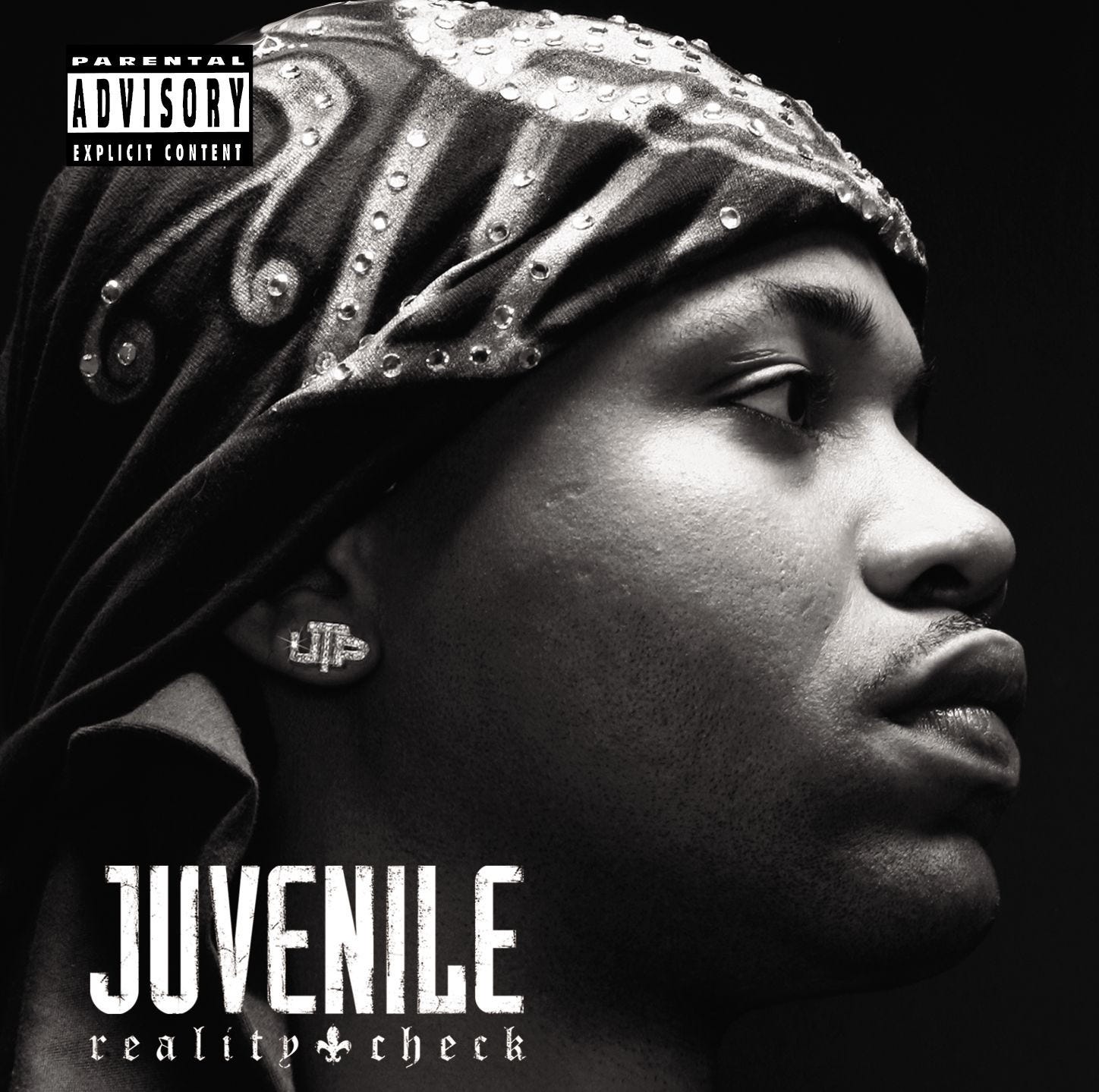
Hot take: I have never once given an S-grade perfect score in this publication scoring machine. But for this album I’d give it 5 stars. That’s how strong the follow-up is. Of course, since I’m saying that here, I’m not in a position to assign a score this column, but the basis for calling it “perfect” is that there’s only one track you don’t need to listen to: “Say It to Me Now.” I’ll write it clearly: this is an even more fully loaded work than Juve’s own representative classic 400 Degreez (‘98). Having two peak periods, that’s an enviable life, huh. I know, fight me in the comments.
Why is Juve this incredible. First, there’s the irresistible appeal of his voice. Well, on the previous album it sounded like it had faded, but this time, not only is it back, it comes at you with even more weight and variation, so there’s nothing to complain about (the peculiar pronunciation where “building” becomes “bidann” is still there). And his flow is diverse. It’s rhythmical, he can go off-beat, and he can sing. And the worst thing, more than anything, is that the hook ideas are incredibly varied. While ordinary rappers reuse one idea across many songs, Juve throws multiple ideas into a single song. I don’t know any other rapper who can make the pre-hook bridge sections this luxuriously. Also, his ear for choosing tracks with a wide range of tendencies, including self-imposed constraints, feels like a specialty product.
The songs you can point to here become like a whole crowd living on, each with a different color and face. Following the intro, “Get Ya Hustle On” is orthodox South, bounce-to-crunk, but after that it’s a mass of variety: “Sets Go Up,” which is like turning crunk and R&B into hip-hop; “Rodeo,” where Juve sings a mellow sing-rap over a bright mid-tempo track; “Way I Be Leanin’,” where a hook blending running hi-hats with screw connects bounce, crunk, and screw; “Animal,” whose hook “Bao~n!” won’t leave your ears; “Holla Back,” where even meaningless lyrics like “waa-aa-aat~ ee-he~” are more than enough to make you listen; “I Know You Know,” where Trey Songz earnestly sings lyrics calming a wife who worries about infidelity while he’s out; and “Addicted,” a rich one where Brian McKnight’s singing and Juve’s voice intersect, and even the second ballad is fun. Anyway, it’s a work that seems to have four or five times as many things to hear as an ordinary album. — Devon Kai Brooks
Dem Franchise Boyz, On Top of Our Game
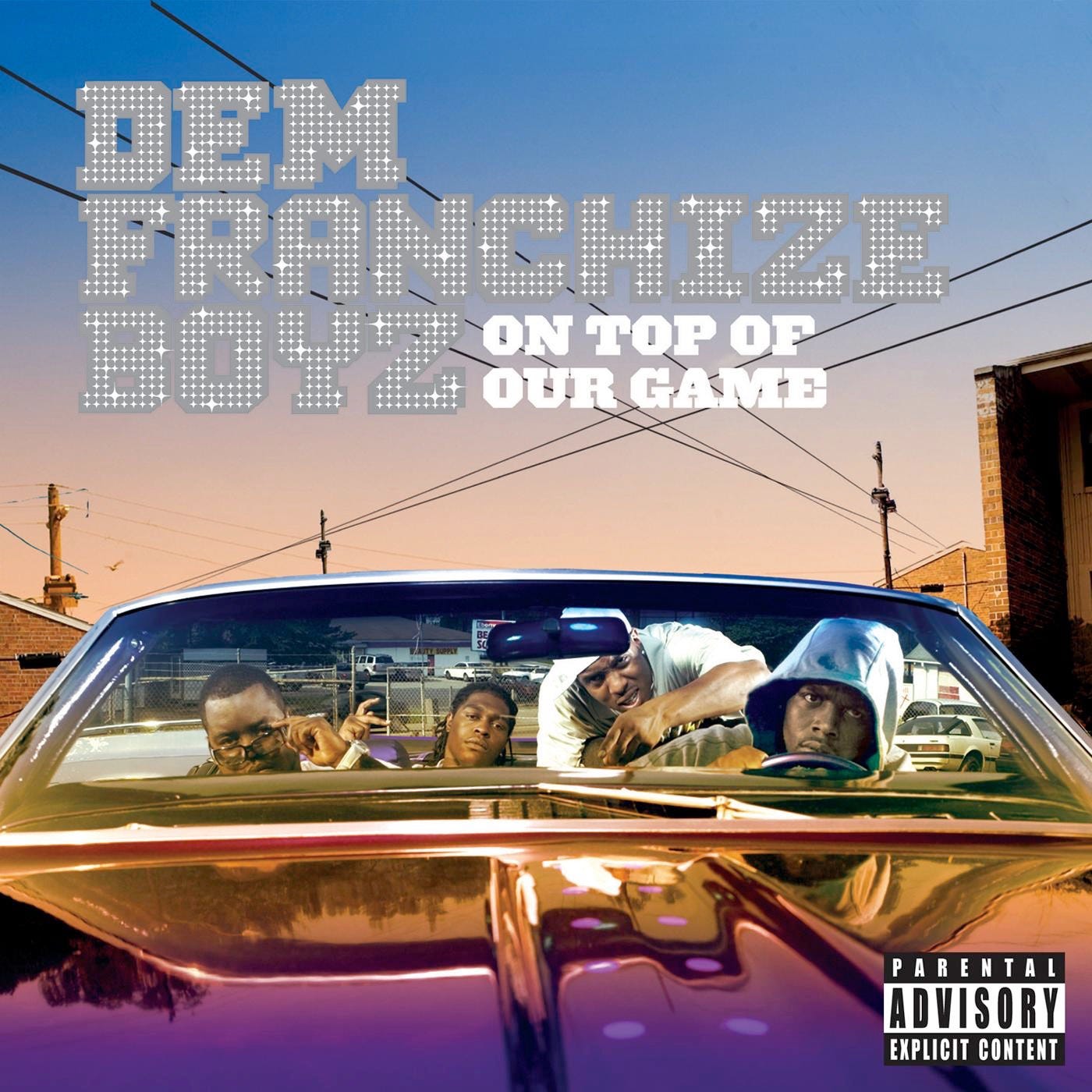
Isn’t it that almost nobody thought someone could transform this dramatically. Even at the time of the self-titled major debut (2004) that Raheem was also involved with, there was already a minor hit like “White Tee,” but the situation surrounding this So So Def transfer album that came out under Jermaine Dupri’s guidance has become outrageous. As is well known, the advance cut “I Think They Like Me (Remix),” with Dupri himself plus Bow Wow and Da Brat on guest spots, has grown into a huge hit that snatched No. 1 on the R&B chart. Of course, you could explain it as something that hits the dead center of trends, since it rides the minimalist snap-tracks that could only thrive in an era where D4L’s “Laffy Taffy” can take the top of the national overall chart, but you must not forget that the song was originally pre-included on So So Def’s Young & Fly / Fast & Fresh Vol. 1 last year, and if you trace it further back, it’s a remix of “Oh I Think Dey Like Me” from the above-mentioned debut. The guy whose way of riding the current is different, I guess.
This album also has that in-season vibe, but surprisingly, the patron Dupri only took part in production alongside LRoc on “My Music,” which invites Bun B as a guest, rubs in a Pimp C “Hogg in the Game” quote, and skillfully produces a dope flavor like a proper H-Town beat. And the new tracks by Pimpin, who handled a lot on the previous album, are now limited to only “Bricks 4 the High,” which brings in Jim Jones and Damon Dash. Lately, the veteran DJ Montay (from the group’s camp) also provides the best trap tune “Suckas Come ’n’ Try Me,” but the majority of the beats were handled by up-and-coming craftsmen like Young Juve, who also handled “Freaky as She Wanna Be” where Trey Songz rings out a glossy vocal, and Maestro Brooks, who handled the catchy “Don’t Play with Me” featuring Three 6 Mafia. Fellow member Parlae is also involved in making the sticky “Lean wit It, Rock wit It.” Depending on the song there are moments that feel a bit lacking in twist, but wouldn’t you say it’s a solid work that easily clears a certain level across the board. This album backs up the fact that an Atlanta act, which is now less and less boosted just by “regionality,” is hitting its highest harvest period, and at the same time it’s also something that forecasts So So Def’s 2006. The meaning of the main body being finished to this level of completion is extremely big. — Brandon O’Sullivan
Remy Ma, There’s Something About Remy: Based on a True Story
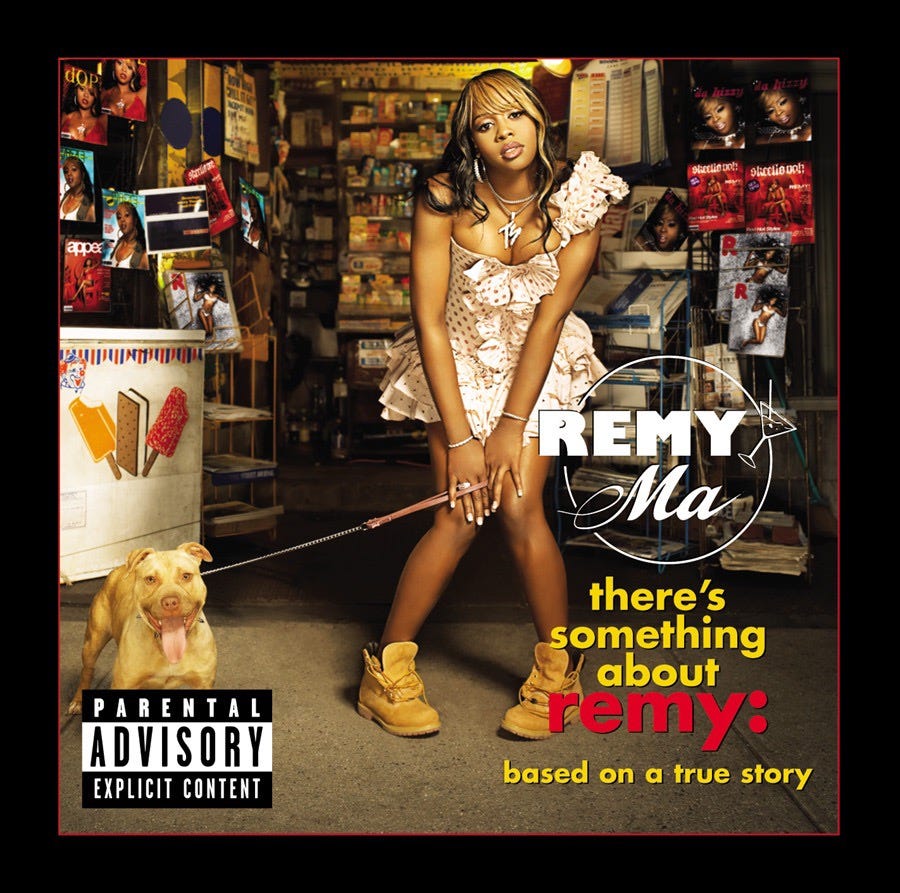
As the lone women member of Terror Squad, appearing on works by M.O.P., the late Big Pun, Big Leb, and others, with a Loud debut also planned, this is Remy Ma (Terror)’s first album. During an overly long waiting period she ran through a wide range of features, from Nelly to Three 6 Mafia joints, and in the end she arrives after a steady setup. Above all, TS’s “True Story,” where she held the mic on seven songs including that “Lean Back,” was big, just as the subtitle of this album suggests. The Swizz Beatz-made upper “Whuteva” and the Scott Storch joint “Conceited (There’s Something About Remy)” that he finished with that familiar exotic mood have already become advance hits, but if those two fit into mainstream templates, then the other tracks express Remy’s original appeal in a more multifaceted way. With Pun’s spoken intro pulled from Pun’s “Ms. Martin,” there’s “Light’s, Camera, Action” that uses a Treacherous Three track, and there’s also “Thug Love” where she pseudo-collabs with an unreleased Pun verse; from a David Banner-made club banger to combinations with Ne-Yo and Keyshia Cole (perfect match!), and with I.V. Queen, she handles it freely, and her full-bodied rapping is just too cool. No complaints all the way to the ending on “Still,” where sentimental piano pours down. Still, the cover punning on “Mary ni kubittake” is fine, but the sexy (?) photomontage-style image on the inner jacket might be a little unpleasant. — Cierra Marcel
Aceyalone, Magnificent City
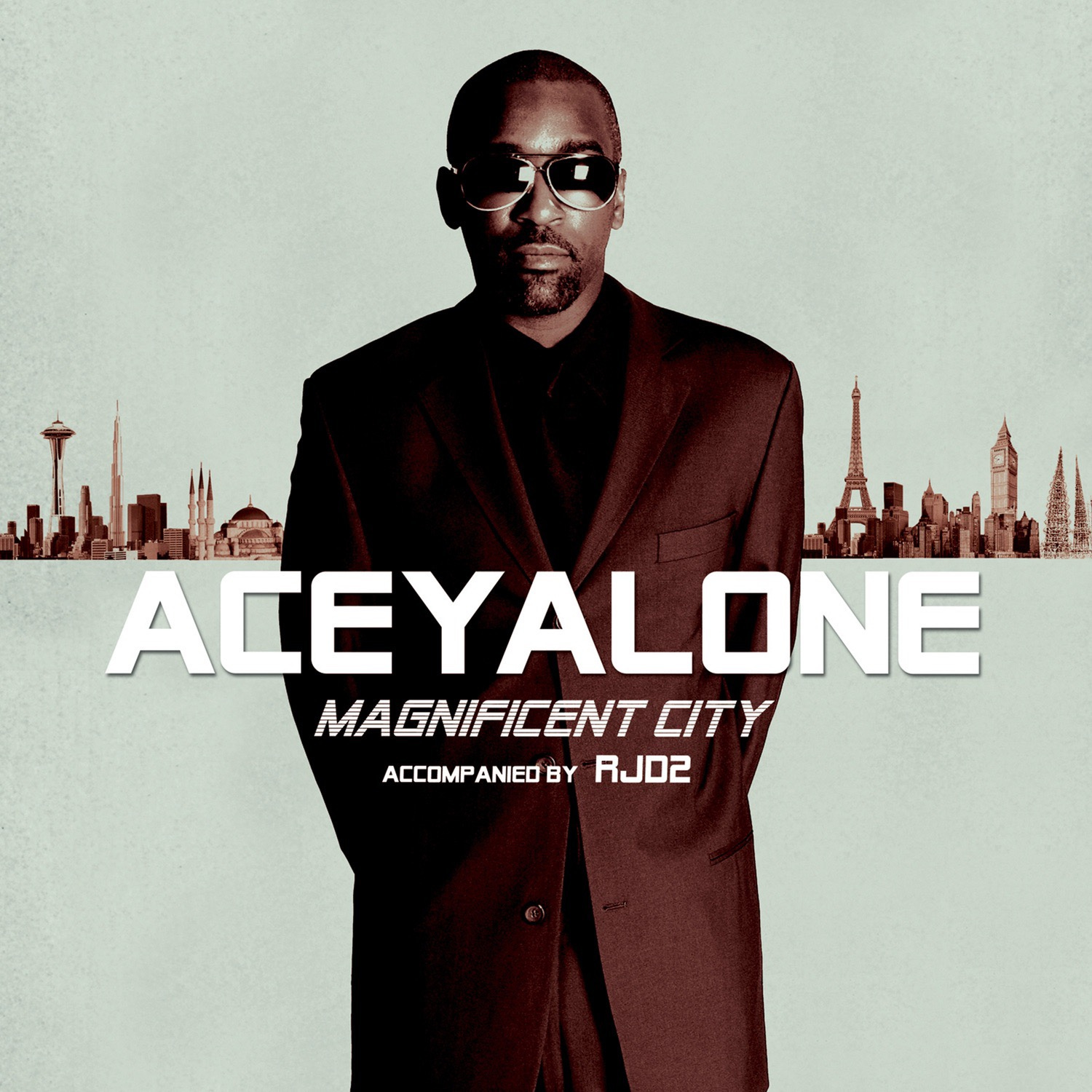
For an MC like Aceyalone who doesn’t necessarily treat on-beat rhyming as common sense, isn’t he always worrying about what kind of tracks he needs. He has kept putting out works while repeating trial and error, but on this album he has RJD2 handle the entire thing, the same partner from “Love And Hate.” The diversity of the tracks themselves rivals RJD2’s own Since We Last Spoke, but the first two grabs, “All for U,” with cheerful mariachi-style horns, and “Fire,” which is funky and charging, are beats that, for an RJD2 work, are unusually something you could just play in a club (by his standards, experimentally the other way around!), so you get lightly surprised. But that thought doesn’t last long: from “Here & Now” onward it’s coated in a sound you could call proper RJD2. Even the beat on “Junior” feels like Kim is about to come out. For Aceyalone, and for RJD2, many listeners hold an image of each as a set of common traits. And they simply think, if those two connect well it will become something amazing, and they expect it. Of course, since these two teamed up, there’s no question it’s above a certain level. But for Acey, he probably saw through those expectations and, even though every track is an RJD2 beat, he chose to create under a kind of constraint, rhyming on-beat, and he likely aimed for the creativity born from that and the interest inside it. — Harry Brown
Dilated Peoples, 20/20
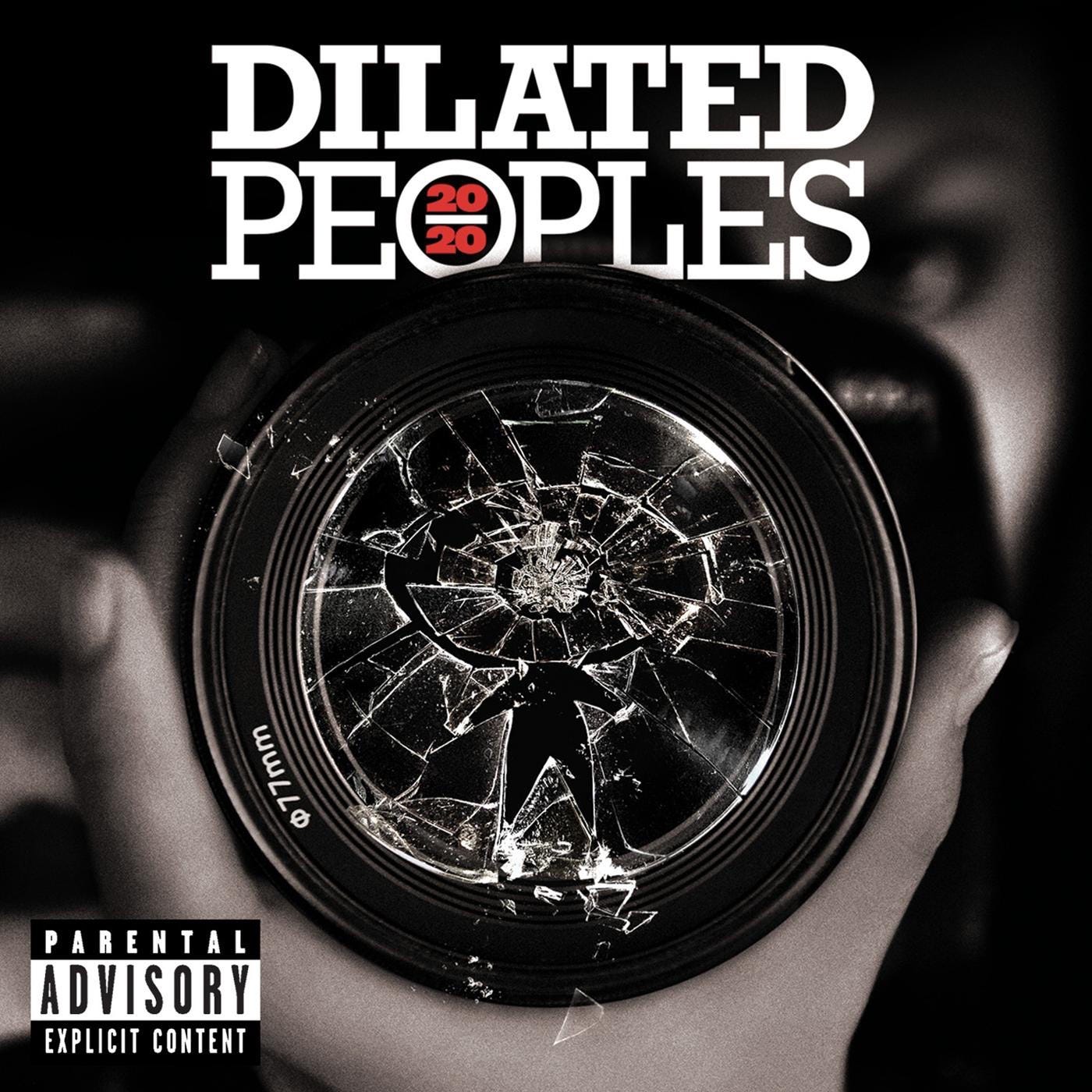
If there’s that guy from Blackalicious who got to do what he wanted on a major, didn’t sell, got dropped, and right after that calmly made an annual top-10-class album, then in the case of Dilated Peoples, who with this album count it as their third major-label record, what is it like. It makes me wonder. Because it can’t be only that they brought in Kanye West, but listener opinion on the previous album seemed to be summarized in one word as “a subtle work,” and if the title means “staring reality in the face,” then even more so. They start with the Alchemist-produced upper “Back Again” and seem to want to signal a handoff. But there’s DJ Babu’s one-man show “The One and Only,” and not only “You Can’t Hide, You Can’t Run,” which is theirs, putting out a positive message from what looks like a negative angle, but there’s also “Firepower (The Tables Have to Turn),” a new direction that, as a result of seeking hip-hop’s source in reggae, invites Capleton. Still, overall, it somehow feels like they’re using the previous album as a mold. And then it’s closed with the Alchemist-produced title track “20/20,” and just from listening to the chorus, it’s not only “staring reality in the face,” but also clearly keeping the future in view, and when looking back at the past, a sharp insight is shown. This isn’t a concept album, but when it continues alongside the other tracks, it targets a wide range, not a narrow “scene,” and even beyond “Neighborhood Watch,” and in that sense it surpasses the previous album. — Nehemiah