

Remembering Bob Power, the Engineer Who Made Hip-Hop’s Best Records Feel Alive
From Stetsasonic’s first sessions to Questlove’s phone calls about fader settings, Bob Power stayed indispensable. Few engineers bent hip-hop and R&B closer together than him. He was 73.
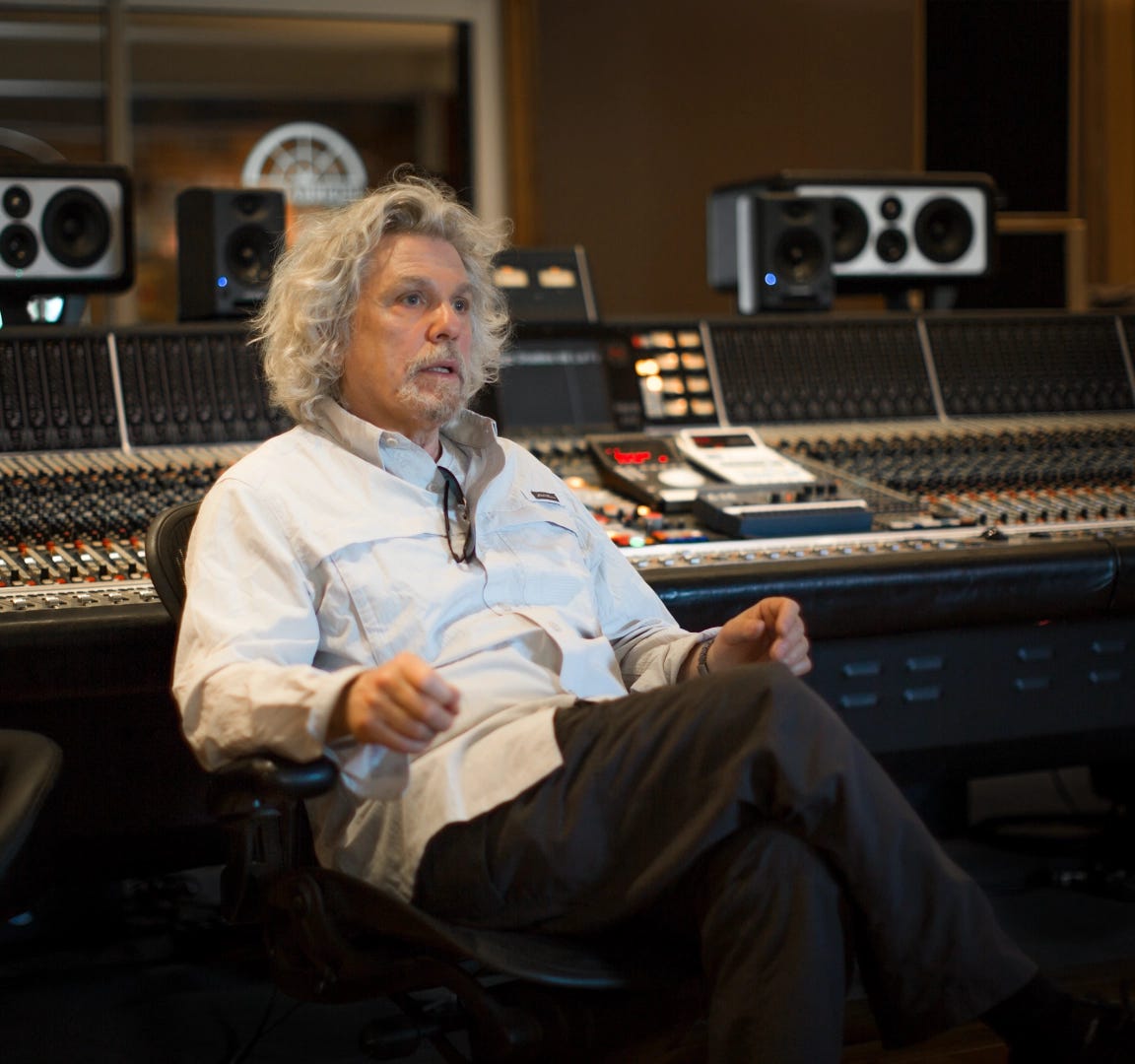
Bob Power, the engineer and producer whose painstaking ear calibrated the grain and gravity of 1990s hip-hop and neo-soul, died on Saturday, March 1. He was 73. A funeral listing confirmed the date; no cause of death was given. Across three decades of studio work, Power sat behind the boards for A Tribe Called Quest’s The Low End Theory, De La Soul’s De La Soul Is Dead, Erykah Badu’s Baduizm, and D’Angelo’s Brown Sugar. Each of those records still dictates the terms of how bass, drums, and samples interact on tape.
Power was born in Chicago in 1952 and raised in Rye, New York, where he picked up guitar as a kid. He studied classical theory and composition at Webster College in St. Louis, joining his first rock band, the New Direction, during the same years he drilled counterpoint and harmony. After graduating, he decamped to San Francisco and enrolled in a master’s program in jazz at Lone Mountain College. California suited him. Between 1975 and 1982, he gigged relentlessly, scored the Emmy-winning PBS program Over Easy, and cranked out commercial jingles for Coca-Cola, Hardee’s, and the United States Postal Service.
In 1982, he drove cross-country to New York, determined to chase bigger work and willing to accept anything that paid. For the next two years, that hustle sent him to psychiatric hospitals, retirement parties, and at least one mafia wedding in Bensonhurst. He was a musician for hire in the purest sense, hauling gear into rooms that no career counselor would have recommended and playing whatever the gig demanded.
The break arrived in 1984 at Calliope Studios in Manhattan, when the studio’s owner asked Power to fill in as an engineer during someone else’s vacation. The session belonged to Stetsasonic, the Brooklyn rap group built around live instrumentation and DJ turntablism. Power knew almost nothing about hip-hop engineering at the time, and that blank slate worked in his favor. He asked the group how they wanted tracks to sound. They told him to just make it happen. His classical training and sharp instinct for low-frequency balance impressed Stetsasonic enough that they retained him for the rest of their debut, 1986’s On Fire. Through Calliope, Power fell into the orbit of the Native Tongues collective, the loose federation of Afrocentric rap acts that included A Tribe Called Quest, De La Soul, Jungle Brothers, and Black Sheep.
His credits from that period remain staggering. The Low End Theory, released in 1991, reorganized what a hip-hop mix could contain: acoustic bass threaded through programmed drums, jazz samples snapped into place beside boom-bap. In a 2019 interview, Power compared the record to Sgt. Pepper’s Lonely Hearts Club Band. “It’s a record that changed the way that people thought about putting music together,” he said. “I’m not a big hip-hop historian; I just know the stuff that I worked on.” He was underselling himself. The list ran deep. De La Soul Is Dead, Badu’s Baduizm (which yielded his first No. 1 R&B single with “On & On”), D’Angelo’s Brown Sugar, Run-DMC’s Down With the King, Common’s Be, and J Dilla’s The Shining. He worked on multiple Roots albums, among them Do You Want More?!!!??! and Things Fall Apart. Two Grammy nominations followed. One arrived for Best Engineered Album, Non-Classical, for his work on Meshell Ndegeocello’s Peace Beyond Passion in 1996. The second, an Album of the Year nod, came via India.Arie’s Acoustic Soul in 2001.
Power joined the faculty at NYU’s Clive Davis Institute of Recorded Music in 2006 and retired in 2025 with professor emeritus status. Nicholas Sansano, the Institute’s chair, praised Power’s nearly 20-year tenure in an email to Pitchfork. “He embodied what we aspire to be as people and professionals,” Sansano wrote. “Beyond being a musical legend who influenced the sound and feel of an important era in our cultural history, he was one of the most generous and caring people I had the great honor of calling a friend, a brother, and a teacher.” Sansano added that the flood of remembrances was telling. “No one focused on his amazing professional success and stature, his wealth, or his awards and possessions. The light shone—and will continue to shine—on Bob Power, the man.”
Tributes accumulated from every corner of the music world after news of his death spread on Monday. Questlove posted a carousel of album covers on Instagram. “You could NOT encounter a more engaging, enthusiastic, laser focused craftsman of sound,” he wrote. “Bob was our training wheels for how to present music.” Maggie Rogers, who studied under Power at the Clive Davis Institute, remembered him on her Instagram Story. “Bob always made me feel so seen in my weird creative brain and always kept me pushing and searching,” she wrote. DJ Premier called Power “one of the iLLest Engineers of all time.” Erykah Badu offered her own farewell. “You taught me soo much,” she wrote. “Baduizm is thee most bass heavy singing album in history.” Young Guru, JAY-Z’s longtime engineer, pointed to Power as the direct source of his own recording instincts. “You gave my generation a sound,” he wrote. Killer Mike and Citizen Cope also shared remembrances.
Power stayed productive long past the era that made his name. He took on sessions with David Byrne, Scritti Politti, and Brockhampton, and in 2022, he contributed to the posthumous Phife Dawg record Forever. His final two album credits were Ndegeocello’s 2023 The Omnichord Real Book and China Moses’ It’s Complicated…, released last year. In a 2014 interview with Red Bull Music Academy, Power offered a modest summary of a four-decade career spent pushing faders and coaxing warmth from tape machines. “The fact that I’ve been able to participate in a lot of seminal recordings,” he said, “is just another wonderful thing that has come my way in my life.”
what a beautiful writeup - an incredible man and an absolute loss