

Remembering John Forté, The Quiet Name on The Score
Forté’s career is inseparable from the Fugees and the Refugee Camp circle that shaped how he was heard. The obituary has to hold that truth without turning him into a supporting character.
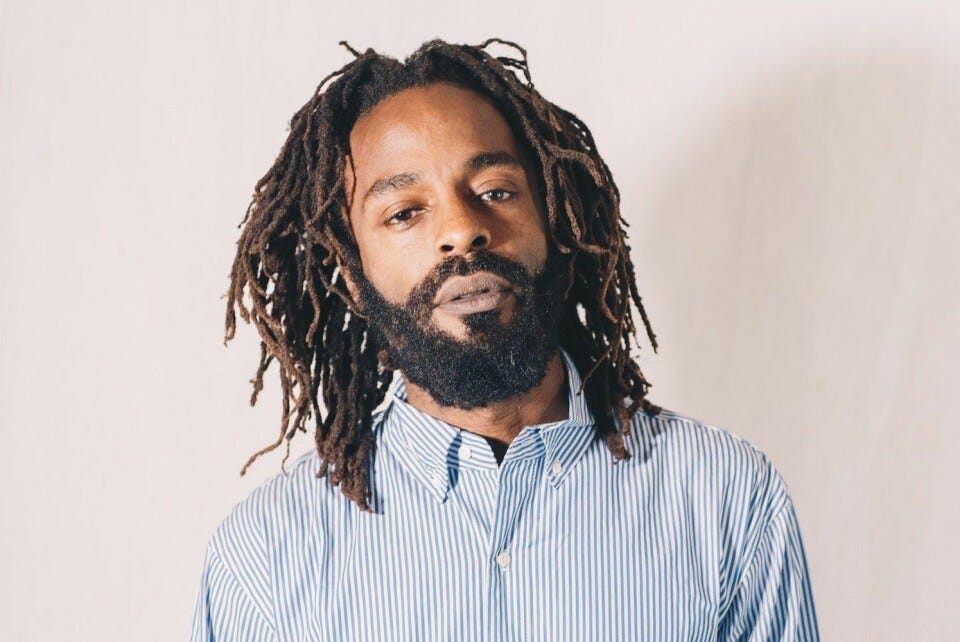
At eight years old, John Forté picked the violin because the line for rock band instruments was too long. He grew up in Brownsville, Brooklyn, commuting to a gifted-and-talented school, and when his guidance counselor suggested boarding school, he thought he was in trouble. She pulled out a brochure for Phillips Exeter Academy—there was a river on the cover, and a small boat—and Forté left the neighborhood that had shaped him for New Hampshire prep schools and classical training that would bleed into everything he made afterward.
Forté is credited on The Score the way session players and behind-the-scenes architects get credited—present enough to matter, buried enough to miss. He co-wrote and co-produced “Cowboys” and “Family Business,” played drums on their cover of “No Woman, No Cry,” and reworked the “Fu-Gee-La” remix. Lauryn Hill introduced him to the group after the Fugees’ contract had been renewed following the “Nappy Heads Remix” breakthrough. He played Wyclef Jean and Pras Michel some beats he’d been working on, started rapping over them, and wound up anchoring two tracks on the album that won Best Rap Album at the 1997 Grammys. He was 21 years old, nominated alongside the trio for work he’d stumbled into after planning to stay in A&R.
The Carnival followed in 1997. Forté appeared on “We Trying to Stay Alive” and “Street Jeopardy,” and the Refugee Camp All-Stars circuit widened around him. He partnered with Pras on “Avenues” for the Money Talks soundtrack. Wyclef produced his debut solo album, Poly Sci, in 1998. By this point, the infrastructure around the Fugees had begun splintering—Ms. Lauryn Hill went solo for The Miseducation, the group never made another album—but Forté remained tethered to the circle. His proximity to that sound is how most people heard him first. His solo career would be shaped by trying to get out from under that weight and never quite making it.
In July 2000, Forté went to Newark International Airport to pick up two women carrying suitcases. The women had already been arrested and were cooperating with federal agents in a controlled sting. The suitcases held 31 pounds of liquid cocaine worth $1.4 million. Forté later told police he believed the suitcases contained money, not drugs. He was charged with possession with intent to distribute and conspiracy. The conviction carried a mandatory minimum of 14 years.
He recorded I, John while awaiting trial in 2001. The album featured Herbie Hancock, Tricky, Esthero, and a duet with Carly Simon—the beginning of a relationship that would define his second act. Simon’s son, Ben Taylor, had a cousin who’d been classmates with Forté at Exeter. Simon posted Forté’s $250,000 bail. She and Taylor believed he hadn’t received a fair trial, and they turned his case into a campaign against mandatory minimum sentencing. Simon called him her “spiritual godson.” He called her his “second mama.”
The years inside changed the timeline. Forté served time in a low-security federal prison in Pennsylvania before Senator Orrin Hatch arranged a transfer to Fort Dix, New Jersey, 25 minutes from his mother’s home in New Brunswick. Hatch also got him his guitar back—a perk most inmates don’t receive. On November 24, 2008, President George W. Bush commuted Forté’s sentence after he’d served just over seven years. He was one of only eleven commutations Bush granted in eight years in office. He walked out of Fort Dix on December 22, 2008, four weeks before his original release date of 2014.
The post-prison run started fast. He recorded over 50 songs and played over 100 shows in the months after his release. He covered Kanye West’s “Homecoming” with Talib Kweli—his college roommate from NYU—and addressed the incarceration directly in the verses. In 2009, he started teaching at City College of New York. He kept making albums with Riddem Drive in 2020, Vessels, Angels & Ancestors, the year after. The writing on the later records sounds pared back and deliberate, less invested in proving range and more interested in documenting where he’d landed. The production credits shifted toward the Brooklyn Nets’ inaugural theme song in 2012, as well as soundtracks for Just Wright, Night Catches Us, and Stomp the Yard 2. He scored the Emmy-nominated HBO documentary Momentum Generation in 2018. He spent the pandemic composing from a home studio in Chilmark.
His most substantial late-career work was the score for Eyes on the Prize III, the six-part HBO series that premiered in February 2025. Dawn Porter, the executive producer, brought Forté in during the pandemic to compose the score. He suggested they audition Fiona Brown, a 14-year-old singer from Martha’s Vineyard whose grandmother, Kate Taylor, he knew through Ben. Brown recorded the theme song in a New Orleans church with a children’s choir and gospel singer Mary D. Williams. Her voice opens every episode.
Forté moved to Martha’s Vineyard in the mid-2010s after meeting his wife, Lara Fuller, in 2015. They had a daughter, Haile, in 2017 and a son, Wren, in 2020. He performed at Island venues with Carly Simon and Ben Taylor, collaborated with Austin songwriter Peter More on the score for Kerouac’s Road: The Beat of a Nation, and played Sunday porch sessions for neighbors and friends. In a 2024 interview with a local magazine, he was asked how he told his story to audiences. “I don’t ever have a setlist when I walk into a performance,” he said. “Because I never know until I know, and I don’t want to ever get ahead of myself.”
A documentary about his life, Settling the Score, was in production during the last leg of his life. He’d been taking medication for seizures after a serious health setback a year earlier that required hospitalization. On Monday afternoon, one interior light was still on inside his house. His car was parked out front. A neighbor found him unresponsive on his kitchen floor in Chilmark, Massachusetts. Police arrived at 2:32 p.m. and pronounced him dead at the scene. He was 50 years old. Forté will be missed, and we send our condolences to the family.