

Sweetness Was Never Free
Vince Staples and a 40-year-old anthropology study describe the same American machine. The commodity changed, but the extraction didn’t.
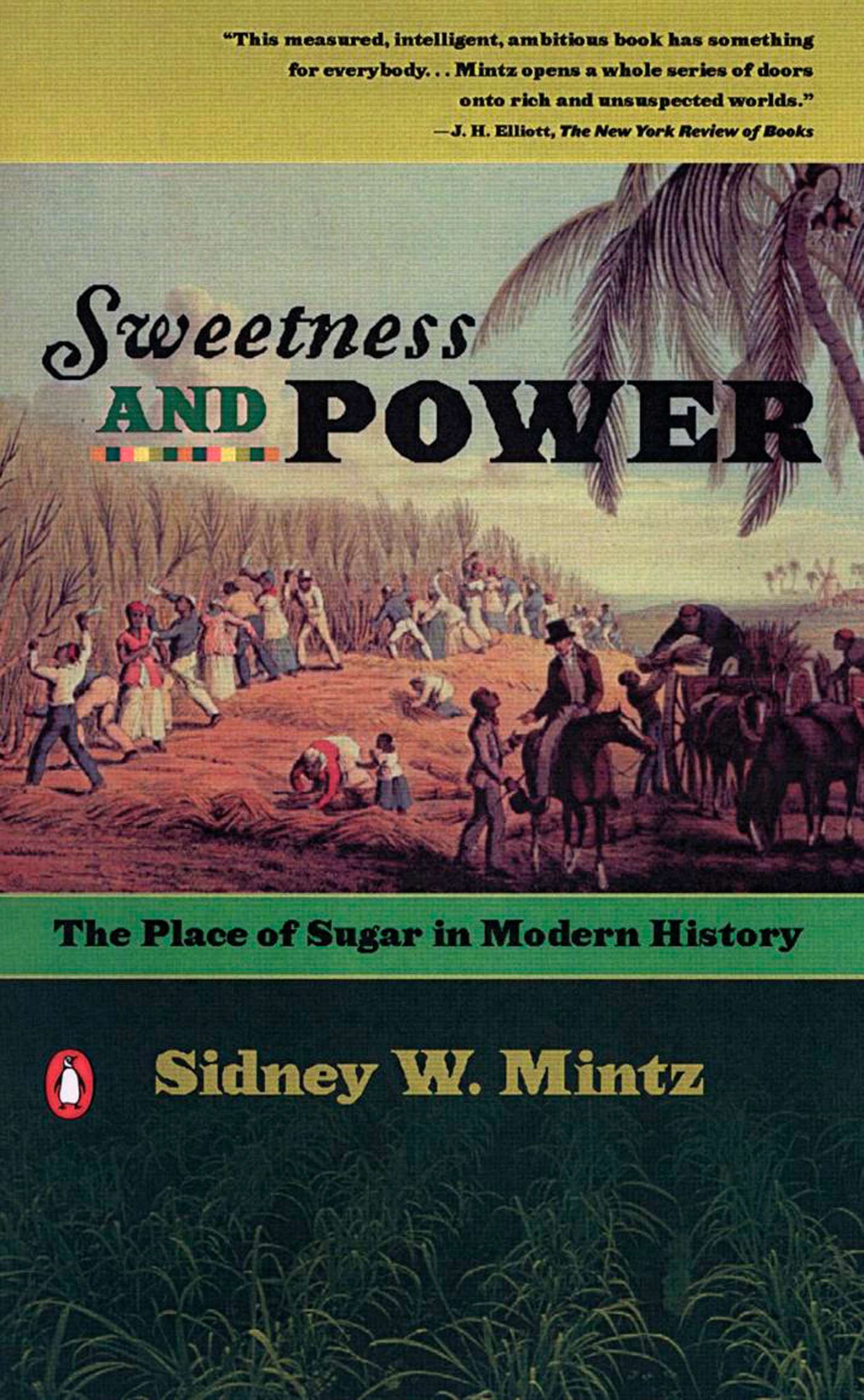
The first factories in the Western Hemisphere were not textile mills or steel plants. They were sugar plantations in the Caribbean, and the laborers were enslaved Africans. A Johns Hopkins anthropologist named Sidney Mintz devoted decades to studying cane cutters in Puerto Rico before writing, in 1985, the most thorough account of how a rare spice consumed by European royalty became the cheapest calorie available to the English working class. His central finding was blunt: that transformation required kidnapping and forced labor, the invention of an industrial system on stolen land, and the systematic erasure of every human being who made the product possible. The consumer never had to see any of it. The design depended on that blindness.
On April 25, 2026, a track dropped whose second verse opens: “Anti-establishment, crackers on that shadiness.” White people watch him work and break his back and call themselves maniacs. They tap his pockets with taxes and claim they made him rich. Then: “Cracker jack the sound of soul, you’ll box me in and sell my shit.” A supply chain described in a single bar. Raw material gets packaged, sold; the person who made it gets cut out of the profits; and everybody acts confused when somebody reads the fine print.
The track is “Blackberry Marmalade,” produced by Mike Hector and Saint Mino, the lead single from Vince Staples’ seventh album, Cry Baby, due June 5 via Loma Vista Recordings. His first release as an independent artist after an entire career inside the Universal Music Group system. Def Jam, Motown, Blacksmith. He walked away. But Mintz died in 2015 after arguing for decades that you cannot separate consumption from production. The pleasure of the buyer is financed by the death of the supplier. The whole arrangement depends on the buyer never having to think about it. Staples grew up in Ramona Park, North Long Beach, Crip-affiliated, his father incarcerated, introduced to rap through Odd Future. He has never romanticized where he comes from; he has never performed his trauma so somebody in a conference room could feel like they understood the streets. And now, off the label for the first time, the opening thing he says on record is that empires are built on bloodstained ground.
Mintz catalogued sugar by grade: raw, refined, molasses, treacle, muscovado. All of it processed from identical cane, sold at varying price points to separate social classes. Staples does something structurally parallel in the final third of the track. He spells out N-I-G-G-A, letter by letter, then runs through the grades America has processed that word into: ghetto, gangsta, dangerous, famous, bougie, Louis, Prada, Gucci, artist, hardest, honest, smartest, scholar, proper, kill a, rob a, conscious, pompous, Obama, Kamala. A product line organized by market segment. One cane. “Who the fuck you calling nigga?”
Parliament debated whether to allow slave-produced sugar into Britain. The pro-trade faction won. Their argument, as Mintz detailed, went like this: we won’t eat it ourselves because we have consciences, but we’ll refine it and sell it to Germans, and if prices drop, we’ll eat it too. Colonies full of “negroes and colonists,” Parliament noted, had no right to consciences. They could consume as much slave sugar as the market would bear. That framing maps cleanly onto the American music industry’s recurring conversation about streaming royalties. That debate has not changed. Everybody involved knows the economics are exploitative, and everybody involved knows who collects and who doesn’t. But nobody stops streaming, the way nobody stopped eating sugar. The conscience keeps getting deferred to a meeting that never happens.
The chorus goes somewhere nobody can tax. Blackberry marmalade and sweet tea, beating the summer blaze. Something made by hand inside a Black home, consumed by family, never listed on any exchange. Mintz found the identical split across four centuries of sugar history: a home-preserved luxury in the 1500s became a mass-produced industrial calorie by the 1800s. That shift from domestic to industrial was also a shift from autonomy to extraction; from sweetness you owned to sweetness that owned you. Nana’s kitchen is the before picture. The tax bill, the stolen sound, the boxed-up soul is the after.
The music video, co-directed by Staples and Bradley J. Calder, is a first-person shooter. You are holding the gun. You kill Staples first, then walk into Frank’s Coffee Shop and Restaurant in Burbank (a location used exclusively as a film set since 2020, which means you’re killing people in a place that was already fake) and shoot the patrons while a security guard plays games on his phone and doesn’t look up. A red MAGA cap sits on the dashboard in the opening seconds. At the close, a Martin Luther King Jr. quote from “Letter from Birmingham Jail” appears: “So the question is not whether we will be extremists, but what kind of extremists we will be.” Seven consecutive “promise me you won’t gun me down”s follow. Addressed to the consumer. Not the gunman. The person watching, scrolling past the last shooting, playing the track, moving on to the next one.
After emancipation across the British Caribbean, Mintz found that the planter class tried to replace the discipline of slavery with the discipline of hunger. They imported contracted laborers from India and China to undercut freed Black workers; they cut off access to land so freedpeople couldn’t farm independently. Maximum labor, minimum cost. Staples recorded seven albums inside a major-label structure that operated on a version of that arithmetic: advance against future royalties, marketing spend against ownership percentage, the artist as a depreciating asset on a balance sheet. Cry Baby is his first record with no Universal money attached. The discipline changed shape but did not disappear. Staples just stopped agreeing to it.
Mintz’s epigraph came from a French writer in 1773: “I do not know if coffee and sugar are essential to the happiness of Europe, but I know well that these two products have accounted for the unhappiness of two great regions of the world.” Two hundred and fifty-three years later, Staples says the equivalent with different nouns and a production credit. The chorus closes twice with a parenthetical. The first time: “(say it).” The last time: “(they lying).”