

Tenderness, Control, and a Strong Sense of Self
These five R&B albums from 2011 that stayed close to the body and the voice, then kept deepening over time. Some came in quietly, but none of them disappeared.

R&B in 2011 was dealing with its own split set of demands. The genre was being pushed by digital habits, crossover pressure, independent reinvention, and a market that often wanted immediacy more than depth. Even so, plenty of artists were still making albums that trusted slower pleasures: strong writing, careful vocal choices, grown emotional detail, and moods that did not need to announce themselves loudly to hold your attention. Fifteen years later, that feels like one of the year’s strongest qualities. A lot of the best R&B records from 2011 were not chasing a clean slogan for where the genre had to go next. They were staying committed to songcraft, intimacy, and adult complexity while the ground shifted under them.
That is where this series begins. Not from the need to crown a definitive year, and not from the urge to turn every anniversary into a history lesson with the life drained out of it. This is a return to five R&B albums from 2011 that still sound fully inhabited. Records where the performances matter because the writing gives them room to matter. Records where desire, disappointment, reassurance, doubt, devotion, and plain physical closeness are handled with enough detail that the songs still feel lived in now. Some of these albums came from artists already well established in the form. Others arrived with something to prove. All five are here because they still feel intentional in ways that outlast trend language and short-cycle hype.
Marsha Ambrosius, Late Nights & Early Mornings
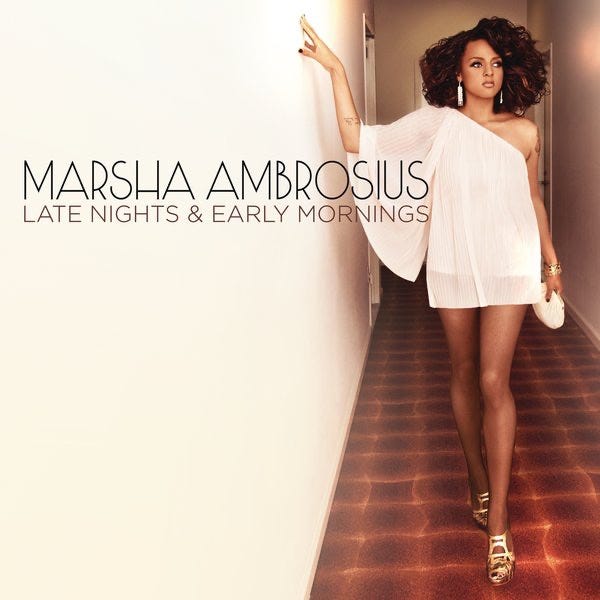
In terms of an official solo album, Marsha’s long-awaited first proper solo statement arrived after her former Floetry partner Natalie (a.k.a. Floacist) had already gotten there first. Much of the recording and mixing for this album was done in Philadelphia, and Marsha herself produced most of it. Of course, she is also a great songwriter, and apart from the two covers she put pen to paper across the whole thing, which makes it a work with a single clear line running through it.
The Just Blaze-produced lead track, “Far Away,” is a serious slow song said to have been dedicated to a friend who suffered anti-gay discrimination and took his own life. The live-instrument, ambient sensibility heard here is also one of the tones running through the entire album. Still, on her mixtapes Marsha had been even more eager than this to deliver floor tunes. On those, where she also invited famous MCs, she sometimes showed tracks with a strong contemporary taste and got very solid results. A track that carries on that line is “Hope She Cheats On You (With a Basketball Player).” This song, with its wavering groove and sharply cutting synths, has a current texture, but underneath it there is a classic ’90s R&B feel, at moments even recalling Brownstone, and that part is naturally delicious. Among the groove-based cuts, “Chasing Clouds,” produced by Syience, is also quite good, with a floating mood true to its title and a swaying beat that feels nice.
But the core of this album is probably the group of sexy tunes, or rather love songs with such a high erotic index they could even be called “in-bed” songs, yet still full of enough beauty. Starting with the percussive breathing attack on “With You,” a co-write with Alicia Keys, and moving to the Rich Harrison-produced “Late Nights & Early Mornings,” which grinds all over the place song-wide, then on to “Your Hands” by Dre & Vidal, who were also heavily involved in Floetry’s debut, the ambient and mysterious mood that runs through all of them seems to give these erotic expressions a distinctive texture.
As for the ambient side, there is also the cover of Portishead’s 1994 song “Sour Times.” With DJ Aktive’s scratches brought in, this is basically a remake that keeps the feel of the original, if anything placing more weight on the number itself. You can also hear Marsha’s trademark vibrato-style vocals, but on this track and on “The Break Up Song,” rather than overusing it, she makes the clever choice to use it in pinpointed, limited, effective ways, and the same goes for the voice processing.
Meanwhile, the Ms. Lauryn Hill cover “Lose Myself,” perhaps made out of frustration with the overly forced original arrangement from the Surf’s Up soundtrack, unfolds as earthy acoustic soul in order to draw out the song’s leaves-and-branches strengths. “I Want You to Stay,” which is probably an homage to Stevie Wonder and Michael Jackson, and maybe Prince too, and the medium-slow “Tears,” which carries the scent of the Impressions of the ’60s through Southern soul of the ‘70s and is pure older-guy bait, also push up the soul index of the album alongside the erotic material mentioned earlier. The bonuses are the writer’s own remake of Michael’s “Butterflies,” and the piano-accompanied jazzy slow song “Fan.” The character of the former is, as expected, outstanding, and the latter, which in part brings Denise Williams’ “Free” to mind, is also hard to throw away. It is a record worth keeping an eye on from here on as well. — Kendra Vale
Ginuwine, Elgin
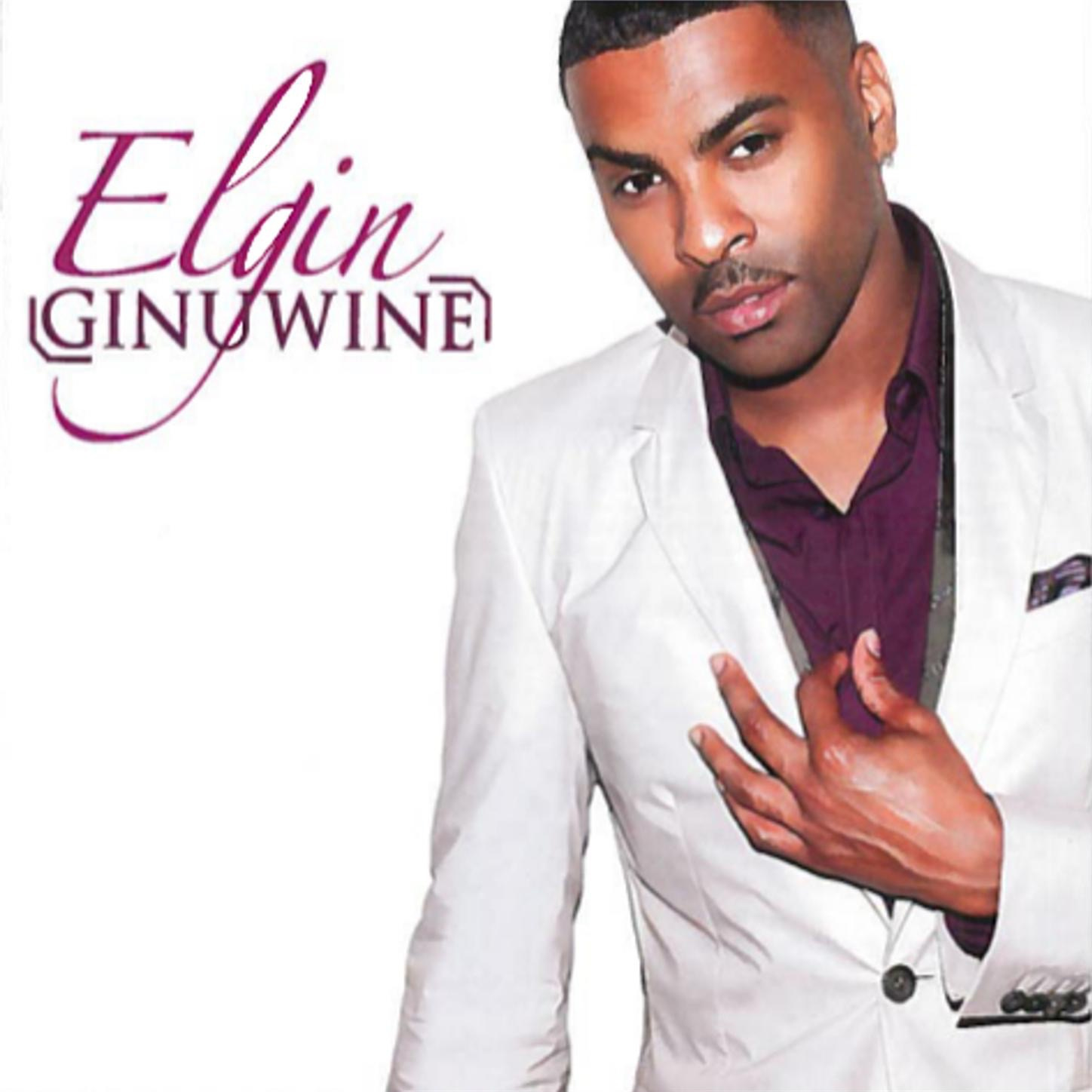
Ginuwine, hereafter G, came back with a new work after only about a year and a half, which is a fairly quick pace. Like the previous one, it was released from Notifi, but this time distribution had changed to Fontana, and the name of Kedar Massenburg, to whom he had entrusted management in action, is nowhere to be seen. What is more, Timbaland’s name, with whom he reunited on the previous album through “Get Involved,” cannot be confirmed here either. In other words, was that reunion nothing more than a commemorative re-collaboration? If so, then G, rather than continuing to cling to teaming with Timb on “Pony,” may have decided to push ahead in the style he had pursued since “Differences,” based on the fact that “Last Chance” was a hit on the new album. So then, to say the conclusion first, this album is lined with orthodox R&B ballads that clearly carry on the flow of “Last Chance.”
I mean, from “Heaven,” placed by members of Song Dynasty including fellow TGT member Tank, it is already an honest slow ballad. “What Could Have Been,” which had been made a single, is also a slow cut with the late-’90s mood of something Joe might have sung back then. Production comes from Melvin “Saint Nick” Coleman, who continues from the last album. Fortunately, “Drink of Choice,” handled by Bryan-Michael Cox, who was also brought back from the last one, is another aching slow number, and G singing it with such single-mindedness is good. There is no flashiness, but the track is sturdy and the vocal is grounded. Somehow it also has a texture close to the kind of songs Tyrese, the “other T” in TGT, used to be talked about around 2000 Watts, and with Cedric Solomon’s “Body” sounding just a little like SG’s “My Body,” maybe that is not totally off. “Why We’re Fighting,” which sounds like Melvin made it with Cox’s style, something like Mary J. Blige’s “Be Without You,” in mind, the mid-slow “First Time” sung with slightly Auto-Tuned vocals, and “Frozen,” a Cox production co-written with Kendrick Dean, all have the feel of post-mid-2000s ballads, synth gifts included, but in any case this work centers on melodic vocal numbers and is even simpler and more orthodox than the previous album.
The impression is strengthened by the fact that he sings two ballads written by Diane Warren. On “Break” and “How Does Your Heart Forget,” G emotionally sings Diane-like universal, beautiful melodies, and he is dear there. When he sings songs like these, it is also refreshing how G’s soulfulness becomes even more exposed. Outside the ballads, there is the festival-style mid-up “Batteries,” featuring Trina, and the electro-type up-tempo “Kidnapped,” co-written by RL from Next, and these feel like he was trying out the current trend. Still, because the singer is G, he is not swallowed by the tracks. “Kidnapped” in particular is interesting as a song where he borrows a contemporary style and shows his own Michael Jackson-lover side.
The album title bearing his first name probably tells us that the songs presented here are his unadorned, plain self. It is a good work where G’s soul comes across straight. And as of this writing, this was his last album to date. — Renée Halloway
Elisha La’Verne, 361 Degrees

A truly miraculous comeback. For Elisha La’Verne, this is her fifth album and her first original album in a full nine years. As everyone knows, she became popular as an R&B singer launched out of Japan, but the distinctive voice that lets you feel a kind of lovable sweetness, the catchy melodies that pleasantly bring that voice over to this side, and the bright sound that made all of that shine as much as possible are all still here on this work too, without any strange change of course. It feels like the Elisha La’Verne everybody wanted is packed in here just as she is, and it becomes a melodic record that puts forward, at drug-level value, the fact of being made up of “good songs.” Familiar StarBase producers like T. Town and Nephrite, Ken Sato, who supported Elisha from her debut, and Neville Thomas of 203 Production all gather here.
The fine duet with Jamillions, “Going the Distance,” the gentle and smooth “Close to You,” featuring and co-written by Matt Cab, “I Don’t Know Why,” and the rest are mellow medium-to-slow one-ballads through and through, and some people may feel that makes it a bit lacking, but when you finally hear the warm-hearted “Full Time Lover,” with the late Sam Salter participating in the songwriting, something falls oddly into place, or rather, this comfortable sense of reassurance makes you think, this really is proof the work is a good one. If I may be greedy, I wanted to hear another collaboration with T.Kura, but still, rather than just a first step, it is fair to call this a work that smoothly takes a second first step. It suddenly makes what she does from here all the more enjoyable to look forward to. — Imani Raven
Frank McComb, A New Beginning
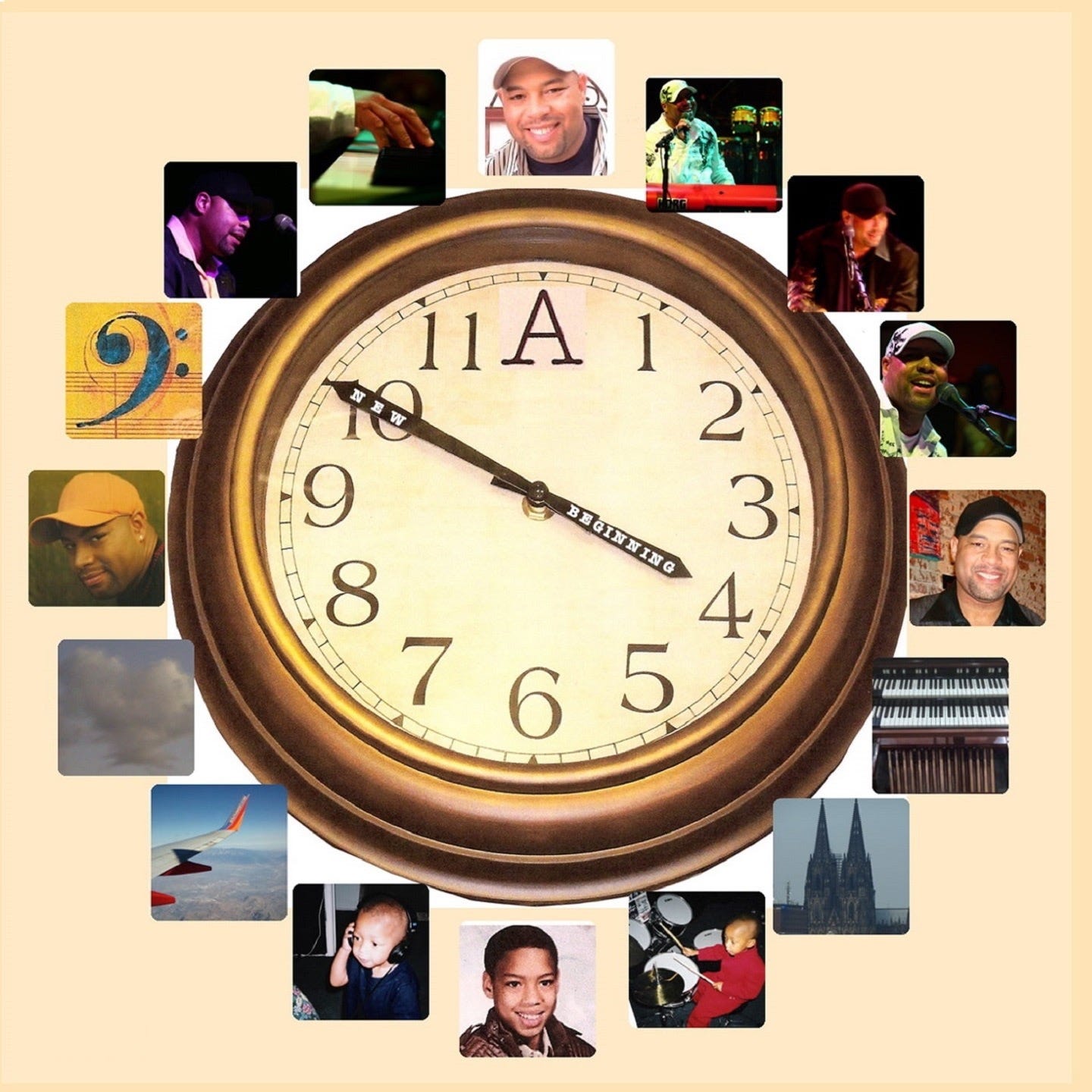
In previous years Frank McComb had releases like instrumental collections and live recordings, but as a purely new original album, this is his first in a full eight years since The Truth, Vol. 1, produced by Steve Harvey. Produced by Frank himself, this work does not have the earlier, Steve Harvey-like organic color, and its polished sound-making is closer to the feel of Straight from the Vault. But unlike Straight..., where he handled almost all the instrumental parts by himself, this time you can see active use of musicians. In that sense too, this work can be said to give more of a sense of the roots of that wave called “soul and jazz.”
What stands out most is the reunion with Branford Marsalis, the benefactor who pulled him into Buckshot LeFonque, their first together since his debut. The ballad “And Now I’m Fighting,” where Branford’s soprano sax curls in mellow fashion, is the highlight of the album. Frank, too, sings gently in his familiar Donny Hathaway-like voice. Also, on “Inspire a Life,” which features Russell Gunn, he sings with remarkable tenderness atop a Stevie Wonder-like melody. On a melodic number like “Open My Heart,” written together with Yaki-san, his honesty seems to seep out of the singing. The vocals on this record are wonderful like this, but on the other hand, in “Wishful Thinking” and the fusion-style instrumental tracks, you can also soak deeply in his cool keyboard playing. It is a very Frank McComb-like album, packed with his charms both as a vocalist and as a session musician. — Jill Wannasa
John Stoddart, Faith Hope Love
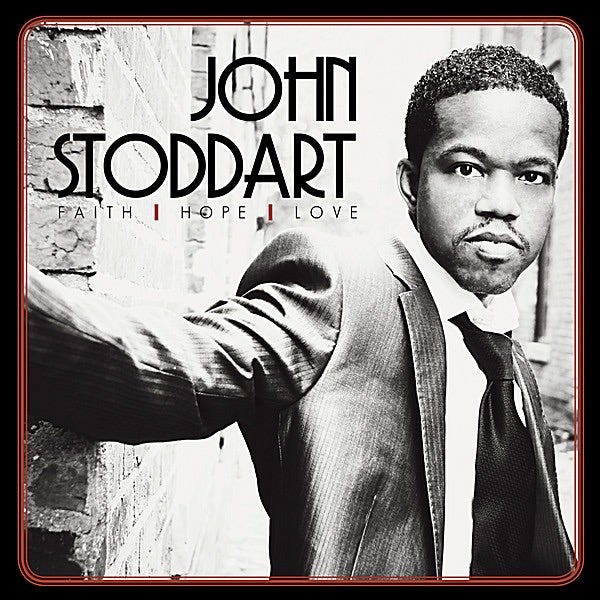
Right at the opening, when a sample-like guitar somewhat recalling Raul Midón starts to intertwine with strings and flute that feel almost alive, you get caught by a sensation close to hearing the old India.Arie, or maybe some high-quality UK soul. This Philadelphia-born artist has long been active as a professional musician-creator, and this album appears to be his second, arriving seven years and several months after his first solo work, which got a major release in the latter half of 2003.
Recording was done mainly in Nashville, the backing is basically live instrumentation, he himself plays keyboard, and he also handles production and arrangement. In the soft tunes and acoustic slow cuts lined up around the middle of the album, his smoky voice, like a lighter Will Downing with a faint dusting of Brian McKnight, and still youthful too, has a very nice flavor. On the other hand, early on there are some more subdued, folkish medium numbers that at times sound a little like Bill Withers, and he also gives us that exact Withers song, “Lovely Day.” That is the only cover, and everything else is self-written, but each song carries a hook that may not be flashy, yet certainly stays in the ear. The way he sprinkles a sense of déjà vu over several of them is tasteful too, and even the light slow songs carrying a Stevie Wonder flavor are delivered smoothly, with emotion that is neither excessive nor lacking. If he had put one more medium cut near the end instead of closing out with a run of slows, the album might have felt even fuller as an album, but even so, the ten songs lined up here have more than enough power to intoxicate grown folks. — Deja L.