

The 75 Best Albums of 2026 So Far
No filler, no genre silos, no other list in its weight class. Seventy-five records make 2026 impossible to call a slow year. Match this range if you can.
Most year-end lists pick a side, and that’s where they live. The rap site rank rap, the indie blog rank indie, and everybody just separates the year into discrete boxes and never has to argue with the person who put a soul record up against a heavy metal one. This list doesn’t bother with boxes. Seventy-five albums, all they have in common is that this year would have been poorer without them. The breadth here is the entire argument, the argument that the year was too rich and varied to sort into rooms.
Look at what sits shoulder to shoulder. An octogenarian still trying to find the right tune, alongside thirty-two minutes of crime-punk looped from frayed ends. A revival of Cuban ballad tradition brought back through the instruments of a sax quartet, and a bedroom-pop confession reconstructed on the pulse of UK garage. Gospel-taught jazz, Backwoodz noise-rap, disco-house where the mic is passed to a new guest on each track, an album of fever-dream folk recorded over the course of eleven studios. Would none of these albums share space on the same wall in a record shop? These genres sit, unapologetically side by side, without losing anything that made them individually unique.
Here is the year, all at once, all under one roof, with no contest.
Blessing Jolie, 20nothing
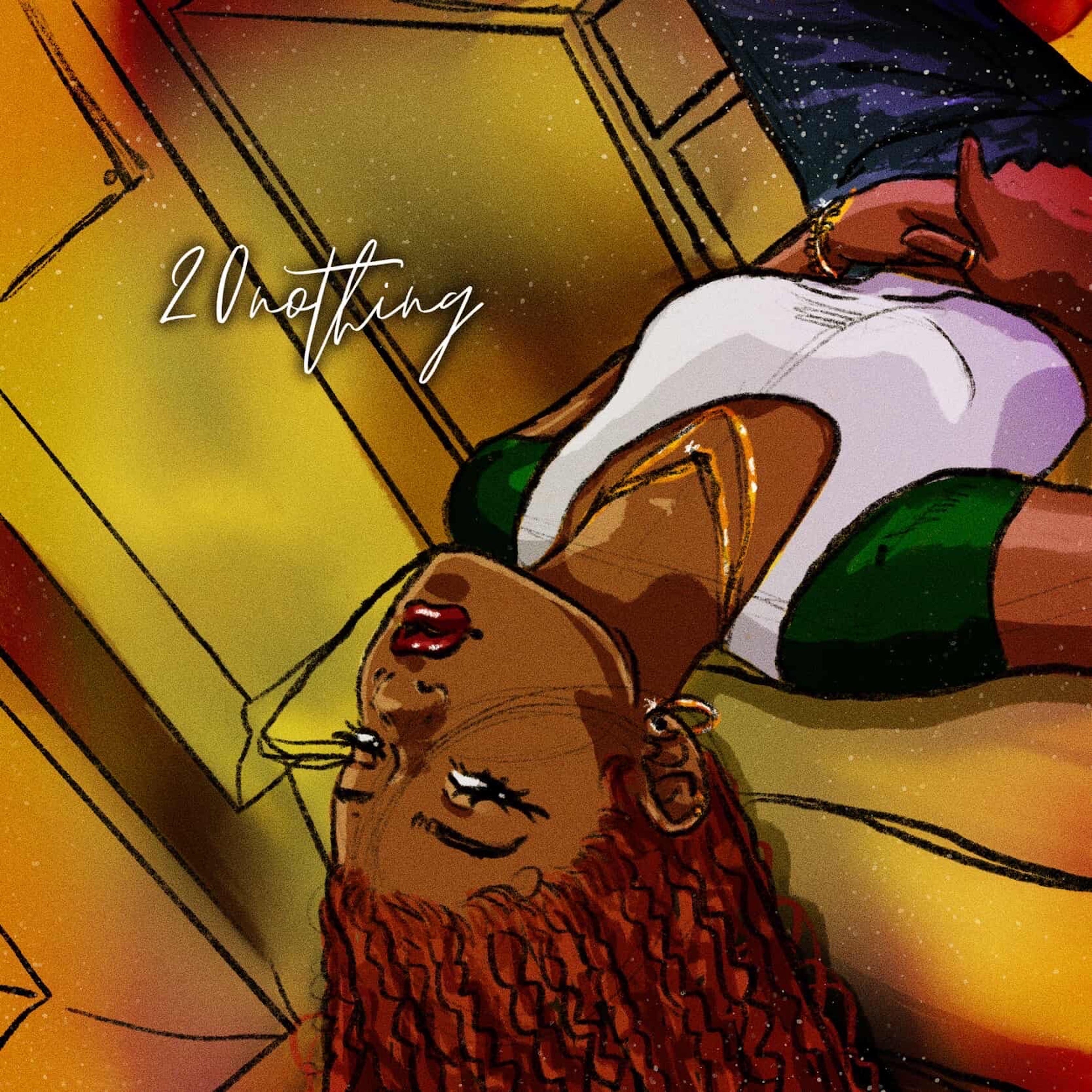
Picking up a guitar at fifteen in Katy, Texas, after hearing Shawn Mendes’s Handwritten, she is the youngest of five children in a Nigerian household where her mother listened to Donna Summer and Shalamar all day and weekends. She began to post covers on Instagram, found herself at nineteen, enrolled in computer science at the University of North Texas and subsequently dropped out. Signed by Thirty Tigers with a six-song EP named the girl next door consisting almost entirely of her voice and an acoustic guitar, she posted a clip late last year of “20teens” recorded in Katy. Tyler, the Creator, retweeted it; Kehlani cosigned; hundreds of thousands of followers landed on her Instagram page within weeks; Sirius XM, KEXP, and Radio Milwaukee added the single to rotation. It’s an upbringing of circumstance which hardly predicts “Software Developer,” the album’s longest and most complex track: Blessing questions what it would be like if she had remained in school (“Could’ve been one hell of a software developer”), names friends who followed the expected paths, recalls being around almost entirely white friends growing up, dubs herself “that comic book reading bitch,” tells the man who tried to put her on layaway to “come correct” and closes the track begging a software developer to “Please fix my dreams,” her jokes thinning until the underlying hurt shines through. On “Regular Shmegular Girl,” she is given a number by a man in a gas station during a stifling Texas heat, and it takes her three minutes to make clear her terms: “Bitch, I ain’t no regular, shmegular, begging, hurt, bitch-type girl,” making conditions for her pursuit clear. At no point in the conversation does she request to be picked. Blessing Jolie is bursting with things to say and never once asks for approval. —Zoe Westfield
Roc Marciano, 656
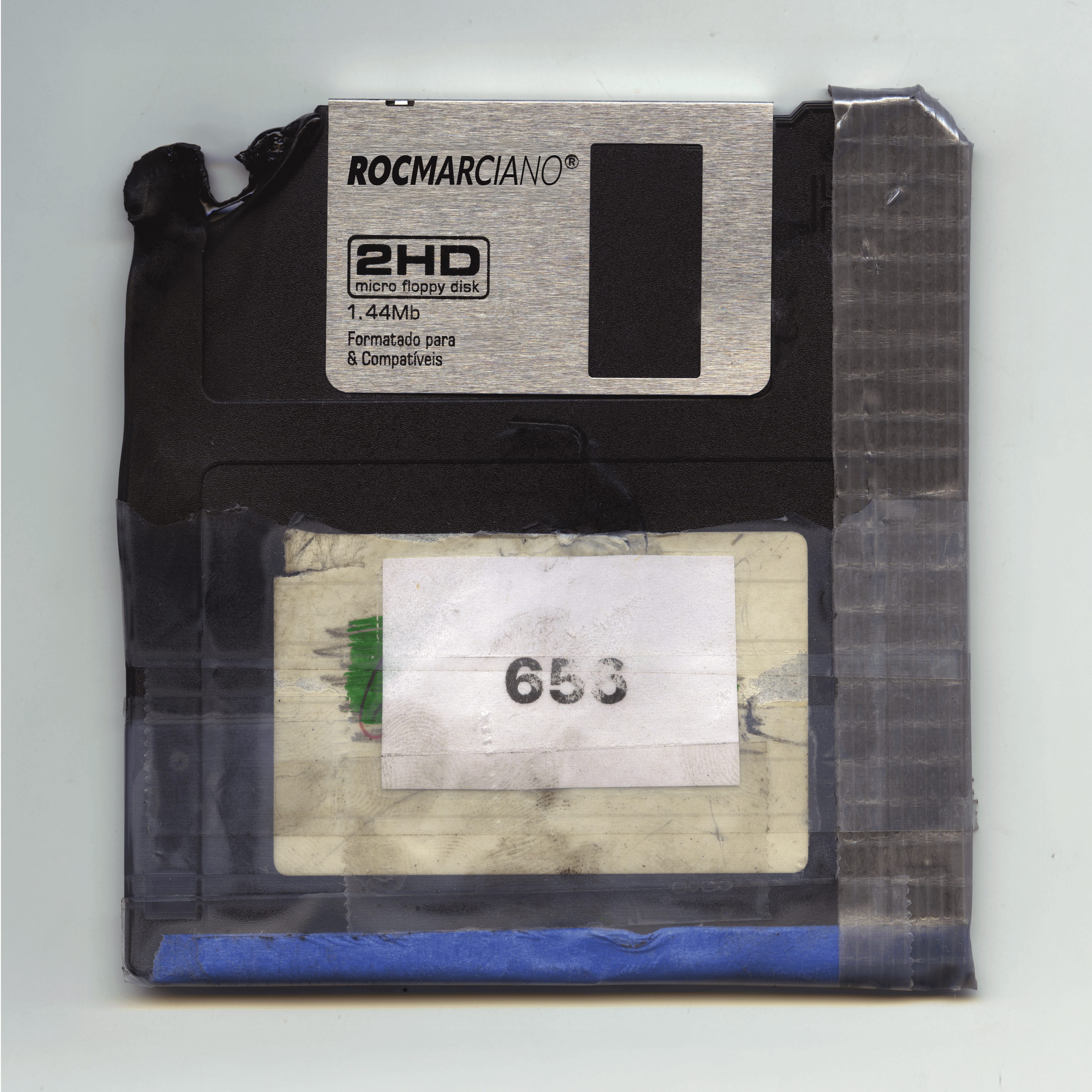
656, “neighbor of the beast,” puts Roc Marciano one numerical away from damnation, right where he’s been for the past 15 years. The album itself clocks in at a trim 32 minutes, each track produced by him under his Quiet Luxury moniker, and the shortness isn’t conservative so much as efficient. If you know the exact path, why take too long? Marciano pioneered mafioso rap during the early aughts before peeling off the major label gloss to expose frayed loops and hollow, disembodied drums like survivors of an RZA-flooded basement. Marcberg’s retooling expanded the horizons for underground street rap, and absolutely everything to come (Griselda’s multi-album expansion, Mach-Hommy’s cryptic dispatches, the entirety of the luxury grime subgenre) flows from this early blueprint.
You know what you’re going to get production-wise; know it’s going to be every bit as cinematic as the lines are. “Trick Bag” opens with a slow pull back, setting the stage before he even clears his throat. Once he begins to narrate his heists and home invasions with the same dead-eyed drone as someone ordering a sub, his internal rhymes are intricate and dense, reward attentive listening, and his pleasure comes from its temperature: frigid. It’s icy cold even when discussing the hot shit. This one limitation is its greatest power; 656 has nowhere near the narrative scope of Reloaded, let alone Rosebudd’s Revenge. Instead, it’s a meticulously edited highlight reel in place of a grand narrative crime saga. You can spin it twice an hour and still feel wanting more. For hardcore fans, it’s the intended effect. For new fans, it’s an intense study of why the 47-year-old from Hempstead is still the North Star of this region of hip-hop, and why all the current copycats can’t cut the mustard despite already swamping the market. —Harry Brown
Aquakultre, 1783
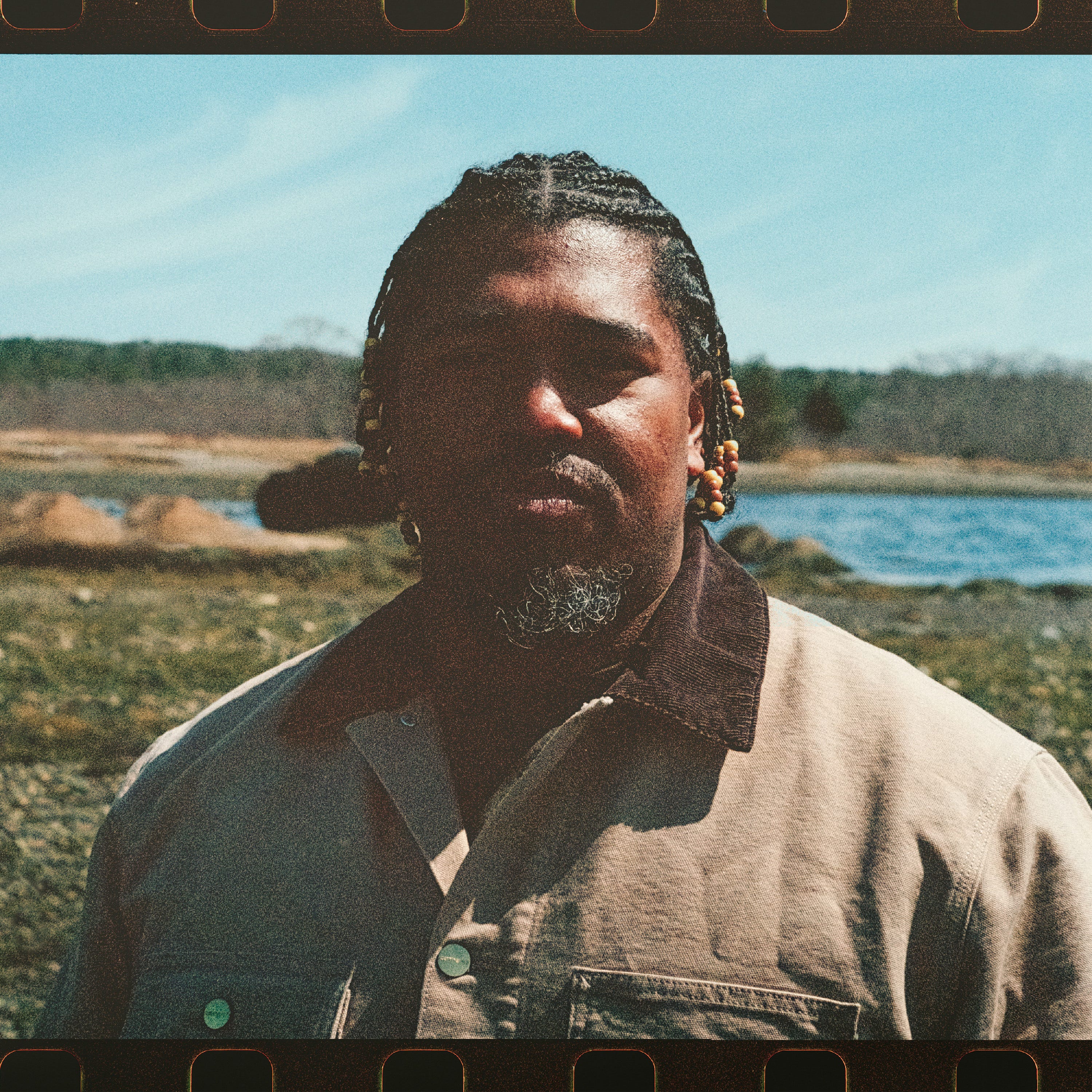
Some 3,000 people of color took ships out of New York Harbor in 1783, as the War of Independence ground to an ignominious close, to reach Nova Scotia with the promise of land and freedom from the British Crown—they did not receive it in its entirety. The Black Loyalists scratched settlements into the rocky terrain of the province, where their descendants live on. Lance Sampson, who writes and records as Aquakultre, is a blood relative of those original settlers, and his fourth album is titled with their departure year. The record, which features Production by Erin Costelo, has roots in gospel, soul, R&B, folk and hip-hop without ever becoming some kind of stylistic lesson. He delivers hymns in the voice of Reverend William White (father of famed opera singer Portia White), imagining letters he may have written to loved ones back home while in France in World War I. On “Gallows,” Sampson uses pounding drumbeats that sound like a chain gang and assumes the voice of his great-great-grandfather Daniel Perry Sampson, who was convicted of murder by an all-white jury and hanged in Halifax in 1935. The family is certain he was framed, and Sampson is working to clear his name. These are not sterile historical examinations. “The Avenue” glides along on a groove so similar to Marvin Gaye’s What’s Going On that it feels intentional, while Sampson delivers his lyrics in a way so smooth it’s like silk, and a sampled older person recites last names of families who have lived on the same street for centuries. Throughout 1783, Sampson poses a question that can also be understood as a present to his young daughter: “Who are we, and who enabled us to be?” —Daliah Green
RJD2 & Supastition, According To…
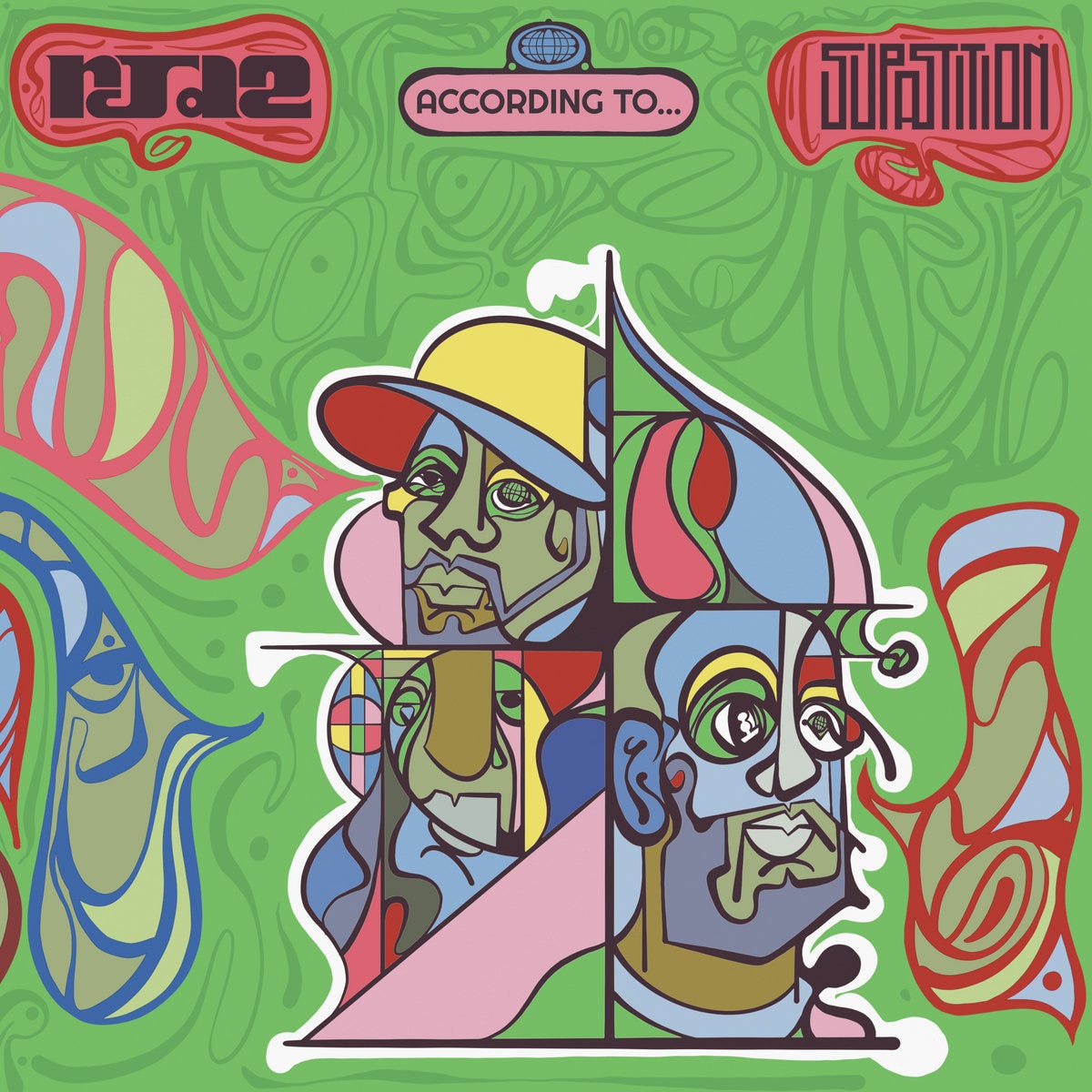
Most people define Supastition by the big-name rappers who have given him nods of approval—KRS-One, Royce da 5’9”, Little Brother—as if his own discography is a secondary support to somebody else’s trajectory. He selected the name because no one in Greenville, NC, thought that he’d ever do it, and after a tour through a dozen countries, several XXL features, and generally continuing as the kind of artist that has been both talked about more than he’s been bought. RJD2, who put Deadringer on El-P’s Definitive Jux in ‘02, made the Mad Men theme, and somewhere along the line began constructing his own hardware in Columbus, OH exists in a parallel world. According To..., their first full-length album in tandem, distributed solely through their own label, and the finished product only leaves one wondering why the hell they waited another ten years. On “Machines Like Us,” he surveys Cubicles that aren’t even pretty, paychecks written to erase ambition, blood pressure that climbs higher than salary and it ends with: your employers would sign a couple of sympathy cards, after you die tomorrow, they’d post the job by the end of the week. He drops this truth on you with a weary authority, a man who has indeed spent time staring out the window from that chair. “Wins and Losses” expands further on the family math. A cousin pushed dope and went to jail, came home, started up a business. Supastition only wants to win scratch-offs, until the line that shatters the track wide open: maybe God doesn’t want me to be a millionaire. He’s just trying to be secure, and lately he’s been paying attention to what his children are eating, and secure isn’t going to be enough. —Rian Frost
Arlo Parks, Ambiguous Desire
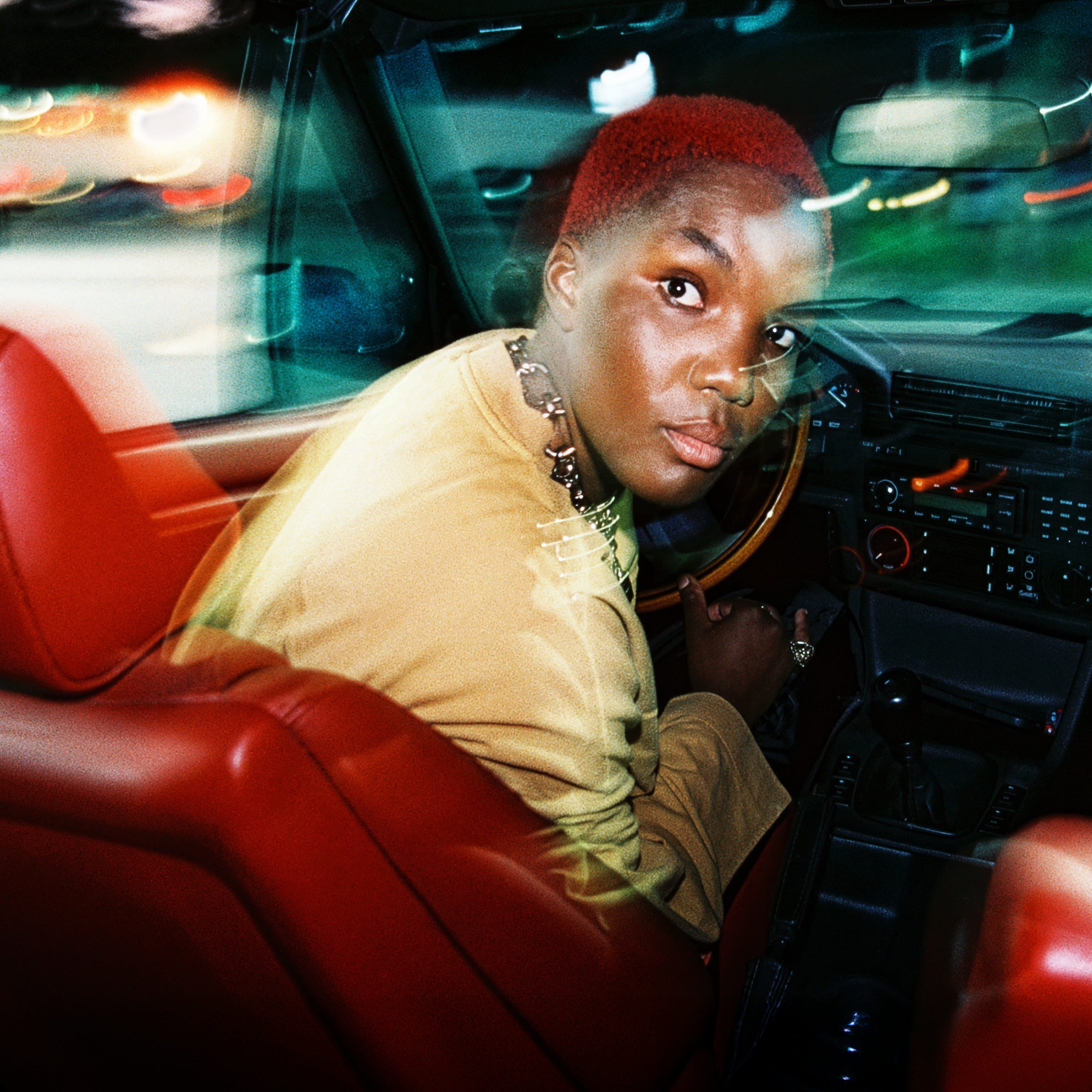
Signed at 17, Mercury Prize at 20, a US tour cancelled for mental health concerns at 22. Arlo Parks had been famous longer than she’d been an adult when, in the spring of 2024, she wrapped her My Soft Machine tour at Brooklyn Steel and found herself with nothing to do. So she did what 23-year-olds do. She went to Midnight Lovers in LA and juke nights in Greenpoint. She read McKenzie Wark’s Raving. She started DJing Goldie and Prince at house parties (still hasn’t picked a DJ name) and fell in love with someone who lived in New York. Then she linked up with Baird, a Baltimore producer known for his work with BROCKHAMPTON and Kevin Abstract, in his downtown loft, and the two of them made a song every other day for two years. The guitars from her first two records disappeared. Modular synths, breakbeat rhythms, and UK garage kicks took their place, and the bedroom-confessional poet who’d been everybody’s sad best friend suddenly had bass frequencies and a reason to leave the house. The songs are full of people. Aleda’s cousin is being sick out back while the disco lights turn blue at ten to six in the morning. Maria stands on a dancefloor holding both her heels, sequins on her jeans, wishing she wasn’t herself. Cindy slips out of a car in leather and pink chrome. Joey guards his decks. Parks packs a night bag—cigarettes, cash, phone—and rides in a Jetta to someone named Conor’s place. And then, on “Beams,” she’s sobering up on a stranger’s stairs, looking at Harley Weir photos, and she tells someone flat that she was suicidal in Brazil. On “Senses,” she admits she’s been dulling herself with art and women, wishing she’d disappear at speed while cycling, asking Sampha’s question back at herself: is trying better than nothing? —Charlotte Rochel
hemlocke springs, The Apple Tree Under the Sea
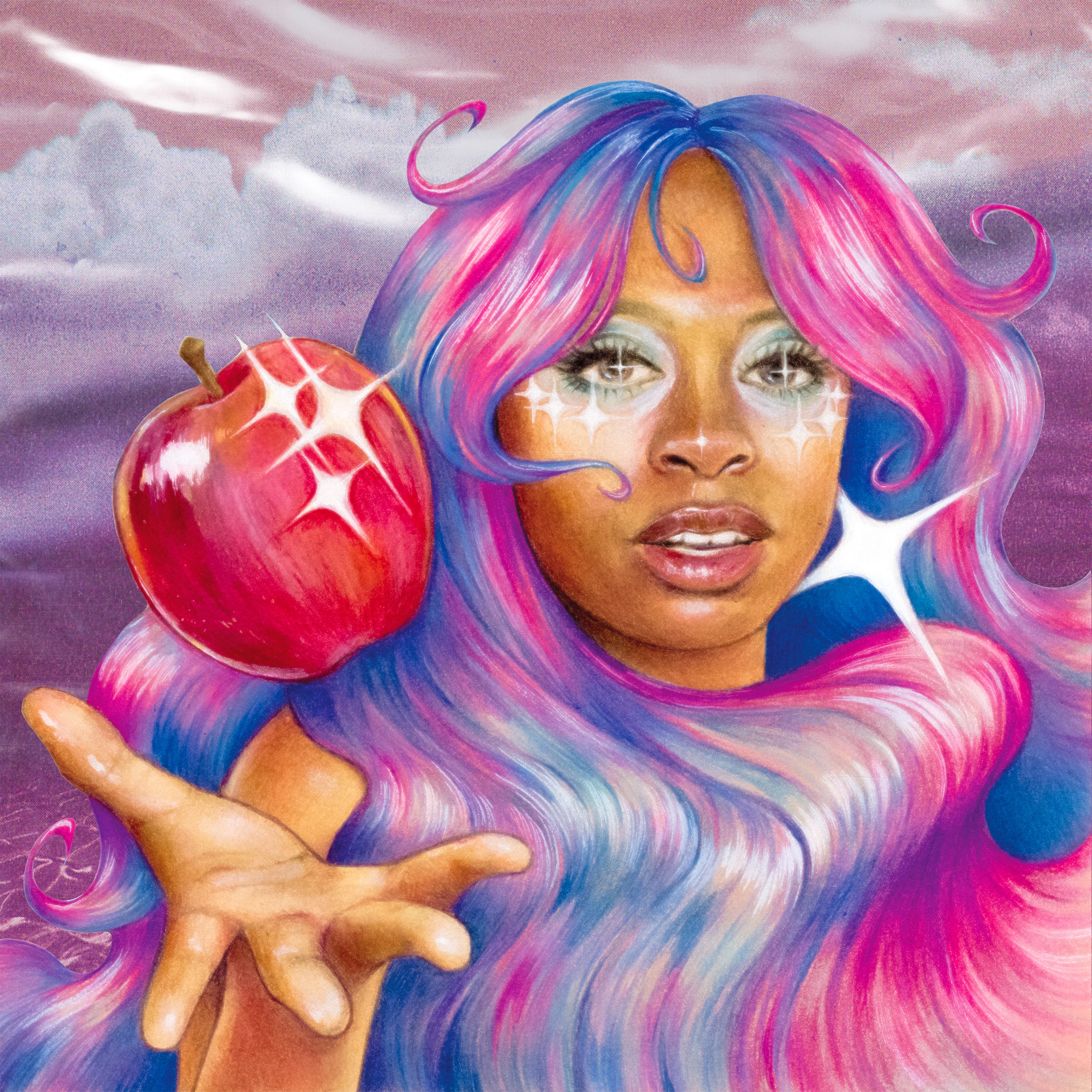
The record opens with a cassette tape featuring Isimeme Udu’s mother, a lovely sliver of domestic tape hiss that is promptly consumed once the synths take over the room. Udu-who records as hemlocke springs, spent years working up a fanbase through singles that straddled the line between Kate Bushian drama and Devo-level plastic funk, and the debut takes that impulse somewhere stranger. “W-w-w-w-w,” she wrote out of rage; the funkiest cut on her debut and her voice leaps between a Prince-esque falsetto and nobody else’s bark. Entirely co-produced with Burns, The Apple Tree Under the Sea runs on a fairy tale, religious guilt, a particular variety of fear of the beloved being one who will one day judge you dark-fantasy narrative. “The Red Apple” introduces the proceedings with the kind of theatrical beginning Udu might have deployed as she studied musicals at Dartmouth before abandoning her MD. “Sever the Blight” drops down into industrial synths and a chorus begging release from some unnamed source, and on “Sense (Is)” she’s done playing games with fame. “Words of honor and of praise have lost their noble highs,” she sings, and the gall feels especially pungent given that Udu blew up on TikTok and toured with Doja Cat before finally finding herself three years to finish the album. —Darryl Keyes
Paul McCartney, The Boys of Dungeon Lane
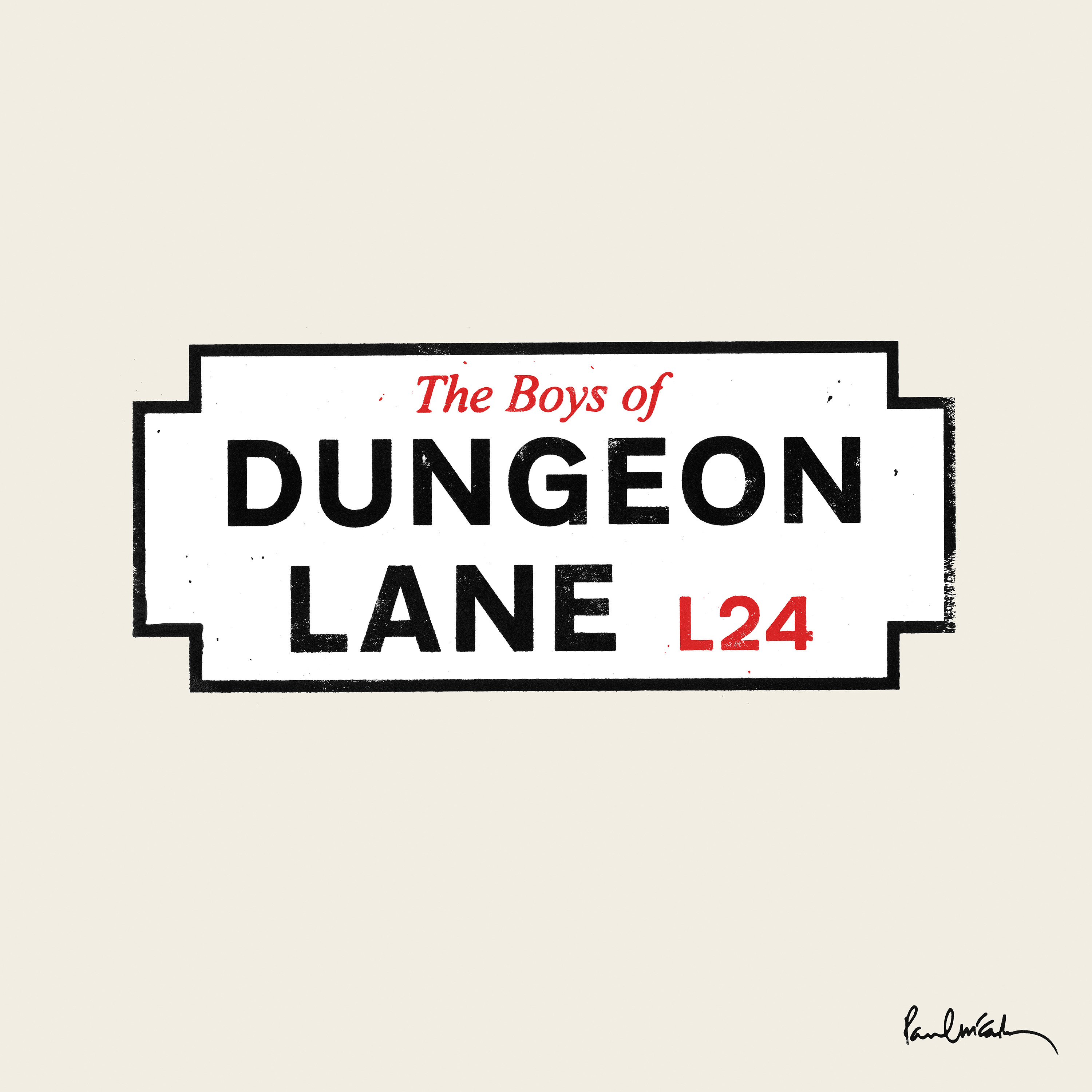
Six years after the rather negligible McCartney III, what exactly do we expect from our Paul as he enters his eighth decade? The Boys of Dungeon Lane answers that question for him: everything. Following the overhaul of The Beatles Anthology, the documentary chronicling his Wings era, and a string of high-profile television appearances (including the season finale of SNL and the finale of Stephen Colbert’s Late Night at the legendary Ed Sullivan Theater), he continues to give it his absolute all. Is the end in sight? In true Abbey Road fashion, the album presents itself as a street name—“Dungeon Lane,” a haunt from his youth that the “boys” used to roam back in the day. “Days We Left Behind” begins there, eventually crossing paths with the Beatles along the way. During “Down South,” he hitches a ride with George. “Home to Us” is a poignant duet with the surviving Ringo. “Never Knows,” among others, playfully channels the sonic spirit of his collaborations with John. It ranges from something akin to Wings to “Ripples on the Pond”—a tribute to his latest wife. And is it any good? Surprisingly so. Musically brilliant, certainly, but beautifully sung as well. When you possess a naturally veiled timbre, singing in falsetto softens everything—like a heartfelt expression of gratitude to life itself. —Charlotte Rochel
dälek, Brilliance of a Falling Moon
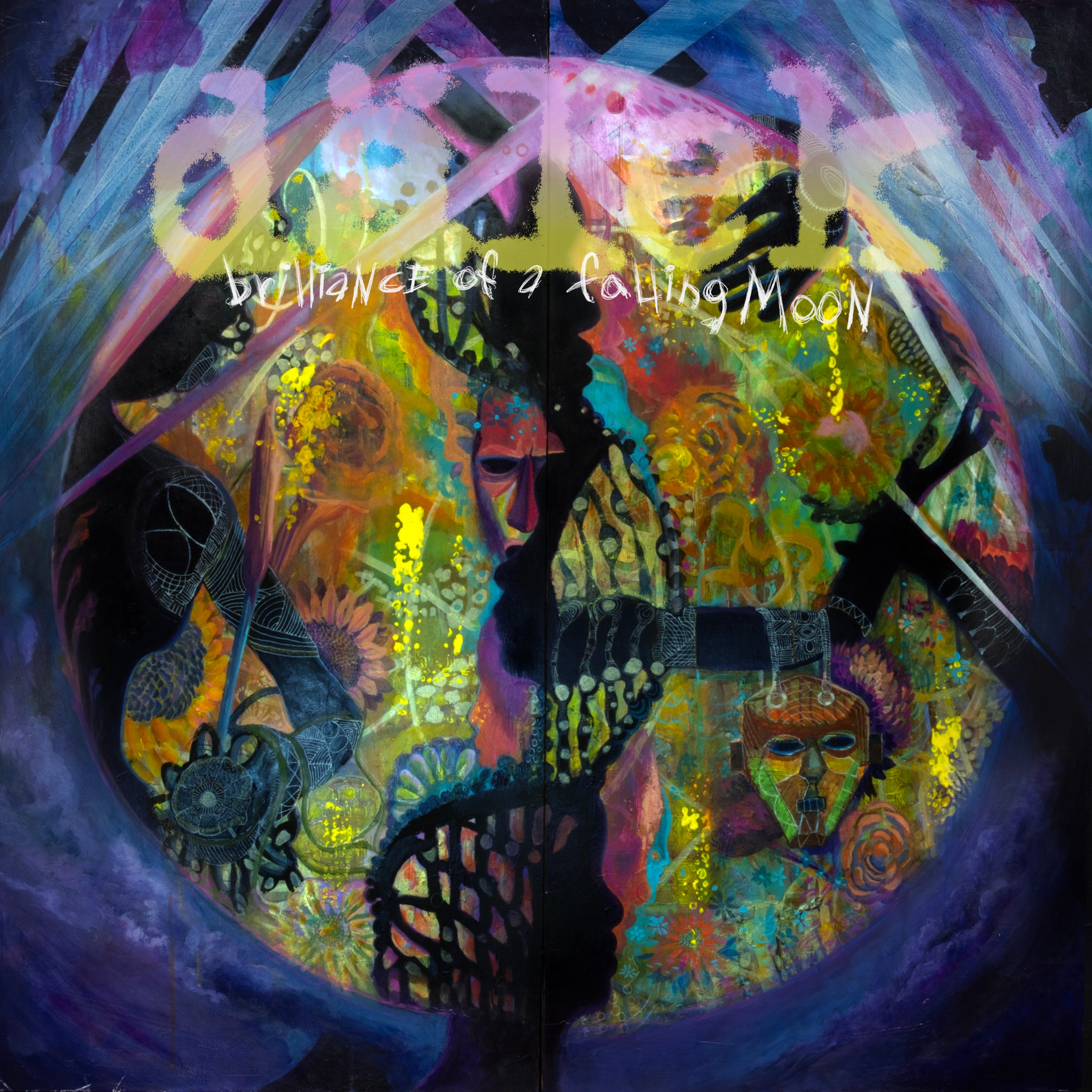
Won a college scholarship, used the funds to buy an MPC 3000, dropped out of school, and founded dälek with an old production partner, Alap Momin (whose production for dälek is nearly impossible to discern, as Brooks insists on being called like Van Halen; he was an earlier production partner) in Newark, New Jersey, in 1998. The same year dälek toured with Tool and De La Soul. Brooks also opened for Mastodon and played with Grandmaster Flash, yet insisted on and succeeded for nearly thirty years that dälek made strictly hip-hop. The same year COVID forced the shutdown of the group’s studio, he cut seven albums using a 4-track and his apartment, releasing them monthly on Bandcamp, and dubbed the entire practice “a ritual.” By the time dälek got to the other side of that process, Brooks was sharpened: the subject of Brilliance of a Falling Moon, his 10th LP to be recorded at the hands of producer Mike Manteca, he’s over fifty years old and raps harder, more pointedly, than he did in his thirties. On “By the Time We Arrive in El Salvador,” Brooks cannot shake the image of some bastard grandstanding backstage at an underage pageant, connects melanin level with disappearance rates, and connects the chain back to Flint. Larson, the author, writes “By the Time We Arrive in El Salvador” is the title of a book which documents the experience of a naive American family during the early days of Nazi Germany in 1933 and how they were unable to adequately prevent it. Brooks is not referencing the parallel with hyperbole; he’s already been shouting about the parallel for thirty years. The only difference now is that America finally matches the description. —Alexandria Elise
Baby Keem, Ca$ino
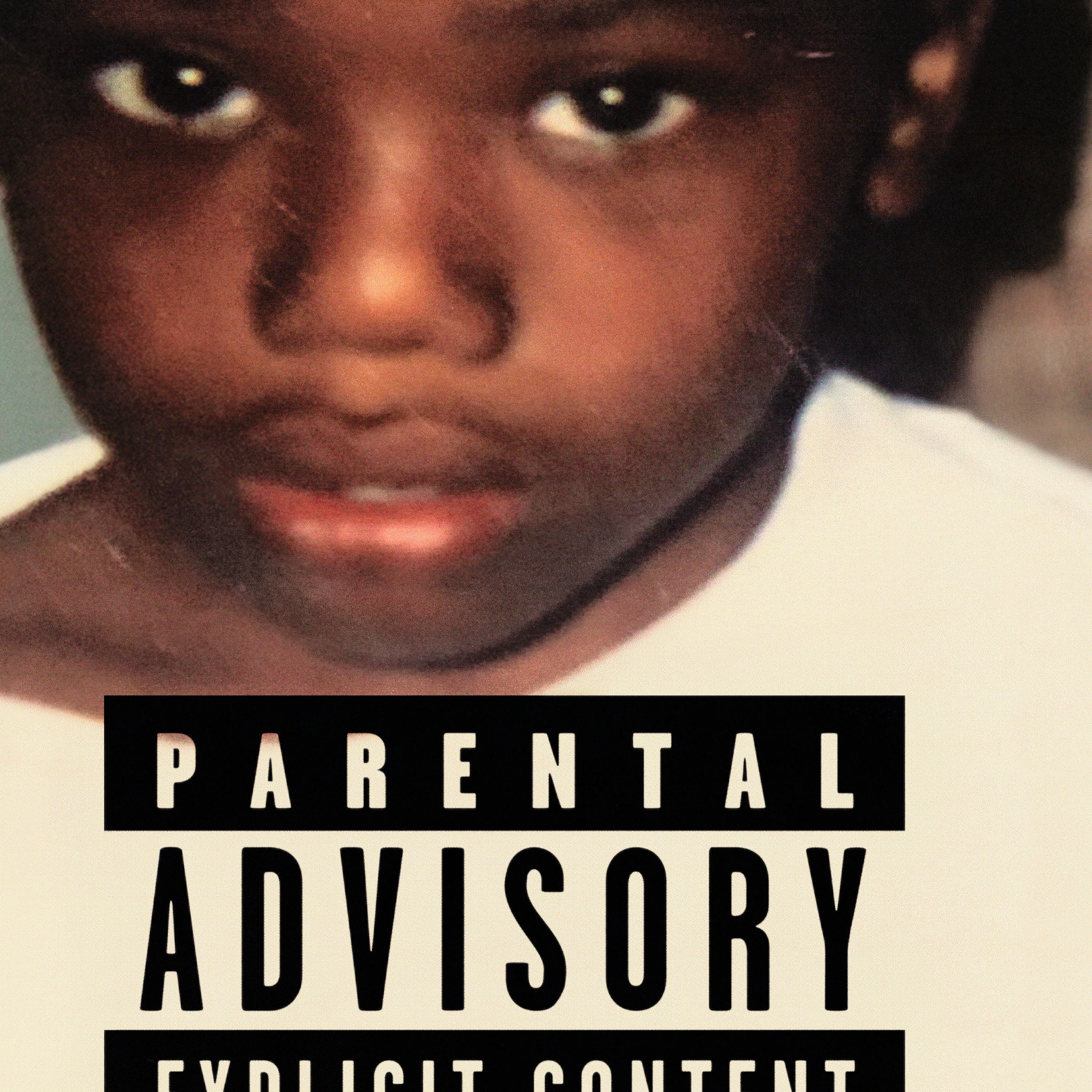
Keem was raised in Las Vegas, and uses a childhood photo of him, before neon was ever anything that stained his mouth, of his gap-toothed, smirking, on the cover of Ca$ino. The eleven subsequent tracks are an attempt to process everything that happened in the span between those two points. “No Security,” his opening track, uses a Natalie Bergman sample. Keem sounds as if he’s exhaled. His announcement to the Las Vegas crowd at the listening party that it wasn’t going to be possible to say nothing had happened within the silence of almost five years: “I named it Ca$ino, because that’s where I went through the things I went through. That’s what shaped me to be here today. A lot of these stories [on the album] I used to be embarrassed to talk about. But I kinda changed my perspective on that—it’s not embarrassing, it’s empowering. I wouldn’t change my story for anything. This album is for the child that walks home slow.” His second album would’ve initially been titled after his mother (Janice). But not exactly as we now know it, since it was initially named Child with Wolves. “No Blame” is dedicated to her. That track, about his mother’s cigarettes at home, her pill-popping when she was pregnant, her nightly disappearances and her subsequent absolution, due to her own lack of a template as she raised herself in Chicago.
Keem’s cousin Kendrick Lamar shows up on “Good Flirts,” alongside Momo Boyd, also part of Infinity Song; the beat is all throwback R&B, and would suit all three artists if Lamar were somewhere within the room, rather than elsewhere in the ether. One of his fun tracks is “$ex Appeal,” with Too $hort. It’s a Bay Area party track that mixes $hort’s lewd storytelling, and Keem’s squeaky yelp, and the effect is delightfully, stupifyingly absurd. Another track swerves in alt-rock so boldly that you might question why Keem doesn’t explore it more, on “Dramatic Girl.” The “Circus Circus Free$tyle” has a shape-shifting Keem, and one or two of his flows would sound similar to Kendrick’s delivery on Section.80. He’s honed his voice and zeroed in on his targets. The bouncy humor of The Melodic Blue has been replaced with a darker gravity; not every track is equipped to handle the weight and nighttime drum lines that underline Keem’s most naked lyrics yet. —L. Ari James
Black Milk, CEREMONIAL
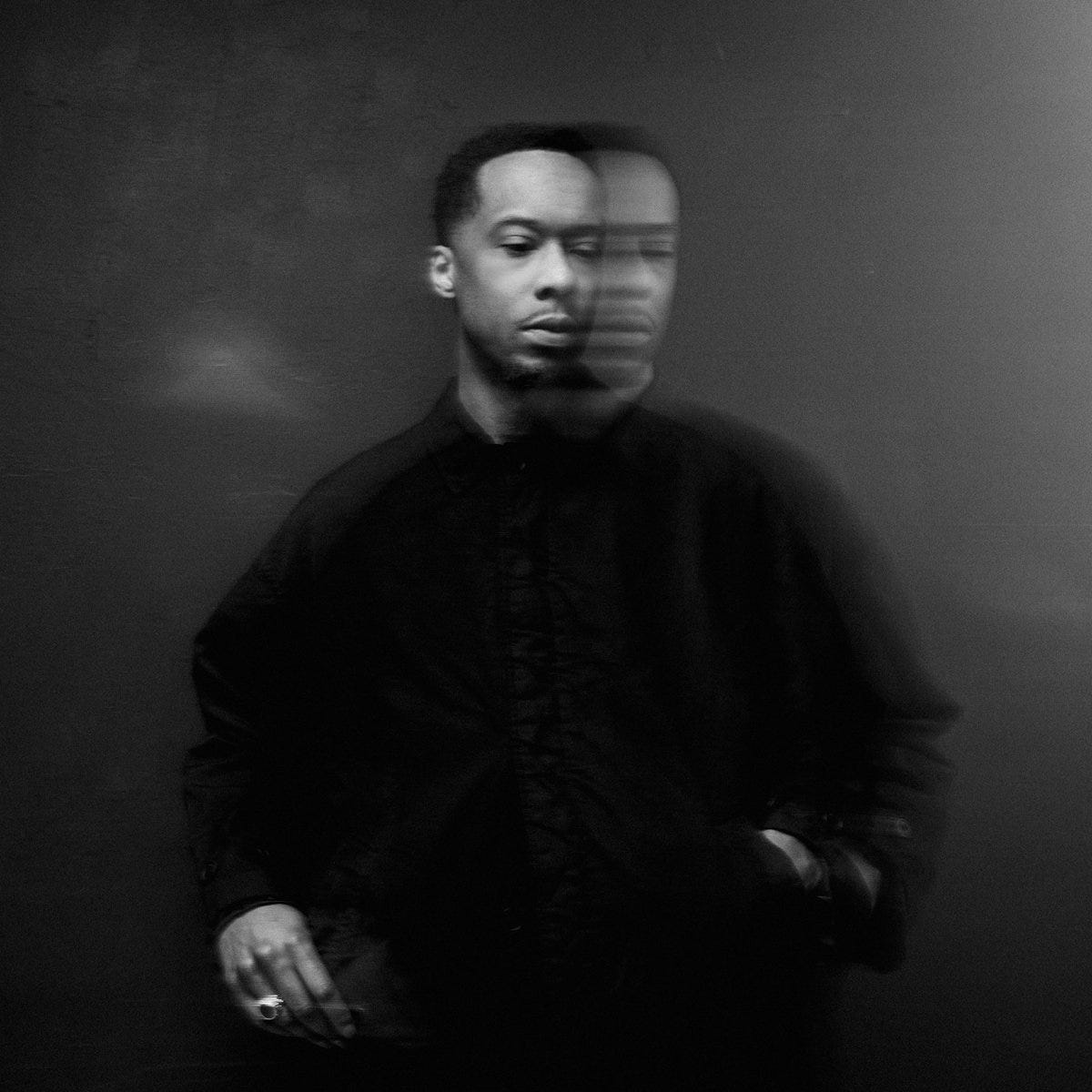
Twenty years running, and Curtis Cross still has the same room in Detroit. CEREMONIAL is a session tape on “record” when the “red light” is typically on. The tape is covered in a dusty relic with musicians playing beyond their time—and with no one counting the minutes. The walls of Stank Babies Studio, where Cross spent the last ten years of his life tracking the last remnants of his Black Milk alias, have become a permanent collaborator. “Dreams Not Only Made at Night” opens with the ‘corner store’ trip rush of friends, takes a muted (piano and drums) tempo, until someone’s “gone.” Ghosted where they’d been. A woman is seen entering the car of the wrong man and ends up face down on the pavement with the order barked at her by the cops while Sam Walker’s “Deadpan” shuffles in: shooting witnesses. Cross has no explanation to these stories, and that’s the beauty. Cross is not Michelangelo on “In the Sky,” there is no image of a ceiling that shall not be painted.
On “Right Time,” he calls his steps giant “like Coltrane,” but none of his achievements in life are the “main course,” but “condiments” in comparison. The self-mythology never feels forced; after two decades, he’s earned these comparisons. Jarelle James’ drums on “Crash Test Dummy” crack with air behind every snare—you can hear the wood and a small space—history. The keys of Ian Fink wander lose and slow through the instrumentals. “CEREMONY” itself runs unadorned: heavy drums, dusty soul loop, a chanting vocal, no arrangement, just production left to unspool. This one has dirt on it. BJ the Chicago Kid performs “YOUIT (Truth Be Told)” and Brandon Myster adds the only external beat. It is as if the Slum Village, Dilla-less era is present. Cross’ production for eLZhi’s The Preface is a staple in the extensive canon of Detroit rap in the 2000s. He started as an intern in Jack White’s Third Man Records, and it wasn’t until Phat Kat persuaded him to go down the solo path. Now, he’s painting that never-drying ceiling in the same room, with the same dedication. He will keep the tape rolling until someone finally intervenes. —Harry Brown
Ady Suleiman, Chasing
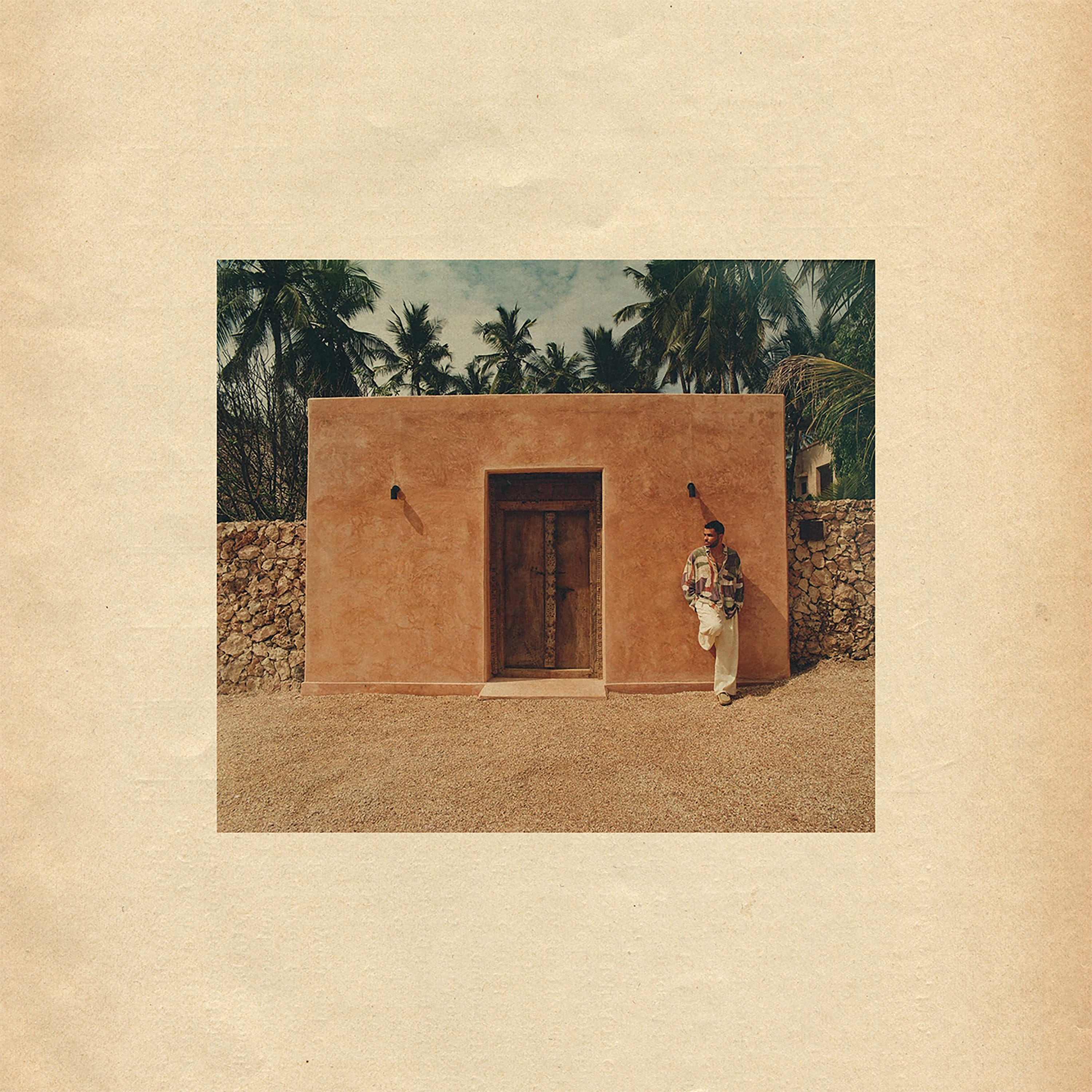
Having cut his teeth on a major-label release, the fallout of which led to just one album and a heap of resentment, Ady Suleiman made it back on the independent circuit and got himself sorted. Chasing is his third overall solo effort (taking into account the Thoughts & Moments Vol. 1 Mixtape) and his most coherent—British soul, which falls somewhere in between Sam Cooke and current London club culture. “Better Days” boasts a low-slung bass line and the soulful vocals of Suleiman dancing effortlessly over the top, offering an assurance of better things without underplaying current struggles. “Waiting” moves us into ballad territory and demonstrates just the kind of vocal versatility which has led many to compare Suleiman to Michael Kiwanuka and James Blake. This album has warmth flowing through its production; the use of live instruments, the minimum use of auto-tune and the spacious room sound, which sounds lived-in, rather than clinical. He deals with actual relationships and real human emotions as opposed to vague sentiments and abstruseness. The title track itself is a very human depiction of the weariness of chasing an ever-slipping opportunity. and the emotion resonates: This path seems to be more appropriate for him now than it perhaps once did, when he seemed all set for crossover potential; it’s certainly less polished, but more intimate. —Alexandria Elise
aja monet, the color of rain
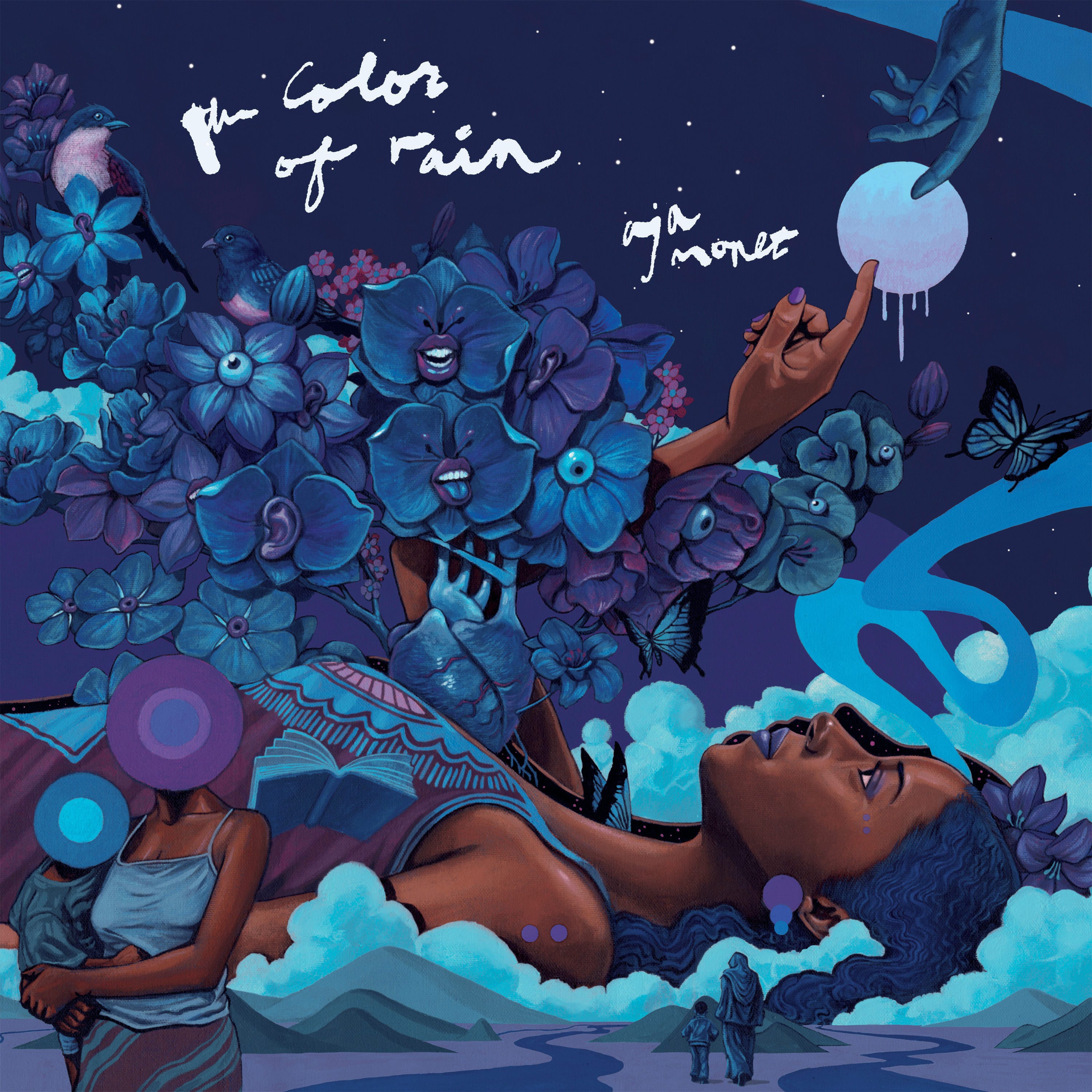
The death machine in your hand buzzes with another notification as aja monet’s second album unfolds like a city on fire. Starting from a sweeping panorama over Altadena’s burning hills to a trans woman drinking iced tea while protests happen behind her, the color of rain turns the poet’s voice into a document as vast as the resistance, spanning from LA to the Congo, and beyond. While 2023’s debut was anchored by Christian Scott aTunde Adjuah’s trumpet, this record shifts the power balance to other parts of the band. “for the Congo” settles into a propulsive hand drum rhythm that turns antagonistic in less than two bars, then monet starts rattling off names before turning it inwards: “This is the war my favorite poet warned me about/The one between me and me.” In “skinfolk,” she reimagines a list of body parts into a chant (“Skin double dutching the darkness”) over a deep funk groove. Two ropes swing, two feet meet the concrete, suddenly a schoolyard game outweighs a half a year’s worth of protest poetry. Ending with a group of musicans lugging drum kits through subway snow, one gig to another, playing to live, aja monet’s second LP proves, as her first line promised, not a list, but a city; not just poetry, but a world where a jump rope is just as radical as a jazz drum. —Renée Holloway
Fatboi Sharif & Child Actor, Crayola Circles
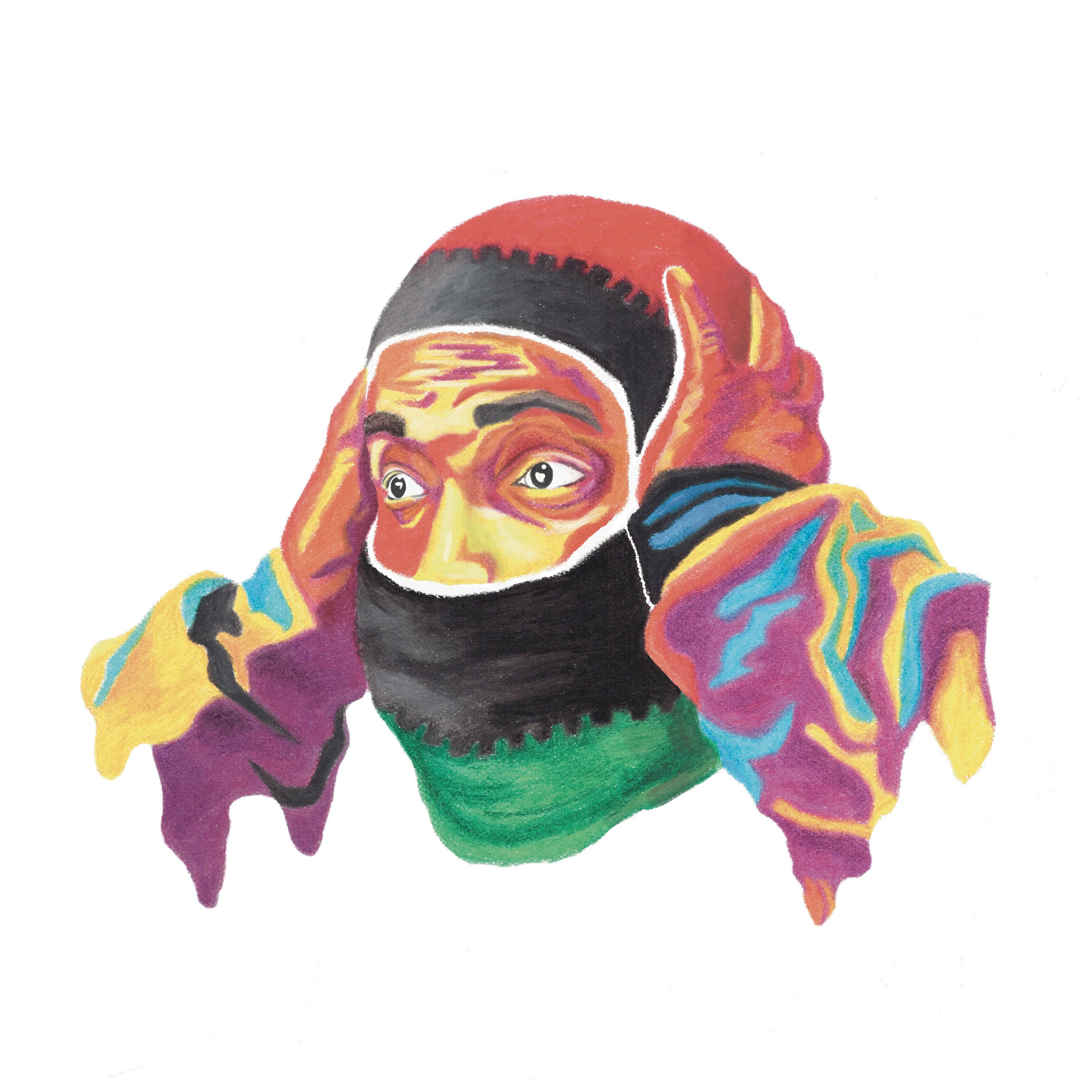
Since 2016, Fatboi Sharif has released records with Roper Williams, LoneSword, noface, Steel Tipped Dove, Bigg Jus, Fat Tony, and Duncecap, each collaboration lasting one album before he moves on. Crayola Circles pairs him with Child Actor, a producer who came up making dream-pop before landing credits with Navy Blue, Earl Sweatshirt, and ELUCID on the same Backwoodz Studioz roster Sharif joined for 2023’s Decay. The two had never worked together. Child Actor said he built the beats from jazz and folk scraps, and it shows: the production across these fifteen tracks (none longer than three minutes, the opener a 21-second instrumental) sounds like a college radio signal dying in a parking garage. Drums show up late or not at all. There’s almost nothing underneath Sharif except open air, a low throb, and whatever he decides to put there. He fills it with shrapnel. “The hotdog truck postponed by falling evidence,” he raps on “How to Disinfect a Live Grenade,” a sentence that contains a real noun and a real verb and no recoverable meaning between them. “Poison gateside near the playground, fell syringe.” And when Sharif raps “My parents asked if suicide is the solution” on “How to Disinfect a Live Grenade,” sandwiched between a ghost ship and a fast lane to heaven, or “My father who carved out my heart at arm’s length from a distance” on “The Destitute Stashspot,” those lines arrive at identical volume as the Reagan assassination and the mermaid fantasies and the poison candy apple carrot cake. The album is over before you’ve finished processing what you just heard. —Koda Lin
Thundercat, Distracted
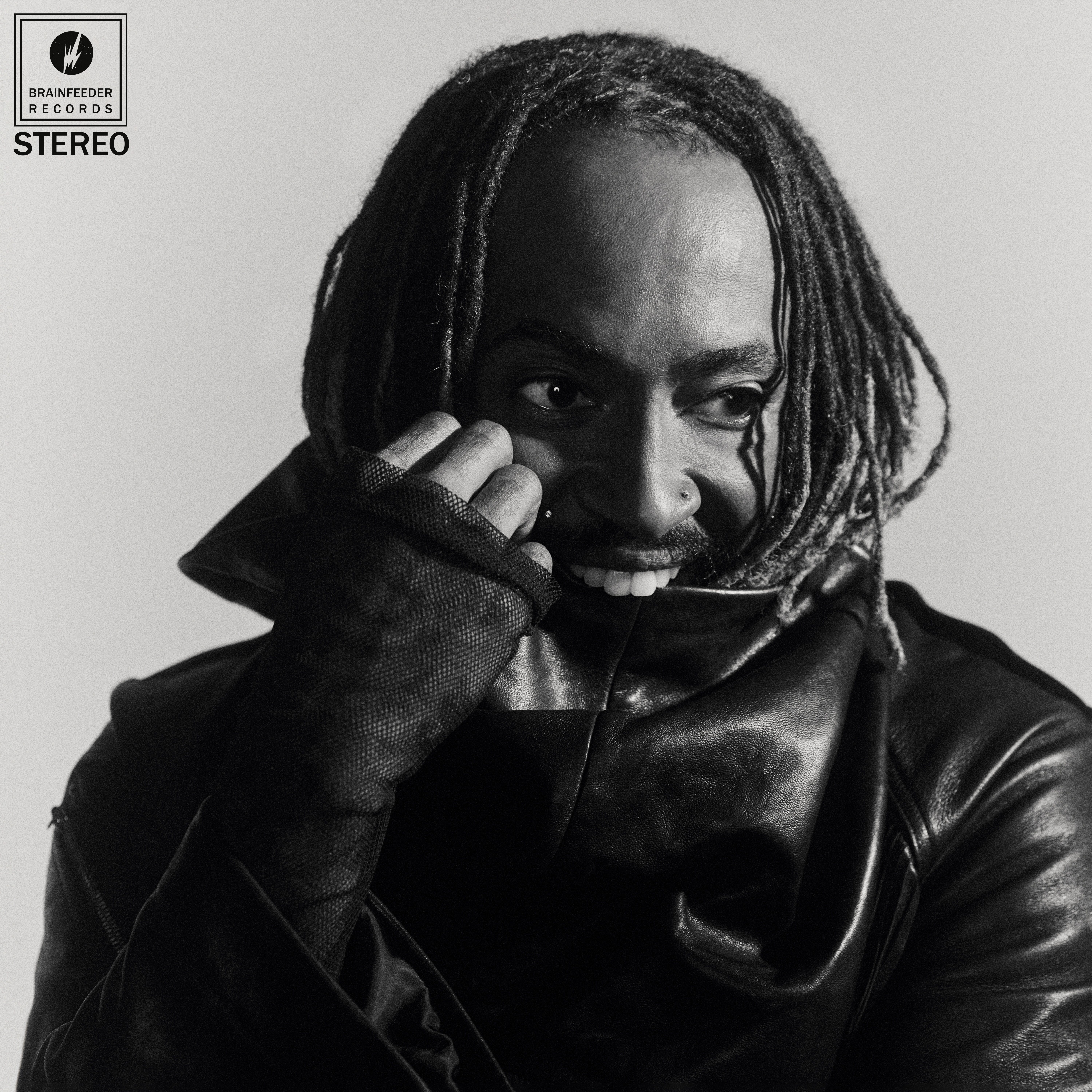
Stephen Lee Bruner’s father, Ronald Sr., was a session drummer who toured with the Temptations and the Supremes. His older brother Ronald Jr. won a Grammy behind the kit. His younger brother Jameel played keys in The Internet. By fifteen, Bruner had a minor pop-punk hit in Germany; by sixteen, he’d replaced the bassist in Suicidal Tendencies and was touring internationally, shredding crossover thrash while still figuring out what to do with his voice. After six years, Distracted breaks that silence with a jarring personnel swap: ten of its fifteen tracks are produced by Greg Kurstin, the man behind Adele’s “Hello” and half of Beyoncé’s Lemonade. Flying Lotus, who executive-produced every previous Thundercat album, contributes just two songs. One of them, “She Knows Too Much,” carries a posthumous Mac Miller vocal recorded before Miller’s 2018 overdose—Mac rapping crude, funny, contradictory bars about a woman who’s read all the books but doesn’t know him, offering to upgrade her apartment, then calling her a “motherfuckin’ bitch” for wanting a celebrity, then catching himself mid-verse: “Man, that was a little harsh. You’re just lost. But I’m here to find you.” It’s the opposite of a memorial. It’s Mac in the room again, talking reckless and alive. The rest of the album belongs to Sober Steve—Thundercat’s name for himself after quitting drinking following Miller’s death, losing over a hundred pounds, and starting to box. Sober Steve writes songs about waking up burnt out and talking to his cats (“Great Americans”), about having his emotions “sanded off” from living in L.A. (“No More Lies”), about feelings being like children in a car: “You can put them in the trunk, but let them drive, you won’t go far” (“What Is Left to Say”). It’s the best album Thundercat has made since Drunk, and it might be funnier. —Phil
AZ, Doe or Die III

After thirty years, Anthony Cruz still gives sentences that do not allow people to distinguish McLarens and murders. This is the third outing in his Doe or Die Trilogy. In this LP, Cruz expands on how fast the McLarens are and shortens the time it takes to die. He shows the formula he has perfected since he opened Nas’s Illmatic at age twenty-two. In “Uniqueness,” Bvlgari cologne gets four bars, but murder only gets half. In “No Need for Lactose,” he describes the perfect element of causality in four lines: crack spots, real estate, McLarens, and enemies. On “Winners Win,” Amar Noir shows off the same deadpan style as his dad while Cruz says that he is the literal owner of the trilogy. AZ, at fifty-four, is still retrospective. His song “I Was Once There Too” says his inspiration as Rakim, Kane, Kool G Rap, and Pretty Tone, he runs through neighborhoods in which he and Half-A-Mil used to chill, to say that he is free now. Half-A-Mil was murdered. So was Phil (not me, though). AZ kept the words and kept going, thirty-four minutes of them, his gold chain, a little thinner at the collarbone than the day he put it on. No one noticed his decade of independent releases pre-Griselda, was the model, and in 2026, when he released again, he said Pyrex, project buildings, and dead friends in the same way he did in 1995. —Phil
IDK, e.t.d.s. A Mixtape by .idk.
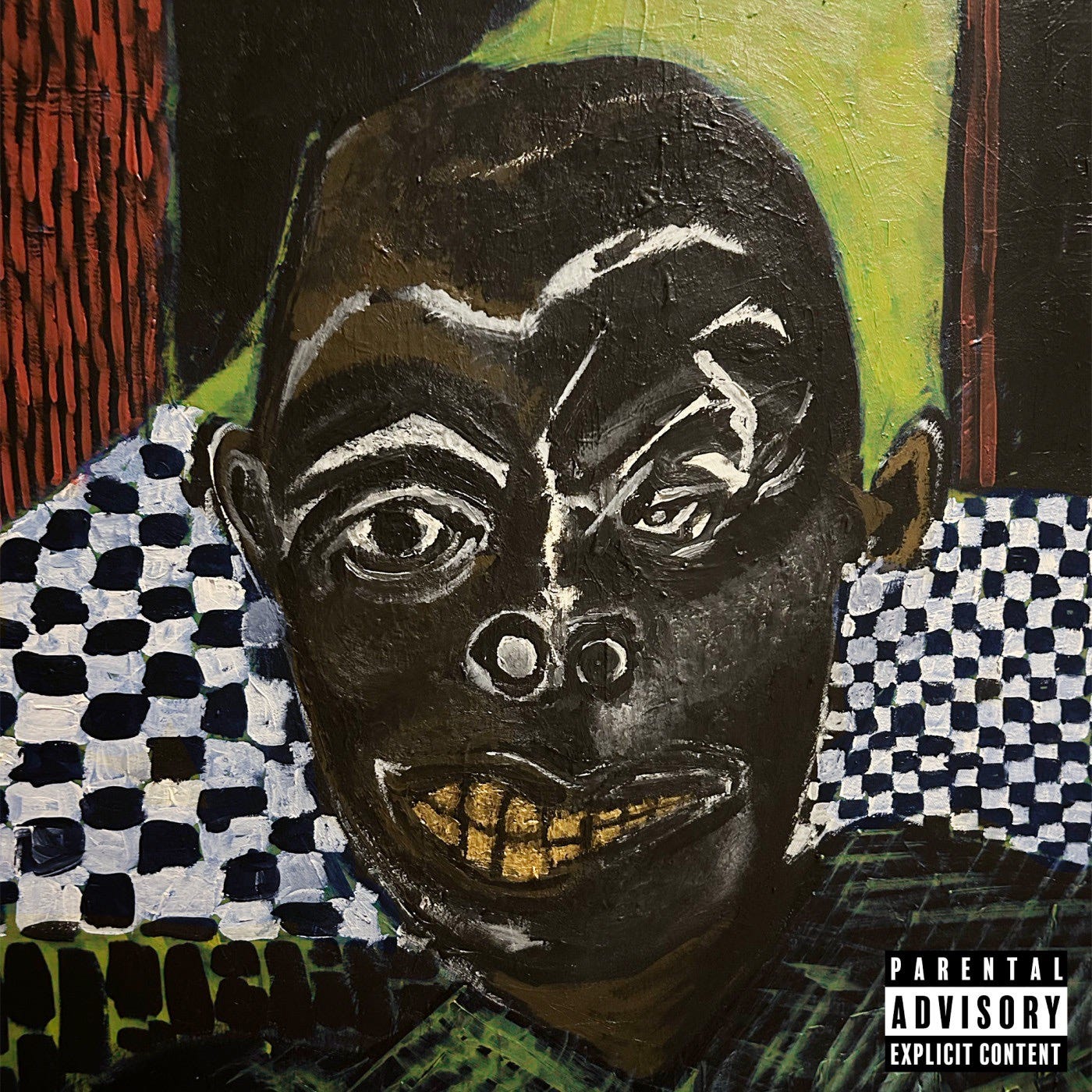
The producer credits alone are enough to write this review: Kaytranada, No I.D., Madlib, Conductor Williams. When you factor in guest spots from Pusha T, RZA, Black Thought, and even a posthumous DMX verse (the first to receive official estate blessing), e.t.d.s. appears to be an all-star collection built for connoisseurs. IDK (aka Jason Mills) has been languishing in the outer rings of the mainstream for years, respected but not acclaimed enough to break the barricade; with e.t.d.s., he’s crafted his most convincing attempt to crystallize that admiration into something irrefutable. The idea here is to mimic the energy and production aesthetic of the early aughts mixtape era. Raw, urgent and primed for physical circulation rather than streaming data. The concept is derived from Mills’ experiences with prison, and in his handling of the material, the urgency rings true. “SCARY MERRi” finds Conductor Williams in the most chilling zone, with a dizzy, sinuous energy; you brace yourself for this track as it unfurls. “S.T.F.” matches Kaytranada’s characteristic bounce with the growl of DMX, whose presence on new production feels weightier. A curious figure, IDK continues to occupy a no-man’s-land within modern hip-hop. Not street enough for street anthems and too street for backpackers; too eager for more than a cult following. He may not have his “Smokey Robinson 2000” on e.t.d.s., but he does have something that might be considered definitive. —Nehemiah
duendita, existential thottie
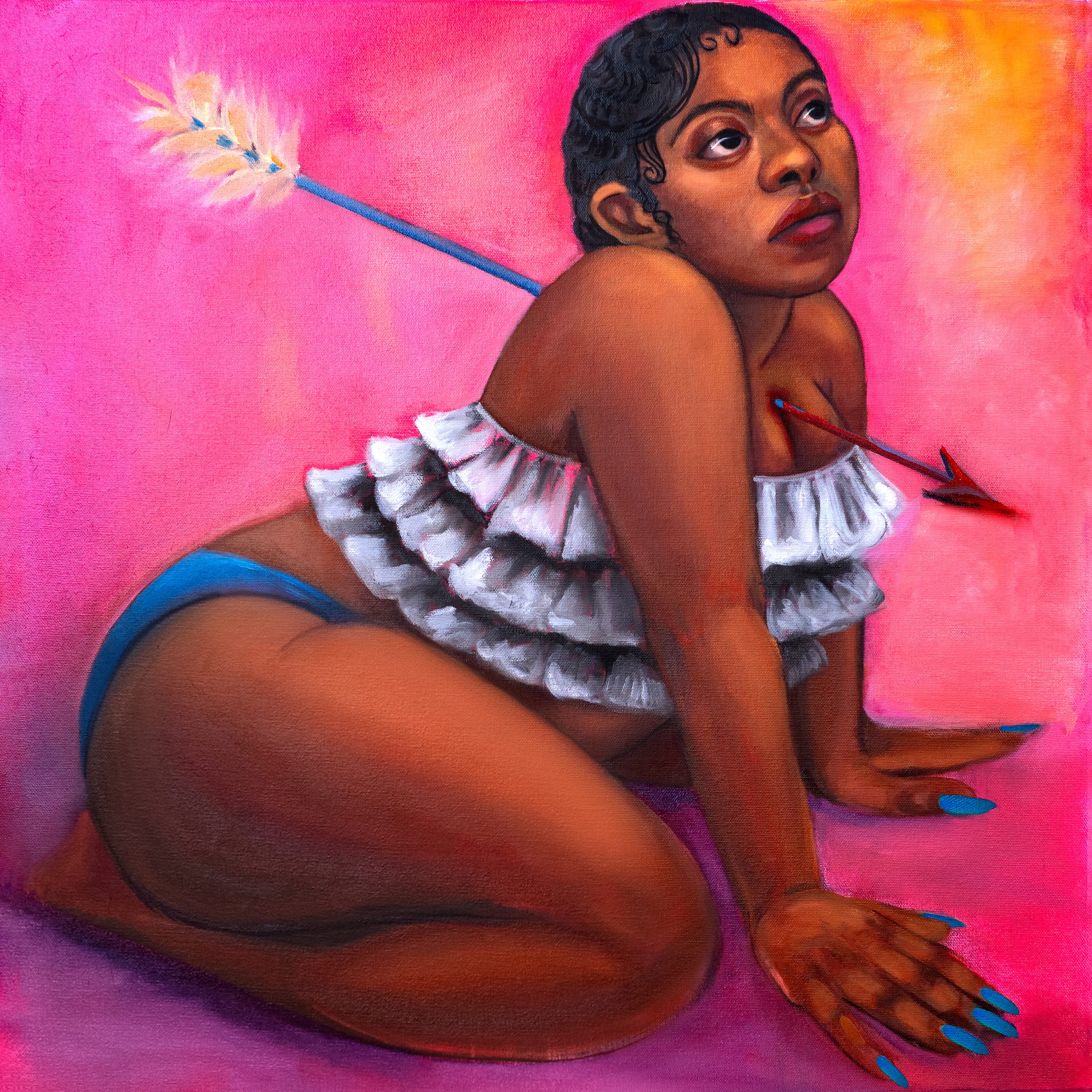
Candace Lee Camacho grew up in Jamaica, Queens, studied classical voice, went to NYU’s Clive Davis Institute on scholarship, moved between New York and Berlin for years, and somewhere in there started telling her friends—painters, illustrators, people who had never touched a sequencer—to learn how to use an Elektron Digitakt. You need to write a song for your health, she tells them, and coming from someone who’s been involuntarily sedated, that’s literal advice. She produced every song on existential thottie herself, starting alone with the Digitakt in late-night sessions before the rest of the band filled out the arrangements. The demos were already on the album. Everyone else was confirming what she’d said in the dark. The songs go wherever she was at, and where she was at was everywhere at once. “As I Am” describes being injected, asleep for three days, her father crying, a nurse pulling up a video of her singing at a restaurant in Colby that she couldn’t recognize herself in—and then asking, genuinely, “Who’s gonna love a fucked up crazy bitch like me?” “Nexplanon” names what birth control hormones do to her moods. “Roasting That Ass” ends with her yelling at herself to finish her tracks. Who else is putting involuntary hospitalization and birth control side effects and club music on one plane, treating each equally? “Super Sad!” puts it best: “Wanna fuck, but I’m so depressed.” Same verse, same comma, no irony. “Toxic and Evil” asks “how many dicks can I fit in my mouth?” and then falls apart on the chorus: “No, no, I’m not okay.” She said the album might be for her more than for anyone else. After hearing it, good luck believing that. —Chiamaka Boudreaux
Zo! & Tall Black Guy, Expansions
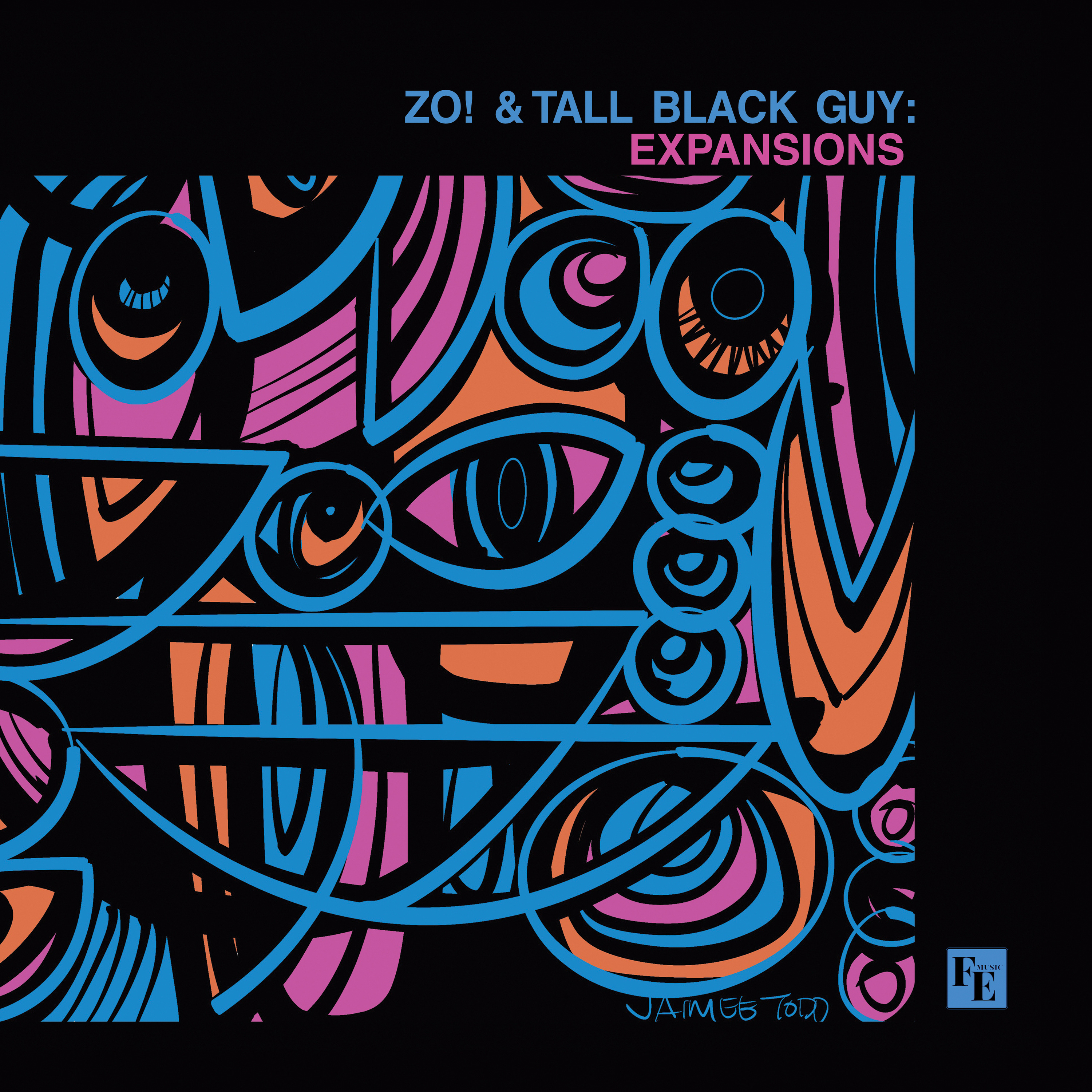
Both producers are from Detroit, both came up through the beat-community pipeline, and the feeling is still of two guys in one kitchen making music together without bumping elbows. Their 2021 debut together, Abstractions, showed they could make a record together, and this record, Expansions, sticks in a groove pocket where house, jazz-funk and mid-tempo R&B all live, but none for very long. J. Ivy delivers a spoken word cut over twinkling Rhodes chords with a cadence that falls somewhere between sermon and family reunion toast, and DJ Jazzy Jeff scratches his way through the bridge of one of the more bouncy cuts with the exact same precision he possessed in ‘88. “Keep Him Satisfied,” co-produced by 14KT, has a bassline that surely could have come off a lost Mary Jane Girls 45 with a falsetto hook that’s more than a nod to Rick James, rather than impersonation. Debrah Bond and Sy Smith trade verses across the slower numbers, singing each like they wrote the words, while Darien Brockington arrives to contribute the album’s most tenderly ragged moment with a cracked voice when singing about sticking around when he could have bailed. Expansions is never preachy or lectures on what adult music should sound like. It’s just good grown folk put on the record, turn off the light. —Harry Brown
Kneecap, Fenian
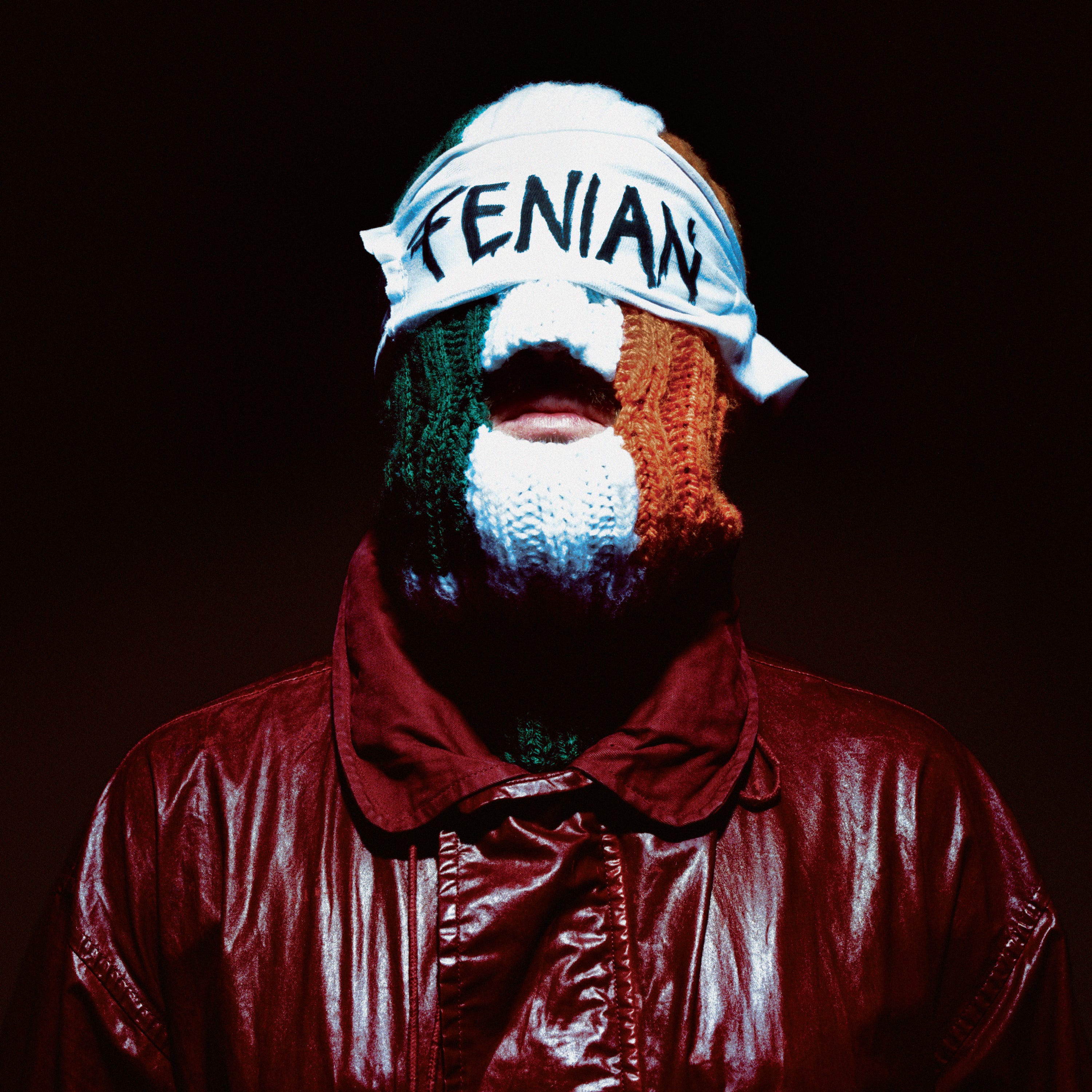
The British government has received many things to their disapproval in history, but Kneecap, with their new album, Fenian, might be the best of all. Making its way through Belfast, Kneecap’s first release since their 2021 release, Fine Art, is an album bursting with creativity. It’s the breath of fresh air the rebellion movement has desired. Each song is a message being sent through Downing St. with a forcible push. With Keir Starmer in power, Kneecap has suddenly become a much larger, more threatening figure. This is primarily due to their support of Palestine. Mo Chara (the group) has faced legal problems for various reasons, one troubling instance being the group’s support for the violent Hezbollah group, as a flag was tossed onto the stage. This group has faced much criticism with their self-made documentary, but overall, has received immense support and proved to be inspirational for many. With this movement, the group decided the best way to combat the criticism was to make an album. Each song is a message they are crafting. There are various discursive elements layered in the album.
As the names of the songs portray, “Carnival” speaks to Mo Chara and their court cases, and “Palestine” speaks to the current situation in Palestine and the case of genocide, with an Arabic verse being rapped by FAWZ. “Occupied 6” left no room for error or misinterpretation–the 6 counties within the Northern part of Ireland are occupied. Kneecap is not solely a group to be labeled as militant republicans. They also go after the RAAD group with their song fictitiously named, “Radical Republicans Against Drugs. They also sample the saying “Tiocfaidh ár lá” (our day will come) in an ironic way within the song to say that it’s true to talk nonsense at parties. With various effects, the songs bring a feeling of dread to the listener, but they also give a feeling of elation. With the song “Cocaine Hill,” you are likely to feel frustration; it is an instant classic. Finally, the album ends with an amazing collaboration with Kae Tempest on the song “Irish Goodbye,” which is a wonderful addition to the album. While the British Government struggles to maintain control over its country, the UK’s left-leaning artists have given it their warmest welcome. —Brandon O’Sullivan
Melissa Aldana, Filin
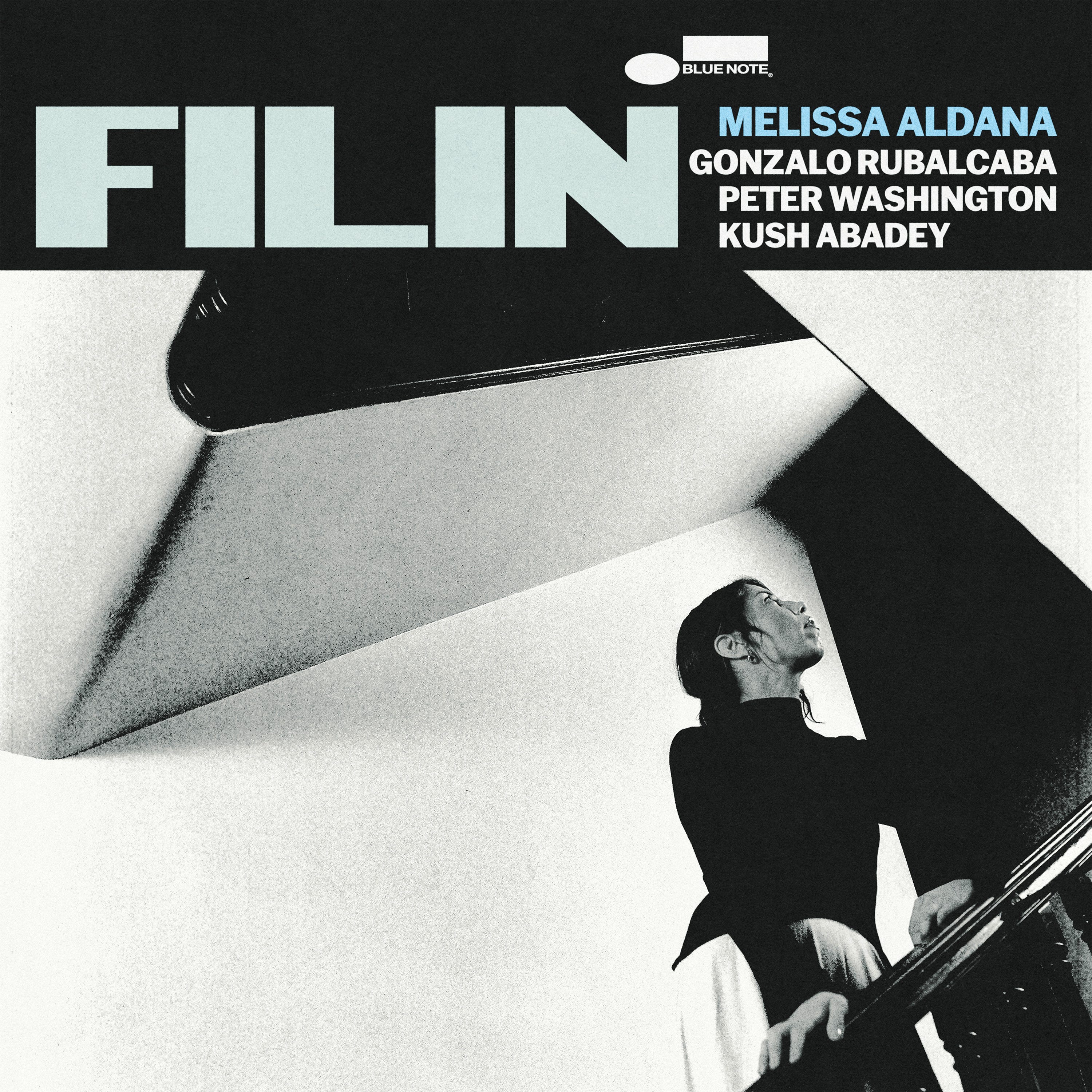
Cuban filin, born in the late ‘40s, when young, bohemian musicians in Havana made romantic ballads based more on cigarettes and late-night conversation than big-band tightness; the tradition is as much about a whispered intimacy as a raised voice, and Aldana built a quartet that would be calibrated to fit that intimacy. Gonzalo Rubalcaba, who arranged every eight songs, moves from sparse single notes to dense clusters that push Aldana out of the way to move through her horn, the two finding the most meaningful interplay in the record, where he tightens the harmony to a point of near implosion she breaks it open with a whisper of notes and then again when, after a whole chord to his own name, she extends a note until it hurts; Peter Washington on bass and Kush Abadey on drums remain so muted under the duo it is almost a relief when they appear for an occasional touch and grounding. Two tracks (“No Te Empees Ms” and “Las Rosas No Hablan”) allow Cécile McLorin Salvant to step in, shifting the atmosphere with her entrance as her grain of sadness pulls Aldana’s horn into the highest, most exposed parts of its register, the two bending a phrase each from opposite emotional ends. Her tone can be a deep, warm grain, or it can become clean and high-pitched when she pushes it; Aldana can leave a solo at the apex before its peak, defining what she’s already played-each note she doesn’t play strengthens the statement of those she does. —Nehemiah
Cadence Weapon & Junia-T, Forager
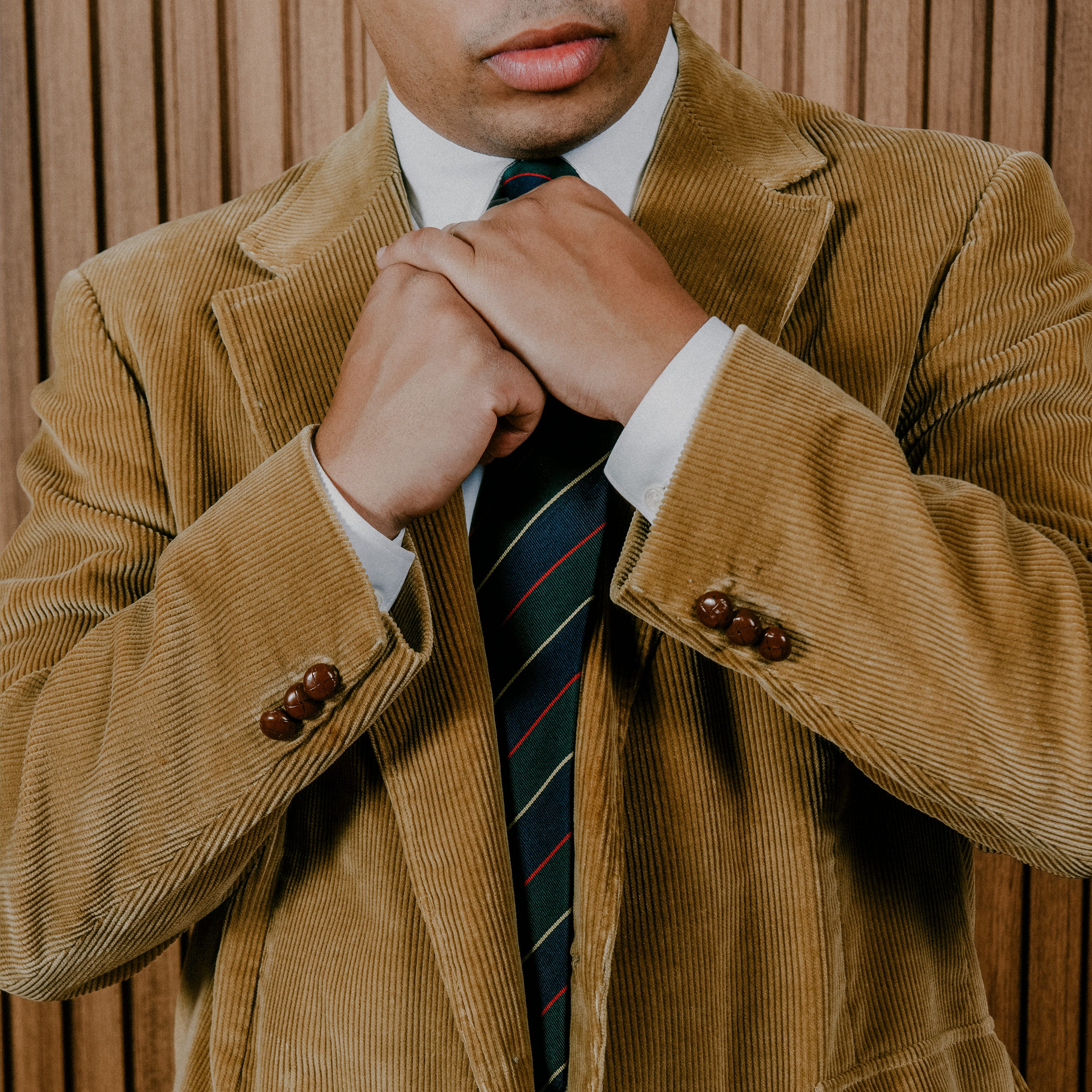
Cadence Weapon grew up rapping in math class, failing math, blogging about records for Stylus and Pitchfork before he could rent a car. By twenty, he had a Polaris nomination; by thirty-five, he had the prize. Junia-T, the Toronto producer behind the boards here, almost quit music after his 2014 debut flopped, rebuilt through Addy Papa’s Riot Club sessions, and came back with Studio Monk in 2020 to a Polaris longlist nod. He’s also Jessie Reyez’s touring DJ. Forager is their first collaboration, and its conceit fits inside an interlude: Pemberton buys old clothes, and he thinks digging through racks for the right garment is the same discipline as digging through crates for the right bar. He bought a Harris tweed blazer on the way to the studio, virgin Scottish wool from the Outer Hebrides, and describes it on the record the way a collector describes a rookie card. An interlude on “501XX” details a pair of hidden-rivet jeans worth twenty-five thousand at auction. Elsewhere, he thanks his therapist on “Toronto Zoo” for saving his life; “Babymoon” sketches a trip to Miami’s Arts District with his wife before their son arrived. The Niagara Region sixteen has him eating exotic cheese with his main squeeze, she orders the Riesling, and then he’s describing a Woolrich barn coat like he’s outside tapping maple trees. Canadian design runs through the album (Edmonton as origin, Toronto as work, Hamilton as home, the Niagara region as a weekend), and those places feel inhabited rather than visited. The fashion bars are funny; he needs your opinion the way he needs another tote bag, he pulls up dressed as Bebop and Rocksteady. But the fatherhood and the geography are what stay. —Rian Frost
Irreversible Entanglements, Future Present Past
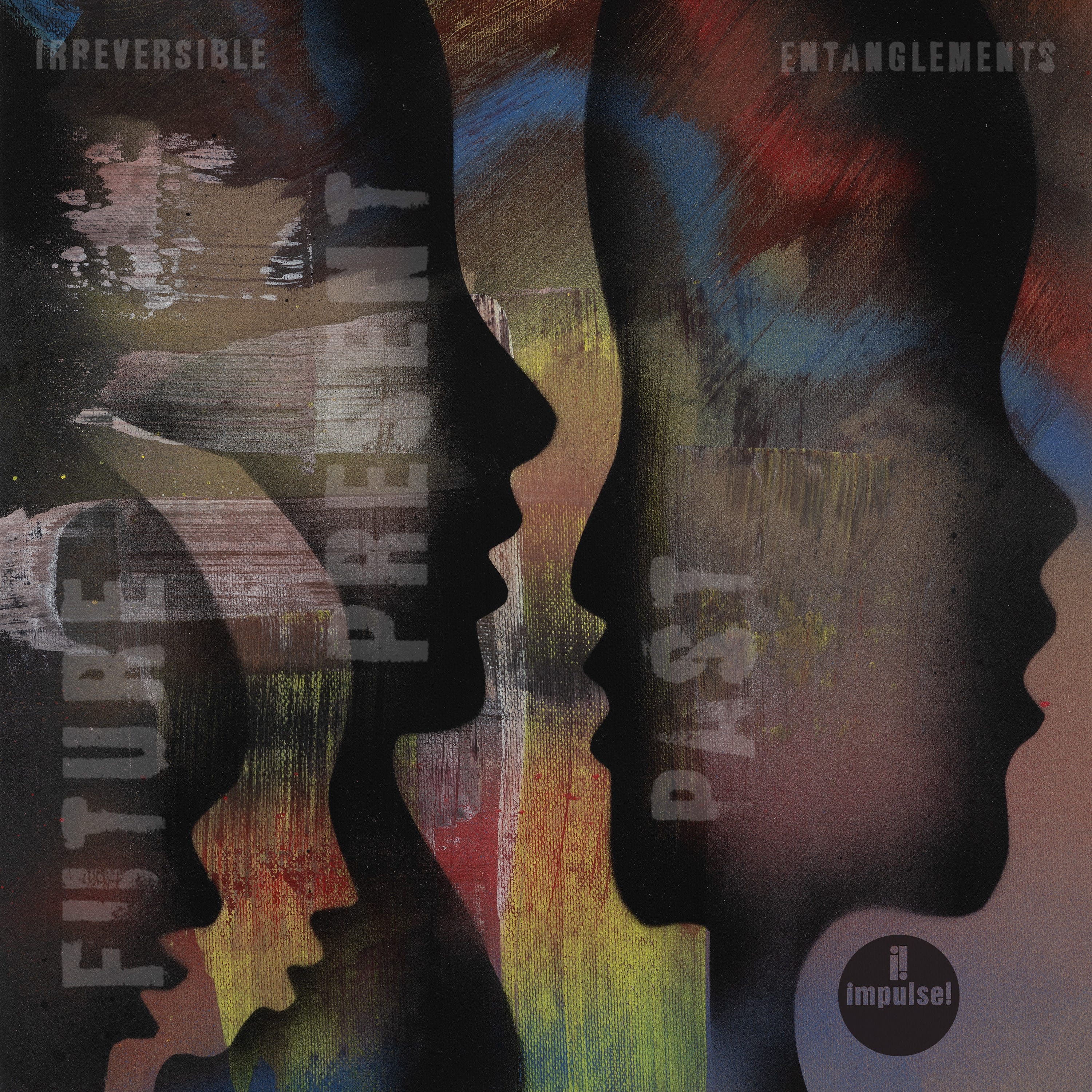
Irreversible Entanglements began at a Musicians Against Police Brutality rally in Brooklyn in April 2015, where five strangers met, who originally showed up to protest, but left forming a band. Ten years later, the quintet consists of poet and vocalist Camae Ayewa (who also records under the solo name Moor Mother), bassist Luke Stewart, trumpeter Aquiles Navarro, saxophonist Keir Neuringer and drummer Tcheser Holmes. Future Present Past is their fifth LP, their second on the Impulse! Record label which brought Coltrane’s A Love Supreme into the world sixty years ago. Much of this record was recorded in the actual Van Gelder Studio in New Jersey in October of 2024; the room where Rudy Van Gelder engineered half the Blue Note and Impulse! Catalog. MOTHERBOARD, a frequent collaborator of Irreversible Entanglements, contributes to five of the ten songs while Helado Negro guest appears on the very first and last tracks, “Juntos Vencemos” and “We Overcome;” the very same statement repeated first in Spanish, then English, “Vibrate Higher;” while “Panamanian Fight Song” refers back to Mingus without trying to sound just like him. The opening to “The Messenger” is instrumental chaos, then Ayewa steps in, her vocalizations winding their way through the horns and drums without truly locking into a meter. At just over seven minutes long, “Keep Going” has the quintet in their longest stretch on this record, all locked together in a collective improvisation that both loosens and tightens without anyone calling it. —Phil
Rap Man Gavin, Garden Dance
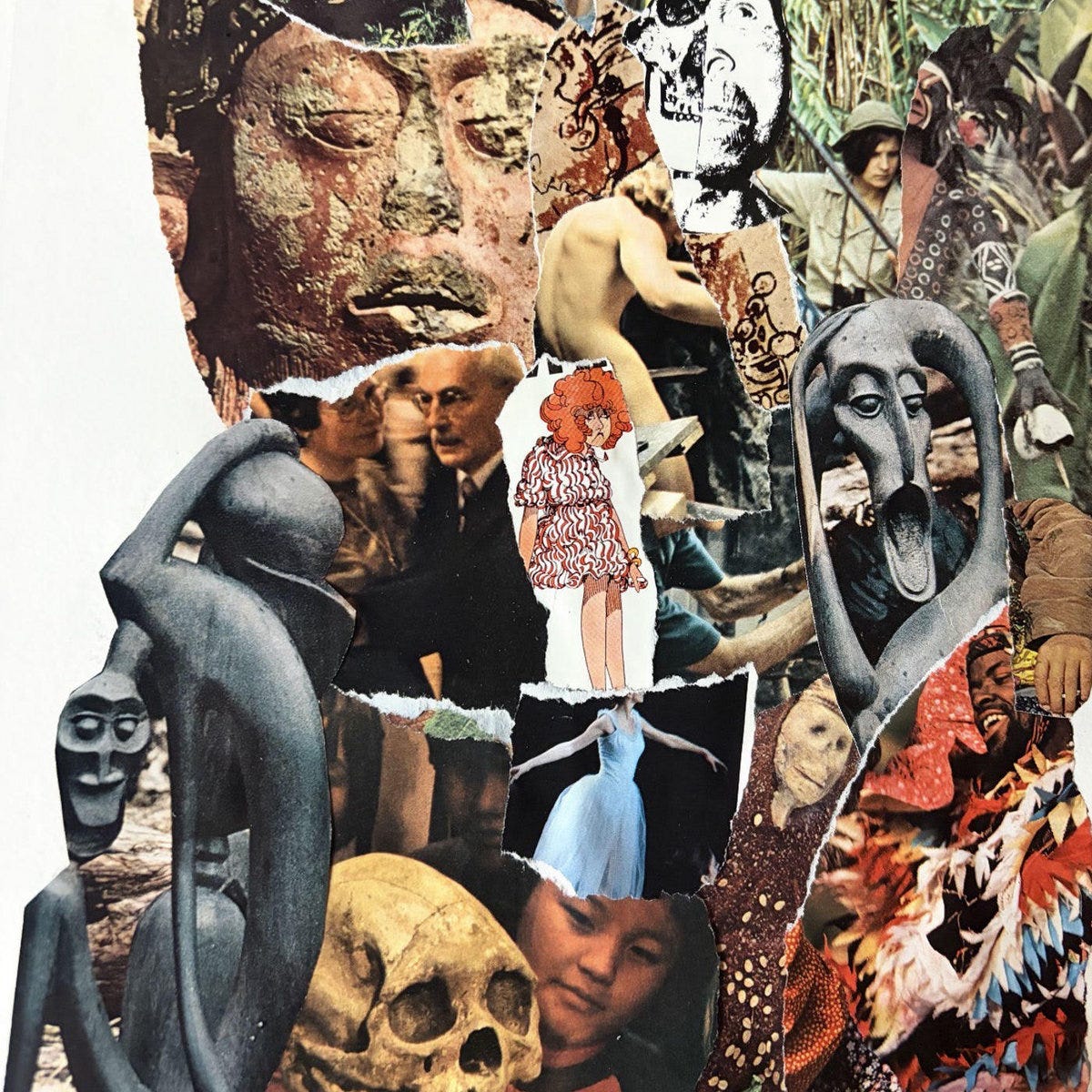
Bottom Rock is run out of Cape Town by rapper Gavin, who also runs a one-man art collective/label which has been steadily uploading to Bandcamp since 2020, his name an album title he gave an autobiographical tome from Carl Jung. Garden Dance, the album currently being peddled around for four years, the Jesse The Tree-produced beats smear and shuffle more than they smack, and samples of dialogue from psychology seminars, apartheid era broadcasts and interviews on LSD precede every song. Gavin raps for three verses on “Mapungubwe,” named after the ancient southern African kingdom whose ruins white settlers insisted Black people weren’t able to construct, dispelling the myth before “Ritual of Art,” the lone collaborative number on the album, where Gavin spits about the master dripping in blood in the cotton field, about statues which ought not to stand; and Jesse sees hands covered in blood clutching pearls at the ghastly golden door. “In the Angel’s Nest” gallops through incessant self-doubt, suppressed shame and psychedelic pandemonium. This is a rapper who has been consistently uploading for six years to a website the bulk of whose rap following abandoned years ago, and who is running an art collective outside the underground circle which would otherwise know about his project; he’s been mailing rhymes across the ocean to a dude in Rhode Island. This is the best one, by either of them, either one of them will ever do. —Kendra Vale
Grace Ives, Girlfriend

Grace Ives dropped Janky Star in 2022 and was burned out too quickly. The Bushwick pop star’s bedroom synths had painted her as the city’s answer to a pop diva, but life on tour broke something. She reached a “real rock bottom” of sorts, she writes in a November open letter; drinking made a songwriting session a surprise bender, and life had gotten boring in a way she could never get out of. Ives got sober, moved to the west coast, called Ariel Rechtshaid (Charli XCX, Vampire Weekend, Kelela) and John DeBold (HAIM, Dijon) to produce, and Dave Fridmann (Flaming Lips, MGMT) to mix. Girlfriend, her third album, is by far her largest work yet; what makes its size seem earned is its directness-there’s no poeticizing, no hiding behind wordiness. “Avalanche” is a sweltering tune that feels just as much a Charli tune and has a lyric that shows how this artist, who stopped being able to sugarcoat, thinksm “If I run right off for my cute little life/Then I’ll settle into something and I’ll die by the knife.” “Fire 2,” a dance track where Ives states she’s “blue as a match, I’m unkempt, unattached” and “the shadow of a girl who’s just doing her best,” keeps going, even if her body is lagging. Toward the end, “Stupid Bitches” ends the album in the form of pop hooks that are sharp enough to earn any Robyn comparisons she ever received. Ives returned after three years off to create a record, hoping for authenticity; the authenticity was actually much more compelling than any attempt at wit could have been. —Darryl Keyes
Ego Ella May, Good Intentions
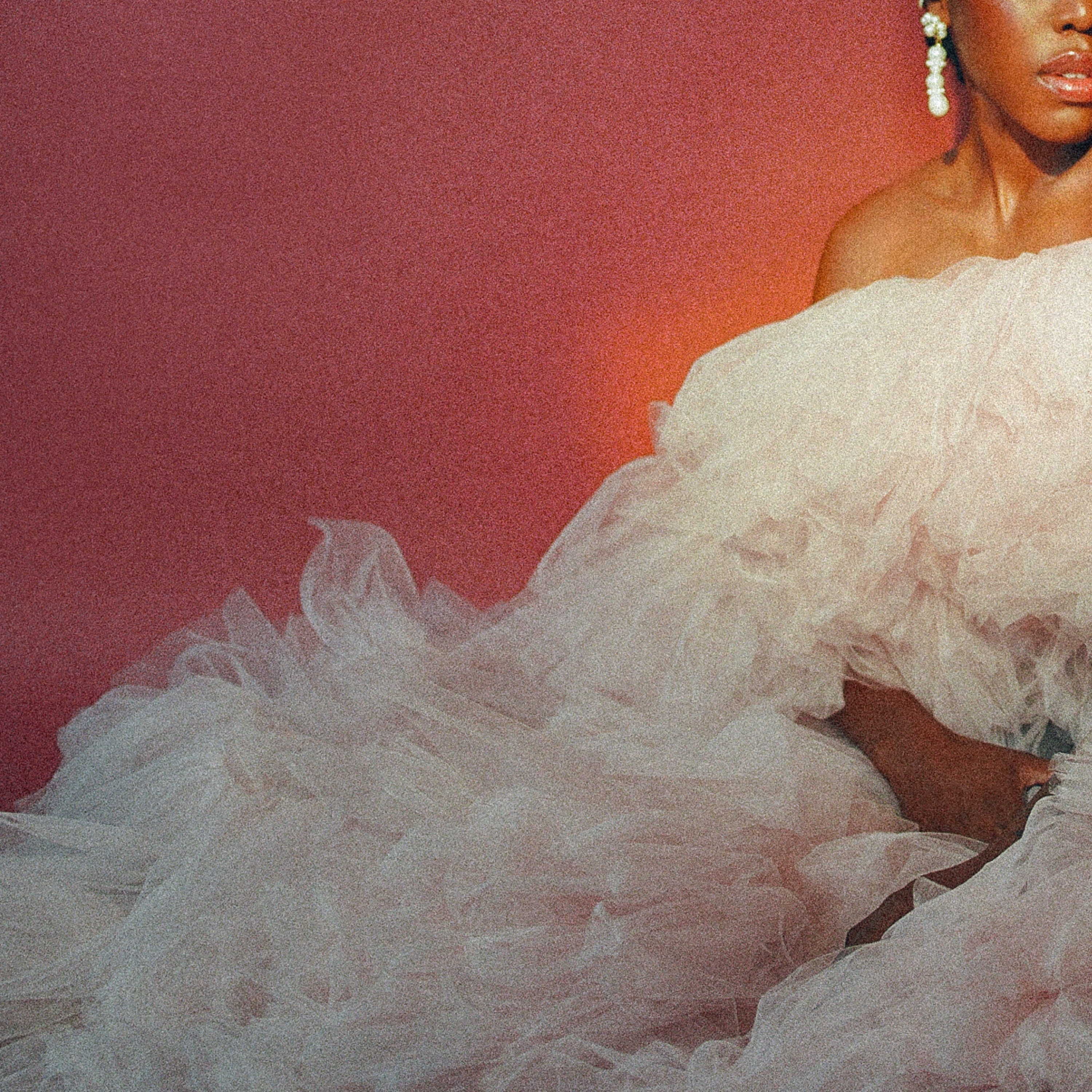
In 2014, Vice called Ego Ella May the “future sound of neo-soul,” 22, self-taught on the guitar, playing her EPs out of Croydon to living-room-sized audiences. The first, Honey for Wounds, received a MOBO for Best Jazz Act, her songs appeared on Insecure and Sex Education and she was awarded Vocalist of the Year at the Jazz FM Awards. But this career moment couldn’t stick. She continued releasing over the next few years—FIELDNOTES, a three-part EP written in and around the pandemic—before vanishing to a residential studio for five days of jamming, cooking, and walks, with her band, with no deadline, at the genesis of Good Intentions. Her second album prays that her enemies be brought down (her brother chiming in “fire, bun dem all” on the title track) before falling into a Buddhist metta chant of well-wishes, happiness and freedom for all beings, including you. On “We’re Not Free,” Keir Starmer’s government is called out by name and thanked for cancelling the Rwanda plan before she asks whether this was politics or profits. “Won’t feed our kids, won’t ceasefire/Won’t heat up our homes.” That still, small voice (that God sent to Elijah in 1 Kings) whispers that you are not free until all beings are free. May believes it and doesn’t know what to do about that either. The best song on the album is probably “Potluck Baby,” in which May rings up her mum and, hearing Igbo on the phone, doesn’t understand a thing. Or perhaps it’s “Sister,” a plea to a woman in a relationship she should have escaped years prior. Good Intentions, of course, was made in pure honesty. You know because none of it feels like a lie, and May knows that there are no easy answers to anything. —Ameenah Laquita
Joel Ross, Gospel Music
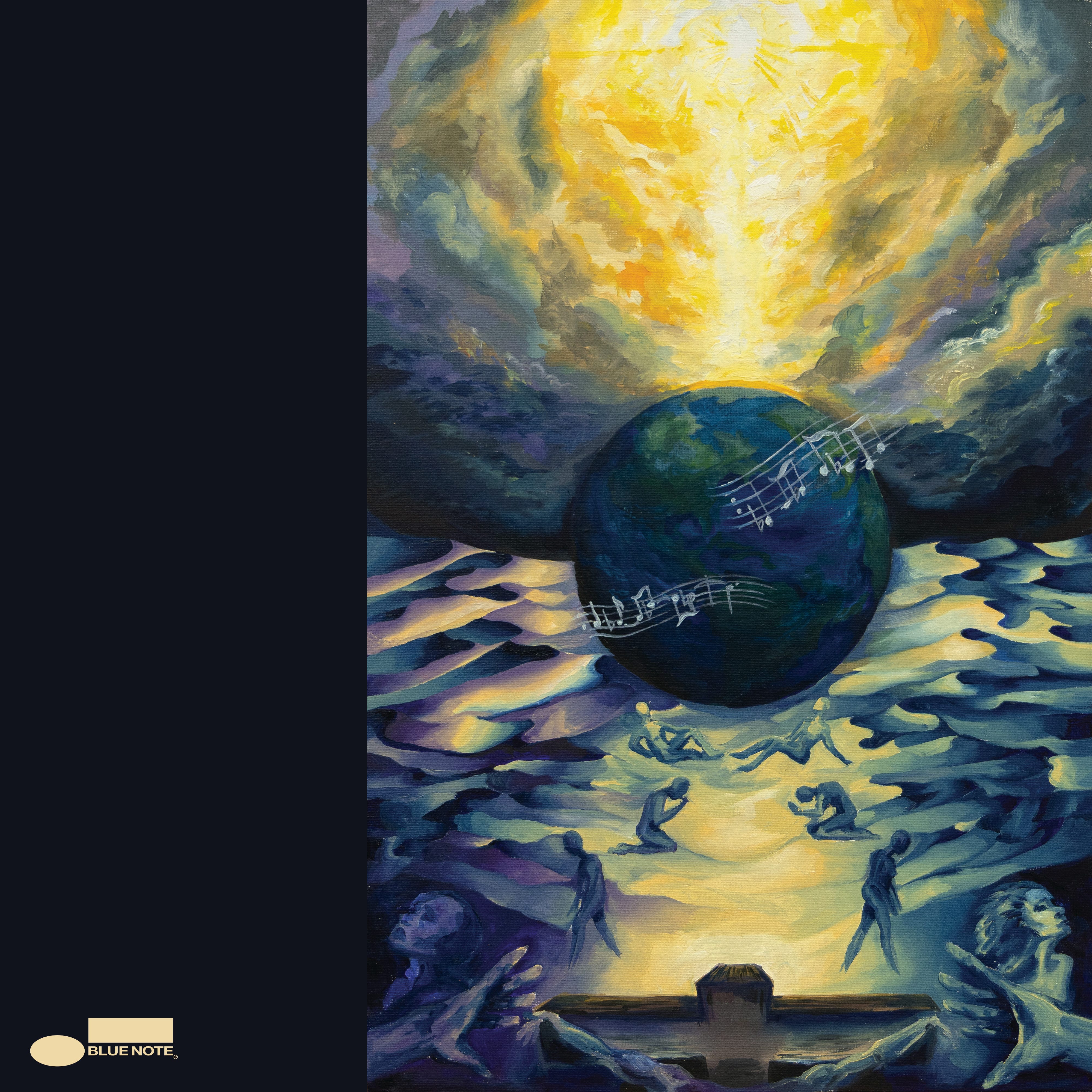
Ross, who usually plays two mallets as opposed to most four-mallet contemporary vibists who often dictate the harmony with their four mallets, so they play it as if they were composing it, prefers the challenge; it allows Ross to see the cold, unfeeling metal bars of the vibes as something I can challenge and not as some giant, naked canvas that’s just sitting there. This stubbornness characterizes Gospel Music, Ross’s fifth album for Blue Note, his most personal offering to date. The album takes the form of the biblical story: creation, fall, and redemption. Each song is linked to a particular verse of scripture, printed in the liners, though the listener will feel the heft without benefit of the words: “Wisdom Is Eternal (For Barry Harris)” is in honor of bebop great Barry Harris, the man who taught Ross how to feel harmony instead of hear it; “Trinity (Father, Son and Holy Spirit),” at over seven minutes, sees the large sextet (Josh Johnson on alto, Mara Grand on tenor, Jeremy Corren on piano, Kanoa Mendenhall on bass, Jeremy Dutton on drums) work in various fields of force and stillness. Growing up in Chicago, Ross’s early absorption of the gospel was osmosis, and he turned to jazz pedagogy, first studying with Stefon Harris at the Brubeck Institute, then joining the young lions of the Blue Note. Gospel Music is a mediation between the two disciplines. —LeMarcus
Ghais Guevara, Goyard & The Kayfabe Reveal
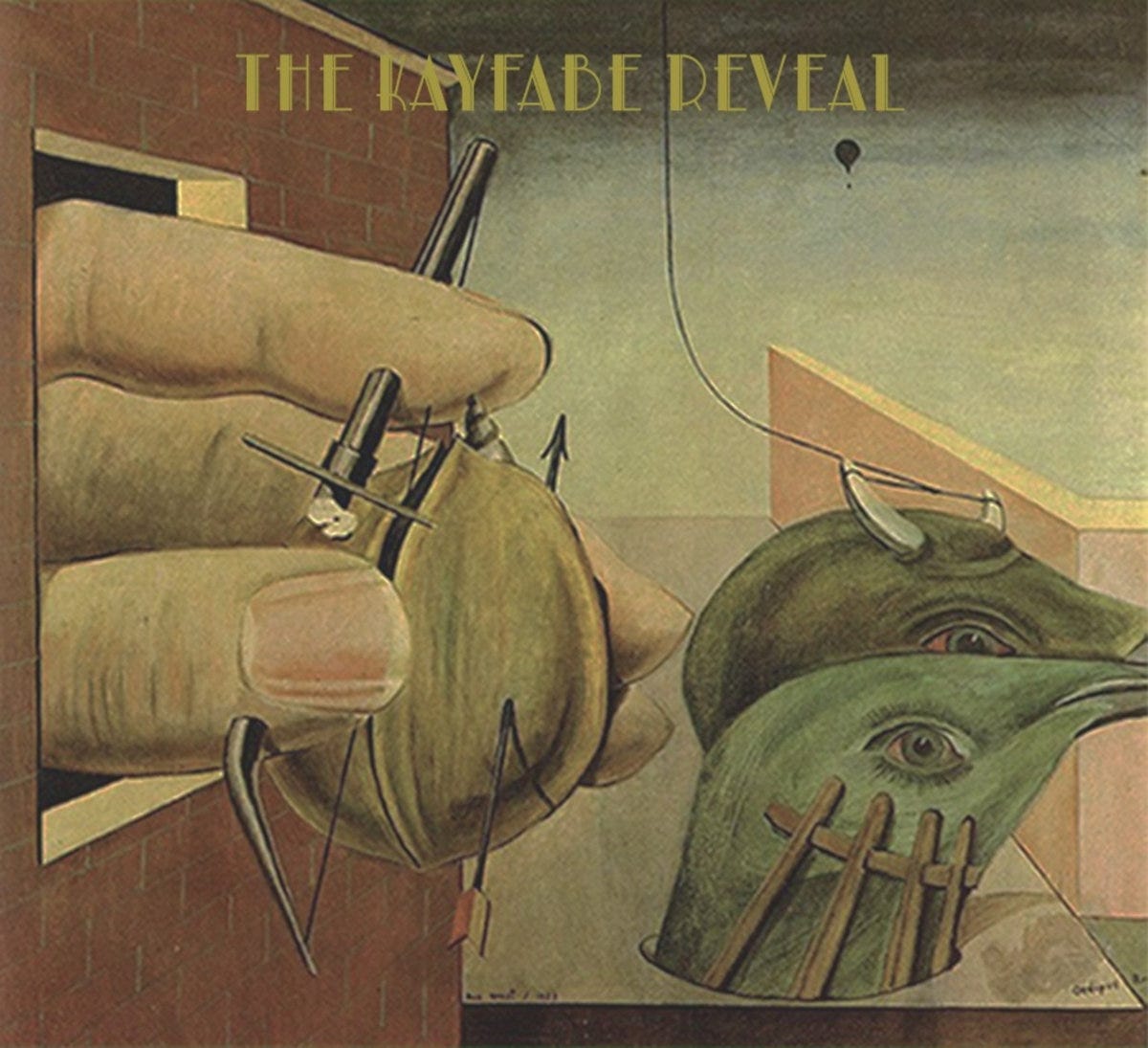
Few rappers have played Marxist bookshops, punk dive bars, and sold-out festival stages before the age of 25 like Ghais Guevara. Last year, he put out Goyard Ibn Said, a two-part concept record about the rise and eventual immolation of a fictitious rapper called Goyard who shed all parts of his personality to make it in the music business. It played at Kendrick’s Super Bowl. Critics took notice. Audiences kept their distance. On The Kayfabe Reveal, Guevara continues his story, maintaining the fiction. But his autobiography bleeds so heavily into the narrative that there’s hardly enough fiction for the persona to contain. Goyard still narrates the story, but this time he tells the story of a revolution. A tyrant called Jouissance, who orchestrates the kayfabe, is overthrown, and the record chronicles the uprising, from its ignition, through its climax, through its devastated aftermath. Robinson pulls his philosophical sources as any film director might his epigraphs-Nietzsche on ressentiment, Bruce Fink on Lacan’s jouissance, Deleuze and Guattari’s Anti-Oedipus as narration between songs, Cormac McCarthy cited as part of the closing track. It would seem to be unpalatable and preachy. It is not, for the reason that each song on the record is so bound to the artist’s lived experience in physical space that the theory vanishes in favor of life. —Alexandria Elise
Teller Bank$, Hate Island
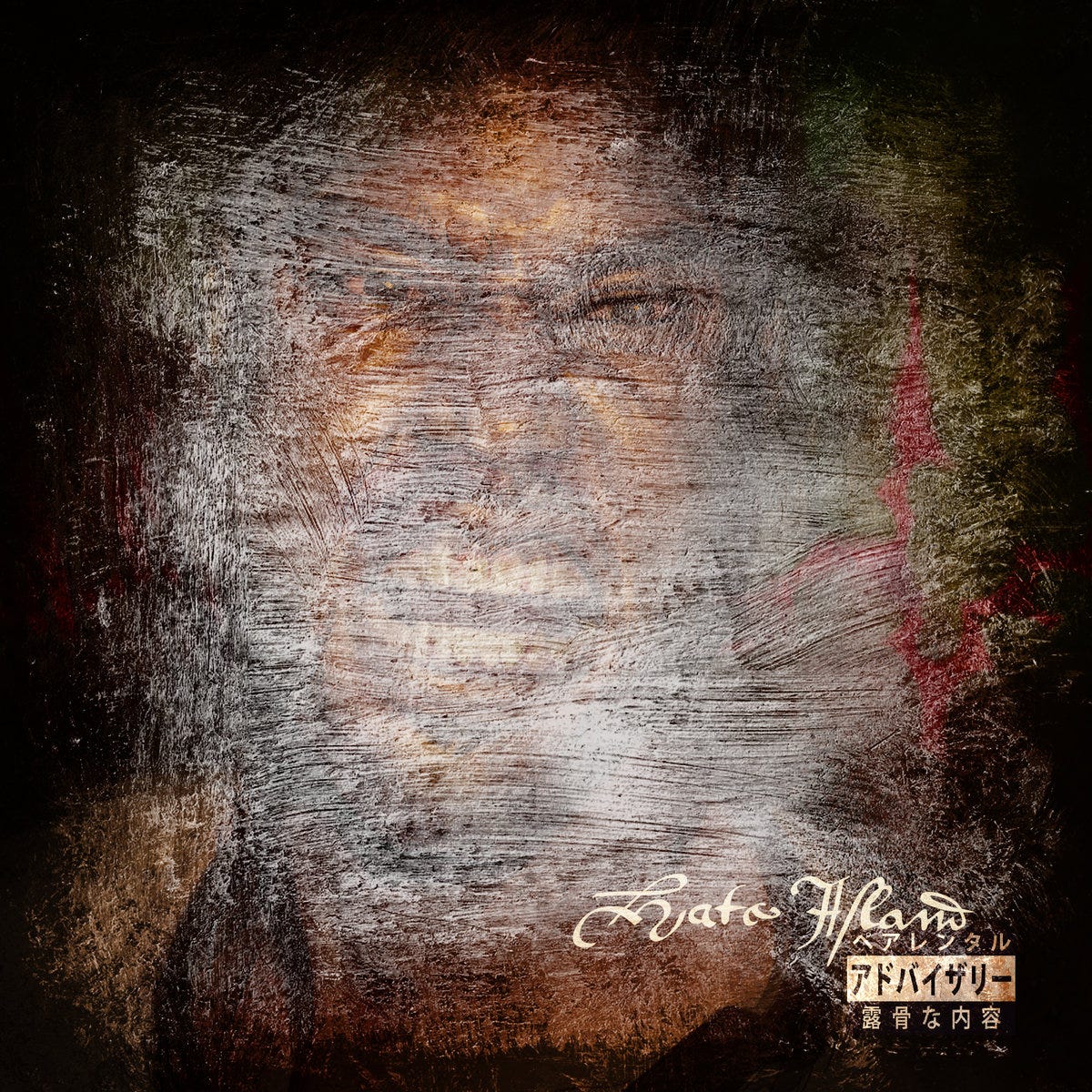
On DRUG$$$, the 2025 album he recorded with Philadelphia’s TripleDollar$ign collective, the central conceit was “What if Rico, Mitch, and Ace were one and the same person, and they was a rapper.” Hate Island, arriving seven months later with the same producers, deals with the aftermath of the Hustle-and-Die. That success, it seems, didn’t bring peace. The TripleDollar$ign producers chop up soul and funk samples into choppy, stubby loops, and Teller Bank$ barks over them, at full blast, in pretty much every song, filling the verses so high with bars that the beat barely has anywhere to move to. He claims, on “A Hate Supreme,” that he caught a body, is slinging enchiladas and sleeping with his rifle, then offers an apology to his momma: “Sorry momma had to do it/Know you raised me smarter but life is stupid.” On “HATE HATE HATE,” he serves customers in front of a church on Colfax, checks Facebook on a burner phone for missing persons advertisements, then, midway through the song, in one long breath, swerves from American imperialism to mass incarceration (“Slavery ain’t ended that’s American imperialism”) without so much as a pause to signal the change. You’re not gonna feel too at ease listening to Hate Island, either. It’s on the title track that Teller lets us know that “the rest of it just happened,” and that he decided not to write any of it down. For a man who put out multiple albums just in 2025, it’s precisely in the space between the obsessive recording and the deliberate absence that the whole album resides. —Devon Kai Brooks
ELUCID & Sebb Bash, I Guess U Had to Be There
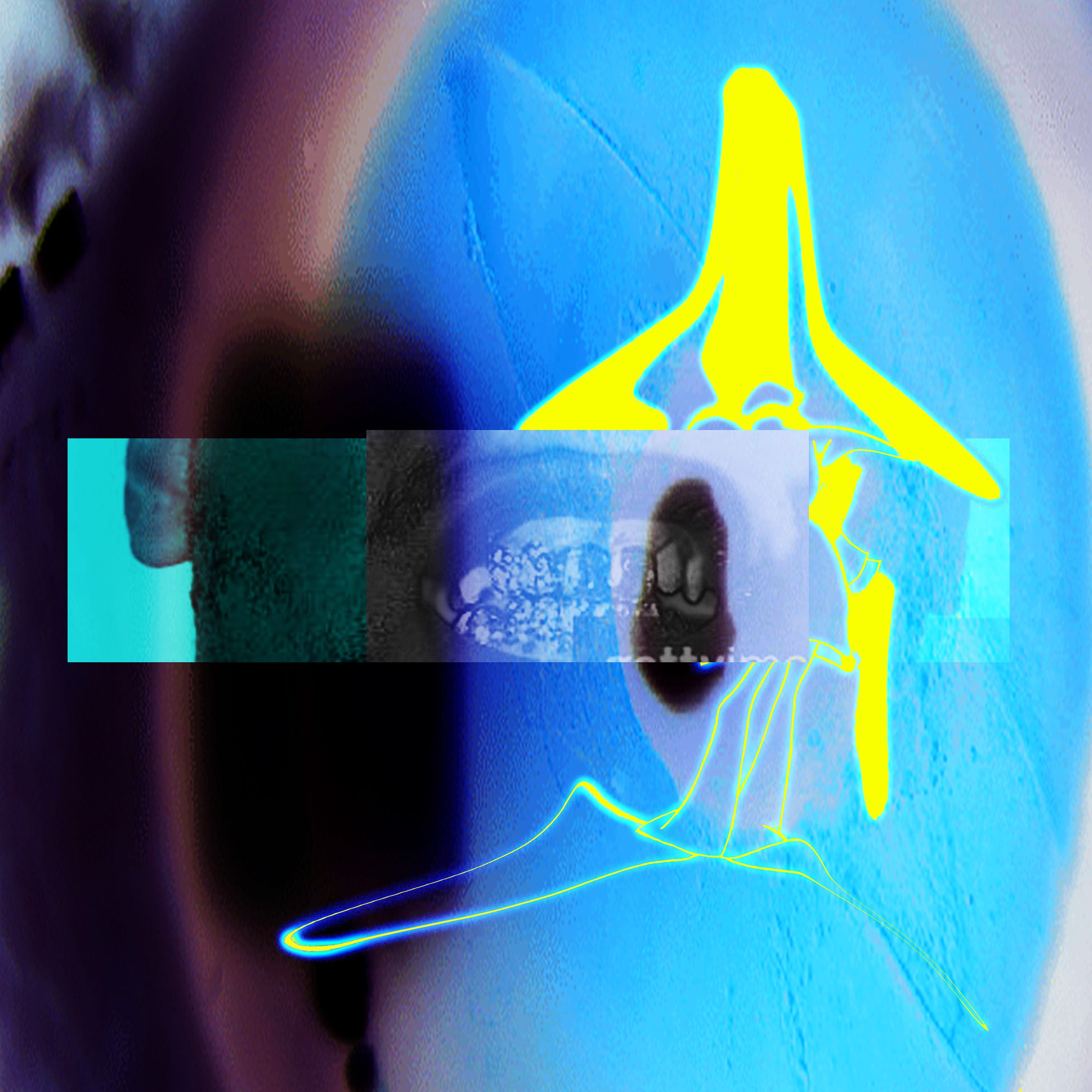
ELUCID was in The Alchemist’s L.A. Studio to put the final touches on Haram when he started bumping other people’s beats between takes. He kept inquiring about who made them, and the recurring response was Sebb Bash—a Swiss crate-digging producer from Lausanne who’d won the Swiss Federal Office of Culture’s National Music Prize, who’d helmed “Mtissages,” Switzerland’s very first rap radio show, who’d also given ELUCID the rare, exclusive compliment “He’s the best producer I know” after he persistently badgered Alchemist. Sebb sent beats throughout the I Told Bessie sessions, two of which landed, but the two had never met in the flesh until Sebb’s trip to New York, where they still never got to record, but hung out smoking in the park and eating sandwiches. From day one of the I Guess U Had to Be There sessions, it was clear what they were crafting an album-and it’s twelve tracks are weighted with a patient knowing.
“Coonspeak” utilizes the slur right there in its title and drags it from the inside out (burnt cork smeared across laptops, Donny Hathaway crooning on a balcony with iridescent wings, an unrepentant gumbeat), and by the second half ELUCID owns back each inch of the slur to himself and no one else. On “Fainting Goats,” a James Baldwin sample situated between Breeze Brewin’s rapid-fire Juggaknots rhymes and ELUCID’s own verse articulates the struggle succinctly: Not having the ability to express oneself is the final destruction, and a passive workforce would be ideal. The “Parental Advisory” closing the album are real-life questions asked by a child: why is it at the end of a belt, did the strap wake you from your sleep, how’s it hurt you more than it hurts me? —Mina Abdel
Joshua Idehen, I know you’re hurting, everyone is hurting, everyone is trying, you have got to try
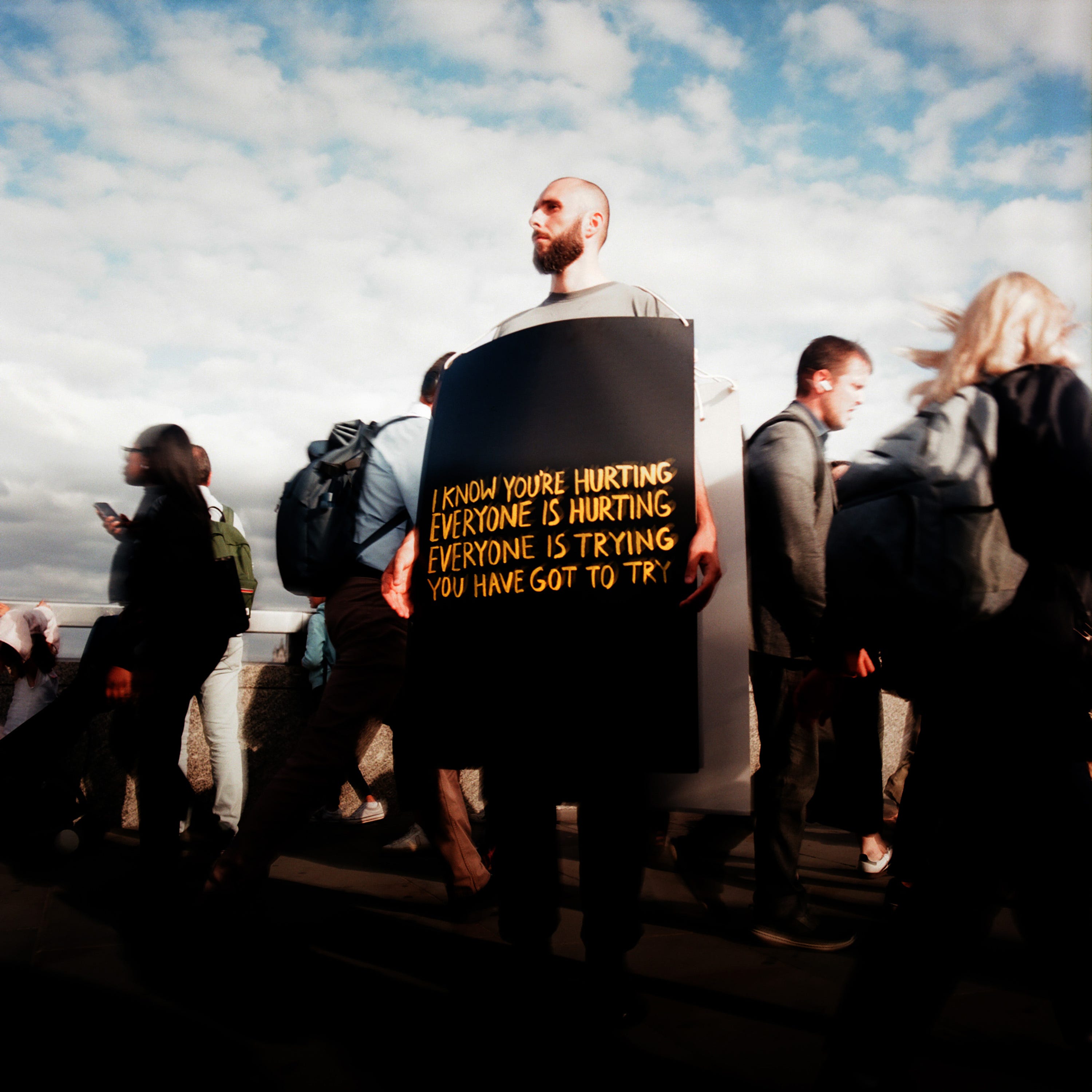
For years, Joshua Idehen wore guilt during the collapse of his marriage and an episode of poor mental health that informed every line he penned for his former group, Benin City. By his mid-forties, the British-Nigerian poet moved to Sweden, partnered with Ludvig Parment and constructed his solo debut, intended to get people dancing while he says the most difficult things he has ever stated. “You Wanna Dance or What?” begins on a house-esque rhythm which takes influence from Baxter Dury and Fred Again..’s “These Are My Friends,” on which Idehen’s voice is carried on the rhythm of a man who is experiencing an epiphany at night with his T-shirt stuck to his back. Shabaka Hutchings lends his flute to the record. Leone Ross and Charlotte Manning each lend text. Amanda Bergman provides her vocals on “My Love,” a slow, cerebral affair where her voice swirls around Parment’s keys as Idehen questions whether love is found or built from shards and fragments. The record features “Your Mum Does the Washing,” the song which propelled him to virality and subsequently the Heavenly Recordings signing. The domestic image of a mother washing clothes runs through over a dozen definitions of political ideologies. Capitalism, a mother who washes clothes and charges you a dollar for it while you bill your friend fifty, Communism, mother doing the washing every night saluting your father, Zionism, mansplaining, Brexit every –ism gets the same treatment with the backing beat getting increasingly powerful under the definitions, until they aren’t funny anymore but actually bleeding. —Aicha Odilia
Rashad, I Was Told There’d Be Gold
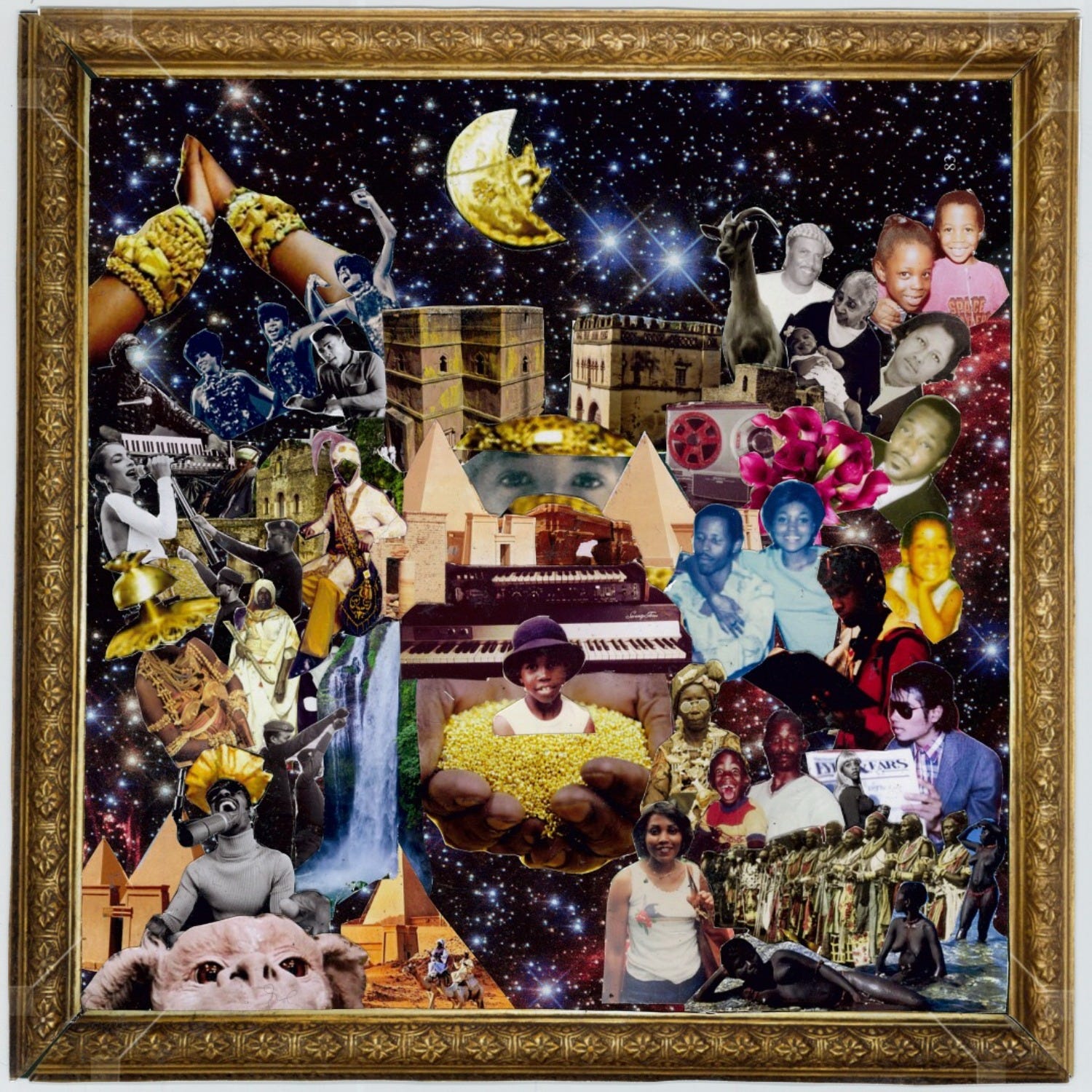
After being shelved three times by the majors, Rashad went home to Columbus, Ohio, formed Elev8tor Music with the guys he’d grown up with in The 3rd Power, and began producing for others. Both his first two solo albums—2012’s Museum and 2015’s The Quiet Loud—were written, produced, performed, programmed and mixed entirely by Rashad himself; they each dropped and disappeared with no apparatus behind them. Eleven years later, I Was Told There’d Be Gold, which was constructed the same way (every bit of it his), takes its name from a line on “Larry’s Lament” in which he rhymes “I won’t fold, I was told there’d be yellow gold, brick roads/Back when pops was hanging with Mike and Dickie/I was making music, you wasn’t with me.” The first half of the album’s topics include good thoughts and moving past trauma on “We Expect You” (“But if God ain’t coming back/I don’t know how we can justify these actions”) and atheism, god complexes, Tupac (twice—once about building a nation and needing freedom, once about building a nation and needing money) and worship on “The Craft”; the second half are love songs, every one about a woman who stayed. “Ribbons,” based on a “Ribbon in the Sky” sample and whittled down to “I wanna share my life with you” and “loyal when I wasn’t winning, day one, but you ain’t forget me, when I was wrong, you forgave me,” captures the feeling perfectly. The gold that was promised to a child, the yellow brick road, the end-game payoff; none of it has ever materialized in a way the industry can see. —Sameira
Brent Faiyaz, Icon
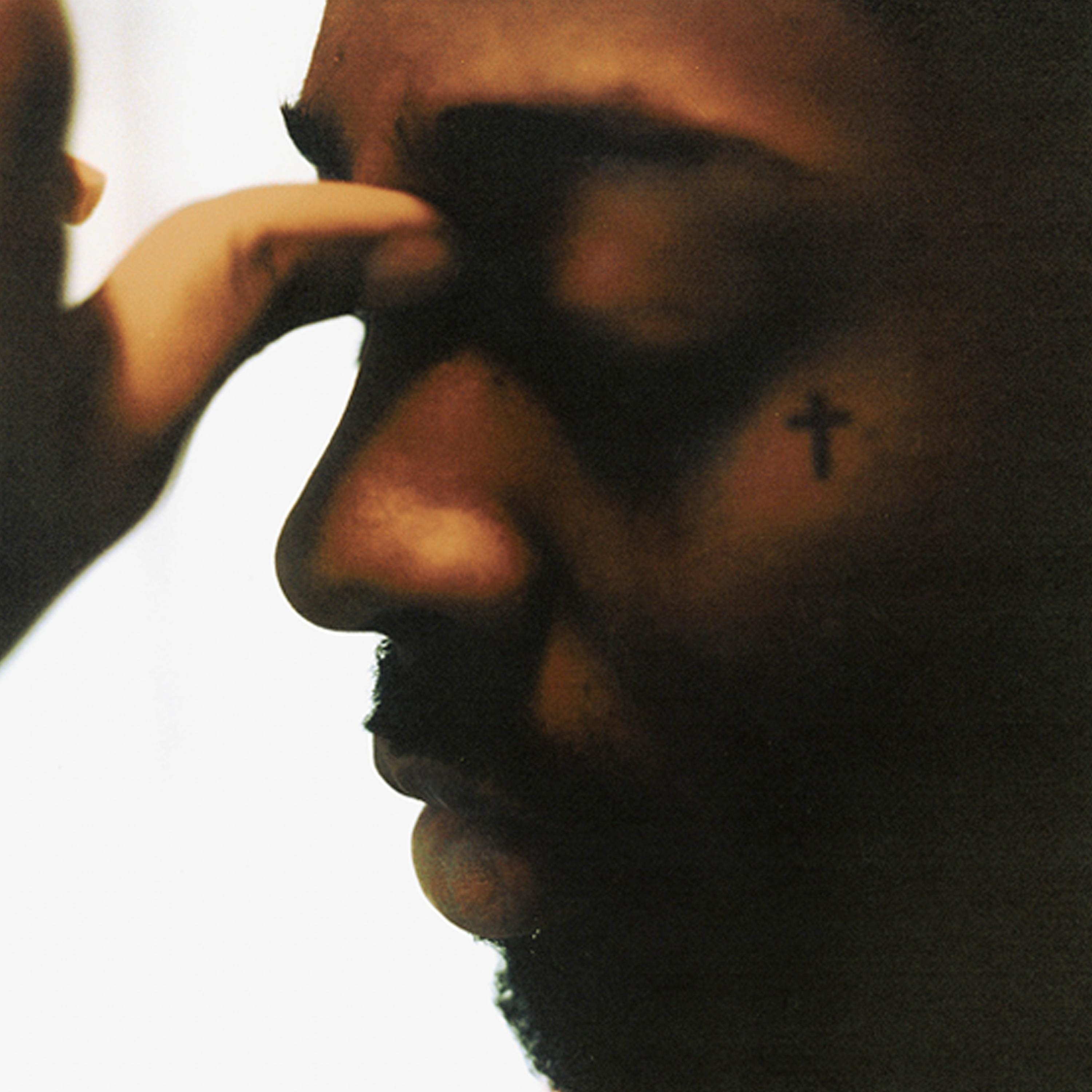
A group text from Faiyaz on the eve of September 2025’s planned Icon launch announced it was cancelled. The lead single. The music video. All killed. It would take five months more before the record arrived on Valentine’s Day weekend, with Raphael Saadiq as executive producer (and production by, among others, Chad Hugo, Benny Blanco, Tommy Richman and Sonder’s Dpat), with zero features and just Faiyaz’s voice, multitracked and altered, across thirty minutes of R&B that wavers from ‘80s synth-pop to proto-disco to the type of bedroom balladeering Jodeci would have surely dug. “Other Side” layers his golden voice into the same sleek disco-soul arrangements of its namesake, while “Pure Fantasy” shimmers like an unreleased Michael Jackson track. “Four Seasons” attempts the difficult task of using weather as a metaphor for romantic uncertainty, but manages not to completely exhaust the cliché thanks to the singer’s surprisingly scratchy, pissed-off tone. Saadiq’s involvement ensures that, unlike in some of Faiyaz’s prior work, Icon carries an unmistakable warmth; the best of it, including “Have To’s” pitch-shifted nonsense, and the gorgeous, spare tenderness of “Butterflies”—seems to confirm that scrapping it in the fall was the right choice. Icon is, ultimately, the sound of a man who loves the sound of his own voice, which would be overwhelming if that voice weren’t, so, so good. —Imani Raven
Boards of Canada, Inferno
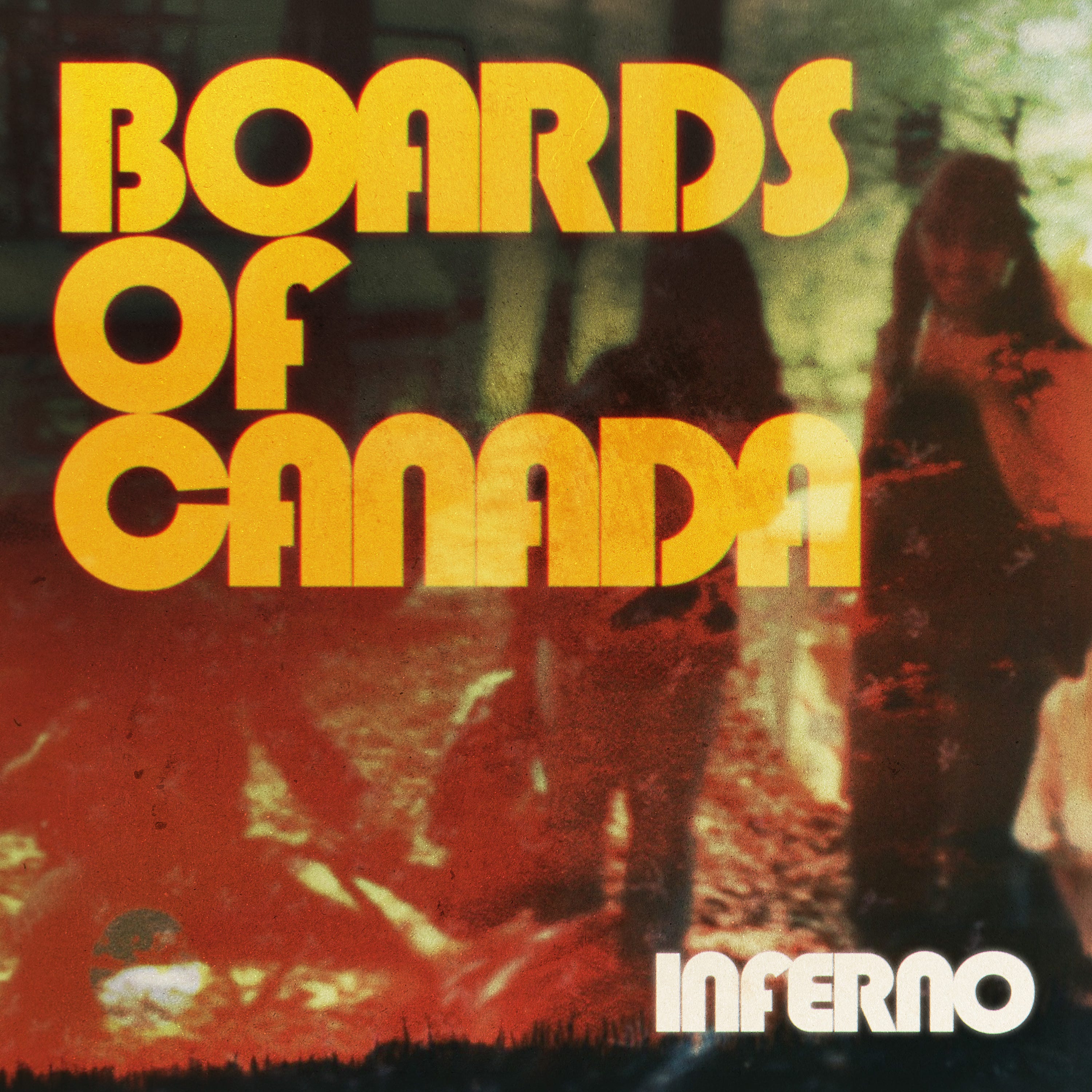
The elusive duo is indeed back with their fifth album in nearly three decades—their first since Tomorrow’s Harvest (2013)—on which, this time around, they seem to cast an anxious gaze upon our world. A hellscape, an Inferno: Boards of Canada has never articulated a concept so lucidly. For the first time, too, the two musicians employ electric guitars and studio-recorded percussion—appearing first on “Prophecy at 1420 Mhz” early in the album, and later on “Into the Magic Land” (a track that feels Cocteau Twins-esque distinctly). The suave nostalgia that colored their early albums gives way to the sonic backdrop of an old thriller: the 1990s-era synths feel heavy, the bass pulses often lugubrious; yet the rhythmic structures—languid breaks inherited from hip-hop—bear the duo’s unmistakable signature (with “The Word Becomes Flesh” evoking their classic “Telephagic Workshop”). Midway through the album, the magnificent “Naraka” (referencing the Hindu “hells”) and the subsequent “Arena Americanada” add a welcome melodic touch. —Oliver I. Martin
Isaiah Rashad, It’s Been Awful
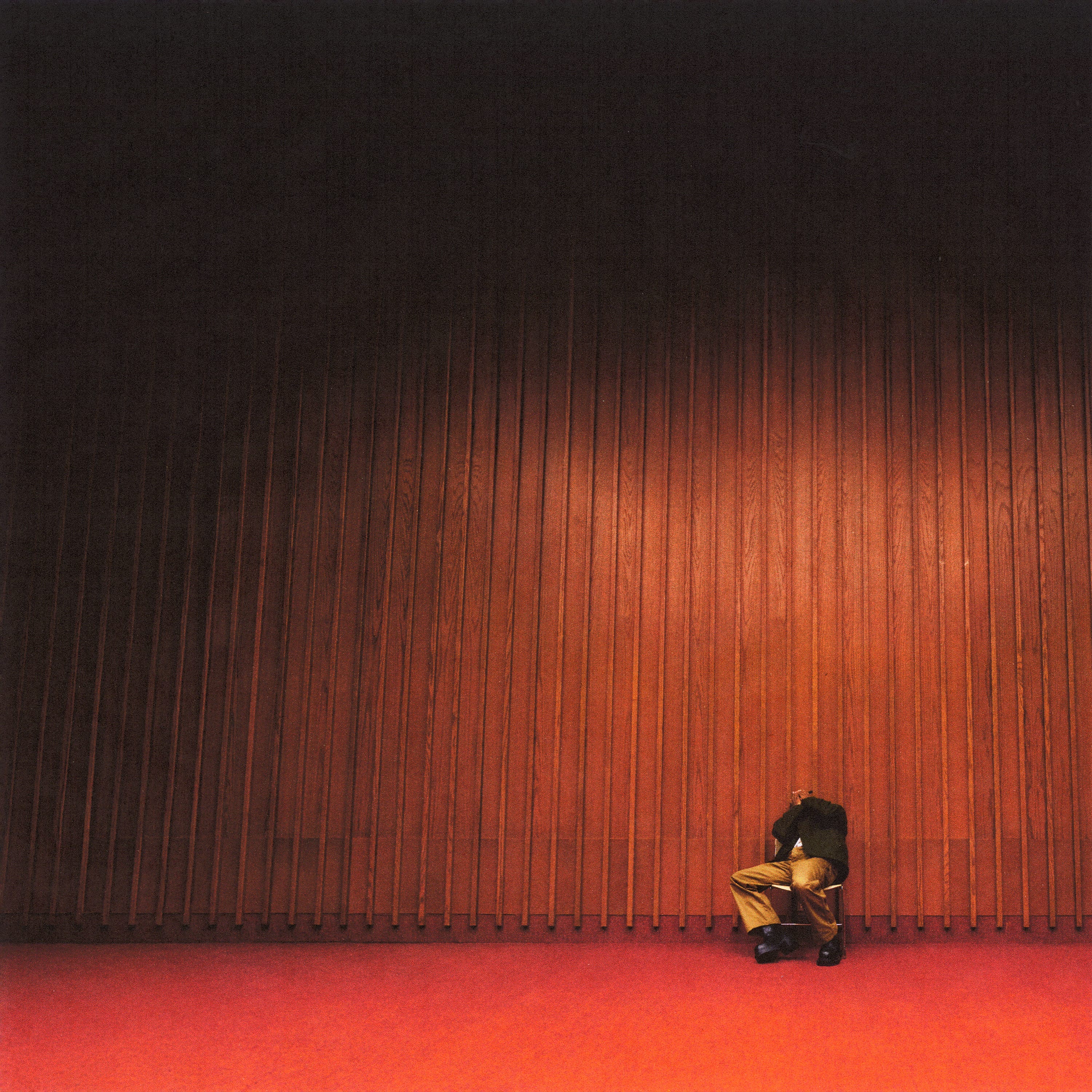
They’re not just a little inspirational pick-me-up that TDE threw in merch orders to support a fanbase that has had its fair share of ups and downs; “I just want to see you smile” is this year’s most incisive example of cruel misdirection. Isaiah Rashad was not the second coming overall. It’s Been Awful is a relapse diary—and that’s not even the most fucked up part. It names the substances he can’t stop doing and the people he has hurt while doing them. The production by KTC and Julian lends the album a sonic cohesion that the lyrics lack. Rashad’s confessions of crystal meth use bleed into love songs, bleed into freestyle sessions, all reeking of that lethargic Southern style. Rashad’s doctor warns him about irreversible damage to his heart, and his mother cries in a desperate plea for him to come back home. When he leaves his family to choose money and drugs over love, it is shocking. “Act Normal” depicts 12-year-old Rashad and shows how this family of sex addicts, parents and all, Rothschild, shows how this family, including Maxwell and Rothschild, were addicted to sex; parents included. The chilling question he poses to the audience is one that he never expects to have answered: “What is love when I don’t trust a boy or a girl?”
Across the third record, sobriety is nonsensically romanticized and marks most of Rashad’s restarts, with “The New Sublime” warning against romanticizing Percocets, “M.O.M” saying don’t do a line then two bars later saying pop two, and “Scared 2 Look Down” setting the quitting limit to eight. On “SUPERPWRS,” he has many unanswered confessions: how he survived, no clue; how he got clean, then messed up, then got clean again, no explanation. The most haunting moment of the record occurs when someone threatens to end their friendship if he doesn’t change. Rashad asks, “Damn, you don’t wanna be my friend no more?” A few bars later, he states, “Say I’m never going back, but then again, I don’t know.” It’s Been Awful opts out to conform to the emotional redemption arc, the cautionary tale, or the recovery narrative. Rather, it is the documentation of a man who is methodically destroying everything in his life; there is no resolution of any kind in sight. —Phil
Yebba, Jean
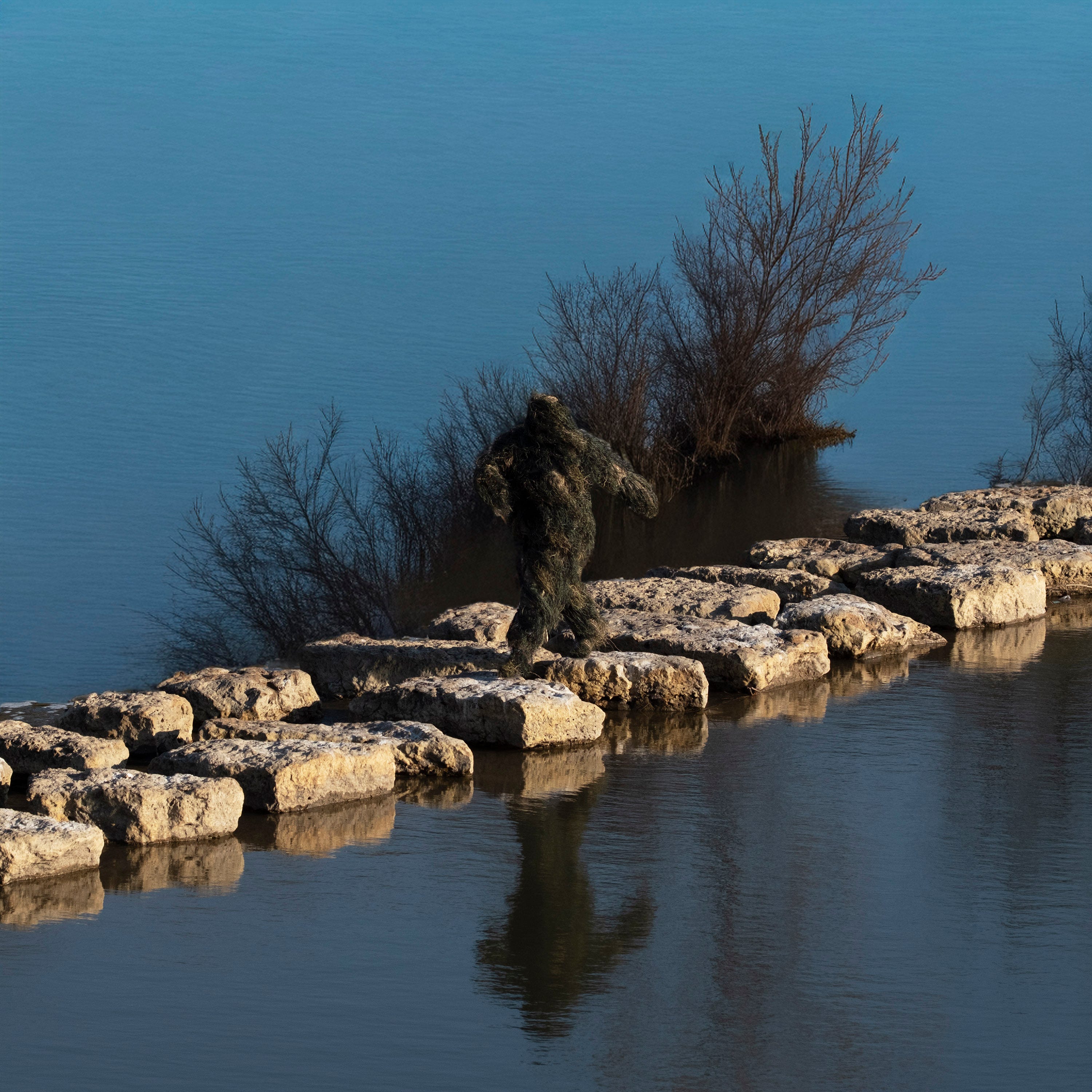
When Dawn finally arrived, constructed by Questlove, James Poyser and Pino Palladino, it was consciously constructed with Voodoo’s bones-every month of waiting carried in its voice. Followed by nearly five years of silence. Yebba has become the vocalist that vocalists themselves have named when seeking to demonstrate their taste. Jean is her second album, named after her deceased grandmother, and the album opens with a question that most singers who grew up in gospel would likely never verbalize: “What if I forgave it all? Be the laughing stock of every guard at every wall.” Is this an act of faith that demands you look deliberately stupid, or is holding your ground on someone else’s commitment something that passes as having done something? “West Memphis,” a smoky number about a cigarette and the aforementioned neighbor who brings tea and the year’s most searingly funny line, “What’s realer than the part of you that you don’t even claim?,” carries the feeling forward. The funniest, and the most savage of the bunch, is “Of Course”—a story about a man calling her Mademoiselle, her ex trash-talking and sleeping in her bed, shoplifting at the mall, a DM reported as scam, “all these men are fucking scams,” with each verse concluding in the phrase “of course.” —Reuben Dara
Jarrod Lawson, Just Let It
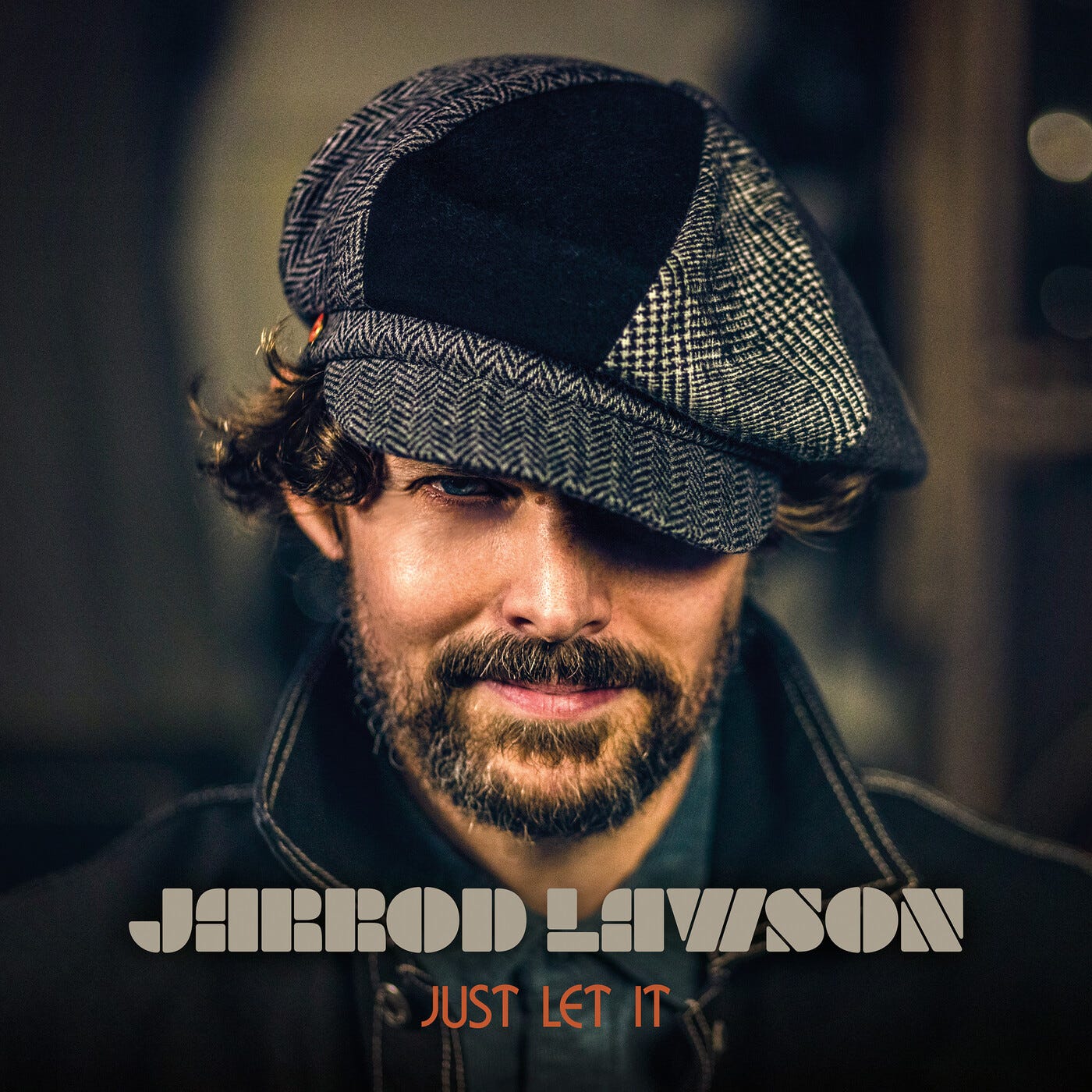
Pacing himself in the same way he did as a stone mason, Jarrod Lawson made Just Let It as a first-time producer, singer and sonically gifted artist from Seattle. He builds layer upon layer of falsetto vocal harmonies over thick instrumental layers. Being the patient musician he is, each vocal and instrumental layer he pieces together is spaced out. Lawson really digs deep to create a vocal illusion as he layers his harmonies in a ‘pipes’ style. For an album that takes its time to speak, there is a sudden burst of directness from Lawson when he reaches the song “Smoke Me Out.” It speaks of Lawson zoning into the streets and sharing the loss of life of a street boy and a boy from two doors down. In the song, there is an abundance of people telling Lawson to leave, but instead of smoking him out, he will stay. On “Laugh at Yourself,” Eric Roberson shares the album’s most hilarious moment, as he recalls the experience of stubbing his toe and the message he got from the voice of God telling him not to worry because he has 9 more toes. In good humor, that message between the toe-stubbing man and God has more character and depth than the advice songs scattered across the album. —Fallon Reese
Kehlani, Kehlani
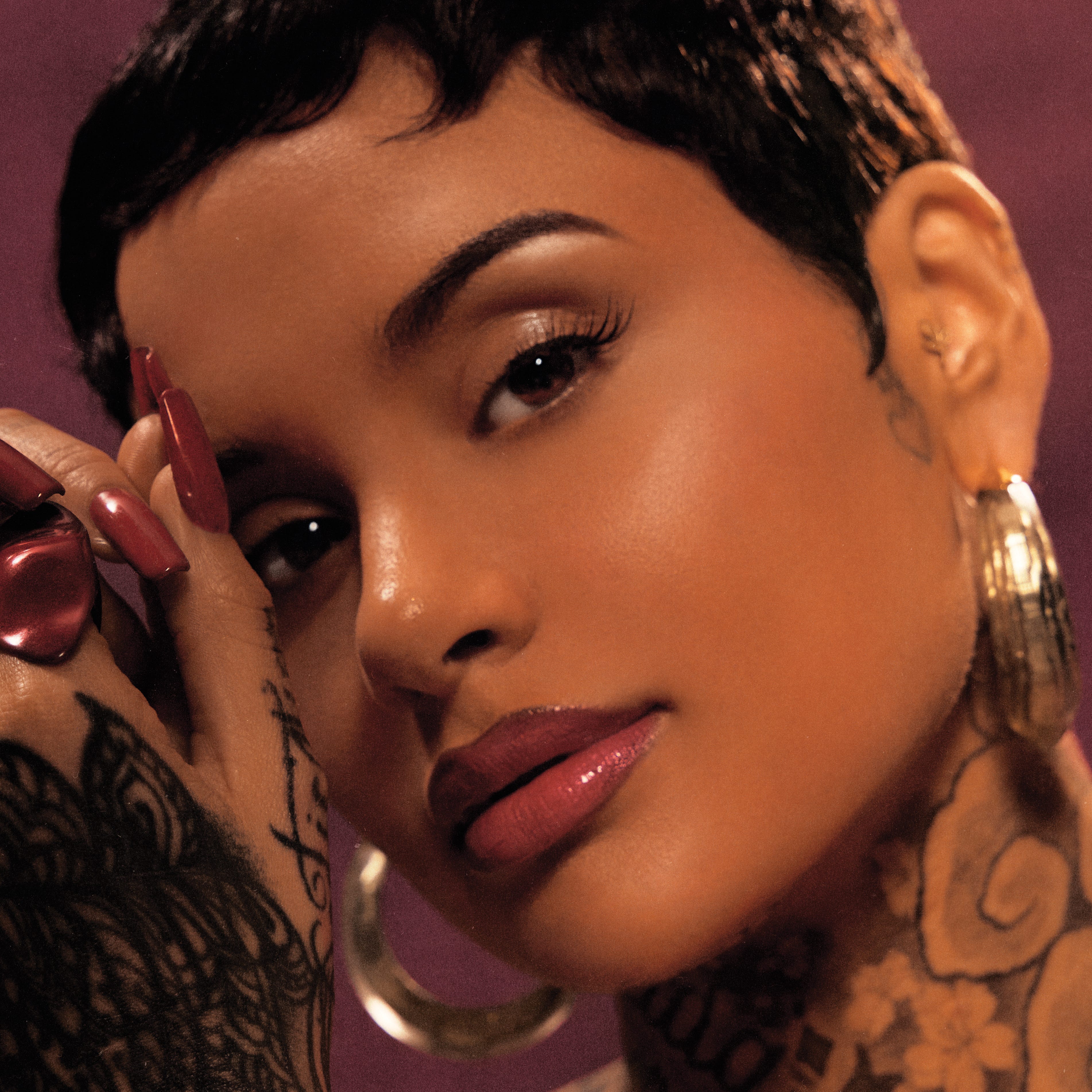
How do you get Brandy to sing a full verse on an R&B album in 2026? You don’t, unless you’re Kehlani. On her self-titled fifth album she got one on “I Need You,” along with a full Usher duet on “Shoulda Never” that gives him equal billing, a Clipse couplet over a Pharcyde drum loop on “No Such Thing,” and Missy Elliott playing the jealous boyfriend in a back-and-forth scene on “Back and Forth.” Imagine that lineup. The album arrived on her thirty-first birthday in April—eight weeks after she walked offstage at the 68th Grammys with her first two awards for “Folded” and a “Fuck ICE” closer to cap the speech. Hear the lead single. An ex has left clothes at her apartment, and she’s not about to drop them off. She washed them, folded them, stacked them on the bench by the door, and called to tell him to come get them. Notice how quiet she keeps it. The bravado cracks on “Anotha Luva,” where she spends her verse in circles: “I know you’re not mine, telling myself/But every time that I refine, I don’t want nobody else.” By “Still,” with ad-libs under the chorus line “My body knows I love you still,” she’s in a hotel room and past pretending. Every R&B voice Kehlani came up learning from shows up on the record. She matches all of them. The Grammy came ten years late. —Kendra Oluwaseyi
Tank and the Bangas, The Last Balloon
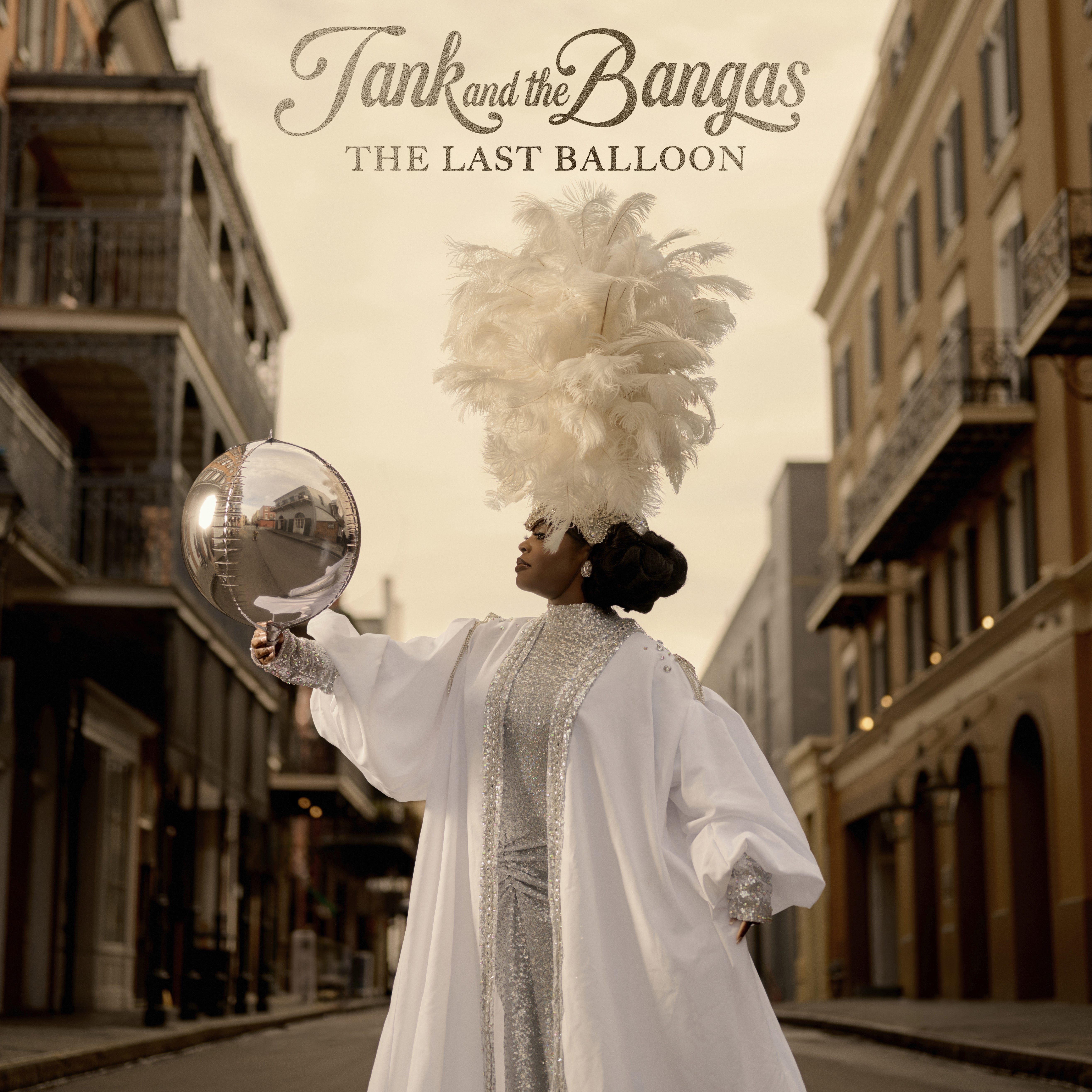
Three albums in on her solo career, Tarriona “Tank” Ball has learned to let the room breathe. The Last Balloon begins with “Rest,” where Ball begins to speak over a choir with the electric piano, and Ball once again establishes the liturgical then funk order she’s held since 2013’s ThinkTank. This time, Ball isn’t pronouncing every chorus from the above arrangement. In Green Balloon, she was in pursuit of something that earned her an unwanted Best New Artist nomination. The generosity here is striking. Ball gives the title chorus on “Don’t Count Yourself Out” to Dawn Richard and only answers between lines. She steps offstage so her guest can be in the spotlight. Ledisi gets a full verse on “Whole World,” followed by Ball with “Okay, bad day that’s just one in a million... I’m done people pleasin.”
The funk returns on “Move,” where Ball is the reqester on a Camper and Rob Debose with a walking bass line on the track while Lucky Daye sings about watering power flowers while a bass line is walking. “No Invite” finds her half shouts “I might start a riot, get that motherfucker started” over Josh Green and Austin Brown’s stuttering bass and sax bleats that won’t quiet. Banga Anjelika “Jelly” Joseph’s “Jealous” puts her at the front as she invites Spence’s syncopated funk pocket as a peace offering. Joseph left in 2022 to front Galactic. She appears as a guest on this track. On “Nighttime,” Ball drives off with a “Most of me stirred up like some Kool-Aid, but I’m drinking Alize,” resting over a Kindred the Family Soul sample, as The Quarter is wet and she is alone. It’s been a decade since ThinkTank. She is at her own pace and has nothing left to prove. —Kenya DuRant
6LACK, Love Is the New Gangsta
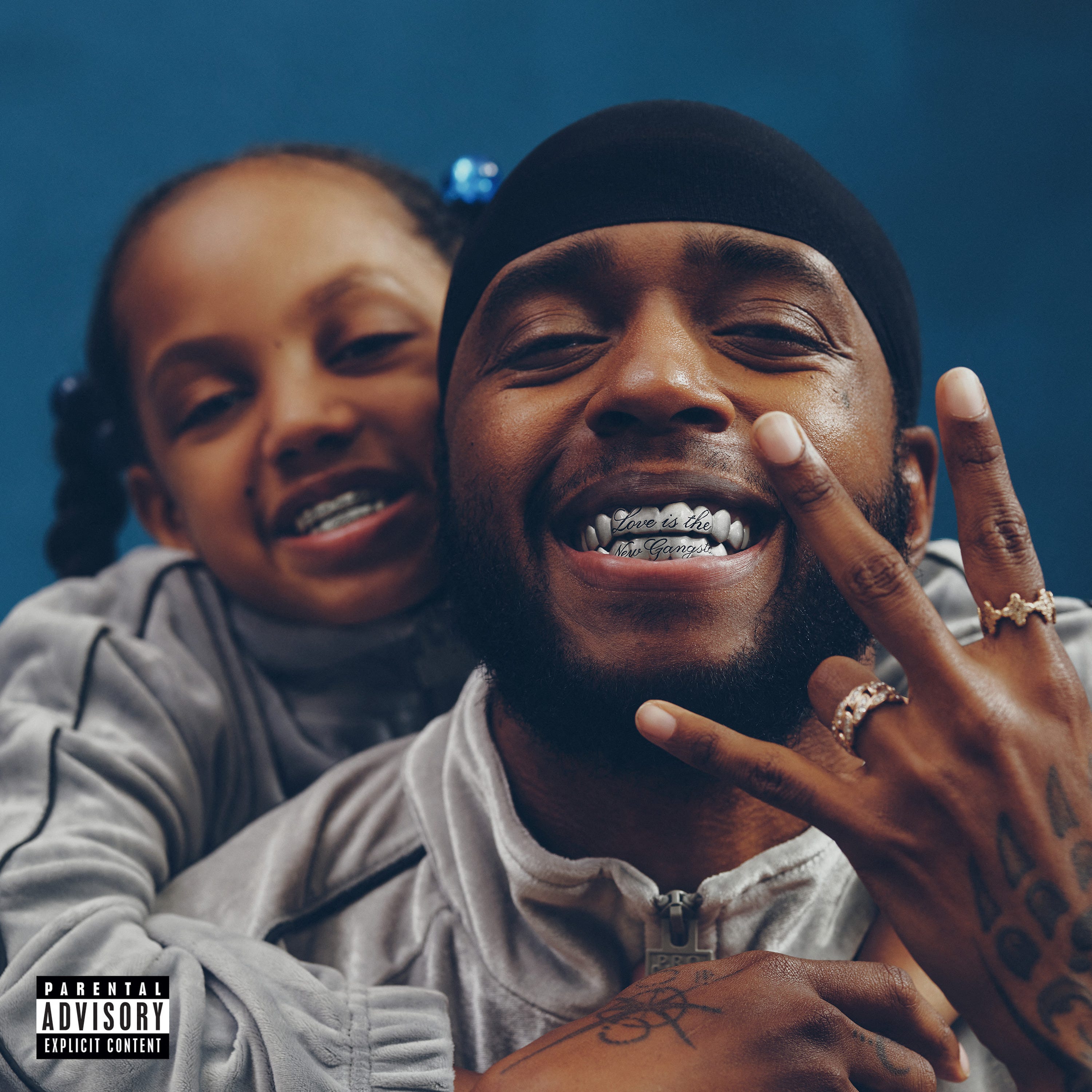
It feels like 6LACK’s fourth album lives in contradiction. There’s a guy opening up his album with bounties on his exes (“There’s a bounty on your head, post one to post just for whoever want this bread”), and there’s the guy who tells us that laying your head on someone’s chest is the safest place in the world. It’s this tension that Love is the New Gangsta lives in. We find it in the heart of a luxuriously appointed dream villa, with 6LACK singing along with Odeal on “Water,” then taking each and every piece of his life, from every aspect of his downfall, and setting it up for the world to hear. On “I GUESS” he is the guy at the door with his hands up, wondering why he’s being let in while the girl with the gun is apologizing for letting him in. He sets up the scenario for her to open the door and reveal the gun in her hand while he narrates the story. On “Ashin’ the Blunt” he teams up with Young Thug, who’s been incarcerated for RICO and has been hit pretty hard by the whole slammer experience that has left him paranoid as all hell. There are plenty of moments of grand excess, specifically in the magnificent “Wifey Baby Mama,” where 6LACK delivers his best rapper in love verse, where he mentions NFL player Marshall Faulk and describes his South of France courtship where he’s sliding into a fellowship of politickin’ and church attendin’ with his “wifey baby mama.” Yet, there are still attempts at profundity, where “Fellowship and politickin’” is the line, and there’s still cheese being sliced and diced. —Tunde Albright
Noah Guy, MEMORIA, in blue

After NYU moved online in 2020, Noah Guy couldn’t afford it any longer; he was an unofficial film production major, writing songs by day and attending class by night, doing a two-semester internship at Fool’s Gold Records in Brooklyn between his halves of years. He moved back into his parents’ suburban Philadelphia house, bought a $15 microphone from Walmart, opened up GarageBand, and began writing daily. That discipline stuck as he moved out to LA for a year, living on couches, recording Who’s Taken Time?!, two five-track EPs so unstable in their creation he later claimed the first felt from a “very ego-driven, self-centered” place. But it was when he returned east and connected with his brother—it opened up somewhere outward. As he and Devin Concannon, a producer who’d reached out via a cold beat pack, moved in together in LA, Guy had the songs, and Concannon the setup. He constructed MEMORIA, in blue, the way anyone would build something when you’re sharing a rent payment—daily, cheek by jowl, finishing each other’s musical sentences. Concannon produced nine of the ten songs, and the only guest artist, Tampa singer Amaria, who’d been around since the two met at a co-writing retreat at a cabin in the woods in Lake Arrowhead, sings on “My Loss,” where her lines “I can’t wait for you, baby/I know things fall apart” have the specific weariness of someone who stopped waiting. There’s also “Higher,” its percussion stuttering, chopping, reminding me vaguely of Amerie’s “1 Thing” before the groove finally kicks in to something warm and elastic, Noah Guy praying for absolution over a beat that’s dying to move. He’d been releasing five-track EPs for years, and his first full album knew exactly what he’d been saving for. —Danica Ford
Momoko Gill, Momoko
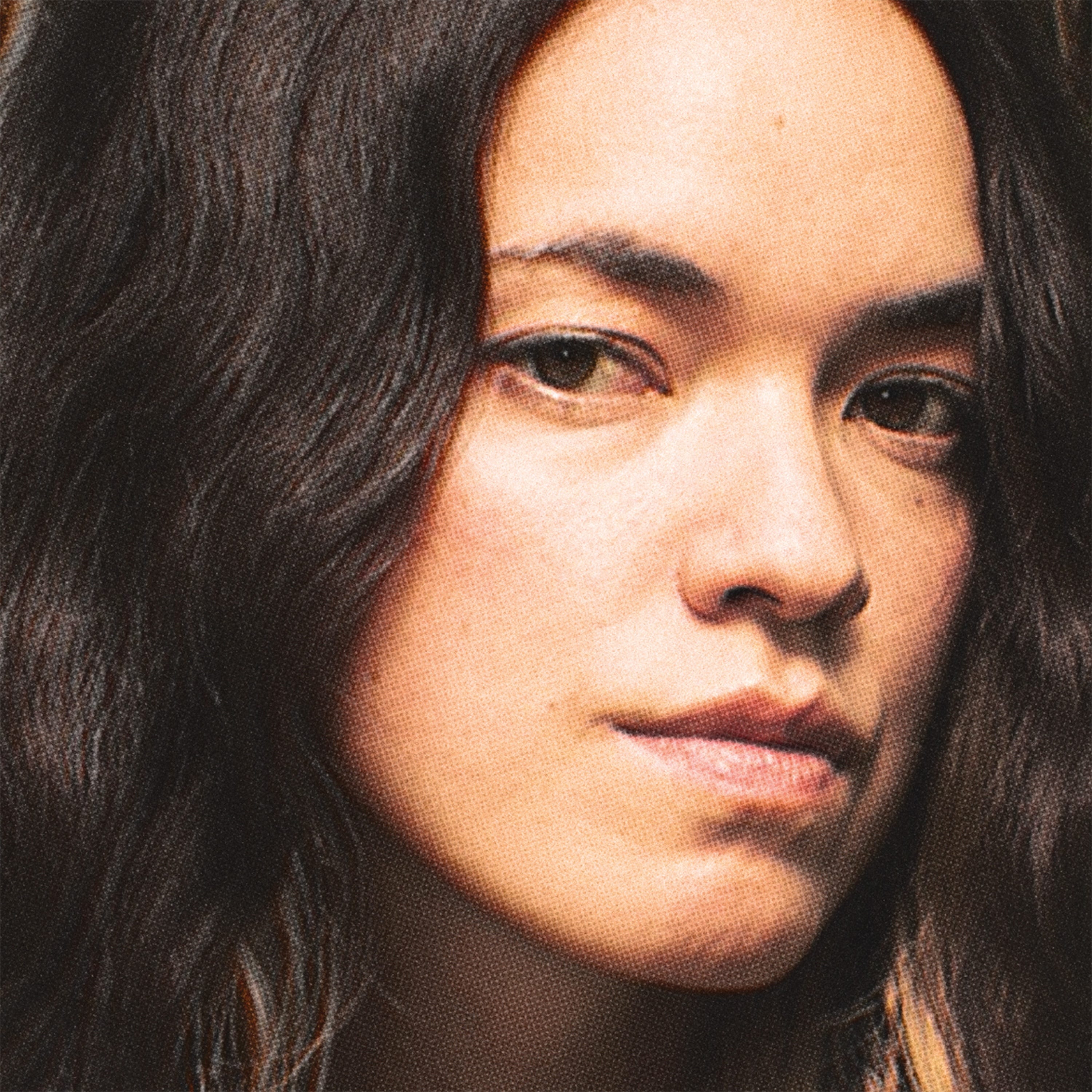
The album’s ninth song, “When Palestine Is Free, “where fifty people turned up to sing in a studio. Soweto Kinch and Shabaka Hutchings were there, part of the singing crowd. The song is six minutes long on Momoko Gill’s debut solo record, and it has the impact of a public statement buried on a record that is otherwise at room volume. The drummer with Alabaster DePlume, keyboardist with Tirzah, co-writer with Coby Sey and co-producer on Matthew Herbert’s Clay, Momoko lays down at the north London Total Refreshment Centre and does almost everything on her own. “No Others” is driven by her drumming and a piano line that doesn’t seem like it will end on a note that feels resolved to the listener. Flute and harp, instruments susceptible to sentiment in a soul-jazz setting, are used on “Heavy” but kept dry and spare by Gill. “2close2farr” is a love song built out of almost nothing. “Ineffably” is acoustic piano and voice so soft that it almost doesn’t exist. Momoko grew up in Japan and California and then moved to London, and the album moves around these places without announcing it. —Mina Abdel
Gorillaz, The Mountain

Damon Albarn and Jamie Hewlett buried their respective dads, ten days apart in 2024, his mother-in-law having passed away a year earlier-Albarn and Hewlett had been on the outs prior to the latter’s mothers-in-law death; their respective fathers passing brought the pair back together, and after a journey to India, where Albarn scattered his father’s ashes into the Ganges River, he had a place to put the grief. Indian mourners embrace death as an end, rather than a bolted door, and the reorientation is at the core of The Mountain, the ninth Gorillaz LP and the first in some time where one has a feeling it was conceived as opposed to merely scheduled for release, something which really had to be said. The dead are sprinkled throughout the album-Dennis Hopper, Bobby Womack, De La Soul’s Dave Jolicoeur, Tony Allen, Mark E. Smith, and Proof; all deceased, all included through recontextualised vocal sections from previous recording sessions, now woven into new soundscapes.
Anoushka Shankar’s sitar is used consistently throughout; Albarn’s father’s preferred music was his father Ravi’s, and Shankar’s accompanied bansuri flute and sarod give the record a framework upon which to lean even as the list of collaborators gets unwieldy. Black Thought appears on “The Moon Cave,” sharing the space with Jolicoeur, the living and dead sharing a track without the obvious gimmick of many similar ventures, as Mark E. Smith comes on to trash the building melancholy of “Delirium” with unintelligible prattle, as if he were present in person. The spoken word from Tony Allen begins “The Hardest Thing,” an opportunity for Albarn to deliver what amounts to the record’s simplest confession: “You know the hardest thing is to say goodbye to someone you love.”Sung in English, Arabic, Hindi, Spanish, and Yoruba, over fifteen tracks, The Mountain is the first Gorillaz LP in recent memory which justifies its runtime by having something other than the all-star lineup serve as a reason for it to exist. The title itself offers an explanation. Some people climb for perspective. Others climb because there is no other place to leave the grief. —Phil
My New Band Believe, My New Band Believe
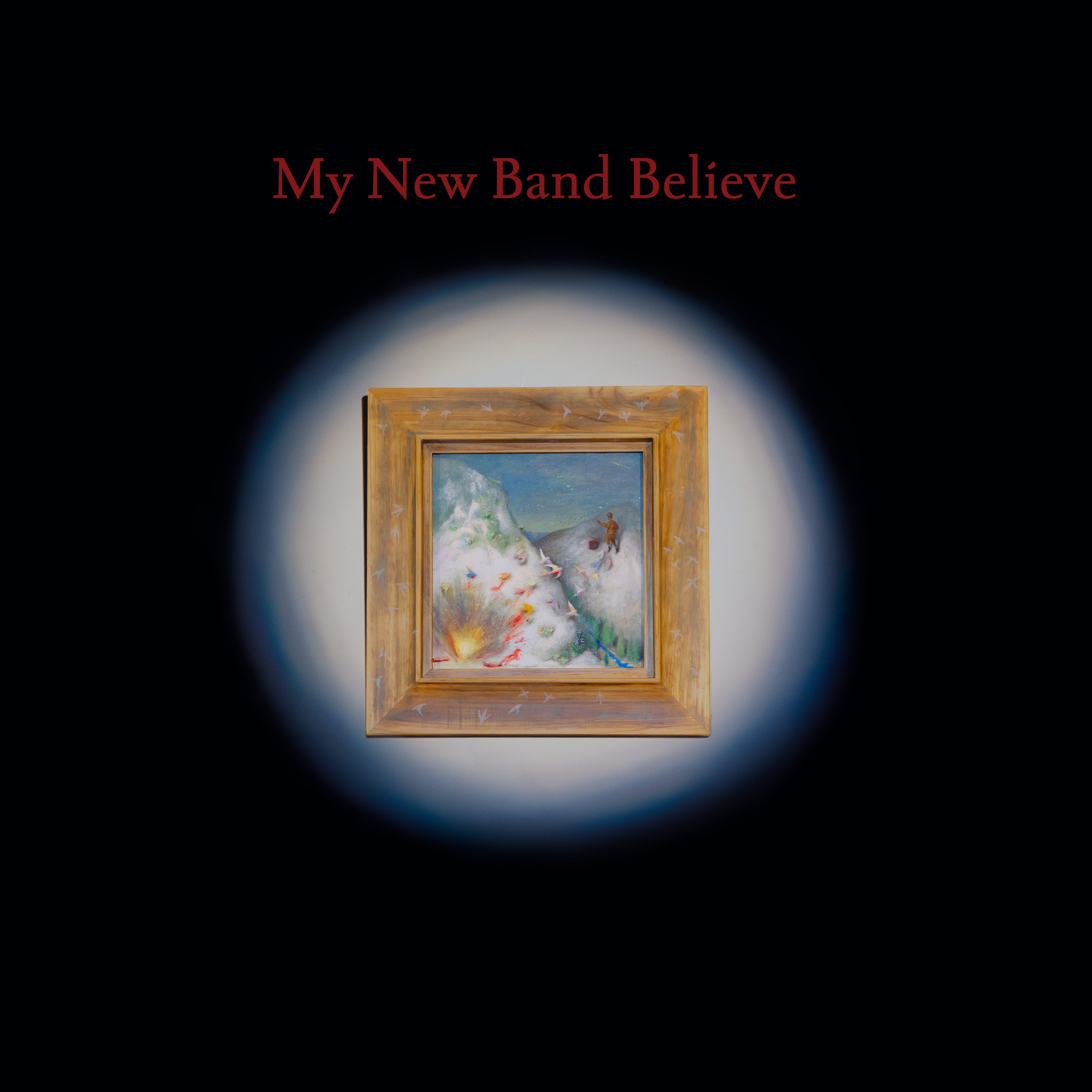
The band name was a souvenir from a Chinese hotel room, where Cameron Picton was burning through a fever and scribbling down the scrambled phrases that stuck through it. One in particular lodged in his head even after the fever broke. By his own admission he sometimes cringes at it, but he kept my new band believe anyway, all in lower case. After spending the back end of black midi’s hiatus releasing CD-only mixtapes under the alias Camera Picture, Picton pulled together a real lineup with Kiran Leonard, Caius Williams, Steve Noble, and Andrew Cheetham, then cut an almost entirely acoustic record across 11 London studios with nine different engineers. “Heart of Darkness” carries the late-period black midi folk-rock shape into a more unguarded place. “Love Story” sets a domestic scene of Picton cooking dinner for his partner, feeling sexy about it, and then collapses the sweetness on a flash of imagining her gone. “Actress” gets closer (closer than anything else here, anyway) to the chaotic instrumentality of the Lecture 25 single he released early last year. The record is a cluster of conflicting registers stitched together by a kind of fever-dream consistency, and it makes a strong case that Picton was doing more of the storytelling in his old band than the credits ever suggested. —Oliver I. Martin
Dominique Fils-Aimé, My World Is the Sun

The album starts with a recording Claudette Thomas (mother of Fils-Aim) made for herself of herself singing a Patricia Carli song onto a cassette in the ‘70s. At the end of the album, it’s her own take on that song, performed by Fils-Aim herself acapella. In between the two songs, the Montreal singer takes us on a journey through jazz, soul, and blues, the second chapter of a trilogy that began with last year’s Our Roots Run Deep. Pianist David Osei Afrifa is an adept and patient player, creating space for Fils-Aim to stretch syllables until they seem to turn into whispers of air. Percussionist Elli Miller Maboungou and tabla player Shawn Mativetsky shift some of the songs toward West African and South Asian rhythms without it feeling like anyone even tried to call it fusion. My favorite cut here is definitely “Life Remains,” because of the lackadaisical way it unfolds-the sheer length of a held note is celebrated before moving onto the next thing, followed by a spare, Francis Cabrel cover that closes the set. After spending two years playing over 150 dates in fifteen countries, the road is apparent in how at home she is with all these songs, even the ones that aren’t technically hers. — Janelle K. Moore
Hil St. Soul, Nasalifya (Thank You)
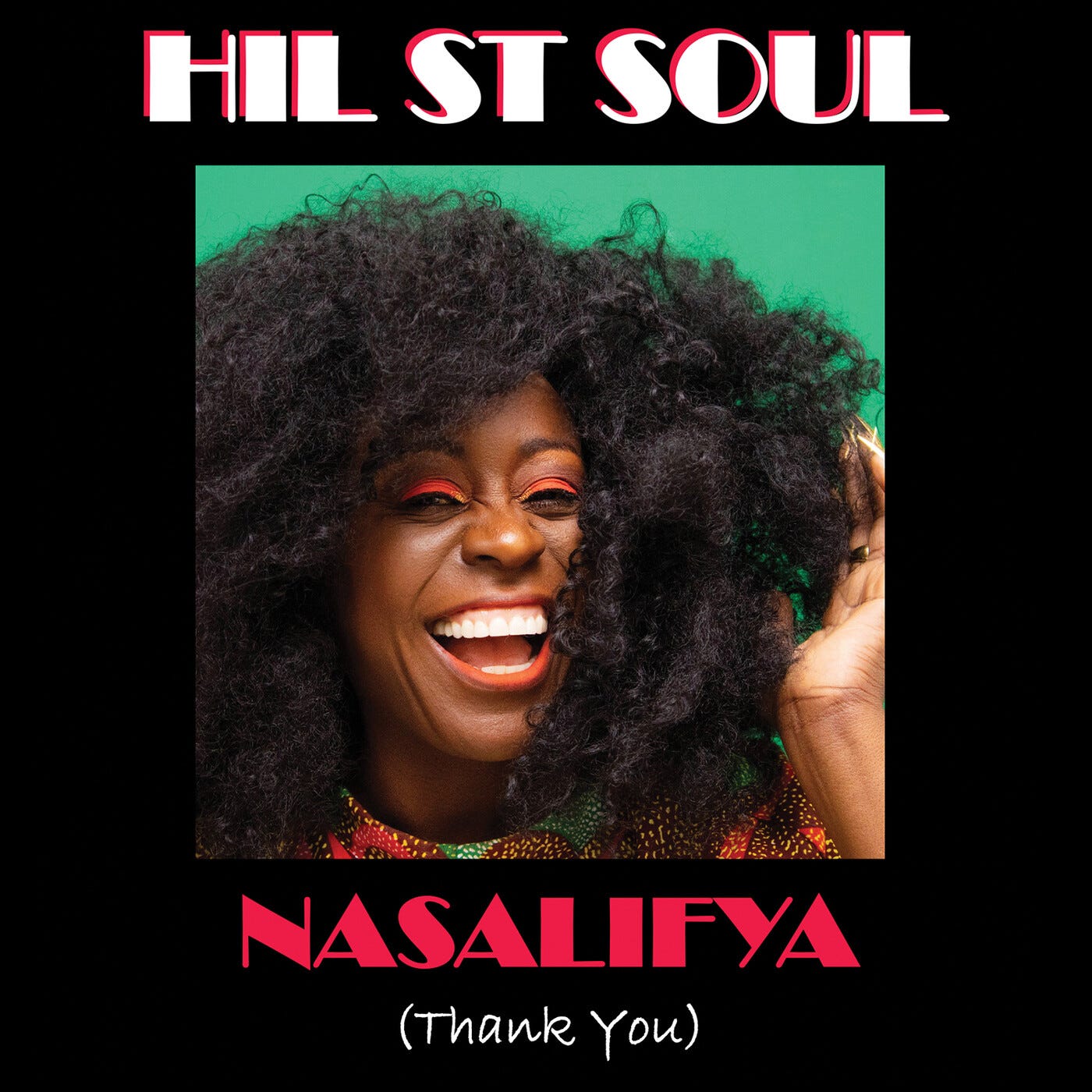
Hil St. Soul’s sixth album, Nasalifya, is positioned in 2026 as a soulful masterclass in creative restraint. Produced in Lusaka and London after the passing of Hil’s father, Nasalifya’s eleven tracks ooze the confidence of a 48-year-old who’s accomplished and grateful. Where the design brilliance of this album is evident in the restraint of producer Regi Myrix, we hear Rhodes pianos that nestle near the edge, wayward kick drums, and spacious arrangements that preserve Mwelwa’s voice. This is Reggie Myrix exercising the restraints of his craft; it is design genius, and done, in the full context of restraint, across eleven tracks. Mwelwa moves further away from gospel in Athology’s dead, and reserves her mourning for the album’s closing title track. This is sung in her father’s Bemba. The rest of the album breathes cookout anthems, the album’s split personality showcasing daylight’s self-help discipline versus the nighttime’s care-free adult honesty. Mwelwa finds, in the closing song, a frequency of post-40s desire that rests unapologetically, the missing notes of younger desire, and contrasting, in the self-help daylight sonal gifts, the adult appetite. —Zachary Penn
Honey Dijon, The Nightlife
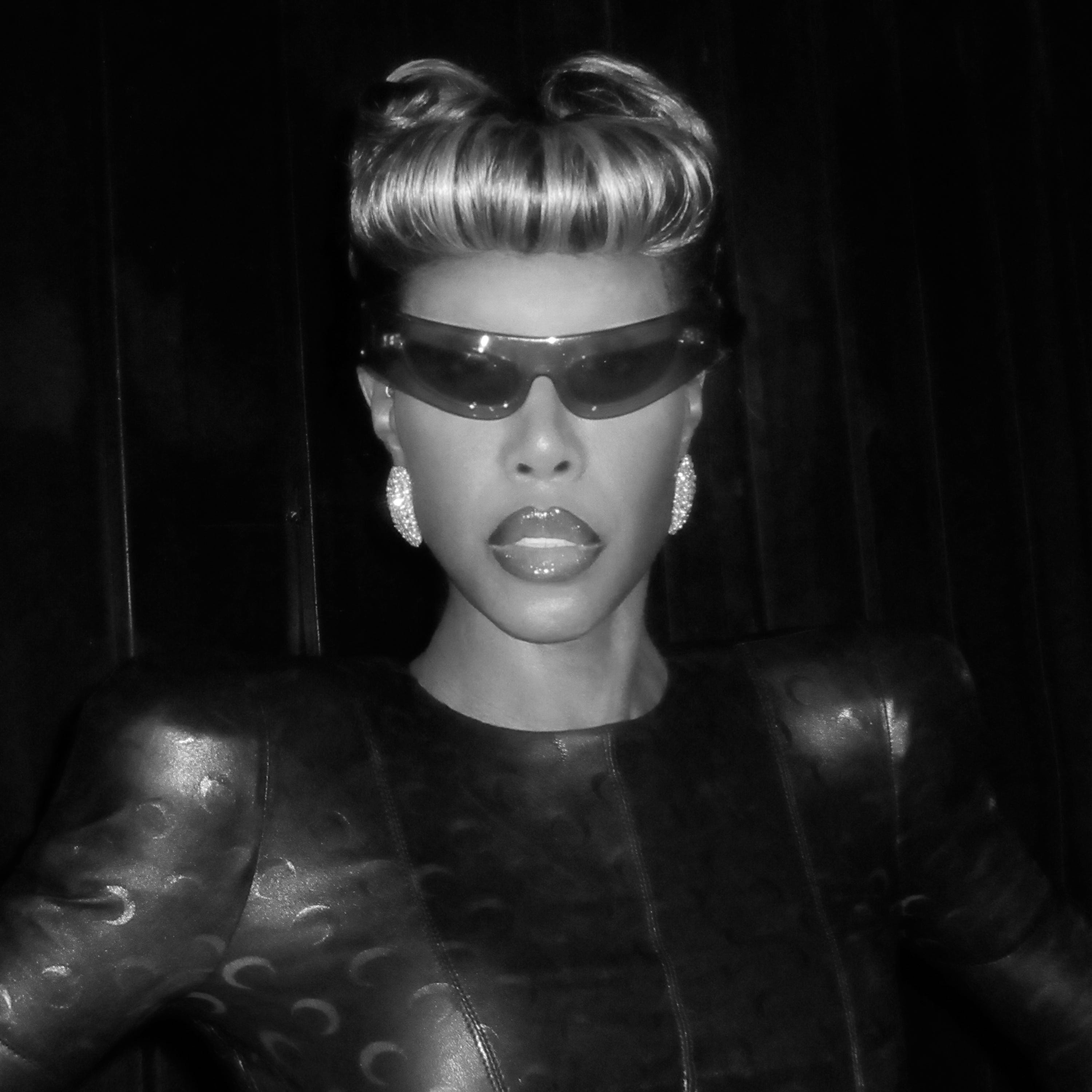
A diva voice over a four-on-the-floor kick was the original deal at the Warehouse on West Jefferson. Frankie Knuckles and Ron Hardy built Chicago’s genre on it; Larry Levan took the same idea to the Paradise Garage in New York. Thirty years of Chicago-born DJs have lived on the royalties of an argument they never copyrighted. Honey Dijon, who was a Black trans teenager in those rooms before she was anything else, knows exactly who gets the credit. Her third album hands every lead vocal to a guest and keeps Honey Redmond behind the boards. What Dijon does with them is the album’s real shape. “Just Friends” stacks Adi Oasis’s cool alto, Danielle Ponder’s smokier alto beneath it, and a Suni MF rap bridge across four minutes of euphoric disco-house that could have lit up a Parisian runway in 1994. Bree Runway raps “Slight Werk” with Missy Elliott-grade snarl over a kick drum and barely anything else. Mahalia holds “Don’t rush me, take your time, we’re not in love” as a four-minute directive on “Rush Me,” and Rochelle Jordan plays both voices of a one-way crush on “Private Eye.” Dijon has been DJing since her mid-teens. She co-produced “Cozy” and “Alien Superstar” on Beyoncé’s Renaissance in 2022, soundtracked Dior Men runways for nearly a decade, and still makes the trip back to Chicago every year. What is the point of all that tenure if not this—an album that gets every name it calls? The Nightlife is the cleanest case she has put on a single LP for where this music came from and who is still there to play it back. Not bad, for a third album. —Darryl Keyes
Mitski, Nothing’s About to Happen to Me
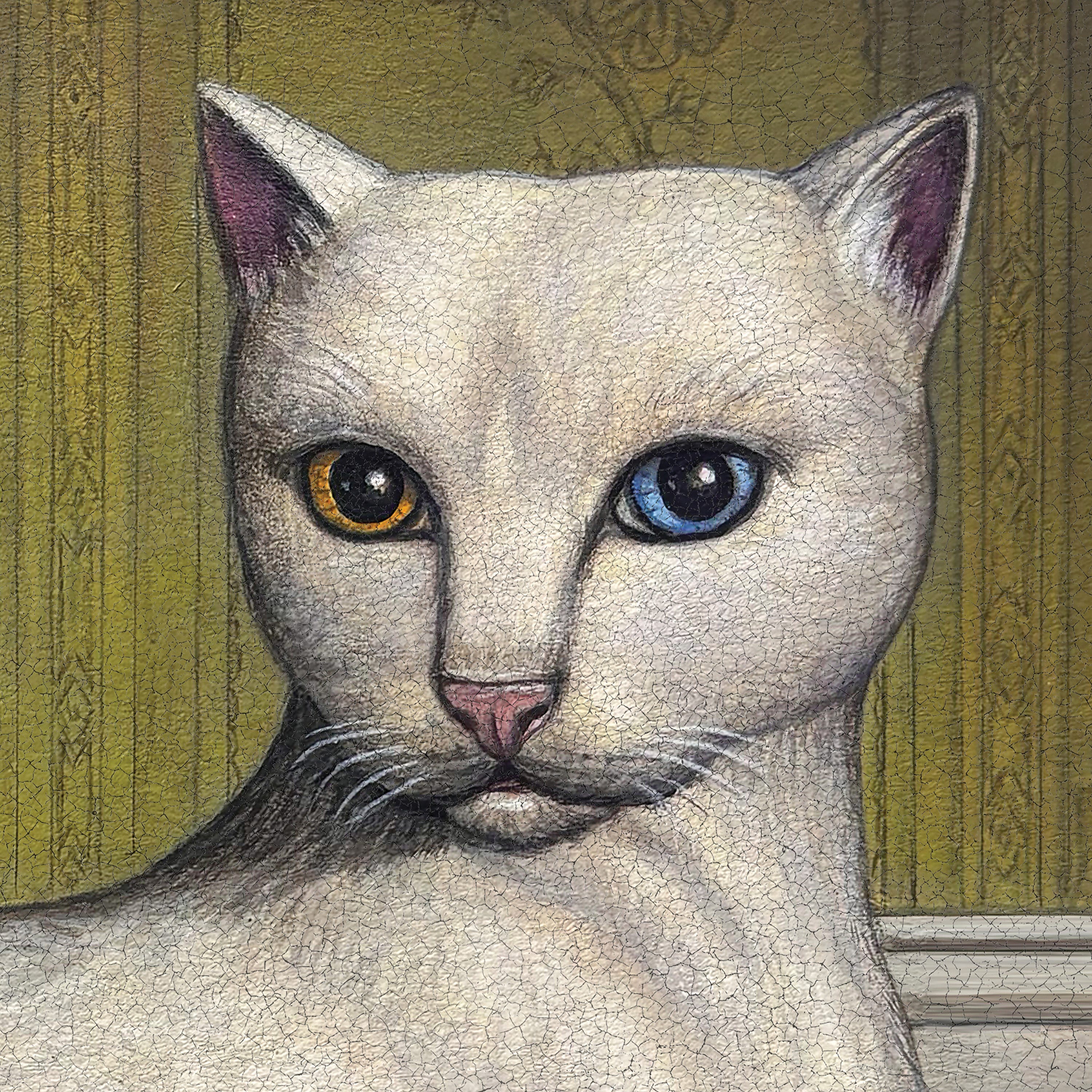
Mitski informed the twenty-thousand-person audience at Merriweather Post Pavilion that she was nearly done, as if to let them know they’d soon be freed from being around all of these strangers. Her eighth full-length album, Nothing’s About to Happen to Me, gives that desire a character and a home. Outside of the character, she’s a deviant; inside, a free woman, and her songs navigate between claustrophobic small-town life (where “In a Lake” features anyone who gets within a mile of you smelling like your first love because only one brand of soap is sold within the city limits) and the desperate logic of a breakup. A bossa-nova-inflected ballad she wrote about her own patheticity, “I’ll Change for You” captures the bargaining phase of a breakup, where you already know the relationship is dead but you’re still drunk dialing, still promising to reconfigure every part of your personality to keep them around. “Dead Women” portrays Mitski as a phantom woman while her former friends and lovers have constructed a narrative about her much larger and more heroic than life. “That White Cat,” meanwhile, borrows PJ Harvey’s 4-Track Demos spirit, devolving into a guttural, guitar-smashing, howling, hilarious-and-terrifying-at-the-same-time declaration about a feral cat that has taken residence in her home. The overarching theme, throughout the album, is the suspicion that Mitski’s need for disappearance is precisely what keeps making her unignorable. —Charlotte Rochel
Tiana Major9, November Scorpio

Tiana Major9 exploded into the mainstream in 2019 with the EARTHGANG-featured “Collide,” on the Queen & Slim soundtrack, for which she later received a Grammy nomination for Best R&B Song. While signed to Motown, she released four EPs. From there, she left Motown, signed with an independent imprint (+1 Records), and went silent for two years. “Money” uses an effeminate, love-song-ish premise to personify cash as a fickle lover that will leave her after a single, reckless rendezvous. She acknowledges herself as “high key possessive,” a trait which might come across as cute or conceit, were it not for the instant anchor to memory: “I was just trying to figure out where to get the cash to feed my kids.” She used to count pennies in order to afford basmati rice. The most pointed writing comes in “Shook One” and “desire.” The first, taking the title and sample from Mobb Deep, addresses a partner who refuses to communicate with an effigy of the menace he wields. “I can’t read your mind if you don’t communicate,” is the plainest bar on the record, and is the only one that cuts more deeply than any other on it. She then follows it with “GRACE,” where she wakes up, smokes a spliff, walks her dog, and fakes being alright. November Scorpio is the very picture of a person who no longer feels she needs to get anyone’s permission to be specific about the shit she is living with. —Phil
Shabaka, Of the Earth
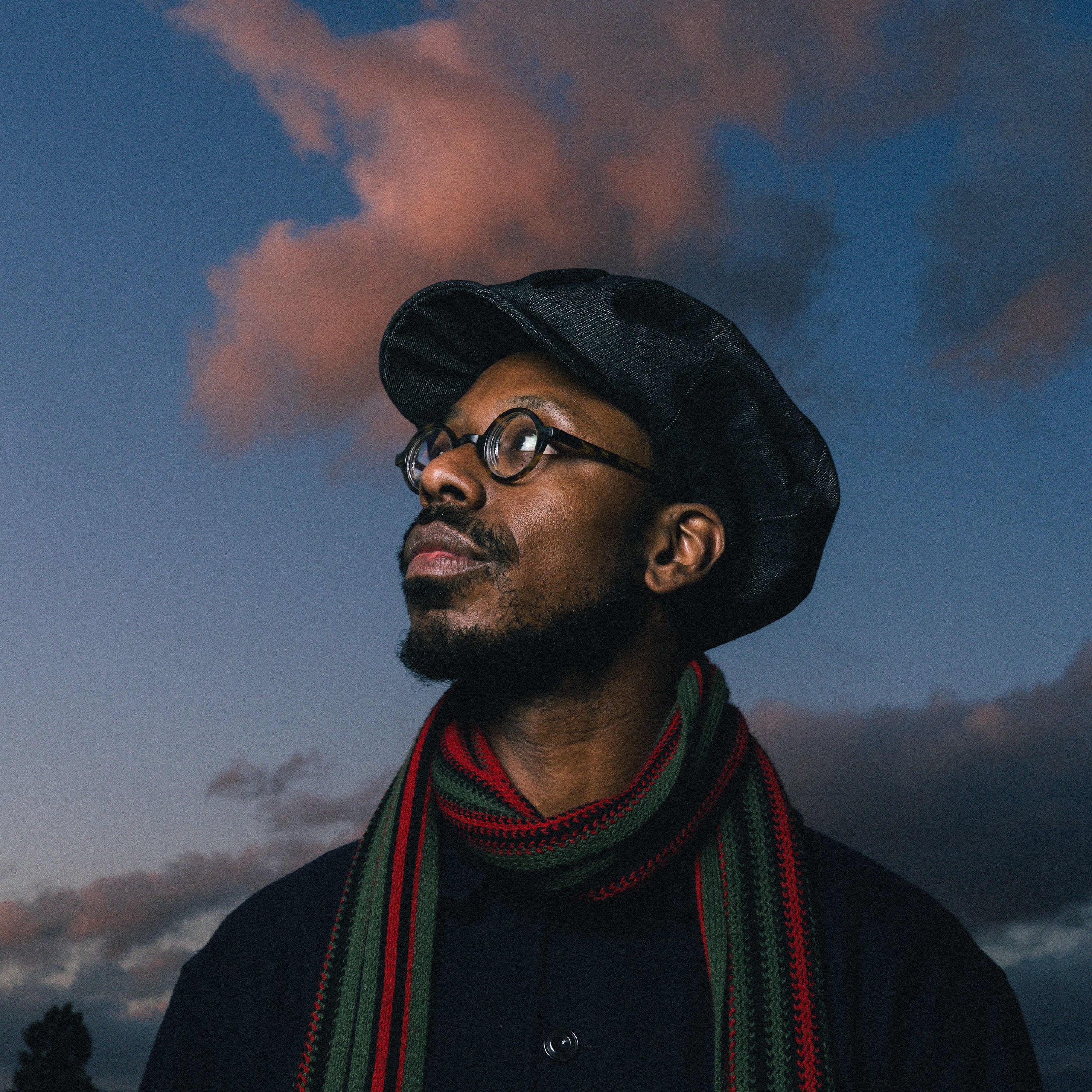
Shabaka Hutchings purchased his first CD in the mid-‘90s—D’Angelo’s Brown Sugar—and spent subsequent years baffled by the fact that one person had created something so bodily and total, and sung on it as well. Thirty years later, he’s mastered it: Of the Earth is here. His saxophone, missing for eighteen months, comes back in a blistered, overdriven haze on “Marwa the Mountain,” ripping apart a low-fi beat made with what sounds like someone playing on a kitchen table. Two minutes into “Step Lightly,” a Mort Garson greenhouse-esque synth arpeggio gives way to a thrashing dancehall rhythm. And for the first time, Shabaka raps on “Go Astray,” the solo venture that needed André 3000’s flute shift for permission. It’s not all sterile mastery though; there is the tangible sound of tape hiss and room tone creeping under the drum work of “Ol’ Time African Gods,” the residues which tether Of the Earth away from any possibility of spa ambience (part of Perceive Its Beauty, Acknowledge Its Grace occasionally skirted that danger zone). Instead, where Perceive meditated, Of the Earth stomps, pivots and dances with its emotional center held steady by its rhythm. —Kevin Matthews
KJADE, On Everything I Love
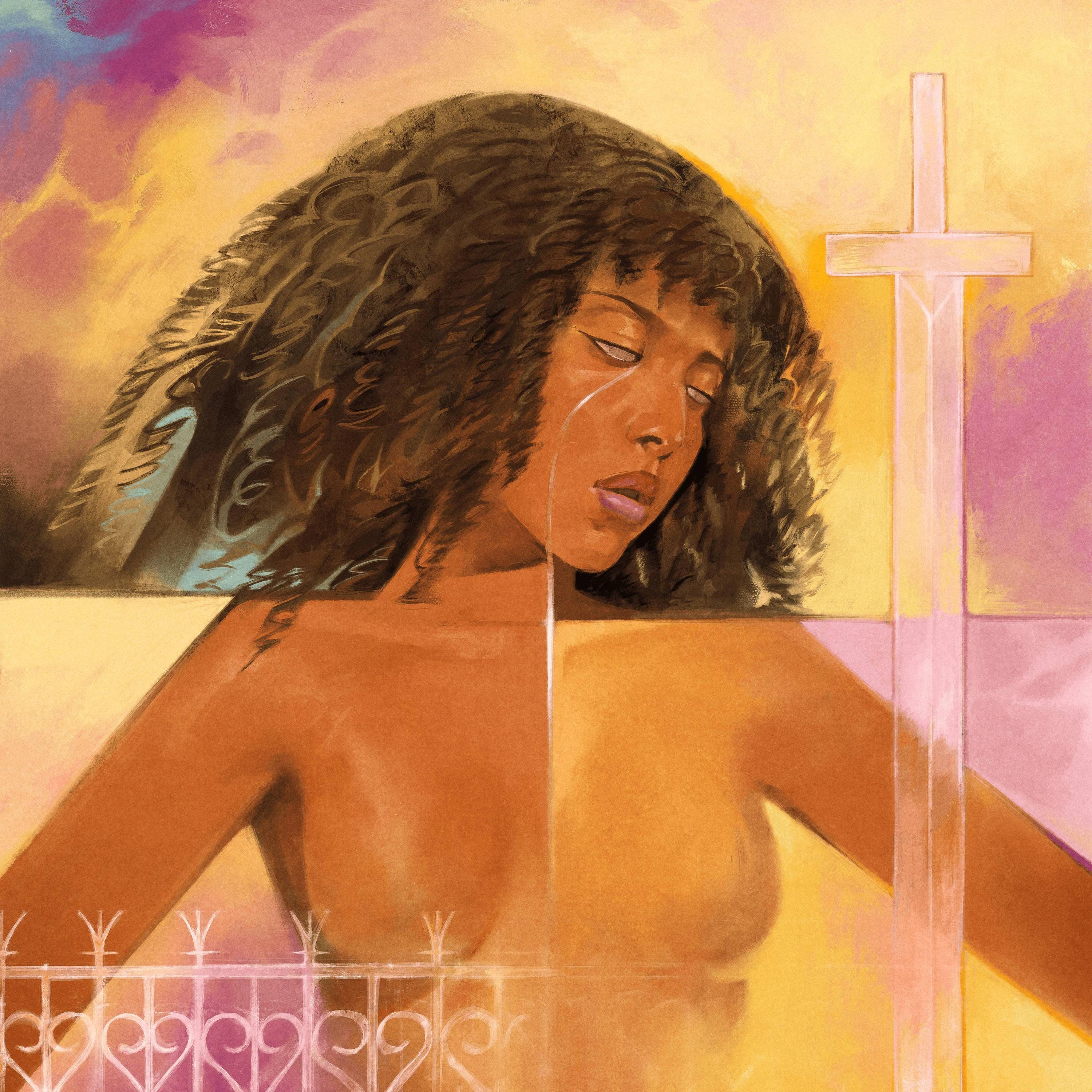
While rapping had not yet come, KJADE curated performance art shows and modeled for Envy Mag. She moved from California to Arizona, started releasing music in 2022 with her single “REASON”, and spent 5 years constructing her debut album, The Sound That Trees Make, an album for which Esteba handled production in its entirety. The album has the same patience of someone who mastered sitting still before knowing what to do with their words. Everything I Love has none of this patience. In “Redbone,” she proclaims, “I’m on the hunt for my rapist to kill what weapons inside of me,” later in the track namedropping Phoenix for facilitating coordination against her and not for the game. She immediately pivots from that thought to “Keep the raps high just to keep the rent low/I won’t stop till we free the Congo,” tying rent with the Congo simply because that is how her reality operates. In “Douglas,” she drops the most gut-wrenching line on the album: “They almost killed me when I told ‘em all that you gon’ need some help/Asking a Black woman for something, well, she’ll go kill yourself.” This line, though a literal interpretation of a request for assistance met with suicidal instructions, also feels like a meta commentary of the song’s overarching narrative about what happens when you refuse to conform and ask for help instead. In “She’s So Heavy,” she begins the track by saying, “You not hard, you just aggressive,” aimed at one person who mistook the latter for the former, but then in the second verse, she requests her mother, sister, nan. The track “Superjail” begins with “Fuck going global, I’m going solo,” and she really means it; the song continues to refuse to monetize her own trauma and says, “No better chip on my shoulder just from the trauma,” collecting the dub, like Tchaikovsky. —Noura Haddad
Absolutely, Paracosm
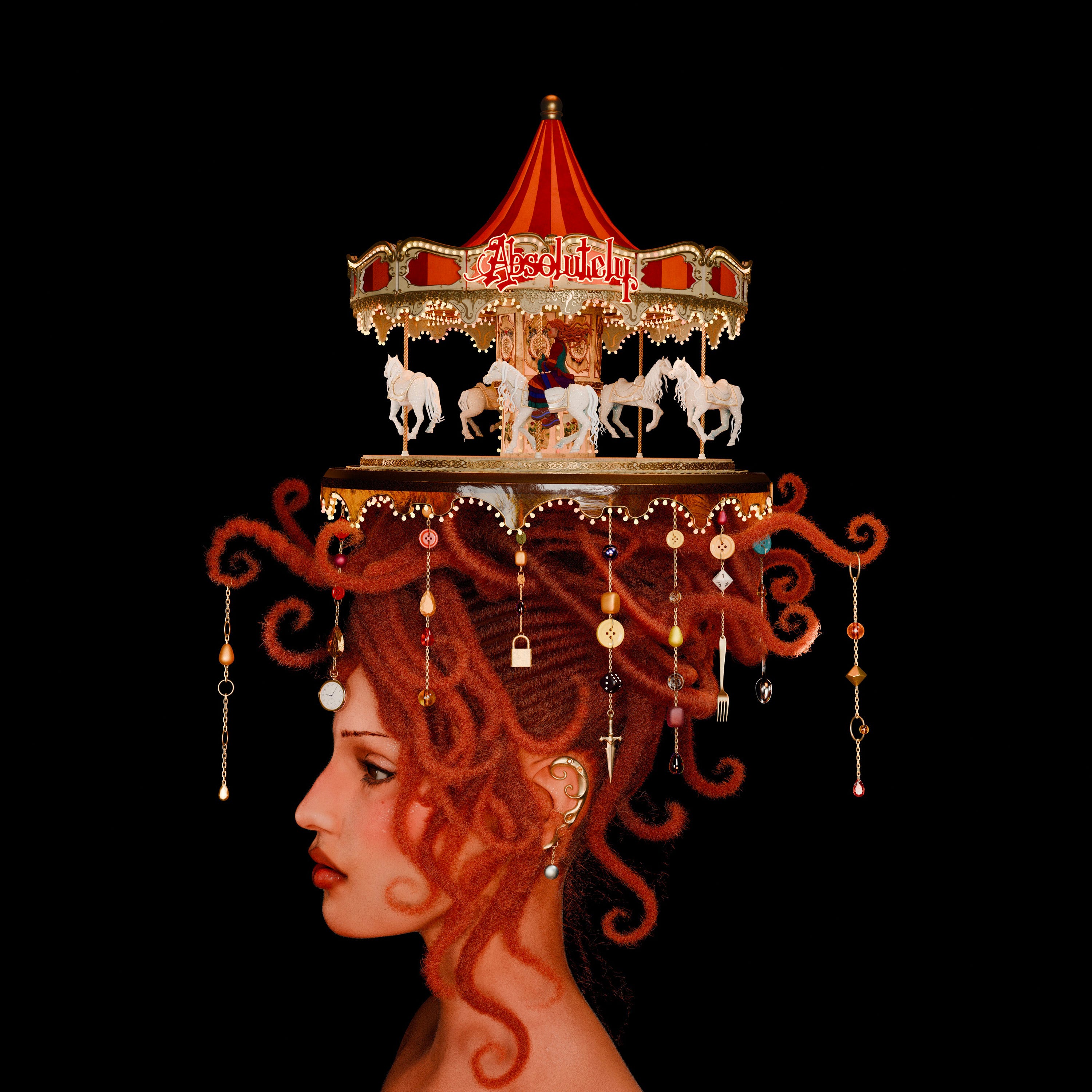
Abby-Lynn Keen was raised in London with her sisters RAYE and Amma. She began her career writing for other artists, including contributing to albums by Pharrell, Giveon, Teddy Swims, and Tinashe, before launching her solo career as Absolutely. Her debut, CEREBRUM (2023), announced her capabilities; this, her second album, was penned upon her return to London from Los Angeles. Keen has stated that this homecoming was the trigger for the album’s composition. The lead single, “I Just Don’t Know You Yet”, went viral last summer, prompting standing ovations during her opening slots at RAYE’s arena tour. On ‘No Audience’ she asks the most pointed question on the album: “Oh, can you visualize it?/Dancing without even trying/Moving your body out of timing/Does it ever get tiring?/Feeling like you do it all for show?” “Goodbye Glitter” veers into a heavier, more dramatic space, and the title track itself opens with the lightness of a music box, then unfolds. “Maybe some things are not meant to change, this life makes less sense as I age/The best pieces of me they remain, just a little bit strange”, she sings, embracing strangeness not as a temporary, yet to be overcome stage, but as a permanent aspect of being. A paracosm is an imagined, detailed fantasy world that is sustained over time. Keen built one, in full view of the public, and it sticks. —Charlotte Rochel
Mark Turner, Jason Palmer, Joe Martin & Jonathan Pinson, Patternmaster
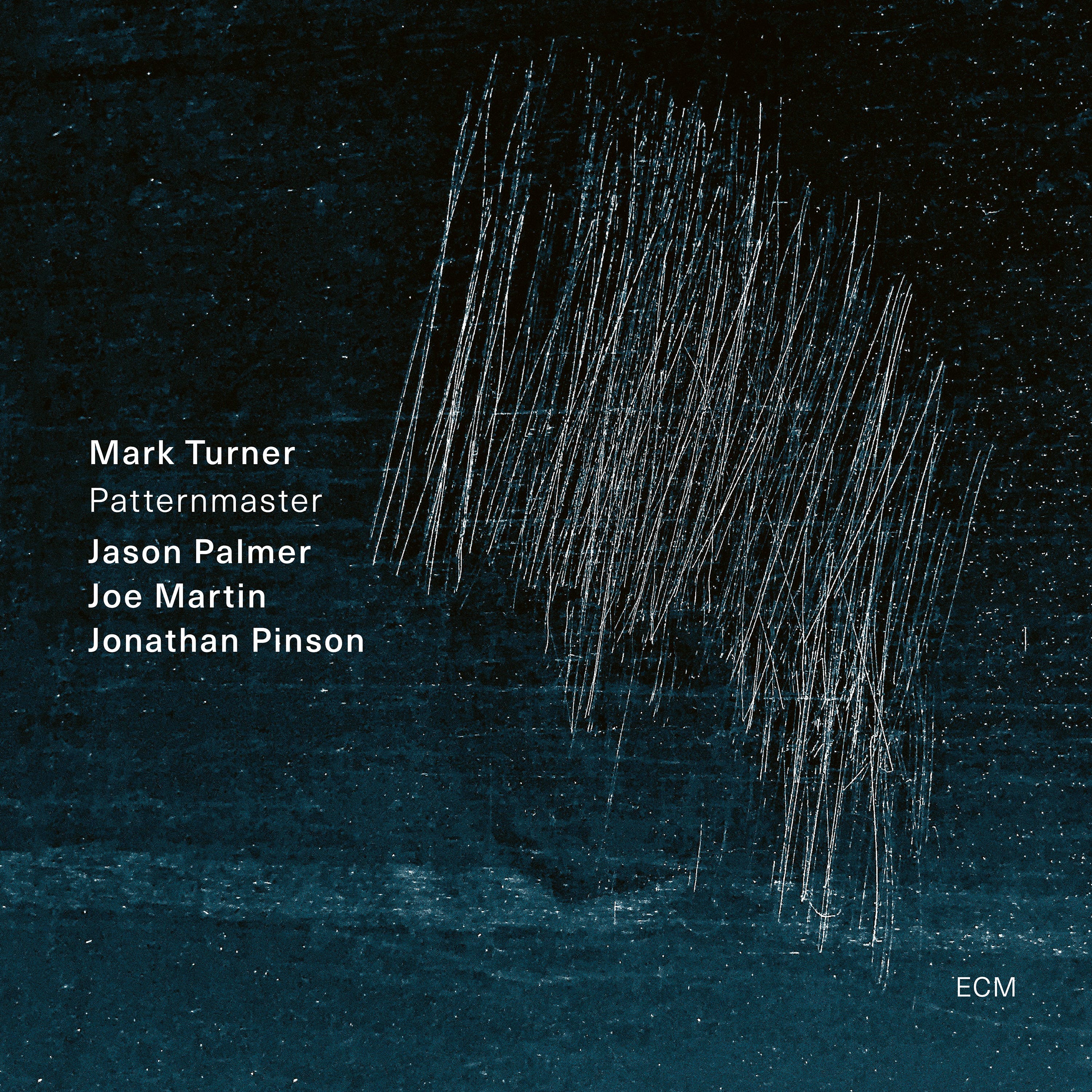
Mark Turner takes his title from the title of Octavia Butler’s 1976 science fiction novel, concerning telepaths, and the four men commune as if having both read it twice over. The quartet have been playing as a unit since 2022’s Return from the Stars (another Octavia Butler title, another ECM release, another Manfred Eicher production, another recording made at Studios La Buissonne in southern France), and the new record Patternmaster follows it closely, but with the level of trust dialed up even more. “Patternmaster” begins as a contrafact on a theme by Wayne Shorter’s “Pinocchio”-Martin and Pinson latch onto a bossa-inflected feel while Turner and Palmer restate the main melody in unison before the former unfurls a solo in bold and deliberate terms, a statement somewhere between patient determination and unerring conviction. “Trece Ocho” opens up in a lengthy, pizzicato statement by Martin, at which point Pinson enters, and the pair set up a Spanish-influenced pocket between them as the horns enter with a slow-burning melody consisting of sustained tones, followed by a jagged, breakthrough motif as the entire unit begins to really rock hard, making the previous sparseness feel like preparation for all this. Six originals by Turner, but every single tune feels spacious, open, the space into which the four men collectively pack an incredible amount by instinct and feel. Without the piano, the weight of harmonic information falls between Turner and Palmer’s horns, and the stringency of this predicament is the central driving force of the entire proceedings. —Reginald Marcel
JuJu Rogers, Pink Guitars, Spaceships N Voodoo Dolls
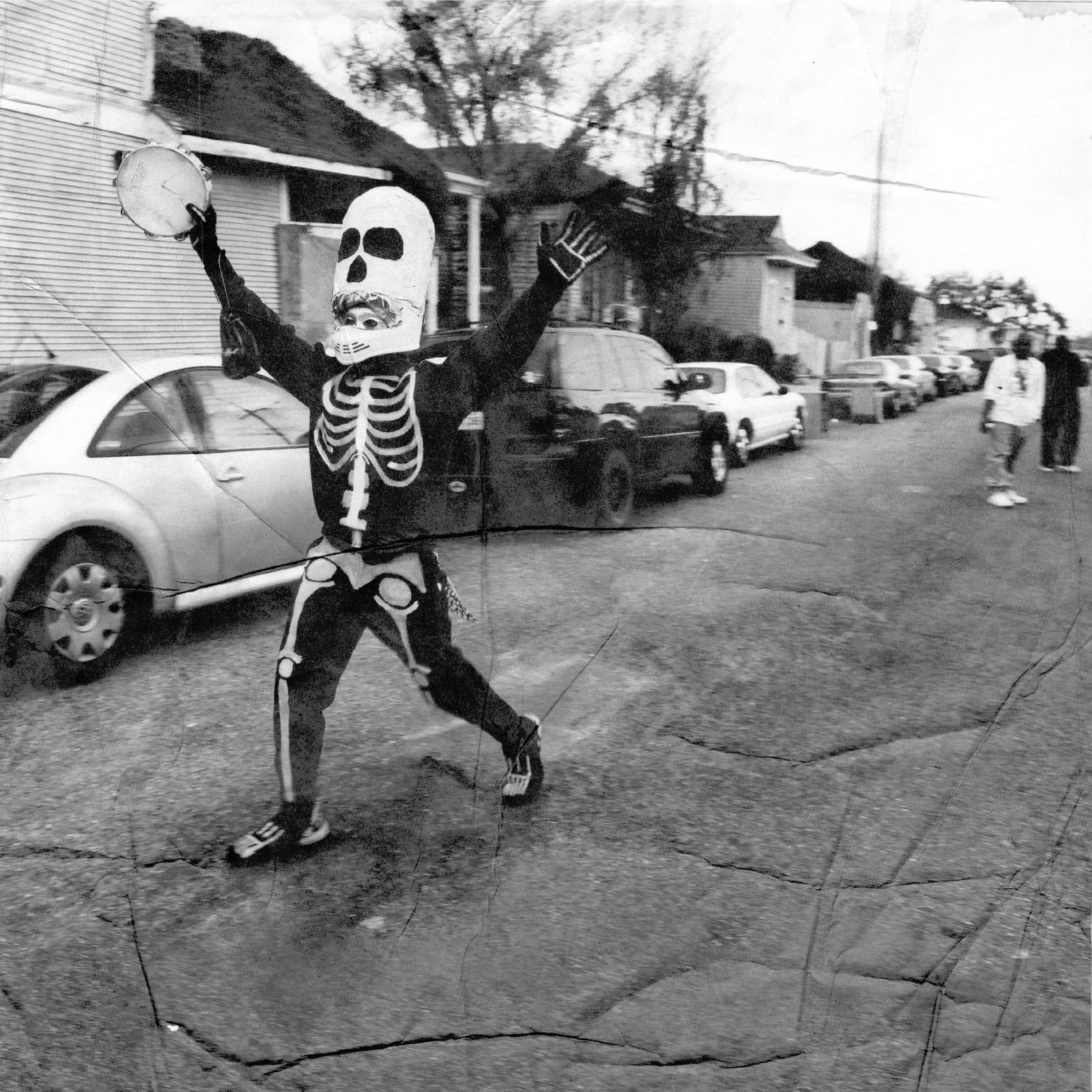
Schweinfurt, the small Bavarian city Julian Rogers is from, housed American military personnel after WWII. His unexamined lineage to this history comes from his father, a New Orleans native, who left him B.B. King records and Louisiana Creole French, a language Rogers now uses in his wartime poems on “European Dead Zones.” He was silent for five years after his 2019 release (40 Acres N Sum Mula). In his most recent project, Rogers describes his genre as “Afrophunk,” a term that embodies many of Rogers’s contrasting selves: German Panther Lord, Black misfit, a hood’s intellectual who reads Lenin on rooftops, wearing a Turban and Cowboy boots. Although Rogers calls his album Pink Guitars, Spaceships N Voodoo Dolls a manifesto, it presents more of an idea of a quilombo, a self-organized settlement of escaped slaves in colonial Brazil, existing outside the colonial economy and societies. Rogers’s self-made label, Counterkultur, gives an instance of his independence, and so do his bars. He’s not American enough for American rap, not German enough for the German rap industry, and he speaks on Maroons and quilombos from a city few people have heard about. In “No Sun” he asserts that people want to put him in a box, yet they have no idea where to actually put him. —Miles Everette
Rosco P Coldchain & Nicholas Craven, Play With Something Safe
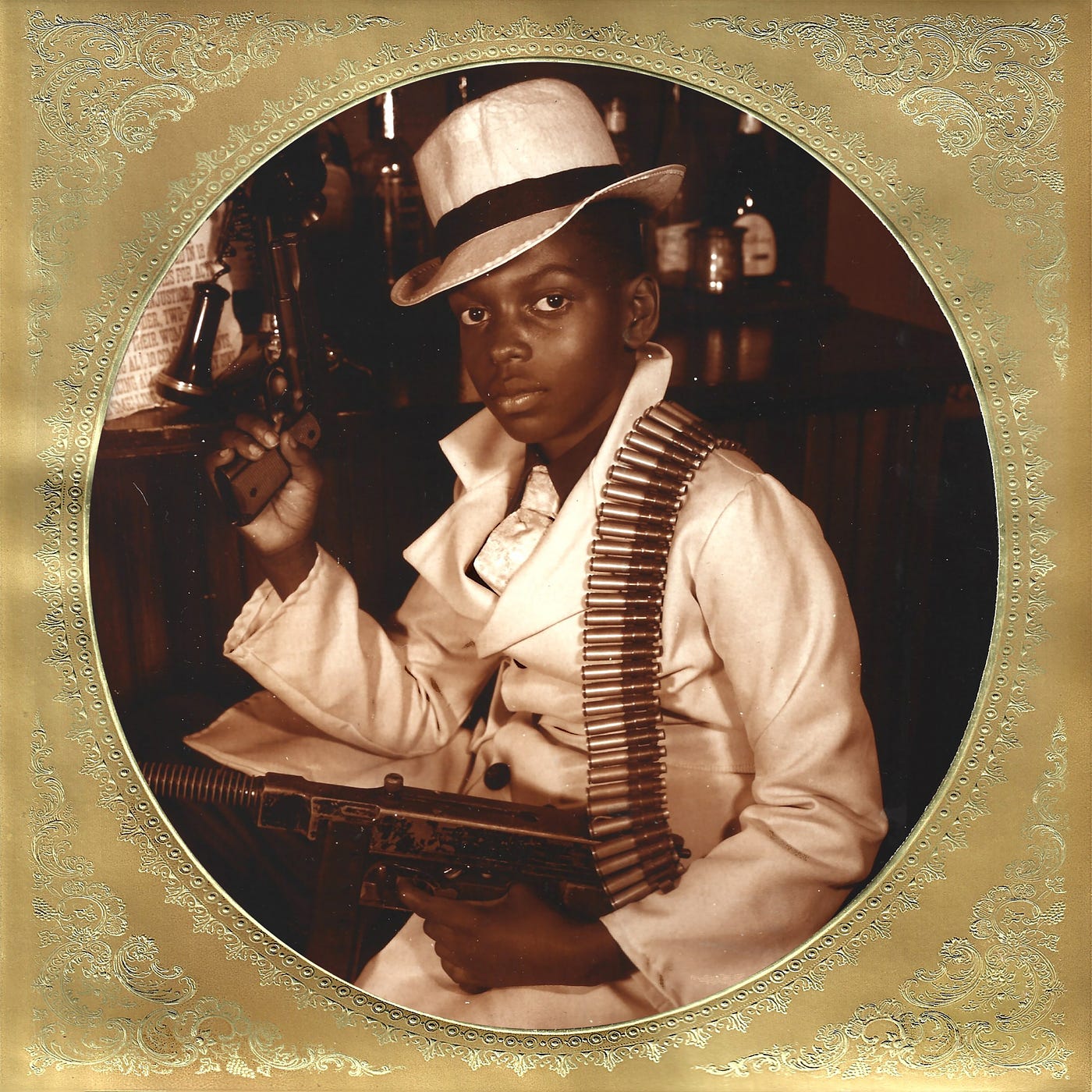
After spending fourteen years in prison, Play With Something Safe is Rosco P Coldchain’s first proper full-length since his release, produced entirely by Montreal’s Nicholas Craven, whose drumless soul-loop flips stay out of the way and let the stories run long. And the stories are staggering. On “Prayer Group,” he’s ten years old, lying in bed next to his sleeping mother, wondering if he can sell what the man in the Troop jacket and Lee jeans sells. He wore a kufi to school; kids called him Pookie, Pork Chop, Saddam Hussein. He dropped out in ninth grade. He was tired of powder milk and welfare cheese and boiling water on the kerosene heater, and watching his mother starve was eating him up, so he ran away from home, put on his LA Gears, and copped a buck-thirty pack from Brunroni at 17th and Ingersoll. On “Hold My Hand,” a mother’s crosswalk warning, “look both ways before you cross the street, hold my hand,” sits between two verses about brain matter on Louis Vuitton and buying outfits for closed caskets. Ab Liva and Jimmie D show up on the title track, both Re-Up Gang affiliates, and rap about filing serial numbers off guns and scraping pots in trap houses as if they’d all been sentenced to the same room at different times. Rosco’s grandmother shared blood with David Porter of Stax Records, and Premier kept calling the jail every year for fourteen of them. —Phil
GENA, The Pleasure Is Yours
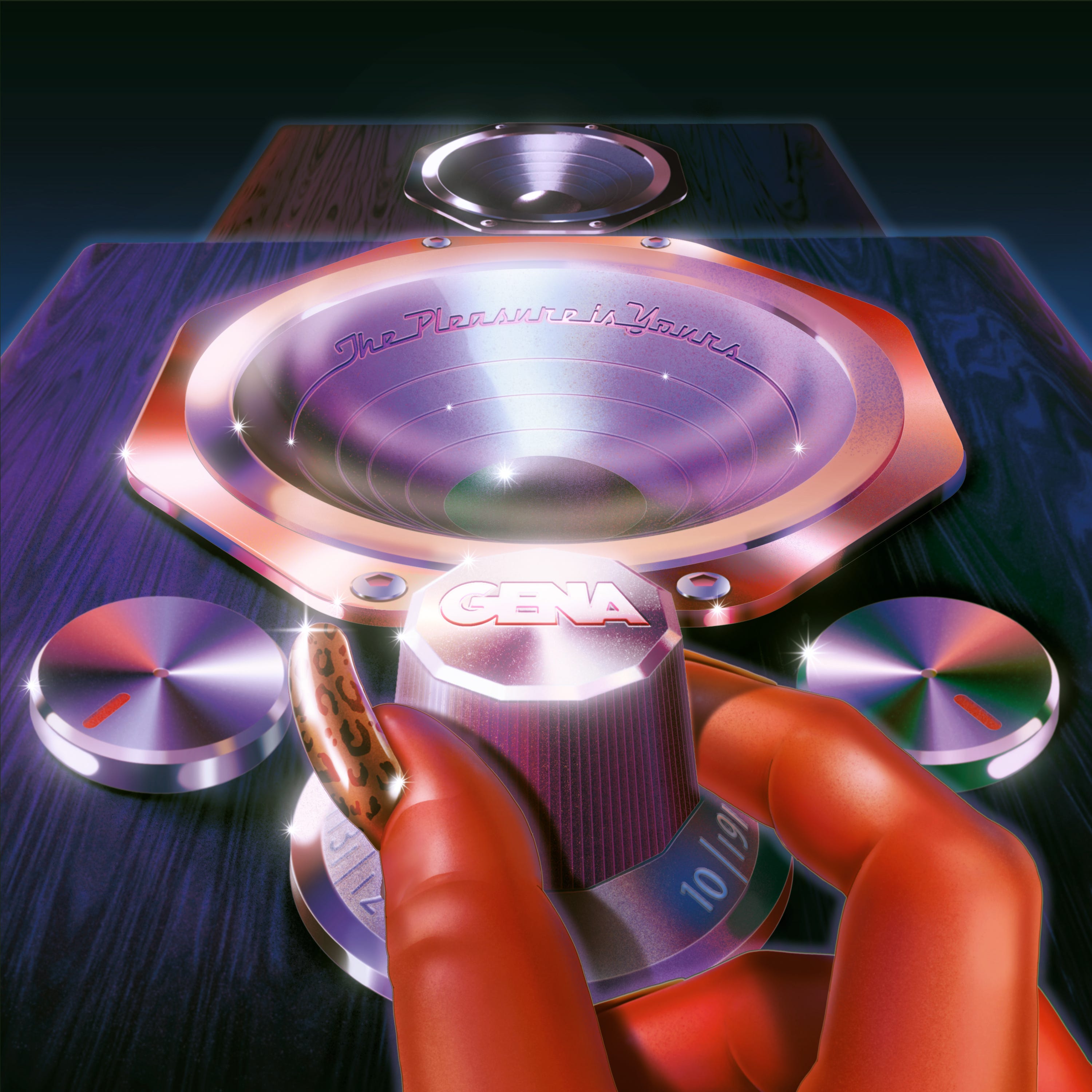
One combination we didn’t know we wanted. They were introduced to each other by a mutual friend and immediately recognized each other. Starting with shows under the name GENA, “God Energy, Naturally Amazing”, derived partly from Gina on Martin, before anyone realized they were putting a record together, Riggins has already drummed for Common, Erykah Badu, The Roots, Madlib, and left his signature feel on records of the last two decades across hip-hop and neo-soul, his solo records already a love letter to the dialog between improvisation and rhythm. Liv.e from Dallas first carved her niche with Couldn’t Wait to Tell You... and Girl in the Half Pearl, where her voice bent across the record bar by bar; here her singing, rapping, and mumbling is situated on top of a rhythm line Riggins keeps loose enough to dance in. It exists in the space between Detroit and Dallas, between Dilla’s unquantized drum beat and Sun Ra’s patience between the cosmos, and early 2000s neo-soul’s playfulness, without ever reaching for that sentimental nostalgia. —Renée Halloway
Genesis Owusu, REDSTAR WU & THE WORLDWIDE SCOURGE
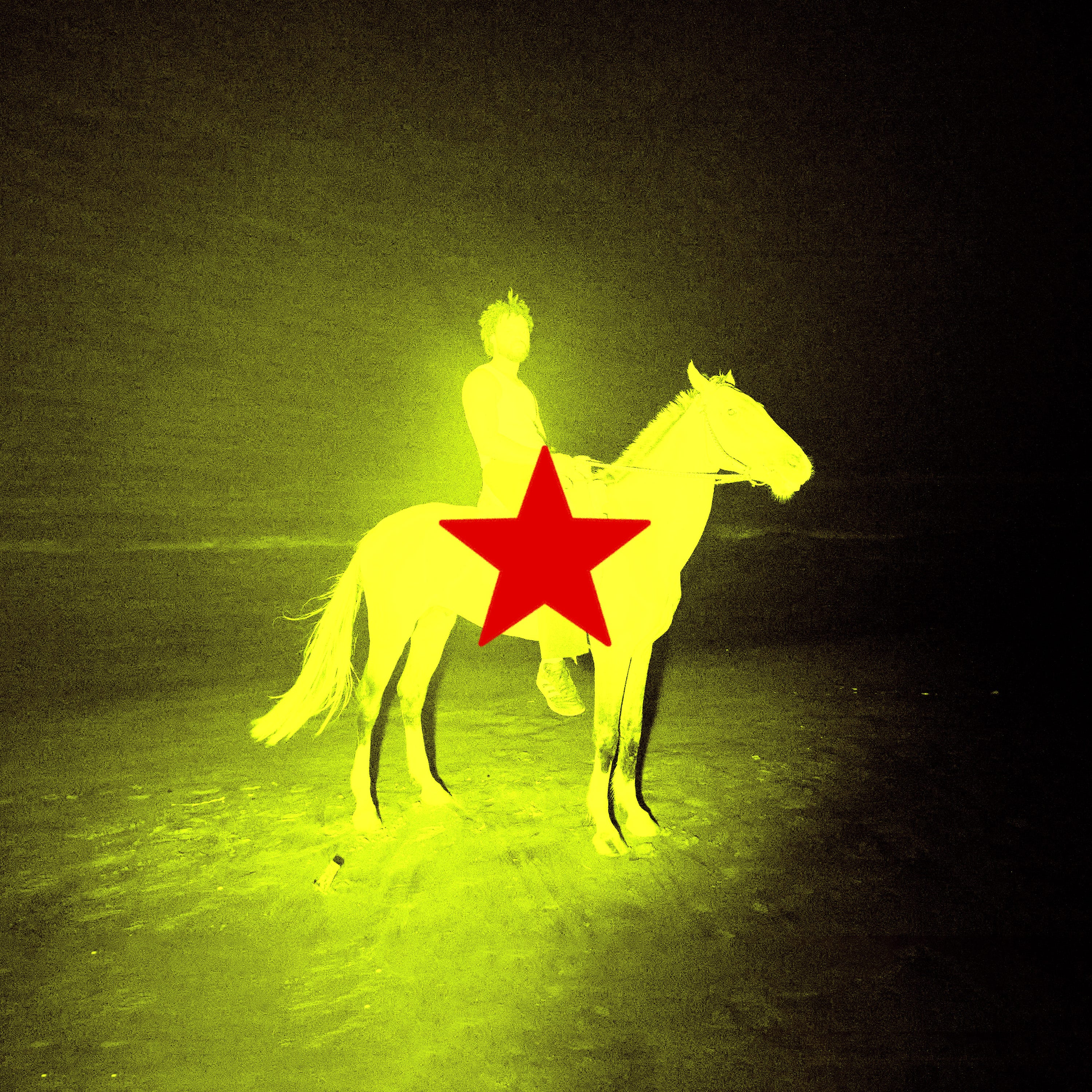
The revamped church in South Wales, where Genesis Owusu confined himself with producer Dann Hume, as a place for radical transformation. There were ten-hour long jam sessions. Vocals were recorded in the nave during church bark and bass dictated the volume levels, and people slept in the pews. This is how the Melbourne rapper decided to go for the big follow-up to his back-to-back ARIA Album of the Year wins and tours as the supporting act for Paramore. He decided to destroy everything in his path and to build everything back up from the ground. With REDSTAR WU, who is Owusu’s clear-minded, alter ego who is “seeing the world as it is,” he uses every genre in his reach. Industrial stomp reduces a church organ on the title track. Breakbeats snap with neo-soul bass. A four-on-the-floor house kick shares the low with programmed drums that swap to live in the middle of a song and then back again. The political overview is broad and based on Owusu’s perspective. “The Worldwide Scourge” describes a white woman crossing the street in fear and contains a bar with rappers degrading women. “Should I blame her for seeing me and picturing a threat/Or the centuries of whipping that’s keeping women in debt?” Owusu asks over a liturgical organ and then later reveals that his own solidarity merch was made by exploited labor in the middle of his verse. There is no one to save us from the mess of real time. —Phil
Mýa, Retrospect
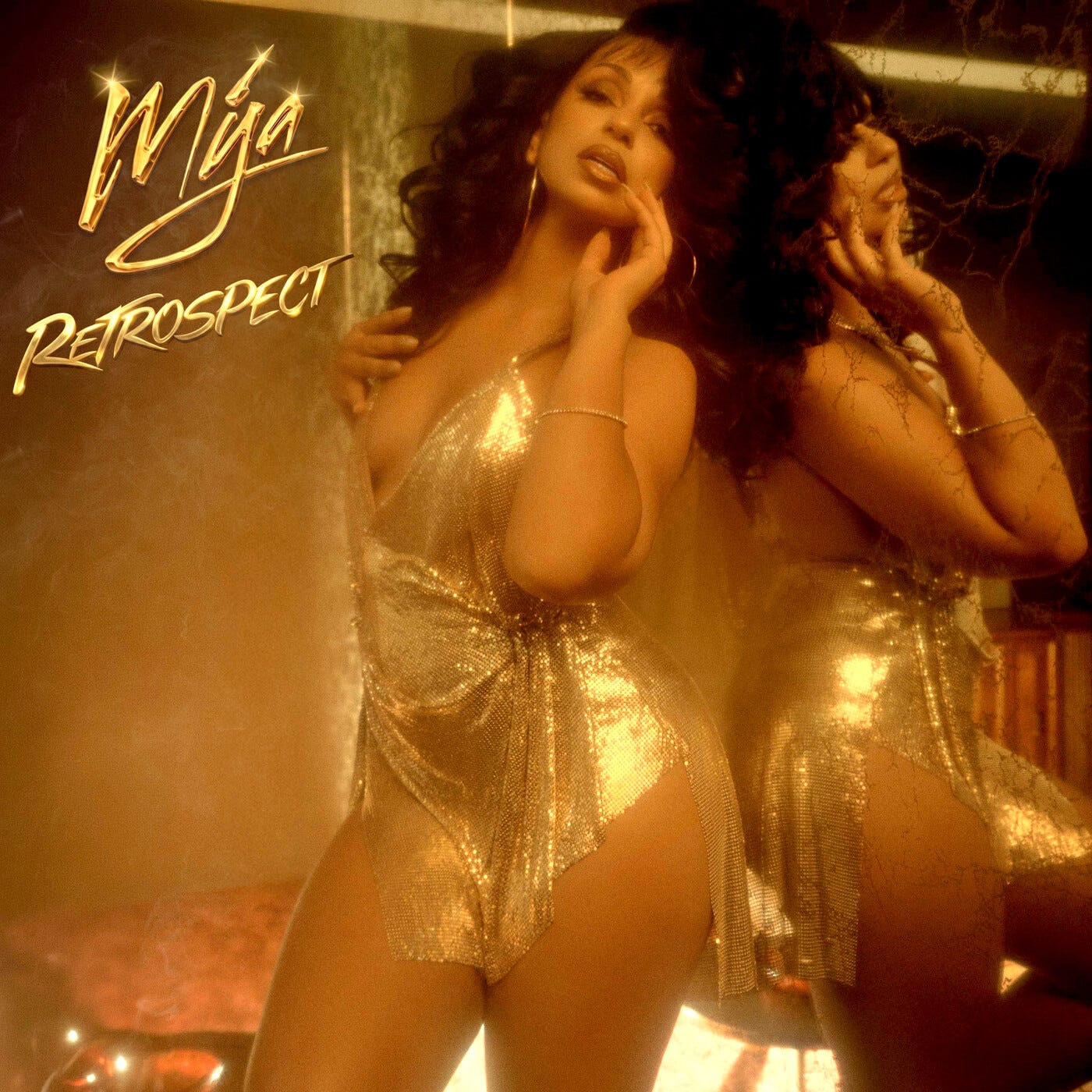
Ten years in the making, Retrospect is the most patient work from Mýa. This album is a time capsule drenched in funk but refuses to look back. While on The Boy Is Mine Tour, along with Brandy and Monica, Mýa sang Case of the Ex in front of those who purchased tickets for their nostalgia of 1998. Mýa was the only artist to present new music in performances that did not call for it. LaMar My Guy Mars Edwards, the producer for this album, built all 16 tracks without samples on period gear. This was a rule Mýa learned from Prince, in order to maintain creative control. The commitment is strong in this album. LaMar Edwards decided to stick to one production style in every song, and the remixes only focused on stretching the time, along with guest appearances that added little to nothing.
Mýa performs with the same expressive exuberance as Rick James did in 1981. She drops an ad-lib in the style of a Teena Marie “whoo!” and carries the same song in the form of a reference, not a quote, as she does in “Remember the Time.” From the early age of two, when she began ballet and learned music through the physical movement of other bodies in the absence of a melody, she brings this foundation to every song. The same vocalist comes forth when she transitions between the quiet of “Good to You” and the fullness of the space that “Saturday Night” occupies. What does it mean to call an album Retrospect if every one of its thirteen tracks looks forward to tonight? Mýa spent a decade working on an album about the present and named it after the past. Perhaps the separation between title and content is intentional—the D.C. area code sung in the refrain becomes both an inside joke and map coordinates, locating the funk where it started while moving it in a new direction. —Brielle Saint-Amour
Bruno Mars, The Romantic
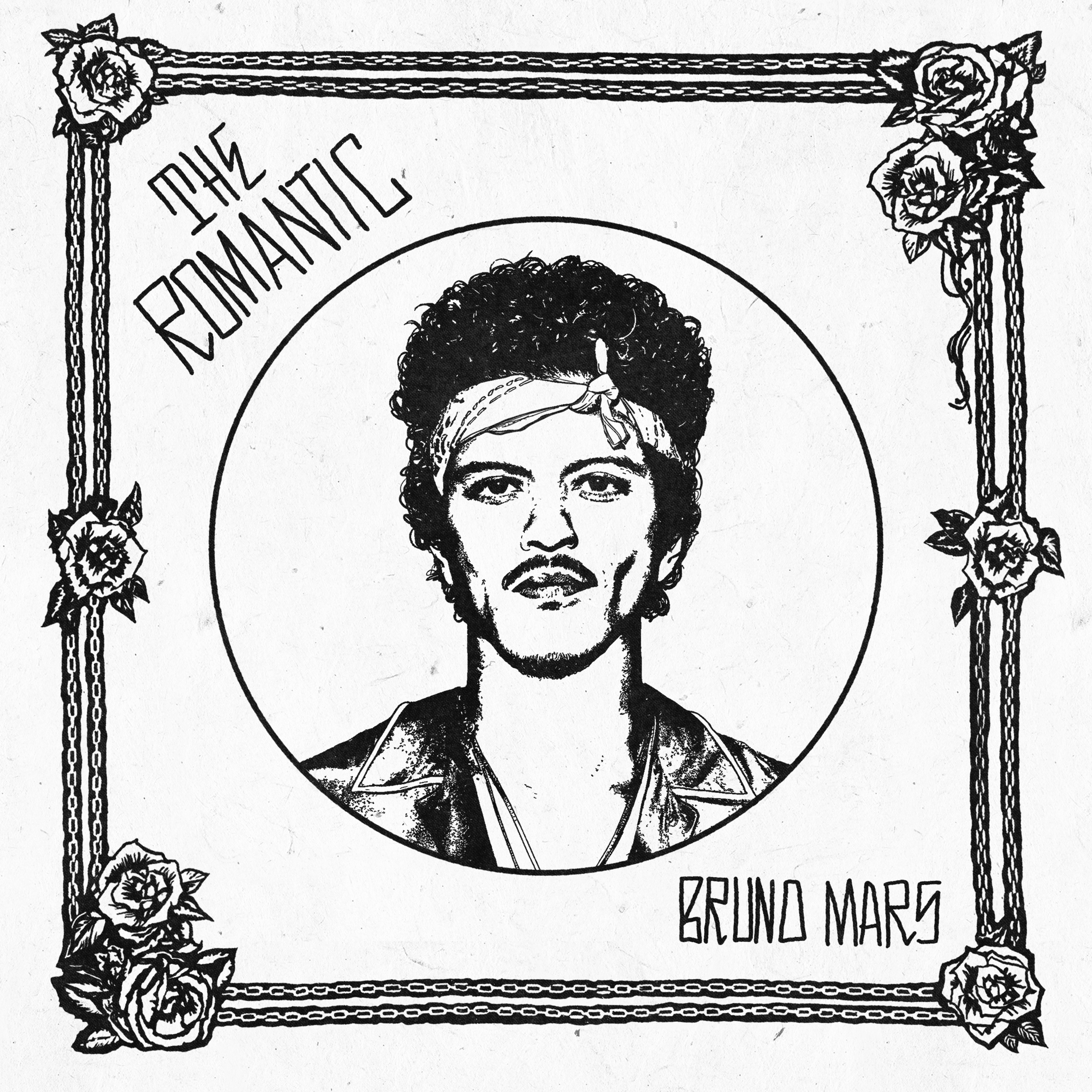
Any of the tracks on The Romantic could cap a wedding reception; none of them would speed up the floor; they would all slow-drag it into oblivion. It’s the first solo LP Bruno Mars has dropped since 24K Magic in 2016; he’s spent the interim on a Las Vegas residency, a partnership with Anderson .Paak, proving he could make number ones without a whole LP behind them, turning forty while making this one—it sounds exactly like that. It leans much harder on cha-cha, bossa nova, and late-‘70s quiet storm than anything he’s ever attempted, trusting the songs to carry their own weight. D’Mile, who provided the warmest corners of the Silk Sonic LP, co-produced every track here, and it results in arrangements that are band-driven, analog—even Dave Guy, Homer, and Leon Michels from Big Crown Records lend contributions. “Risk It All” is understated in its ballad form opening; it’s an even bigger risk than Mars taking any single track on his LPs. His whole instinct is to grab you by the collar first. “God Was Showing Off” borrows its horn arrangements from what appears to be the outer rim of heaven itself. Mars is grinning through every single line of its best couplet: “Is ‘Heaven’ your name, or is it ‘Divine?’ Don’t matter, girl, it’s gonna look good next to mine.” Why You Wanna Fight finds an artist returning to begging; he’ll call her mama and plead with her friends, in the tradition of the take where Al Green goes to his knees over “Let’s Stay Together.” —Chiamaka Boudreaux
Arima Ederra, A Rush to Nowhere
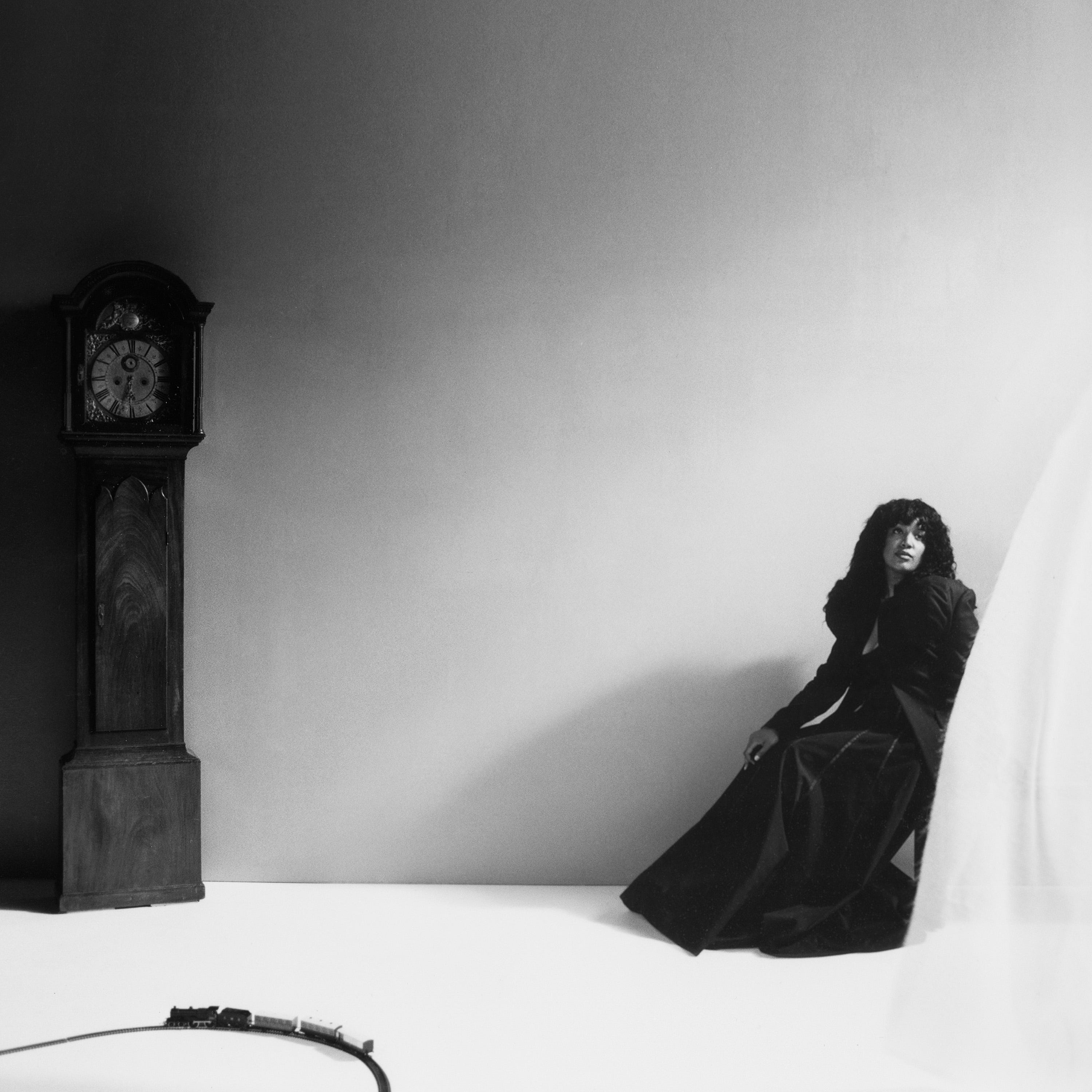
Arima Ederra had a debut EP in 2012, which she removed from streaming, another EP in 2016 and in 2022 her first album, An Orange Colored Day. A decade between the first recording and the first album. A Rush to Nowhere, her second came out four years after, and it sounds like she’s finally stopped asking permission before saying what she feels she means. Fifteen tracks, co-produced mostly with Halm, co-written between Lake Arrowhead, Havana, and Oaxaca and each one of them asking the same question from a different direction. Why am I running, and what have I missed while I have been doing so? On “Shine,” a friend of hers has died, Arima is direct: “God, I just want my friend back.” She’s running out of shoulders, and she’s running out of days; she wants to watch her friend grow old. “Heard What You Said” is about a friend of hers telling her how they didn’t understand her, but by then it was too late; “You froze me in time while you cling to the past/And you missed how I’ve changed/So you could never know who I am.” The butterfly landing on her knee on “Heads or Tails,” she wishes forshadow dancing by the soccer park, a voice in a little desert breeze, “Are you still whole?” she asks, “You’re all I know.” —Maya LeRoux
Jai’Len Josey, Serial Romantic
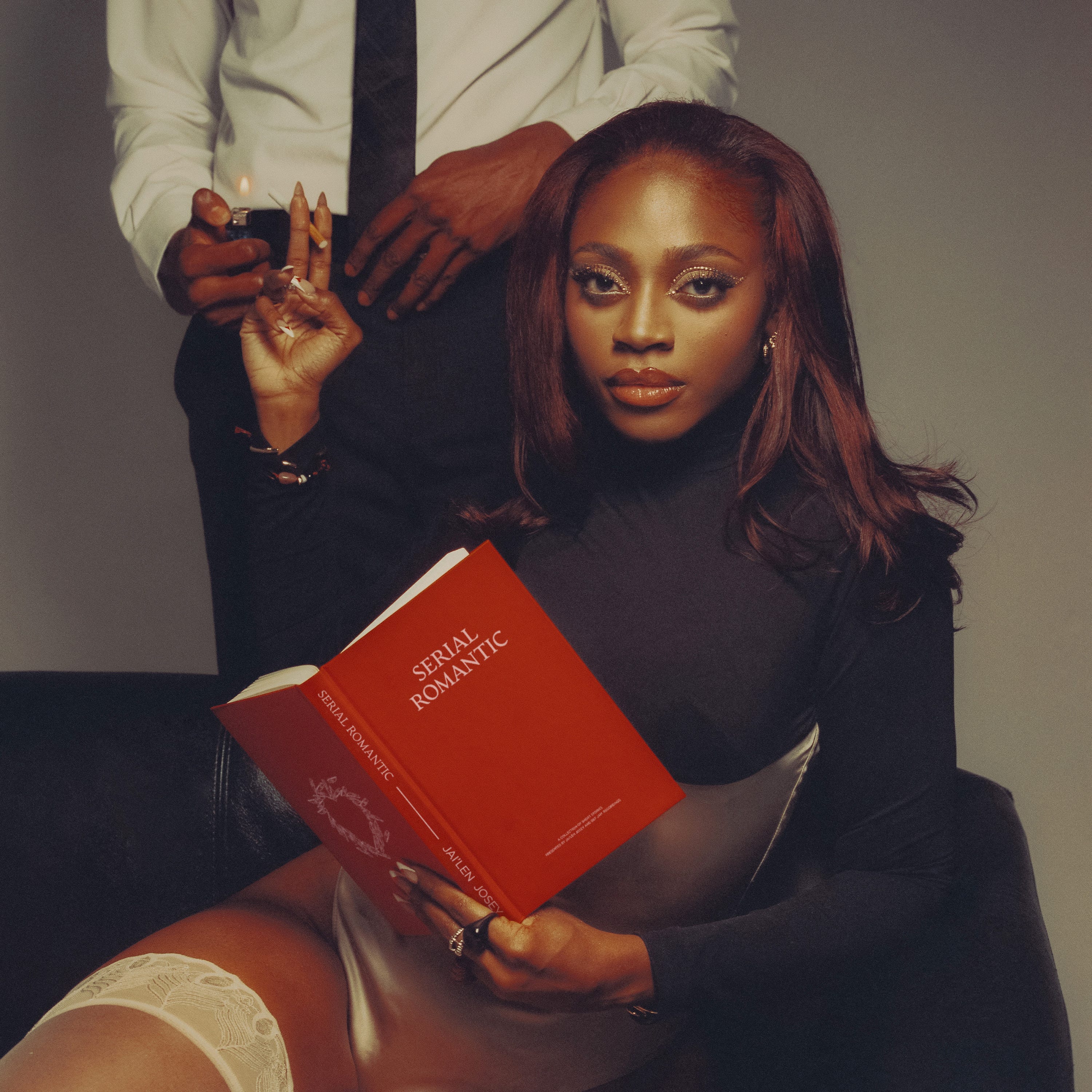
Before she had a label deal, Jai’Len Josey co-wrote a platinum single for Ari Lennox, held writing credits with SZA and Babyface, and left a Broadway role as a teenager to go make music in Atlanta. When Tricky Stewart heard six songs she’d written and produced on her own, he added six of his and stitched a debut from both batches, giving Serial Romantic a tonal restlessness that a single-session record wouldn’t have. It is an album about wanting (every permutation of the word), and none of it comes with an apology. On “Housewife,” she’s trading the Hennessy and the six-inch Pleasers for a honeymoon in Bali, singing “I ain’t never, ever think I’d submit to no nigga” with genuine surprise at her own willingness. On the title track, she’s reserving a table at Benihana’s for three and listing her ideal lovers like a dinner order. Halfway through, a phone skit about her man at Nobu with another woman splits the record in half, and the restaurant upgrade is the wound. Josey never reconciles any of it. She’s a self-described hot girl playing Lois Lane on one cut and ordering the buffet on another, and Serial Romantic holds all of those women in the same tracklist. The only complete track produced by Josey is the last song. On the last song, Josey has reached a point where she chooses to stop giving. Under twelve tracks created in collaboration with Tricky Stewart, The-Dream and Leon Thomas, the last song is an expression of what Josey chose to save for herself as she walks into the vocal booth alone and sings the lyric, “How silly would I be if I had none left for me?” After giving everything she has on thirteen tracks, the last track represents an act of acceptance of what she has chosen to keep for herself. —Sydni Carter-Reed
Liam Bailey, Shadow Town
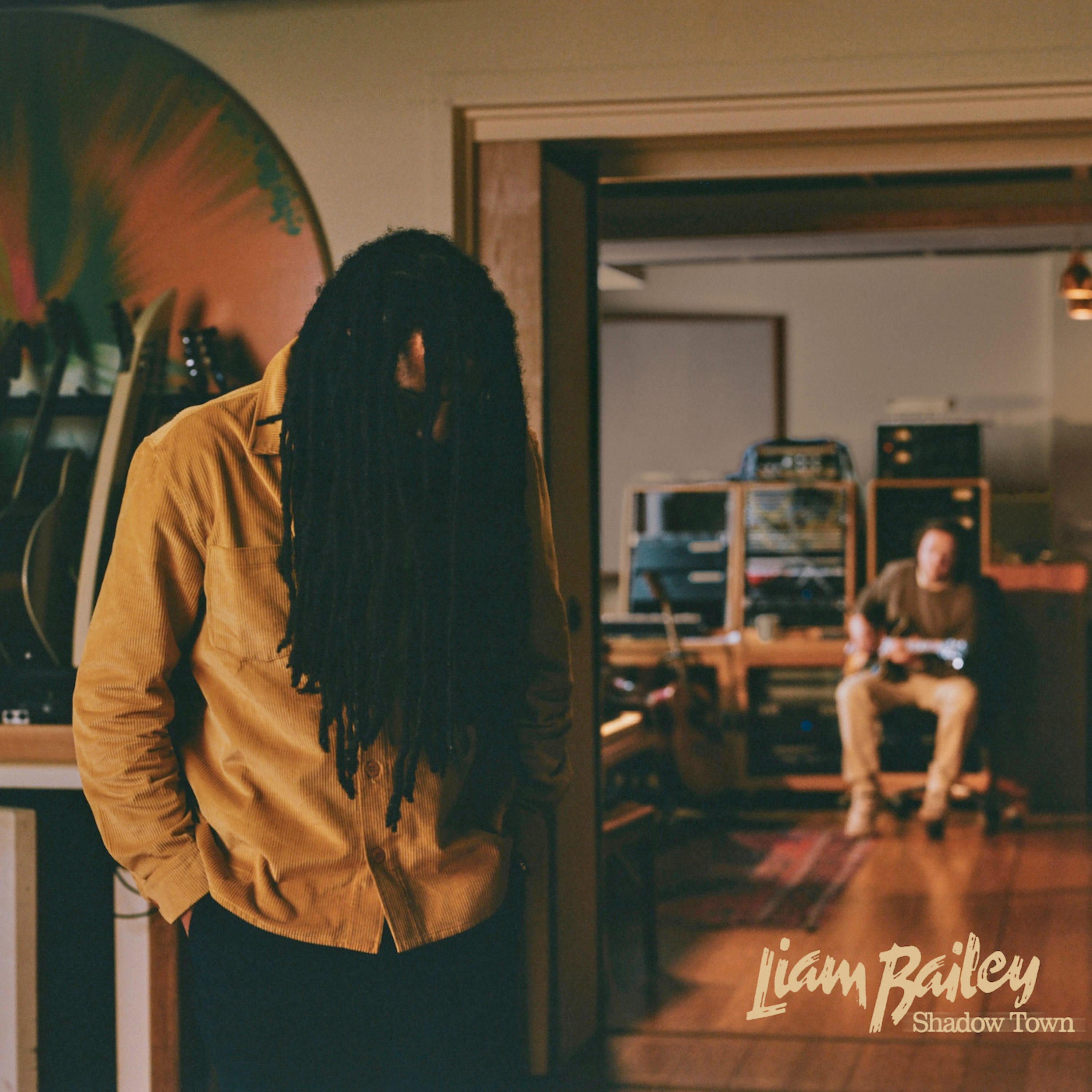
Amy Winehouse heard a demo and signed Liam Bailey to Lioness Records in 2010. Polydor shelved his debut over disagreements. He co-wrote Chase & Status’s “Blind Faith” and watched it hit No. 5 on the UK Singles Chart, then gave the next decade to records with Salaam Remi, Leon Michels, Sleaford Mods, Lee “Scratch” Perry, and Paul Weller while the industry kept trying to file him under one genre at a time. Bailey’s the son of an English mother and a second-generation Jamaican English father; he grew up speaking Patois with extended family, a Nottingham accent at home, and something closer to London everywhere else. For the length Shadow Town arrived, five studio albums deep and released independently through his own Home for Us imprint, Bailey had already been reggae (the Big Crown records with El Michels Affair), folk (the Thrill Jockey album with The Accidental), and soul (the Hogarth-produced debut that Polydor tried to own). Bailey freestyled the songwriting in Jimmy Hogarth’s Hampstead living room, and “Trauma” came from a psychology book he picked off the studio shelf, its clinical definitions of childhood damage (“Child’s sense of self is repeatedly threatened/But the child in no way possesses protection of essence of themselves”) feeding straight into a chorus where he chants “Trying to kill it, kill it, kill it/Killing your life away.” On “Got to Love You,” he croons, “It’s okay, now honey, I won’t change,” and then the culmination arrives: “Break me/Call me/And I beg you, beg you, beg you.” —Alexandria Elise
Michelle David & The True-Tones, Soul Woman
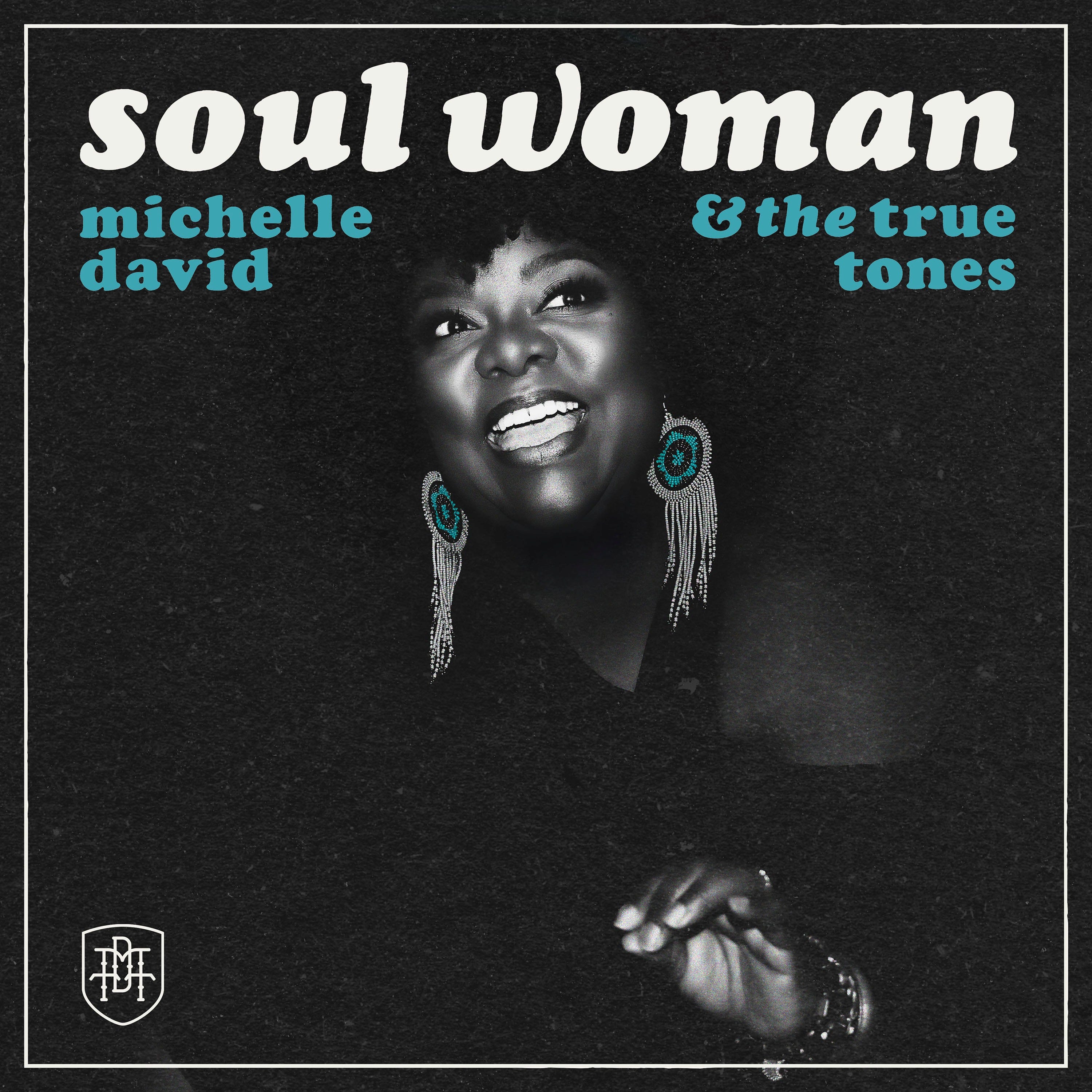
“How can I ask others to take time to reflect on their lives if I’m not doing the same myself?” Michelle David pondered before creating Soul Woman, and her seventh effort with The True-Tones was born of that question, turning its gaze inward. Their 2024 LP, Brothers & Sisters, cast a wide net across the world and its conflicts. Soul Woman is a self-analysis. A New Yorker raised in church, David started singing at age four and fronting her own group at five. In the years between, she worked on Broadway and backed Diana Ross, and eventually ended up forming The True-Tones with Dutch musicians Paul Willemsen, Onno Smit and Bas Bouma in the Netherlands. Soul Woman is lush, the way three men playing their tight, warm analog arrangements in a nice room always will be. Willemsen and Smit alternate guitar and bass parts while Bouma provides a dry, punching rhythm section; small, the arrangement leaves a huge lane open for David’s voice. “Running” barrels forward like a fast, breathless Northern Soul floor-filler, the kind of song made for sprinting toward the dance floor in advance of the refrain. A similar, uptempo gait is also found on the blues-informed, all-the-way-through urgent “Golden Sun.” The album’s fastest track, “I Thank You,” is nonetheless driven by David leaning into the tempo and stretching her notes with the muscle memory of a church gospel shout singer. —Imani Raven
Elmiene, sounds for someone
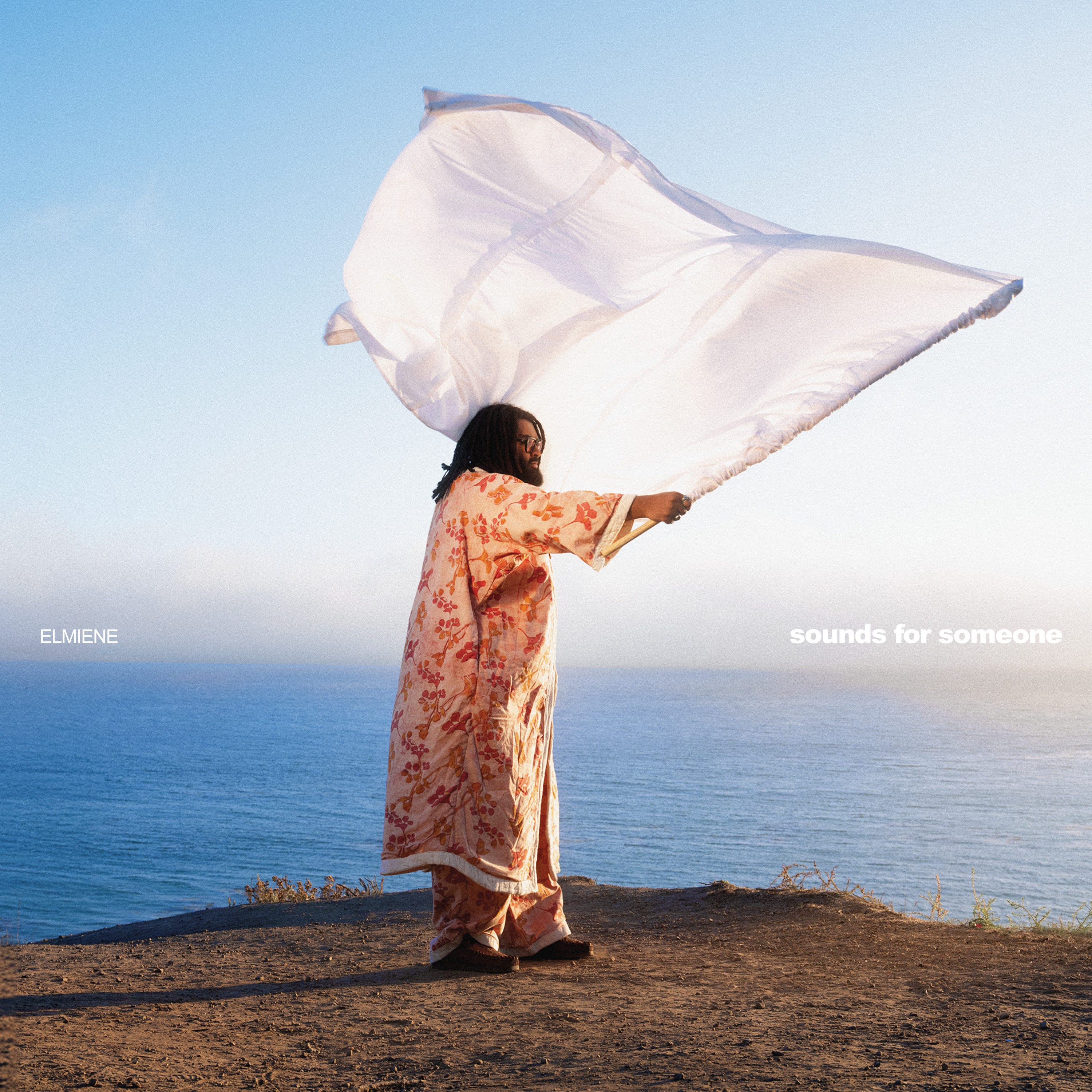
Since his virality, Elmiene released four EPs and a mixtape over the last three years with the likes of Sampha, Syd, BADBADNOTGOOD, D’Mile, and Jeff “Gitty” Gitelman, and somewhere in the middle of that realized that 7 out of 10 of his new songs were about his father. sounds for someone is that realization made manifest. On “Cry Against the Wind,” Andrew Aged and Buddy Ross lay down a woozy set of keys underneath Elmiene as he cops to the album’s ugliest line—“I’d watch the whole world drown/To see you cry again”—and then watches the tears evaporate in the wind, a punishment of its own. On “Don’t Say Maybe” Ghost-Note and No I.D. Provide him with the album’s most uptempo groove, snapping and insistent, and Elmiene use it to lose the pleading that saturates every other track. “Lie With Me” asks a lover to fake it, to lie, to allow him to believe what they don’t believe until he’s over it—which feels like pretty much the same transaction he’s attempting with his dead father on “Told You I’ll Make It” when he arrives at the house, turns the key in the lock and then can’t get the door to open. “Reclusive,” inspired by a bad spell Elmiene had in late 2024 and Biz Markie’s genius at making mundane thoughts stick, goes into the minutiae of evasion (wake up, play video games, consider leaving the house, do not leave the house). Elmiene was born in Frankfurt to Sudanese parents; was raised in Oxford by his mother; was the grandson of poets, on both sides, and musicians, on both sides. He was raised in a house where articulation was not a choice, but volumes were open to negotiation. All of these songs sound like it. —Marjani Fields
Jessie Ware, Superbloom
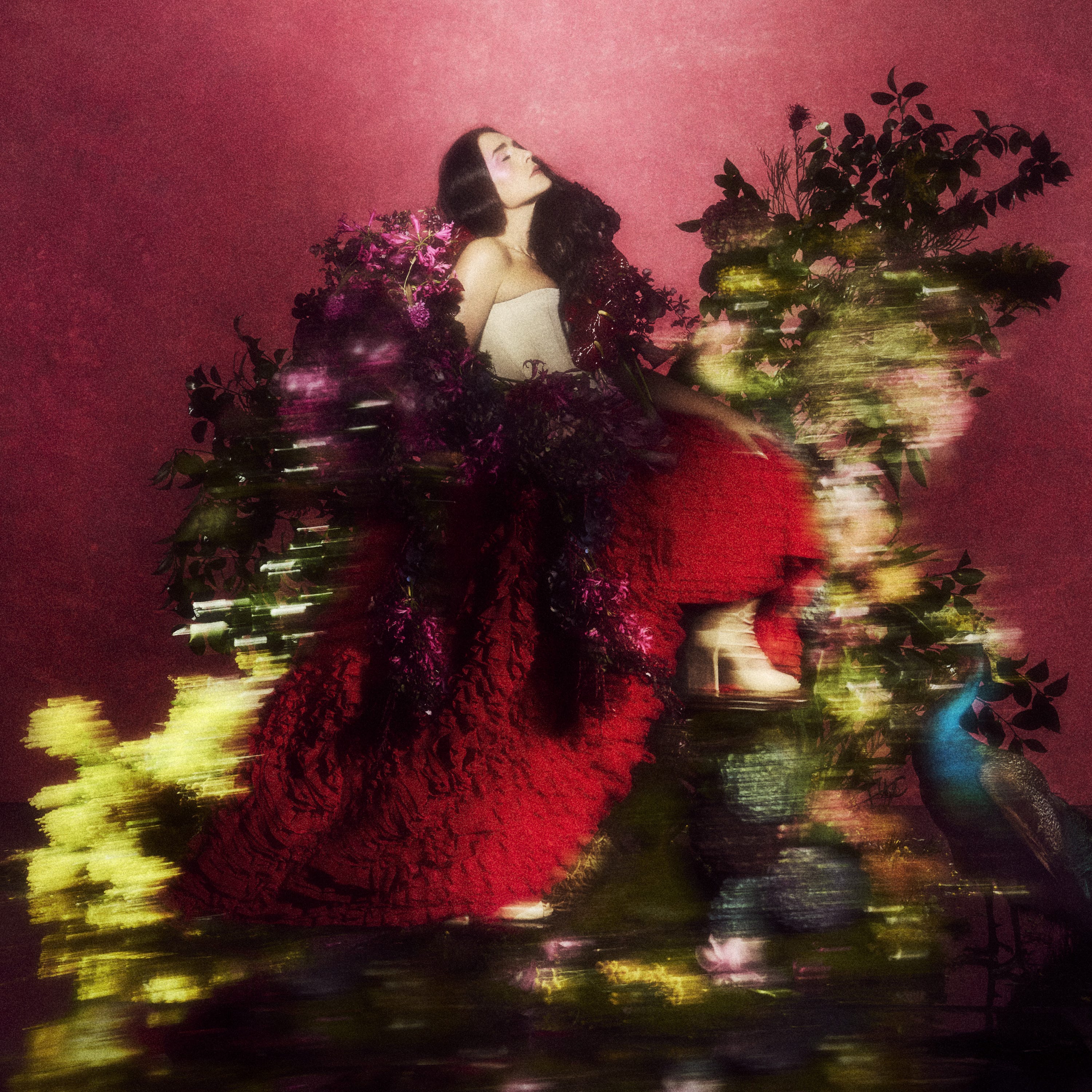
The third and final installment of her disco-pop trilogy stays entirely inside her own marriage. Superbloom is Jessie Ware’s sixth album, her third consecutive pleasure-mode outing, and the first one where the conceit is that two people in a long marriage pretend, for one night, they haven’t met. She A&R’d it herself, and she has said in interviews that the next thing she makes will move toward “synth and electronic and kind of blue and crooner-y” territory—which means the disco ends here, and she chose to end it at home. Her husband is the “you” on half the record, and a child’s voice opens “16 Summers” asking “Mom? Are you jumping, Mommy?” before Ware counts the summers she has left before the kid pulls away. The tour that closed That! Feels Good! had kick lines and sequins and an audience chanting “pleasure is a right” back at her across festival fields; this one settles for the living room, and the scale works. The disco history behind Superbloom runs through Larry Levan’s pre-Studio-54 Continental Baths and Ennio Morricone’s coyote-howl from The Good, the Bad and the Ugly. Stuart Price (Madonna, Pet Shop Boys) and Karma Kid take the Continental Baths onto a dance floor for “Sauna,” with Ware calling for “wood dropping, God-given love” over the steam. “Ride” loops the Morricone sample under a stallion fantasy, and she asks for a partner “who can go all night” over the beat. James Ford (Arctic Monkeys, Depeche Mode) takes the solo chair for “Don’t You Know Who I Am?,” the break-up fantasy at the center of the marriage record. Barney Lister produces eight of thirteen. He builds the mythology around what Ware has called “a garden full of gods and goddesses.” —Charlotte Rochel
Da Flyy Hooligan, Supreme Cut Untouched Magnificence II
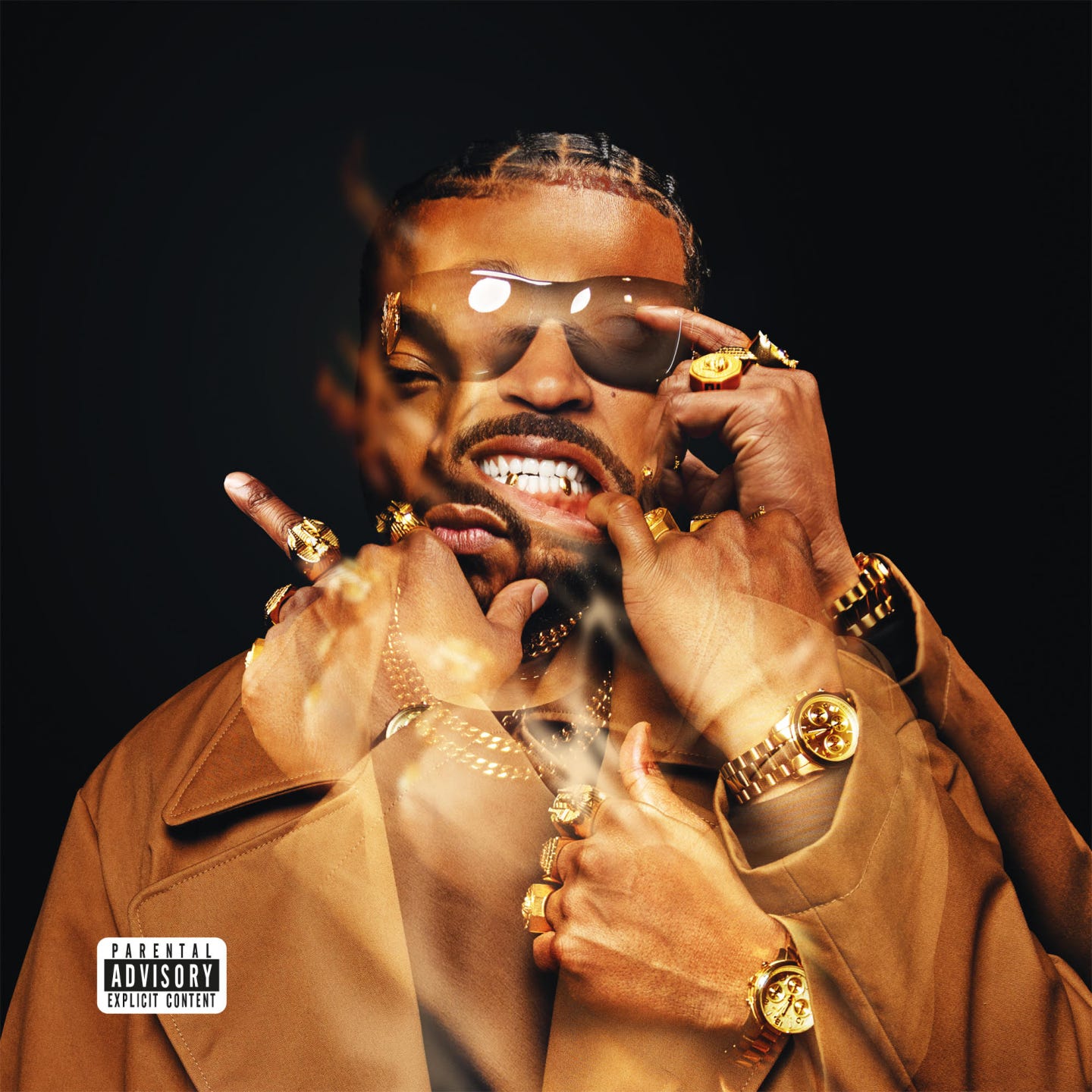
He was a kid from Nigeria who, prior to even being known as Iron Braydz, and prior to becoming Da Flyy Hooligan, moved to Harlesden, North West London, in the early 90s and found himself rhyming anywhere they’d let him. The legend has it he was backstage at a Public Enemy gig in London when Chuck D himself invited him up onstage to rhyme: he did, and instantly earned Chuck’s approval. This audacious quality, that of someone barging into someone else’s space and refusing to play second fiddle, can be seen throughout the twenty-odd releases Hooli has put out between 2017’s original S.C.U.M. and this sequel. The first one was all Agor and featured drumless, sample-based loops, indebted more to Roc Marciano and the Wu Tang Clan than any of what was going on in the UK scene at the time: this sequel follows suit with the same producer, just better guests:
Hooli snaps SIMs and ghosts his proximity before torching his burner on “Lab Coats,” a dreamy ride through White City in a Maserati followed by a dedication to Nipsey Hussle before the mood darkens on a call from his cousin explaining the infraction with “Nightingale Road,” M1 recalls Big Pun in ‘99 wanting to fight Bush for “what he done to them Haitians in Miami” in “China,” while Hooli blames Boris Johnson for COVID, and General Steele names Fred Hampton and remarks, “If you ain’t fightin’ to live, then you’re probably already dead, nigga.” A posthumous Sean Price verse appears, calling himself “the prophet of profit,” and says he was “selling them cracks with a grin, and a karate chop that could split krills in two”. He sounds loose, funny and mean. On “Expensive Wishes,” the façade crumbles. Hooli sprays on a new Versace, and his thoughts go back; days spent locked away without taking calls while his mama was worried sick, the vision of his mama’s burial and a self-perception of someone that was unable to fulfill her wish; his own brother literally sliced him open, sixty-four stitches, eight months of pain; he beat his depression, escaped the hate, and left. —Noura Haddad
RAYE, THIS MUSIC MAY CONTAIN HOPE.
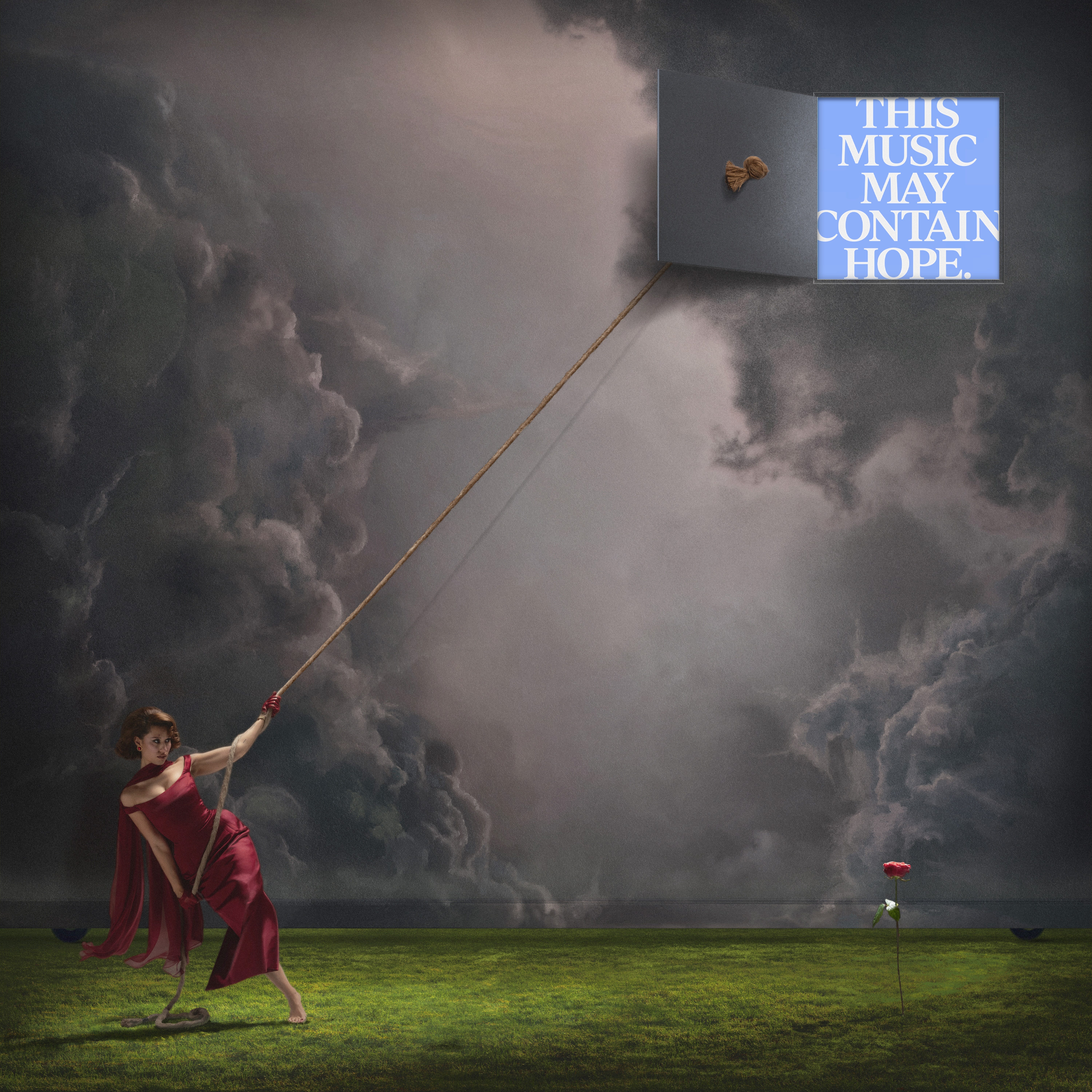
Sixteen was Rachel Keen’s age when she was signed to Polydor, seven years spent co-writing hit after hit and writing for other people. Beyoncé, Charli XCX and John Legend have all sung her work, Keen collecting her ghostwriting checks, and waiting for Polydor to finally let her produce her own work. They didn’t. Keen came out of the closet as the author of several major hits in 2021, left Polydor and was subsequently signed to distribution company Human Re Sources and released My 21st Century Blues independently. It went on to win six BRIT Awards in one night (breaking the all-time record). On THIS MUSIC MAY CONTAIN HOPE., the artist who spent her entire 20s co-writing for everyone else can finally say the thing none of her assignments asked for-that she is lonely, has been lonely for a very long time, and she suspects that it will not kill her but is nevertheless a bit more enjoyable with company.
The men who populate this album are each provided with a crime scene, the South London Love Boy taking your arse before you’re sitting, pulling up in an all-black car, spouting poetry out the window; the “WhatsApp Shakespeare” sending cursive kisses and sappy verse, refusing to put his name on paper-by the end of the track RAYE finds herself playing one of seven leading ladies in a romantic thriller to which she was not privy; 79-year-old Al Green arrives from Memphis to explain that it will always take effort, and his voice coupled with RAYE’s is perhaps the most lopsided, perfect duet recorded this year; meantime, her grandad Michael arrives in Memphis to reply to a voicemail she sent him months prior-her sisters Amma and Absolutely are clapping their hands, guaranteeing morning is coming, and the family comes through not as guests but as a reason RAYE can be this sad and still not fall apart. —Hana Beltrán
Blu & Exile, Time Heals Everything
A kid from the west side of Los Angeles famously made a rap album in 2007 about praying to the sky and believing the sky was listening back. Below the Heavens has been lionized on underground-canon lists every year since (which, admittedly, is the kind of reception most rappers would sell a kidney for), and the writer responsible, Blu, has put out records with his producer Exile all through the two decades since while the mythology of the debut kept collecting interest no royalty check could match. But what happens to a rapper who’s been understood to matter more than he’s actually been paid for? On “In My Window,” the 37-year-old Blu writes about that exact predicament, that while he didn’t get the money he envisioned, he’s “blessed enough to pay my rent with this.” Time Heals Everything, his sixth with Exile, is the record on which the duo apparently stops pretending the myth and the working rapper are the same person (and it’s about time), writing directly from the life of the guy paying rent. He separates “R-A-P” from “hip-hop” and claims the second, then spoils the claim by admitting his first Exile record was built to get shorties on the floor naked. On “Crumbs,” Rome Streetz and ICECOLDBISHOP get on a song with Blu to argue the machinery of prison and poverty from two different coasts at once. Black Thought, on the three-MC centerpiece, prays to the Lord for lighter skin and finer hair, a couplet that in most other mouths would curdle into a bad tweet but sits here inside a verse about being “out of pocket” for pride. Mach-Hommy reshapes “My Favorite Things” into an informant manual on the same track. Exile’s horns and Rhodes and chopped-soul loops still refuse every production trend since 2007. Blu has figured out how to be 37 inside the sound that made him at 24, and the harvest of hay of doing that is the whole engine of the record. —Phil
Jill Scott, To Whom This May Concern
After eleven years in between albums, Jill Scott comes back ready to fight with two fists, one wrapped in silk, one covered in brass knuckles. “I married a bitch,” she announces on “Me 4,” walking through two divorces and their aftermath with the same comical clarity she previously reserved for describing bubble baths and incense. “Dope Shit,” a mid-album track from the singer, has Maha Adachi Earth taking her word before Scott even gets to the mic. The Philly singer’s sixth album is a collection from a woman who spent 11 years collecting and cataloguing the things she had to say, discovering that the words still had relevance, and was still willing to be accompanied. Scott, on “Be Great,” layers horn blasts from Trombone Shorty underneath her self-coaching. The words, “I’ma go ahead and be great, why not?” landed without flinching, an announcement made with the confidence of someone moving at full speed. On “A Universe,” love ambushes her when she thought it wasn’t coming. “I felt like my love life was finished/I was satisfied, believe me/I got my music, my family/Genuine friends who love me,” Scott confesses on the track, and the surprised delivery rings as true as her happiness once did.
With “To B Honest,” JID’s packed-to-the-brim rhyme schemes are in sharp contrast to Scott’s airy delivery. The tension of both performances together elevates the track far beyond the sum of their parts. The groove of “Beautiful People” is warm like Valentine’s Day in one moment and critical of “algorithms and wicked, wicked systems of things” in the next. On “Pressha,” Scott takes on the burden of beauty myths, status games, and social pressures with one word, then sheds them with a laugh. This is a huge record because she had specific people to talk to on To Whom This May Concern. She delivers shade with sass at ex-husbands, delivers comfort to young women calling her about love on “Right Here Right Now,” acknowledges the DJs who propelled her career through house music, and speaks to ancestors with a familiarity that comes from an actual relationship and tending to them over the years of her silence. —Kendra Oluwaseyi
April + VISTA, Traditional Noise
A mock pharmaceutical ad opens the album: “Are you restless? Afraid? Can’t seem to focus? Reduce your existential panic today with traditional noise for anxious adults.” It sounds like someone rehearsed the gag on index cards. Then the actual music hits. The duo (April + VISTA), who met at a Busboys and Poets after April George found one of Matthew “VISTA” Thompson’s beats on SoundCloud, both fresh out of Hampton University, and they’ve been making EPs and singles for over a decade, including a 2023 project with Little Dragon, without ever committing to a full album. April writes about interior collapse using trees, brine, tides, sap, crystal lakes—the physical world doing the emotional work that abstract language won’t. On “Grotto,” she admits she ran so fast she left herself behind, then spends four and a half minutes looking for a grotto that might wipe her clean. She doesn’t find it. “The silence I pursued emptied out my mind,” she sings, and the cleansing she came for turns into another kind of loss. On “Bless My Heart,” April sings “Lost myself there, bless my heart” while TonyKILL’s ad-libs crowd the background and the song tilts toward “Flush it down the barrel of a gun.” The pharmaceutical ad promised a cure. The songs hand you the diagnosis. —Imani Raven
Aldous Harding, Train on the Island
Silence is the loudest form of expression for Aldous Harding. She uses her quiet vocal style to express the essence of being. It whispers secrets that will unravel and reweave a listener’s molecular form. With her fifth album, Train on the Island, Harding replaces her Indie scene Jim Carrey persona and places listeners into the proximity of the fragmented memories and dreams that Carrey’s character experiences in the film Eternal Sunshine of the Spotless Mind. This album begins with the track “I Ate the Most.” Synthesizers carve out the fog amidst the trees in the dawn of a new day before an on-time guitar arrival. It is very much reminiscent of Radiohead. In this singular song, we see the brilliance of Harding filling the emptiness of a life-sustained void. Wandering through this album, we note her voice is a shapeshifter. Sparse touches of a harp and some artistry based on Wooding’s style, thanks to some 1960’s maternal folk, create a nostalgic and a fusion of the unfamiliar. Many would have called it a chaotic, gothic style folk, with some dissonant and eerie harmonies, but it has transformed to be reconciling and tinged with hope. “Venus in the Zinnia” sings of self-redemption, which speaks to past regrets of hair and style, and resonates with the vulnerable sound of H. Hawkline. Hidden in her poems, the most powerful form of expression can once again be found in Harding’s soft-spoken words. —Charlotte Rochel
underscores, U
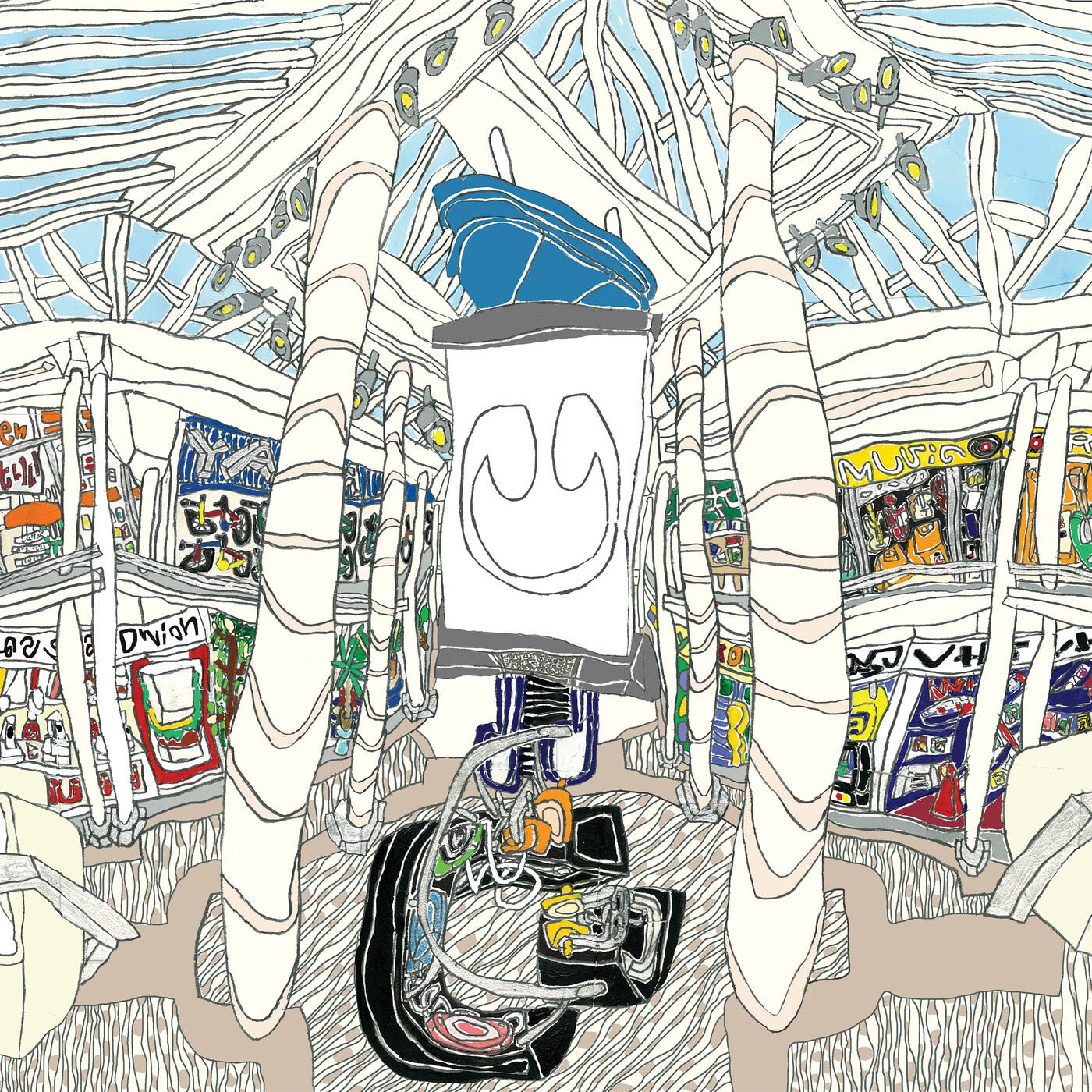
On U, April Harper Grey performed writing, production, recording, mixing, and mastering all by herself. It was done almost exclusively on a laptop and a minimalist audio interface while she toured in support of 2023’s Wallsocket—her dystopian concept album that garnered her the booking at Coachella, opening slots for Porter Robinson and Danny Brown, and an NME cover. The latter album constructed a full-fledged fictional town populated with its own set of characters; for U, Grey discards this entirely. The album opener “Tell Me (U Want It)” plays like a Katy Perry song reimagined by PC Music, Grey’s voice a processed and anxious pitch lamenting about a bad dye job and whether she’s giving the audience what they paid for. “Music” follows, a piece of production that sounds like Skrillex covering a Timbaland track, featuring Grey dreaming about the perfect song over a ripping bass line. “Hollywood Forever” allows her to bask in her fame, questioning the ethics of enjoying a negative attitude, before “The Peace” peels back every element to just a vocoder sample and then builds its own set of hyper-processed vocals and vocals until a deep bass drops, proving that her rest to release dynamic is the best of her production work to date. She was still recording this entire thing while on the road between soundchecks and hotel rooms, and that urgency imbues every single glitch-ridden and sugar-coated moment of U. —Darryl Keyes
Ari Lennox, Vacancy
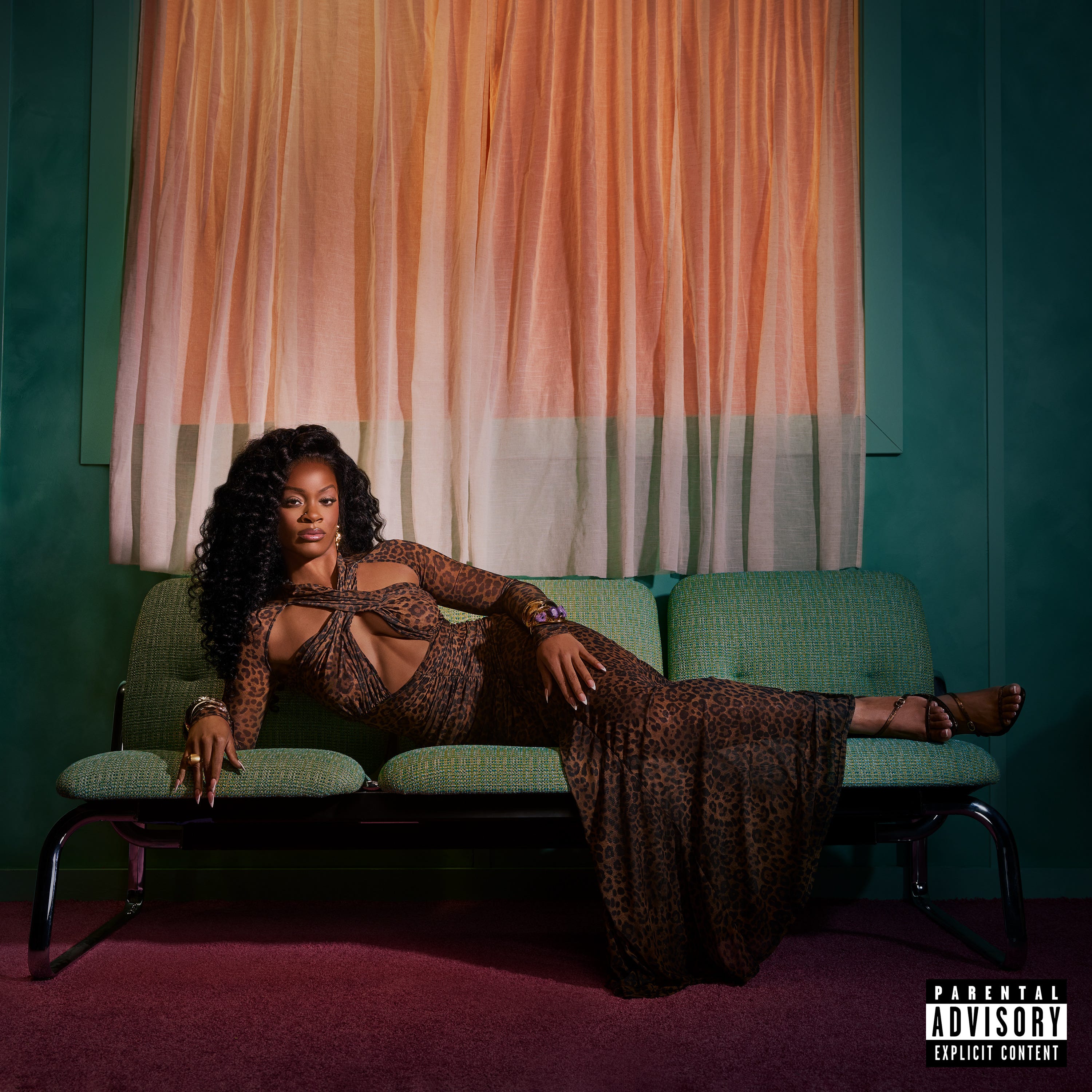
Six months after leaving Dreamville, feeling exasperated by how the label had treated her career, Ari Lennox’s most confident effort arrives. Vacancy took three years and a variety of cities—Atlanta, LA, Miami-to complete, with Elite taking charge of the final recording sessions. Lennox, with writer’s credit on every song (something R&B singers of her stature rarely have, it should be noted), starts her album with “Mobbin’ in DC,” which instantly announces her DMV affiliation with Elite’s production at its warmest and most unhurried over Lennox’s breathy alto. Her album’s heart is the title track; it finds her reunited with Jermaine Dupri and Bryan-Michael Cox, producers of her platinum single “Pressure.” Their rapport still feels intact: interpolation of the Flamingos’ “I Only Have Eyes for You” on “Under the Moon,” with the famous “sha bop sha bop” over a smoky bassline, as Lennox wails about a lover who is potentially also a werewolf. It lands somewhere between charming and camp, which, as you can probably imagine, is no small feat. Lennox masterfully balances classy and freakiness without straying too far into either: “Pretzel” (as in: she wants to be tangled like a pretzel), for example. As does “Highkey,” over a bed of fluttering vocalizations, which she chants “let me be your freaky lullaby.” She is looking backwards, but the past references never swallow up her individuality, and it is finally clear that Lennox is enjoying herself with her voice. And she’s utilizing all of it. —Jamila W.
Moonchild, Waves

The members met at USC in 2011 while they were all studying jazz. 15 years later, they’ve released their 6th album, and it’s their first one that isn’t written about romance, but instead grief. In October 2024, they had to announce Waves, the same week D’Angelo died, and it hit them hard. “He is our north star. There really wouldn’t be Moonchild without D’Angelo,” Navran said. Waves includes collaborations from Jill Scott and Rapsody on “Not Sorry,” Robert Glasper and D Smoke on “Up from Here,” Lalah Hathaway and Chris Dave on “For Yourself,” and PJ Morton on “Fear (Hey Friend),” while Elena Pinderhughes guests with a flute melody throughout. String players from the Latvian National Symphony Orchestra play on most tracks. Recording it in person shows a stark difference after Starfruit (2022), their Grammy-nominated album that they made via Zoom during lockdown. “Strong” instead asks for someone else to support: “I didn’t need you to be strong/I needed someone/Someone to cry with me/Someone to hide with me.” “For Yourself” turns its energy outward, with Hathaway proclaiming, “Dust off your cape/Get your mind right/It’s time to fight, girl/Fight for you/Don’t you let nobody/Take you back there.” “Ride the Wave” shows them surrendering to the wave of loss and rebuilding. You can see that their love songs are all gone, and in their place are songs written about getting through life without the ones that wrote them. —Yara Blake
Wendy Eisenberg, Wendy Eisenberg
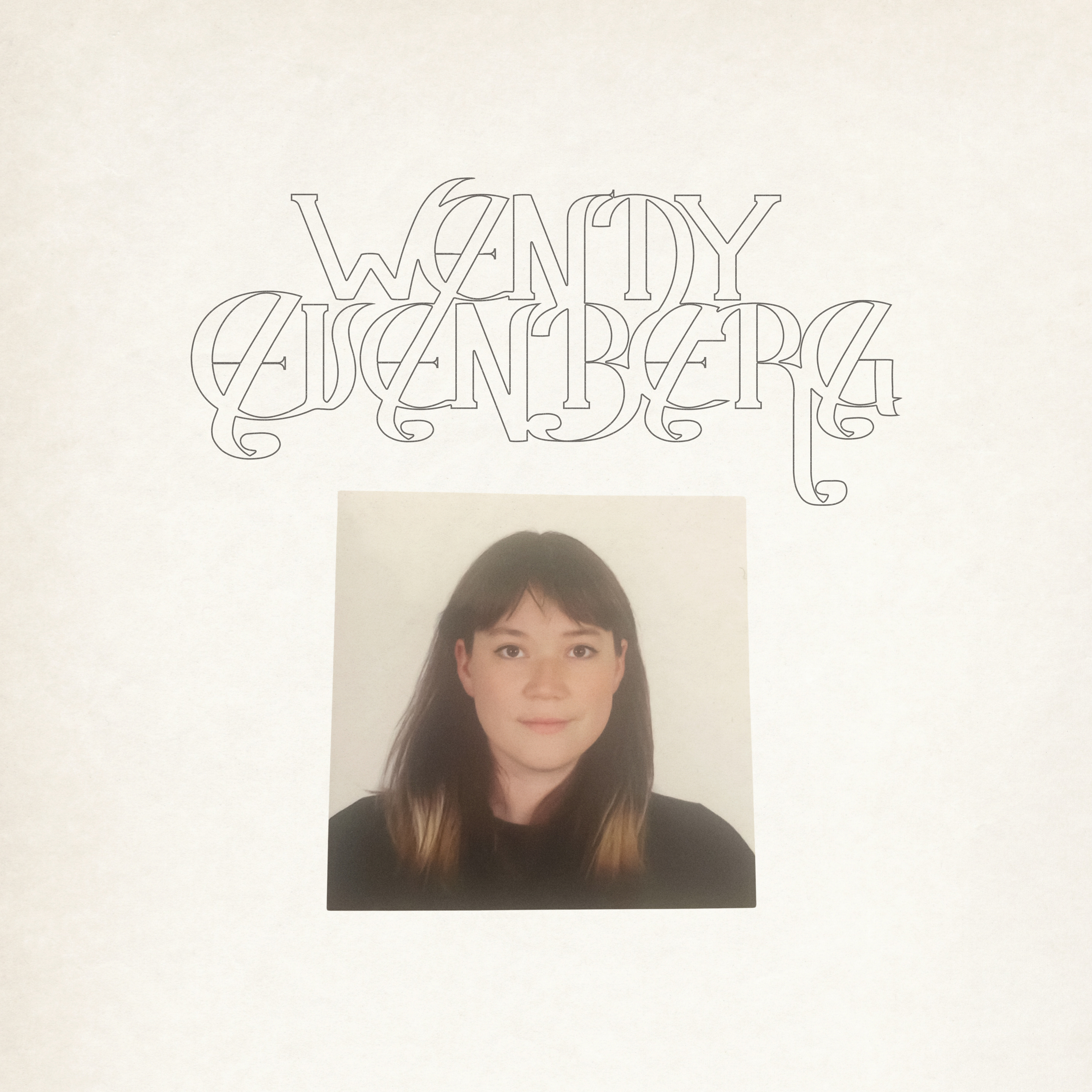
Rhetorical questions pile up across the ten songs on the Brooklyn songwriter’s first record released under just their name. None of them expect answers; the asking is the operating mode. Eisenberg has put in a decade across Squanderers with David Grubbs and Kramer, Bill Orcutt’s Guitar Quartet, the noise-punk outfit Birthing Hips, and the rock trio Editrix; 2024’s Viewfinder built a song cycle around recovery from corrective laser eye surgery. This one, produced with their wife and frequent collaborator Mari Rubio, settles into a folk-rock idiom of Willie Nelson balladry and Joanna Newsom phrasing without ever giving up the avant tendencies that made the noisier work worth following. Rubio (who records as more eaze) co-produced the record and arranged the strings, and her pedal steel turns up almost everywhere there’s a memory to color. “Another Lifetime Floats Away” rides one of those memories, a Proustian drift through highway driving and a mother making breakfast, time pulled forward and back at once. “Meaning Business,” an ode to David Lynch’s Twin Peaks, walks a Lô Borges-shaped chord progression so warm it practically hums; the recovery it describes slides into the harder work of grieving the self that didn’t survive it. “Vanity Paradox” catches the absurdity of writing about yourself for so long that you can no longer see yourself, and the melody opens on a patch of dissonance before the lyric tumbles out plainly. Whatever those questions go on to ask, Rubio’s pedal steel stays in the room. —Charlotte Rochel
Alex Isley, When the City Sleeps
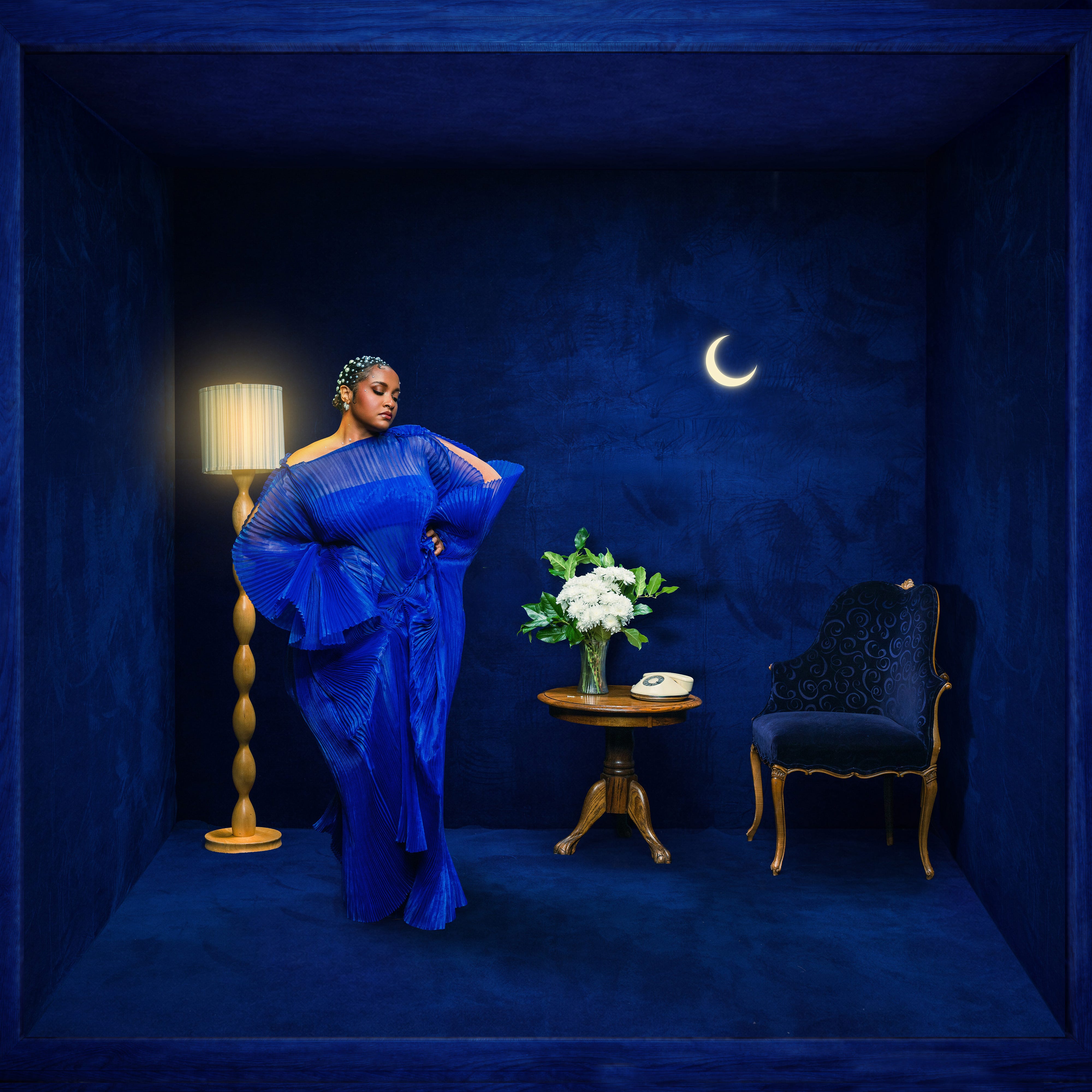
Her father, Ernie Isley of The Isley Brothers, has a daughter who was born perfect and synesthetic (she saw colors on a keyboard of chords), which made her abandon pieces when she felt the chord had come out at the wrong hue in her head. But the production from Jack Dine resulted in Wilton and Marigold, and her I Left My Heart in Ladera, with Terrace Martin, led to her first appearance on the Billboard chart and two Grammy nods. Nothing in the universe could have prepared us for When the City Sleeps, an album that moves like a late-night cruise down Vermont Ave with all the windows down and no destination in mind. It’s the songs when Isley knows the answer already and yet chooses to stand there still, that survive—“Fool’s Gold” begins with the rhetorical question, “What’s to be said of the weather when it’s raining cold,” while the D’Mile produced “Sweetest Lullaby” requests the lover leaving to at least make their departure beautiful. “If you really have to lie/Lay here with me beneath the light/Sing the song of you and I/Make it the sweetest lullabye.” She knows it’s a lie. She wants you to try harder at it. The whole album exists in the space between her unwavering assertion of self in “Mic On” and those tracks that substantiate when that belief doesn’t make her immune to wanting someone who’s unwilling to meet her halfway. —Tori Hammond