

The Handguide to Lucky Daye
David Brown left a cult at eight, got cut from American Idol at nineteen, and starved in LA at thirty. Lucky Daye is what happened after all of it. Three albums deep, nobody writes R&B like this.
The Cult
For the first eight years of his life, David Debrandon Brown couldn’t listen to music. His family belonged to a Christian church in New Orleans so restrictive that drums were considered sinful and television was forbidden. Children who talked back or didn’t finish their food got beaten. The only sounds Brown could make were church hymns and the melodies he invented from nursery rhyme books, clapping out rhythms and singing whatever words he found on the page. His parents eventually left the church after the pastor, who had been accused of molestation, made a remark toward young David that his family interpreted as predatory. By the time the family got out, Brown was eight and had never heard Prince. He had never heard Stevie Wonder, Rick James, or Chaka Khan. He went backward instead of forward, consuming decades of R&B in a frantic catch-up, soaking in everything the cult had starved him of.
The Storm
Hurricane Katrina scattered what was left. The storm killed more than 1,800 people and demolished roughly 134,000 homes; Brown’s family packed up and drove 400 miles to Tyler, Texas, then split apart once they arrived. His brothers settled in nearby cities. Brown, barely twenty, struck out alone. He had auditioned for season four of American Idol in 2005, singing Sam Cooke’s “A Change Is Gonna Come” and collecting four yes votes before being cut just outside the Top 20. The experience gave him a taste of something real, but it would take more than a decade of couch-hopping, ghost-writing, and near-homelessness before that taste turned into a career.
The Ghost Years
He landed in Atlanta first, picking up songwriting credits wherever the door cracked open—Keith Sweat’s Just Me in 2008, Ne-Yo’s “She Got Her Own” the same year, Boyz II Men’s “Believe Us” in 2014. By 2016 and 2017, he was co-writing for Keke Palmer, Ella Mai, Trey Songz, and two cuts on Mary J. Blige’s Strength of a Woman. He kept a Google Doc of every producer who gave him a number and then ghosted him; at one point the list had 223 names. Eventually he packed a car and drove to Los Angeles without stopping to sleep. The months that followed were the worst of his life. He went broke buying celery stalks from a Shell station and disguised hunger as spiritual fasting. He later told interviewers, plainly, that he was trying to die. Then he reconnected with an engineer he’d met in Atlanta named Dernst “D’Mile” Emile II, and everything changed.
The Name
He read somewhere that luck was the meeting of preparation and opportunity, and he added an “e” to his new surname the way Marvin Gaye once had—Lucky Daye was born. In October 2018, he signed with Keep Cool and RCA Records and released “Roll Some Mo,” a single so warm and buoyant it seemed impossible that the man behind it had spent months on the street. The song earned him four nominations at the 62nd Grammy Awards, including Best R&B Song and Best R&B Album for his debut, Painted.
The Run
His 2021 duets EP, Table for Two, won Best Progressive R&B Album. His sophomore record, Candydrip, put him on the Billboard Hot 100 for the first time with “Over” and landed him songwriting credits on Beyoncé’s Renaissance (”Alien Superstar”) and Mary J. Blige’s Good Morning Gorgeous, both nominated for Album of the Year. His third album, 2024’s Algorithm, earned a Best R&B Album nod and its lead single “That’s You”—co-written and co-produced with Bruno Mars—won Best Traditional R&B Performance. The trophies, the nods, and a pen that some of the biggest names in popular music keep calling on. The kid who wasn’t allowed to hear a drumbeat now commands a room with one.
Painted (2019)
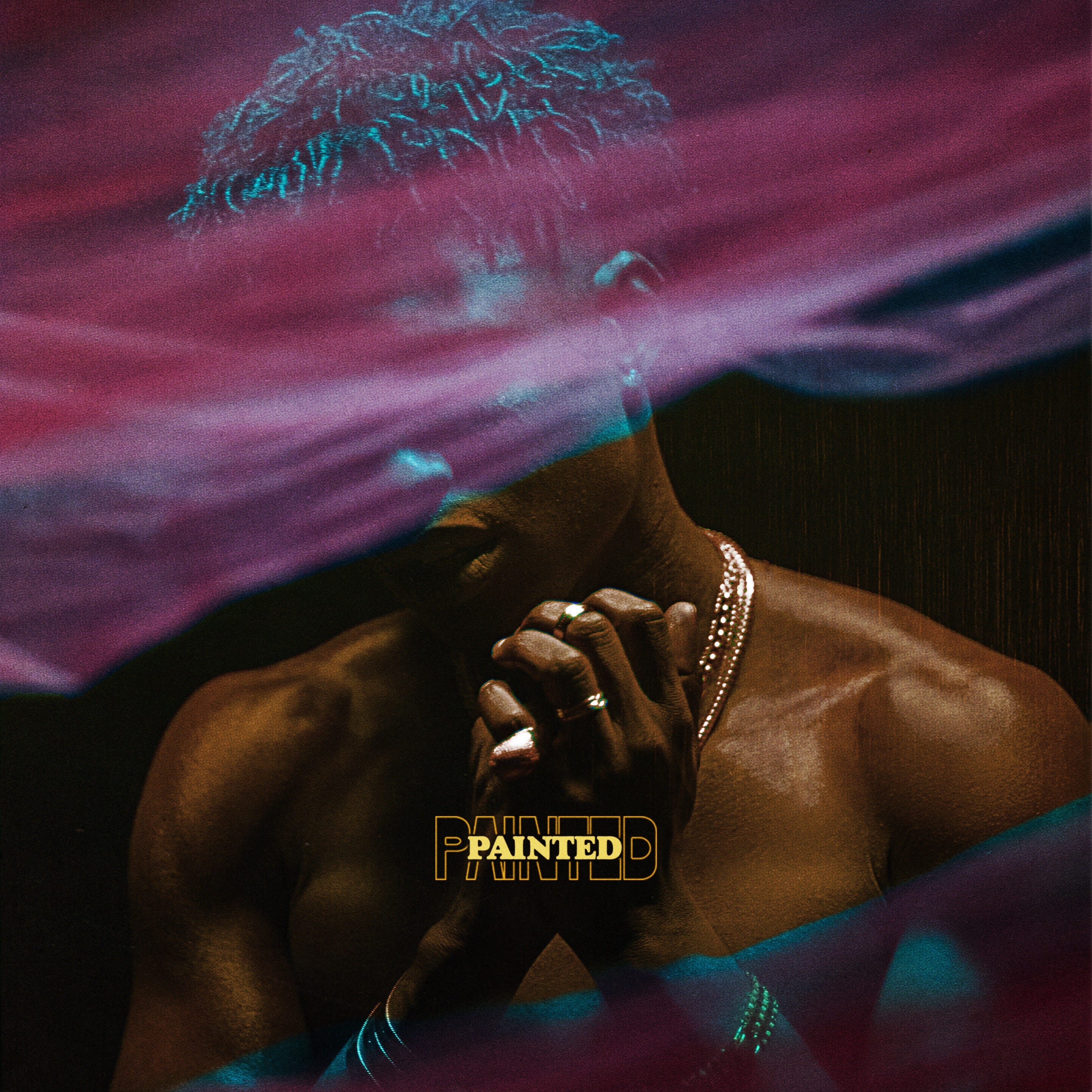
Lucky Daye and D’Mile recorded Painted over nine months in only fourteen studio sessions, and the compression of those visits shows in how tightly the album is wound. The horn stabs are precise, the vocal runs economical, the rhythm-section pockets airtight—nothing made the final cut without earning its spot. The thirteen songs were whittled from fifteen, and the four that hadn’t already appeared on the lead-up EPs I and II arrived with the album feeling like the last panels of a stained-glass window snapping into place.
“Roll Some Mo” opens the record with a pillowy guitar loop and a vocal so frictionless it nearly disguises how specific the writing is—Daye doesn’t sing about a woman in general but about time he can’t afford to waste with one, the urgency of a man who spent years losing it. “Late Night” brings out a brassy, Gap Band-adjacent strut that proves Daye’s vintage ear isn’t just reverence but fluency; he bends the funk without breaking it. “Karma,” built on a slithery interpolation of Ginuwine’s “Pony,” carries a meaning its groove obscures: Daye wrote it about a friend who killed herself, and the repeated word “karma” refers not to cosmic payback but to a person who left the earth. He told an interviewer in 2019 that people misread the song constantly, hearing a breakup anthem where he planted a eulogy.
The back half dips into slower, more conventional R&B balladry where the hooks don’t grip as hard and the energy sometimes idles, a common debut problem of wanting to show every tool in the kit rather than choosing the sharpest ones. But “Real Games,” with its Boyz II Men warmth and coiling harmonies, and “Concentrate,” a double-entendre slow jam that nods to Usher’s Confessions era with its violin runs and feathered high notes, hold their weight. Daye grew up in a place that outlawed pleasure, and the relief of finally having it bleeds through every song. The four Grammy nominations Painted received were not sympathy votes; they were a roomful of musicians recognizing someone who could do the thing they couldn’t stop trying to do.
Table for Two (2021)
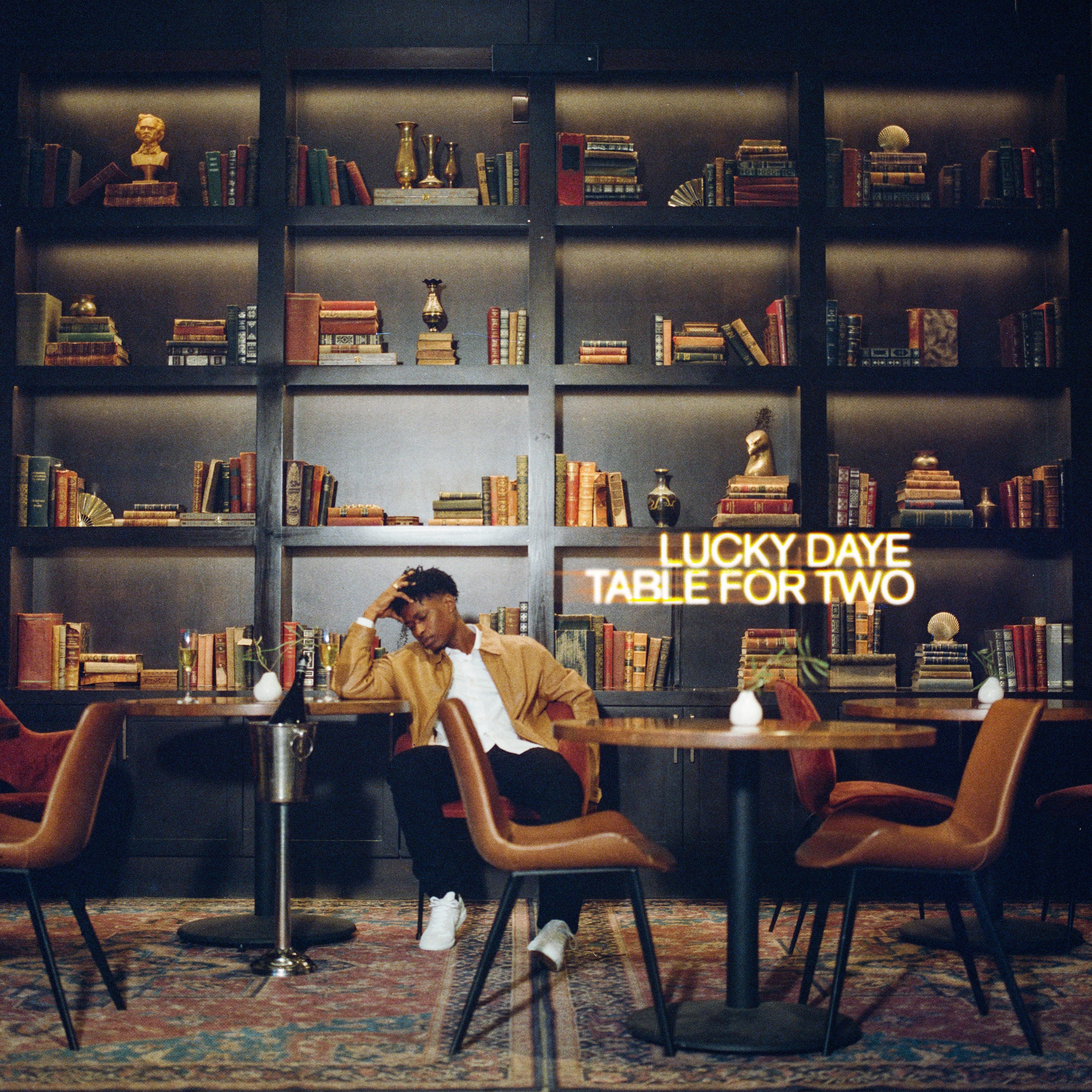
Daye dropped Table for Two two days before Valentine’s Day, and the title sounds like it promises candlelight. Instead, the seven tracks—six duets and an intro—spend most of their time documenting romance falling apart. Every song pairs Daye with a different female vocalist: Yebba, Tiana Major9, Mahalia, Ari Lennox, Queen Naija, and Joyce Wrice. He picked each collaborator because he wanted the EP to honor the women redefining modern R&B, and because the conversational format gave him an excuse to write from both sides of an argument rather than just his own.
“How Much Can a Heart Take,” the best thing here, drops Yebba into the middle of a breakup so jagged you can practically hear dishes being thrown. Yebba’s vocal on the chorus is enormous. She inherited Aretha’s habit of treating the melody as a suggestion, and Daye wisely stays out of her way, letting his verses simmer while she detonates. “On Read,” the lead single with Tiana Major9, turns the petty modern grievance of being left on read into a full emotional crisis, which is funnier and sadder than it has any right to be. “Access Denied” with Ari Lennox plays at withholding, emotional unavailability dressed up as self-protection, and Lennox’s natural tartness sharpens Daye’s sweeter tone.
The EP won Best Progressive R&B Album at the 64th Grammys, Daye’s first trophy. Twenty-two minutes was enough. He explained the concept in an interview by saying he wanted the songs to feel like entering a dating app and living through a relationship inside it—the intro even rattles off social media platform names. If you play the tracks in reverse order, starting with “Falling in Love” instead of ending with it, the narrative flips: a couple falls for each other, rides a brief high, curdles, and splits. Whether Daye planned that architecture or whether the songs just happened to fit both directions, the ambiguity is part of the fun.
Candydrip (2022)
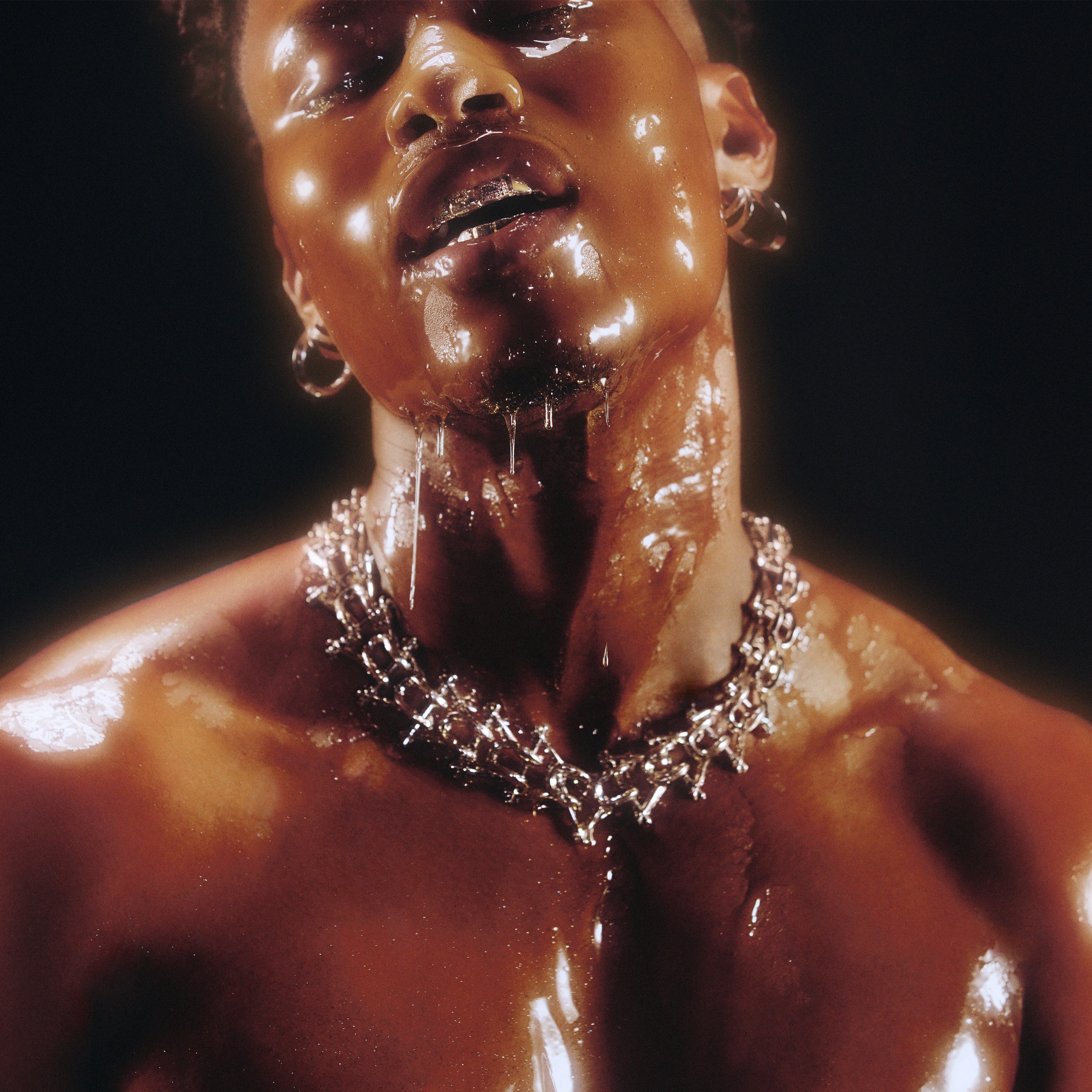
D’Mile returned to produce, and the first thing you notice on Candydrip is that the drums hit harder. Where Painted furthered cushioned grooves and muted tones, Candydrip opens with “God Body” featuring Smino, a track so loaded with live horns and snapping percussion it could score a Blaxploitation car chase. Daye had privately worried that going more mainstream would alienate the niche audience that had carried him through the EPs and the debut; the worry was warranted but, as it turned out, unnecessary. Candydrip is absolutely his pop play, and it’s also his most disciplined front-to-back.
“Over,” the lead single, borrows a string sample from Musiq Soulchild’s “Halfcrazy” and repurposes it under a plucked acoustic melody while Daye sings about knowing a relationship is toxic but not having the discipline to leave. The sample is brazen. Soulchild was singing about the same damn thing in 2002, and Daye earns the reference by not flinching from how pathetic it feels to repeat someone else’s mistake twenty years later. “NWA” with Lil Durk is the most polarizing moment, a deliberate pivot toward trap cadences and choppy rap delivery that sticks out in the tracklist like a sneaker at a black-tie dinner. It isn’t bad, just obviously designed for a different room.
The title track itself, a slow-drip seduction song with a bass line that shifts under your feet, captures Daye’s best trick. He can sound explicitly sexual without ever tipping into vulgarity, a balance that most of his peers forfeit within the first bar. “Guess” borrows from Usher’s “U Don’t Have to Call” and gets stickier with each spin, the sort of deep cut that outlasts the singles because nobody wore it out on first contact. “Fuckin’ Sound” closes the standard edition with a choir, an organ, and Daye moaning his way through a gospel-adjacent ode to physical pleasure. The audacity of blending church instrumentation with bedroom subject matter is not lost on a man who spent his first eight years being told that both were sins.
Candydrip debuted at sixty-nine on the Billboard 200 and got Daye nominated for Best R&B Album again. More importantly, the songwriting credits stacked: Beyoncé’s “Alien Superstar” on Renaissance and the title track of Mary J. Blige’s Good Morning Gorgeous both carried his name, landing him two Album of the Year nominations in the same ceremony as someone else’s employee. The boy who grew up banned from secular music was now writing hit records for the biggest woman in popular music. The check cleared before anyone outside of the credits page noticed.
Algorithm (2024)
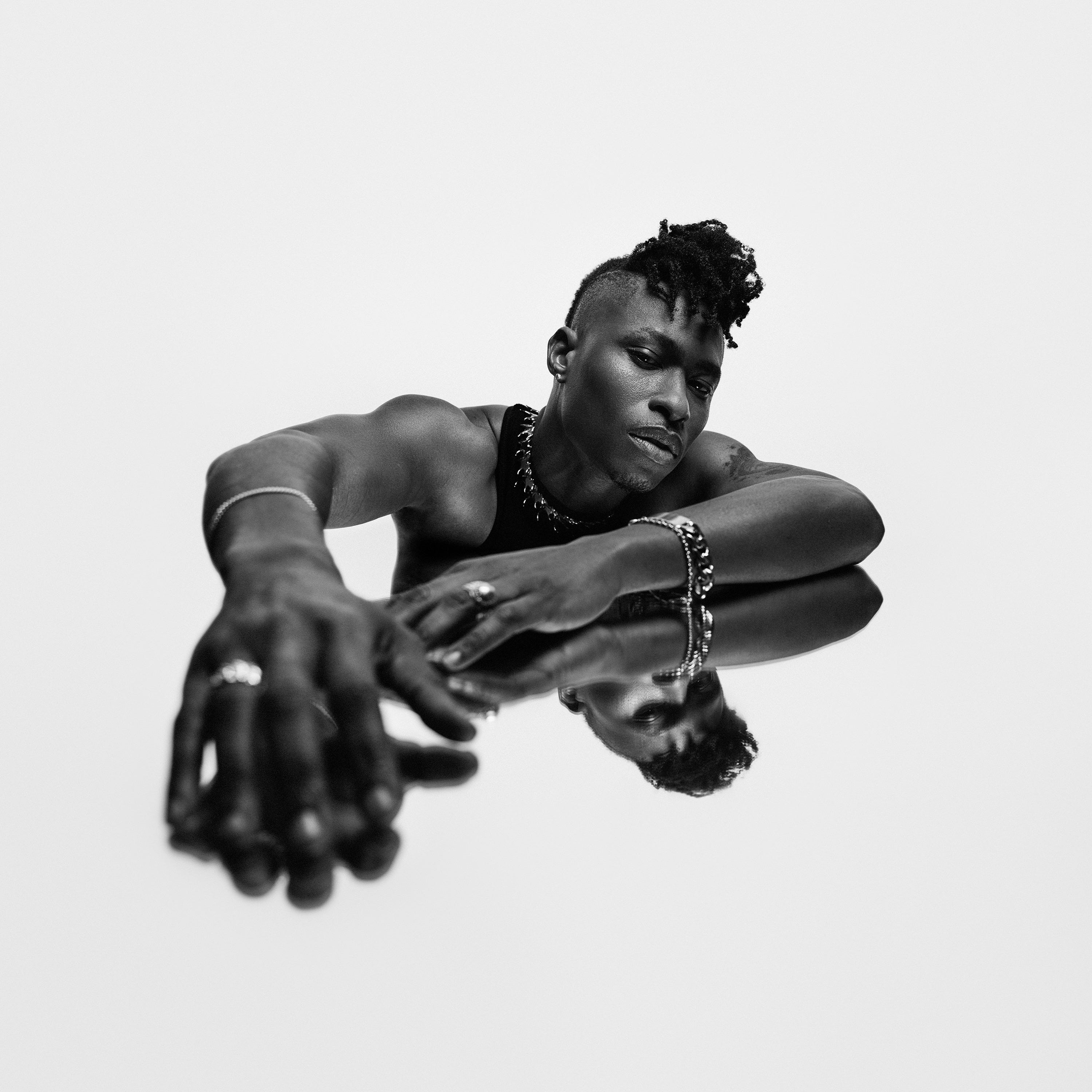
From the first seconds of “Never Leavin U Lonely,” electric guitar licks rip across the speakers in a way that neither Painted nor Candydrip prepared anyone for. Algorithm is Daye at his most aggressive and his most tender within the same tracklist, a fourteen-song set that swings between arena-rock energy and pillow-soft balladry with a confidence he hadn’t shown before. He said in an interview that the album was “a new beginning” and that he was done feeling boxed in, and for once the promotional quote matches the product.
“HERicane” is the single that justifies the entire shift. Built on a punning title and a swaggering funk-rock riff, the song radiates Lenny Kravitz heat without photocopying it. Daye’s vocal is slipperier than Kravitz’s, more prone to curling into falsetto at the top of a phrase, and the production (still D’Mile, still lethal) keeps the drums snapping underneath the guitars instead of drowning in them. “Soft” flips the register entirely, a yacht-rock drift about surrendering to public affection, cuddling, and other behaviors that get men teased. Daye commits to the tenderness with zero defensive irony, and the track benefits from his refusal to wink. “That’s You,” co-written and co-produced by Bruno Mars, won Best Traditional R&B Performance at the 67th Grammys and became Daye’s first number-one hit on the Adult R&B Songs chart. Mars’s fingerprints show up in the pristine arrangement, but the lyric belongs to Daye. He catalogues the luxury and status he’s accumulated only to realize that none of it substitutes for one specific person.
“Top” is the album’s most explicitly carnal moment, and Daye sells it with an eagerness that stops just short of desperation—you believe him when he says he’s willing to go anywhere for this woman because his delivery sounds like a man sprinting, not posing. “Blame,” a duet with Teddy Swims, is the second half’s heaviest moment, both singers confessing the ways they failed their respective partners over a bluesy, horn-laced groove. The back end of Algorithm doesn’t sustain the voltage of its first seven or eight songs; the self-actualization interludes slow the momentum more than they deepen it, and that is not a bad thing. But the highs outpace anything Daye has recorded. He spent three albums earning the right to make a record this wide-open, and when the riffs kick in, you stop thinking about the quiet moments he came from and start hearing the loud ones he was always heading toward.
Best Lucky Daye Features
Lucky rarely phones his features. Across fifteen of his best guest spots, Daye adjusts his tone, timing, and temperament to fit each host, sometimes receding into harmony, sometimes bulldozing the second verse, and occasionally stealing a song that didn’t belong to him.
“Forfeit.” by Kiana Ledé (from KIKI, 2020)
Ledé spends two verses daring her man to say something slick and meaning it. Daye waits until the third verse to give the rebuttal, flipping the argument so that she’s the one pushing buttons, and by the time the two of them harmonize over the outro they’ve reached a stalemate that neither wants to break. The production is bluesy and stripped, acoustic guitar and bass holding the floor while the singers throw furniture at each other.
“Can You Blame Me” by Kehlani (from It Was Good Until It Wasn’t, 2020)
Kehlani confesses to self-sabotage over a bed of warm keys and muffled percussion, asking whether her flaws are forgivable or just predictable. Daye slips in to co-sign the mess rather than clean it up, and his presence turns the song from a solo confession into a shared shrug between two people who know they’re bad for each other and don’t particularly care.
“Look Easy” by KAYTRANADA (single, 2020)
KAYTRANADA’s production does most of the talking here, a rubbery synth shimmer that bounces like a tennis ball on hot concrete. Daye rides it with a vocal so relaxed it barely registers effort, singing about wanting a woman to slow down and stop overcomplicating things. The whole track runs under three minutes and never once raises its pulse.
“Good & Plenty (Remix)” by Alex Isley & Jack Dine feat. Masego (2021)
Isley’s featherweight soprano carries the original, and the remix stacks Daye and Masego underneath her without crowding the room. Daye takes the softest possible approach, nearly whispering his verse, which makes Masego’s sax-inflected ad-libs sound louder by contrast. It’s a song about having enough—enough love, enough attention, enough time—and nobody on it sounds like they’re in a rush.
“Anymore” by Sinéad Harnett (from Ready Is Always Too Late, 2021)
Harnett asks whether her partner still wants her, and the question isn’t rhetorical. Daye’s response doesn’t reassure her. He matches her uncertainty note for note, two people circling the same drain and both too proud to say they’ve already made up their minds to leave.
“Puerto Rico” by IDK (from USEE4YOURSELF, 2021)
IDK’s album is mostly hard-nosed rap, and Daye’s feature feels like the one room in the house with the lights dimmed. Built on a sample of The Singers Unlimited’s “Nature Boy” and Tamia’s “Can’t Get Enough,” the track lets Daye croon about escapism and warm-weather romance while IDK raps about wanting to disappear from the noise. The pairing works because neither man is pretending the fantasy will last.
“Slow Down” by VanJess (from Homegrown (Deluxe), 2021)
The Nigerian-American sisters already have one of the tightest vocal blends in contemporary R&B, and adding Daye to the mix thickens the harmonies without muddying them. He tells the woman to pump the brakes on the relationship, but his delivery suggests the opposite—every note pushes forward even as the words ask to wait.
“You Want My Love” by Earth, Wind & Fire (2021)
Babyface produced this rework of the 1976 original, and Daye co-wrote and sang on it. Philip Bailey called the collaboration an honor, and you can tell Earth, Wind & Fire weren’t just lending their name. The horns are real, the groove is live, and Daye slots himself into the song’s legacy rather than trying to modernize it. He sings like a man grateful to be in the room, which is the correct posture when the room belongs to Philip Bailey and Verdine White.
“Feelz” by Sevyn Streeter (from Drunken Wordz Sober Thoughtz, 2021)
Streeter and Daye trade verses about catching feelings they weren’t prepared for, and the beat keeps everything at a mid-tempo simmer that never boils over. Daye’s contribution admits to wanting more than a casual arrangement without ever sounding desperate about it. He phrases the admission like a weather report—just stating what’s happening, not asking for permission.
“Good Luck” by Nao (from And Then Life Was Beautiful, 2021)
Nao’s voice is a high-wire act by itself, all helium and flutter, and Daye grounds the song without dragging it down. His deeper register gives the track a center of gravity that the airy production deliberately lacks, and the two of them sing about wishing an ex well with a sincerity that stops short of sarcasm. Daye’s deeper register gives the track a center of gravity that the airy instrumentation deliberately withholds, and together they pull off the rare goodbye song that actually sounds like it means well.
“Bag” by Col3trane (single, 2022)
Col3trane’s half-sung, half-rapped delivery floats over a minimal beat, and Daye shows up to add melodic scaffolding to a song that might otherwise drift. The subject is money and ambition, and Daye sings about chasing the bag with a lightness that makes the hustle sound recreational rather than frantic.
“Smoke” by Victoria Monét (from Jaguar II, 2023)
The opening track of Monét’s Grammy-winning debut, and Daye earned the placement. The two trade verses about wanting someone so badly the desire feels physical, like smoke filling a room. Monét’s vocal is precise and controlled, and Daye matches her by pulling back rather than pushing forward—his restraint makes the tension between them louder than any belted note would have.
“Cotton Candy Blvd” by India Shawn (single, 2025)
Shawn sings about a sweet, simple love on a street that sounds fictional, and Daye’s verse extends the metaphor without overworking it. The instrumental is pillowy and pink, all soft synths and muted snares, and Daye melts into the palette so thoroughly he’s almost part of the instrumental.
“Hard Part” by Teyana Taylor (from Escape Room, 2025)
Taylor’s fourth album is loaded with guest spots, and Daye’s appearance on “Hard Part” pairs him with one of R&B’s most physically expressive performers. Taylor sings about the difficulty of staying in love once the infatuation fades, and Daye acknowledges that he’s the one making it harder—not out of malice but out of his own inability to get out of his head. The beat keeps everything tight and dry while the vocals do the sweating.
“Make a Baby” by Tori Kelly (single, 2025)
Kelly’s voice is a technical marvel, and Daye wisely doesn’t try to out-sing her. Instead he plays the romantic lead, his part pitched as a direct address to the woman he wants to build a life with, and the specificity of the language—not “let’s be together” but “let’s make a baby”—gives the song a directness most duets dodge. Kelly and Daye sound like two adults who have already had the conversation and are now just putting it on record.