

The Handguide to R&B Concept Albums (‘80s Edition)
This guide counts “concept album” in two ways. Some of these records tell a story or use a formal device from front to back; others hold one theme/identity or one setup across most of the LP.
In the 1970s, a concept album became a staple of R&B. The singers and bandleaders produced entire records that revolved around a single theme—a suite, a story, or an image. By the end of the decade, the format had acquired its own traditions. Then everything changed, but the format weathered the changes and survived the introduction of drum machines and synthesizers into the recording studio, which was previously dominated by the rhythm section and horn arrangements; the transition from musical recordings to music videos; and the collapse of the disco trend, making the artists look for something new to reinvent themselves. Some of the most successful artists of the decade found refuge in the format to implement their boldest ideas.
The guide is the continuation of the previous ‘70s guide and follows the same rules. By “concept album” is meant both records in which a continuous story is told, or a single format is used throughout, and in which the main theme or image holds through the majority of the tracks. Through the years, from a theatrical revue to the whole nation.
Parliament, Trombipulation
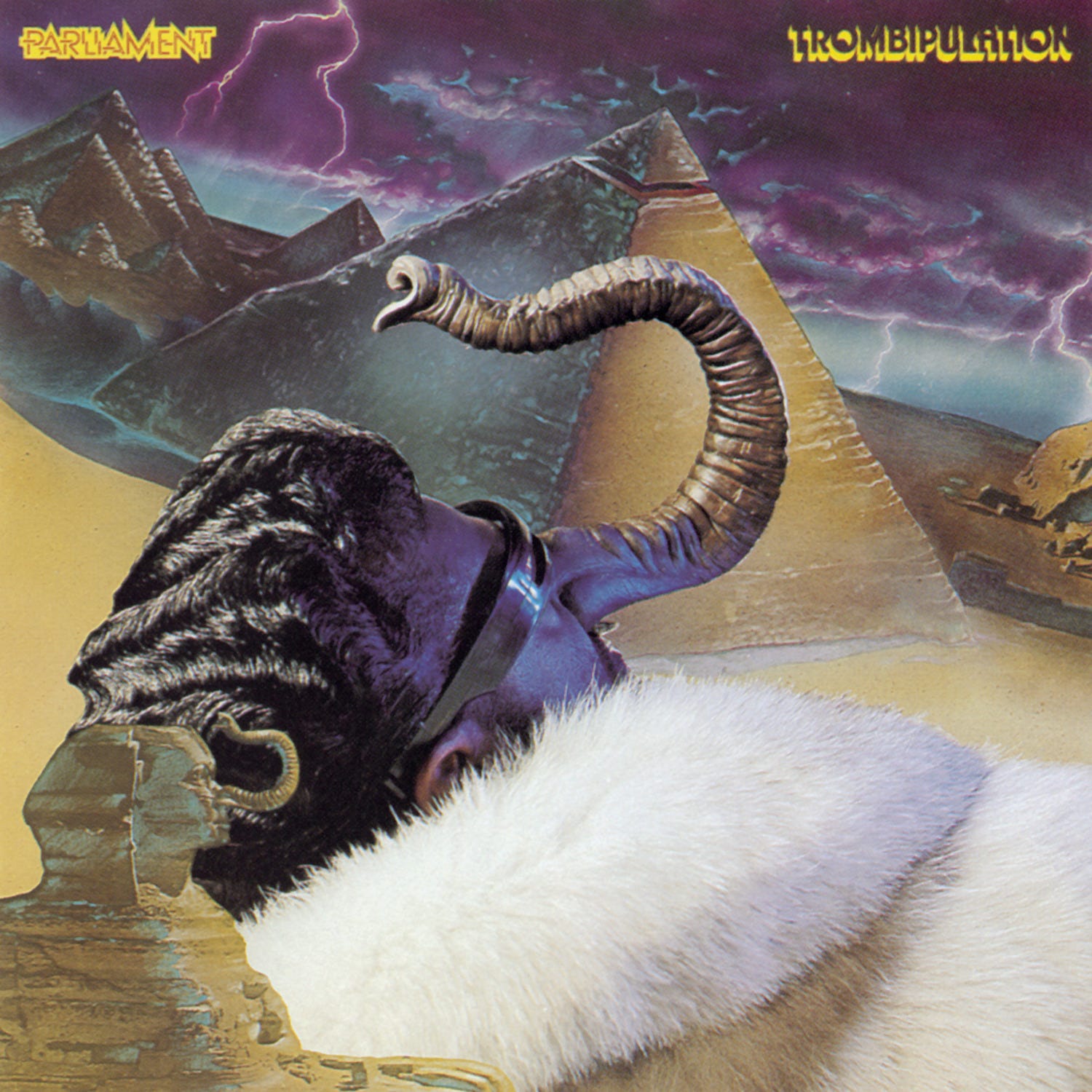
The Concept: The P-Funk mythology’s final chapter, Sir Nose D’Voidoffunk running the show at last and tracing his bloodline to the funky Cro-Nasal Sapiens of ancient Egypt.
Execution: As George Clinton says in his autobiography, Trombipulation was intended to bring the band back to the source, prompting Parliament to return to The Parliaments’ times—P-Funk again, but with doo-wop references. The cover art immerses itself in the iconography of ancient Egypt, with the mythology of the mothership journeying to the underworld Atlantis finding its place at the pyramids. Sir Nose D’Voidoffunk, the recurring villain unable to groove his way through four consecutive albums, is in charge of the proceedings this time, and in the title track, he turns to his lineage, the Cro-Nasal Sapiens, and realizes the funk running in his veins with his son, Sir Nose Jr., beside him.
The cartoon’s logic keeps the fun going. Feet, shoes, and toe-jam jokes aimed at the dance floor provide the whole track on Agony of DeFeet, while New Doo Review puts together Egyptology, Congolese-inspired hairdos, and trunk manipulation in a single review show performance. Clinton considered selling some hair products along with the album, but that back-to-barbershop crossover didn’t work out, and most of the lyrics point their audience to the dance floor as the empire producing the music gets thinner and thinner. Parliament didn’t produce any albums during the next 38 years until 2018’s Medicaid Fraud Dogg. The story of the mothership comes full circle with the villain reformed, and the final holdout joining the dance party.
Marvin Gaye, In Our Lifetime
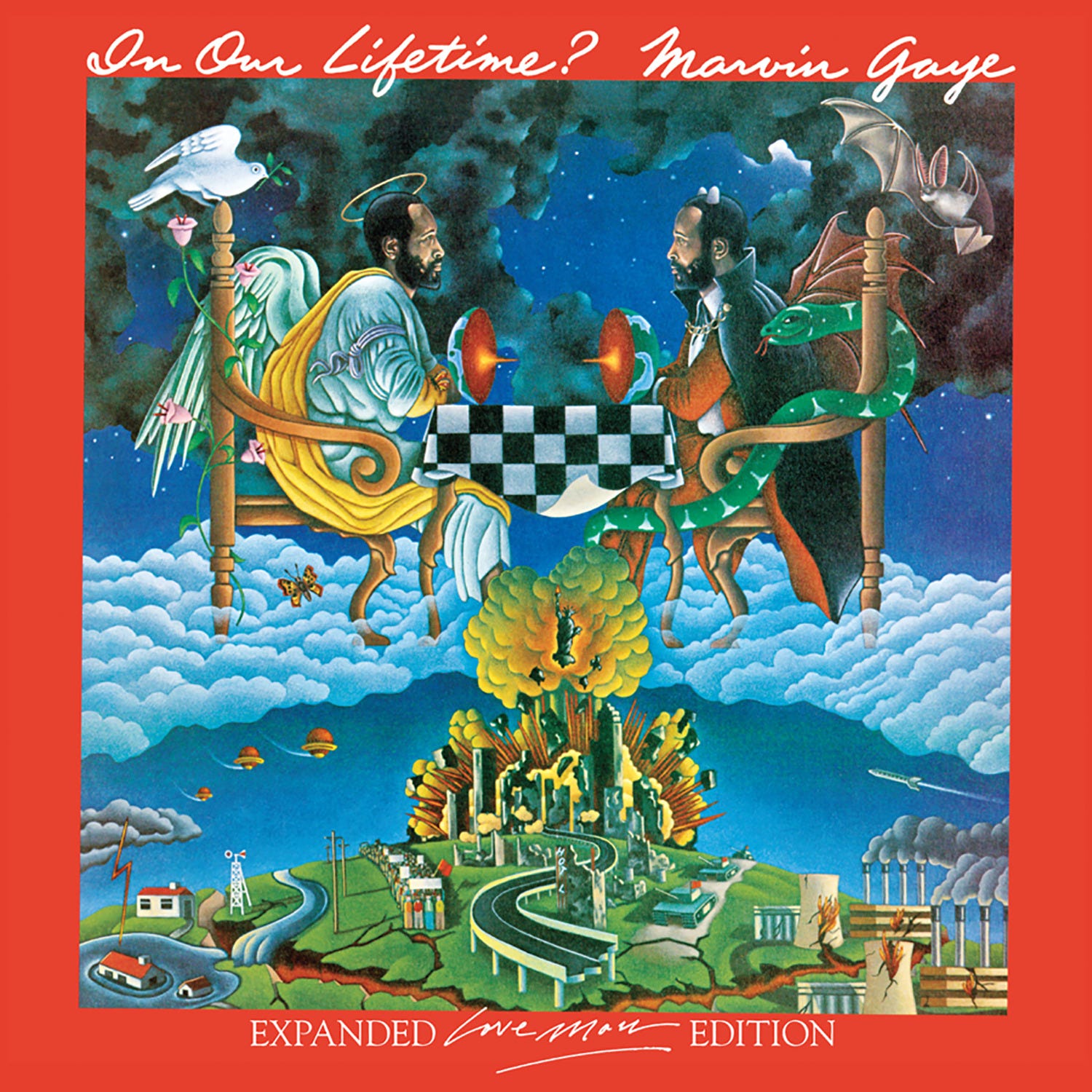
The Concept: Marvin Gaye splits himself into sacred and sensual halves and sings the argument between them with the end of the world in view.
Execution: Cover depicts Gaye with his reflection—angels on the one side and the devil on the other, and the songs repeat this dichotomy as well. “Just Because You’re So Pretty” became “Love Me Now or Love Me Later,” and this confrontation of the good and evil, which the musician felt in people and himself, was applied to this song. Moreover, “Life Is for Learning” is a work full of struggles, depicted in the cover illustration. “Love Party” was “Dance ‘N Be Happy” initially. It was an attempt to cope with the consequences of his marriage to Janis Gaye before Gaye turned the song into a danceable gospel track. People dance and change their moods in this world of apocalyptic events, where sins and salvation coexist.
There is the record by Gaye and the record by Motown; the former is not the latter. He was working with material from the abandoned projects for his Love Man project, while Motown was expecting a disco album. In Our Lifetime was released unfinished, without the musician’s approval. “Far Cry” is included on the album; Gaye did not approve its use, as it was not ready in its stream-of-consciousness lyrics. According to Gaye’s biographer David Ritz, “the artist saw in it a provocatively moving account of a man at war with himself, beginning in despair but ending in hope”. It was the last album with Motown in 21 years. A concept album by the artist, who could not finish the concept, was released.
Rick James, Street Songs
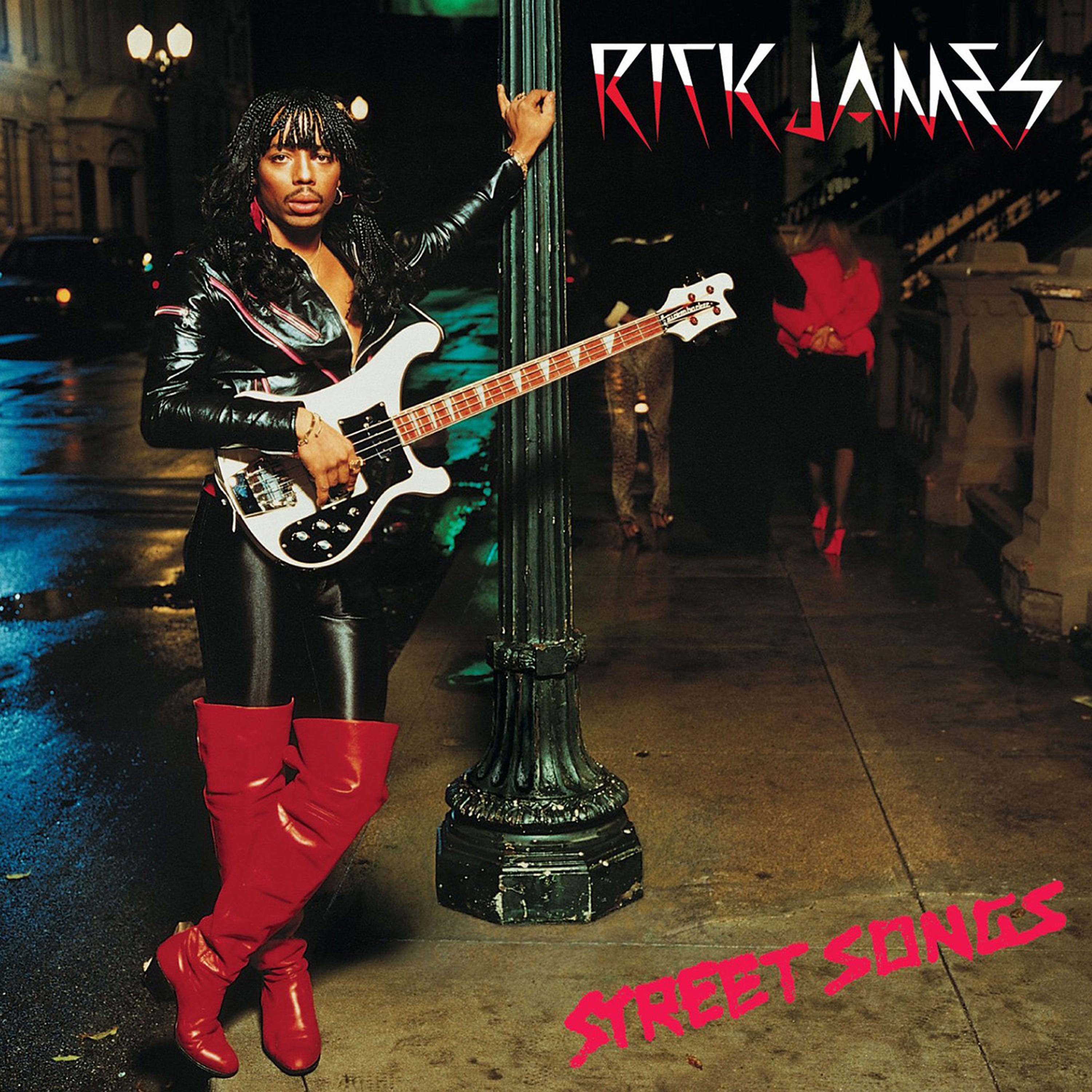
The Concept: James contours a single weekend on Detroit’s east side, contrasting the ecstasy of all-night parties with the thin-ice reality of police sirens, hustling, and sexual politics.
Execution: No overarching narrative exists within Street Songs. However, every song is set on the same streets and subject to the same conditions. Rick James’ Street Songs is all about the street, which is experienced simultaneously as pleasure, threat, performance, observation, and poverty. James speeds up the nightlife economy in the songs “Give It to Me Baby” and “Super Freak,” then heads into the deprivation of childhood, neighborhood code of conduct, crime, and restricted choices in “Ghetto Life.” His “Mr. Policeman” addresses racism and police violence without straying from his party album. It is all one world.
James’ characters use fashion sense, sex appeal, drug-taking, music-making, and bluster as resources against an environment that does not vanish with the opening of the club door. “Fire and Desire,” with Teena Marie, broadens the emotional scope without ever leaving the neighborhood, regret of romance revealing what is left when desire and ego have done their damage. “Below the Funk (Pass the J)” returns us to communal catharsis, recreation, and survival in a single gesture of funk music. Street emergency and street pleasure are kept in the same frame throughout.
Funkadelic, The Electric Spanking of War Babies
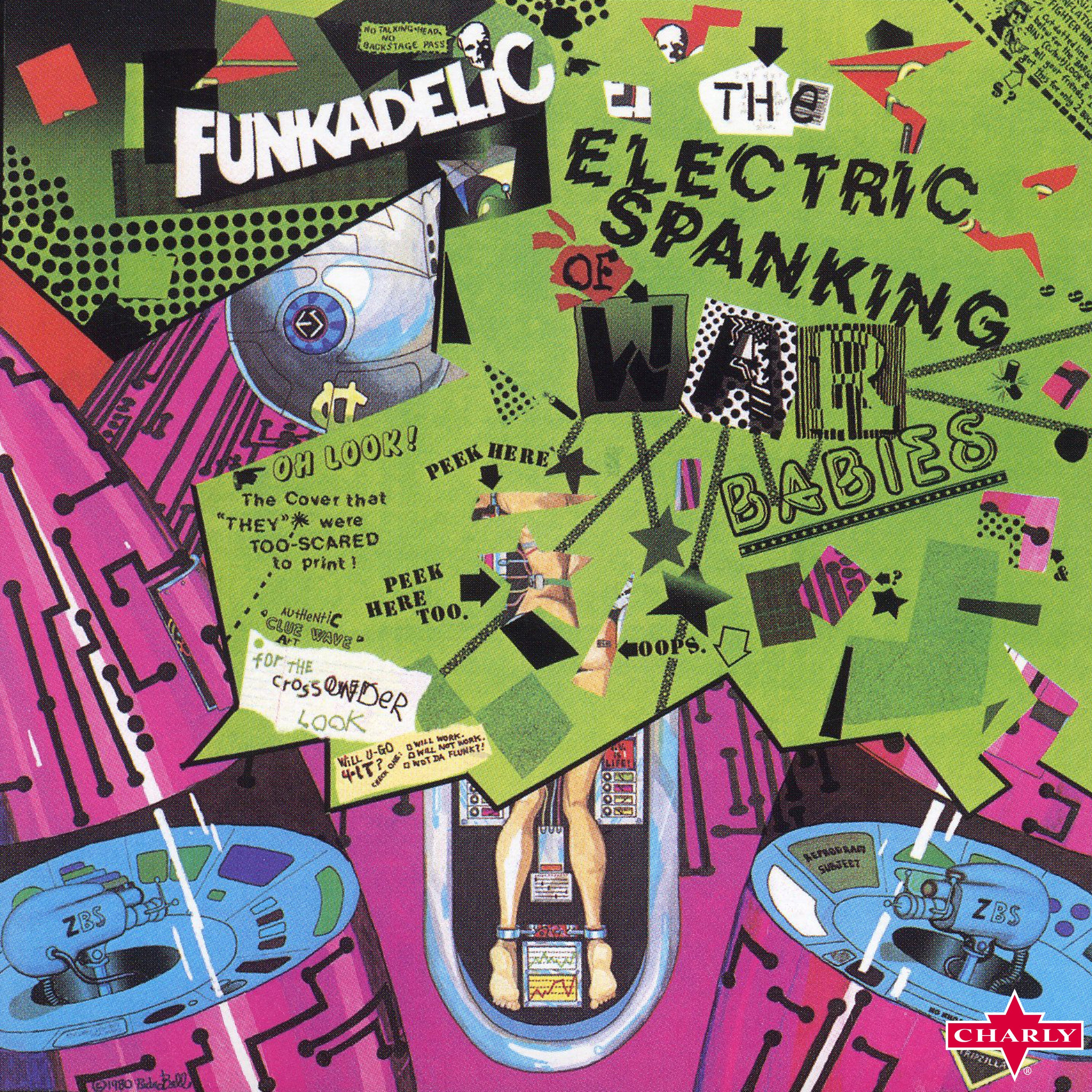
The Concept: George Clinton aims Funkadelic’s supposed last album at the generation raised on Vietnam and television, a government working over its war babies through mass media.
Execution: In his own words, George Clinton said that the album would explore “the darker side of patriotism,” and would feature the government imposing its will on the people via mass media, and “electronic assault on the brain of the baby-boomers.” Junie Morrison composed the album’s title track as an instrumental, which caused it to appear on the R&B charts alongside “Shockwaves.” The double album initially envisioned by the group was reduced to a single record by Warner Bros., but some of the tracks came back to haunt the company in the form of tracks like “Atomic Dog,” which was featured on Computer Games two years later.
Pedro Bell drew the cover art, which showed a nude woman plugged into a phallic spaceship, which Clinton referred to as a “sex toy produced by the military-industrial complex,” and Warner Bros. was not ready to print that image. Then Pedro Bell himself censored his artwork with jagged blocks of lime green color and the message that “they” were scared to put it up for public consumption. Even the cover design highlights the conflict between the group and the machinery behind it. Sly Stone made an appearance in the studio for singing the lead vocals on “Funk Gets Stronger (Killer Millimeter Longer Version)” along with Roger Troutman, contributing another version of the same song.
Kid Creole and the Coconuts, Fresh Fruit in Foreign Places
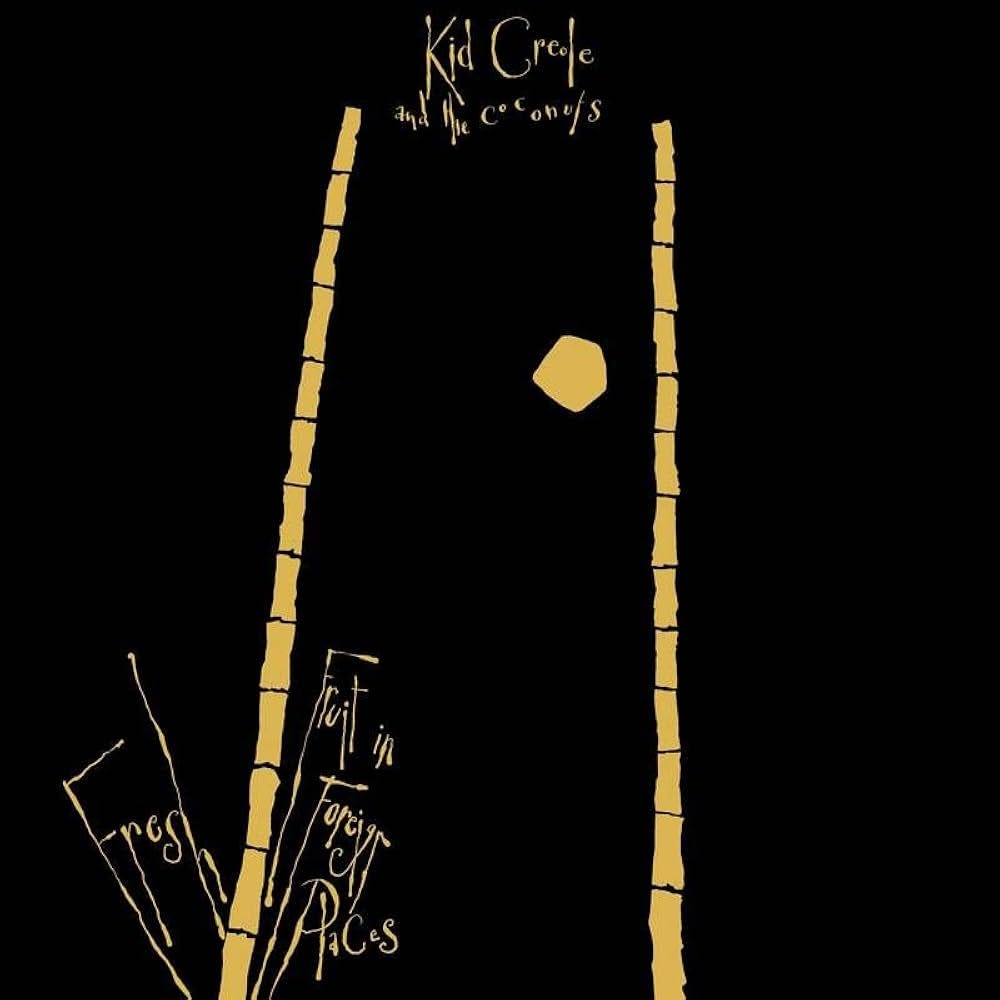
The Concept: A globe-trotting travelogue that traces Kid Creole’s band from Manhattan to imagined ports of call, letting every stop explain another strand in their pan-Caribbean dance hybrid.
Execution: This entire recording was produced as a stage show, and the album preserves this structure of revue music. The Kid in “Going Places” is restless, performative, and always eager to go somewhere else, because he is never entirely comfortable anywhere and in any relationship. The locations remain intentionally artificial: his Caribbean, Latin America, Africa, Europe, and Hollywood of the past are designed to resemble nightclub sets rather than documentaries of these real places. Darnell is interested in how foreigners see other cultures, how musicians interpret them, and what cosmopolitanism amounts to as yet another costume. The Coconuts answer Darnell’s fantasies. They deflate his vanity, challenge his stories, and expand the world beyond his point of view. They do much more than add the background vocals to songs. Coati Mundi also joins to comment on what is happening, thereby filling the album not with random session vocalists but with the recurring cast of characters from Darnell’s imaginary stage revue. Imagery of travel, fruit, hunger, heat, and exotic locations recurs, making the satire even more biting. Foreign places are associated with pleasure and opportunity to change oneself through fantasy, consumption, and stereotyping. The Kid tries different identities without reservations because he has already planned to keep moving anyway. The stage format allows Darnell to express his fantasy and critique it simultaneously in a single song.
George Clinton, Computer Games
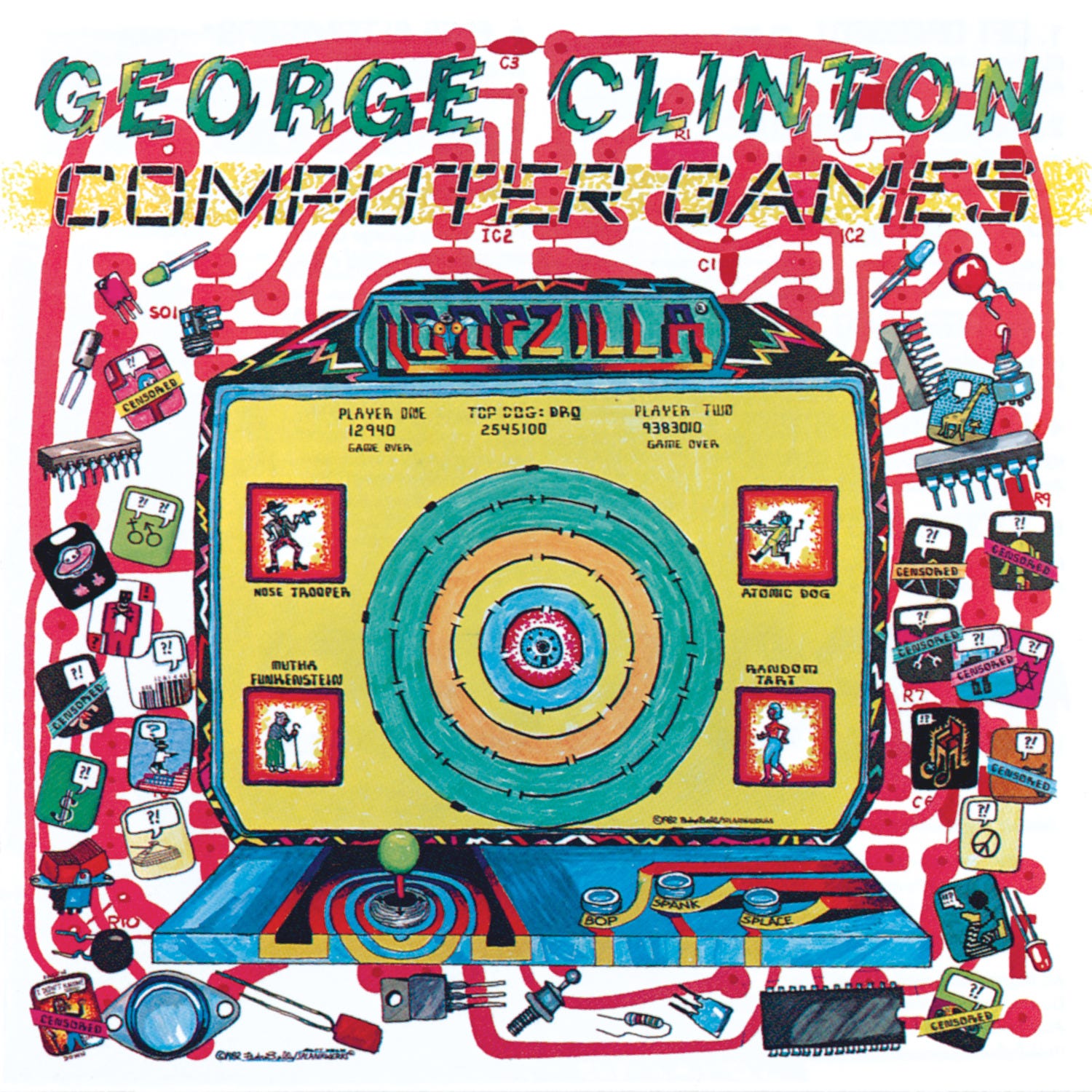
The Concept: P-Funk’s Mothership crash-lands in the digital age, framing funk itself as a self-aware operating system ready to “hack” the new techno-culture.
Execution: Computer Games came after the organization’s fall and its legal and commercial collapse in the late ‘70s for Clinton, and he built the ruins himself. In “Loopzilla,” Clinton pieces together his previous records into something else. The past is material for loops, drum machines and tapes, the same idea behind the rise of hip-hop music. Clinton organizes his studio so that it resembles a video game, in which sounds of voices, commands, malfunctions, and slogans recur. In “Man’s Best Friend/Loopzilla” and “Atomic Dog,” identity is reduced to memorable verbal formulas and physical reactions. The dog in “Atomic Dog” is funny, sexual, instinctual, and mechanical; P-Funk's character creation is transformed directly into dance music, with vocal samples used as commands instead of verses. The familiar voices and musical ideas have survived the collapse, but the corporate names and stable ensemble structure did not. The machines did not replace the musicians, but simply changed the way they are listened to, heard, voiced, referenced, and rhythmically. Clinton got out of the ruins with the funk system, able to restart after the disintegration of the organization that was holding it.
Lakeside, Untouchables
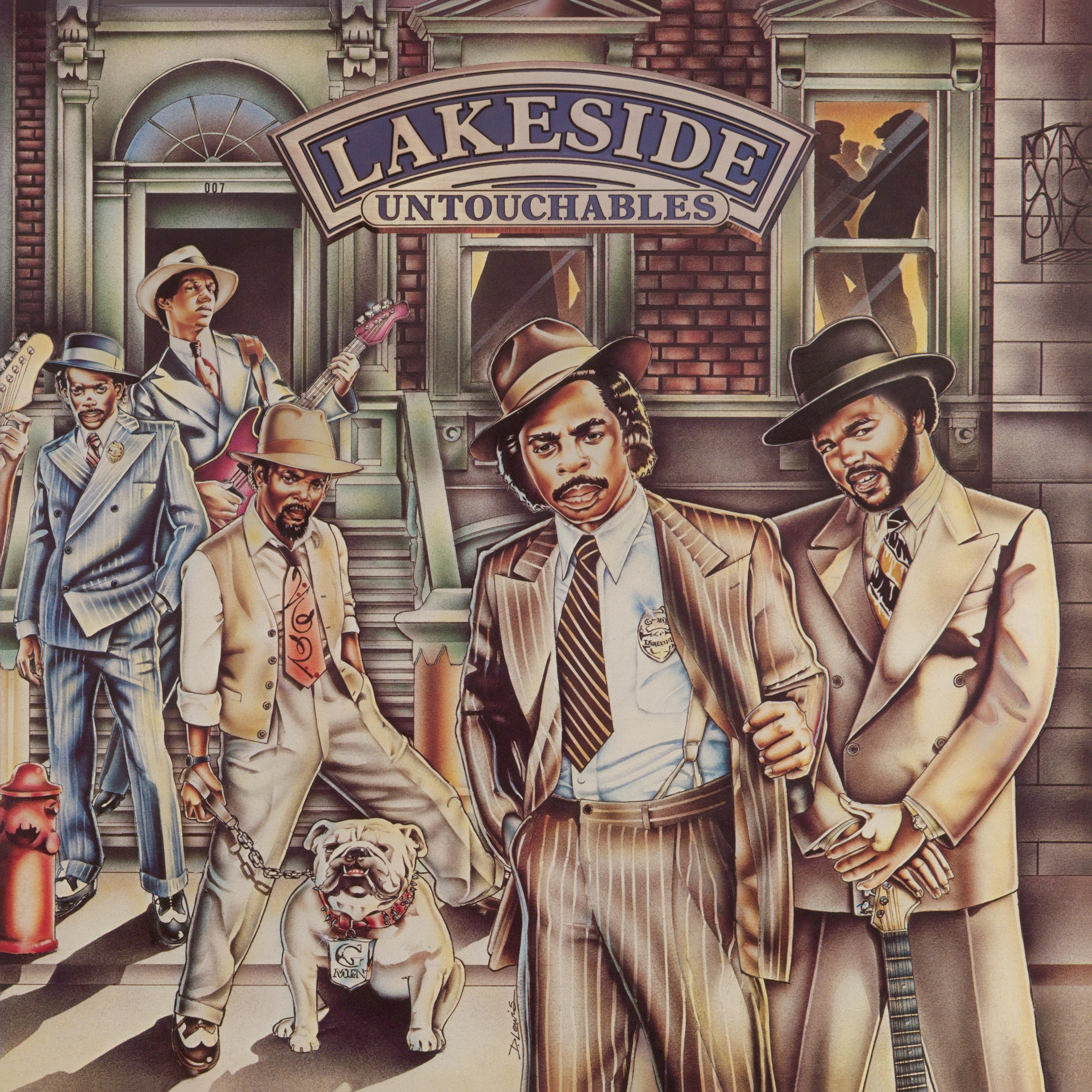
The Concept: The Dayton collective casts itself as a 1930s G-man squad raiding speakeasies of stale funk, staging each song as a cinematic heist against blandness.
Execution: Lakeside had been dressing up for years, creating costumes and fantasies for the whole group, and Untouchables puts the band in the atmosphere of a 1930s gangster movie. The group plays the gangster syndicate untouchable by the FBI, presenting themselves as a team outside of individual singers and songwriters. The music works the same way, in harmony with one another like parts of one criminal organization. No detailed story of robbers and detectives runs throughout the songs; the role-play is the main focus. On “Raid,” the band arrives like an organized invasion, taking possession of the party rather than just attending it, and “Turn the Music Up” continues to give orders, with many voices working towards the same goal. The romantic material shows the team during non-working hours. Polished slow songs and mid-tempo compositions maintain the band’s formal, controlled image, and even in love, Lakeside does not sound careless or solitary. The arrangements remain disciplined and ensemble-based; the team's power rests on coordination, whether during working hours or not, whether on the storyline or not.
Teena Marie, Robbery
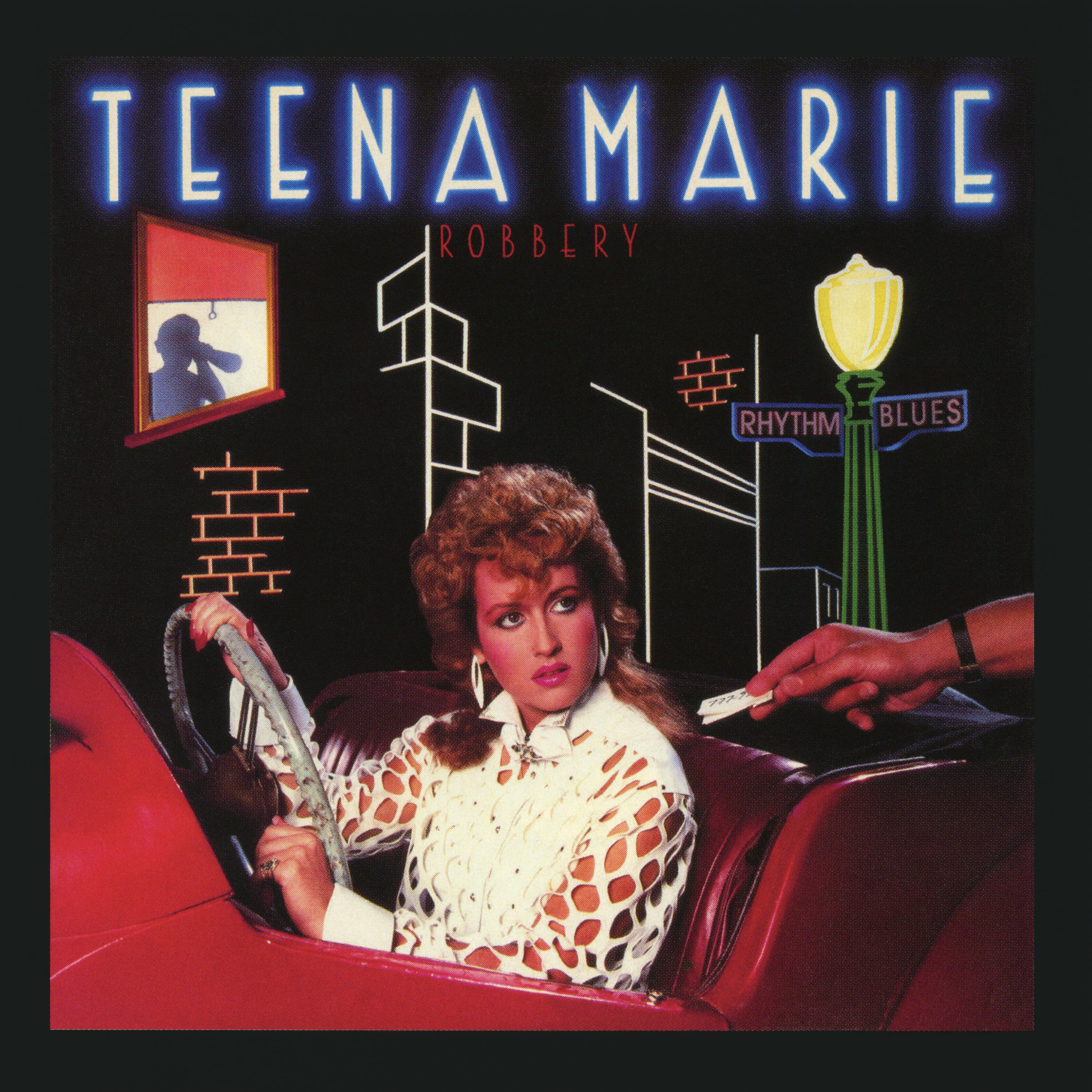
The Concept: An opera in nine parts tracing a love story’s descent from dizzying courtship to betrayal and emotional repatriation.
Execution: On the title track, Marie makes the law for herself. This love was stolen, and the album is the story of accusations, pursuit, evidence, and restitution. She carries on her romance theme of romance as an invasion, betrayal, time, pride, and emotional security by someone who showed up under false pretenses. Crime-themed language heightens romantic tales without limiting each song to a single scenario. On “Playboy,” she describes the seducer’s conduct in public places, and on “Fix It” she asks whether the destroyed intimacy can be fixed. “Shadow Boxing” is an inner track on which Marie rehearses an argument with an opponent who may or may not still be around. In the aftermath of this theft, another fight ensues, a conflict between memories, suspicions, desires, and the need to regain lost things. “Casanova Brown,” long associated with Marie’s relationship with Rick James, is the album’s cover art. He is charming and lethal, and she sings him that way. And the loss is real.
Earth, Wind & Fire, Electric Universe
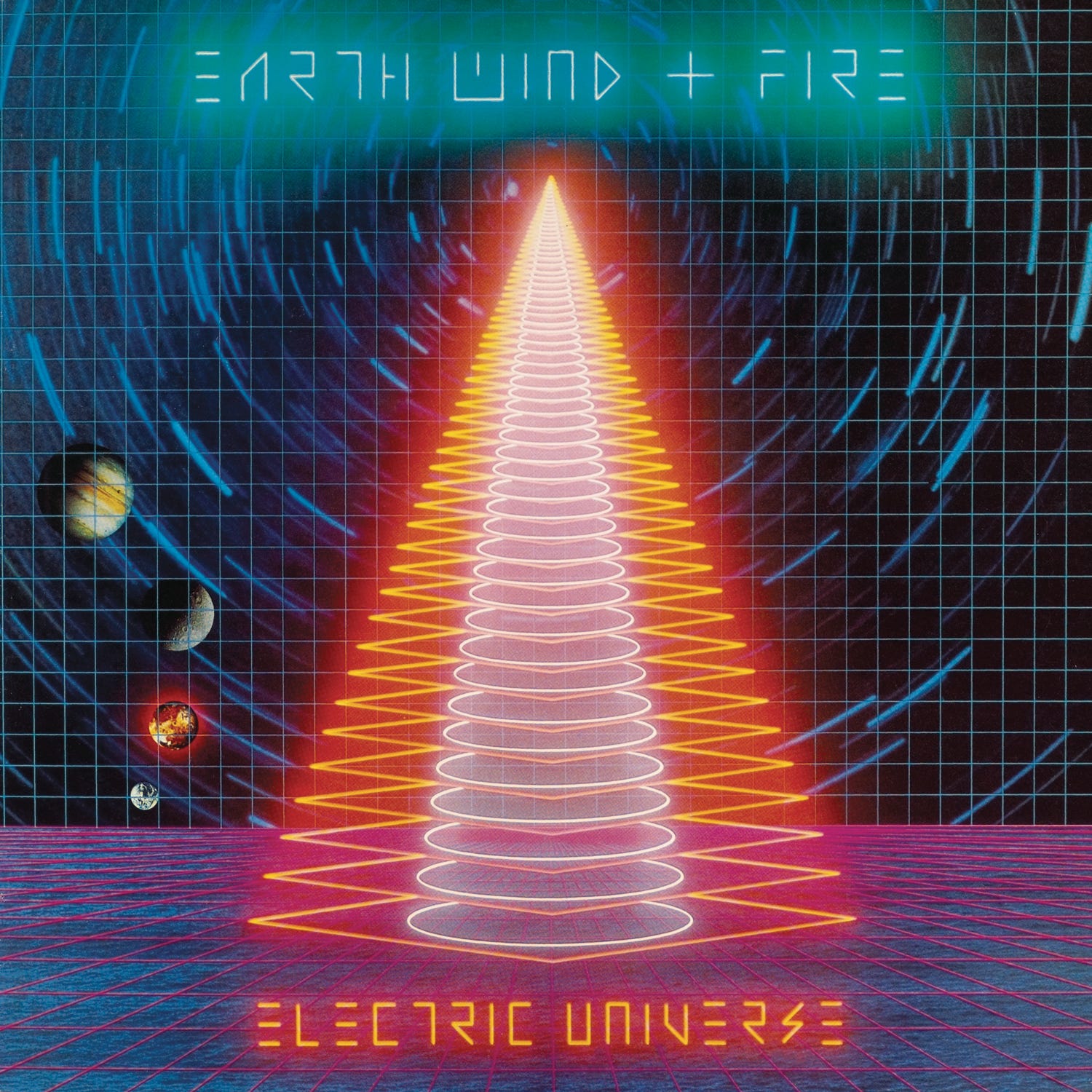
The Concept: Maurice White re-configures the EWF universe as a neon mainframe, employing synthesized funk to probe the implications of technology for human intimacy.
Execution: The Electric Universe is not only the physical space where the songs exist. But the future world that does exist alongside the studio, that is also what is there. Also, minimalist arrangements are at the very heart of the band’s music. But the language of grandiosity of the horn section and the orchestration of the 1970s has come to be of the past. In “Magnetic,” romance and physics are blended together. This is the power of attraction, which is invisible. In “Electric Nation,” the electric current is elevated from the status of a desire that is mere. It then goes to the category of social. Electricity is used as a metaphor for the communication of things. Also for modernity and excitement. Plus for the power of the collective. “Could It Be Right” and “We’re Living in Our Own Time” still examine the themes of intimacy and joint purposes in a world full of mediation, so modernization does not imply any sort of emancipation. The themes that Maurice White has been preoccupied with throughout his career, such as unity, consciousness, and spiritual growth, remain the same, although now they are embodied in the artificial medium. In their previous albums, the transcendence could have been conveyed through the powerful language of the horn section and the elaborate percussion; on Electric Universe, all the songs raise the question of whether communal ideals can survive this transition.
Prince and the Revolution, Purple Rain
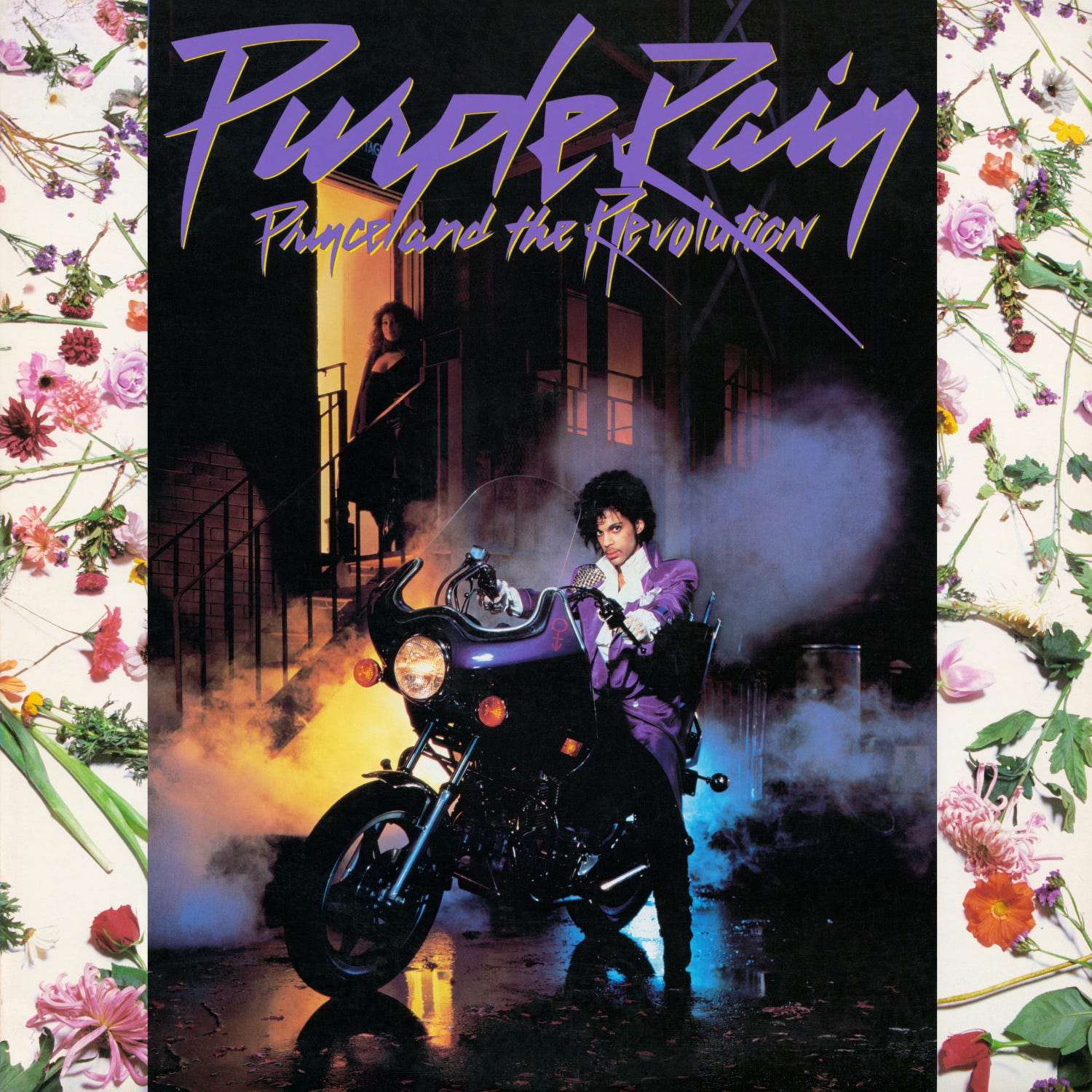
The Concept: A semi-autobiographical coming-of-age tale in which each track advances the narrative arc of the film Purple Rain, mapping “The Kid’s” struggle for artistic and romantic self-definition.
Execution: Since Purple Rain accompanies a feature film, there is a part of its structure that is external to the recording—in live performances, rehearsals, and confrontations of love. Still, Purple Rain is definitely a distinct album. Prince carefully composes songs in order to follow the Kid’s unstable shift between dominance and vulnerability, starting with a parody of a sermon in “Let’s Go Crazy.” Where life appears as a trial, a spiritual experience, full of ecstasy and the words of death and endurance. In “Take Me with U,” the Kid feels attraction and even a chance of escaping; in “The Beautiful Ones,” the romantic rivalry turns into a plea to the Kid, the demand for fidelity. “Computer Blue” and “Darling Nikki” continue the theme of difficulties in intimate relations, where desire is entangled with domination, fantasies, and humiliation. In “When Doves Cry,” he learns the reason for his troubles in the confrontation between his parents and himself, who resembles them; Prince eliminates the standard bass line from the arrangement of the song, thus making more room for the rhythm, vocal, guitar, and keyboard parts.
And the Revolution also matters to the album’s structure. On-screen, the Kid does not appreciate Wendy and Lisa’s work, which is another example of the Kid not keeping up his end of the bargain. “I Would Die 4 U” and “Baby I’m a Star” bring the Kid closer to the transformation in public space, and the title track marks the story’s end. The Kid sings “Purple Rain” as an acknowledgment of the music others have offered him, and as an apology that exceeds anything he can say. The long instrumental part of this track makes the apology even stronger than the character’s words. Rock, funk, gospel, pop, electronic, and R&B are divided across the record in the same manner as the Kid’s personality is divided in the story.
Sheila E., Romance 1600
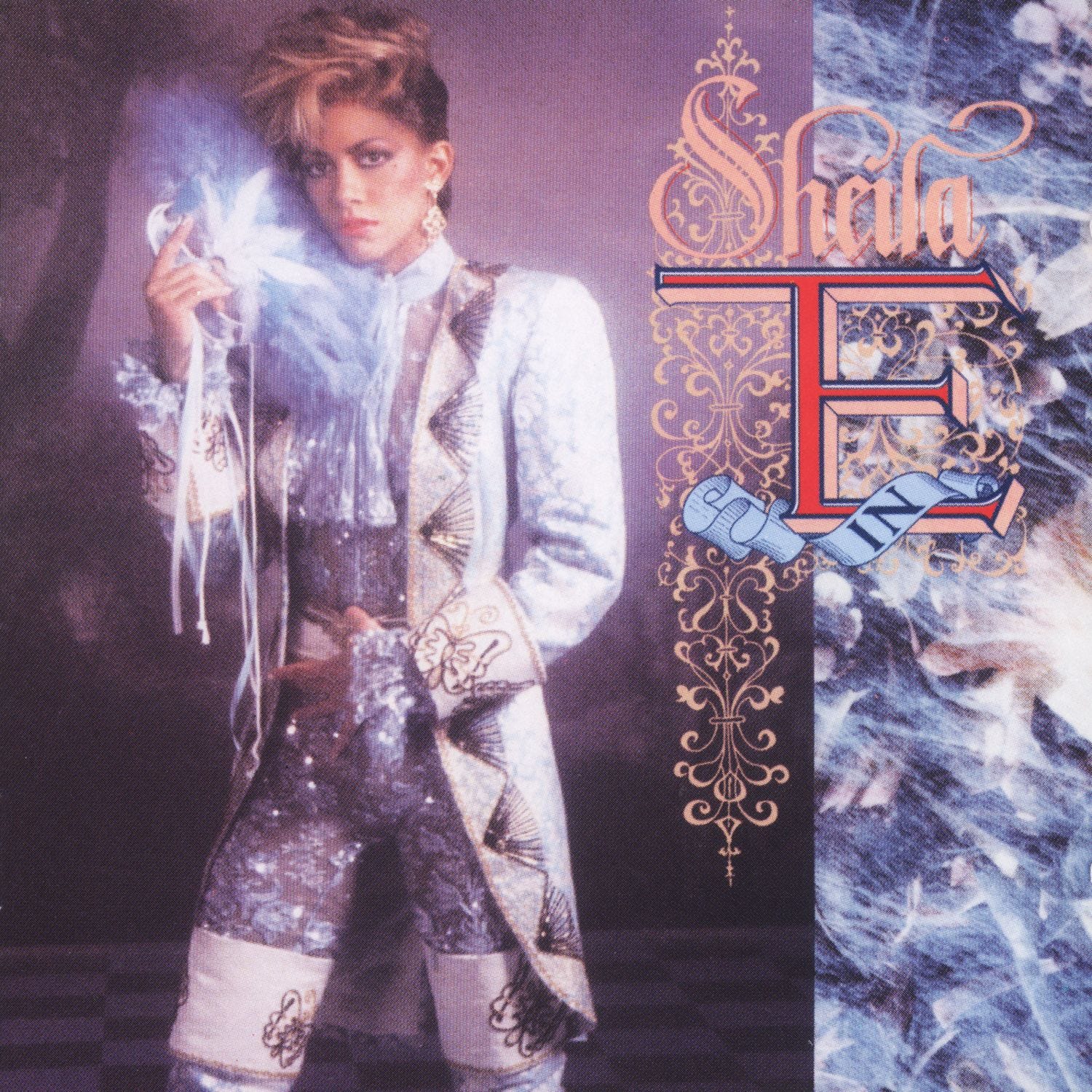
The Concept: Sheila E. costumes her band as a 17th-century court and stages the album as a period production, songs listed as scenes on two reels, love songs playing inside the fantasy.
Execution: Sheila Escovedo dresses her entire band in the style of 17th-century Europe, assigning each member the name of someone who might be found at a court—Dame Kelly, Benentino the Wizard, the Earl of Grey, Sir Stephan. Instead of listing songs by track number, they are called Scenes and placed either on Reel One or Reel Two of the album; the video of the lead single is made to follow the same storyline as the jacket art, and she co-produced the album herself with Prince – one of his first records released on his Paisley Park label by another artist.
“A Love Bizarre,” the twelve-minute duet written between the two of them, becomes the biggest hit off the record. She sings of her love for the painter himself on “Dear Michelangelo”—the period fantasy taken quite literally—while her instrumental, “Merci for the Speed of a Mad Clown in Summer,” pushes the fantasy to its extreme, as reflected in the title. In the fall, she performs “A Love Bizarre” and “Holly Rock” in Krush Groove, appearing in both as the film’s female lead. The costumes and the names tell most of the story; under all those wigs, the music is Minneapolis funk and pop, following in the footsteps of The Glamorous Life.
Grace Jones, Slave to the Rhythm
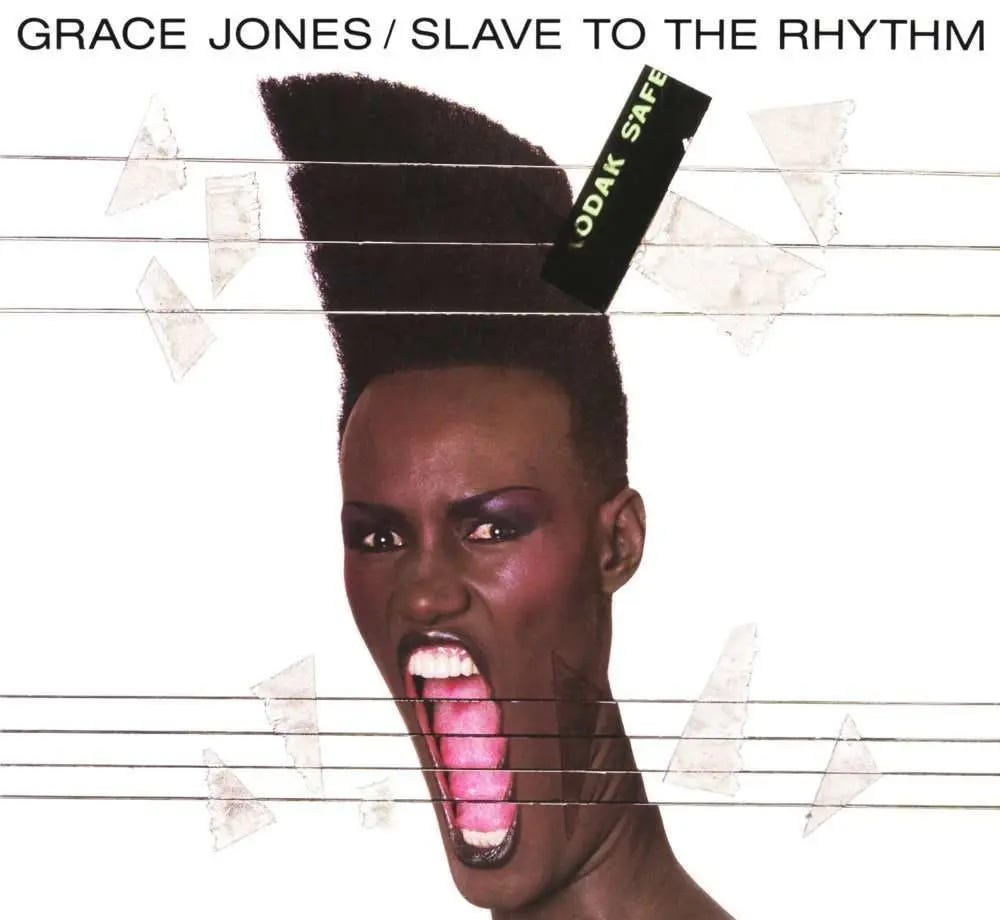
The Concept: An audio “biography” that deconstructs one song eight different ways to dramatize Jones’s myth-making persona and her lifelong dance with rhythm itself.
Execution: Eight related versions, excerpts, and rearrangements of the song “Slave to the Rhythm” make up the entire album. For Trevor Horn and his team, this composition represents not a song but source material surrounded by other songs. Musical phrases, melodies, orchestral fragments, vocal motifs, and production techniques appear in a new context with the help of repetition as a compositional technique. The track keeps pulling Jones, and she recreates herself with each new loop. Interviews and readings by Ian McShane of Jean-Paul Goude’s writings are the biographical concept in the spoken excerpts. Jones is represented as a model, performer, image, body, celebrity, and a constructed creation, without revealing any private “real” Grace behind all those roles. The public identity is constructed through voice, appearance, story, self-discipline, imagination, and repetition, with the luxurious production serving as an auditory version of Goude’s photographic collage.
Trevor Horn transforms the arrangement of the music into a dramatic performance featuring the orchestra, an electronic dance track, funk, choir music, a speech montage, and extravagant pop production. “The Fashion Show” emphasizes fashion and dance; in “Jones the Rhythm,” her name becomes the motif; “Ladies and Gentlemen: Miss Grace Jones” turns a simple introduction into a spectacular show. The same content can sound royal, machine-like, sensual, humorous, and ceremonious depending on the arrangement. Neither of those variations is the defining one of the composition, and the border between the original song and its remixes remains unbroken.
Janet Jackson, Control
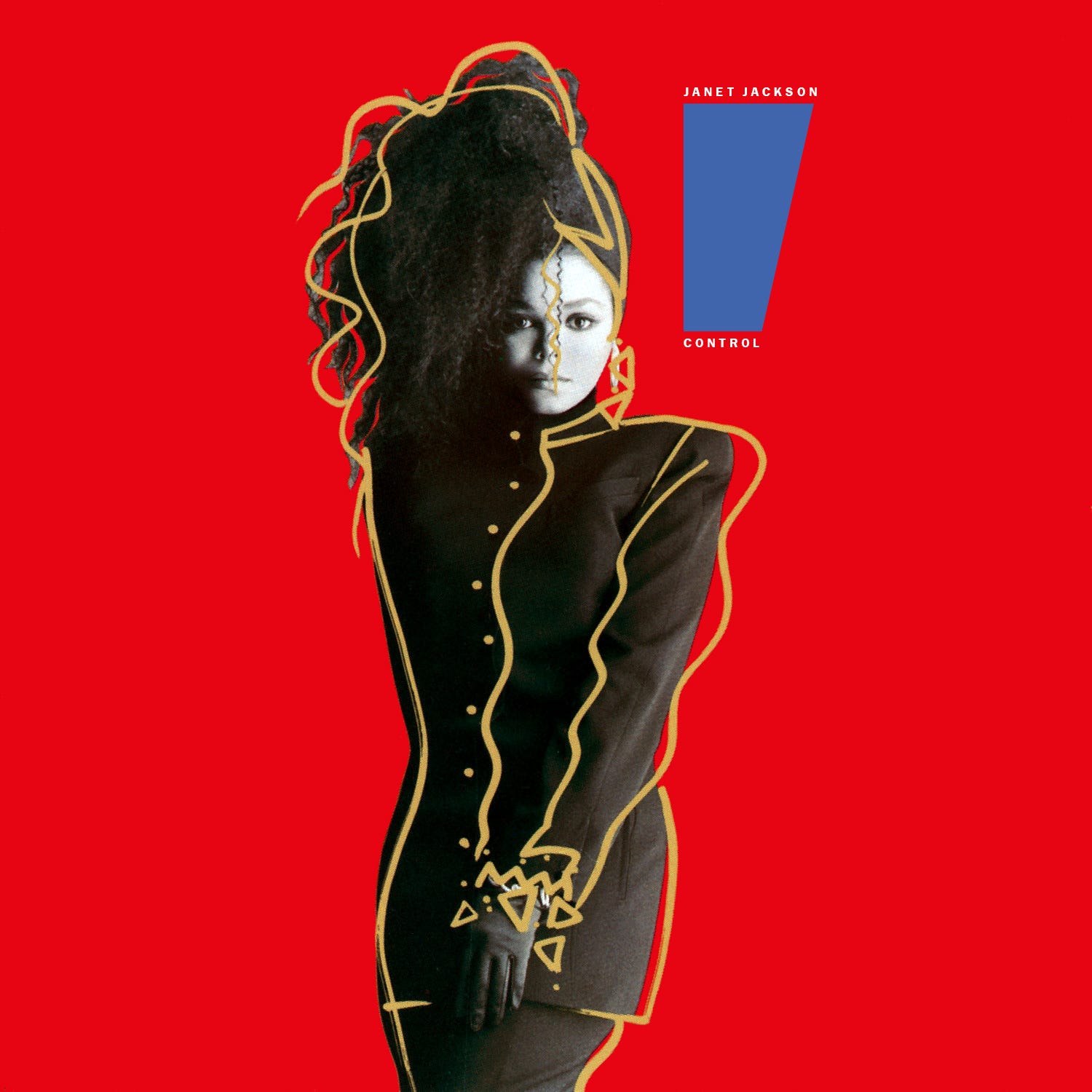
The Concept: A real-time emancipation narrative in which Jackson seizes the steering wheel of her own life—throwing off family management, a failed marriage, and preconceived pop expectations—to declare “I’m in control” and then prove it, track by track.
Execution: After leaving the direct supervision of her father (Joseph Jackson), Janet Jackson worked in Minneapolis with producers Jimmy Jam and Terry Lewis to make Control. In the title track, Jackson straightforwardly declares a past of doing what people have told her to do and an intent to do what she wants. Control explores the ramifications of this statement throughout her adulthood. Jackson rejects a sense of entitlement in “What Have You Done for Me Lately” within a stagnating partnership; Jackson rejects sexual harassment by asserting boundaries on “Nasty.” “You Can Be Mine” and “The Pleasure Principle” continue to interrogate desire without absolving judgment; “Let’s Wait Awhile” expands upon control to describe a partner’s willingness to slow a relationship down. On Control, Jackson claims the power to start, stop, delay, question, and change.
Jam and Lewis give the new self-definition a much harder, rhythmically more edgy sound than anything on her previous records. Her light, airy vocals float above the production rather than bury themselves within it, precise in her orders, queries, and repetitions, with assertiveness conveyed by their placement. “When I Think of You” and “Funny How Time Flies (When You’re Having Fun)” make certain that this new selfhood doesn’t go too hard, that romance, vulnerability, and confusion can still exist within it, but that they come under different definitions. Jackson, as an independent adult artist now directing her own life and professional career, is the main premise driving the songs, the sequence, and the album’s presentation.
Prince and the Revolution, Parade
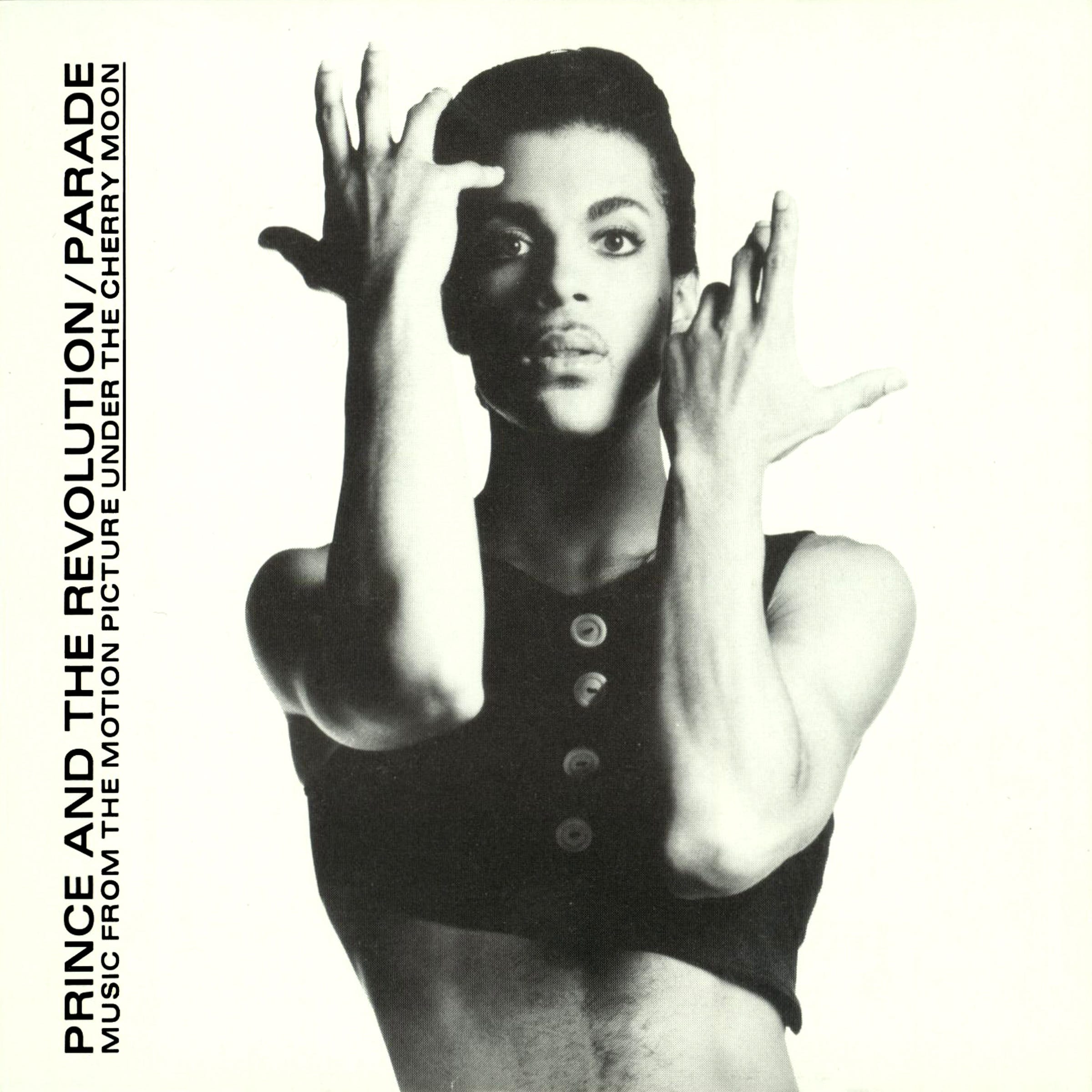
The Concept: The Under the Cherry Moon soundtrack, Prince scoring his own doomed gigolo Christopher Tracy from grand entrance to graveside.
Execution: For Under the Cherry Moon, the movie he starred in and directed, Prince created Parade, taking on the role of Christopher Tracy, a con man who romanced wealthy women on the French Riviera. The character of Christopher Tracy is given the first word by him, “Christopher Tracy’s Parade,” which puts his name up in lights, and the last one too, “Sometimes It Snows in April,” in which Tracy is mourned by name following his death at the film’s end. Between those bookends, the songs move through themes of seduction, money, and play, with Clare Fischer’s orchestral arrangements draped over the Minneapolis funk. “Kiss,” which was pared down to a scratch of guitar, drum machine, and falsetto, that became one of the biggest hits of his career, and then “Mountains” and “Girls & Boys” keep the Revolution’s psychedelic pop-funk running through the character’s world. The film did flop. The album, however, did not. Tracy holds the record together in the same way that the Kid did for Purple Rain, as a Prince surrogate of sorts, whose charm and selfishness are judged by the story around him, and this one does not live to the credits.
Teena Marie, Emerald City
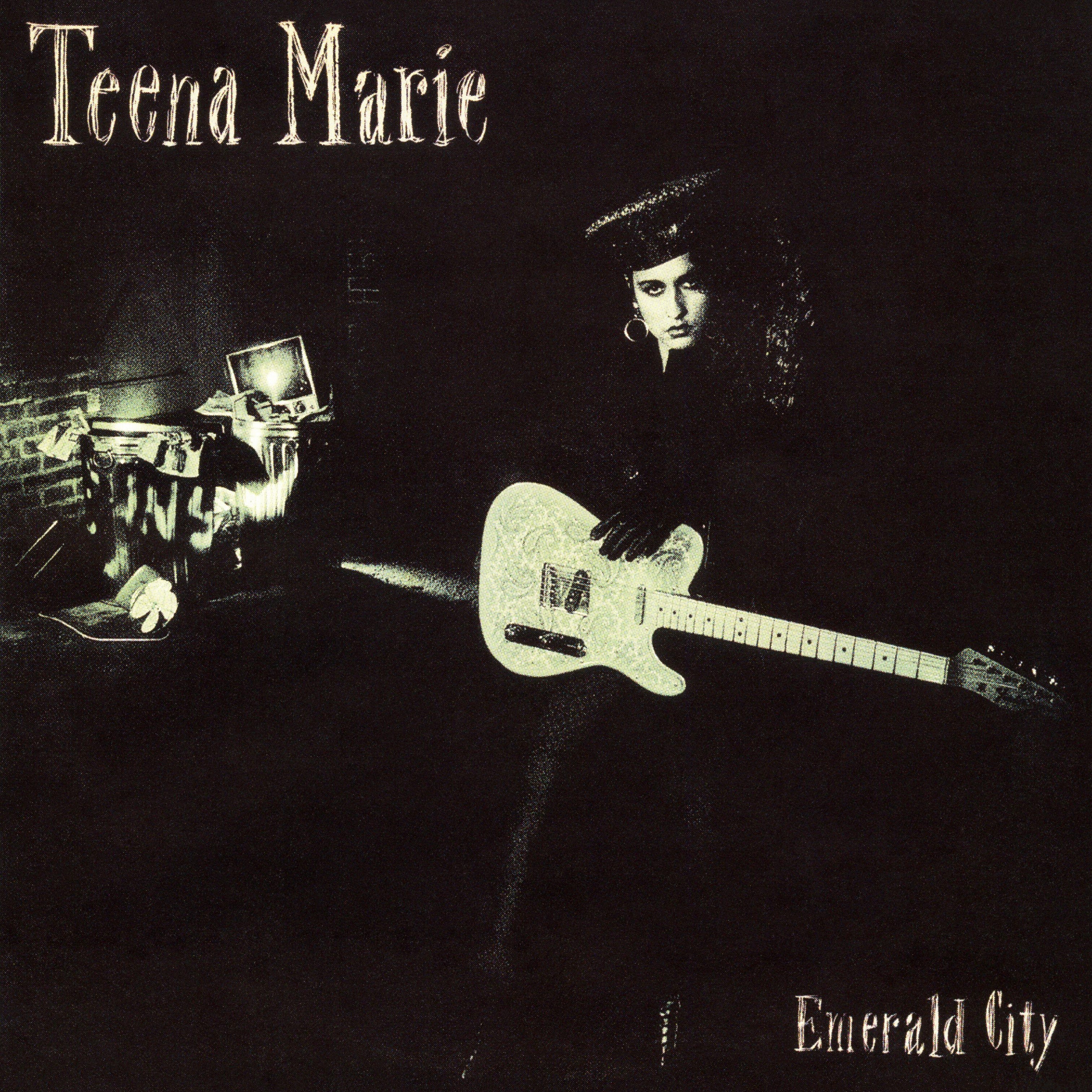
The Concept: Lady T imagines a color-saturated utopia where race, genre, and earthly gravity dissolve—an Oz-by-way-of-funk opera told in eight genre-splicing chapters.
Execution: The destination is a city, like in Oz, a realm of projections, illusions, transformations, and perhaps also personal rediscoveries, but a much more specific and focused one than the one on Robbery. The arrangements expand as far as the fantasy takes her, covering rock, jazz, Latin rhythm, funk, and showtunes, a big enough place that she never has to feel restricted by genre. The title track is more aggressive and more fantastical in conception than her biggest hits; Bootsy Collins makes a guest appearance to link it to funk mythology, and hard rock guitar tones are introduced to harden some of the songs. Desire, as on “Once Is Not Enough” and “You So Heavy,” also takes up a good portion of Desire as does the imaginary utopia of Shangri-La, a city in which she never sets foot, just an empty name of a place that stands for an emotional and spiritual and physical state that is, to use Jackson herself, beyond human understanding.d.
“Batucada Suite,” with its inherent wanderlust, Brazilian rhythm, jazz-inflected lines, complex polyrhythms, and expansive architecture, veers the album well away from typical pop-R&B conventions, particularly with the added presence of guest guitarist Stevie Ray Vaughan. This musical and stylistic crossing of borders is what defines the album’s true location. And beneath those fabricated destinations, what the record really signifies is self-authorization, Marie carving out space for excess, for technical brilliance, for romance, spirituality, and pure musical mischief.
Rick James, The Flag
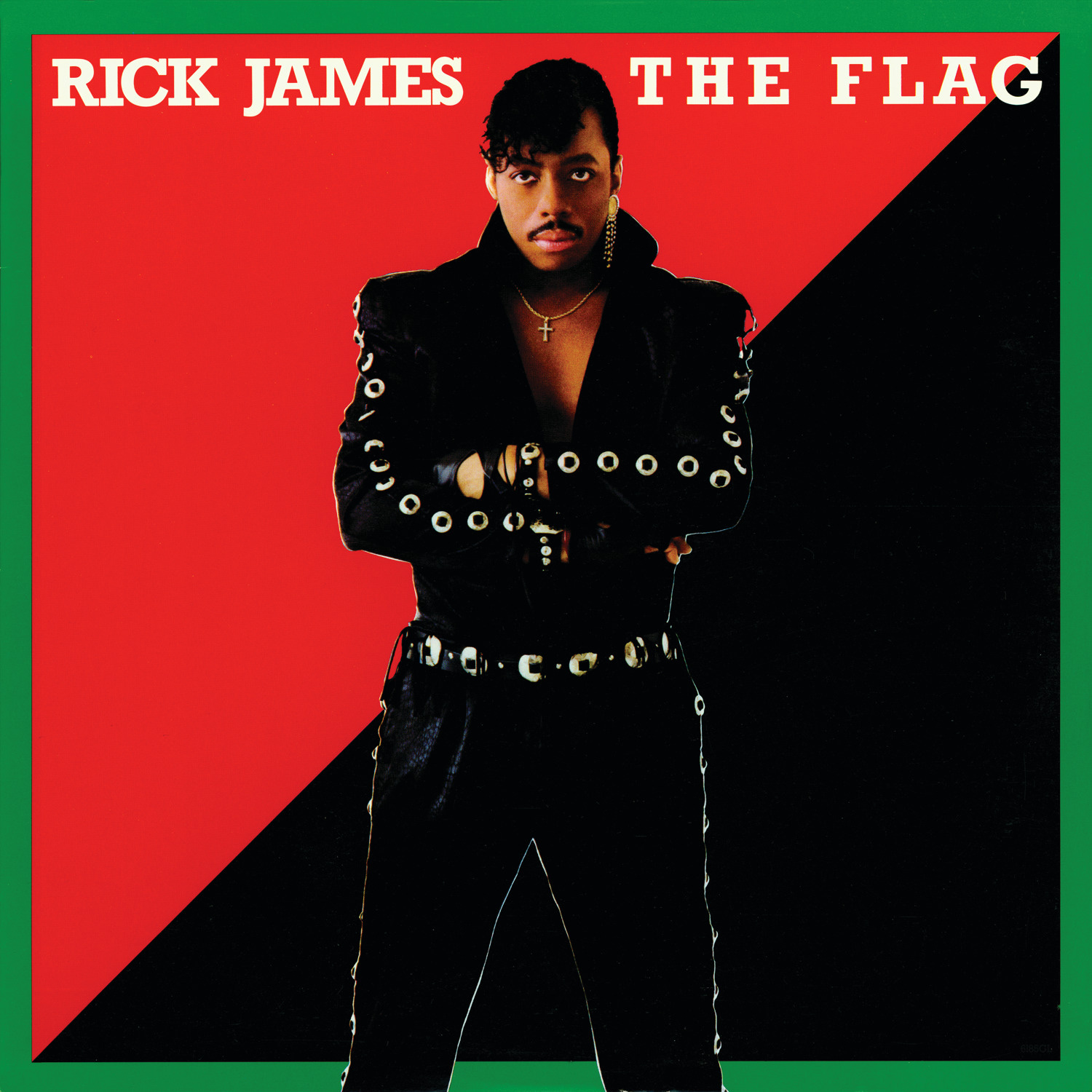
The Concept: On the one hand, this banner is a “rebel freak flag”; on the other, it is a critique of U.S. hypocrisy. James creates an R&B manifesto that is a mixture of liberation and eroticism and political criticism.
Execution: The U.S. flag acquires the quality of provocateur for James; it represents affiliation and status, at the same time emphasizing the gap between American democratic values and Black Americans’ reality. James combines it with the characteristics of his style, that is funk, attractiveness, streetwise nature, and rebellion. Using political subtext in his artistic motif, he addresses multiple issues by allowing oneself to speak, be attractive, move and survive, and to exist and participate in political debate. On “Freak Flag,” James raises the flag of dissent as a sign of common identity and an expanded counterculture slogan that became a patriotic symbol, making one think of what sort of country would refuse to include its own citizens in its culture. On “Sweet and Sexy Thing” and other love songs, James’ obsession with sexuality does not disappear. In the political arena, the celebration of physical freedom takes on added significance, underscoring that personal freedom is the essence of true liberation.
This is not Street Songs. Same themes of independence, flags, allegiance, and hypocrisy are reconsidered, however, integrated into a more complicated story. He keeps everything usual in his instrumentation, and preserves the rockish edge of his style. Mid-80s production introduces new electronic elements, yet James’ character remains the same, with rebellion amid electronic soundscapes and conservative values.
Mtume, Theater of the Mind
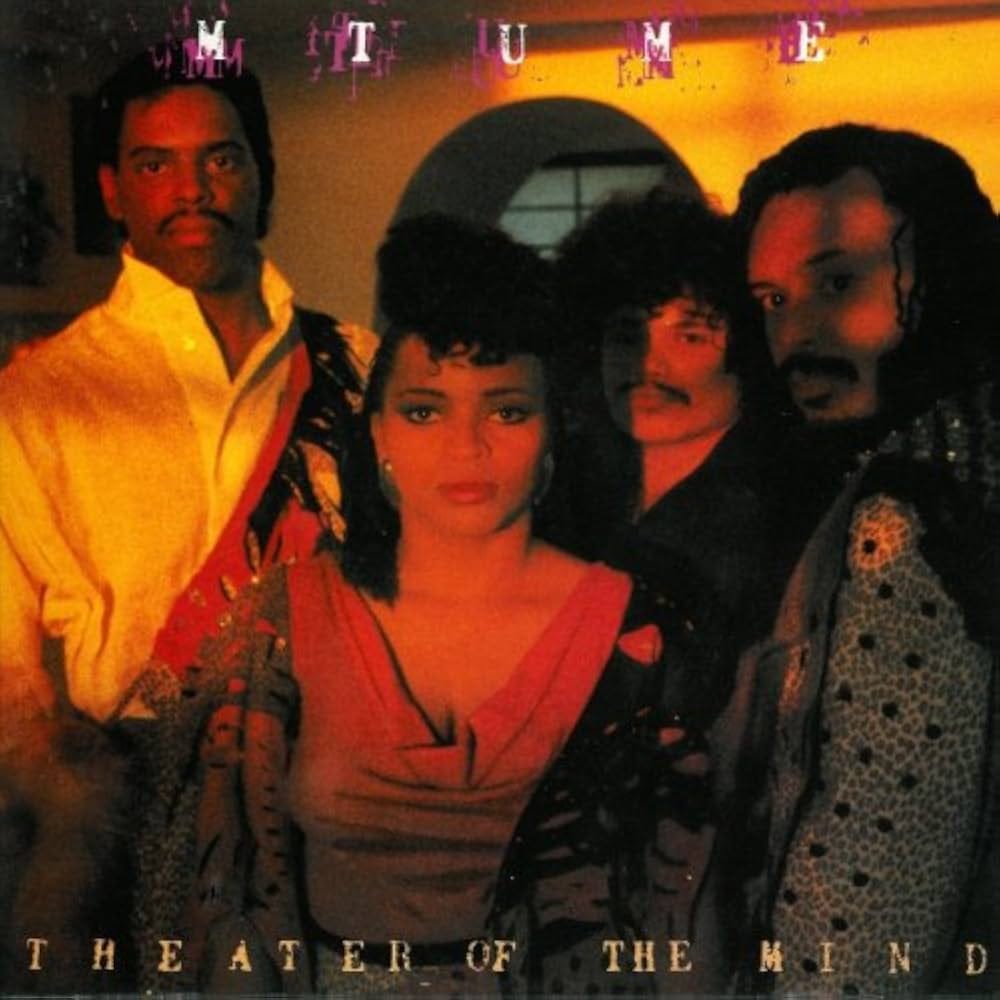
The Concept: James Mtume presents the studio as the theater of one’s mind where memories, love, musical heritage, blackness, and technology are played out in separate acts but bound by imagination.
Execution: Mtume calls upon our imagination; he does not provide us with a story’s structure but a sound framework through which we can create our character. By the 1980s, he had operated within jazz, percussion, composition, funk, production, as well as a more commercial form of mainstream R&B; it all is channeled within the studio space in a way that highlights, even overpowers, the relationship of modernistic programming with traditional funk and soul. In fact, on “I Don’t Believe You Heard Me (A Tribute to James Brown),” the lineage is made very clear: Brown’s power, as much rhythmic as it is vocal, is remembered in a production space, one that relies more and more on a machine, on a sequencer, on a sample. The scenes of this record (romantic songs, reflective passages, funk workouts, and historical gestures) are all playing out in one brain. Tawatha Agee’s vocals provide emotional continuity across the songs. Mtume’s construction of artificial environments gives them an internal continuity: nothing pretends to be one band in one room; all the rooms are being furnished, in this case by the mind itself.
Alexander O’Neal, Hearsay
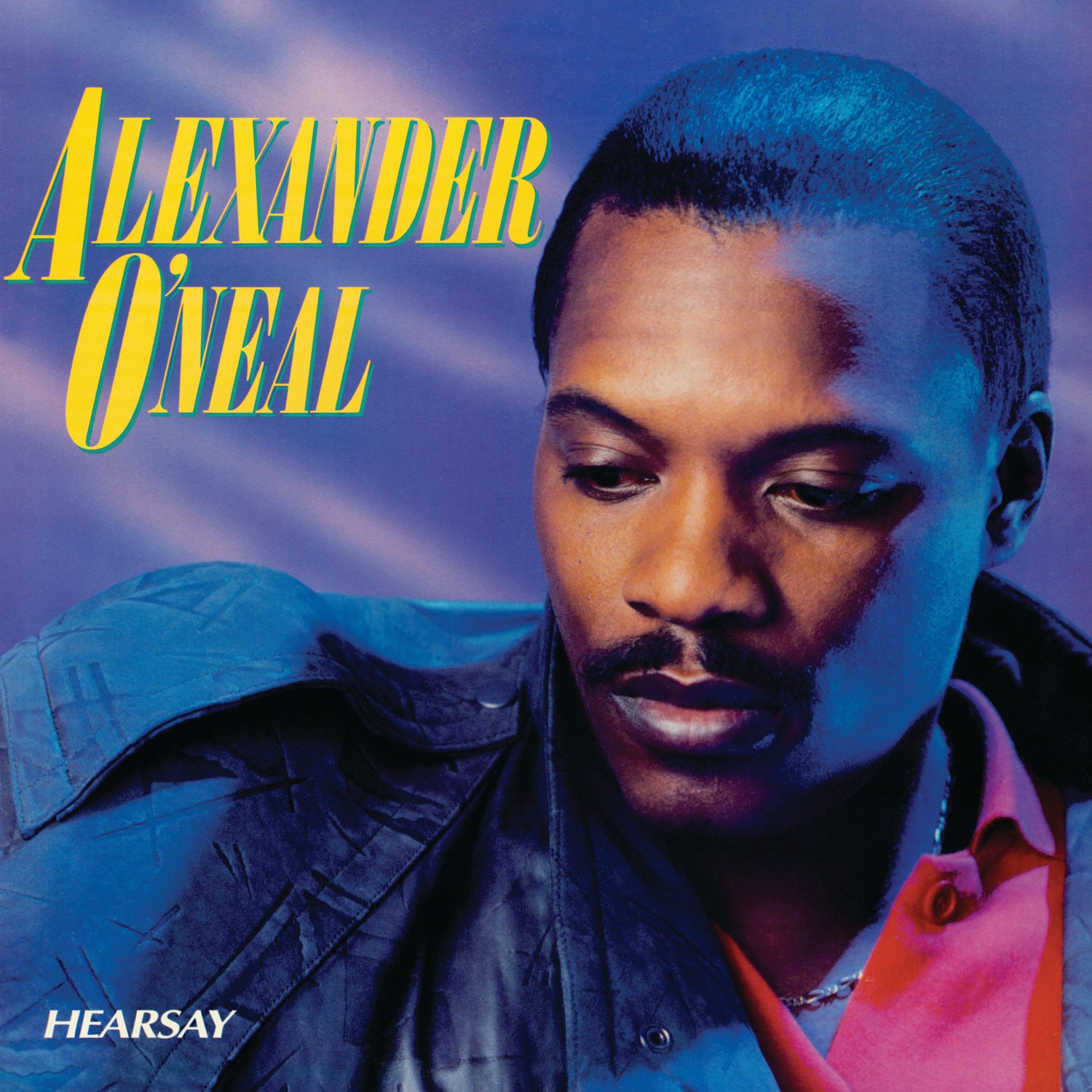
The Concept: A single night-long house party where every track profiles a different guest, building a mini-soap-opera of flirtation, gossip, and reckoning.
Execution: The speaking interludes and the party’s atmosphere provide the context for the entire record. Guests talk, laugh, greet each other, reveal secrets, and make comments about behavior before the songs begin, thus making O’Neal seem to walk from room to room and from conversation to conversation rather than delivering separate performances recorded in a studio. Gossip dominates at the party. Rumor is quicker than direct information, and most songs are about the gap between appearance and reality. On “Fake,” O’Neal disapproves of the person whose image and behavior do not match, and “Criticize” makes O’Neal the subject of criticism himself. Everybody at the party judges everybody, and desire is driven by rumors and personal experiences.
The party allows Jimmy Jam and Terry Lewis to change the record’s atmosphere. Electronic funk prevails in the public rooms of the party—the arrival room, the room for display, and the room of confrontation, while duets and ballads create intimate situations at the same party. With Cherrelle on “Never Knew Love Like This,” O’Neal describes the relationship that was discovered amidst all this party noise, and on “Sunshine” and ballads, O’Neal’s commanding voice changes to that of a devoted lover. The interludes introduce the characters, draw attention to them, and reel the song sequence into the plot; later reissues connect some interludes to the songs they introduce.
Prince, Lovesexy
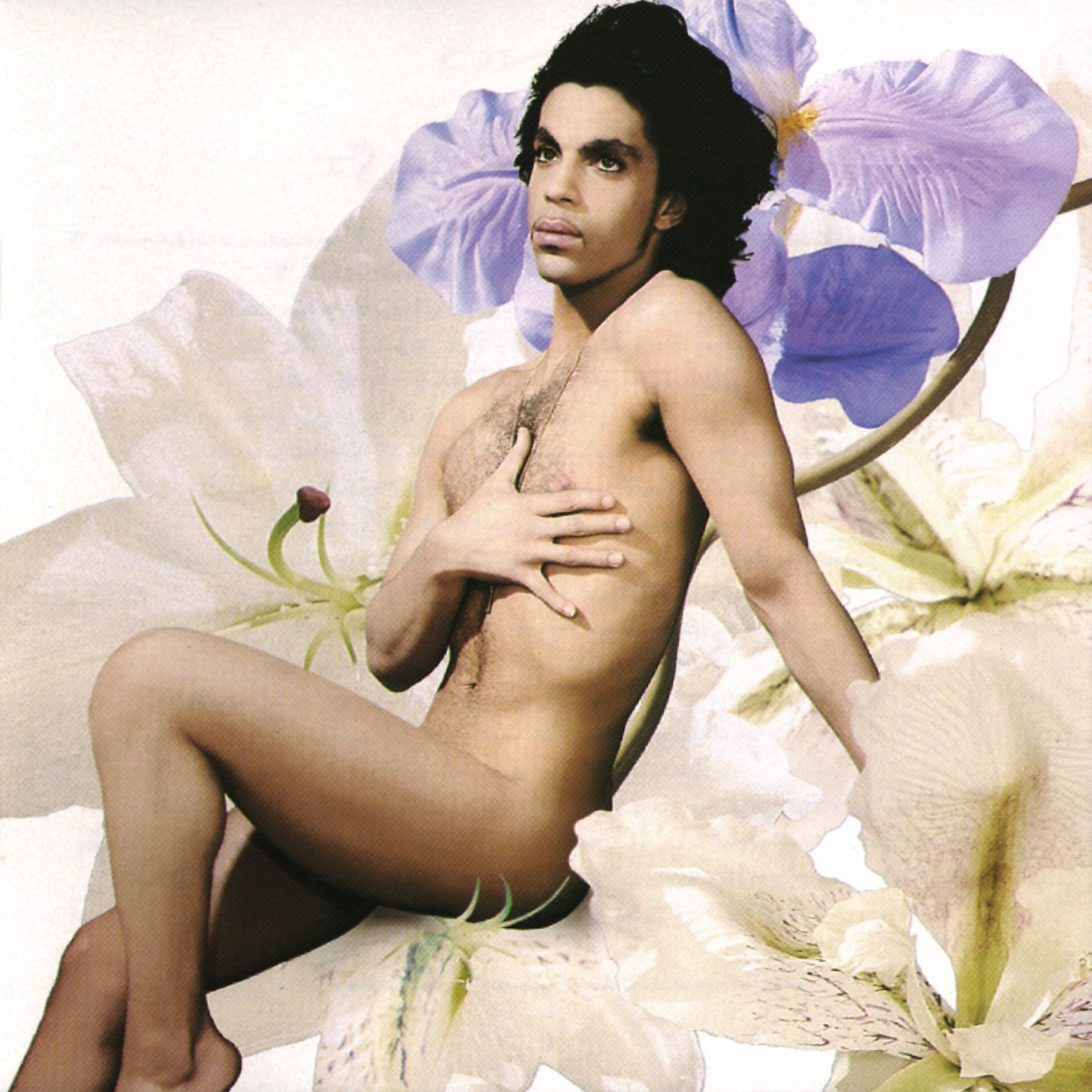
The Concept: A continuous song-cycle that stages an internal battle between carnal temptation and spiritual rebirth, ultimately resolving in ecstatic oneness with the divine.
Execution: Prince withdrew The Black Album, a darker and more abrasive record, from his release lineup, yet a bootlegged version circulated among fans. Lovesexy rebirthed again as its opposite, an explicitly spiritual program in which negativity and corruption were left to “Spooky Electric,” and love, God, positivity, and eroticism were to confront it. There is no renunciation of sexual passion for religious purposes on the part of Prince; the message here is that the desire could be made good after being freed of domination, fear, and destructive ego. Original CD versions offered the whole album as a single uninterrupted track consisting of nine songs, to be listened to either in sequence or not at all. “Eye No” becomes a sermon, a celebration, a testimony, and a performance by the band. “Alphabet St.” incorporates sexuality and playfulness into spirituality; “Glam Slam” sees pleasure as an ecstatic union; and “Dance On” focuses on violence, chaos, and disorder in society, with salvation as honesty to the outer world.
The transformation takes place in the song “Anna Stesia,” in which Prince makes “anesthesia” part of a feminine name and explores loneliness, temptation, surrender, and the repetition of identifying God with love. “Lovesexy,” “When 2 R in Love,” “I Wish U Heaven,” and “Positivity” are four different sides of the same coin—different ways to get to the desirable state of mind. Prince did not usually declare any program that explicitly; he named opposing forces and described temptation turning into affirmation.
Cherrelle, Affair
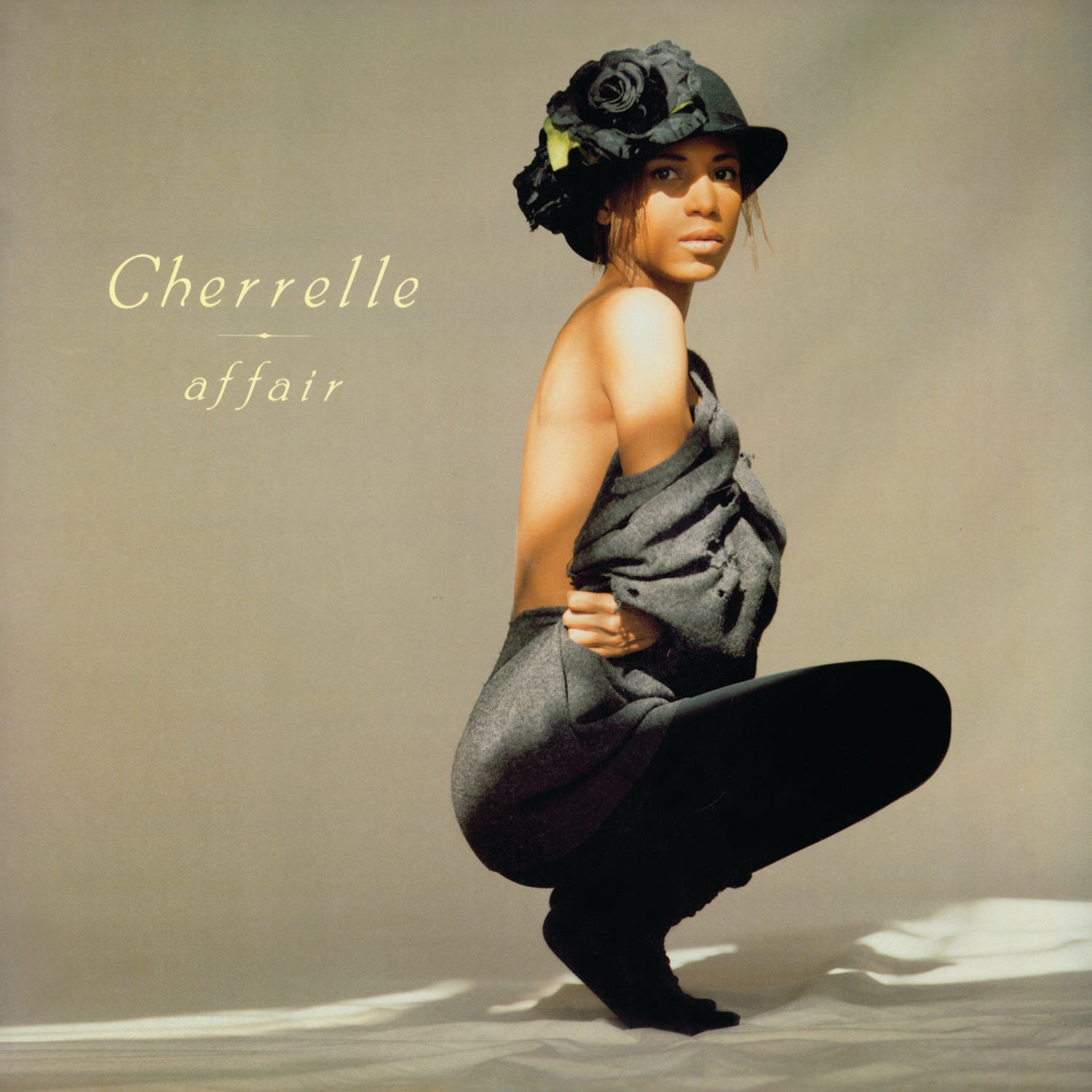
The Concept: Jimmy Jam and Terry Lewis build Cherrelle a companion piece to Hearsay, one soured affair traced from the first look to the wreckage.
Execution: Taking into account the experience with Hearsay, Jam and Lewis decided to make Cherrelle’s third album also based on a specific concept: the story of an affair that went wrong. Moreover, this time Cherrelle was supposed to tell this story starting from the first part of an affair. Thus, “Looks Aren’t Everything” was an invitation to begin such kind of a relationship, “Pick Me Up” showed the excitement of it, and “Discreet” gave the lovers the rules of their affair. In contrast to O’Neal, whose album accused him of being a cheat, Cherrelle put herself in the shoes of a girl who knowingly started this kind of affair.
“Everything I Miss at Home” is at the center of this list. Cherrelle found a lover who gives her all the things her marriage lacks, with Alexander O’Neal, and it became her single R&B number one hit. Cherrelle herself confessed that separation associated with the record was both hurtful and glorious at once, and its ending stretch which she wrote and produced together with her husband Randy Ran describes the after-effects of the romantic breakup of a couple: “My Friend” attempts to save something platonic out of ruined relations, “Crazy (for Loving You)” reflects the one-sided fixation on a person, and “Lucky” appeals to the Almighty with the request to bestow love, hope, and validation on the broken heart. Flyte Tyme released Hearsay a year before this album and Rhythm Nation 1814 a year after it, so there were three concept albums released from the same Minneapolis studio in three years, and Affair became the private life panel of the triptych.
Prince, Batman

The Concept: Prince scores Gotham from inside its heads, the lyrics of every song credited to a character in the film and one number handed to his own half-Batman, half-Joker alter ego.
Execution: In the liner notes, all song lyrics are associated with specific characters. Batman gets “The Future” and “Scandalous”; the Joker gets “Electric Chair,” “Partyman,” and “Trust,” and Bruce Wayne gets “Vicki Waiting” and “The Arms of Orion,” a duet featuring Sheena Easton. All numbers are composed by Prince in accordance with the psyche of their respective characters, without using any scoring cues and incorporating the lines taken directly from the workprint of the film into “The Future,” “Electric Chair,” “Partyman,” “Vicki Waiting,” “Trust,” and “Batdance.” The latter song includes the entire cast as a single number made up mainly of film samples and attributed to everyone, including Gemini, the double personality of Prince created for that work, which is literally split in half as Batman and the Joker. He wore that split in his appearance in the “Batdance” and “Partyman” music videos, embodying both sides of the battle in the film in the same outfit. “Batdance” was a number-one hit, the album took first place for six weeks, and everything about the psychological conflict in Gotham turned into Minneapolis funk and pop music.
Janet Jackson, Rhythm Nation 1814
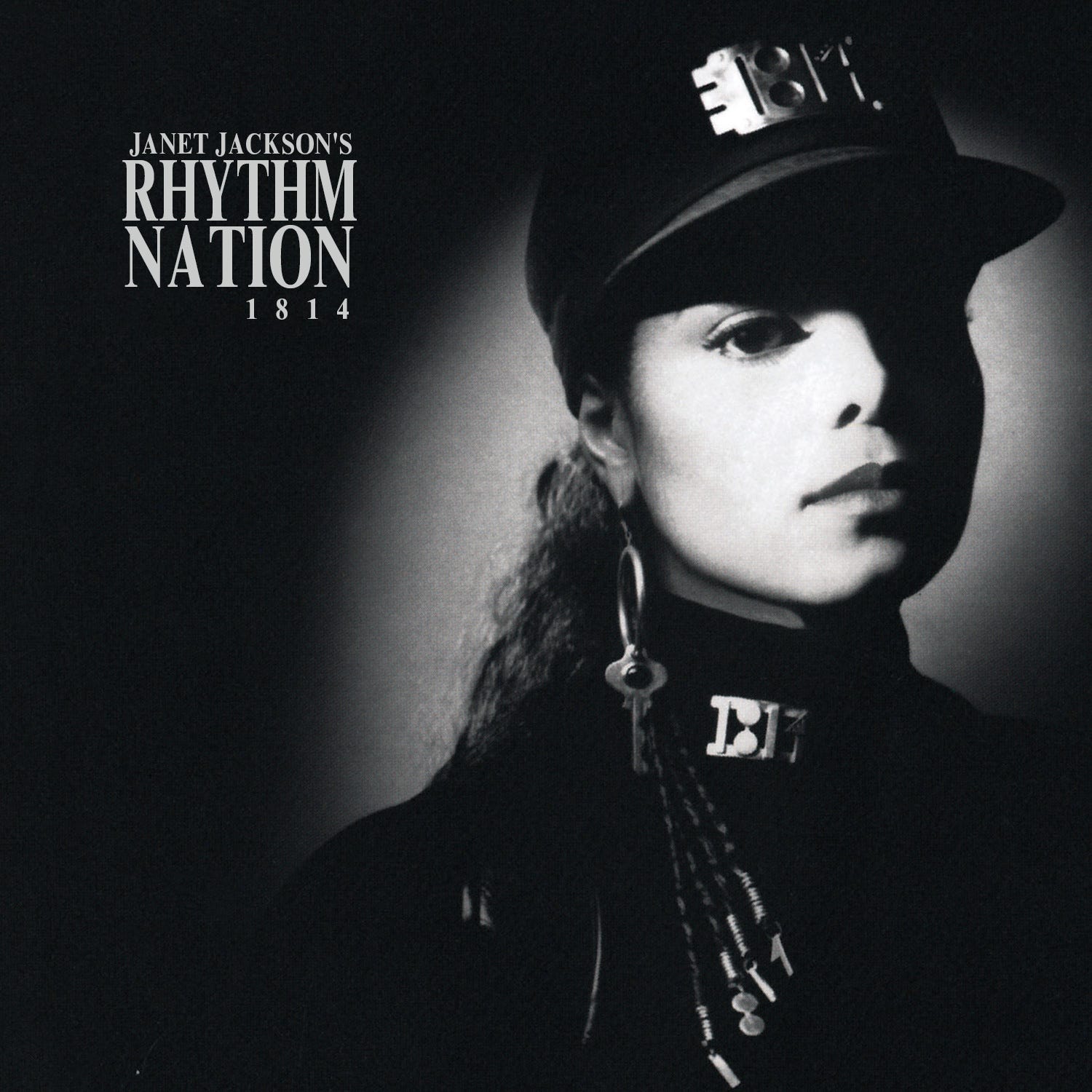
The Concept: A blueprint for a utopian “nation” where rhythm is the rallying language against racism, poverty, and substance abuse.
Execution: Jackson did not fall back on the safe sequel option of Control. She made her next album about what she saw on TV news and heard in the discourse. The band members swear in the “Interlude: Pledge” of Rhythm Nation that they are united by their beliefs, distinct from geographical proximity, and they proceed to march in this belief on the title track, where massed vocals, metallic percussion, and synchronized rhythm create a unified sound. Poor people and families living on the edge appear in the song “State of the World,” which is a manifesto that moves from concrete observation to action. “The Knowledge” ties education and awareness to the issue of survival, and “Livin’ In a World (They Didn’t Make)” describes children born into a world in which adults created the violence and failures. Around this political circle, interludes move like a broadcasting system providing reports, orders, personal reflection, and entertainment.
The songs “Miss You Much,” “Love Will Never Do (Without You),” “Escapade,” “Alright,” “Come Back to Me,” and “Someday Is Tonight” guarantee the preservation of personal life, which is to be protected by political songs. Pleasure, friendship, loneliness, and sexual relationships belong to the community Jackson is trying to build; joy and communion improve collective life and are worth cultivating in the first place. Jimmy Jam and Terry Lewis develop the musical language of Control into more industrial sounds. Black-and-white imagery, uniformity, choreography, and Rhythm Nation 1814 movie turn the ideas of the album into reality—Jackson as a participant and leader of dancing, discipline as a part of synchronization that never takes away individuality.
The year of Rhythm Nation 1814 is the year when “The Star-Spangled Banner” was written, while R and N are the eighteenth and fourteenth letters of the alphabet, respectively. It is the decade’s best R&B concept album.
Sananda Maitreya, Neither Fish nor Flesh
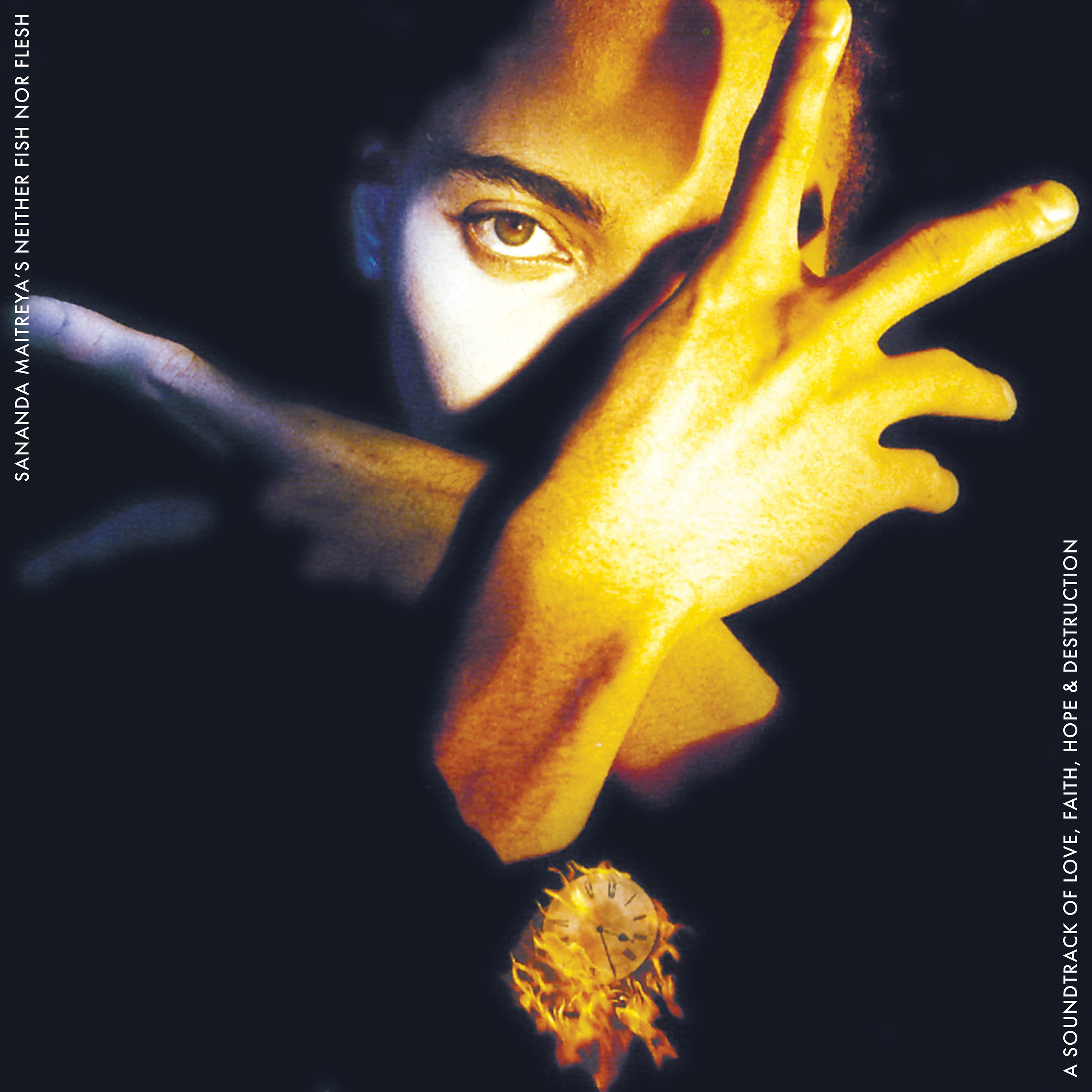
The Concept: Sananda Maitreya follows a multi-platinum debut by building a declared program alone, a soundtrack of love, faith, hope, and destruction with no category attached.
Execution: The complete title is Neither Fish Nor Flesh: A Soundtrack of Love, Faith, Hope and Destruction by Maitreya, and he made it all by himself, the sole composer, arranger, producer, and main performer of it. He declares the program right away in “Declaration: Neither Fish Nor Flesh,” which is 30 seconds of silence followed by feedback and guitar noise with him talking about how he is neither fish nor flesh, and then “I Have Faith in These Desolate Times” comes as a declaration of his faith amid a backdrop of nothing but a koto water harp. The sounds become psychedelic, strings, studio noises, and experiments on top of deep funk and gospel ballads. It flopped after his platinum Introducing the Hardline, and the album, in his own words, “literally killed TTD,” marking his rebirth as Sananda Maitreya from the wreckage of it. The extremely rare case of a concept album when the declared program killed the artist who had the career to finance it, and yet stuck to it.
Quincy Jones, Back On the Block
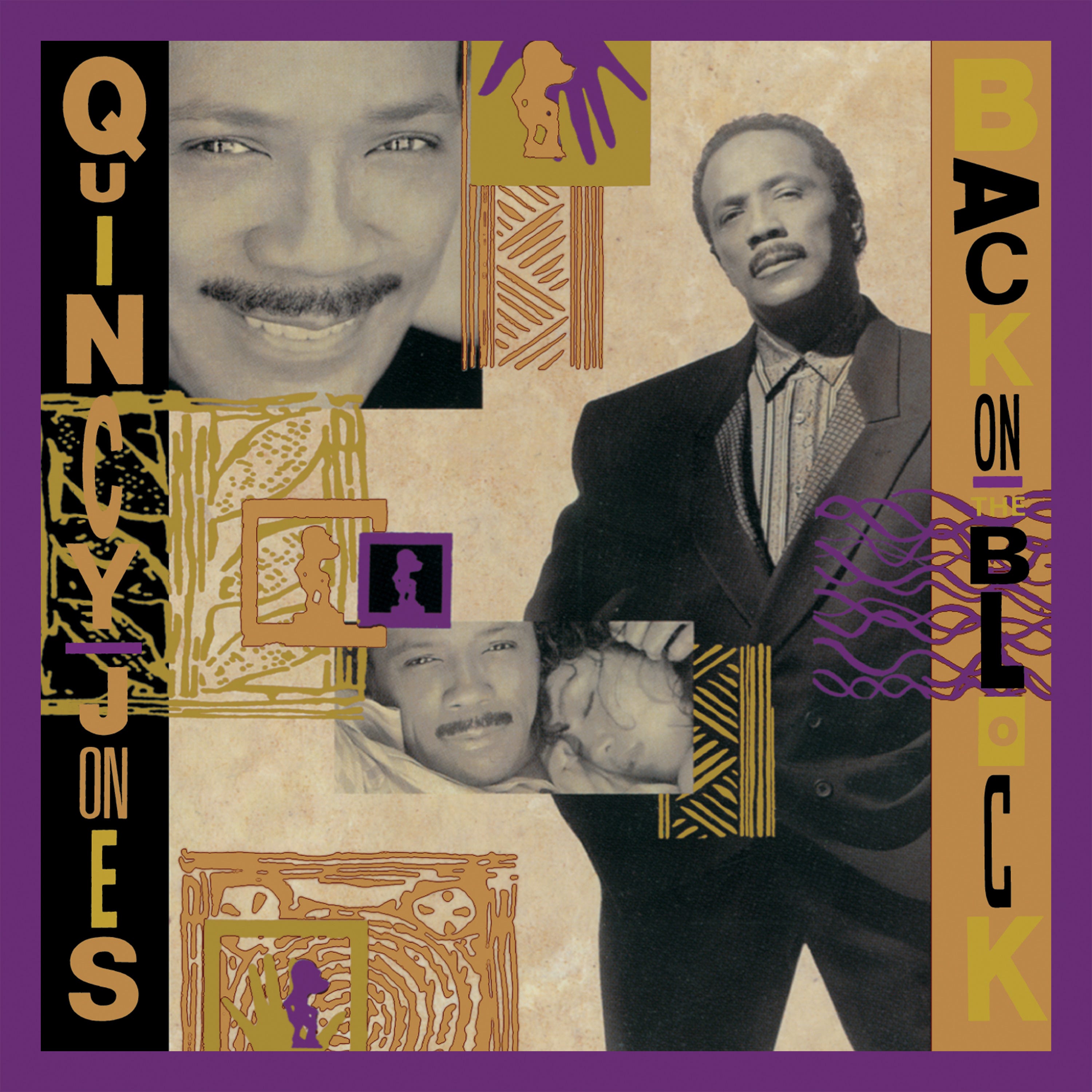
The Concept: Quincy Jones books three generations of Black music onto one record and runs bebop, doo-wop, soul, and hip-hop as one family line.
Execution: While Jones does rap the Prologue along with Big Daddy Kane, the title track has Ice-T, Kool Moe Dee, Melle Mel, and Big Daddy Kane on top of new jack swing with a guest list that includes Ray Charles, Miles Davis, Dizzy Gillespie, Ella Fitzgerald, and Sarah Vaughan. Jones said he would like to consider his album as “a whole family of black music,” bebop, doo-wop, hip-hop, etc., and created the sequence not in order to make a statement but rather in order to demonstrate the connection between the artists. The track “Jazz Corner of the World” features a quick lesson from Kane and Kool Moe Dee about what contributions jazz music brought into the field of music until all of a sudden the entire crew jumps into “Birdland” with the participation of Gillespie, Fitzgerald, George Benson, James Moody, Joe Zawinul, Miles Davis, and Sarah Vaughan. This is Fitzgerald and Vaughan’s last studio recording. While the twelve-year-old Tevin Campbell appears as the youngest member of the family on “Tomorrow (A Better You, Better Me),” Ray Charles and Chaka Khan are behind the success of “I’ll Be Good to You.” At the same time, Barry White, Al B. Sure!, James Ingram, and El DeBarge are responsible for “The Secret Garden (Sweet Seduction Suite).”