

The Lineage of Michael Jackson (Vocal Groups)
Each guide is based on this run of albums, believed to be part of Michael Jackson’s roots. It then branches out into post-1995, drawn from that tree. Here’s the vocal groups section.
Our previous guide and lineage series, The Handguide to D’Angelo, called itself an introduction to R&B, but much of what it covered fell into what people label the “alternative” realm. The question was how to introduce the mainstream R&B that didn’t fit neatly inside that category. Who could serve as the entry point, the way D’Angelo did, and still spark readers’ interest? After thinking it through and the biopic coming up, I arrived at only one answer: Michael Jackson. In a way, it’s an almost too-obvious conclusion. There isn’t a bigger icon than him.
Yet Michael, who ruled the music world as a superstar, is also an artist who can’t be said to have been fairly evaluated precisely because of that stardom. From the 1990s on, when tabloid TV began fixating on his skin and his court cases, it became even more pronounced, but even before that, it’s hard to deny how much the spotlight tilted toward celebrity coverage. And music journalism, too, has to answer for how seriously it confronted his music. In the end, up to the day he left this world, almost no one tried to face his greatness as a musician head-on.
This one is a handguide that barely touches on non-music topics, including lawsuits. Instead, it reconsiders Michael’s work, which has so often been discussed from a “King of Pop” perspective, by returning to its roots on the R&B side, and it introduces albums by current R&B artists (some Pop) who were influenced by him. It starts with the Epic-era solo work where Michael’s musicality bloomed at full scale, then goes backward in time to the Jackson 5 at Motown, where his childhood voice shines, and then moves to the Jacksons, where he awakened to his identity as an artist and the group shifted to Epic. In each section, Michael’s or the group’s work is introduced first, followed by an album guide of R&B releases (from 1995 onward) made under that influence. We also devoted space to Janet Jackson, whose music has been discussed even less than Michael’s, if anything. Alongside a full run-through of her albums, we introduce works by the singers who followed in the difficult wake of Janet, the most important icon for women R&B singers.
Being able to publish a guide like this isn’t unrelated to where the scene is right now. The roots of the disco/boogie revival that’s gained real momentum in recent years can be traced to Michael’s Off the Wall and Thriller, and to his work in the Jacksons era. At the opposite extreme, part of ambient R&B connects back to the sensual R&B sound Janet created with Jam & Lewis.
To begin with, most of today’s R&B singers have been fans of Michael and Janet since childhood, and they are followers who’ve absorbed enormous influence from the two of them. This time, though, while we were working, it was decided that a compilation tied to the guide would be released, and as we progressed with that project our thinking sharpened. The album selections became even more strongly “Michael-coded” and “Janet-coded.” As a result, Michael and Janet appear everywhere throughout the projects we include. A great many R&B works released after 1995 that have been described as “Michael-like” or “Janet-like” are collected in this book. An album guide that revisits current R&B so thoroughly through the music of these two is probably a first.
Sadly, Michael is no longer in this world. But his music hasn’t died. The miracle he created has been carried forward, and it still lives inside many artists even now. If this guide can spread that fact even a little, it would be more happiness than we deserve.
New Edition, Home Again
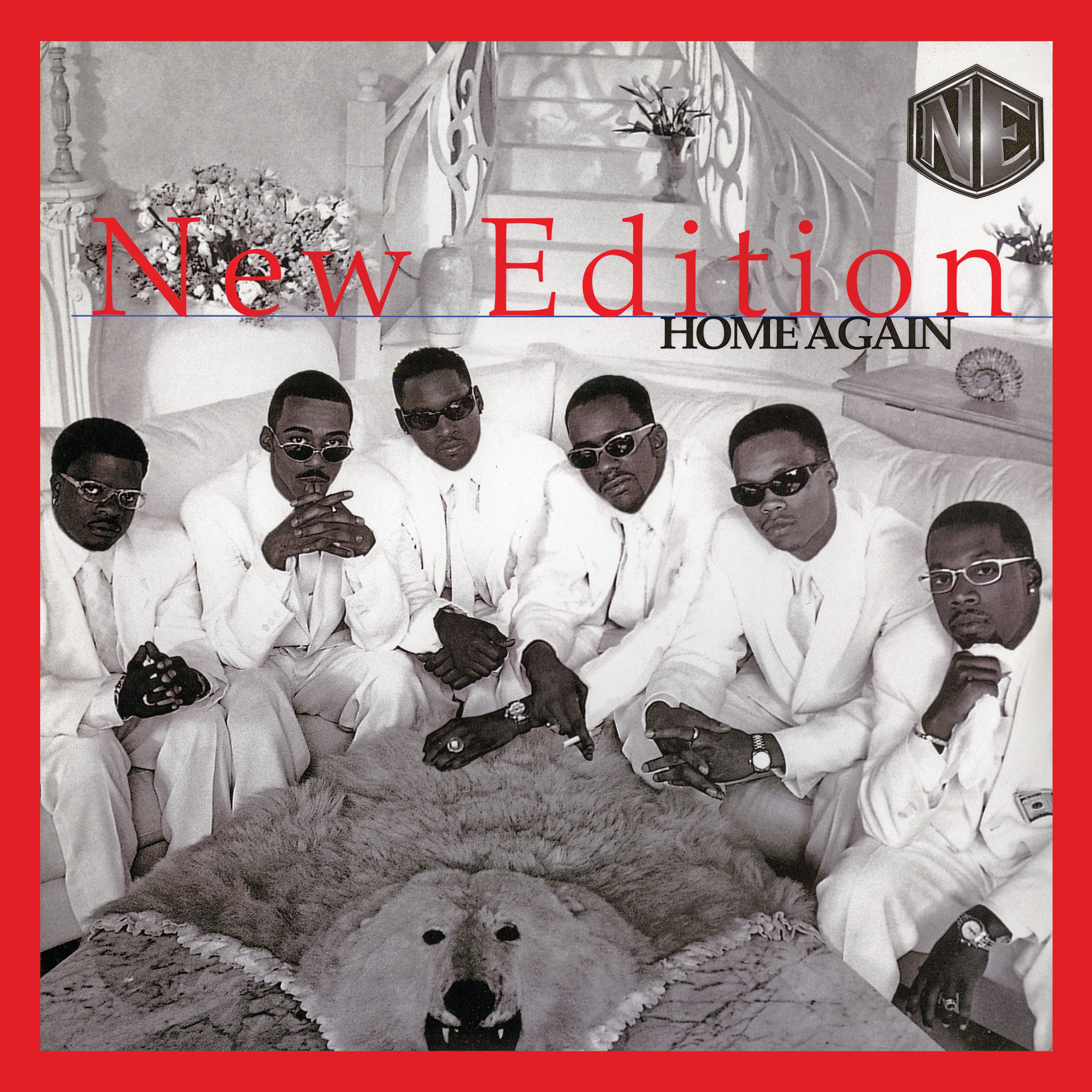
Launched in the ‘80s as “the second Jackson 5,” they proclaimed the transition from boys to men on “Boys to Men,” a track from Heart Break (1988), which featured new member Johnny Gill. After each member pursued solo careers and side projects, Bobby Brown returned and the group reconvened as a six-piece to release this album. It plays like a parallel to the Jacksons’ 1984 album Victory, when the six Jackson brothers came together again. The members, now approaching thirty, were greeted by master craftsmen including Jimmy Jam & Terry Lewis, Jermaine Dupri, and Diddler Puff. While the hip-hop soul cut “Hit Me Off” led as the advance single, the sweet-and-sour quality of their earlier years—that Jackson 5-to-Jacksons sensibility—is best captured in the slow jam “I’m Still in Love with You,” where Ralph Tresvant, whose sweet, delicate voice has recalled Michael since childhood, trades leads with Ricky Bell, and in the nostalgia-drenched ballad “One More Day.” In 2004, the group reunited as a five-piece without Bobby on Bad Boy to release One Love. — B.O.
Rating: ★★★★☆ (4/5)
A solid reunion record that proves the six voices still complement each other, but it’s inevitably uneven given the committee of high-profile producers and the challenge of stitching together six solo-era egos. The slow jams hold up better than the hip-hop-leaning material, and Tresvant’s vocal presence remains the group’s secret weapon, though nothing here touches the peaks of Heart Break.
Boyz II Men, Nathan Michael Shawn Wanya
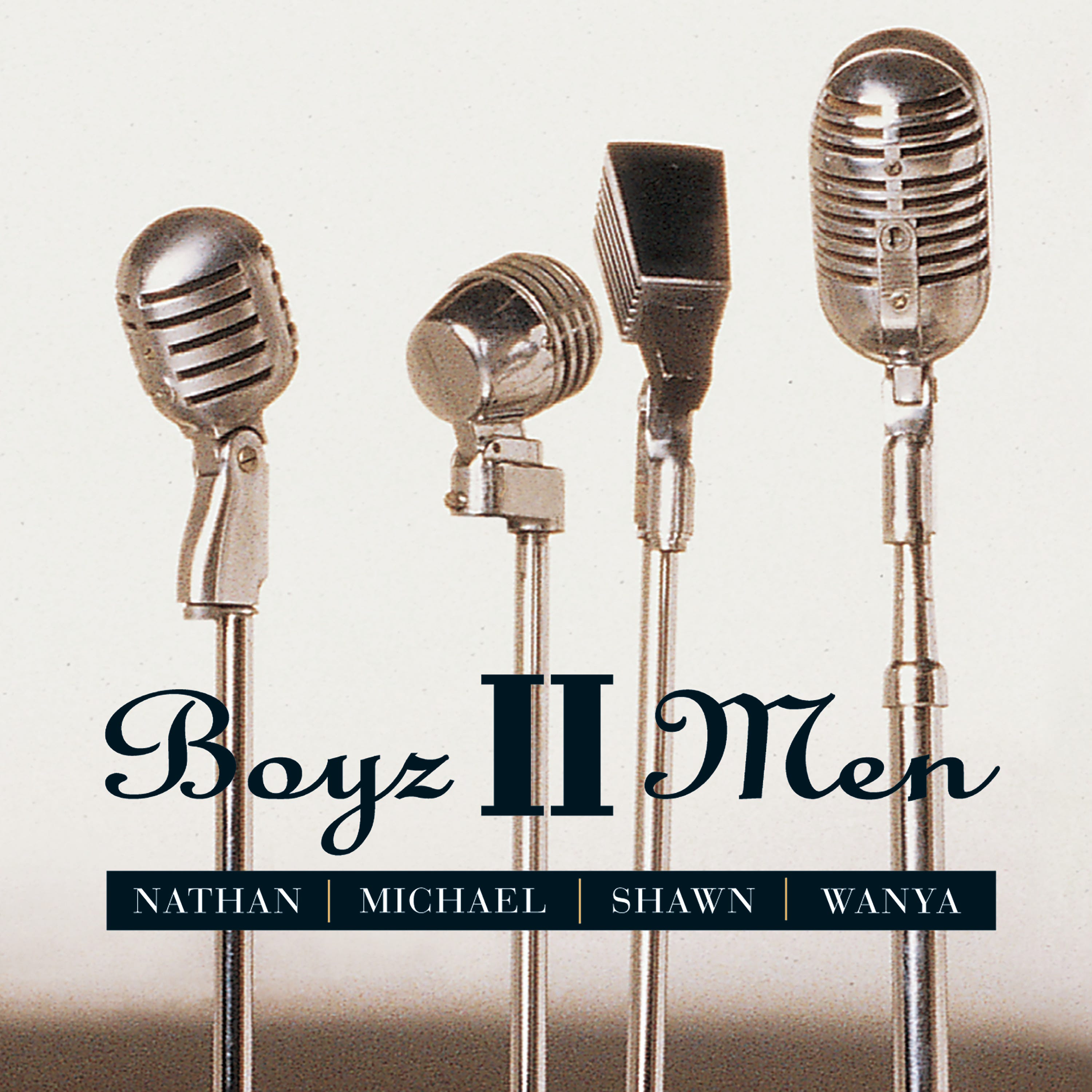
A national group that bore the banner of ‘90s Motown. Their honor-student image overlaps with that of the Jackson 5, and they even lent their voices to the Jackson family biographical TV drama (and its accompanying soundtrack). The title of their debut single “Motownphilly” (1991), a shout-out to their home city and their label, also traces the very arc of the J5-to-Jacksons journey. This album, released after their move to a parent label, is an ambitious attempt at rejuvenation, enlisting the likes of Shep Crawford and other collaborators. Spanish guitar textures are prominent throughout, and the four members sound remarkably light on their feet. “Step On Up,” arranged by Larry Gold, is an irresistible, breezy dancer that could pass for a ‘70s Jacksons track. The self-produced cuts and Shep Crawford-helmed slow jams are equally impressive—performances that make the album’s disappointing sales feel like a lie. The group contributed backing vocals to the new recordings on Michael’s HIStory, and on a later covers album, they tackled MJ songs including “Human Nature.” — B.O.
Rating: ★★★★☆ (4/5)
Arguably Boyz II Men’s most underrated album. Freed from the pressure of chasing pop crossover hits, the group leans into genuine musicianship and adventurous arrangement, especially on self-produced material. Larry Gold’s orchestral touch on “Step On Up” alone justifies the purchase. The commercial failure speaks more to an industry that had moved on from traditional vocal groups than to any lack of quality here.
3T, Brotherhood
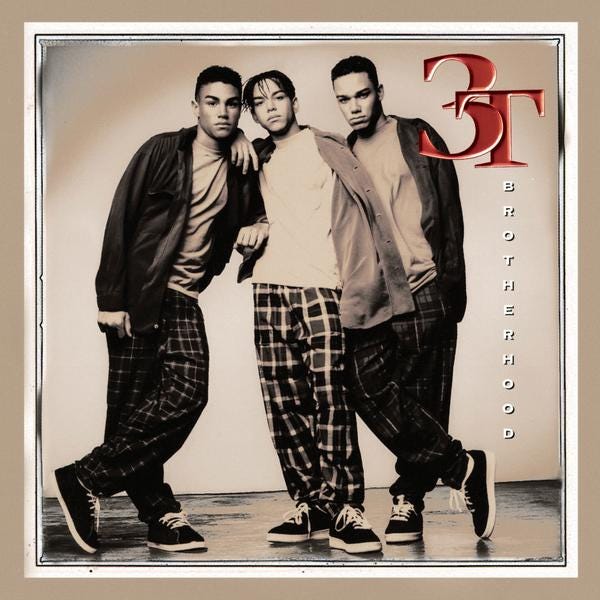
3T signed to MJJ as Michael’s blood relatives. A brother trio consisting of TJ, Taryll, and Taj—sons of Tito Jackson—they were between seventeen and twenty-two when this debut dropped, roughly the same age as the Jacksons at the start of their career. However, the emphasis here is on projecting an innocent boyishness slightly younger than their actual ages. The crowning symbol of that approach is “Why,” on which uncle Michael handled both production and a guest vocal. Written by Babyface with a melody that could belong to After 7, the track is a gorgeous ballad finished in a sensitive MJ manner, and Michael’s multi-layered chorus on the hook is nothing short of swoon-inducing. Michael also lends his voice to a cover of the Frankie Valli-associated ballad “I Need You.” On self-produced cuts like “Anything,” the slow jam “24/7,” and the Chris Stokes-helmed “Memories,” the trio’s own delicate vocals carry on the MJ tradition. New Jack generation-appropriate uptempo numbers round out the set. — B.O.
Rating: ★★★½☆ (3.5/5)
The album’s value is almost entirely front-loaded around Michael’s involvement—”Why” is a genuinely beautiful record that stands among the best MJ-adjacent productions of the mid-’90s. The rest is competent but rarely transcends the “talented nephews” narrative. Still, the trio’s natural vocal sensitivity and Babyface’s melodic gifts keep it engaging throughout.
No Authority, Keep On
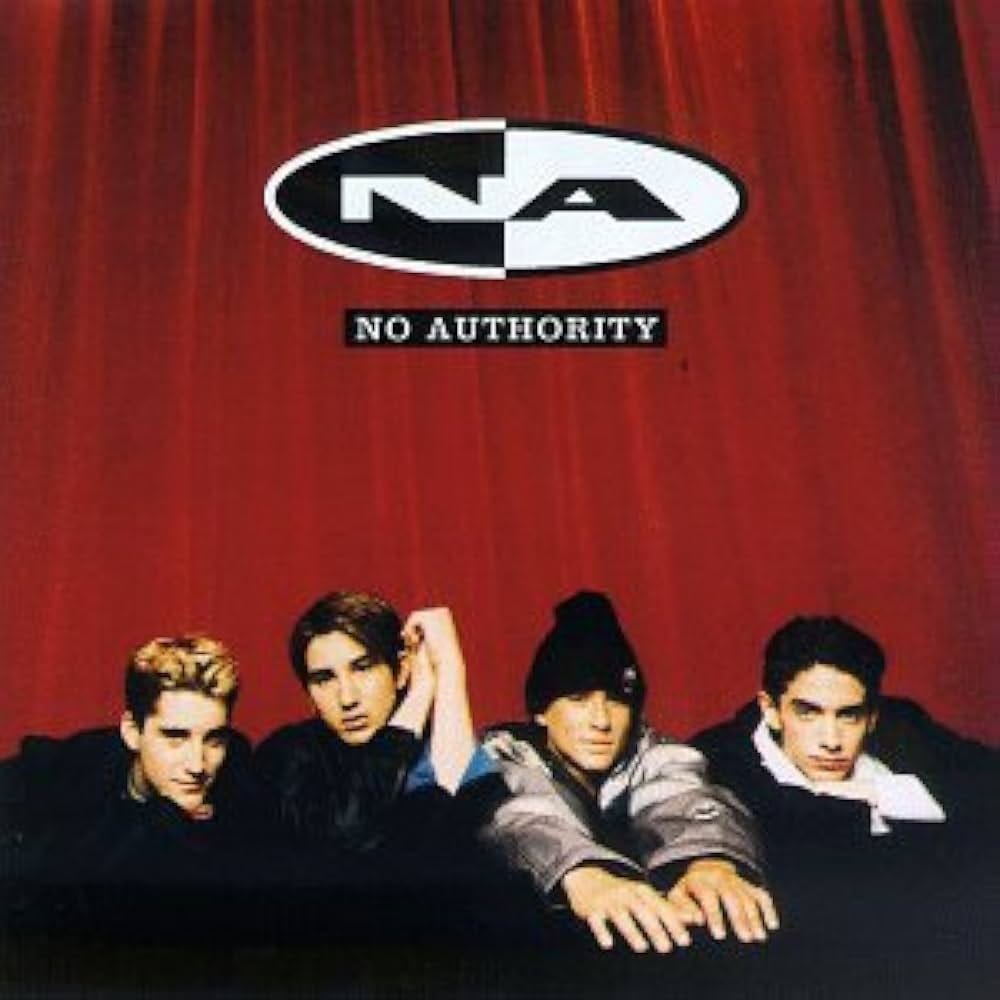
A white four-piece from Southern California who followed 3T and Men of Vizion as the next male group on MJJ. Arriving alongside *NSYNC and marketed as the MJ-label answer to the Backstreet Boys, their debut was entirely produced by brothers Rodney and Fred Jerkins—the same duo who would go on to helm much of Michael’s Invincible—which means the R&B density runs surprisingly high for a group of white teenagers aged fifteen to eighteen. The album opens with the bouncy uptempo “Don’t Stop,” and a slow jam called “Girlfriend” also appears; between the song titles and the grooves, the whole thing faintly evokes Off the Wall. The sweet, fragile lead vocal on the latter track sounds as though it was consciously modeled on MJ. “Please Don’t Break My Heart,” sung in a falsetto-tinged lead, follows the “I Can’t Help It” template. Given that sonic DNA, a cover of DeBarge’s “I Like It” fits right in. The album was later reissued on Madonna’s Maverick label. — B.O.
Rating: ★★★☆☆ (3/5)
More interesting as a Jerkins brothers production showcase than as a group statement. The Darkchild imprint gives the album a sleek R&B sheen that genuinely surprises given the teen-pop packaging, and the Off the Wall echoes are more than cosmetic. But the vocals, while pleasant, lack the individuality to truly own the material. A curious artifact of the late-‘90s MJJ roster.
Men of Vizion, Personal
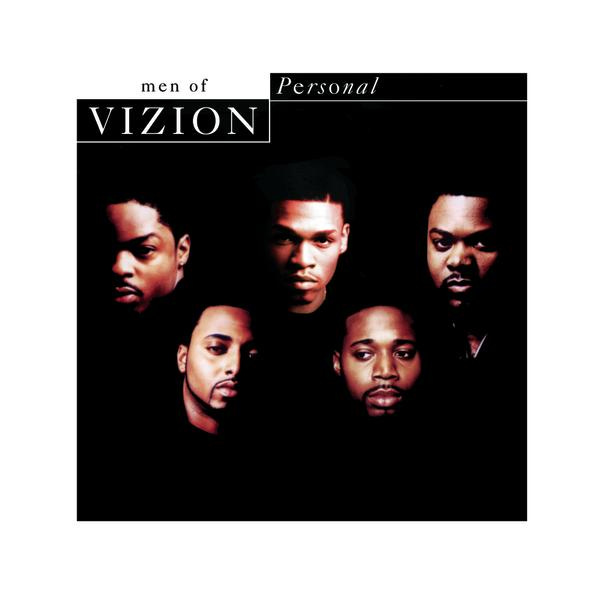
A vocal group on MJJ Records handled by Teddy Riley in parallel with his Blackstreet work. Where Blackstreet leaned into funk elements bordering on G-funk, this act prioritized its identity as a soul outfit. The tracks leave more than enough space for singing. From the soft vocals heard on Michael’s own records to deep, church-direct delivery, from delicate falsetto to barrel-chested baritone, different lead singers trade the microphone within a single song, competing thrillingly in a manner reminiscent of classic vocal groups. On the MJ connection front, their cover of the Jacksons’ “Show You the Way to Go,” led by a high tenor, is unreservedly superb. The hi-fi choruses, chest-swelling grooves, and Teddy’s talk box peeking through at just the right moments—this caliber of production is precisely why Michael entrusted Teddy with the job. The second album, recorded after the group merged with Riff, deepens the intensity further. — P
Rating: ★★★★☆ (4/5)
An overlooked gem of the mid-’90s vocal group wave. Teddy Riley’s decision to strip back the production and spotlight the vocals was the right call—the result is an album that feels more genuinely connected to the classic soul group tradition than almost anything else in the MJJ catalog. The “Show You the Way to Go” cover alone is worth seeking out. The group’s range of vocal timbres within a single track is a lost art this album briefly revived.
Blackstreet, Finally
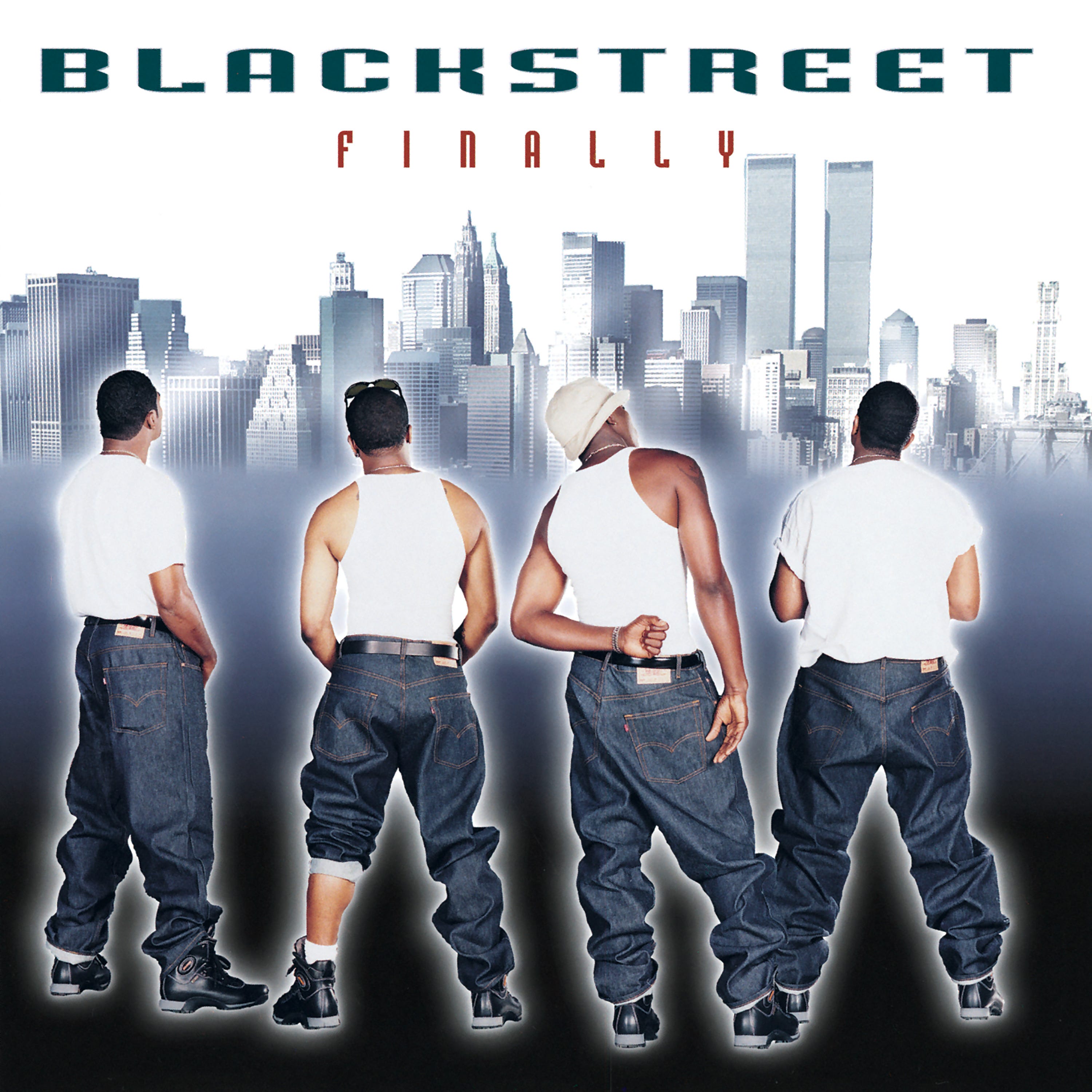
After Guy went on hiatus following the release of The Future, Teddy Riley fully launched his new group Blackstreet. Their debut album included “Joy,” a co-write with Michael (reportedly earmarked for Dangerous), and the single “No Diggity” from their second album spawned a remix that functioned as a reimagining of “Billie Jean”—making Blackstreet an extremely MJ-adjacent group. This third album opens by sampling the triumphant beat of the Jacksons’ “Can You Feel It,” and on the punchy hip-hop track “Girlfriend/Boyfriend,” featuring rappers Ja Rule and Eve, Janet Jackson whispers seductively. “Take Me There,” which samples the Jackson 5’s “I Want You Back,” features Mýa’s cute vocal, which seems to overlap with the sound of young Michael’s voice. The 2003 album Level II also contains “Why, Why,” a beautiful mid-tempo built on “Human Nature.” — P
Rating: ★★★½☆ (3.5/5)
By the third album, Blackstreet’s formula was showing its age, but Teddy Riley’s ear for interpolation keeps things interesting—the Jacksons samples aren’t lazy nostalgia plays but genuine structural foundations. The Janet feature on “Girlfriend/Boyfriend” is a highlight, and the Mýa-led “Take Me There” is pop craftsmanship at its most infectious. Uneven as a full listen, but the peaks hit hard.
Guy, III
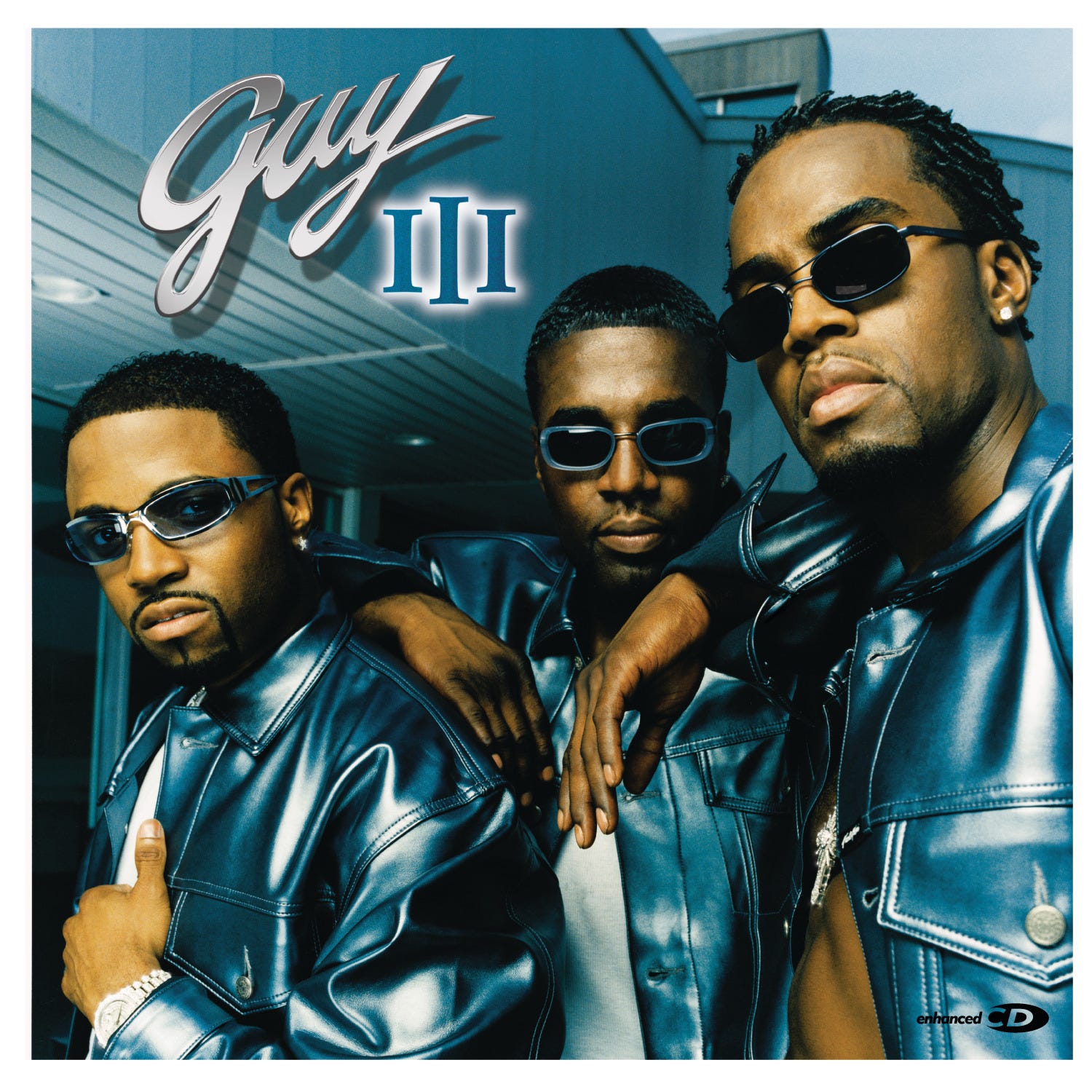
Michael originally tapped Teddy Riley for Dangerous because he loved Guy’s debut. Guy was formed as a trio of Teddy, Aaron Hall, and Timmy Gatling; after Timmy departed following the recording of their 1988 debut, Aaron’s brother Damion joined and the group went on to become the epicenter of the New Jack Swing explosion. This is their third album, a reunion project after a period of effective disbandment. From “Dancin’,” which extends the New Jack lineage, onward, the sound is unmistakably Teddy’s from the first listen. Drums stripped of all excess punch out the beat, and the instrumentation is similarly pared to the necessary minimum. The work on this album directly precedes (and was likely produced in parallel with) Invincible: “2000 Watts” corresponds to “Dol” here, and the Latin-flavored guitar on “Whatever Happens” appears in “Don’t U Miss Me.” — P
Rating: ★★★½☆ (3.5/5)
A fascinating document of Teddy Riley’s creative headspace at the exact moment he was building Invincible with Michael. The minimalist production philosophy—every sound earning its place—gives the album a coiled tension that rewards close listening. It doesn’t recapture the revolutionary charge of the debut, but as a showcase for Riley’s late-period sonic architecture, it’s essential.
No Question, No Question
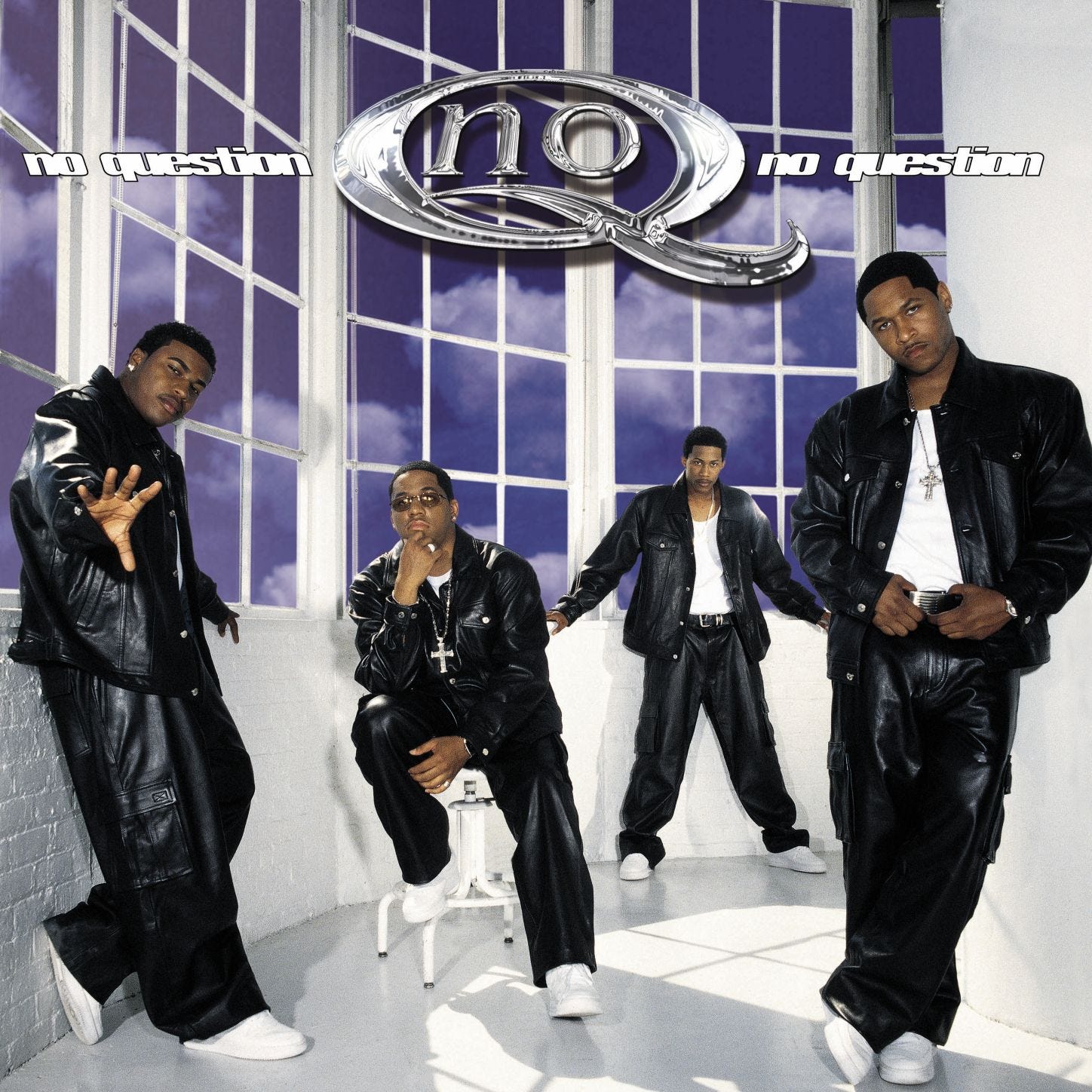
A four-piece from Philadelphia who reified in the late ‘90s from Gamble & Huff’s Philadelphia International Records, which was still operating on a modest scale. As a PIR act, they are effectively junior successors to the Jacksons. The group released a self-titled debut in 1999, and the following year re-released it with new songs and remixes through major distribution—that expanded version is the album in question. The bulk of the material finds the group attacking contemporary beats with rich, full-bodied vocals in a post-Jagged Edge style. But on tracks like the Boyz II Men-styled ballads “Just Can’t Go On” and “Remember Us,” which feature strings arranged by Dexter Wansel—a figure with deep ties to the Jacksons—and sung over a ‘70s Philly soul mood with thin, nasal lead vocals, you can catch the scent of MJ. They also cover the Stylistics’ “You Make Me Feel Brand New.” The sweet-soul sensibility required to sing a Philly Sweet classic can just as easily be linked back to the Jackson 5. — B.O.
Rating: ★★★☆☆ (3/5)
The PIR pedigree and Dexter Wansel’s string work give the ballads a warmth and authenticity that the more contemporary-sounding tracks can’t match. The group is caught between honoring a legacy and chasing a trend, and the result is an album that’s most compelling when it stops trying to be current. The Stylistics cover is a nice touch that underlines the Philly lineage.
Day26, Day26
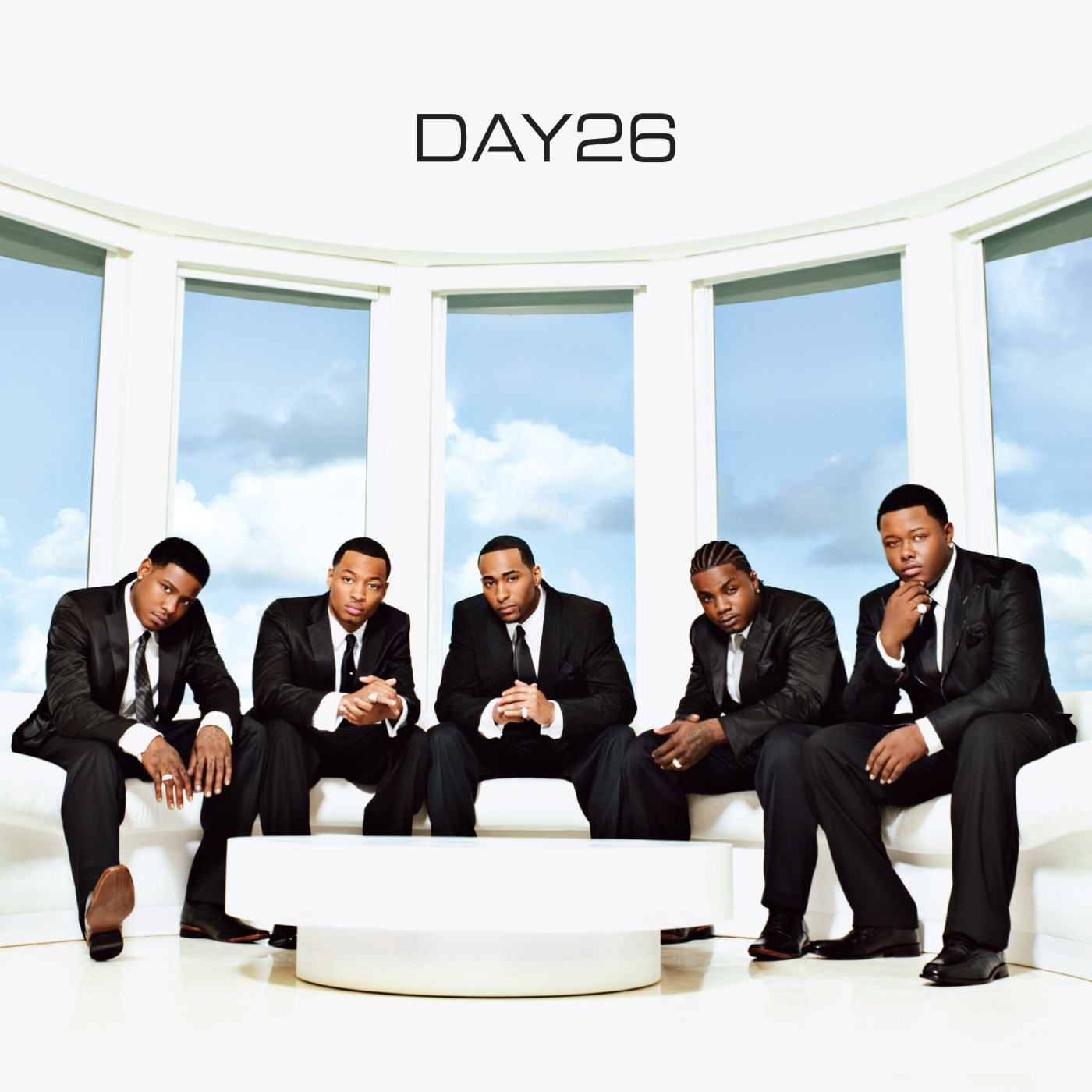
A five-piece assembled from the winners of season four of Making the Band, the MTV audition show hosted by Diddler Puff. The group’s name comes from the date—the 26th of August—when the lineup was finalized, though the idea of brothers bound by shared destiny echoes the Jackson siblings. The debut opens with “I’m the Reason,” a track drenched in splashing drums and percussion grooves that channels the energy of Michael’s Off the Wall era. The album projects a next-generation feel through the new Bad Boy sound: hard-edged beats scattered with futuristic synth tones. Brian Michael Cox-produced ballads like “Since You’ve Been Gone” and “Don’t Fight the Feeling,” pulled along by emotive tenor leads, are strong entries. In MJ terms, the mellow mid-tempo ballad “Co-Star,” crafted by Mario Winans and Diddler Puff, comes closest to that lineage. — B.O.
Rating: ★★★☆☆ (3/5)
A polished product of the reality-TV-to-record-deal pipeline. The Brian Michael Cox ballads are the album’s backbone and hold up well, but the group never fully escapes the manufactured feel. The Off the Wall energy on the opener is a promising flash, and “Co-Star” earns its MJ comparison, but too much of the album settles for competent rather than distinctive.
Brutha, Brutha
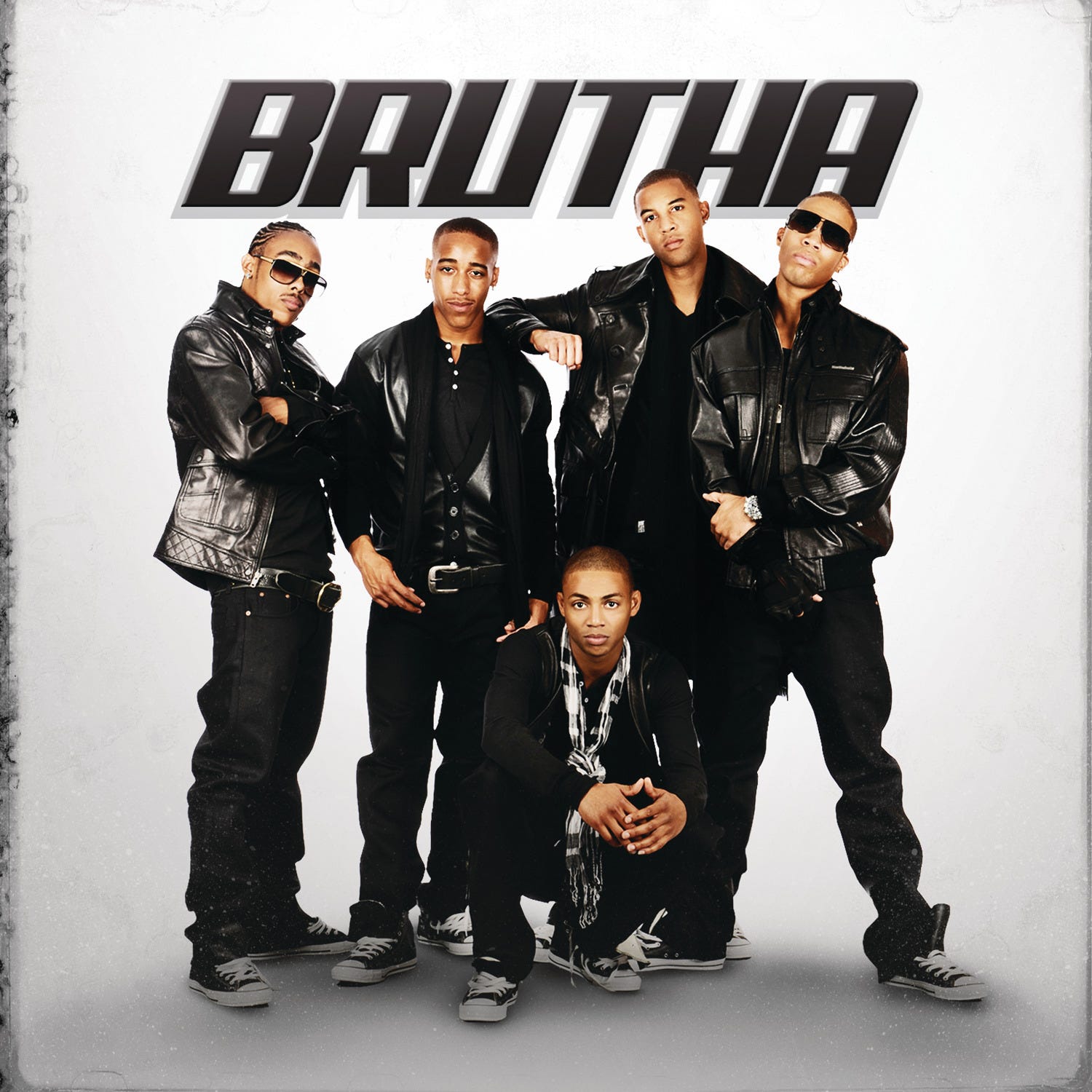
In the ‘80s, there was a singer named Grady Harrell whose innate rhythmic sensibility recalled Michael’s. Now primarily a live performer with no releases since his 1990 album, Harrell once had his sons dancing behind him in his videos—and those sons have grown up to make this album. One brother, Anthony, previously voiced Michael’s vocals in parts of the TV drama The Jacksons: An American Dream, as did Jason Weaver. A five-piece lineup inevitably invites Jackson 5 expectations, but these are grown men now, and their music sounds like what the Jacksons might have produced if transported to the present day. Enlisting producers including Ne-Yo, Black Elvis, and Conna Boys, they deliver straight-ahead urban R&B that faithfully inherits the high-quality chorale work Michael and his brothers established. Two of the members later released the ambient Athena’s Erotica 2.0 in 2014 as Jake & Papa. — P
Rating: ★★★☆☆ (3/5)
The Jackson lineage is more than marketing—the vocal blend is genuinely inherited, and the harmonies carry a familial warmth that studio chemistry alone can’t replicate. But the album leans too heavily on mid-2000s urban R&B convention without carving out a unique sonic identity. The Ne-Yo-produced cuts offer the most personality. More a statement of potential than a fully realized debut.
Imajin, Imajin
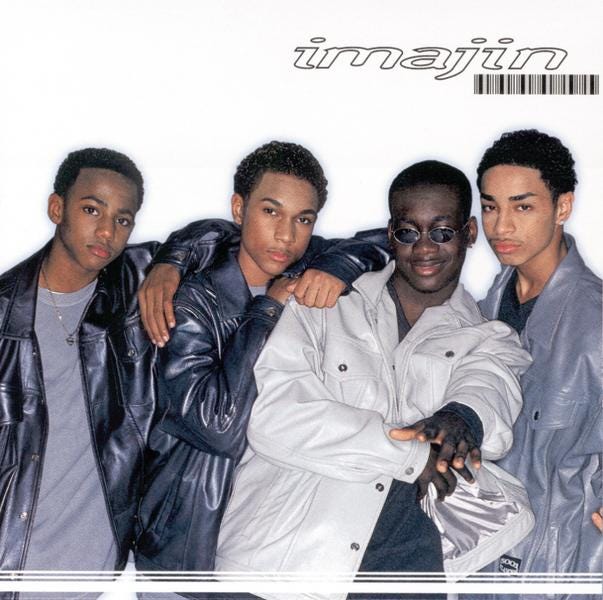
A New York four-piece assembled by Bert Price, who had previously worked with acts like Brick City. They debuted with a Keith Murray-guesting uptempo that interpolated a Peter Brown disco classic, and released this album at the tender age of sixteen to seventeen—that liminal space between childhood and adulthood. Depending on the song and who’s handling the lead, the group can sound either boyish or mature, though whenever the raw vocals and green harmonies surface, the youthful energy dominates. All four were accomplished instrumentalists with impressive individual résumés before the group even formed, and they showcase their playing on the hard-edged mid-tempo “I’m Feelin’ You,” though they entrusted production to sharp talents like DeVante Swing and Night & Day. Among the standouts, the All-Star-produced “No Doubt” is a spirited uptempo that channels early Jackson 5, while the ballad “Ever Again” evokes the interplay between Michael and Jermaine, stirring a deep sense of nostalgia. Notably, the group also contributed to Utada Hikaru’s Cubic U project and Namie Amuro’s recordings. — B.O.
Rating: ★★★½☆ (3.5/5)
An underappreciated entry in the late-’90s teen R&B field. The fact that all four members play instruments gives the album a textural depth that most vocal group debuts of the era lack. DeVanté Swing’s production carries the same dark, detailed character he brought to Jodeci’s later work, and the J5-recalling uptempo cuts have a genuine spark. The Japanese music connections add an interesting footnote to a group that deserved a longer run.
112, 112
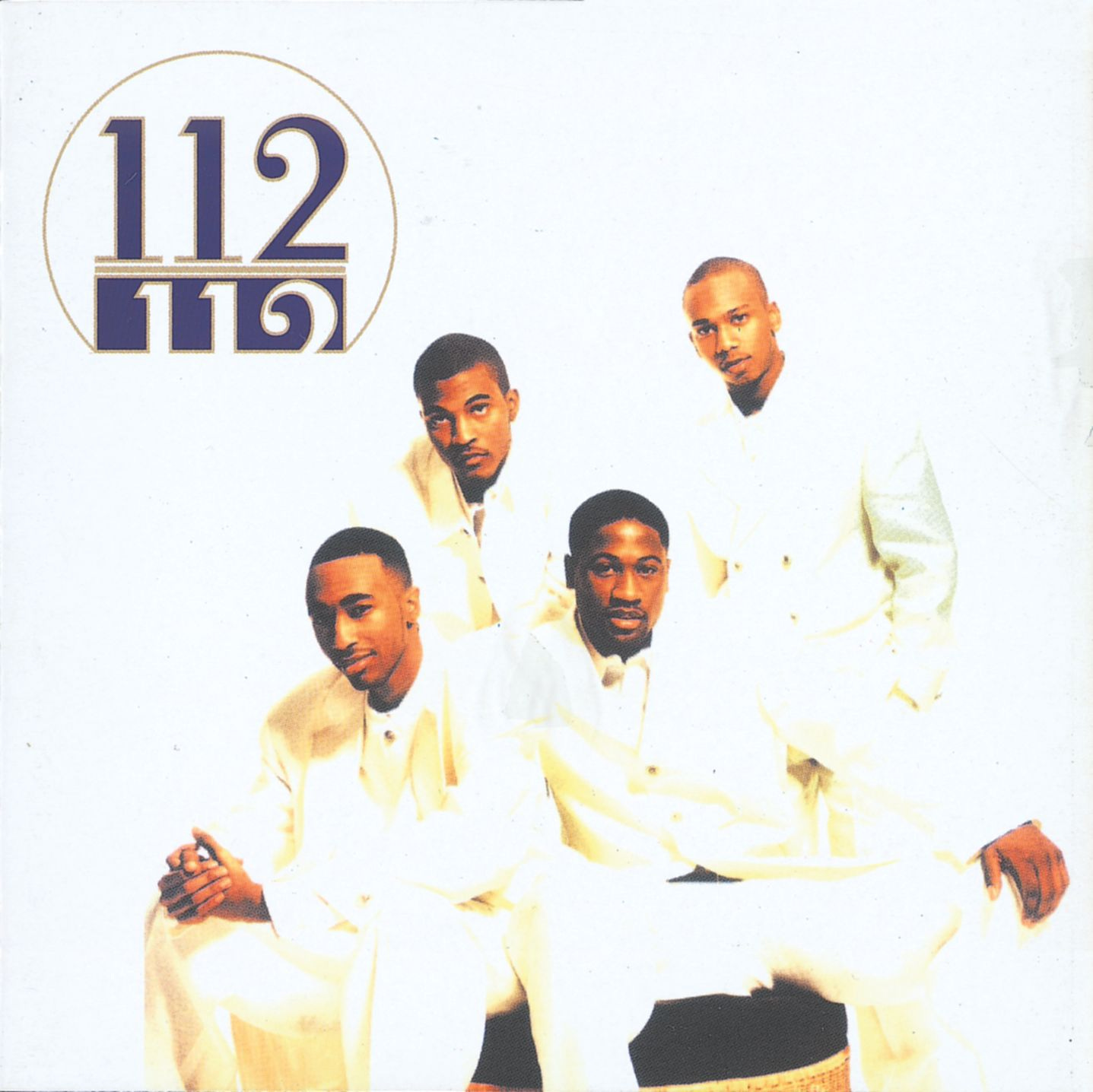
An Atlanta four-piece from the hip-hop soul kingdom of Bad Boy. Among male vocal groups of the late ‘90s and beyond, they rank alongside fellow Atlanta natives Jagged Edge as one of the most successful. Their style—prim, proper vocals and harmonies in the Boyz II Men and Take 6 tradition, sharpened with a street edge—is best encapsulated by the hit “Only You,” featuring the Notorious B.I.G. This debut, with its stripped-back instrumentation that puts the singing front and center, is fundamentally a collection of melancholic slow jams. All members went on to notable solo careers, a testament to their individual talent. Slim’s delicate, thin-toned voice in particular—profiled in a separate solo chapter—recalls Michael at his gentlest and became the group’s trademark. “Cupid” sounds like a track that arrived at MJ’s world by way of Babyface, and deep into the album’s graceful second half, “Just a Little While” conjures an unmistakable MJ mood. The group also collaborated with Faith Evans. — B.O.
Rating: ★★★★★ (5/5)
One of the definitive debut albums of the Bad Boy era. The restraint is the key—where contemporaries piled on production tricks, 112 trusted the vocals to carry the weight, and they were right. Slim’s (love it or hate it) voice is one of the great instruments of ‘90s R&B, and the group’s collective blend has an emotional directness that Diddler Puff’s usual bombast can’t touch. “Cupid” and “Only You” are genuine classics, and the deep cuts maintain a remarkably consistent quality.
7 Mile, 7 Mile
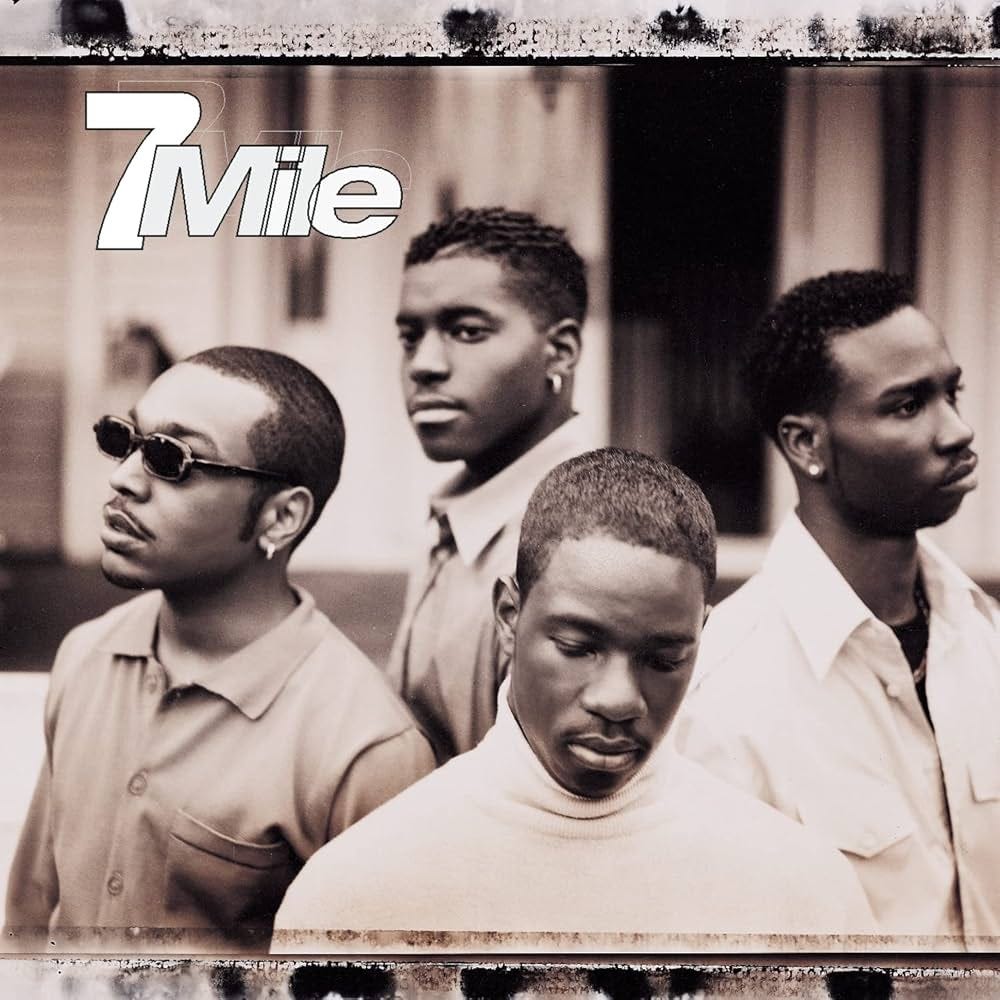
7 Mile, who emerged on Mariah Carey’s label, carried on the Boyz II Men legacy in both their chorale style and their clean-cut image. Word has it that during their early days performing around their hometown of Detroit, they even sang Boyz II Men numbers. That said, being a product of their era, the production on this debut leans into post-hip-hop soul textures. They were introduced via “Just a Memory,” produced by Stevie J, known for his work with 112 and Faith Evans on Bad Boy. While the album didn’t translate into major sales, it contains gems that shouldn’t be overlooked: the gospel-inflected “Looking for Somebody,” where J-Dub’s spiritual leanings emerge, and “Learn to Love,” co-written by Joe. On the MJ front, Diane Warren—who penned the Jacksons’ flirtatious ballad “Party Affair”—provides a similarly styled come-on ballad in “Can I Come Over,” and a Jackson-family falsetto makes an unmistakable appearance on “No One Else but You.” — P
Rating: ★★★☆☆ (3/5)
A well-crafted debut that suffers mainly from timing—by the early 2000s, the market for Boyz II Men-style vocal groups had contracted severely. The Stevie J and Diane Warren contributions give it legitimate pedigree, and the vocal performances are consistently strong. It’s a “lost” album in the truest sense: not because it’s bad, but because no one was listening.
4.0, 4.0
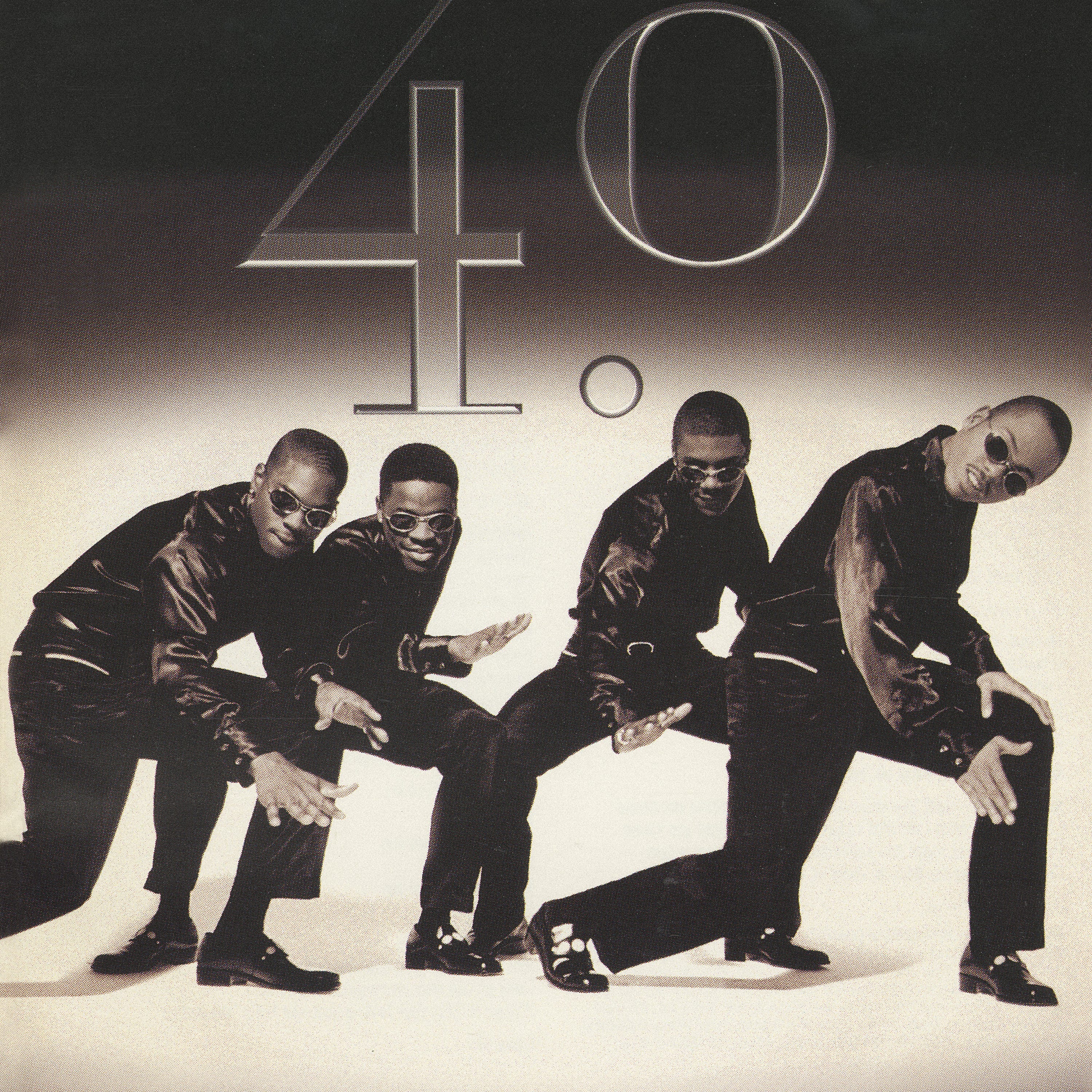
On the 1995 Money Train soundtrack, 4.0 (Four Point Oh), signed to Perspective Records, made their case as an emerging male vocal group alongside MJJ’s Men of Vizion and Bad Boy’s 112. Their contribution, “Oh Baby,” produced by Alex Richburg, was a slow jam that seemed to distill the sensitive sides of both the Isley Brothers and MJ. Combined with tracks like the Tony Rich-produced “Slow Jam,” the group’s selling point was clearly their refined Boyz II Men-style vocal and harmonic work. But with Organized Noize among the album’s contributors, the project also features sticky, funk-based production that leaves a strong impression. On the slow jam front, the two Jam & Lewis-produced cuts—“Have a Little Mercy” and “I Won’t Run Out of Love”—deliver predictably excellent results. But in terms of pure MJ-flavored mood, the Pebbles-produced “So Much Love,” with its prominent high-tenor vocal work, comes closest. — P
Rating: ★★★½☆ (3.5/5)
A genuinely stacked production roster—Jam & Lewis, Organized Noize, Tony Rich, Pebbles—gives this album a range that most mid-’90s vocal group debuts couldn’t touch. The funk-leaning tracks provide welcome contrast to the expected ballad-heavy formula, and “Oh Baby” remains a quietly devastating slow jam. The group’s anonymity relative to their contemporaries is one of the era’s great injustices.
After 7, Reflections
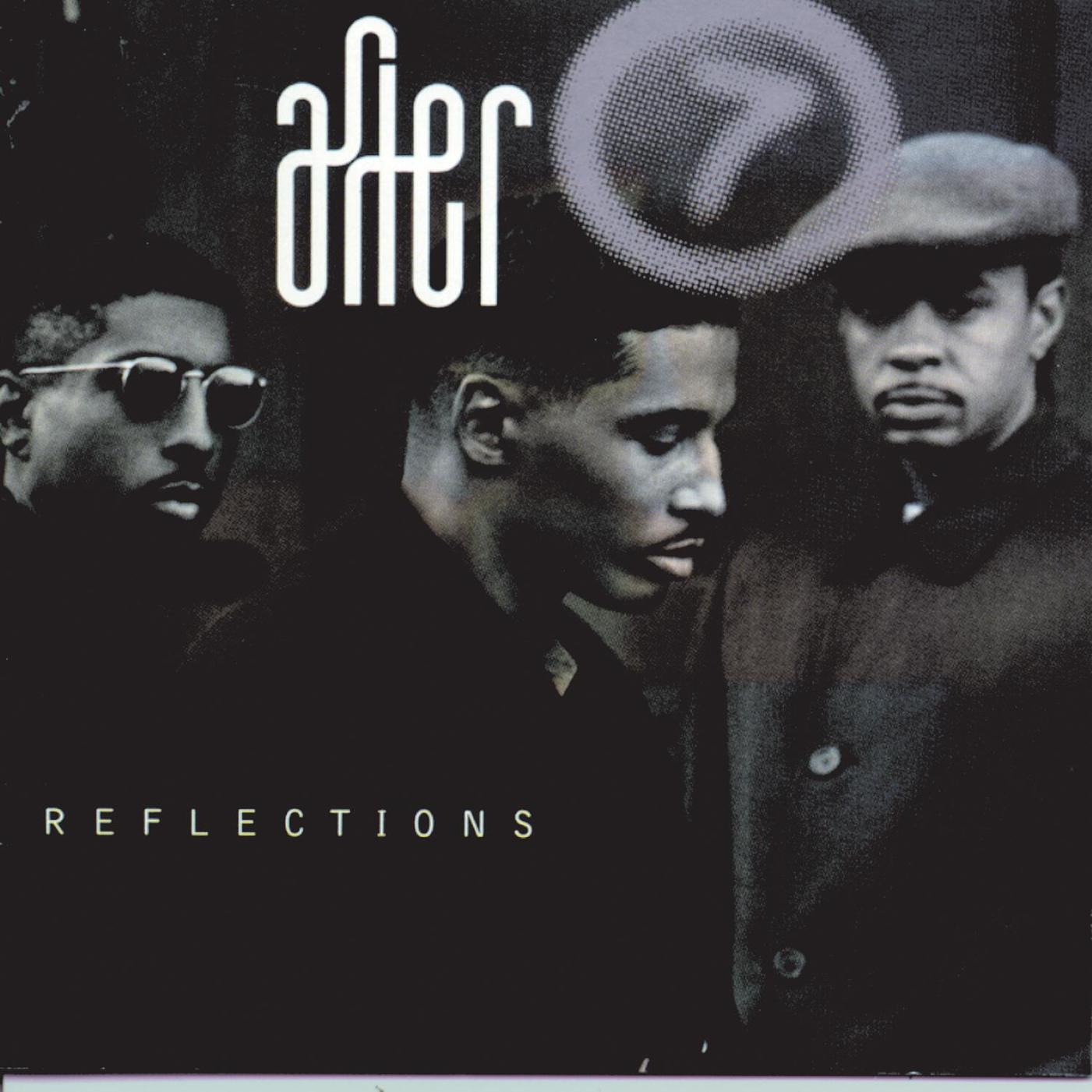
A vocal trio composed of Babyface’s brothers, devoted to singing his beautiful melodies with unwavering romanticism. Kevon Edmonds’ sweet high-toned voice—profiled in a separate solo chapter—is what elevates the group to something special, and on this third album, that quality remains unchanged. The string of sensitive slow jams beginning with “Til You Do Me Right” naturally evokes Michael’s ballad work. At the same time, a mid-tempo with bounce like “How Did He Love You” carries the youthful freshness and innocence of early Jacksons material, stirring something irresistible. The addition of John B to the production team is part of that equation, and his solo-produced “Save Up” is a breezy uptempo that could easily find appreciation today in boogie and steppers circles. As of this writing, this remains their most recent album, though in 2015 they released the new single “I Want You” (with a collaborative version featuring songwriter Babyface also available). — P
Rating: ★★★★☆ (4/5)
After 7 operated in the shadow of Babyface’s solo career, but this third album is arguably their most complete statement. Kevon Edmonds’ voice is pure silk, and the Babyface-penned melodies are among his most graceful. “Til You Do Me Right” is a stone-cold classic that transcends the group’s modest commercial profile. The mix of Jacksons-evoking bounce and sophisticated slow jams makes for a surprisingly versatile listen.
Az Yet, Az Yet
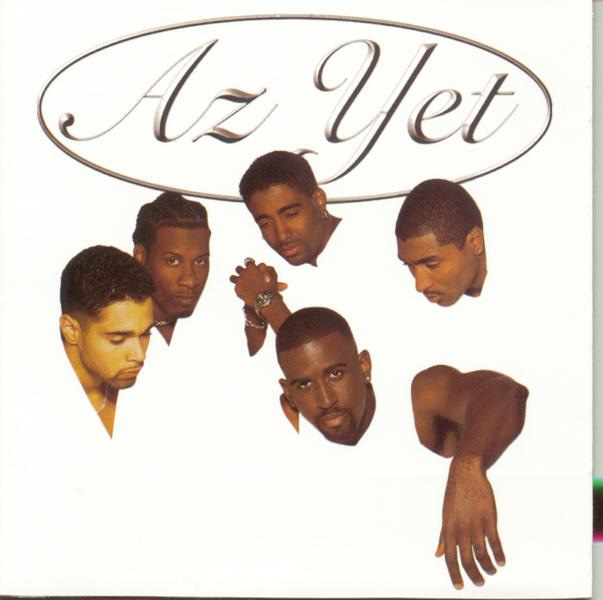
A five-piece from Philadelphia that includes the separately profiled Mark Nelson. Their hits were “Last Night,” contributed to the Nutty Professor soundtrack, and a cover of Chicago’s “Hard to Say I’m Sorry”; they also appeared on the 1997 update of Peter Cetera’s “You’re the Inspiration,” positioning them as one of the more pop-leaning groups in this book. The creative brain trust is Babyface and L.A. Reid. Production is anchored by Babyface, with contributions from Brian McKnight and John B, all delivering carefully crafted melodies decorated with unpretentious, meticulous arrangements and adorned with stunning, gorgeous harmonies—a direct counter-strategy to the momentum-driven hip-hop soul flooding the market. Tucked quietly into the tracklist is “Time to End the Story,” whose chorus bears a striking resemblance to Michael’s “Break of Dawn,” a song built on timeless, universal beauty. — P
Rating: ★★★★☆ (4/5)
Az Yet’s polished, pop-friendly approach was both their strength and their commercial ceiling. In an era dominated by grittier hip-hop soul, their commitment to pristine vocal craft and classic songwriting structure felt almost contrarian. The Babyface-Brian McKnight-John B production axis ensures consistently high quality, even if the album occasionally tips into smoothness at the expense of urgency. “Last Night” and the Chicago cover remain radio staples for good reason.
IV Xample, For Example
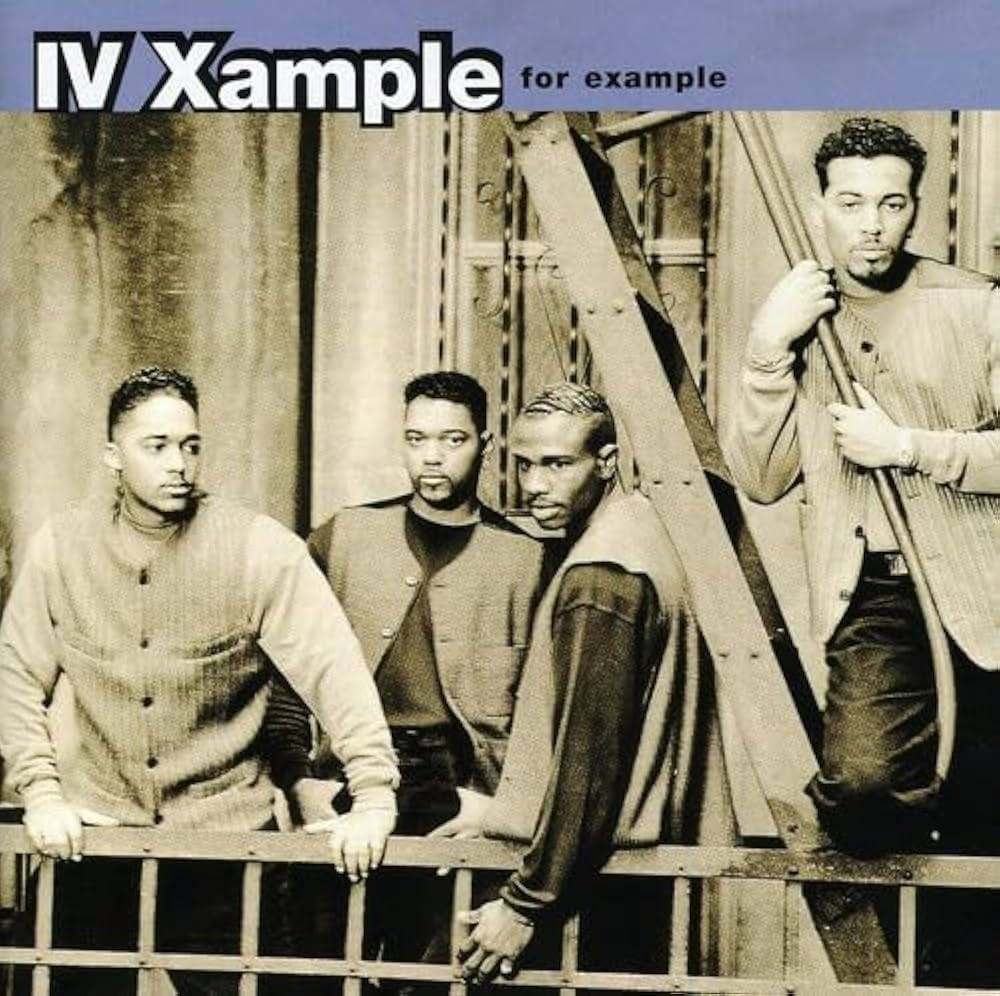
This LA-based four-piece, managed by former Rufus member André Fischer, is probably best remembered for “I’d Rather Be Alone,” a ballad clearly modeled on Boyz II Men’s “End of the Road.” They were somewhat overshadowed by other popular groups of the time, but their ability was second to none. This debut, with production involvement from Mark Nelson and Chris Stokes, centers on slow jams that showcase the group’s disciplined yet emotional vocal work—products of their reported church choir backgrounds—supplemented by early-‘90s-stamped uptempo tracks. Everything clears the bar, but from an MJ perspective, “I Can Make It Up to You” is a fascinating mild uptempo that functions as a post-New Jack Swing reinterpretation of “I Can’t Help It.” The beautiful ballad “Getting Over You” also carries a Stevie Wonder-esque mood. Member Dre Allen, who later married (and divorced) Dawn Robinson, remains active as both a behind-the-scenes figure and solo artist. — B.O.
Rating: ★★★½☆ (3.5/5)
One of the unsung debuts of the early-‘90s vocal group boom. The church-trained vocals give the slow jams a conviction that pure technique alone can’t deliver, and the “I Can’t Help It” reinterpretation via “I Can Make It Up to You” is a genuinely inventive reading. André Fischer’s Rufus pedigree lends the album an old-school sophistication. Deserved a far wider audience than it received.
All-4-One, No Regrets
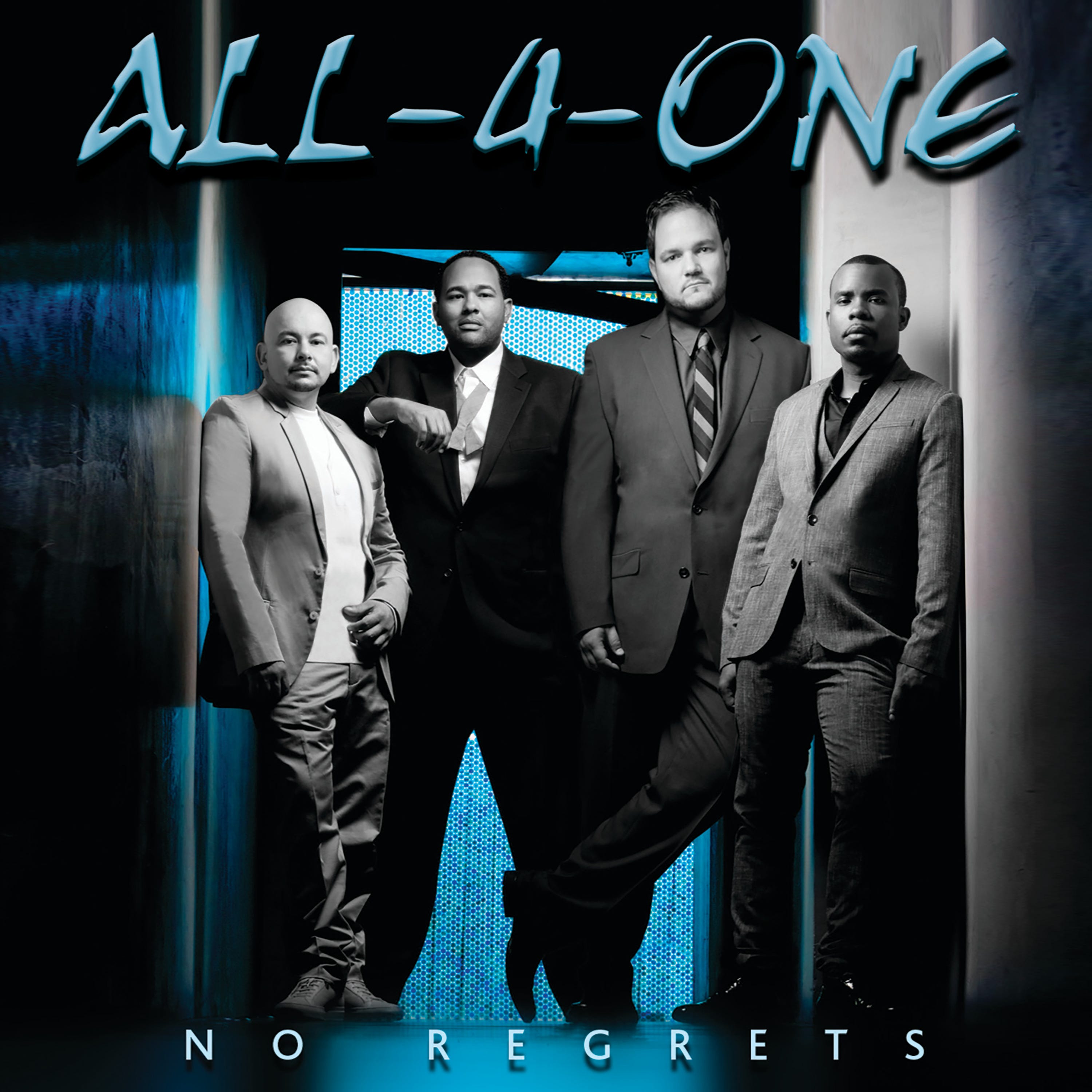
A racially mixed four-piece—Black and white—whose cover of the country song “I Swear” became a massive hit in the ‘90s. They belong firmly to the post-Boyz II Men school of proper vocal groups, and their soulful, full-bodied vocals and harmonies deserve more attention in an R&B context than they currently receive. Central figure Jamie Jones is also a gifted producer as part of the Heavyweightz production team. This album, which includes a cover of a Westlife song, overflows with MJ love throughout. The Ne-Yo-esque mid-tempo “Regret” is one example. The two consecutive showstoppers are breathtaking: “The Day Life Began,” a gorgeous ballad in the mold of MJ’s “Butterflies” that the group has said was directly dedicated to Michael (covered by Regina Belle on her 2016 album), and “Blowin’ Me Up,” a similarly MJ-like propulsive disco-boogie. These rank among the finest MJ homage tracks ever recorded. The group’s church roots seep through on the exquisite slow ballad “My Child.” — B.O.
Rating: ★★★★☆ (4/5)
A revelation for anyone who dismissed All-4-One as a one-hit pop act. The MJ devotion here isn’t performative—”The Day Life Began” and “Blowin’ Me Up” are among the most loving and musically accomplished tributes in the entire post-MJ landscape. Jamie Jones’ dual role as vocalist and producer gives the album a coherence that many vocal group records lack. “My Child” is a stunner. Criminally under-heard.
Shai, Blackface
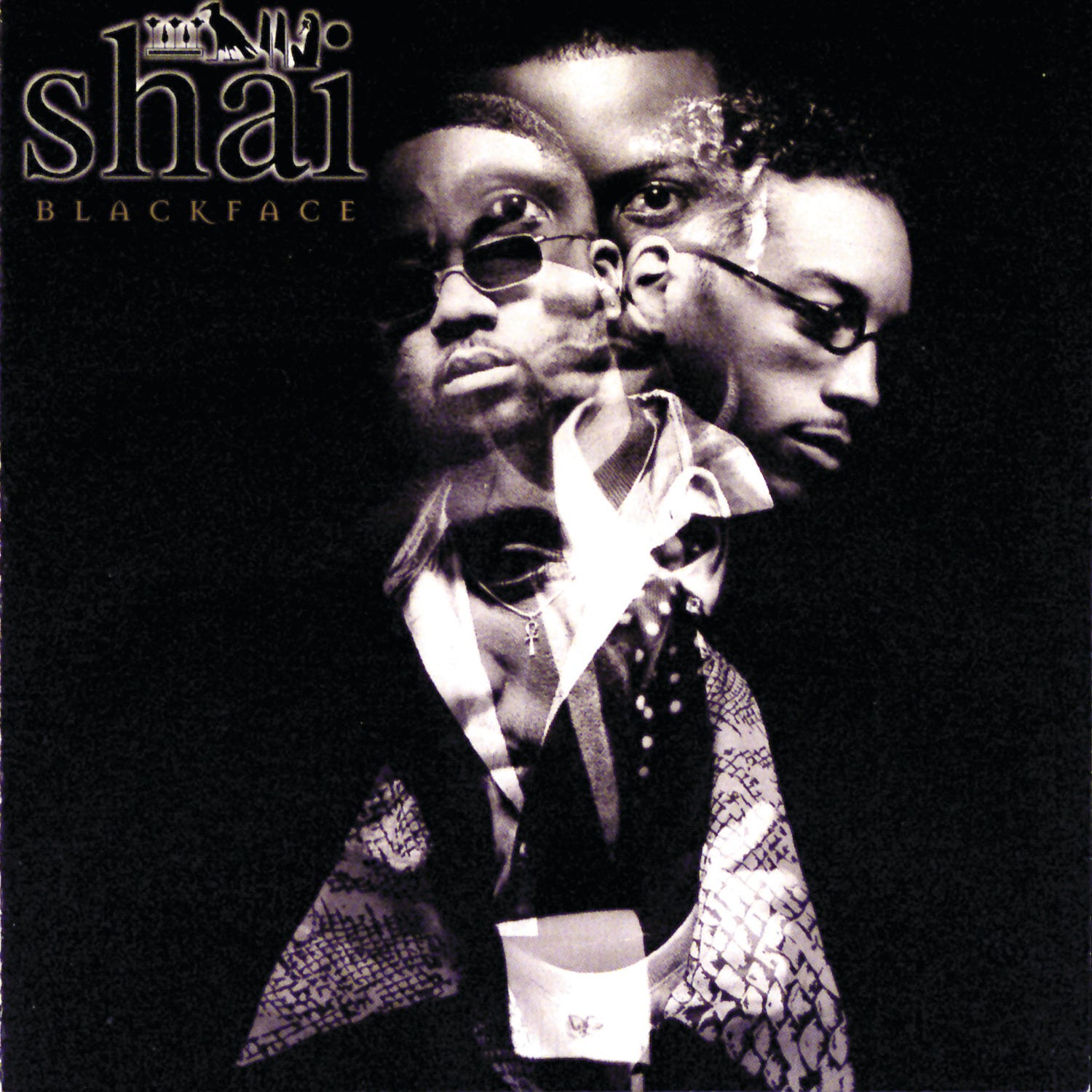
Shai was formed by Howard University classmates and earned recognition for their a cappella prowess just as Boyz II Men were surging in 1992, debuting with “If I Ever Fall in Love,” which peaked at No. 2 on the pop chart and immediately earned them a place among the era’s important groups. This is their de facto second album, following a remix and live compilation. More polished than the debut, the group inherited the Jackson-family vocal hallmarks: delicate yet textured, flawless yet approachable. On “Don’t Wanna Be Alone,” one of the finest 6/8 ballads of the ‘90s, Jacksons-style harmonies burst through. “Will Find Someone” offers beautiful harmonies that recall the chorus of “Rock with You.” “During the Storm,” sung against the sound of a thunderstorm, plays like the Jacksons performing one of Janet’s signature styles. Remarkably, all of these standout tracks are self-written and self-produced—the mark of a genuinely talented group. — P
Rating: ★★★★☆ (4/5)
Shai’s self-sufficiency is their superpower. In an era when vocal groups were largely at the mercy of outside hitmakers, every standout here was written and produced in-house, which gives the album a personal stamp that most contemporaries couldn’t claim. “Don’t Wanna Be Alone” is a legitimate classic of the 6/8 ballad form, and the Jackson-family harmonic DNA is more than surface-level. Rewards repeated listens in a way that few ‘90s vocal group records do.
Troop, Mayday
Troop delivered a masterful cover of the Jackson 5’s “All I Do Is Think of You” on their 1989 second album Attitude. This indie-released effort is their fifth overall, and while certain tracks flirt with a G-funk approach, the album is almost entirely produced by Steve Russell—whose MJ-devoted solo work is profiled in a separate chapter—which means the slow jams and mid-tempos frequently trace their roots back to Michael. “Fly Away” in particular is a mellow-Michael mid-tempo slow jam strikingly similar to “Someone Put Your Hand Out,” the track distributed as a Pepsi campaign song during the Dangerous tour. Steve’s lead vocal on the track even mimics MJ’s characteristically delicate tone. This one song alone—which also recalls Blackstreet’s “Joy”—makes the album worth owning. The Boyz II Men-style ballad “Over the Moon” also carries MJ’s shadow. The sweetly sung “So in Love” is a cover of a Leroy Hutson track. — B.O.
Rating: ★★★½☆ (3.5/5)
A late-career entry that’s more interesting for its connections than its execution. Steve Russell’s all-in MJ devotion gives “Fly Away” genuine beauty and purpose, but the album as a whole feels like a group past its commercial prime searching for a lane. The G-funk detours don’t always mesh with the softer material. For MJ completists and Troop loyalists, there’s enough here to justify the dig, but it’s not the place to start with either artist.
Silk, Always and Forever
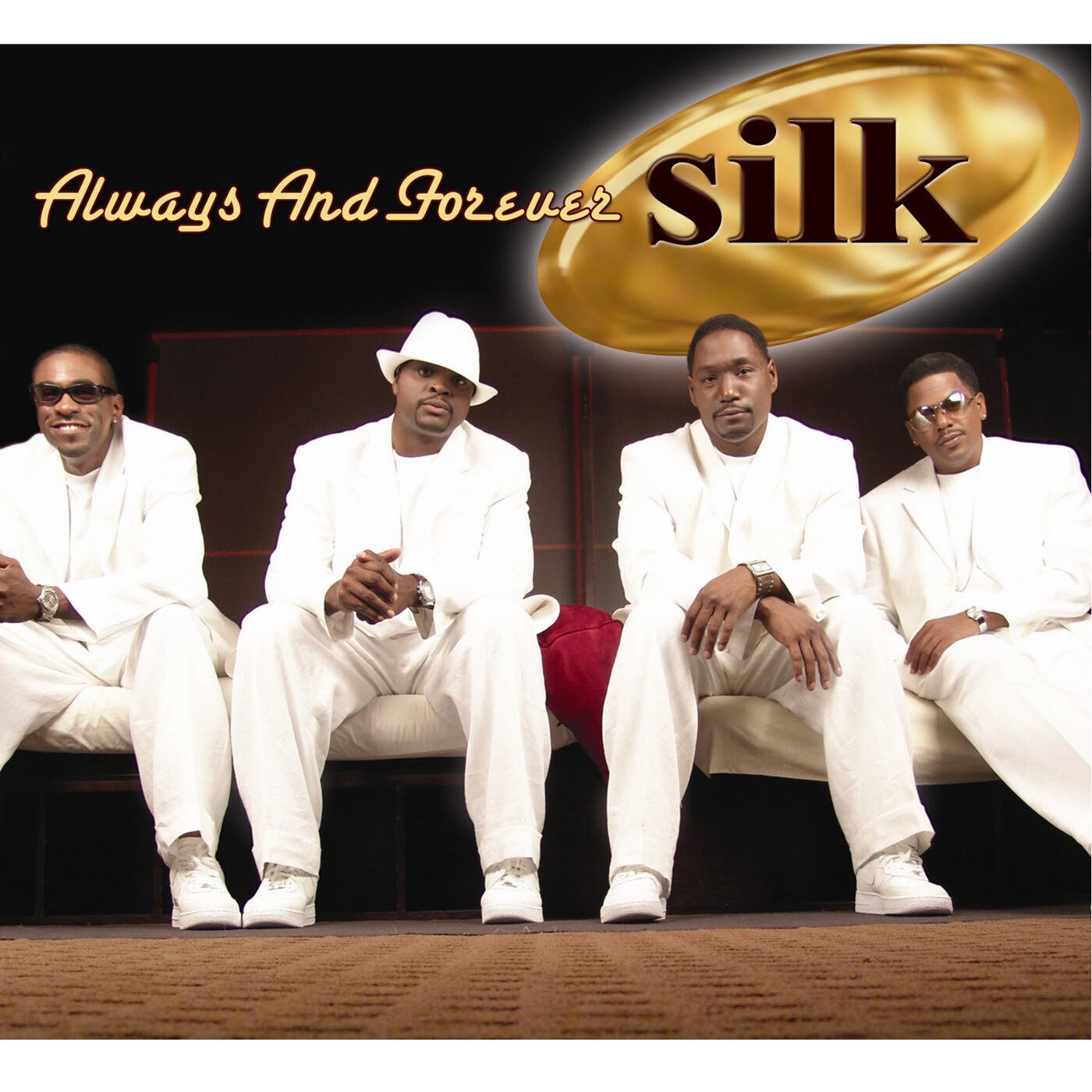
Silk, out of Atlanta, hit big in the early ‘90s with the Keith Sweat-produced “Freak Me” and remained on the major-label frontline through the early 2000s. After central figure Lil’ G (Gary Jenkins) departed, the remaining four members shifted to indie status and pivoted toward a more authentic soul direction, recording this album as part of Shanachie’s signature covers series. The repertoire centers on sweet soul ballad classics from the ‘70s and ‘80s, including Michael’s “The Lady in My Life,” performed close to the spirit of the original. They also cover Heatwave’s “Always and Forever” and Quincy Jones’ “Secret Garden (Sweet Seduction Suite)”—both from MJ-adjacent figures. Tracks by Switch and Teele, artists whose sensitivities align with MJ’s, also receive strong renditions. Lil’ G has since returned, and the reunited five-piece completed a new album in 2016. — B.O.
Rating: ★★★½☆ (3.5/5)
A pleasant, workmanlike covers album that benefits from Silk’s genuine vocal chemistry and their natural affinity for the material. The selection is smart—”The Lady in My Life” and “Secret Garden” suit the group’s velvet-smooth style perfectly. But covers albums live or die on reinvention, and Silk hews a little too close to the originals to make a definitive case for these versions. Solid comfort food for quiet storm devotees.
Ladae, Ladae!
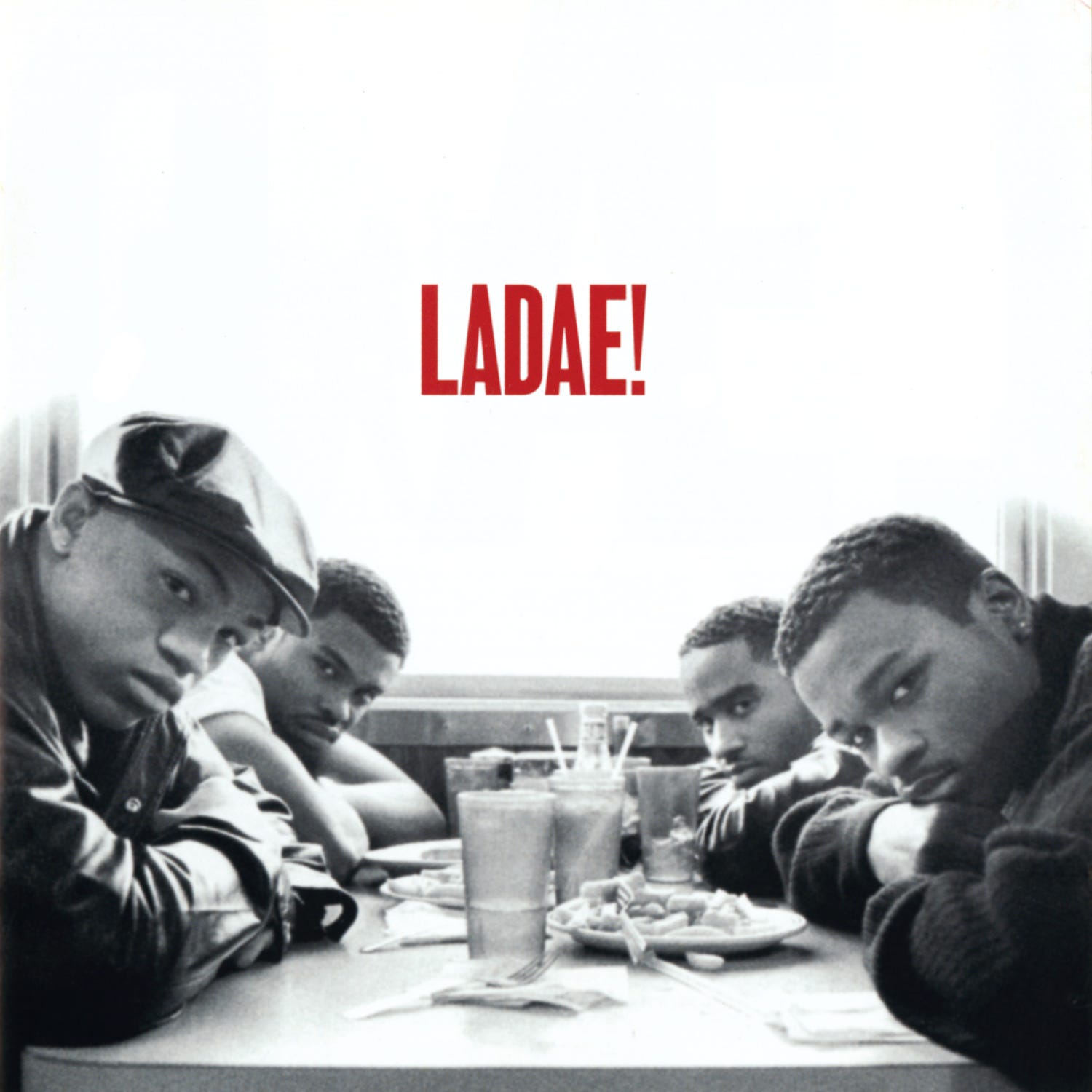
Ladae’s second album contains the exquisite party tune “Party 2 Nite,” which interpolates the dreamy strings and melody of the Jacksons’ “Show You the Way to Go.” The release was pulled at the time of its intended launch and sat in the vault for years, though it has since received limited digital distribution. This New York four-piece originally debuted on Polydor in 1994, but after failing to break through, they moved to Motown and recorded this album. Al B. Sure! was deeply hands-on, crafting every track alongside the members. The result fuses Al’s Michael-esque color with the Jodeci-like tones he brought to his other production work, all sprinkled with R. Kelly flavor—an inviting, sentimental, passionate record. From this book’s perspective, “Fallin’ Back” is also noteworthy for its chord progression, which recalls “The Lady in My Life.” “Beautiful” shares virtually the same track as the K-Ci & JoJo version. Some members later recorded under the Morrison Slick name, and Lil’ Tone continues to perform as TL Cross. — P
Rating: ★★★½☆ (3.5/5)
A genuine lost album. Al B. Sure!’s production gives it a cohesive sonic identity—the intersection of his MJ-smooth sensibility with Jodeci’s darker edges creates something warmer and more inviting than either alone. “Party 2 Nite” is exactly the kind of track that would’ve thrived on ‘90s radio, and its Jacksons interpolation is handled with real elegance. The fact that this was shelved is a small tragedy of label politics.
3rd Storee, Get With Me
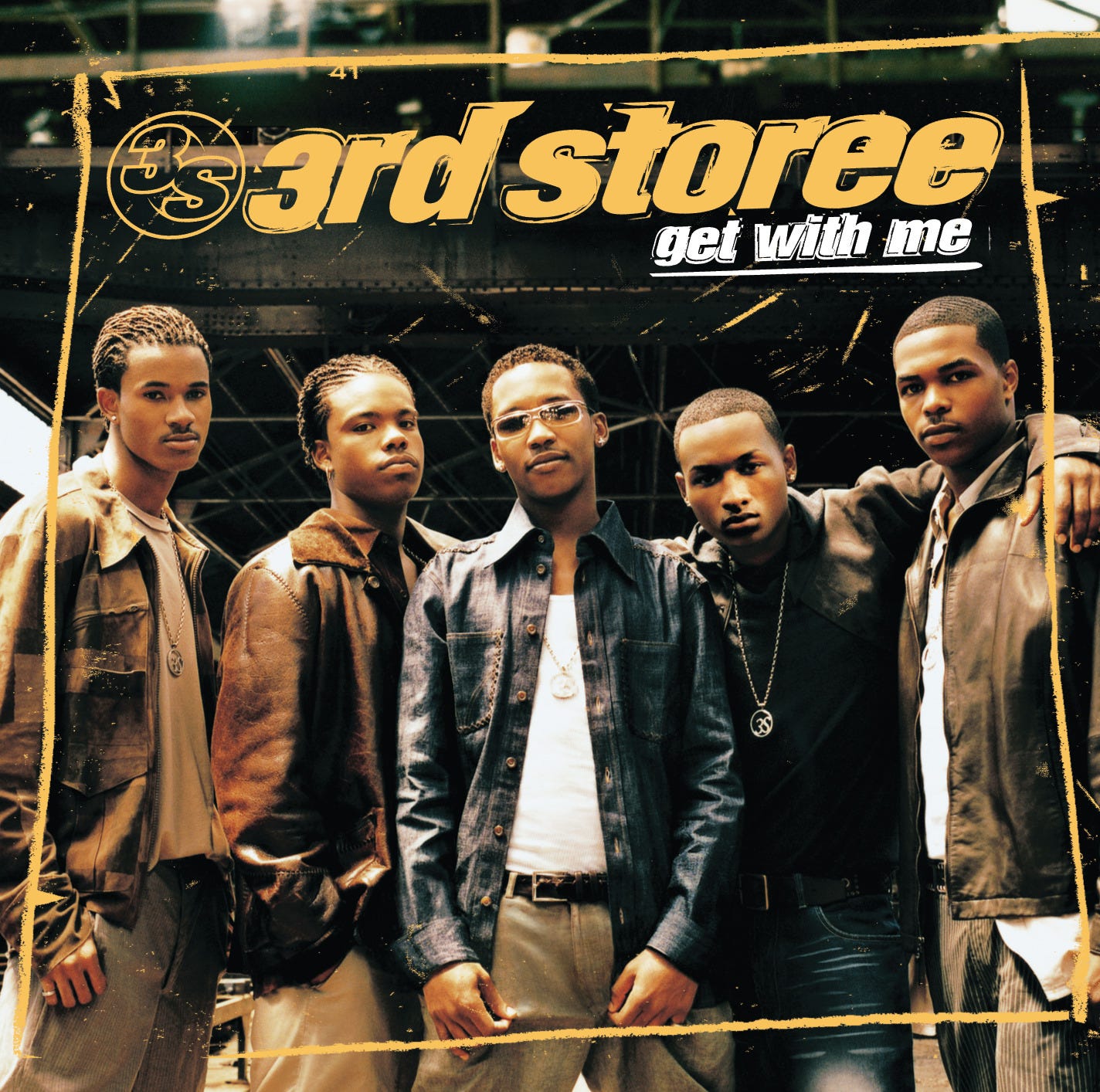
The group’s name positions them as the third chapter after two great kid-group dynasties: the Jackson 5 of the ‘70s and New Edition of the ‘80s. They made their single debut in 1999 on a label run by Babyface’s then-wife Tracey Edmonds. But their debut album—which included “Him or Me,” a track where MJ-identical vocal phrases leap out almost immediately—was shelved before release. Three years later, after a lineup reshuffle that brought in a new member named Jason, the project was rebooted with this album. Any trace of kid-group innocence is gone from the now-mature group. The Rodney Jerkins-produced title track is a powerful, youthful number that evokes the Invincible era. Breezy uptempo cuts from Harvey Mason Jr. and others who also contributed to Invincible are present, as is a ballad co-written by Robin Thicke and a Take 6-caliber full a cappella performance. The a cappella track in particular comes closest to MJ territory. — P
Rating: ★★★☆☆ (3/5)
The production roster alone—Jerkins, Mason Jr., Robin Thicke—reads like a who’s-who of early-2000s R&B craftsmanship. But the group’s identity crisis is palpable: shelved as kids, relaunched as adults, caught between proving they’ve grown up and honoring the J5/NE legacy baked into their name. The a cappella moment and the Jerkins-helmed title track hint at what could’ve been with more consistent direction.
The Newtrons, A Long Time Coming
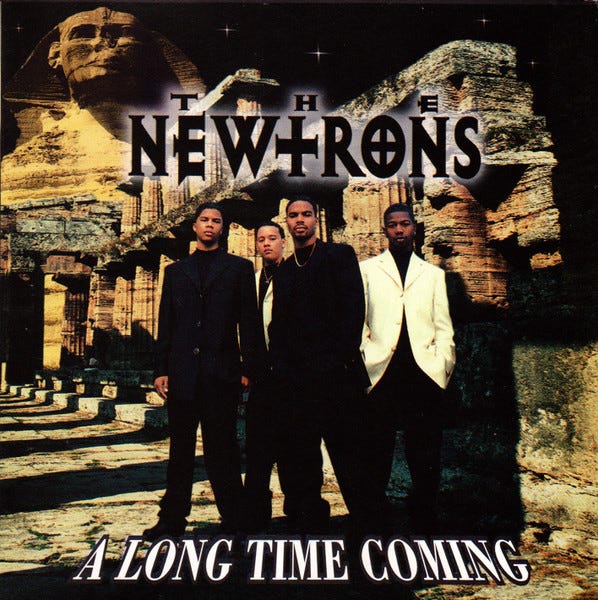
There’s a figure named Ron Newton, a gangster who filed a lawsuit claiming the TV drama Empire closely resembled his own biographical film. The Newtrons are a group formed by Newton’s sons, who debuted in 1990. The family has ties to the Jacksons, and the group covered “I Want You Back” on their debut album. Six years later, on this follow-up, Johnny—who had filled the Michael role—has gone through his voice change. The childhood voice is no longer available, but the album is loaded with sweet, early-‘90s-flavored tracks in the Babyface mold. A powerful new version of “My Heart Beats for You,” the highlight of the first album, appears alongside “Hope and Dreams,” a Damon Thomas production that unfolds like a dream world where Jam & Lewis are producing the Jacksons. Johnny later worked under the name J. Valentine, co-writing with Damon Thomas and others on Tyrese’s separately profiled album, and released the solo album The Testimony in 2011, released a couple of loosies in the early 2020s, and currently co-hosts The R&B Money Podcast with Tank. — P
Rating: ★★★☆☆ (3/5)
A group caught in the awkward transition from child act to adult ensemble. The Babyface-influenced material is consistently pleasant, and “Hope and Dreams” genuinely earns its Jam & Lewis/Jacksons comparison with lush, transportive production. But the loss of the childhood vocal charm that defined the debut leaves a gap the songwriting doesn’t fully compensate for.
Diversiti, Diversiti
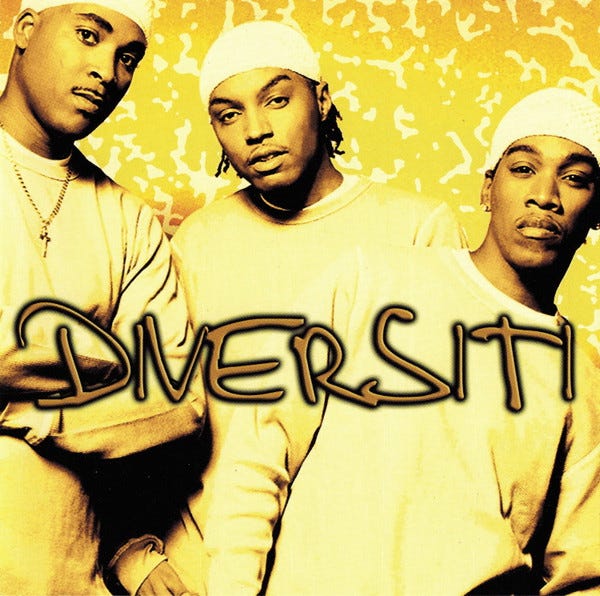
Remember ME-2-U, who released a brilliant album on RCA in 1993 that served as one of New Jack Swing’s final masterstrokes? From that Washington, D.C. five-piece, three members—Devonne, Eric, and Daimon—split off to form Diversiti. The standout voice is Devonne Howard’s sweet, slightly raw tenor, which falls somewhere between Michael Jackson and Raphael Saadiq. That voice finds its truest expression on ballads, a quality that becomes even clearer on his later solo album. Here, his faithful cover of MJ’s “The Lady in My Life” signals his roots in a single track. The songs Devonne had a hand in producing—starting with the opener “Girlfriend”—range from ‘90s-styled mid-tempos and uptempos to acoustic guitar-based ballads, all of high quality. The harmonic beauty rivals Michael’s own multi-tracked choruses. Vocal arrangements also feature input from Ruscola, known as “the fifth member of Dru Hill.” — B.O.
Rating: ★★★½☆ (3.5/5)
An album that deserves rescue from obscurity. Devonne Howard’s voice is a genuine find—the MJ-Saadiq axis he occupies is a rich tonal space that few singers have claimed. The range of production styles keeps the album from ever settling into a rut, and the harmonies are exquisite. The Dru Hill connection through Ruscola adds another layer of late-’90s R&B credibility. The “Lady in My Life” cover is rendered with real devotion.
MN8, To the Next Level
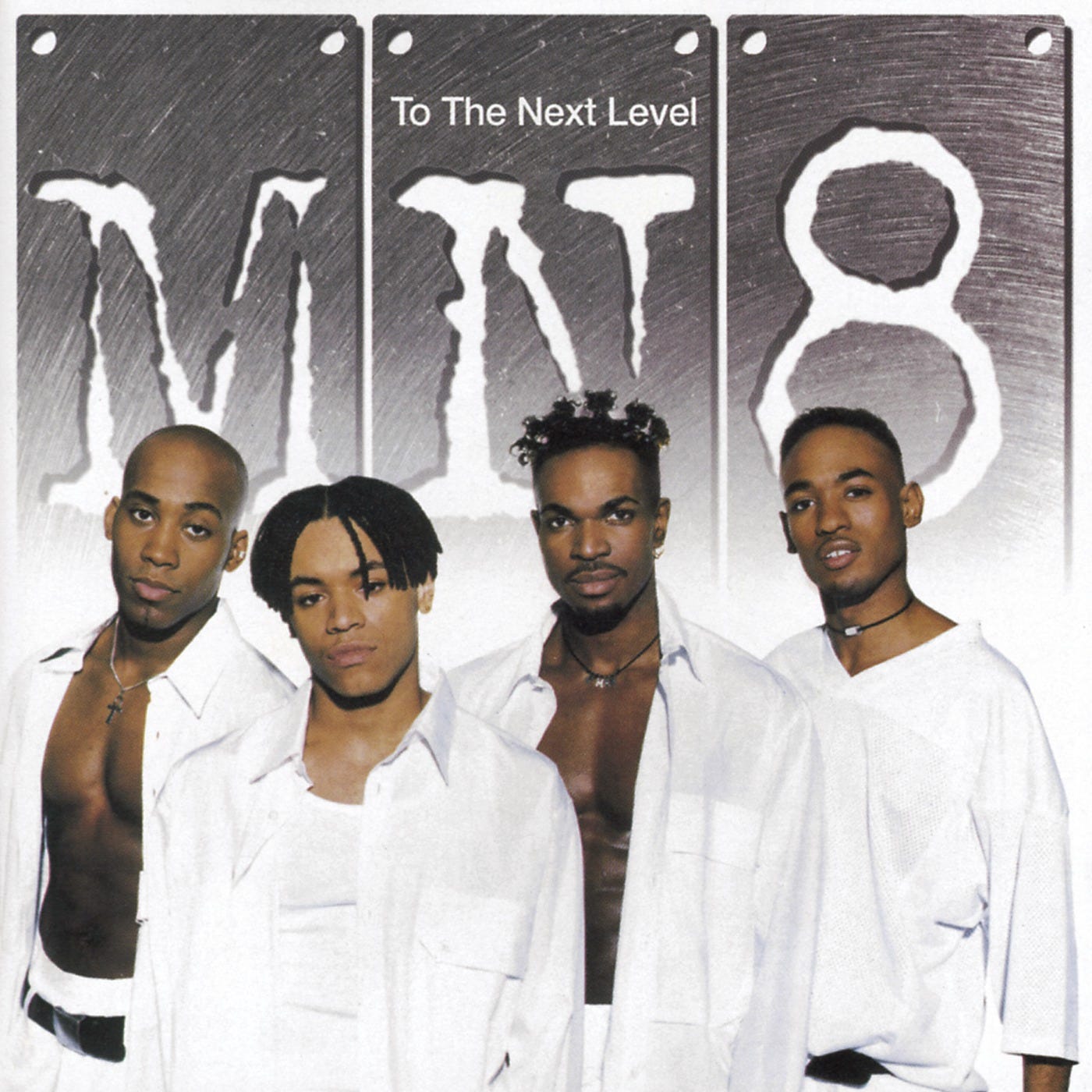
Pronounced “emanate,” this quartet is a vocal group from the United Kingdom, a country where Michael Jackson fandom has always run especially high. Among the boy band wave of Take That and Boyzone, MN8 stood out for their stronger R&B orientation. This debut opens with “I Got a Little Something for You,” still carrying the heavy residue of New Jack Swing, and features tracks in the vein of Tony! Toni! Toné!’s “If I Had No Loot” and “If You Only Let Me In.” But from the third track—a cover of Surface’s “Happy” (originally recorded by UK act Hi-Tension)—the Michael influence steadily intensifies. “The Pathway to the Moon,” a romantic love declaration, and the Hi-Five-esque uptempo “Baby It’s You” are both drenched in MJ influence. “Holding Hands” sounds as though it was written with the mystical chord progression of “I Can’t Help It” explicitly in mind. The rhythm-bending vocal delivery is pure Michael. — P
Rating: ★★★☆☆ (3/5)
MN8 occupied an unusual niche—too R&B for the UK pop market, too pop-adjacent for R&B purists—and this debut captures that tension. The “I Can’t Help It”-channeling “Holding Hands” is a genuine highlight that proves the group understood MJ at a structural level, not just as a stylistic veneer. The Surface cover is well-chosen. The album doesn’t fully cohere as a statement, but the MJ-specific moments are more than worth the listen.
Damage, Forever
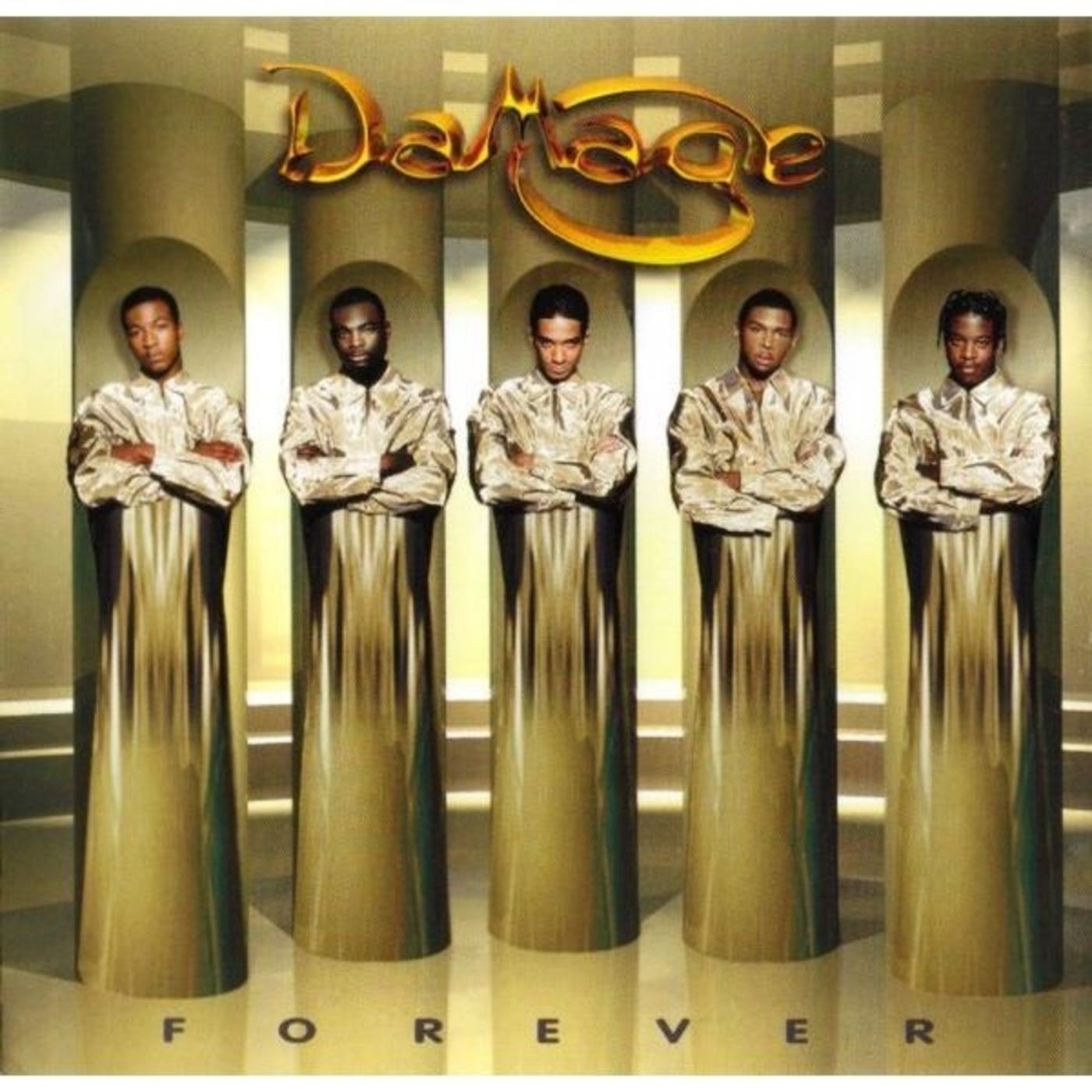
This is a UK vocal group album I’m particularly fond of. Bryan Powell, a rich-voiced singer from the Talkin’ Loud label, along with reliable hands like Donny, Dodge, Lynsley, and Cutfather & Joe, provided songs and production calibrated to the age of the Damage members—young men on the verge of taking flight. The entire album is sweet, catchy, and yet carefully tailored with sophisticated arrangements that occasionally incorporate live strings. The general consensus is that their cover of Eric Clapton’s “Wonderful Tonight” is the main attraction, but the rest is packed with quality. “Love II Love,” co-written by fellow late-‘90s UK singer Ali, carries a youthful quality akin to the Jacksons’ Philadelphia International era. “In Your Eyes,” sung against a gospel-tinged piano backdrop, could pass for the Jacksons with Jermaine at the front. — P
Rating: ★★★½☆ (3.5/5)
One of the finest UK vocal group albums of the ‘90s. The production team made the crucial decision to serve the group’s youth rather than mask it, and the result has an emotional sincerity that ages well. The live string arrangements elevate the material above typical boy-band fare, and the Jacksons comparisons feel earned rather than aspirational. The deep cuts are genuinely strong—this isn’t a singles-plus-filler album.
Take 6, Brothers
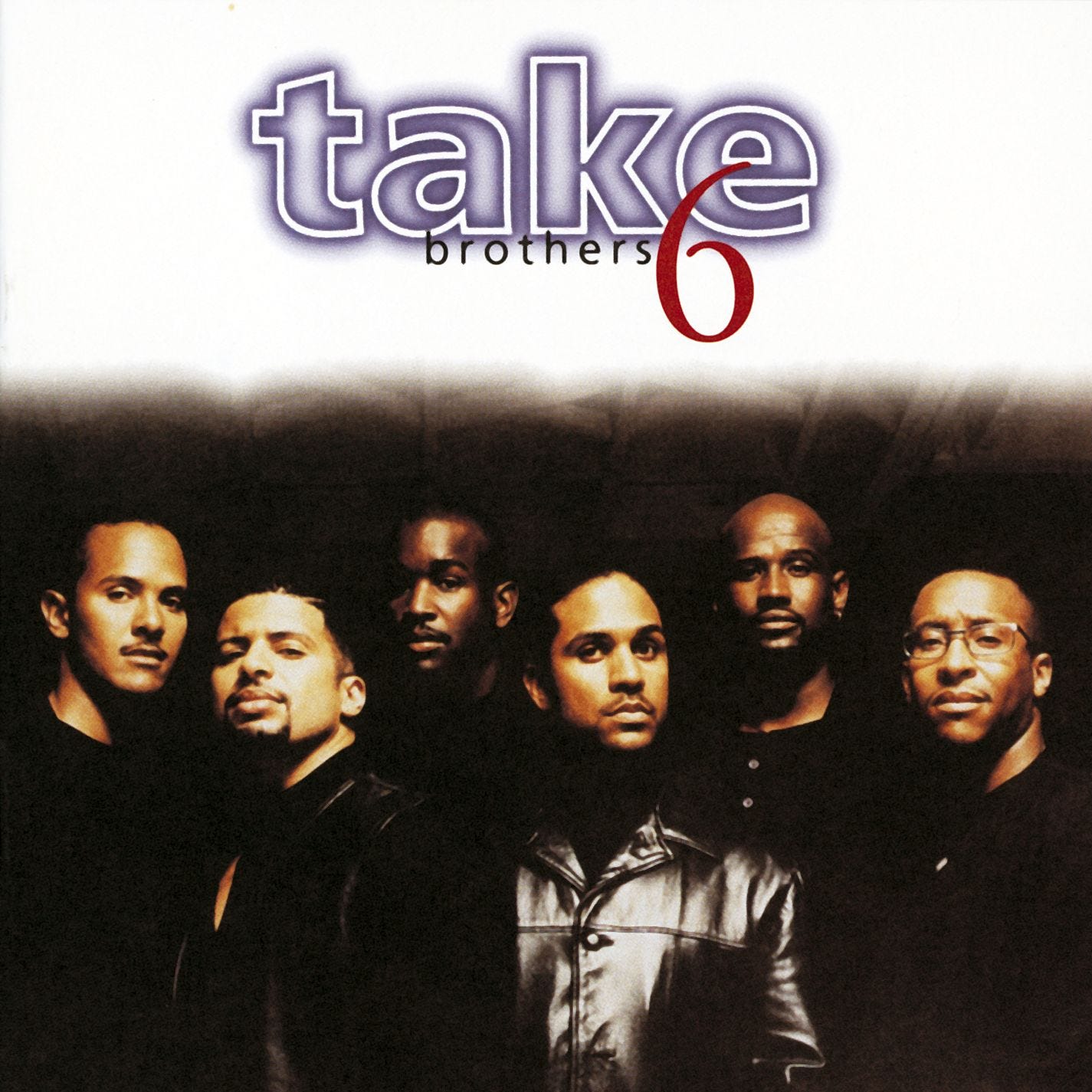
In recent years, newly added member Christian Dentley’s Michael Jackson impression has reached remarkable levels—in concert, he sometimes delivers spine-tingling a cappella renditions of MJ classics accompanied by vocal percussion. However, rather than their later jazz-oriented work or signature a cappella arrangements, the album profiled here is their most R&B-leaning effort, from 1996. Member Claude’s brother Brian McKnight and the Motown-affiliated Les Pierce—two excellent R&B craftsmen—serve the accompaniment, letting the group’s dense chorus work take center stage. What the group prioritizes is not the kind of competitive solo showcasing typical of soul vocal groups, but rather harmony that builds on the high-quality chorale sound Quincy and Michael created, adding additional jazz tension. The David Foster co-write “I’m Only Here for a While” and a cover of the love theme from Footloose, included on the Japanese edition, are jaw-dropping. — P
Rating: ★★★★☆ (4/5)
Take 6 applying their peerless harmonic sophistication to an R&B framework is a dream concept, and the execution doesn’t disappoint. Brian McKnight’s production understands exactly how to frame these voices—warm, spacious, never cluttered. The Quincy/MJ chorale comparison isn’t hyperbole; this group’s blend operates at that level. The David Foster collaboration alone is worth the price of entry. Essential listening for anyone interested in the intersection of gospel, jazz, and R&B vocal harmony.
Winans Phase 2, We Got Next
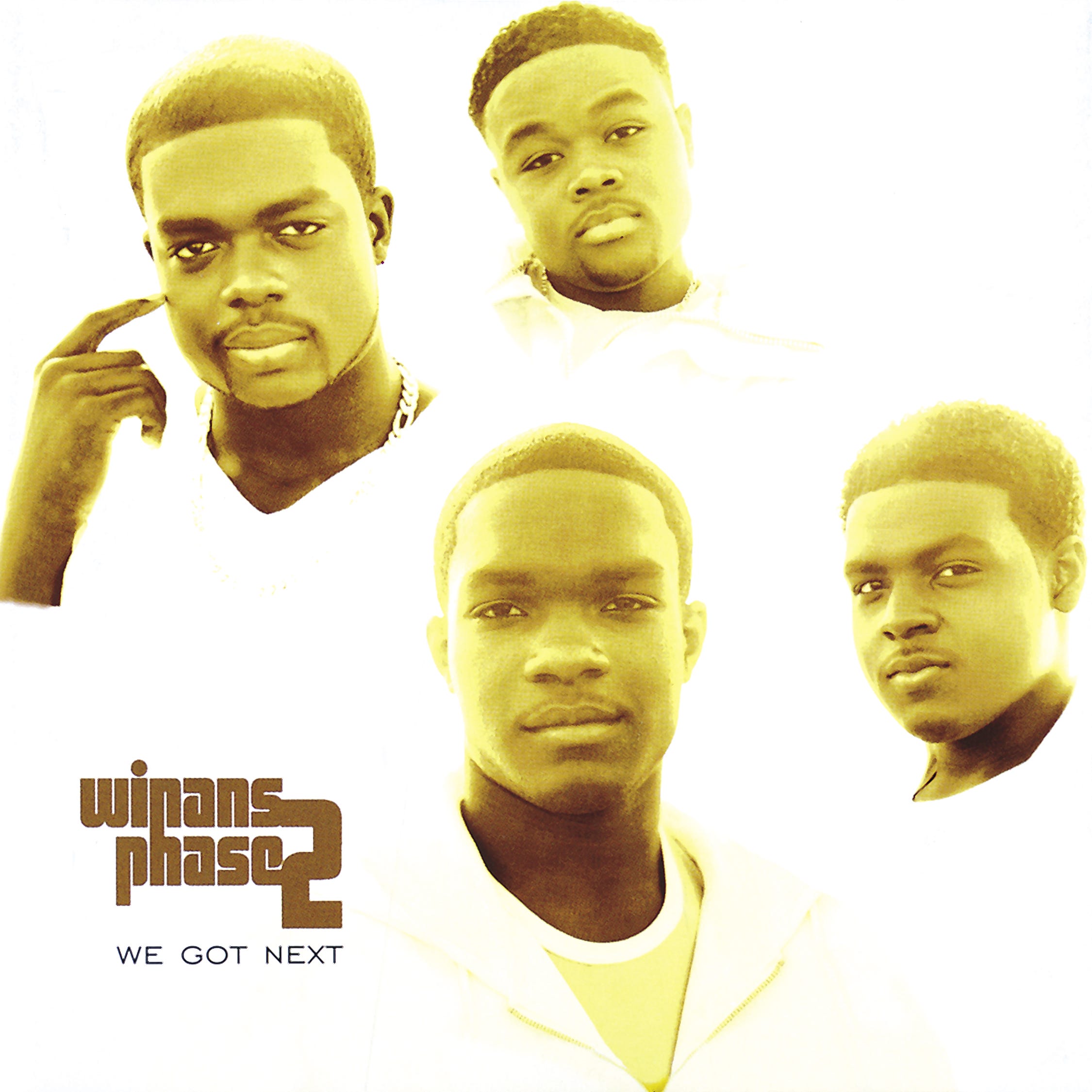
The Winans were recruited for the chorus of Michael’s “Man in the Mirror” in part because of their connection to Quincy Jones’ Quest label. The sons of those Winans members formed this group as teenagers, billing themselves as the next generation of gospel’s first family. On this debut, they confidently ride Rodney Jerkins’ hard, futuristic beats—foreshadowing MJ’s Invincible—while also delivering a sensual performance on “Let Him In,” a mellow slow groove produced by Narada Michael Walden, and executing the Babyface and Myklin Roderick-penned ballad “Just for a Day” with disciplined precision. The beautiful harmonies on tracks like “Everyday Away” unmistakably carry the DNA of a family whose voices once adorned MJ’s recordings. Their falsetto-faithful Bee Gees remake, “Too Much Heaven (Phase 2),” achieves a finish reminiscent of the Jacksons’ Philadelphia era. They also cover Bernard Wright’s classic “Who Do You Love.” — B.O.
Rating: ★★★½☆ (3.5/5)
The Winans bloodline gives this group an automatic harmonic pedigree that most debuts have to earn over multiple albums. Rodney Jerkins’ contributions crackle with the same energy he was channeling into Invincible, and the stylistic range—from Darkchild bangers to Narada-produced quiet storm—is impressively navigated for such a young group. The Bee Gees remake is inspired. A promising debut from a lineage that earned its place in this book.
Resurface, Where Have You Been
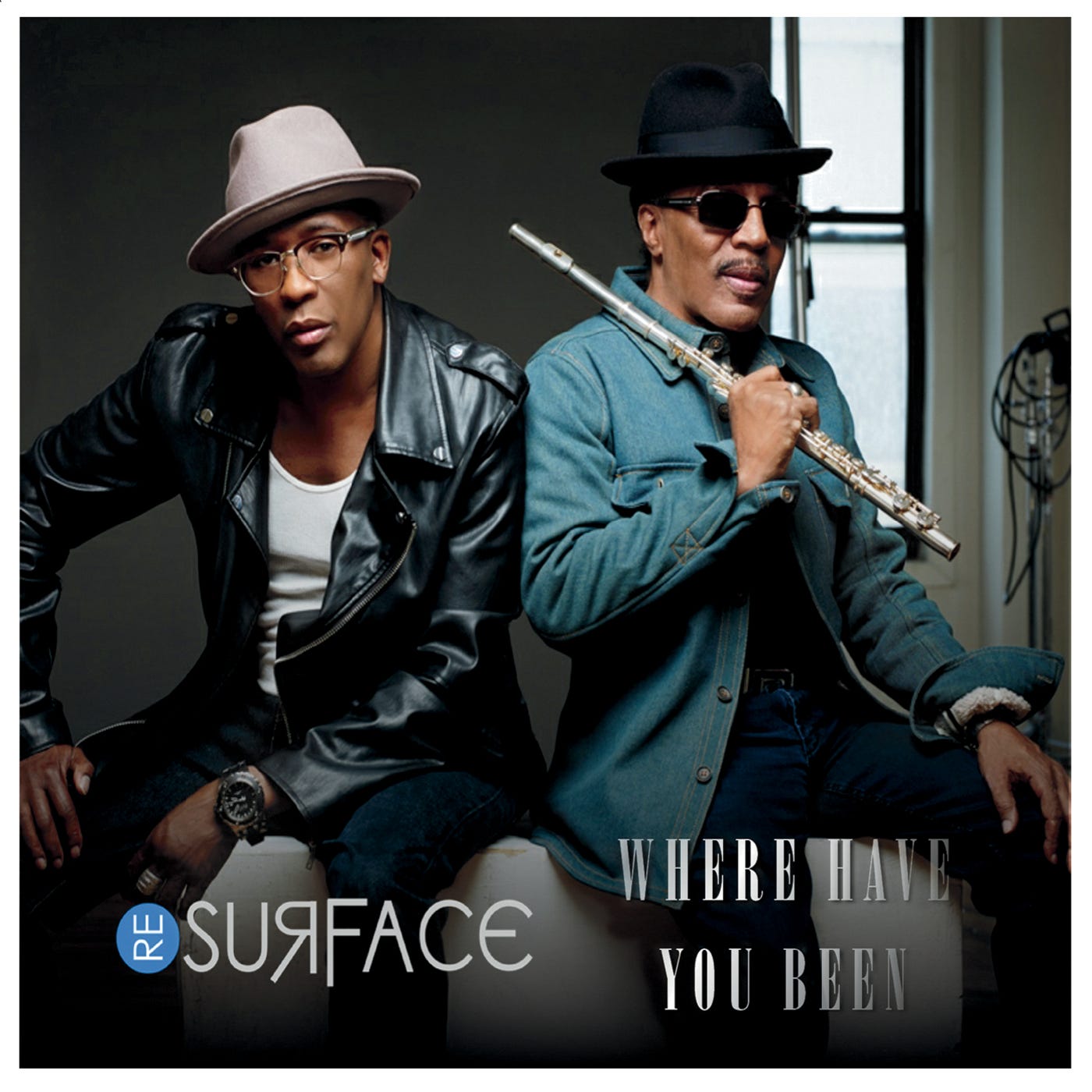
Surface—whose hits “Happy” and “Shower Me with Your Love” sweetly decorated the ‘80s and ‘90s—went silent after their fourth album in 1998. With lead singer Bernard Jackson pursuing a solo career and David Townsend’s passing, a reunion seemed impossible. But David “Pic” Conley, who alongside Townsend had produced for Jermaine Jackson and Rebbie Jackson, recruited John Feeva (a.k.a. Yaya), formerly of the Black Flames, and released this album under the ReSurface name. On “Say I Do,” a TR-808-driven track in the “Happy” mold, and “Baby Making Music,” which lays down its groove over a Marvin Gaye “Sexual Healing” beat, Feeva commits to a Bernard-style vocal that won’t disappoint longtime fans. But on the stepper “Dance Your Heartbreak Away,” the approach goes full Michael manner. Conley’s flute adds a refined touch throughout the album. — P
Rating: ★★★☆☆ (3/5)
A labor of love that works best as a continuation for longtime Surface fans. Feeva does admirable work channeling Bernard Jackson’s vocal style, and the “Happy” DNA on “Say I Do” is comforting rather than derivative. The stepper “Dance Your Heartbreak Away” is the unexpected highlight—the MJ pivot works precisely because it feels earned after the Surface-faithful opening tracks. Conley’s flute is a signature detail that grounds the album in the group’s identity.
Brownstone, Still Climbing
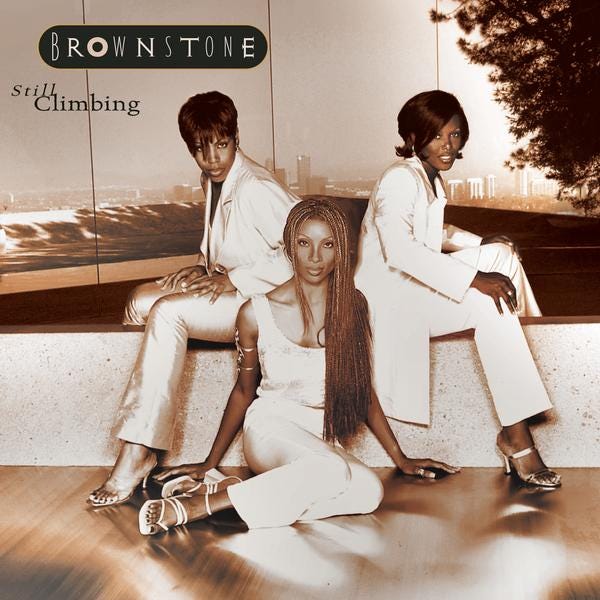
This female trio on MJJ Records, fronted by Nicci Gilbert, was the label’s flagship act, appearing as backing vocalists across multiple MJJ releases and recording two albums for the imprint. Their debut, which includes the classic “If You Love Me,” is widely regarded as an excellent record. This follow-up, featuring one member replaced, wields the group’s weapon of choice—thick, church-rooted choruses brimming with uplift—across a slate of sultry slow jams. Grand Jury’s “5 Miles to Empty” and other tracks from the debut’s production team remain the most natural fit, though Rodney Jerkins’ soul-classic-sampling hip-hop soul entries are also well-executed. Robin Thicke—who, like Jerkins, was in fact involved with MJ’s Invincible—contributes the elegant ballad “Around You,” a track that would sound at home in either Michael’s or Janet’s catalog. They also cover Alicia Myers’ “If You Play Your Cards Right.” The group lost member Maxee to a tragic accident in 2015, but continues to perform. — B.O.
Rating: ★★★½☆ (3.5/5)
The sophomore album from one of MJJ’s most undervalued acts. Replacing a member is always risky, but the church-rooted vocal identity holds firm. Robin Thicke’s “Around You” is the sleeper—an early glimpse of the sophisticated soul craftsmanship he’d later bring to his own records. The album doesn’t quite match the debut’s consistency, but “5 Miles to Empty” and the Rodney Jerkins tracks push it beyond mere sequel status. The MJJ imprint’s best-kept secret outside of Michael himself.